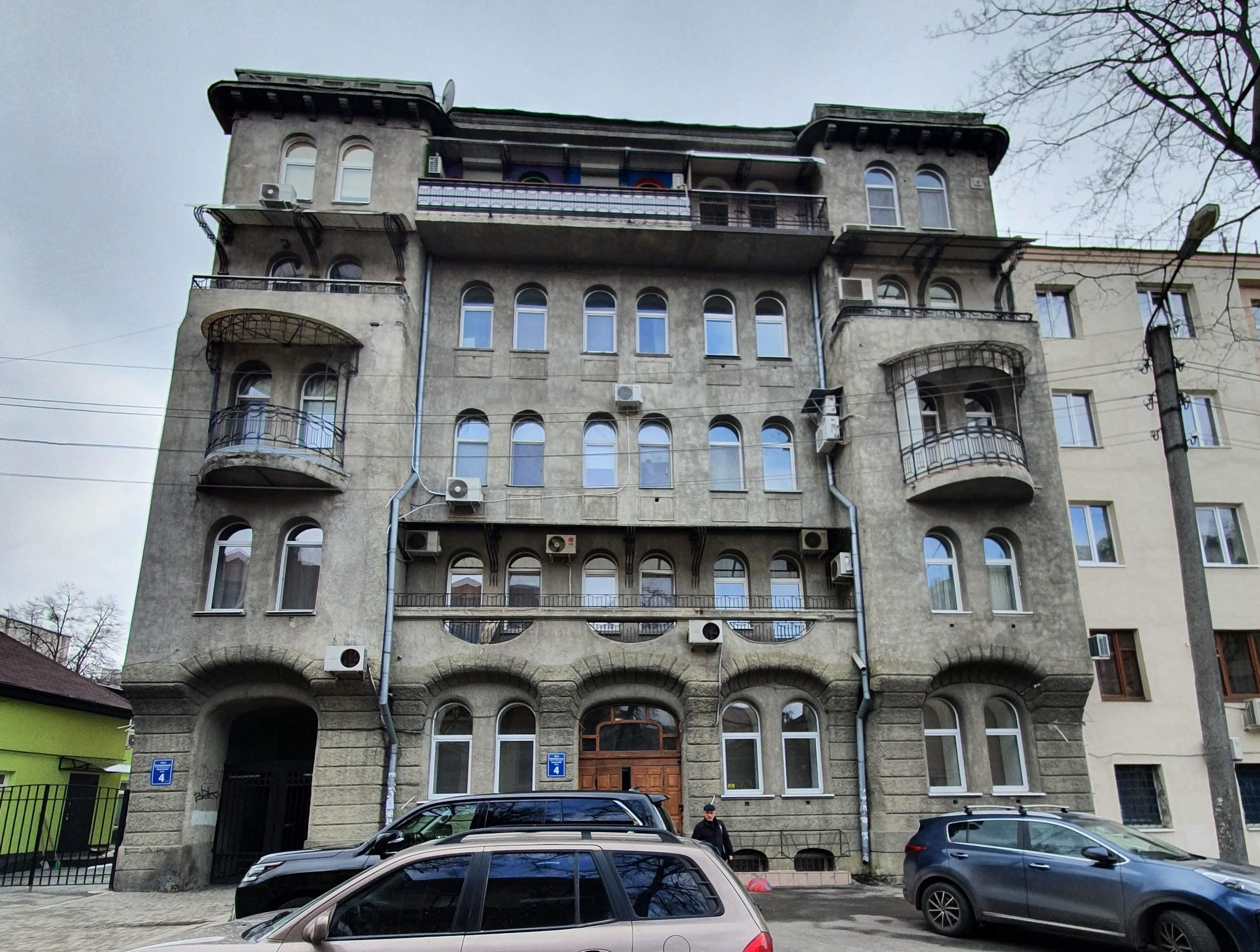
The residential building at Kaplunivskyj Ln, 4 is quite different from typical Kharkiv Art Nouveau—the shapes of its facade are so rounded and fluid that they seem to have been molded from sand or clay.
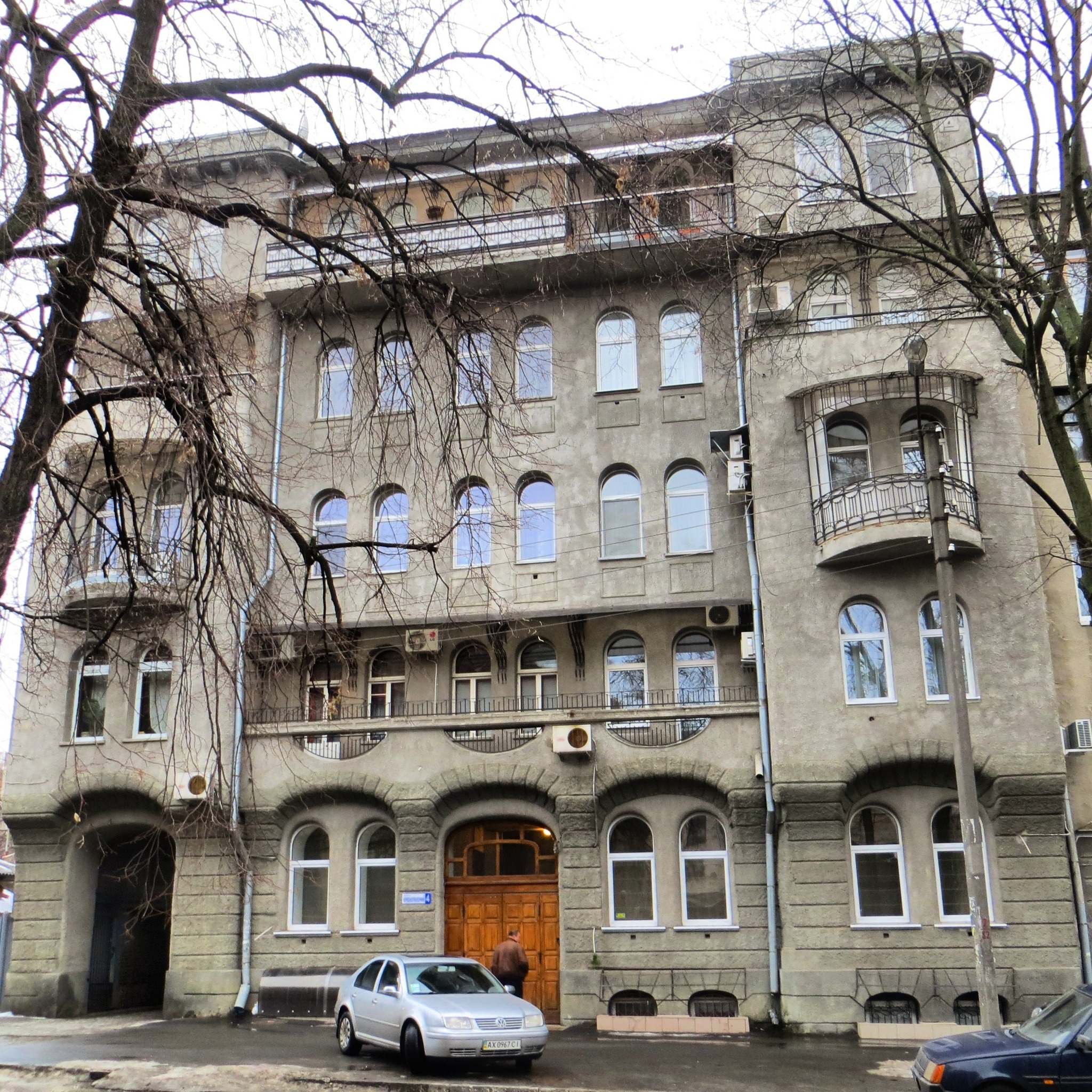
It is also known as the “house without corners”; to some, it bears a distant resemblance to the Barcelona masterpieces of architect Antoni Gaudí, who also favored organic forms. Particular attention should be paid to the bay windows, which seem to grow organically from the first floor, and the second-floor balcony railing, which is seamlessly integrated into the facade.
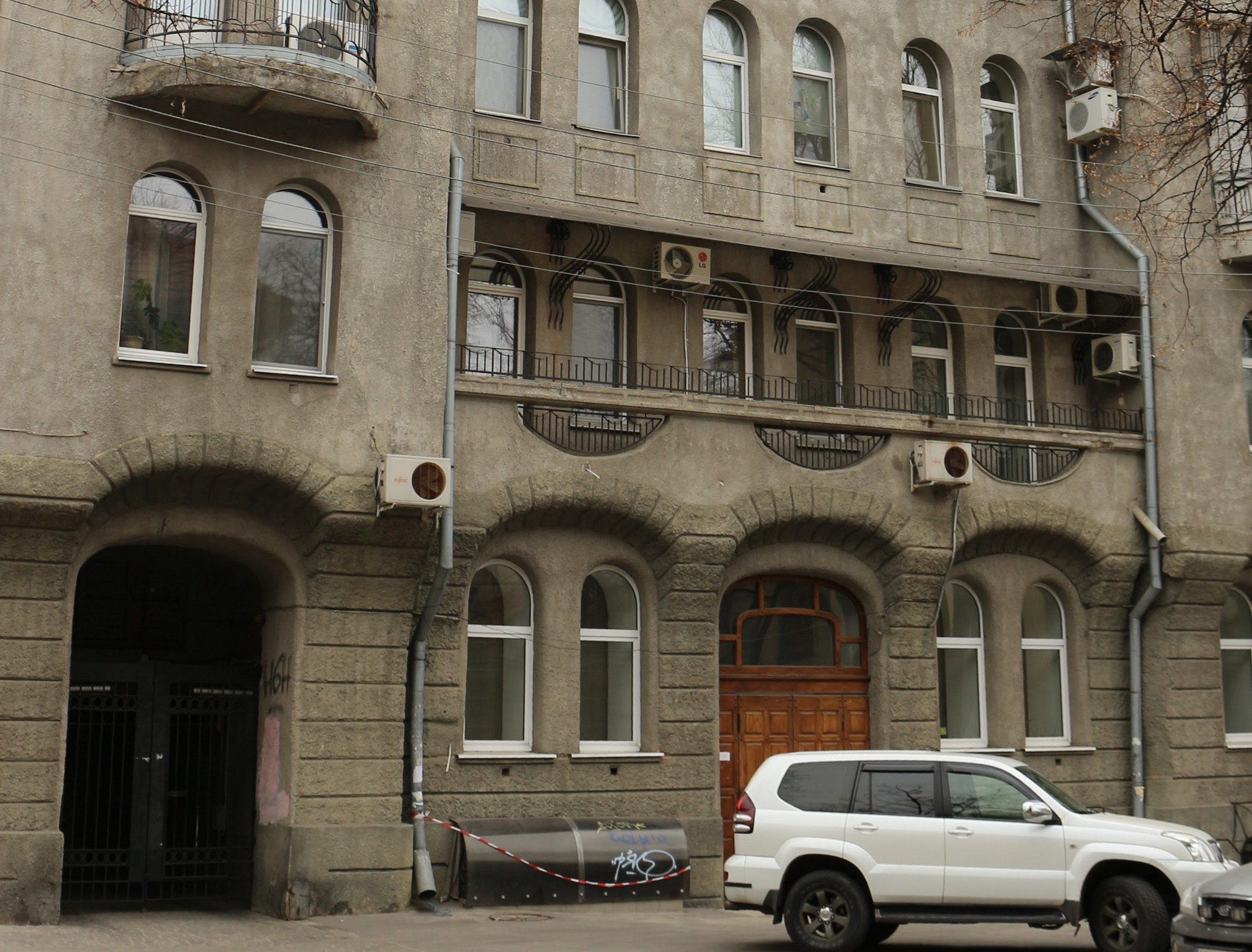
This architectural landmark was built in 1912–1913 based on a design by Alexander Ginzburg. In this building, the architect scaled up certain design elements previously used in the building at Netichenskaya St, 14 (the groups of windows on the first floor and their decorative details).
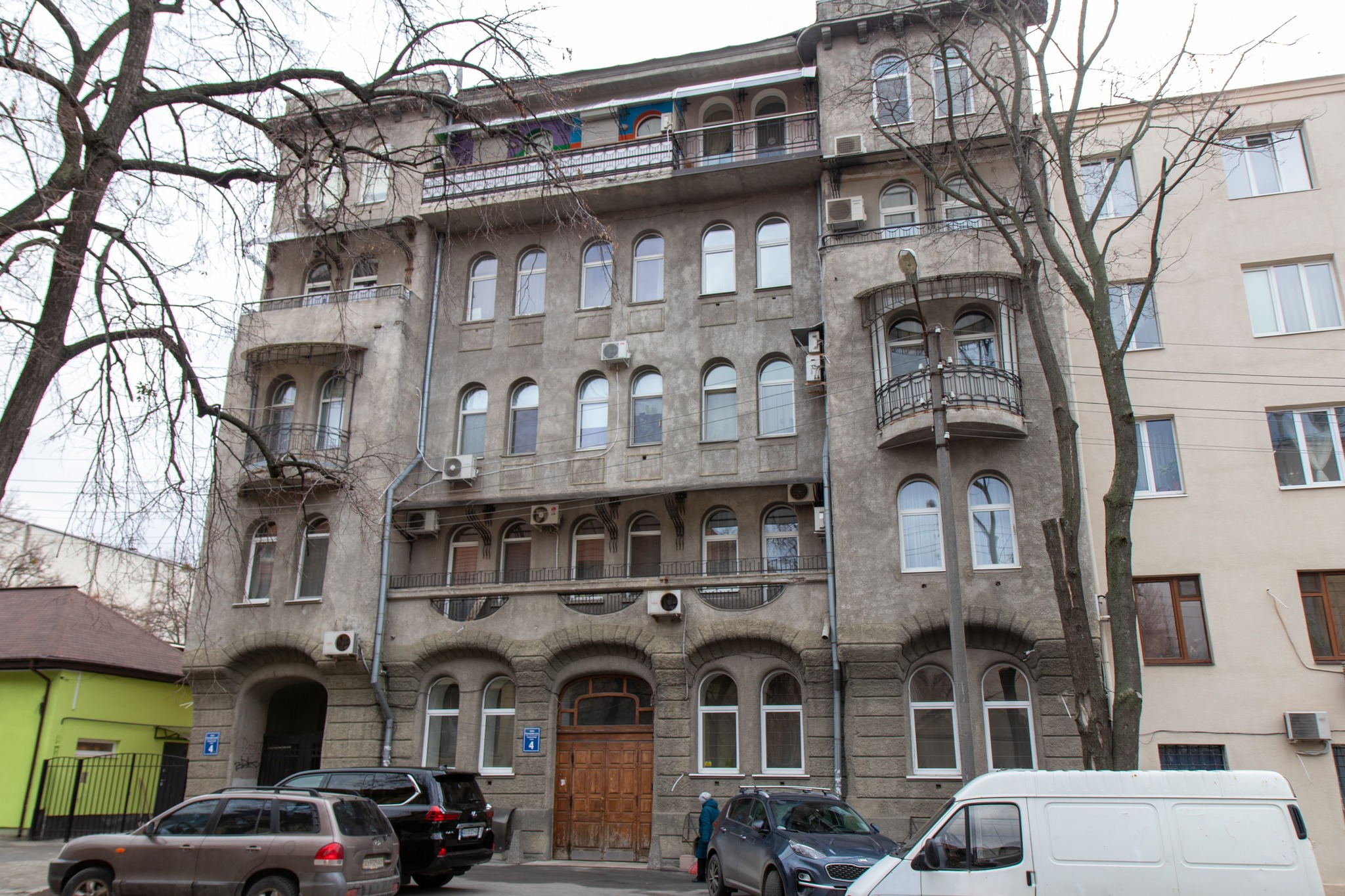
The house is actually larger than it appears from the front—in addition to the five main floors, it has a basement level, and it extends quite far into the yard.
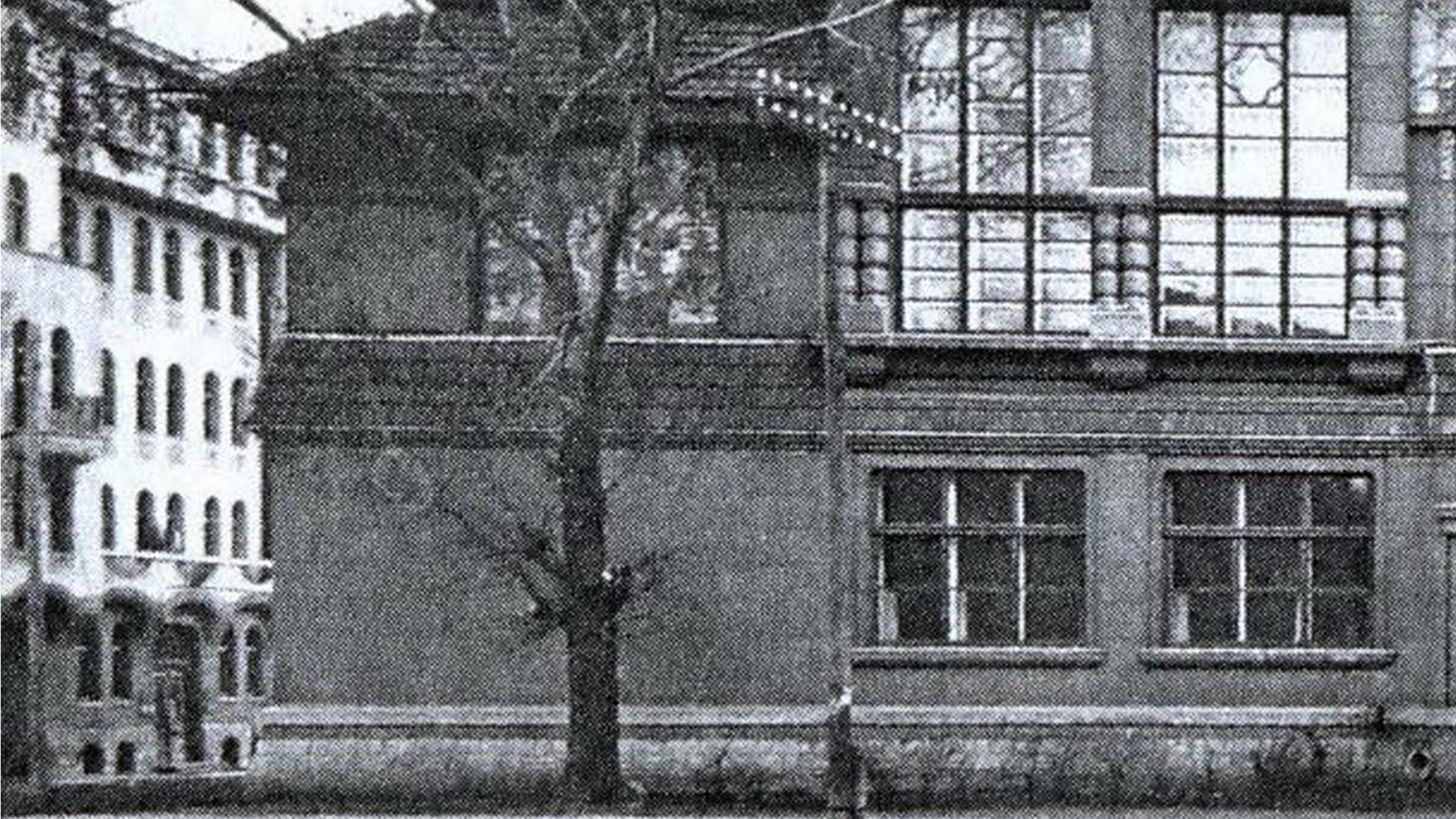
In this old photo, you can see that the house wasn’t always gray—the upper part, starting from the second floor, had a lighter shade.
An interesting fact: in the late 19th and early 20th centuries, Kaplunovsky Lane was Kaplunovskaya Street, and Kaplunovskaya Street was a lane; this is recorded both on historical maps and in lists of property owners. On Ginzburg’s 1916 map, Kaplunovsky Lane is already located at its current site. From 1928 to 2015, it was Krasnoznamensky Lane.
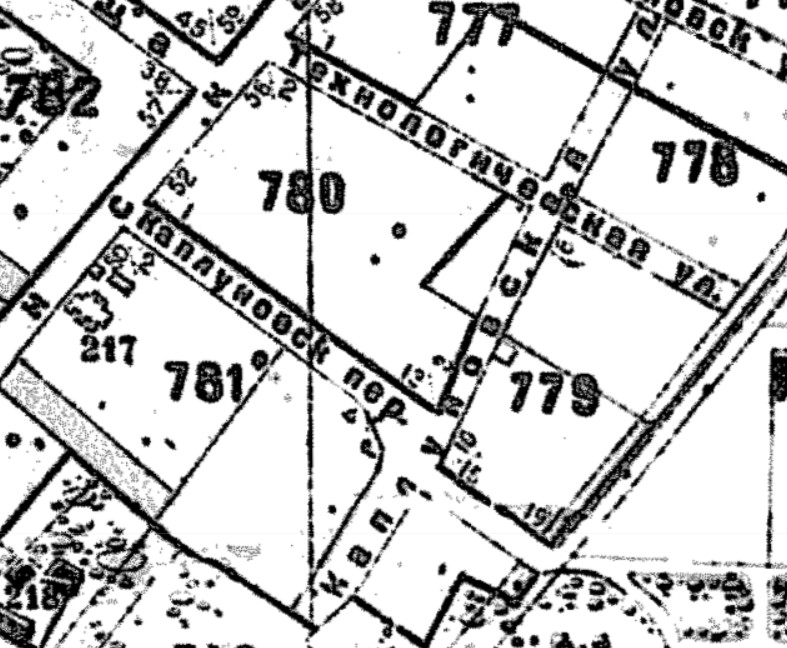
It is not known for certain who commissioned the construction of this house. In 1909, the plot of land which it stands belonged to a peasant woman named Evdokia Mikhailovna Babkina (and, possibly, in part, to a townsman named Vasily Savelievich Zalamatyev).
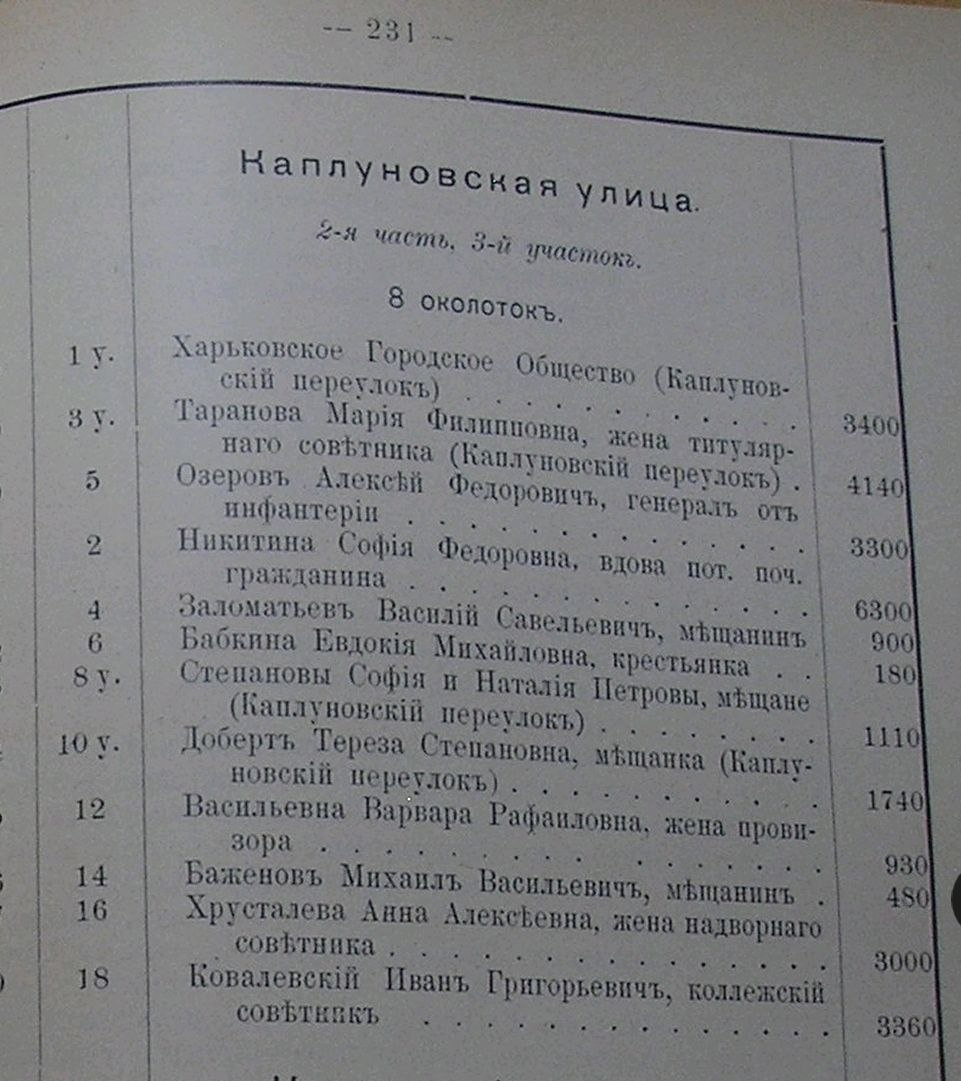
Given the very low cost of the plots, it can be assumed that these were vacant lots that were later purchased for development.

- Danylevs’koho Street, 19 - 13.10.2026
- Debunking the myth about one of the most famous Kharkiv photos - 12.10.2026
- The Architectural Evolution of the Kharkiv Theater - 26.09.2026