Until 1917, the building at Constitution Square, 13, housed the “Alschwang” haberdashery store.
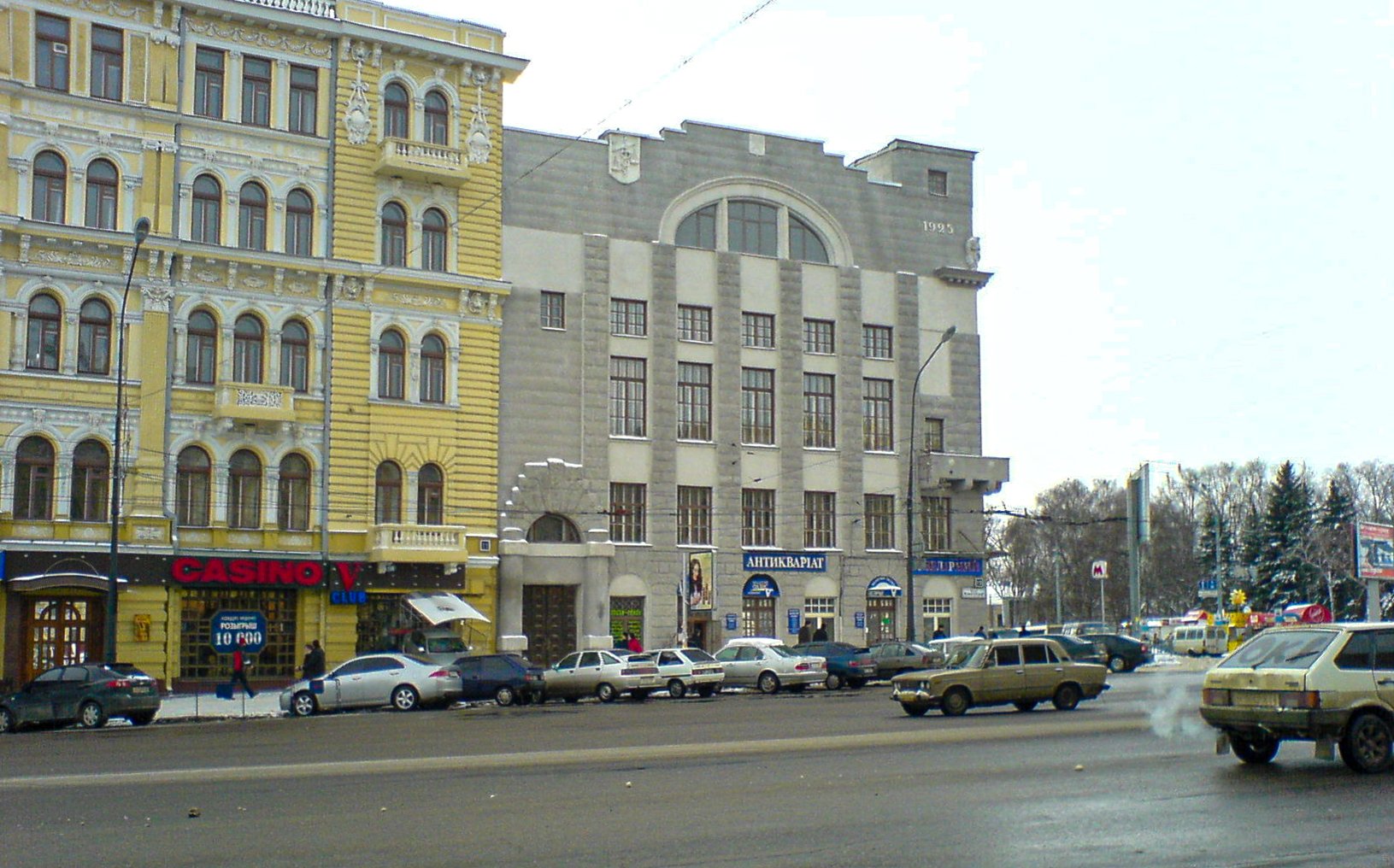
In 1925, the building was renovated and expanded by three stories according to a design by architect Oleksander Linetskyi. The building’s style is revolutionary-industrial romanticism, with hints of Art Nouveau or even Art Deco. It housed the Commodity Exchange (during the NEP era, such activities were permitted).
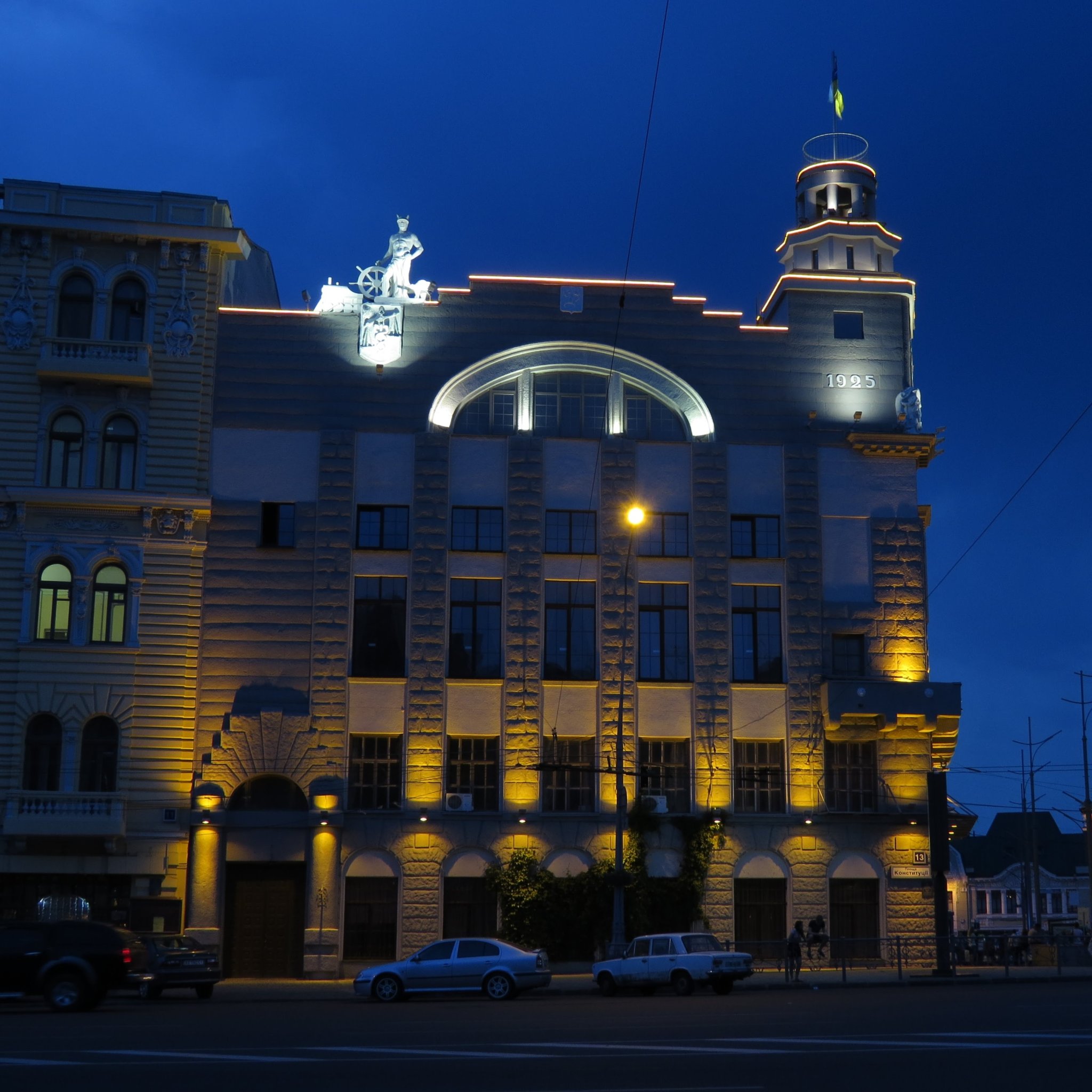
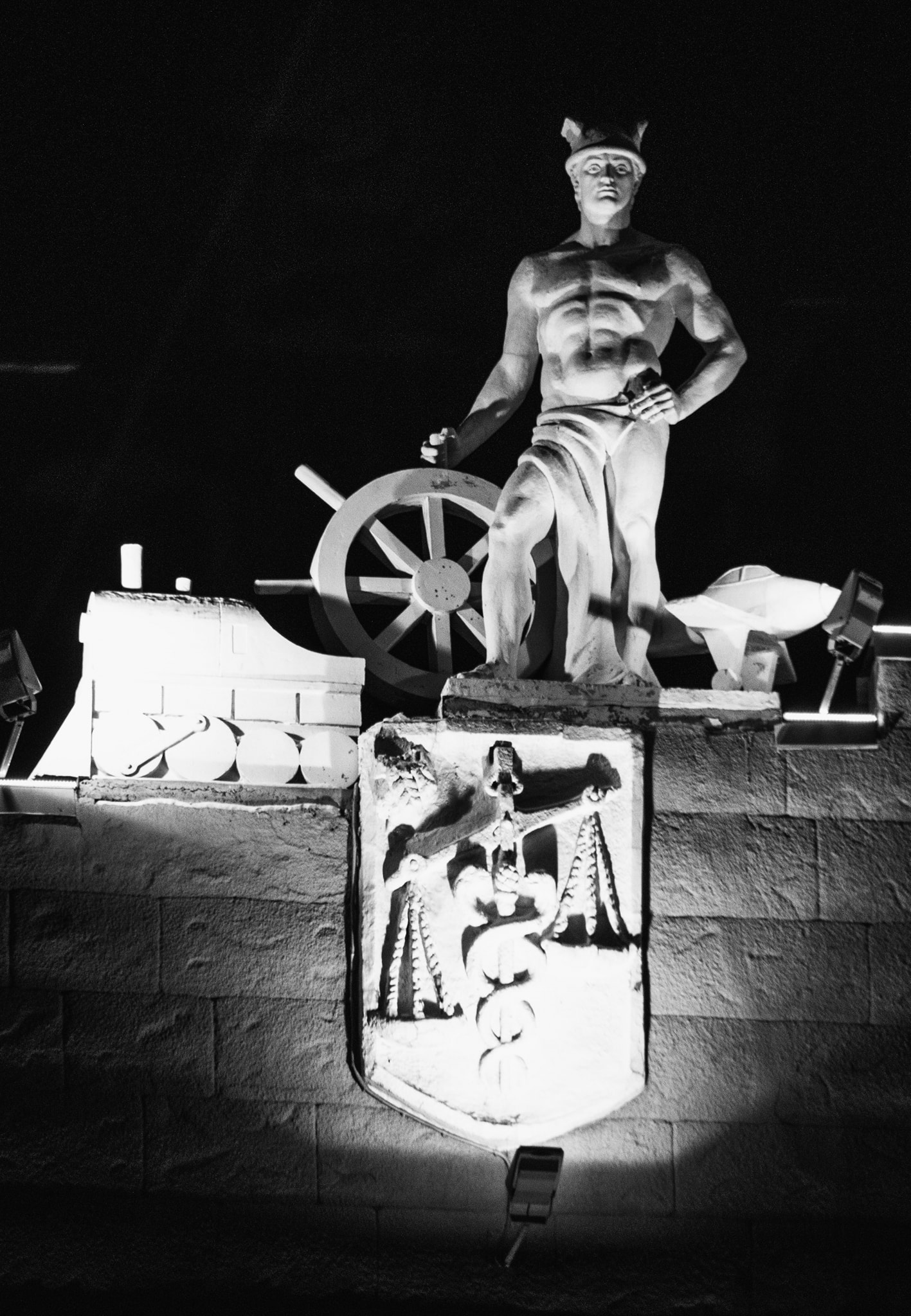
A sculpture of Mercury, the god of commerce, had been installed on the roof—though it had been given a slightly modern twist (he looked more like a laborer). In addition to the traditional caduceus in his hands, a steam locomotive, a ship’s wheel, and an airplane stood beside him. The caduceus, by the way, has appeared on Kharkiv’s coats of arms since 1775…
With the abolition of the NEP, the stock exchange was closed, and the building was taken over by the conservatory. In 1963, it merged with the Theater Institute from the neighboring building at Constitution Square, 11 to form the Kotlyarevsky Institute of Arts (buildings are connected inside). By the late 1970s, Mercury had become completely dilapidated and fell “from the heavens” to the ground, unfortunately injuring a passerby.
Following this, a mass removal of old sculptures from the roofs and walls of pre-revolutionary buildings began in Kharkiv.
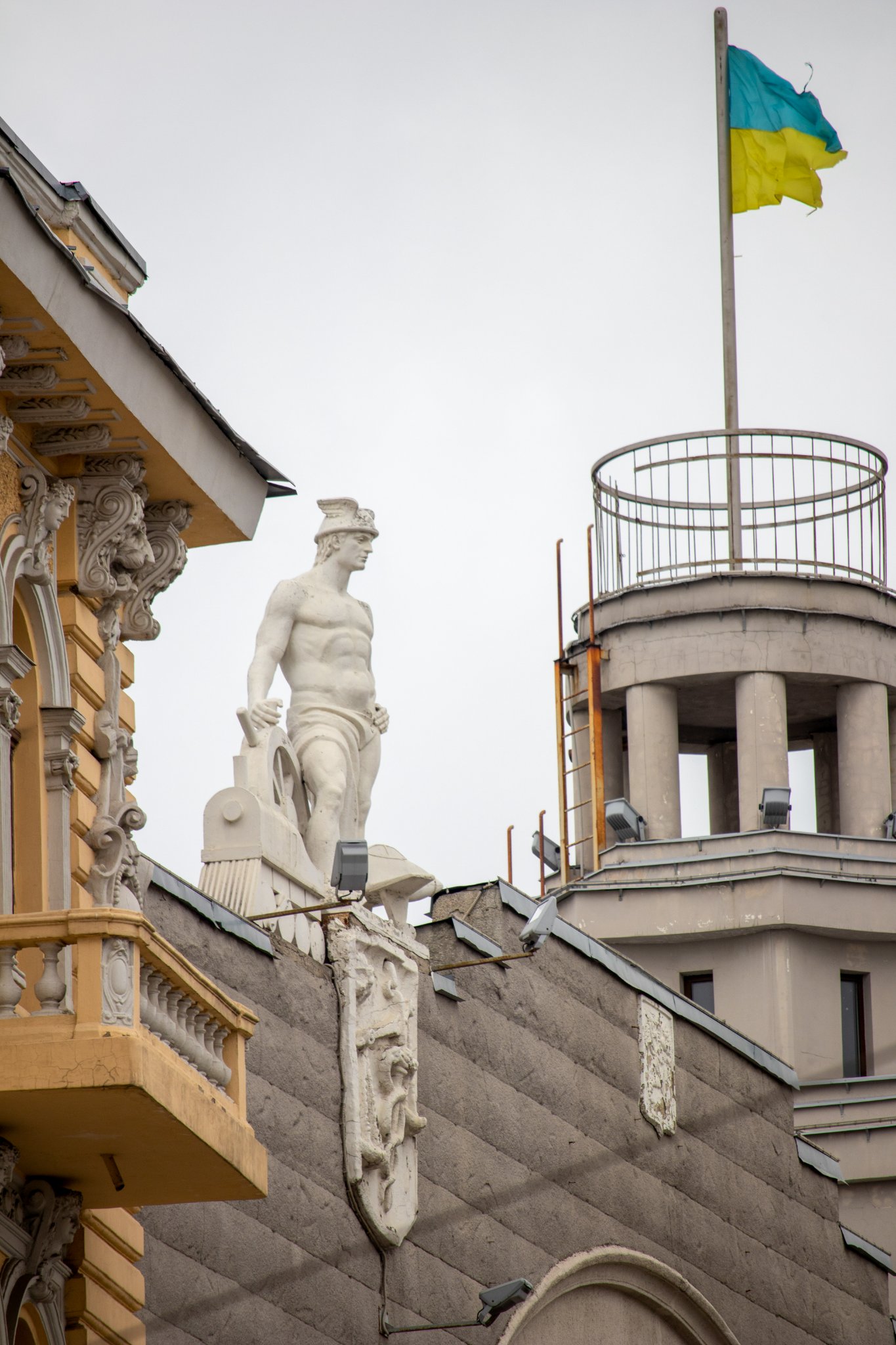
In the 1990s, the facades and the hall were restored according to a design by the Kharkiv branch of the “Urproektrestavratsiya” Institute (architects V. Novgorodov, V. Kortunov, and A. Shcherbakova), but there were insufficient funds at the time for a complete restoration, including the rotunda and sculptures. The additional restoration works were completed just before Euro 2012 by the “PromstroyNIIproekt” Institute.
The statue of Mercury was recreated by sculptor Oleksander Ridny, who is well known in the city for his monuments to Independence, the Cyclist, Andrew the First-Called, and others. Mercury now has a more “antique” look, while the airplane has a more modern design.
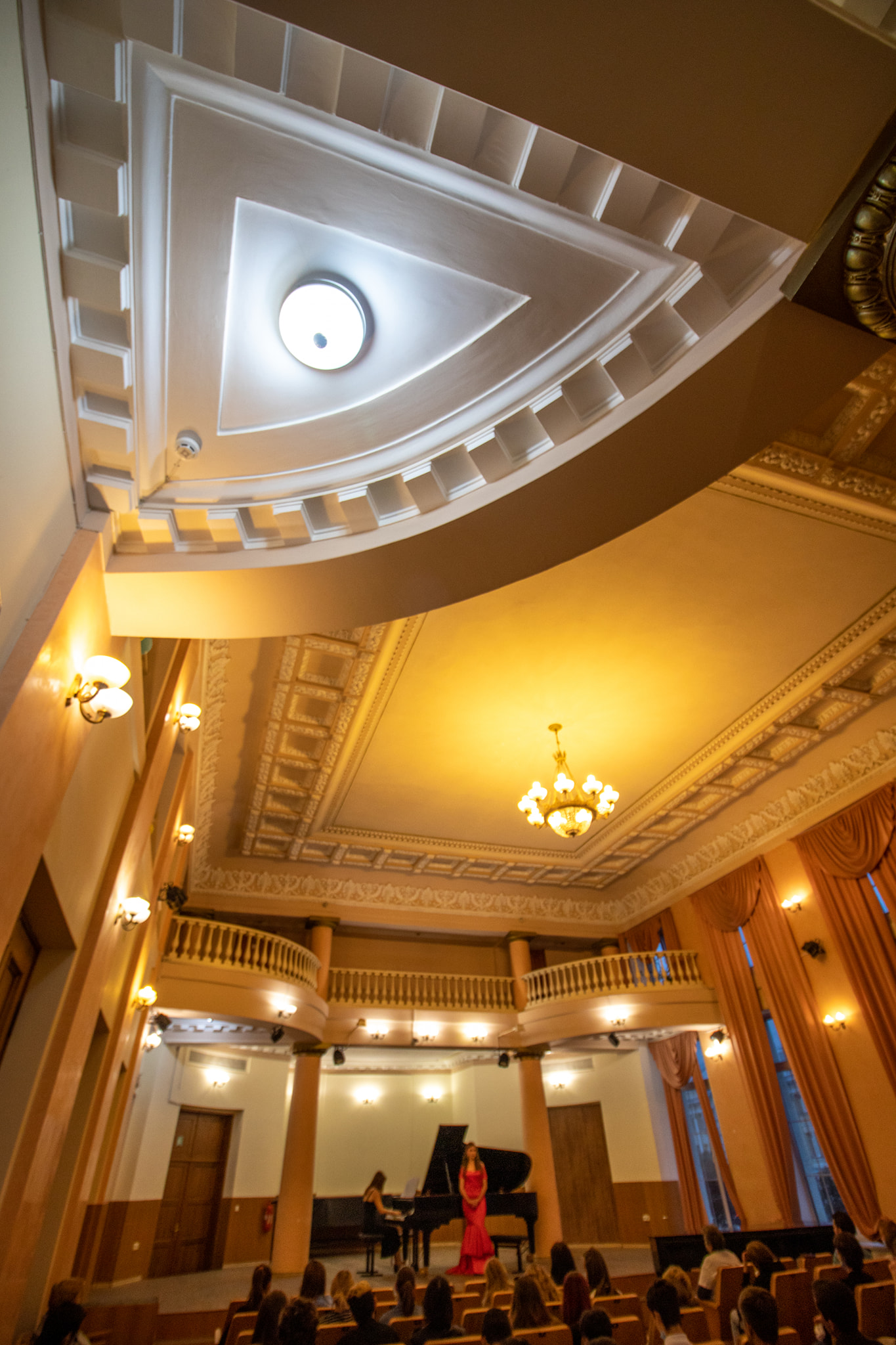
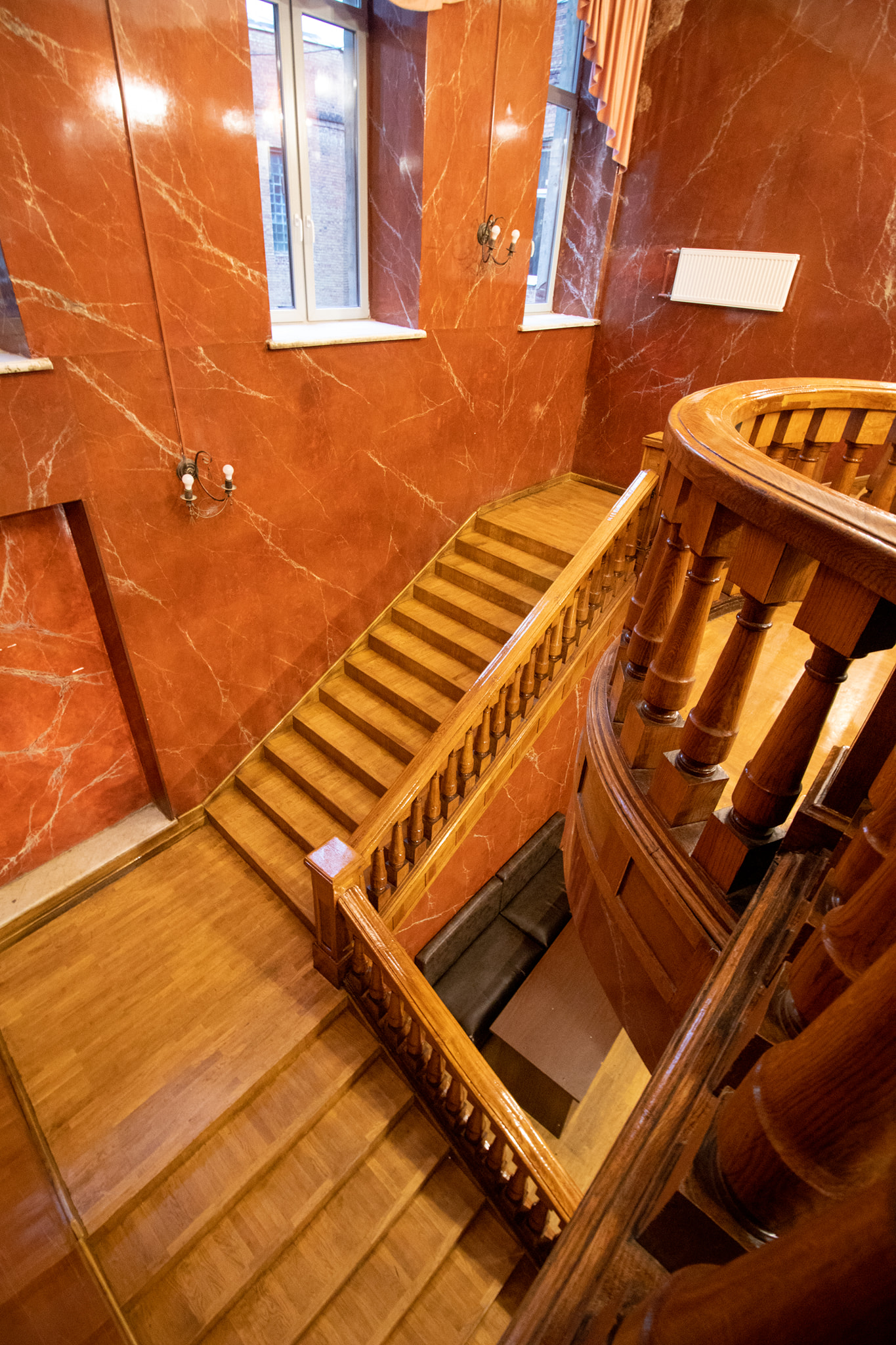
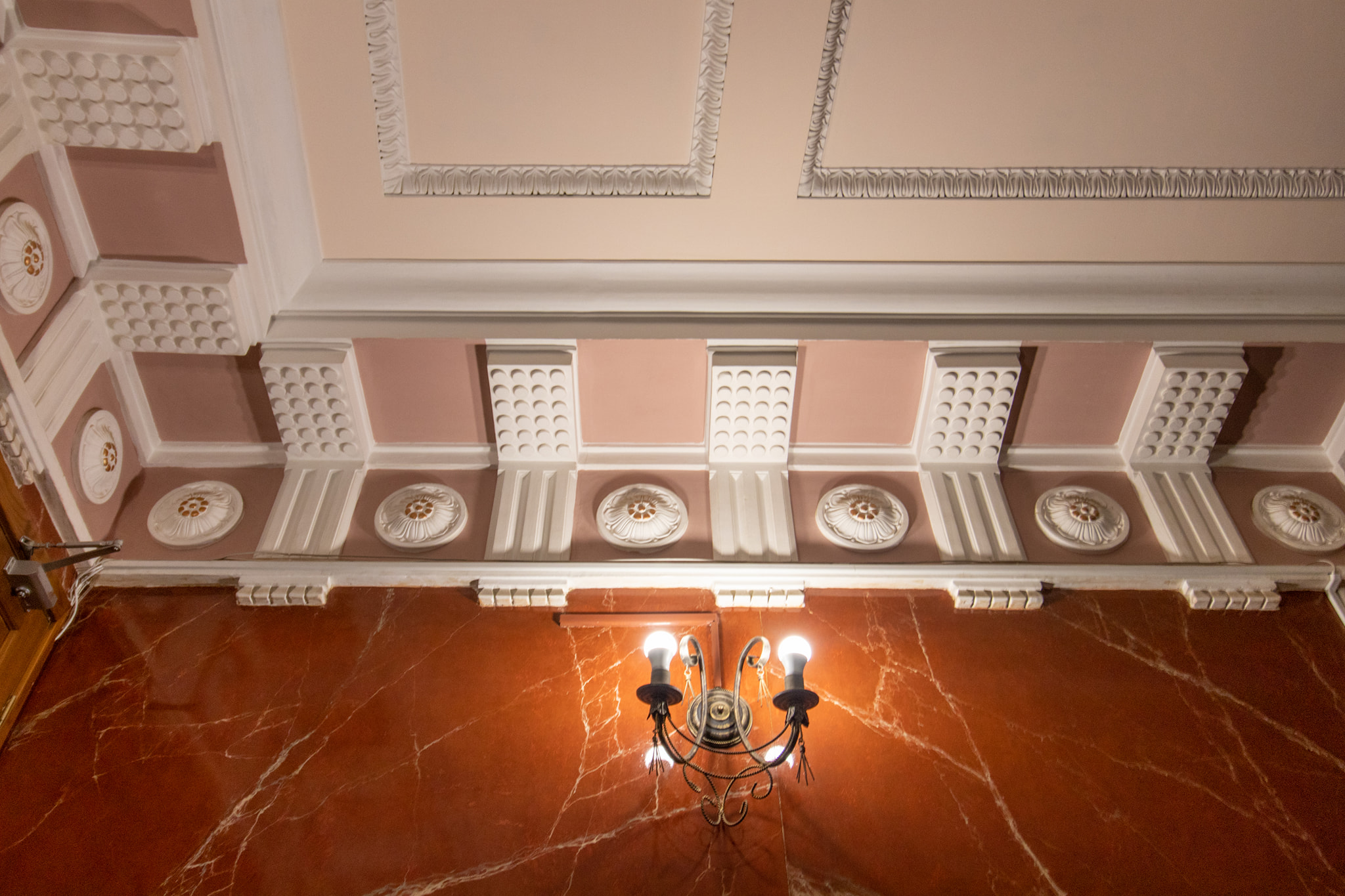
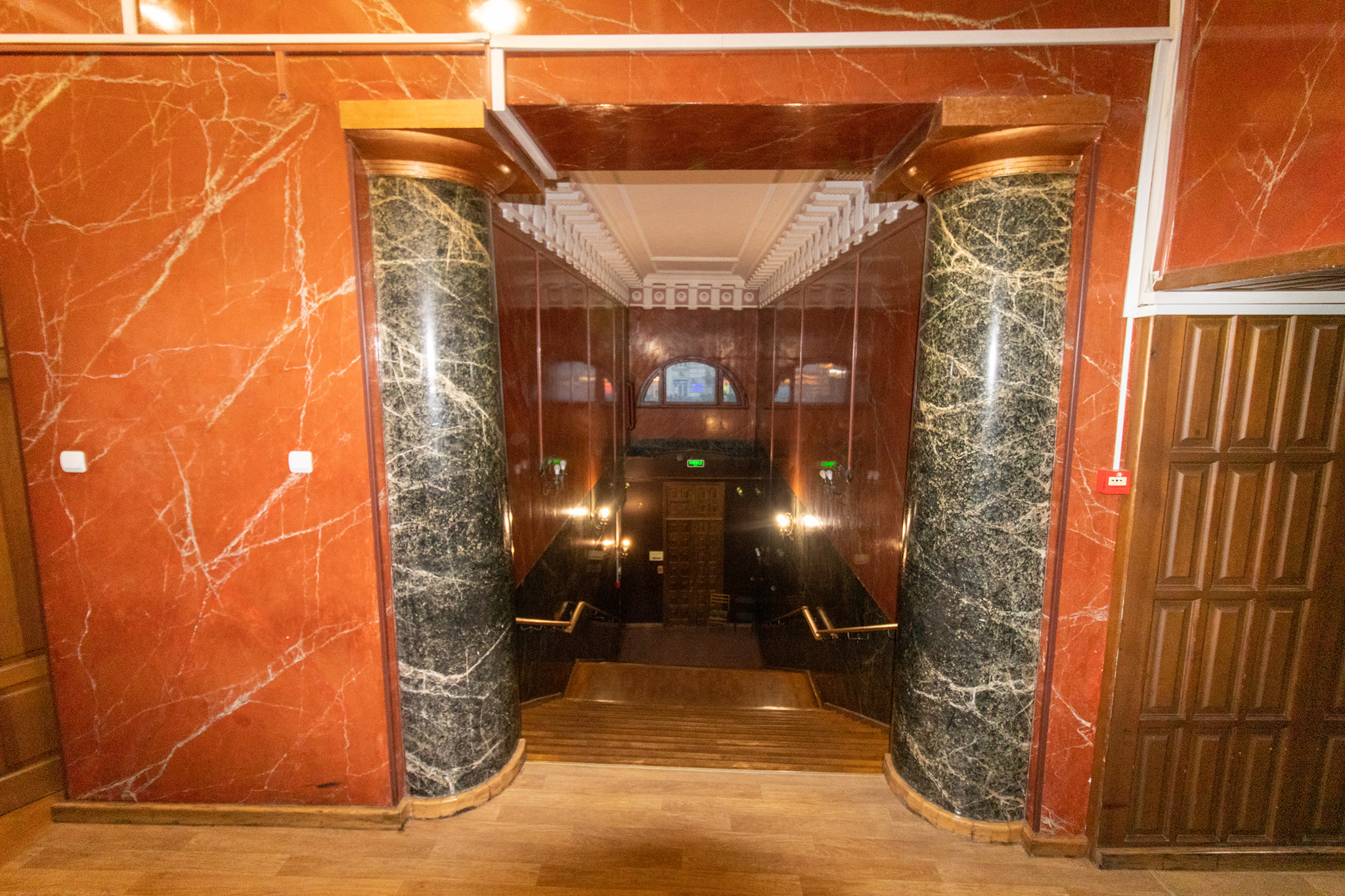
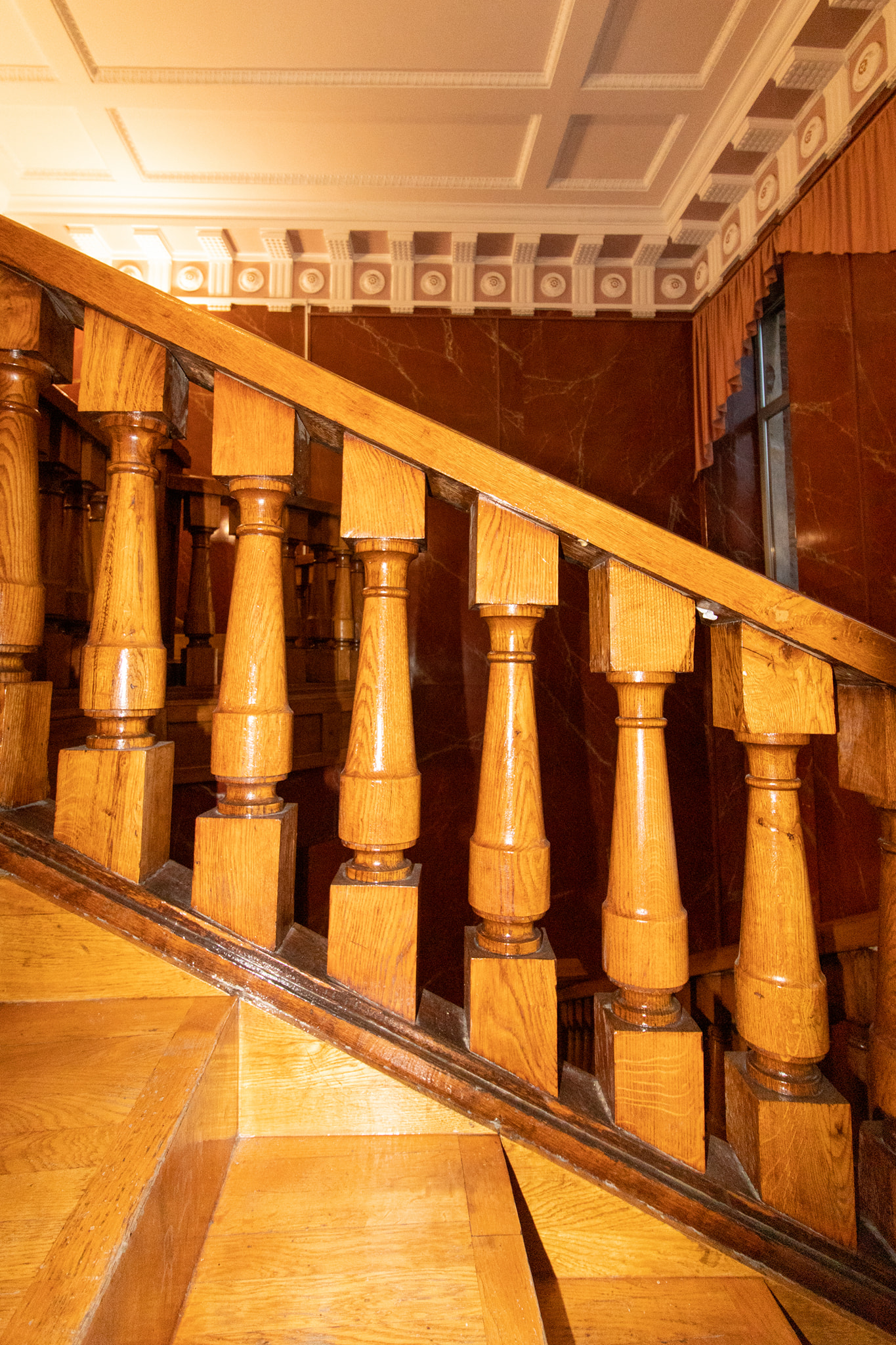
The interiors of the university building are particularly memorable.
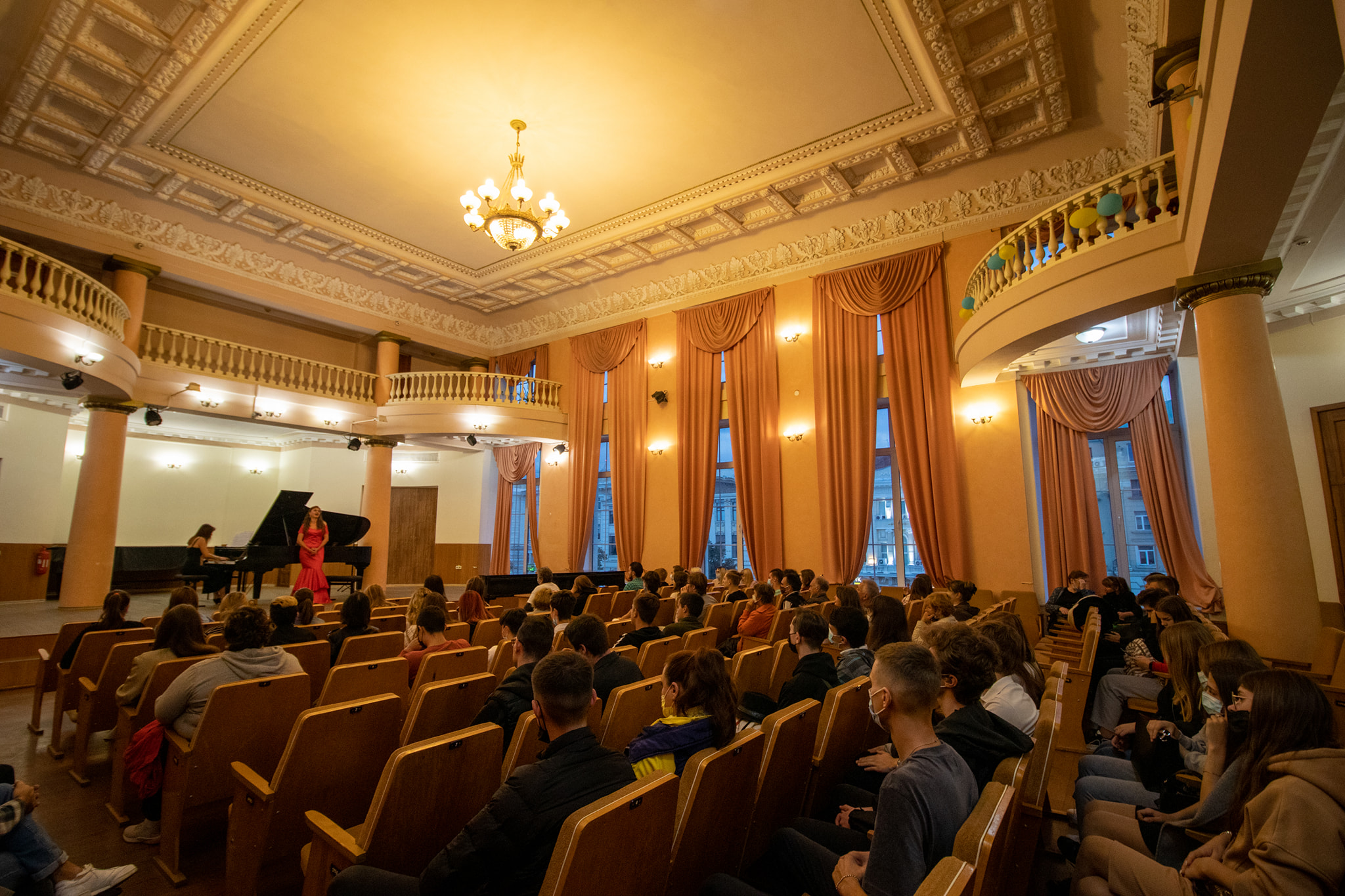

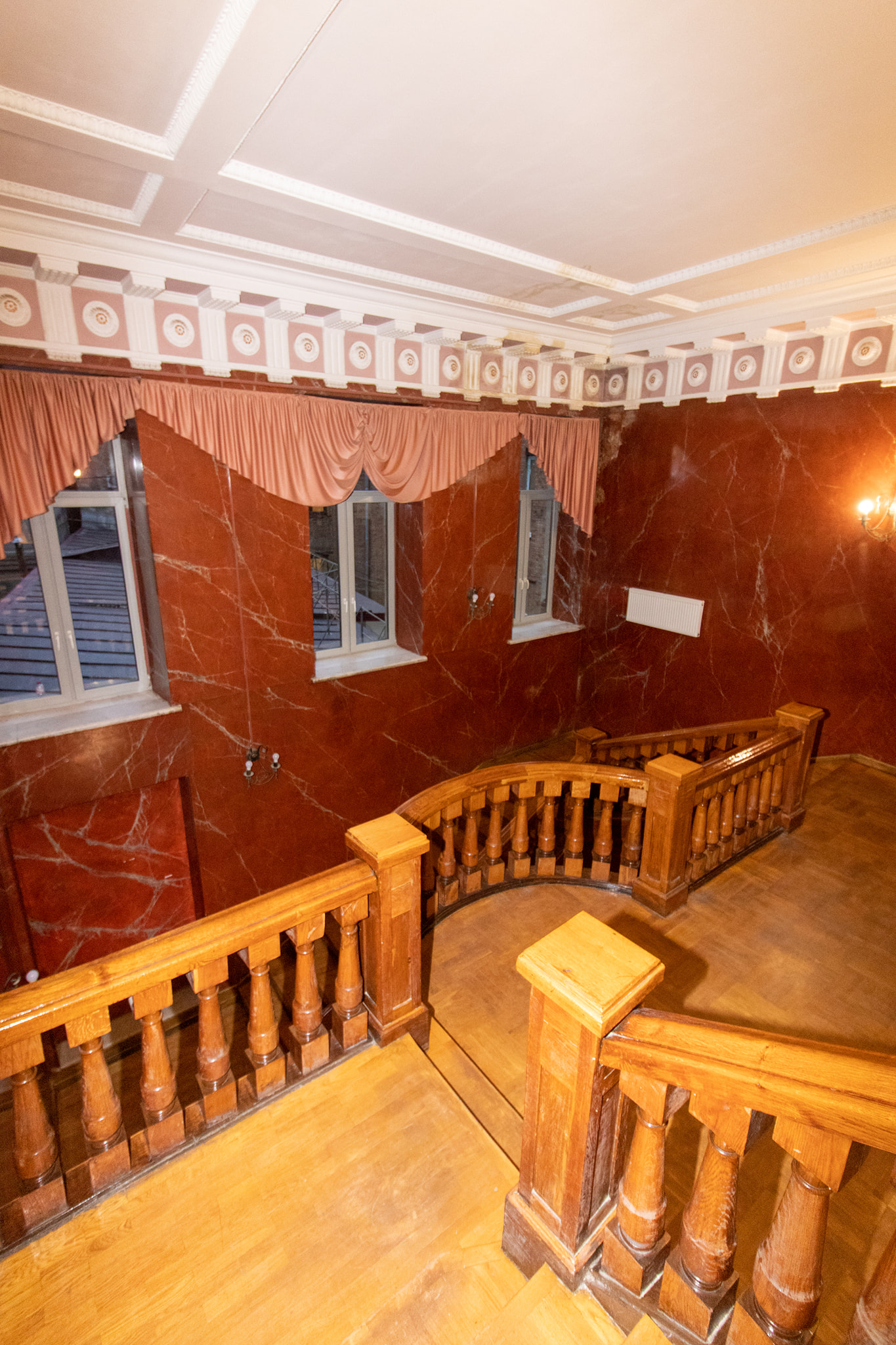
The interior restoration project was carried out by the Kharkiv branch of the Ukrproektrestavratsiya Institute (lead architect: V. Kortunov; scientific director: V. Novgorodov), based on relevant research conducted in the 1990s.
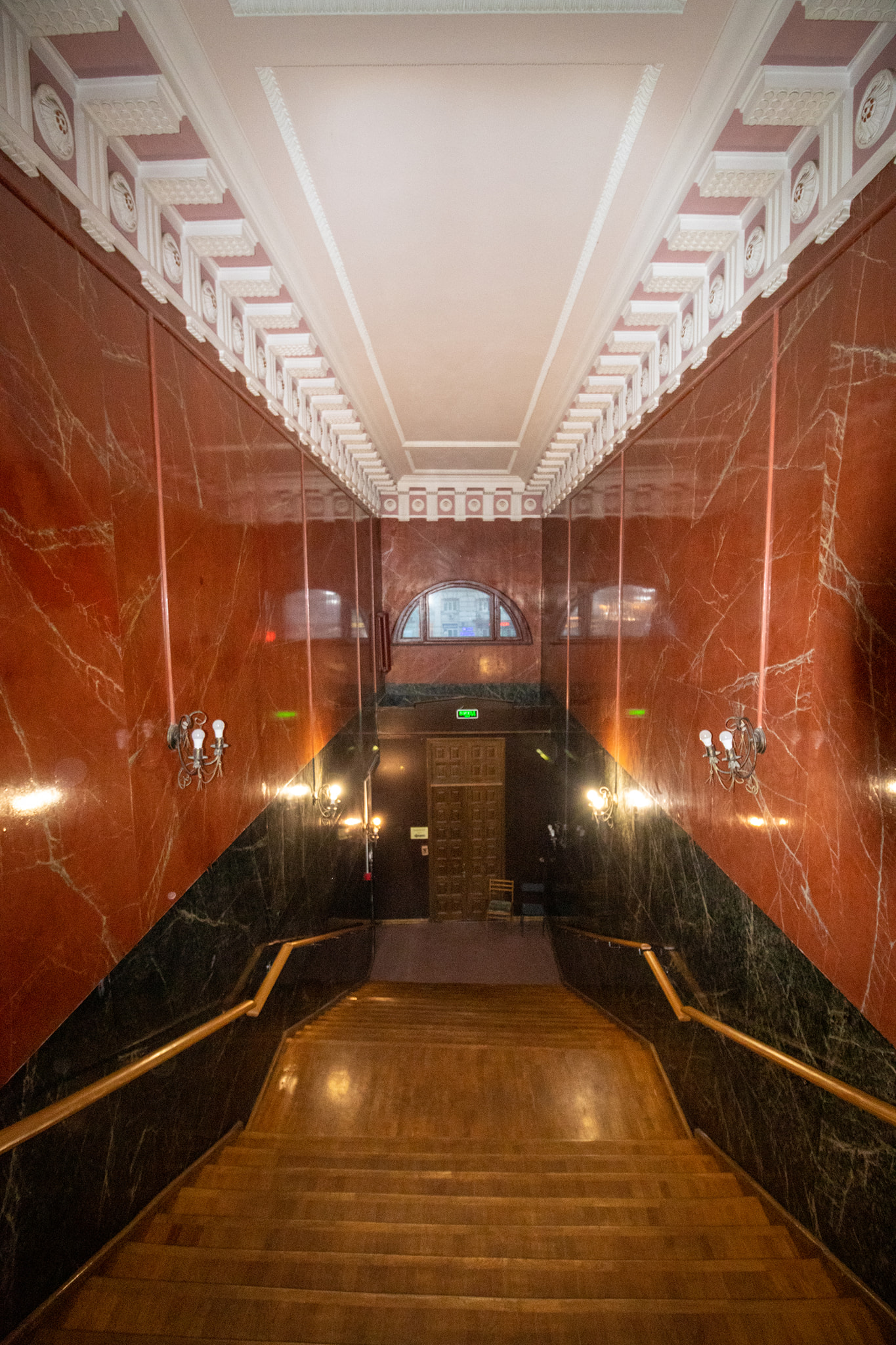
Its staircases are even more opulent, featuring plenty of red stone, marble, and wood.
As a result of Russian missile strikes between 2022 and 2026, the university building lost most of its windows, and its roof and interiors were also damaged.

- Danylevs’koho Street, 19 - 13.10.2026
- Debunking the myth about one of the most famous Kharkiv photos - 12.10.2026
- The Architectural Evolution of the Kharkiv Theater - 26.09.2026