An airship is considered a balloon that can fly regardless of the direction of air currents with the help of its engine, which includes not only a mechanical, but also a muscle-powered drive. The muscle-powered airships, constructed by Konstantin Danilewsky, flew in Kharkiv in the late 1890s. Formally, they became the first airships both in Ukraine and the Russian Empire, the design of which was also patented by the author. Only in 1911 an airship with an internal combustion engine appeared in Kyiv, which is formally considered the first Ukrainian airship, but this is not entirely true.

But let’s get back to our inventor. Konstantin Yakovlevich Danilewsky was born in 1857 in Kharkiv, and in 1879 he graduated from the Medical Faculty of Kharkiv University. As a student, he participated in the Russian-Turkish War of 1877-1878 – but not as a soldier, but as part of the Red Cross volunteer. Like his more famous brother, Vasyl (in whose honor Danylevskoho Street in Kharkiv is named), Constantin also became a doctor. For 2 years he assisted to Dr. Vladyslav Frankivskyi, was a lecturer in electrotherapy at Kharkiv University, conducting scientific research on electrophysiology.
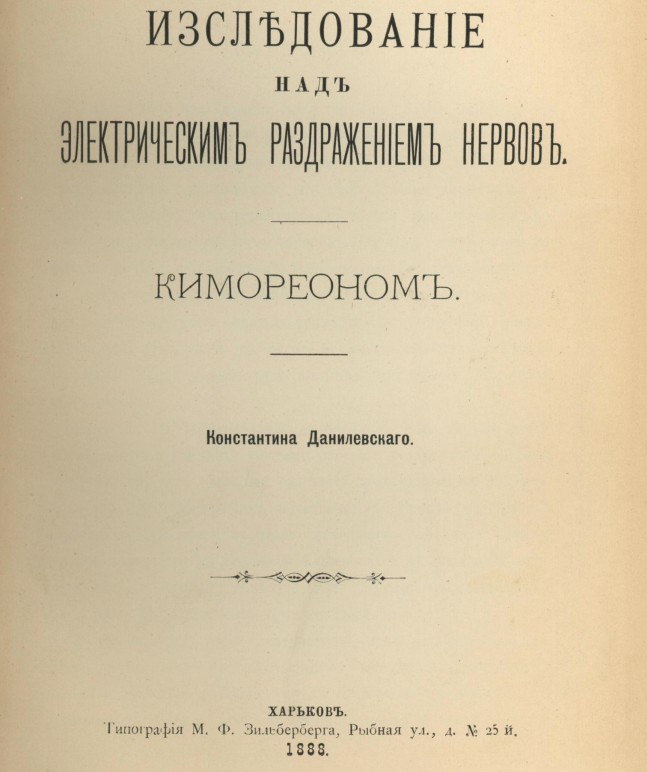
Having received his doctorate in medicine in 1889, Danilewsky opened his own clinic in 1892. The “Sanatorium and Hydrotherapy Clinic of Private Docent K.Y. Danilewsky” with 25 beds was located in the courtyard of a modern building at Myronosytska Street, 47 (the hospital building has been preserved).
Strangely enough, this undoubtedly outstanding person, with all his dedication and self-sacrifice in scientific, teaching, and medical activities, had enough energy and strength to simultaneously nurture and realize his long-standing dream of controlled flight.
A total of 5 balloons designed by Danilewsky are known.
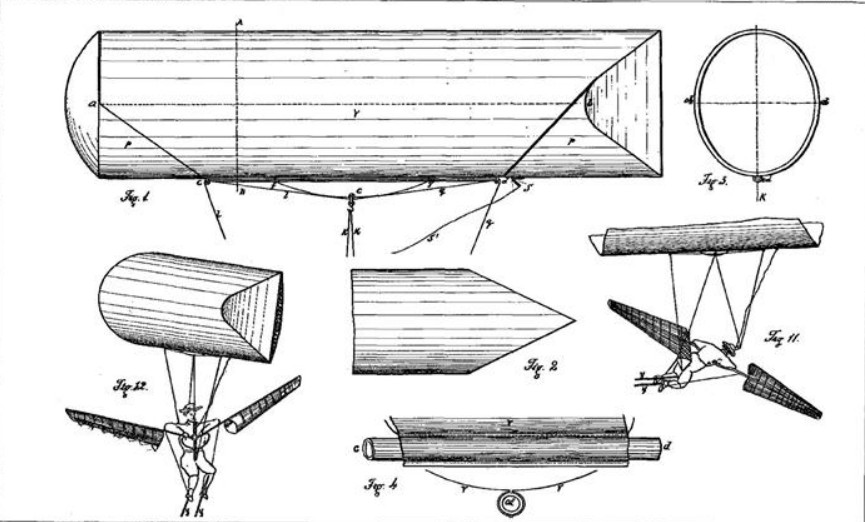
1. Flying carpet. Danilewsky’s first aircraft was called a “flying carpet” and theoretically resembled a parachute-wing with a flat balloon, filled with hydrogen, in the shape of a 20×13 m mattress, consisting of two sections.

A gondola with a pilot has to be suspended under the “carpet”. The pilot could use a pedal drive, that rotated a propeller fixed above his head. In this way, the balloon could rise and fall without dumping ballast and venting gas. The model was not built in full size – Konstantin Danilewsky limited himself to an unmanned, significantly reduced-scale version, the flights of which he demonstrated to various potential investors, but it did not interest anyone. However, the inventor filed a patent for the “flying carpet” in 1894, which he obtained only on March 19, 1897, when he was already working on a more advanced version of the airship. He filed a patent for its design in the same 1897 and obtained it on August 20, 1900.
The kick for manned airship flights was provided by industrialist Andrei Pilström, who acted as the inventor’s patron. Danilewsky ordered expensive silk balloons for his aircraft in France, from the Lachambre & Machuron. This Parisian firm specialized in manufacturing components for balloons of many famous aeronauts. For example, the shells produced by the Lachambre brothers were used to create the first airships of Alberto Santos-Dumont, who, along with Ferdinand Zeppelin, is considered one of the “fathers” of airship. The first Santos-Dumont airship flew only a year after Danilewsky’s first airship, but it was already equipped with an internal combustion engine.
It is worth mentioning the hydrogen generator for balloons. Konstantin Danilewsky made it himself according to the plans and drawings of the chemist of the Kharkiv Technological Institute V. Pashkov. After the reaction of sulfuric acid with iron filings, hydrogen for airships and iron sulfate for sale were formed, which covered the costs of raw materials and other necessary reagents (such as coke and quicklime). According to the researchers, this invention favorably distinguished Danilewsky’s balloons from competitors who had to buy hydrogen from chemical plants for a lot of money.
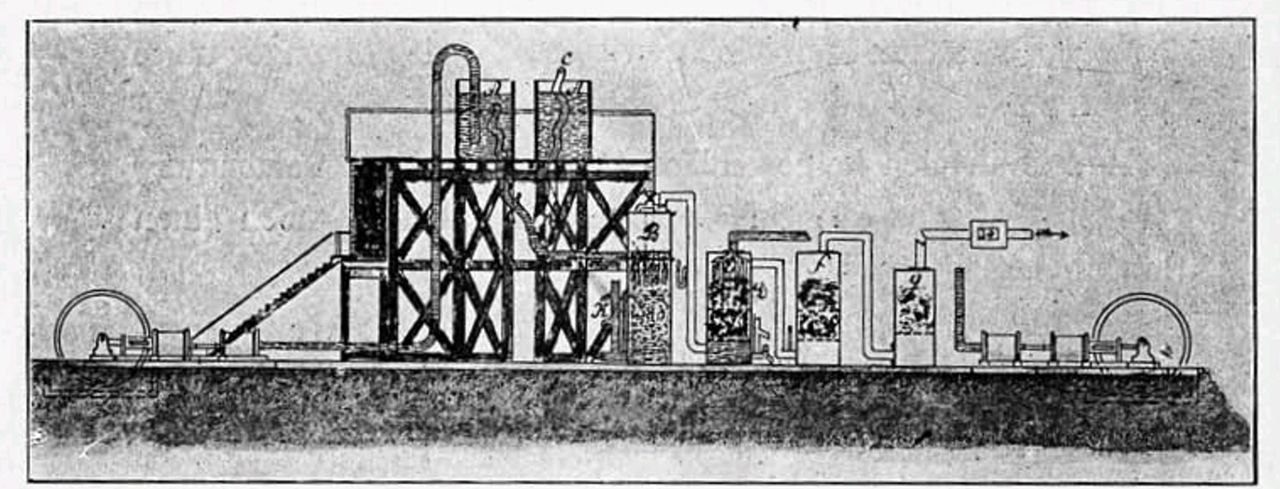
And although the first version of the generator broke at the end of filling the “Embryo” airship balloon with hydrogen (the process then took three days), the subsequent versions of the generator, created in 1898, worked reliably and filled the balloons in just half an hour. According to Danilewsky, it was possible to fly on one hydrogen tank for up to 8-9 days, although it was still advisable to pump up the balloons with hydrogen a little every day. Of course, hydrogen, as one of the most volatile gas, was explosive, but Danilewsky did not have any further incidents related to its ignition. Perhaps this is because Danilewsky took safety precautions very seriously – in the photo of his hangar you can see huge signs “Do not approach with fire.”
For tests in Kharkiv, the inventor rented a plot of land near the current address of Myronosytska Street, 50 (near his clinic) and built a hangar there. At that time, it was a deserted, undeveloped area of Kharkiv, located near the hippodrome.
2. Embryo. What was the first manned airship built in Ukraine? It repeated the concept set out in Danilewsky’s second patent. The length of the elongated balloon with a volume of 170 cubic meters was 11 m, the diameter was 3.6 m, its nose had a wedge-shaped shape to reduce aerodynamic resistance during horizontal flight. A keel was suspended from the balloon using a silk blanket, to which a pilot’s saddle with stirrups that moved the wings was attached by cables. The choice of stirrups is easy to explain – the greatest power in a person is produced by the legs, not the arms. With the help of 4.8-meter flapping wings, it was possible to rise, descend, maneuver and, at a low speed, fly horizontally. The volume of the balloon and hydrogen was calculated to ensure neutral buoyancy in the air.

Danilewskywas not satisfied with the balloon made by the Lechambre brothers, its shape was different from the one he indicated in his drawings – the nose was not as wedge-shaped as expected. The name “Embryo” was chosen because it was the first, somewhat clumsy piloted prototype, which would serve as an impetus for more advanced, “adult” versions of the airship. Danilewsky spoke repeatedly about the gradual, “iterative” approach to the design and testing of airships as the optimal way to safely improve his devices. For all 200 flights of Danilewsky’s airships, the pilot was never injured, there were no catastrophic accidents and destruction of aircraft, which often happened to the inventor’s competitors.
“Embryo” made its first flight on October 8, 1897. On this day, 25 ascents and descents were made within 1.5 hours. Unfortunately, no more flights were made that year due to the hydrogen generator breaking down. Initially, Konstantin Danilewsky himself was going to pilot the “flying machine”, but due to the insufficient lifting force of the airship, the role of the pilot was taken over by 19-year-old mechanic Petro Kosyakov, whose weight was only 50 kg. In total, Kosyakov made over 200 flights on 4 of Danilewsky’s airships.
3. Pilström. In 1898, the Lechambre brothers supplied Danilewsky with two new balloons. The first one produced perhaps the inventor’s most successful airship, which was named after the patron – “A. Pilström“, which can be seen on the large inscription on the balloon’s canopy.
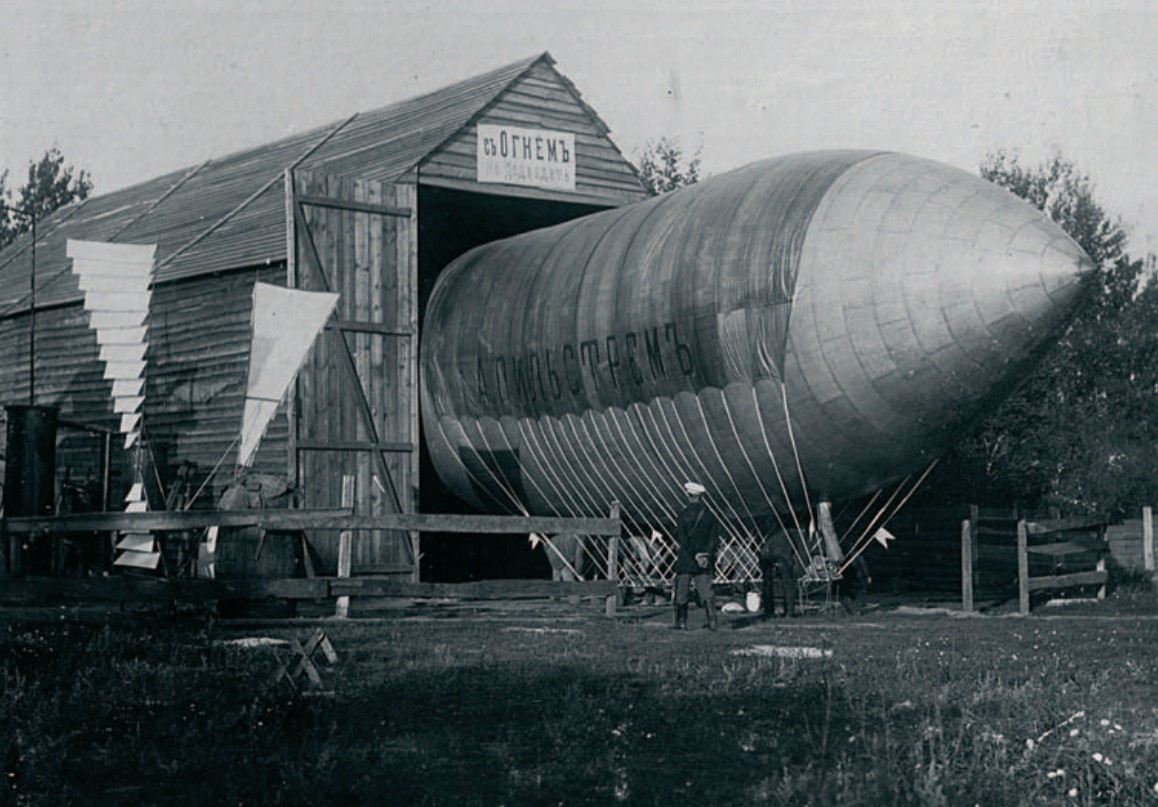
Its 13-meter balloon with a diameter of 4.4 meters and a volume of 150 cubic meters differed from the “Embryo” with the bullet-shaped nose; aluminum tubes were used to lighten the structure.
It is worth mentioning the rather complex design of the flapping wings, assembled from bamboo poles and silk. They were reduced to 3.6 meters, but were very different from the wings of the “Embryo”. In essence, these wings were made from louvers that opened during movement in such a way as to create minimal air resistance during the reverse flapping (which did not require effort thanks to the rubber string).
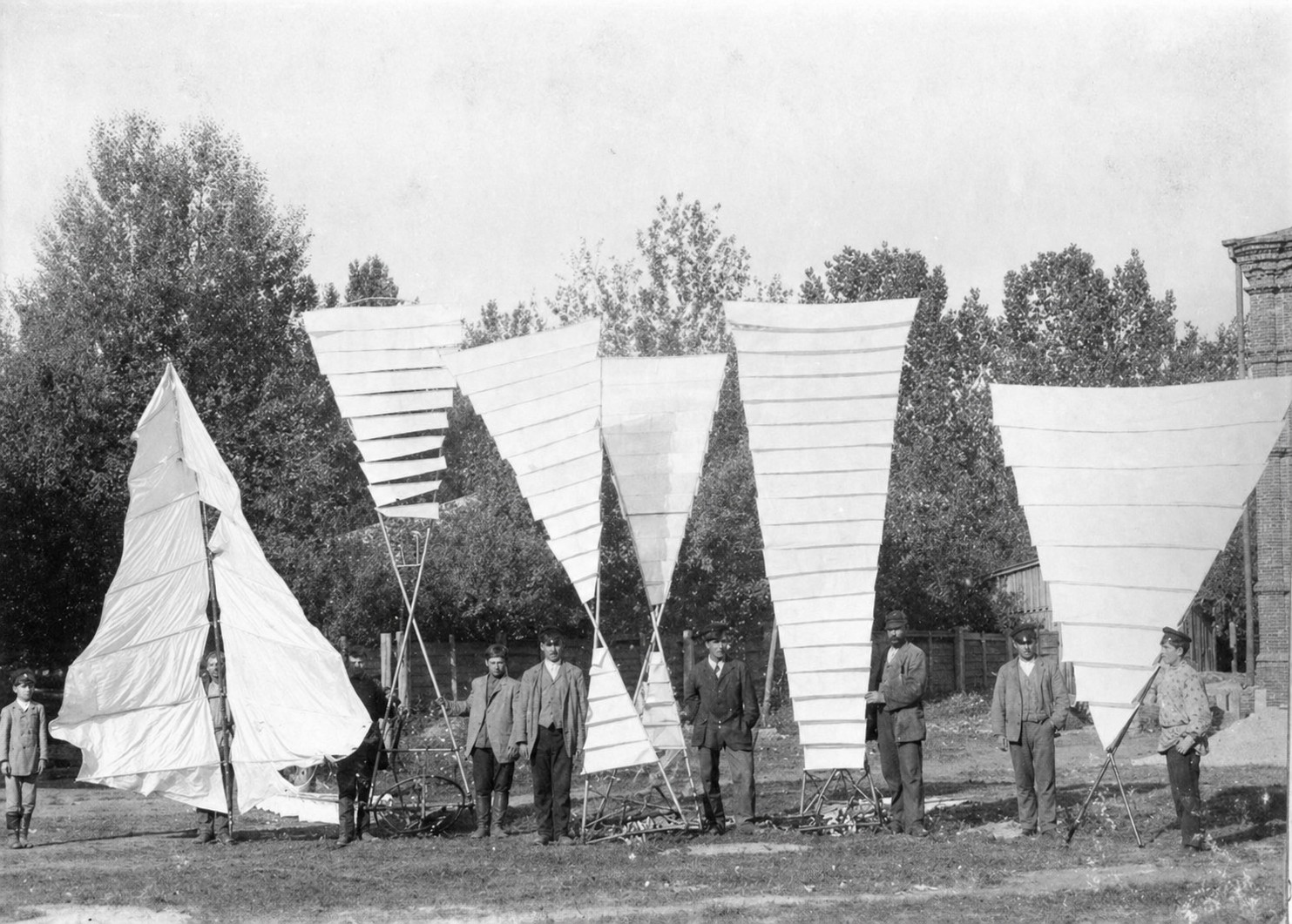
The handles were used to adjust the angle of the wings for maneuvering and horizontal flight. They could also be fixed and act as an aerodynamic brake during descent or as a wing for gliding. In general, different wing options could be tested on one airship, as can be seen on photos.
The pilot also had ballast from bags of earth for emergencies, which, fortunately, never happened with the “Pilström” airship. Danilewsky’s airships were equipped with a guide-rope – a ballast chain, with which neutral buoyancy could be easily adjusted by unfastening or adding fragments of the chain before the flight.

One of the main problems of airships of soft design was longitudinal instability. Hydrogen, especially when the shell was heated in the sun, changed density and could be distributed unevenly inside the balloon, accumulating in its individual parts. This led to a loss of rigidity of other parts of the balloon, it could “collapse” or get an unacceptable roll on the nose or stern. This problem was most often solved by strengthening the main balloon with a separate, smaller “balloon” inside, which was inflated with compressed air. Since there was no engine for the compressor on board Danilewsky’s balloons, he solved the problem elegantly and simply – incomplete silk partitions were located in the balloon, which significantly limited the flow of hydrogen inside.
It is worth noting that all of Danilewsky’s balloons did not have a full-fledged basket for the pilot – his legs served as shock absorbers during landing, after which he secured the airship with a cable using a drill that was screwed into the ground.
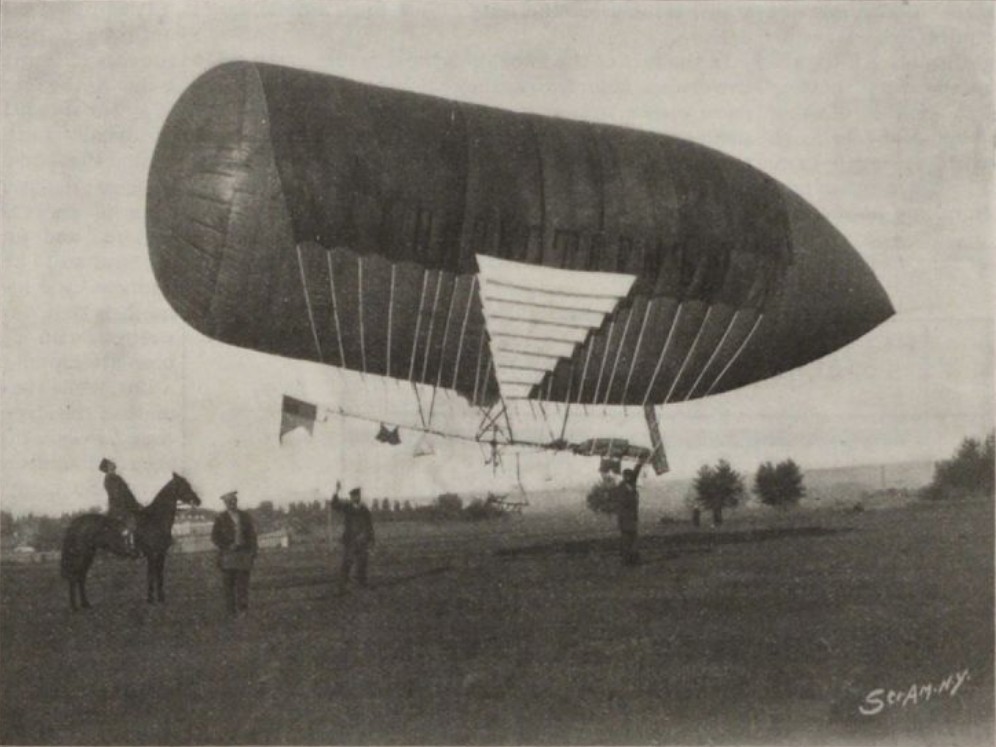
The “Pilström” made its first flight on June 18, 1898. According to an article published in late 1898 in Scientific American, the airship maneuvered freely at an altitude of 85 meters. By mid-August, about 150 successful flights had been made on the “Pilström”, including in the presence of representatives of the Military Engineering Directorate and the Ministry of Railways.
4. Orichka. The least is known about Danilewsky’s third airship – it took to the air only on August 5 and 6, 1898. The length of its balloon was increased to approximately 16 meters, the diameter was reduced to 4 meters. The volume was up to 180 cubic meters. As you can see in the photo, “Orichka” did not have a blanket to hold the keel with a saddle, it was fastened with a net thrown over the balloon.
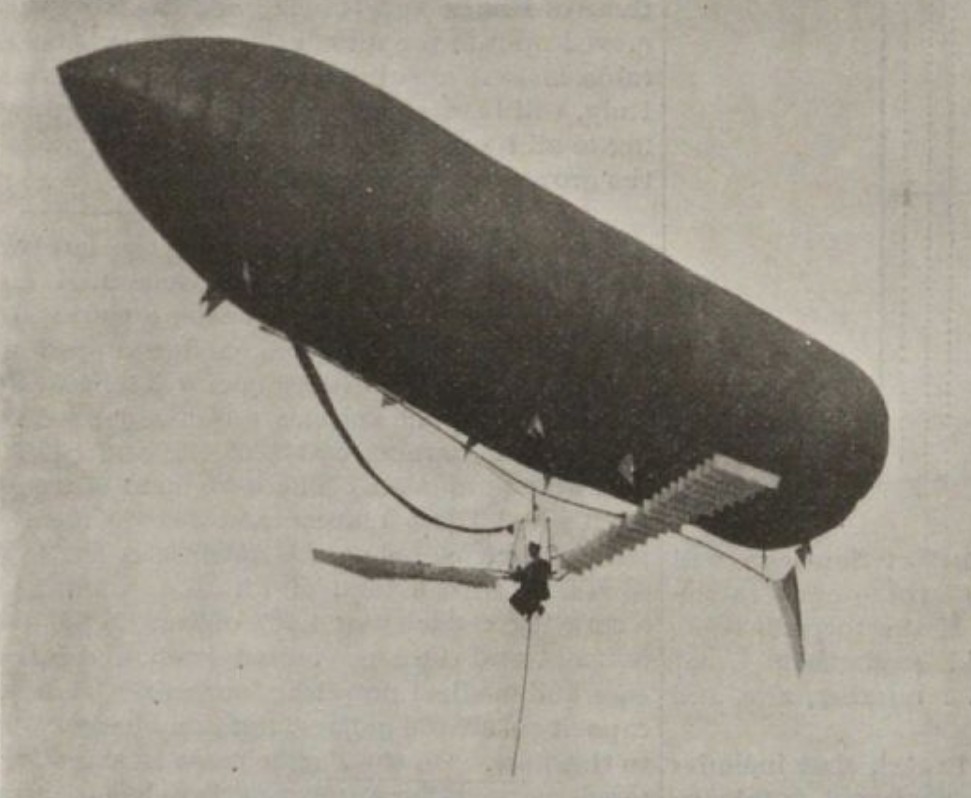
On August 27, 1898, Danilewsky presented a report on his airships in the aeronautics subsection at the 10th Congress of Naturalists and Physicians in Kyiv. Unfortunately, the report did not arouse much enthusiasm – Danilewsky’s “flying machines” seemed outdated to his colleagues, while aeronauts abroad had long been flying airships with steam, electric, and internal combustion engines. However, all these flights were essentially isolated experiments, they often ended in accidents and catastrophes, and a truly successful airship design had not yet existed. The fact of the creation of the first domestic airship, albeit with the pilot’s own drive, was essentially ignored.
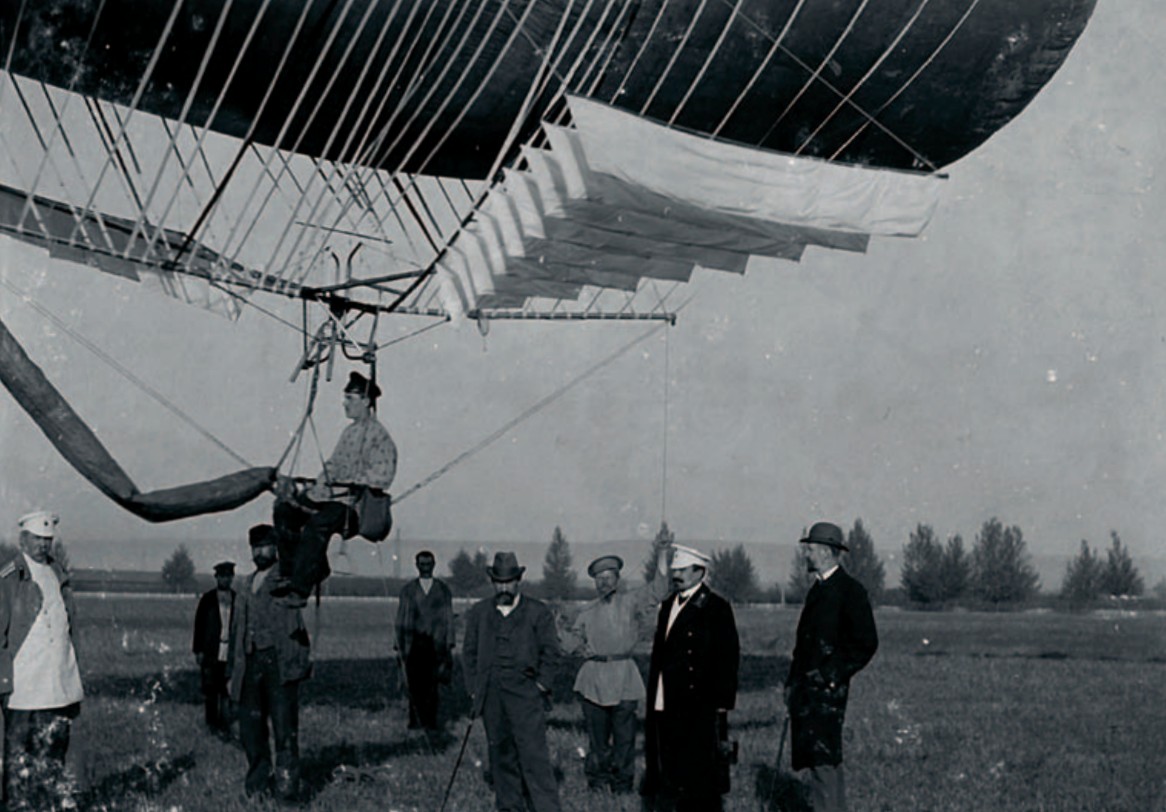
However, the skepticism of the congress audience was understandable, since Danilewsky’s airships could not demonstrate fast horizontal flight without a safe and light internal combustion engine. It was on such an engine, which was practically unavailable in those years, that Konstantin Danilewsky himself pinned all his hopes, which he repeatedly emphasized in his works. By the time of the report, only 3 airships with a Gottlieb Daimler petrol engine had been created, all of them designs of aeronaut Friedrich Hermann Wölfert who was killed in 1897 when the airship caught fire from the engine. Danilewsky’s airships were noted with a separate negative remark because they flew well only in calm or very light winds, since muscular strength was not enough to compensate for the force of the wind. However, the wind would destroy a huge number of more advanced airships in the future…
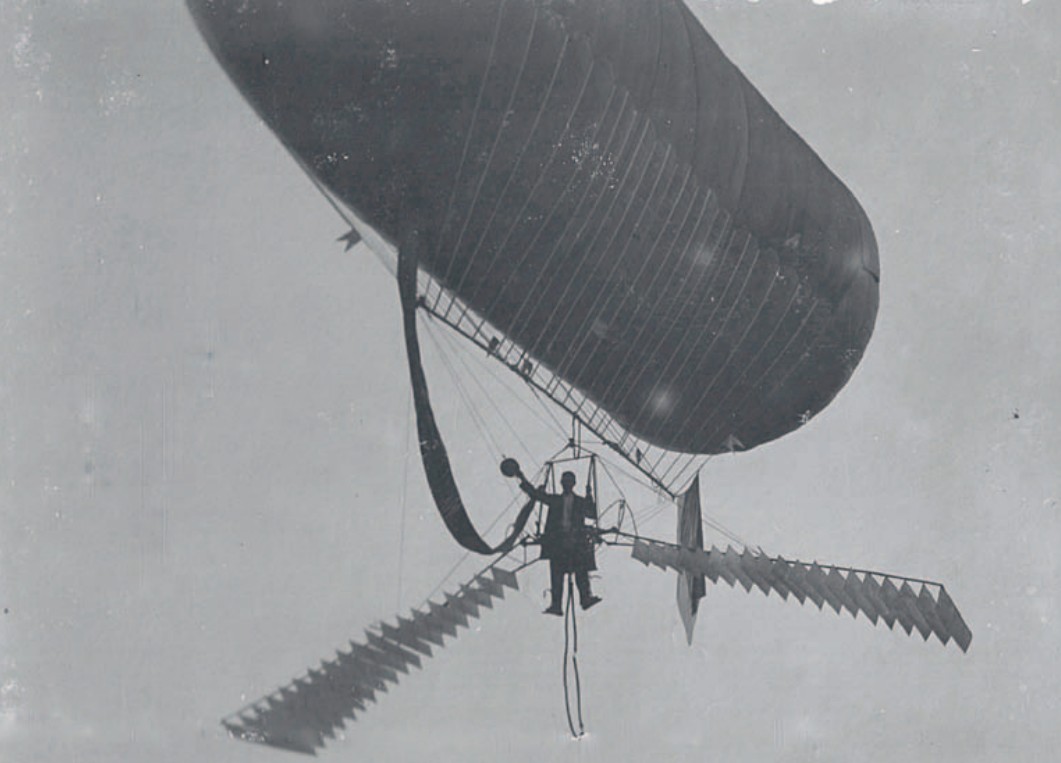
However, not everyone was so categorical. Danilewsky was supported by the well-known scientist and aerodynamicist Nikolay Zhukovsky. In September 1898, the head of the Kharkiv Engineering Distance, military engineer Colonel G. V. Yasevich, who was present at the tests of the “Pilström”, sent a rather positive report to the Main Engineering Directorate. In it, the colonel recommended using Danilewsky’s airships instead of tethered balloons for reconnaissance of positions (especially in the area of fortresses), and praised the inventor for his energy and perseverance, emphasizing that he had invested not only money, knowledge and time, but also his whole soul in his airships.
How much did the Danilewsky’s airship cost? As German and American newspapers wrote in 1898-1900, its cost was only 800 rubles, compared to a typical 3,000 rubles for a military observation balloon of similar size, and it could be operated and transported by only 3-4 people, compared to a typical crew of 15 for a military balloon. In his book, Danilewsky suggests a slightly higher cost – up to 1,000-1,200 rubles. If a balloon were used not from silk, but from cotton fabric (as was ususal in the German army), then the cost of the airship could drop to 500-700 rubles.
The total mass of Danilewsky’s airships was 65-80 kg, which allowed them to be transported disassembled on 1 cart.
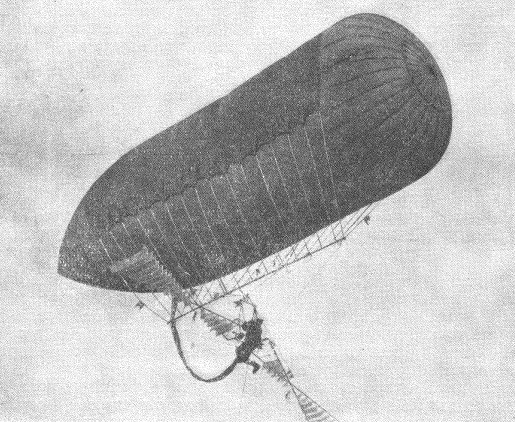
In October 1898, the VII Department of the Russian Technical Society wished to bring Danilewsky’s airship to St. Petersburg for demonstrations, but this did not happen. The inventor spent the winter of 1898-1899 in St. Petersburg searching for funding from the Ministry of War. Unfortunately, as it turned out, the time was wasted, the Electrotechnical Committee of the Main Engineering Department considered Danilewsky’s airships unpromising, and he was denied funding.
5. Model 1899. Konstantin Danilewsky’s last airship had no name, he referred to it as a “model 1899” or “No. 4”. The balloon had a strange, vertically elongated shape, but was the most interesting technically.

The Lechambre brothers again created a shell of unsatisfactory shape, and Danilewsky ordered it too late, so it was not possible to create a new airship and start flying on it until September 1899. For this balloon, Danilewsky used a balloon from “Pilström” airship, turning it vertically. The balloon from “Pilström” was not designed for vertical orientation, so the appearance of the airship from below was spoiled by numerous folds, which Danilewsky lamented, for whom not only the functional but also the aesthetic side of the issue was important.
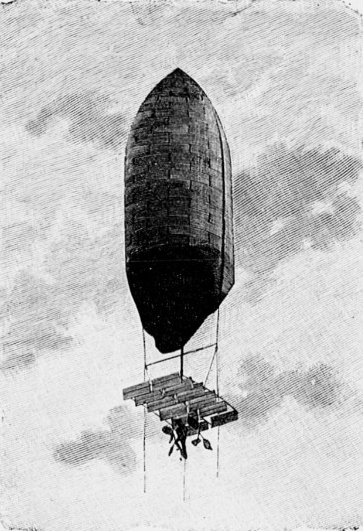
The main improvements were made to the gondola with the pilot. Because the bamboo wings often broke, a chain, pedal-bicycle drive was created, which moved the drum with blades (similar to the paddle steamers of those years). The angles of inclination of the blades were adjusted by two handles in flight, so the drum could work not only for ascent and descent, but also for horizontal movement.
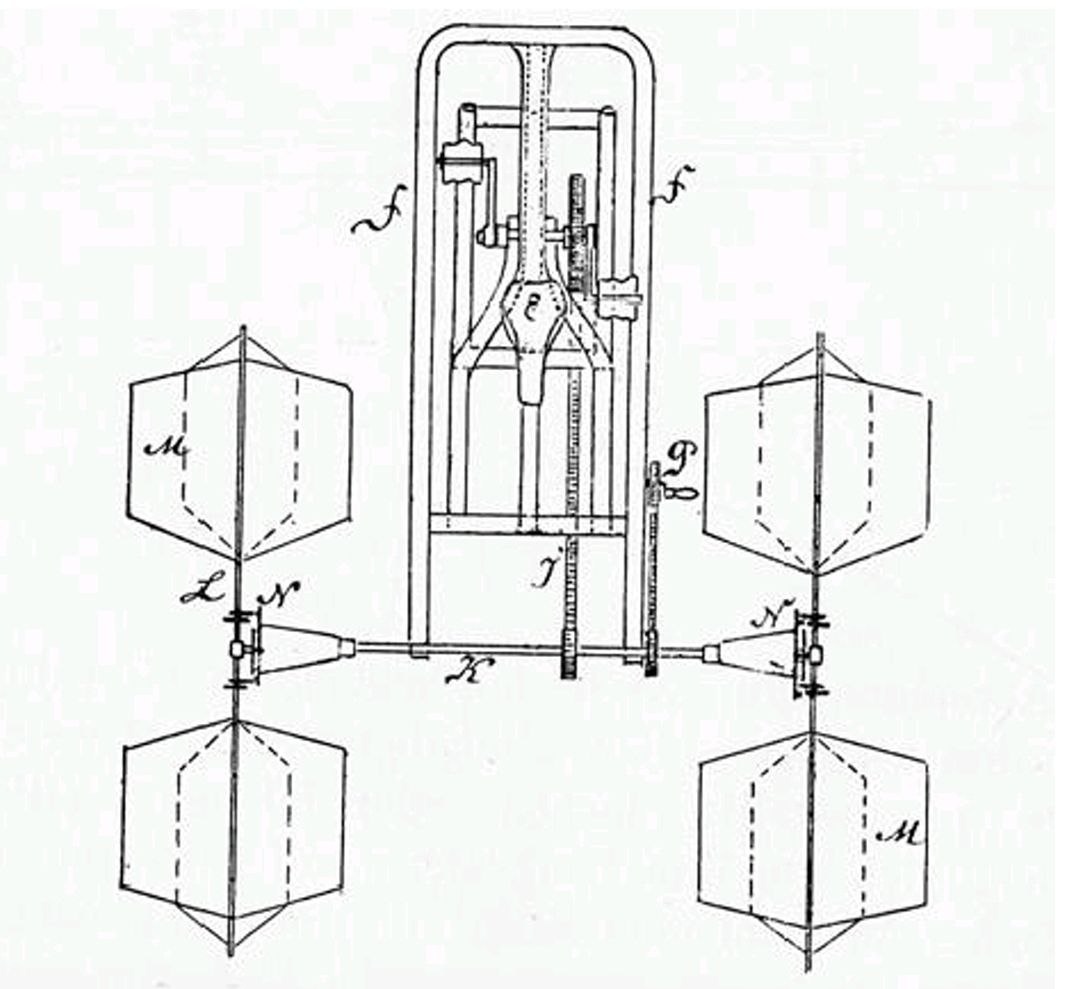
A new feature was the wing – a louvers made of 6 bamboo slats covered with silk. The louvers could be swung to different angles by a handle during maneuvers, acting as an air brake or wing.
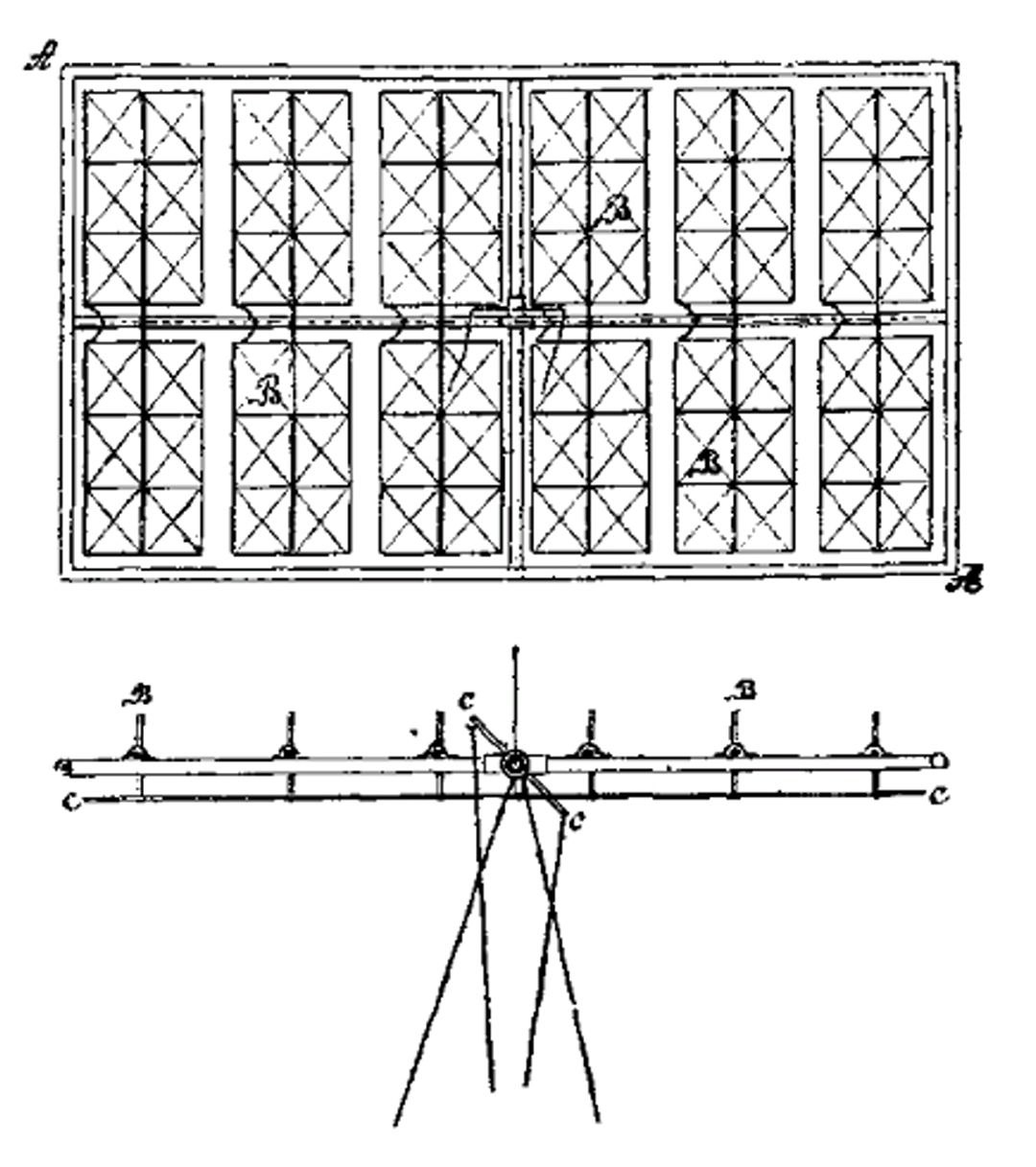
The unusual, “vertical” shape of the No. 4 airship was dictated by the fact that the inventor wanted to reduce aerodynamic resistance during vertical takeoffs and descents, which were to become the basis of his tests.
But it was possible to fly in horizontal directions on such an airship, despite its “vertical shape” and the correspondingly strong aerodynamic resistance. For this, wave-like flight (wellenflug) was used – by setting the wing at certain angles, rising with the help of pedals and descending, the pilot could fly diagonally in the desired direction.
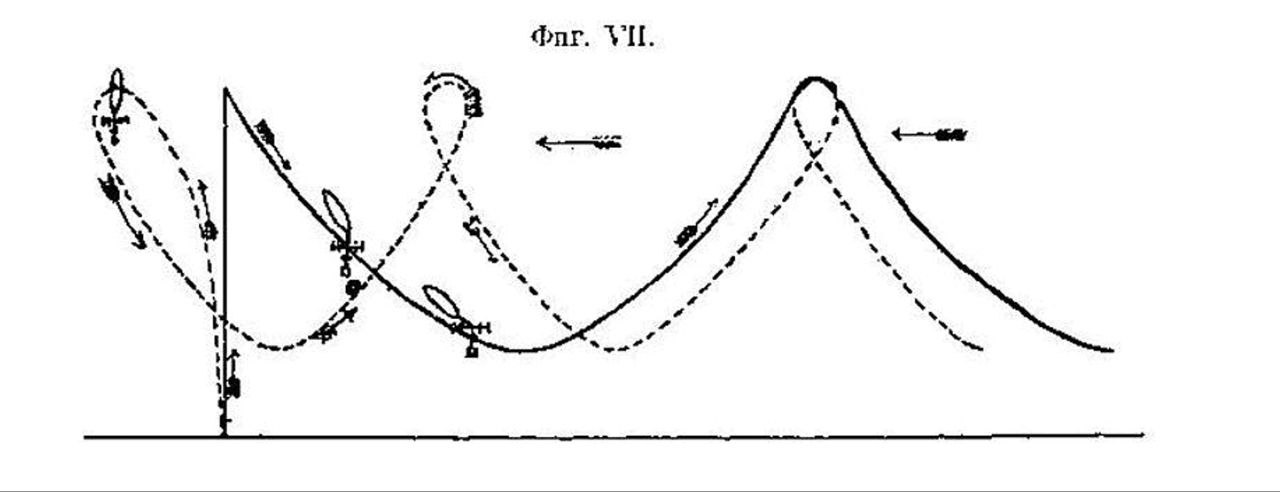
To test the new airship, a hangar was built near the Rohan railway station of the Kharkiv-Balashiv railway, and a hydrogen generator was moved there. The flights took place from September 10 to October 7, 1899.
The only incident occurred on October 7. Danilewsky notes that the pilot did not balance the weight of the balloon sufficiently during the flight preparation on the ground, as a result of which it received excessive positive buoyancy and began to climb rapidly. The aeronaut began to pedal intensively, which led to the chain slipping off the drive – as a result, the airship, heated in the sun, rose to a height of 1.6 km. Pyotr Kosyakov managed to pull the chain back in the air and lower the balloon into the field using the pedal drive.
Unfortunately, the patron Andrei Pilström died in 1899, his heirs were not interested in financing Danilewsky’s experiments. The book “Controlled Flying Machine”, published in Kharkiv in 1900 in Russian and German, became a requiem for the dream of the doctor-inventor. The author described in detail in the book the calculations, drawings of an airship (model 1899), and flight schemes, its potential advantages in military affairs compared to traditional balloons. Unfortunately, even this book was not in favor with specialists, Konstantin Tsiolkovsky simply destroyed it in his review.

You can download the book in PDF format at this link:
Having no money for further experiments, humiliated and oppressed by the “Herostratuses”, as Danilewsky put it, in the mid-1900s he moved to St. Petersburg and continued to practice medicine there. After 1917, Konstantin Danilewsky’s trace is finally lost.
History does not like “as ifs”. Perhaps, if Danilewsky had received funding in 1898-99, Sloboda Ukraine would have seen its own airship with an internal combustion engine already in the first years of the 20th century, and the name of Konstantin Danilewsky, which regularly appeared not only in the domestic but also in the Western press in those years, would have firmly entered the history of aeronautics and would not have been consigned to oblivion. However, even in the field of muscle-powered aircraft, Danilewsky’s achievements are undeniable and outstanding even on a global scale – they are worth remembering.

- Danylevs’koho Street, 19 - 13.10.2026
- Debunking the myth about one of the most famous Kharkiv photos - 12.10.2026
- The Architectural Evolution of the Kharkiv Theater - 26.09.2026