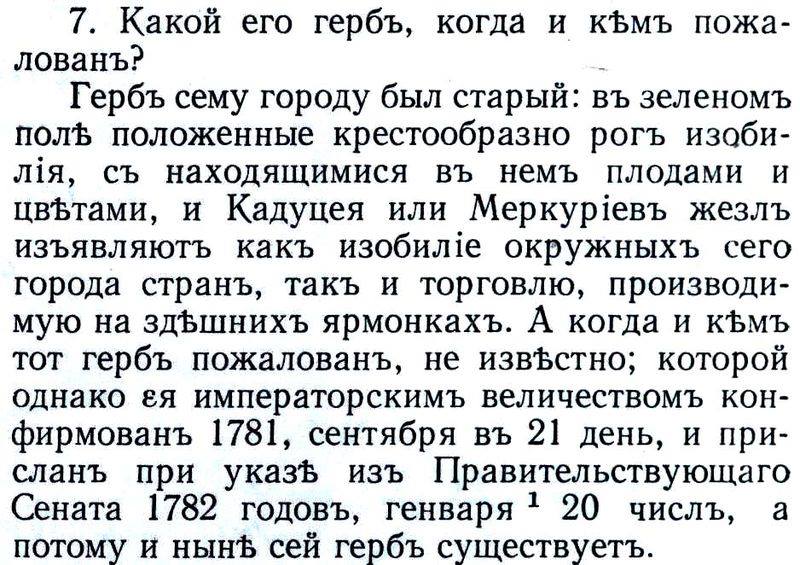
As everyone knows, by the second half of the 18th century, Kharkiv’s first regimental coat of arms (a bow with a drawn string on a shield) had been replaced by a coat of arms featuring the caduceus—the unmistakable attribute of Mercury, the ancient Roman god of commerce— as well as the cornucopia, another symbol from ancient mythology representing fertility and wealth.
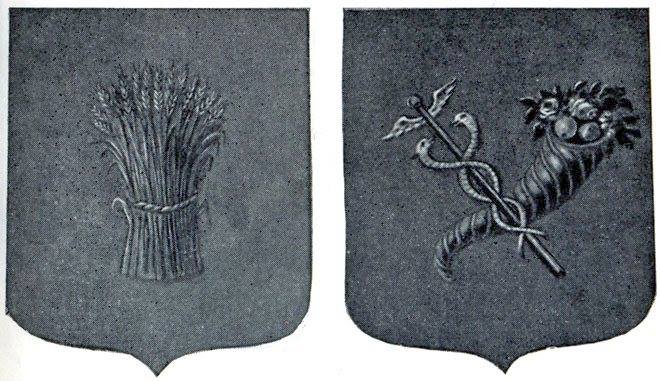
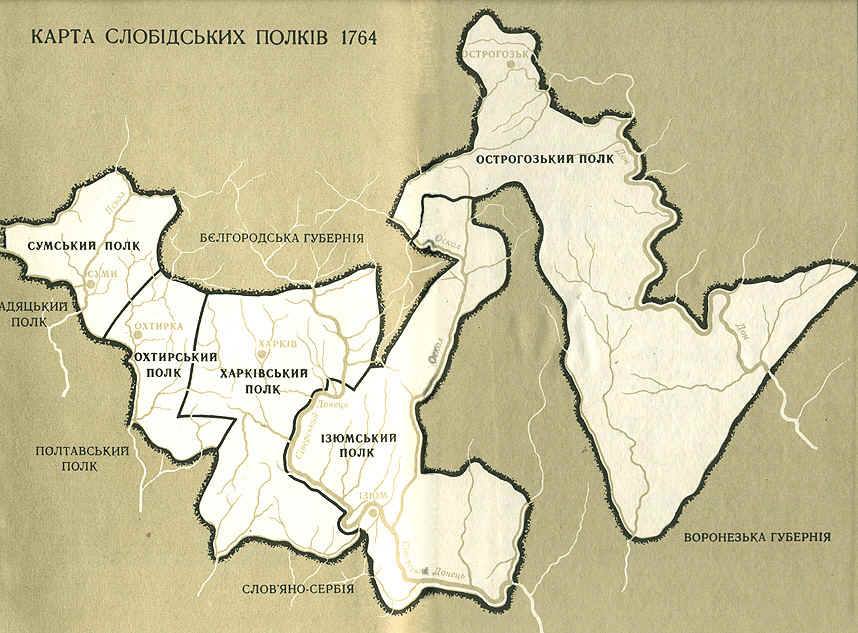
In 1775, Master of the Heraldry Mikhail Shcherbatov, commissioned by the Military Collegium, compiled a coat-of-arms register containing 35 regimental banners, among which was the coat of arms of the Kharkiv Regiment. In 1781, the coat of arms was officially approved by Catherine II as the coat of arms of the Kharkiv Governorate.
It would make sense that the “commercial” coat of arms, which replaced the “military” one, symbolized changes in the life and significance of the city, which was beginning to transform from an ordinary military fortress on the southern defensive line into an important commercial center. However, we would venture to suggest that such a change in heraldry—despite the fairs held regularly in Kharkiv and the growing trade flows—was introduced too early.
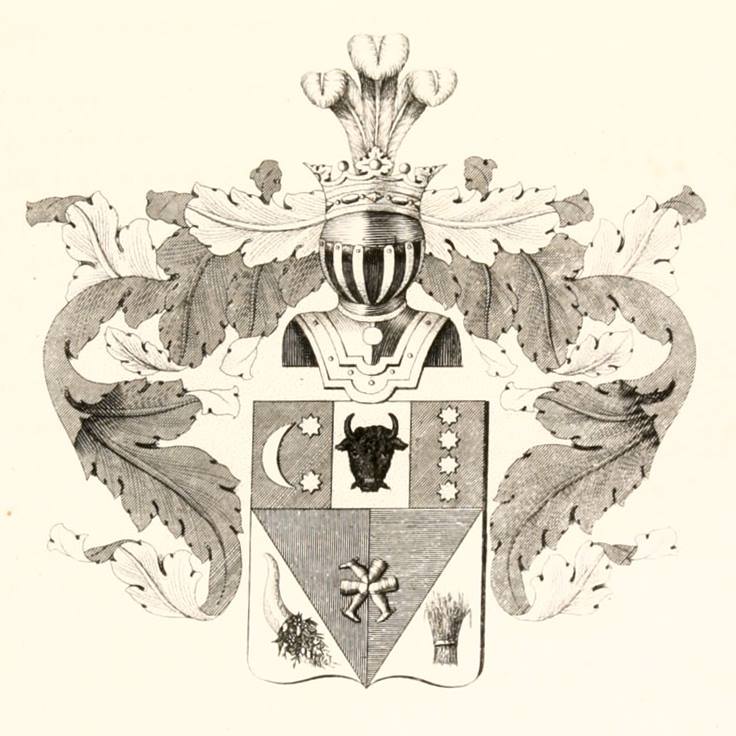
After visiting the Kulikovsky estate in Rokitne, we once again noticed that the family’s coat of arms features a cornucopia. This noble family of Moldavian origin settled in Sloboda Ukraine after Peter the Great’s unsuccessful Prut Campaign. The family was very influential—from 1712 to 1714, Prokopiy Kulikovsky, and from 1757 to 1765, his son Matvey, served as colonels of the Kharkiv Sloboda Regiment. Also, in the mid-18th century, the Kulikovsky family owned significant tracts of land northeast of Kharkiv; subsequently, their surname was reflected in the names of Sadovo-Kulikovskaya Street (Darwina Street) and Kulykivska Street. Could the cornucopia have migrated from the Kulikovsky coat of arms to that of Kharkiv? It certainly could have, given the Kulikovskys’ significance to Kharkiv and the Sloboda Ukraine region as a whole. Moreover, on the coat of arms of the Ostrogozhsky Regiment—which was also designed by Shcherbatov—one can see a bound sheaf of grain, a motif also found on the Kulikovsky coat of arms. Although the Kulikovskys’ influence on the Ostrogozhsky Regiment is already questionable.
Nevertheless, there is another, more down-to-earth explanation for the appearance of the cornucopia on the coat of arms of the Kharkiv Governorate.

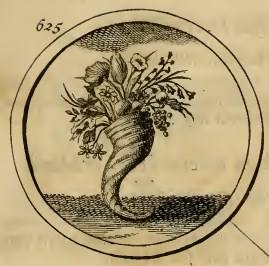
In 1705, an intriguing book titled *Symbols and Emblems*, compiled by Jan Tessing and Ilya Kopievsky, was published in Amsterdam at Heinrich Wetstein’s printing house at the personal request of Peter the Great. The book included 840 engraved emblems with descriptions in nine languages.
This book was reprinted several times and served as a standard textbook for many heraldists in the Russian Empire during the 18th century.
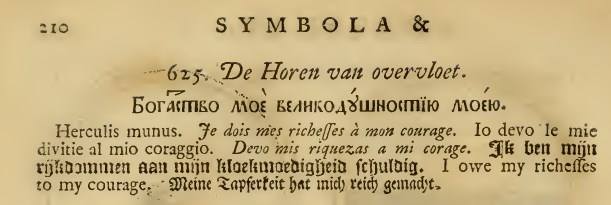
You can download the book *Symbols and Emblems* here:
Shcherbatov must have been very familiar with it as well—elements from the book can be seen in many of the coats of arms he designed. Nevertheless, in the “Topographical Description of the Kharkiv Governorate” from 1785 mentions that Kharkiv’s coat of arms is “old”—that is, it was not newly created by Shcherbatov in 1775, but was “confirmed.” From this, we can conclude that Shcherbatov, in his collection, merely revised the old coat of arms, which had been designed for the city by an unknown heraldist in the 1750s–1760s. It was precisely during this time that Matvey Kulikovsky was a colonel in the Kharkiv Regiment, and this coat of arms may have been drawn at his request.
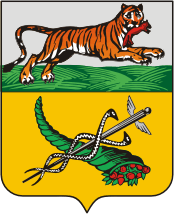
It is very interesting to note that the crossed caduceus with the cornucopia (though depicted upside down) can be seen on only one coat of arms—that of the city of Verkhneudinsk, now Ulan-Ude, the capital of Buryatia. This coat of arms was approved in 1790 and, as in the case of Kharkiv, symbolized trade—the Verkhneudinsk Fair was the largest in Transbaikalia. It is quite possible that the unknown designer of this coat of arms simply took the coat of arms of the Kharkiv Governorate and flipped it upside down, and to avoid any confusion regarding the coats of arms’ identity, added a babr (tiger) on top.
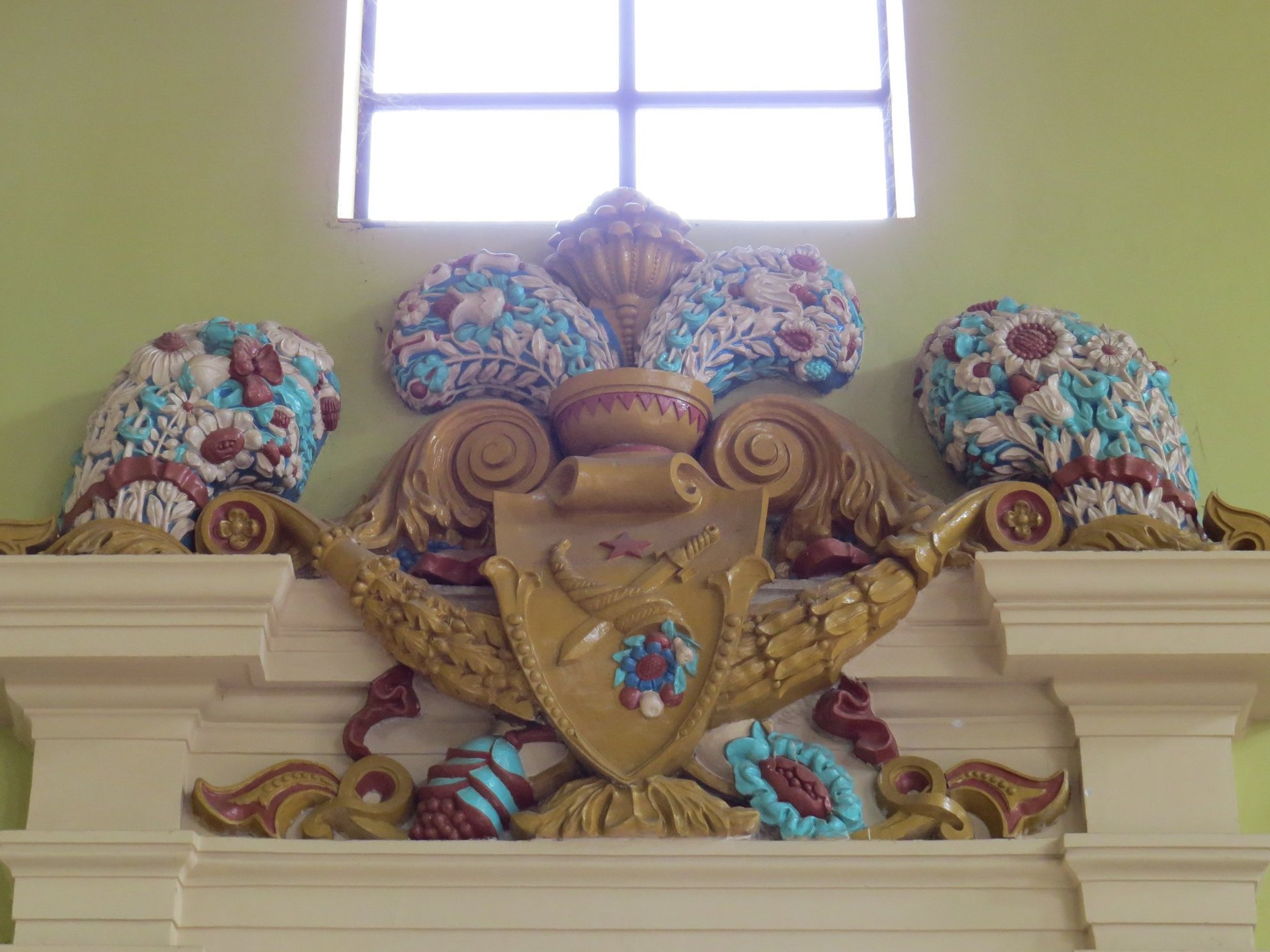
An interesting version of the coat of arms, featuring a sword instead of a caduceus, can be seen in the main hall of the Kharkiv Railway Station, built in 1952. This coat of arms did not actually exist—after the establishment of Soviet rule and until 1968, the city had no coat of arms, and a different one, without the cornucopia, was adopted at that time. The beautiful mural on the station wall is an unknown sculptor’s interpretation of what Kharkiv’s coat of arms might have looked like.
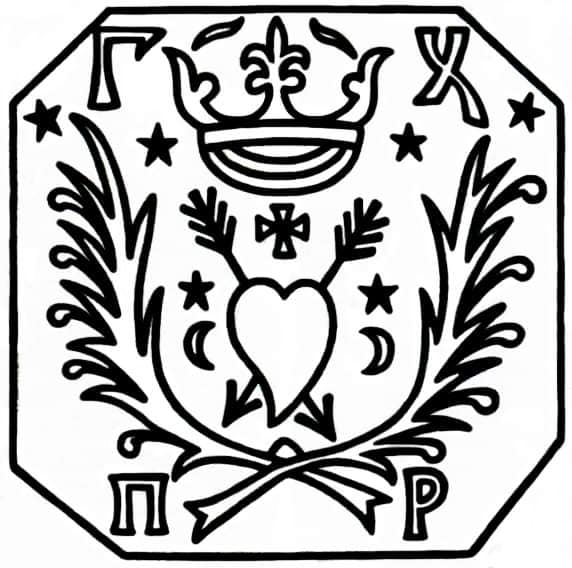
Incidentally, the city of Kharkiv itself—or, more precisely, the Kharkiv City Hall—had a symbol in the 1720s that differed from the coat of arms of the Kharkiv Sloboda Cossack regiments. Recently, historian Oleg Odnorozhenko discovered the seal of the Kharkiv City Hall, impressions of which can be found on documents from 1724. In the center of the seal is a heart pierced by two arrows; at the top of the seal, you can see a crown, and the letters G and X—which stand for the city of Kharkiv—and P and R—which stand for the City Hall seal.

- Danylevs’koho Street, 19 - 13.10.2026
- Debunking the myth about one of the most famous Kharkiv photos - 12.10.2026
- The Architectural Evolution of the Kharkiv Theater - 26.09.2026