A little less than a year ago, my article about Maximilian Helfferich was published. One of the sections of the cited document from 1901 contains an interesting point:
II. To the Kharkiv German Charitable Society, of which I served as chairman for many years—five thousand rubles for the purchase of real estate; however, until the government approves such a purchase, the interest on this capital is to be used for the society’s needs.
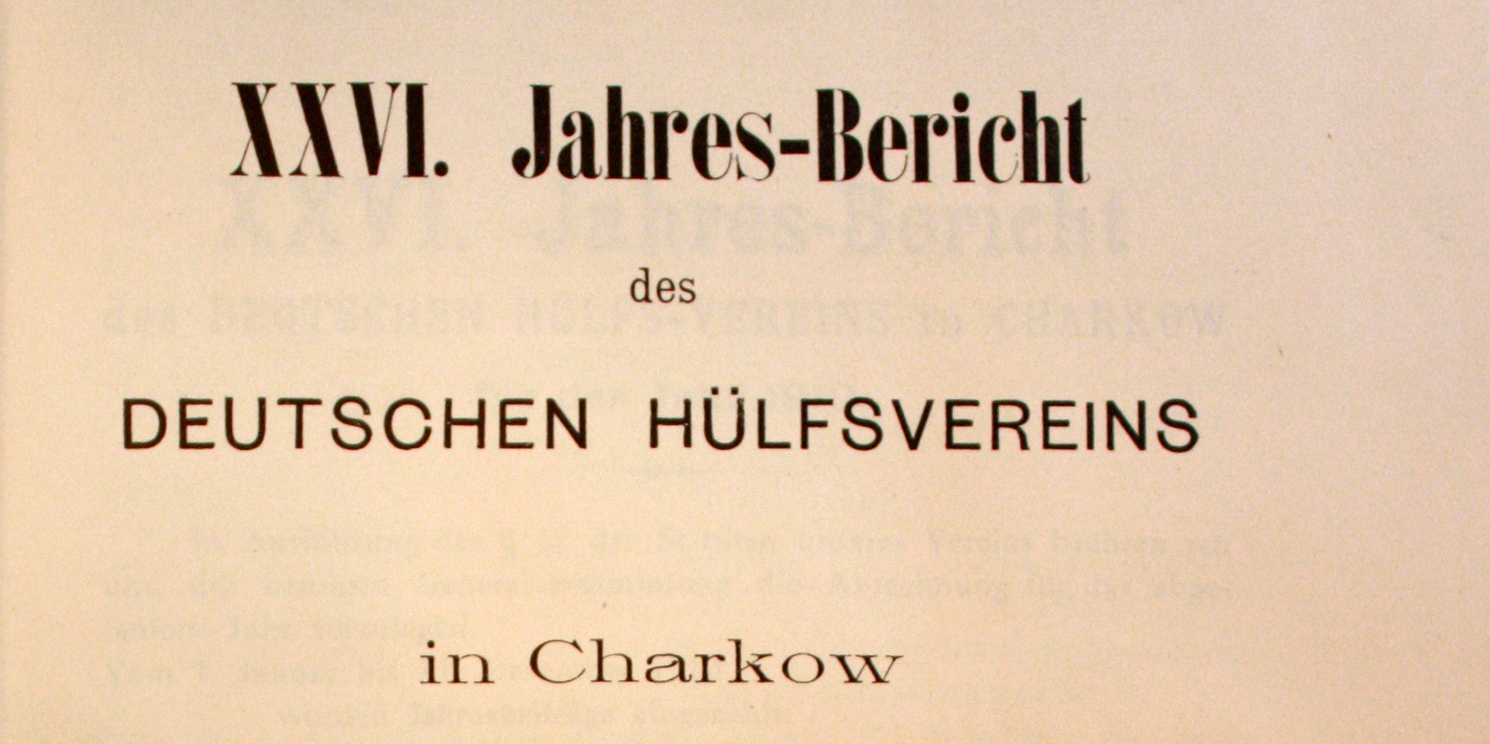
So what kind of organization was it? Who founded it? What did it do? Who were its members?
Although very little is known about her to this day, while working at the Kharkiv Regional Archives, I managed to find a number of unique documents that allow us to at least partially answer these questions.
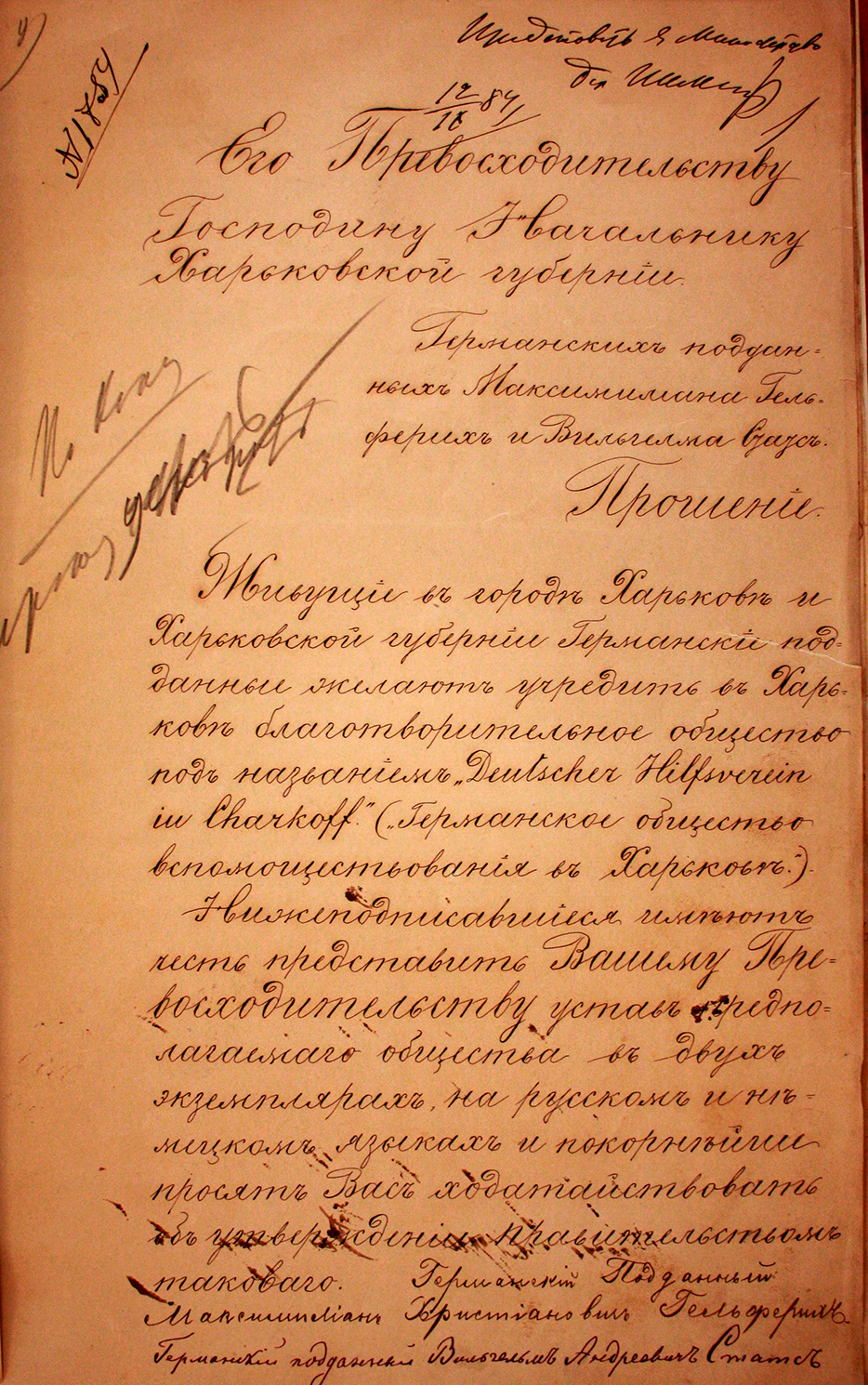
It all began on September 12, 1884: it was on that autumn day that two German subjects, Maximilian Christianovich Helfferich and Wilhelm Andreevich Staats, submitted a petition to the governor of Kharkiv, Baron Alexander Alexandrovich Ikskul von Hildenbandt.
By an interesting coincidence, the mayor of Kharkiv at that time happened to be German. And from 1891 to 1896, he also served as president of the General Evangelical Lutheran Consistory.
In their petition, Helfferich and Staats stated that they wished to establish a charitable organization in our city called the “German Relief Society in Kharkiv” and asked the governor to petition the government for its approval.
Two copies of the proposed company’s articles of incorporation (in Russian and German) were also attached to the petition itself.
As early as December 22, a reply arrived in Kharkiv from the Ministry of Internal Affairs. The authorities’ decision was favorable. And on February 23, 1885, at a general meeting, the following German subjects were elected to the organization’s board: Vasily Andreevich Staats, Maximilian Khristianovich Helfferich, Andrei Andreevich Biro, Emil Emilianovich Zalle, August Fedorovich Grundler, and Fyodor Bernardovich Koch.

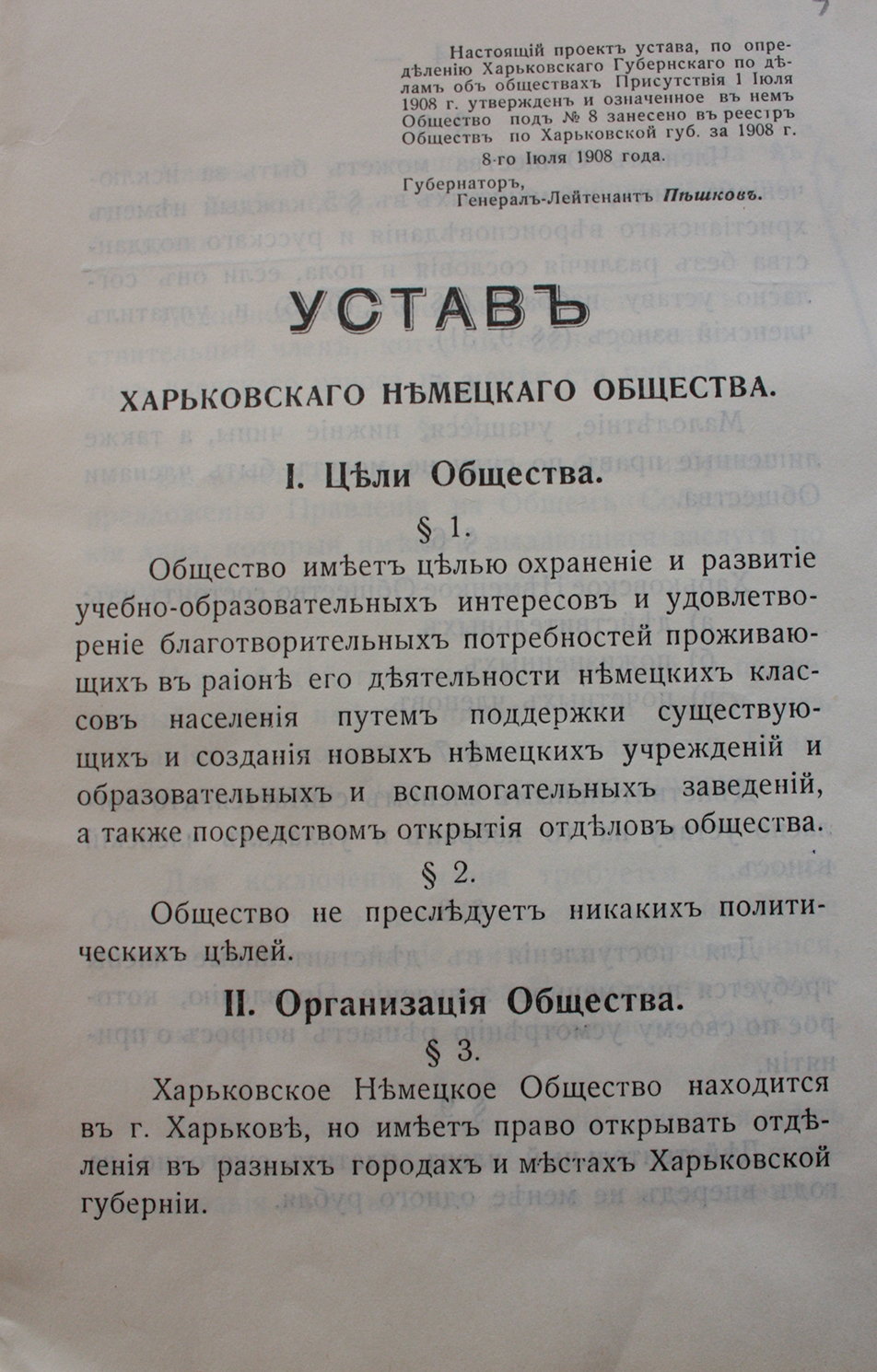
The company’s bylaws have been amended several times over the years. These changes primarily concerned the internal procedures of the organization itself, while its essence and objectives remained unchanged.
I. The Association’s Objectives:
- The Society aims to preserve and promote educational interests and to meet the charitable needs of the German-speaking population living in the area where it operates by supporting existing German institutions and educational and support facilities and establishing new ones, as well as by establishing branches of the association.
- The association does not pursue any political goals.
II. Organization of the Association.- Membership in the Society is open to German adults—whether Russian or foreign nationals—of the Christian faith, regardless of social class or gender, who wish to serve the Society’s purposes.
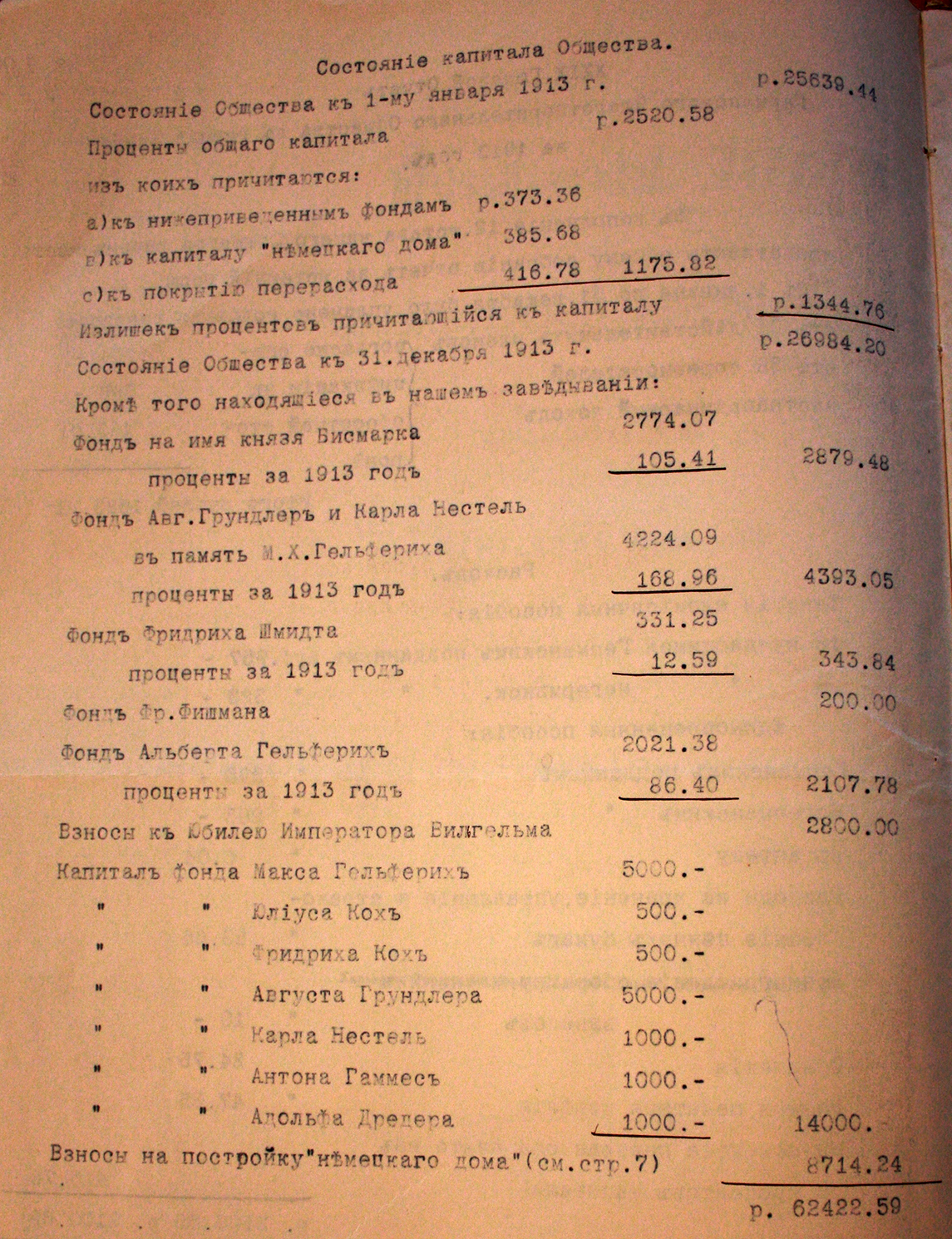
Both German and non-German nationals received monthly and lump-sum benefits from the society. The society’s financial resources consisted of donations from its members, as well as endowments established in specific individuals’ names:
— named after Prince Bismarck
— Maximilian Helfferich
— Adolf Dreder
— Friedrich Schmidt
— Julius Koch
— Karl Nestel
— Friedrich Fischmann
And many others.
However, the world is not without dishonest people. A number of Germans who were visiting our beloved city at that time took advantage of the warm generosity of their fellow countrymen in Kharkiv. For example, in a report from 1910, we read the following:
Over the past year, there have been increasing instances of travelers—who, due to illness or unemployment, claimed to be in desperate straits—turning not only to the Society but also to individual members for help. There were even instances where people who had received discounted tickets from the treasurer at the train station to travel back to their hometowns were caught begging in the city. Therefore, we reiterate our request not to give alms to such visitors who are afraid of work, but to direct them to the Society’s treasurer.
At the beginning of the 20th century, a German consulate was established in Kharkiv. Foreign diplomats from that country—Schüler, Frommann, and Feigel—who served as consuls in our city at various times, held prominent positions in the German Charitable Society. As honorary members or chairmen of the board, they, for their part, provided the organization with the utmost support.
Becker, the German Empire’s consul in Kyiv, was honored with the title of honorary member of the organization in Kharkiv; Lutheran pastors Maximilian Karlovich Stender and Karl Karlovich Kramer were also members of the board.
Not far from the German church, at the wonderful “Zimmerman” restaurant (now located at Sumska Street, 11), the community, together with the German Consulate, held various events, such as celebrations of the Kaiser’s birthday or Christmas. The “bierabende” (“beer evenings”), which had been held there every Saturday since the winter of 1913, were particularly popular among Kharkiv’s German community. And every other Saturday, one of the society’s members would give a talk on some interesting topic.
However, the community needed its own premises, and for several years the Germans of Kharkiv raised money to build the German House. The funds were held in an account at the St. Petersburg International Commercial Bank.
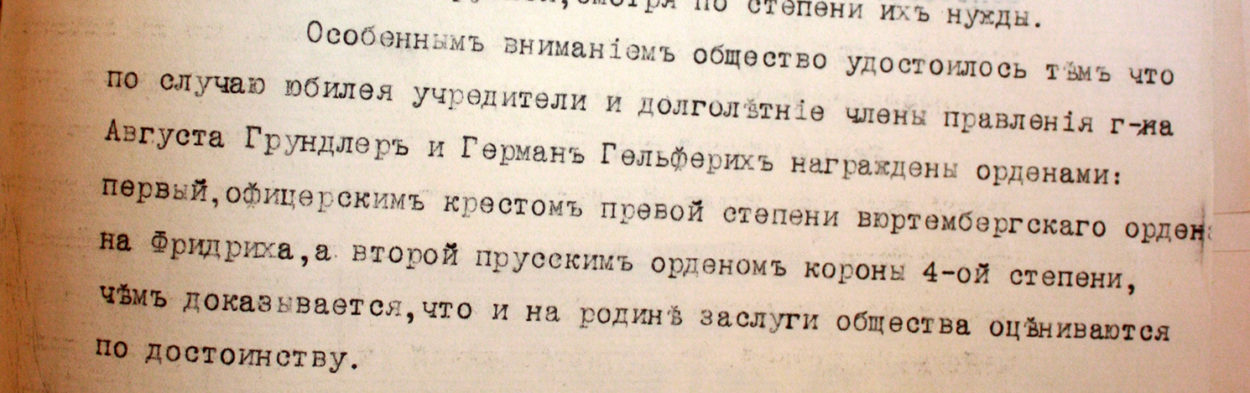
On the evening of February 23, 1910, members of the society, along with their friends and families, solemnly celebrated the organization’s 25th anniversary at the Polish House. We can learn many details about this important and momentous event from the reports of the German Charitable Society itself.
In his welcoming speech, the chairman gave a historical overview of the Society’s activities and concluded by presenting diplomas to the newly appointed honorary members. Representatives of other local German organizations, such as: the German Society, the Gymnastics Society, and the Quartet Singing Society, offered their congratulations to the Society on its anniversary; this was followed by telegraphic greetings from Odessa, Moscow, and abroad from various organizations and former members. The Society of German Subjects in Moscow sent a commemorative address in an elegant binding.
During the second part of the program, opera singer Ms. Bilman-Angerer and cellist Mr. A. Viss delighted the audience with their artful performances.
Finally, humor took center stage: Mr. Trainfels welcomed the guests with a poem, and Mr. Lichtenstein sang a verse about current events, creating a most cheerful atmosphere that lasted throughout dinner, which was served on the lower floor of the building, while upstairs the young people reveled and danced until late into the night.
Those under our care were not forgotten during this celebration; each of the 20 permanent pensioners received an emergency gift of 2 or 5 rubles, depending on the extent of their need.
The following data provide an indication of the Society’s membership:
1910 — 108,
1912 — 122,
1913 — 149 members.
For the most part, these were the leading figures and elite of the German community in Kharkiv and the province. Indeed, the society’s membership lists include the following families: Bild, Darre, Dredder, Helferich, Hirschman, Klecker, Koch, König, Melgoze, Pilström, Jaffe, von Raupach, and von Ungern-Sternberg.
Unfortunately, Nikolai Fedorovich von Ditmar’s name was not found on the membership lists of this organization. Although, in my opinion, this is not surprising: his position on national issues—“I live in Russia and know only the Russian people”—was stated in an earlier article.
However, there you can find a surname that is better known and more familiar to many residents of our city. It turns out that Grigory Nikolaevich Bormann, the famous founder of the confectionery company and the “Georg Bormann” brand, was a patriot of his people. Until 1914, he was a member of the German Charitable Society in Kharkiv; he attended its meetings and events and paid his membership dues.

During World War I, amid rising anti-German sentiment, the organization—where German was widely used—was shut down. The lives of the Society’s members took different turns.
Vladimir Ernestovich Melgoze, who was born in Kharkiv, was exiled to the Ufa Governorate at the age of 35. By law, male German and Austrian subjects between the ages of 18 and 45 living in our city were subject to arrest and deportation, as they were formally considered prisoners of war.
The same fate befell other members of society who did not hold citizenship of the Russian Empire.
Karl Klecker, an active participant in public life and the German community, renamed his restaurant in the Russian style. “Zimmerman” is now called “Medved.”
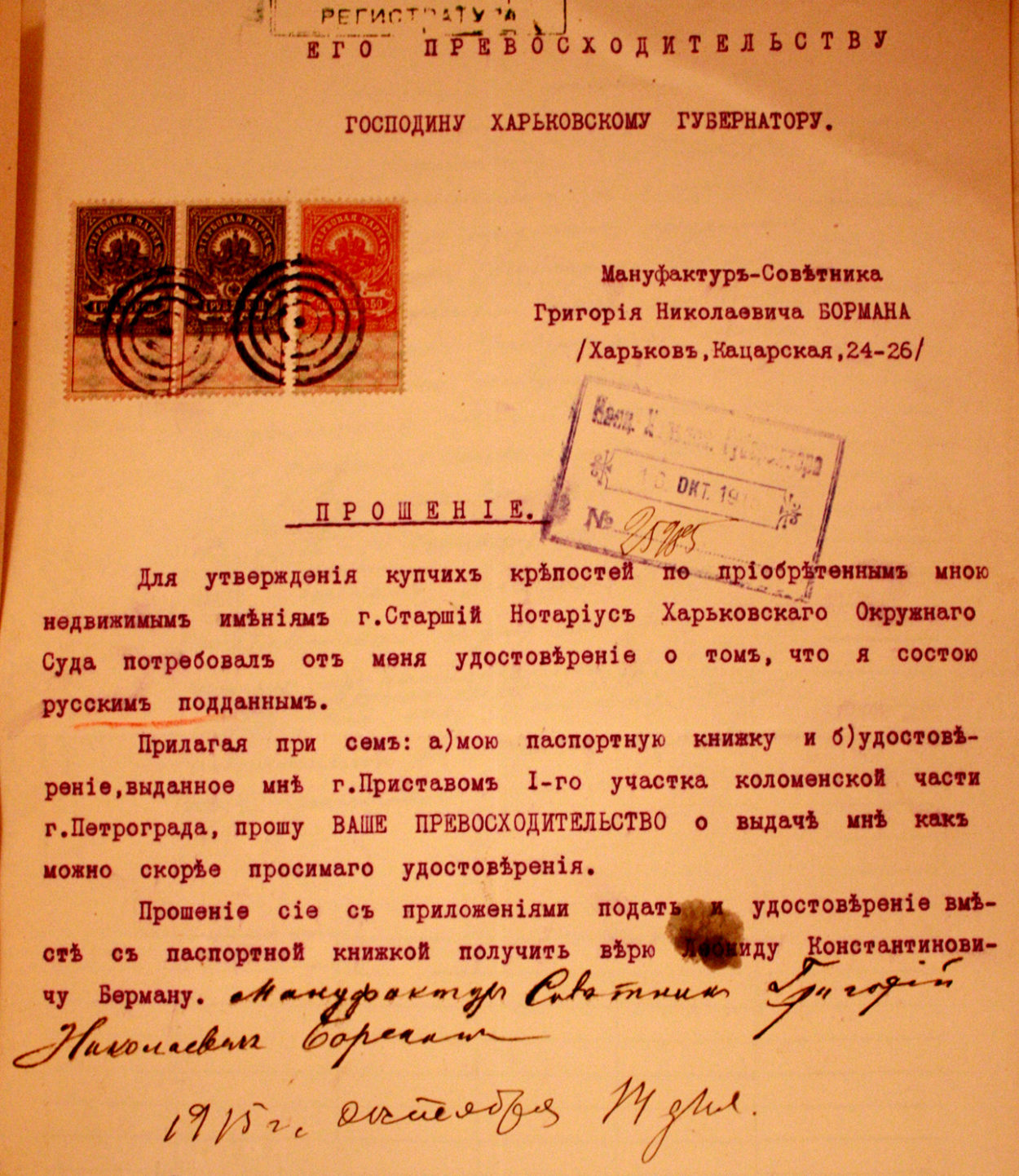
Georg Bormann, a German we know of, was not particularly affected: in October 1915, he submitted a petition to the governor of Kharkiv requesting that he be issued documents certifying that he was a Russian subject.
During those same years, he received a government contract and supplied his confectionery products not just anywhere, but to the army. They also produced a series of “Military Life” chocolates, with each bar’s label featuring a small black-and-white photograph depicting a military scene. It was believed that such packaging boosted morale and confidence in victory both at the front and behind the lines.
The German House—a long-held dream of Kharkiv’s German community, for which they had been raising funds for years—was also never destined to become a reality.
Here is a brief story about what is perhaps one of the most prominent national organizations in our beloved city from the late 19th to early 20th centuries, which existed for nearly 29 years…

- About the military pilot school and the airfield in Kharkiv… - 04.11.2020
- Nikanor Savich—A Political Career by Mistake - 13.07.2020
- And once again, about the Cavalry Guards… - 21.01.2020