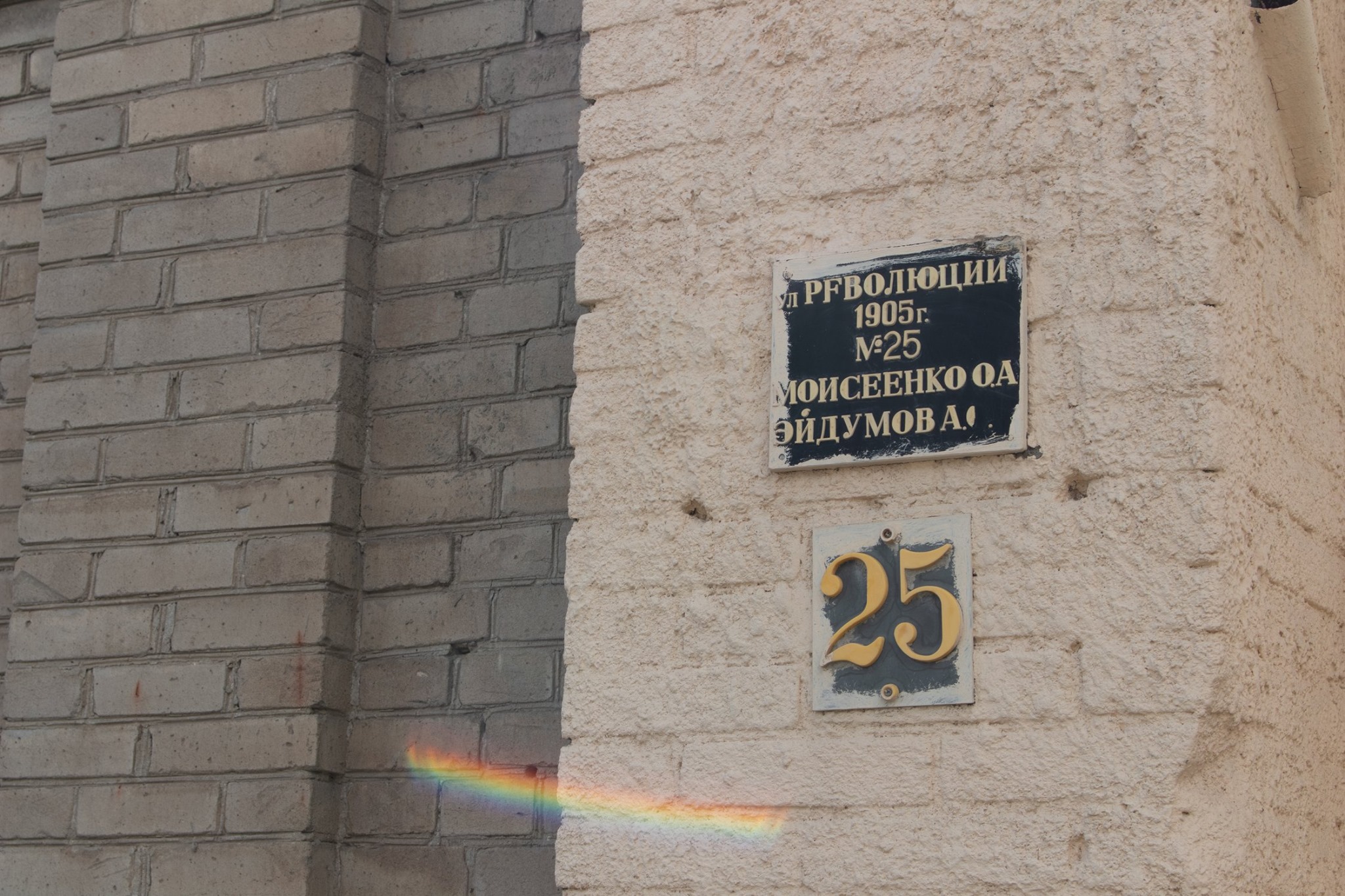
A pre-WWI building made of silicate brick can be found at Kuzinska Street, 25.
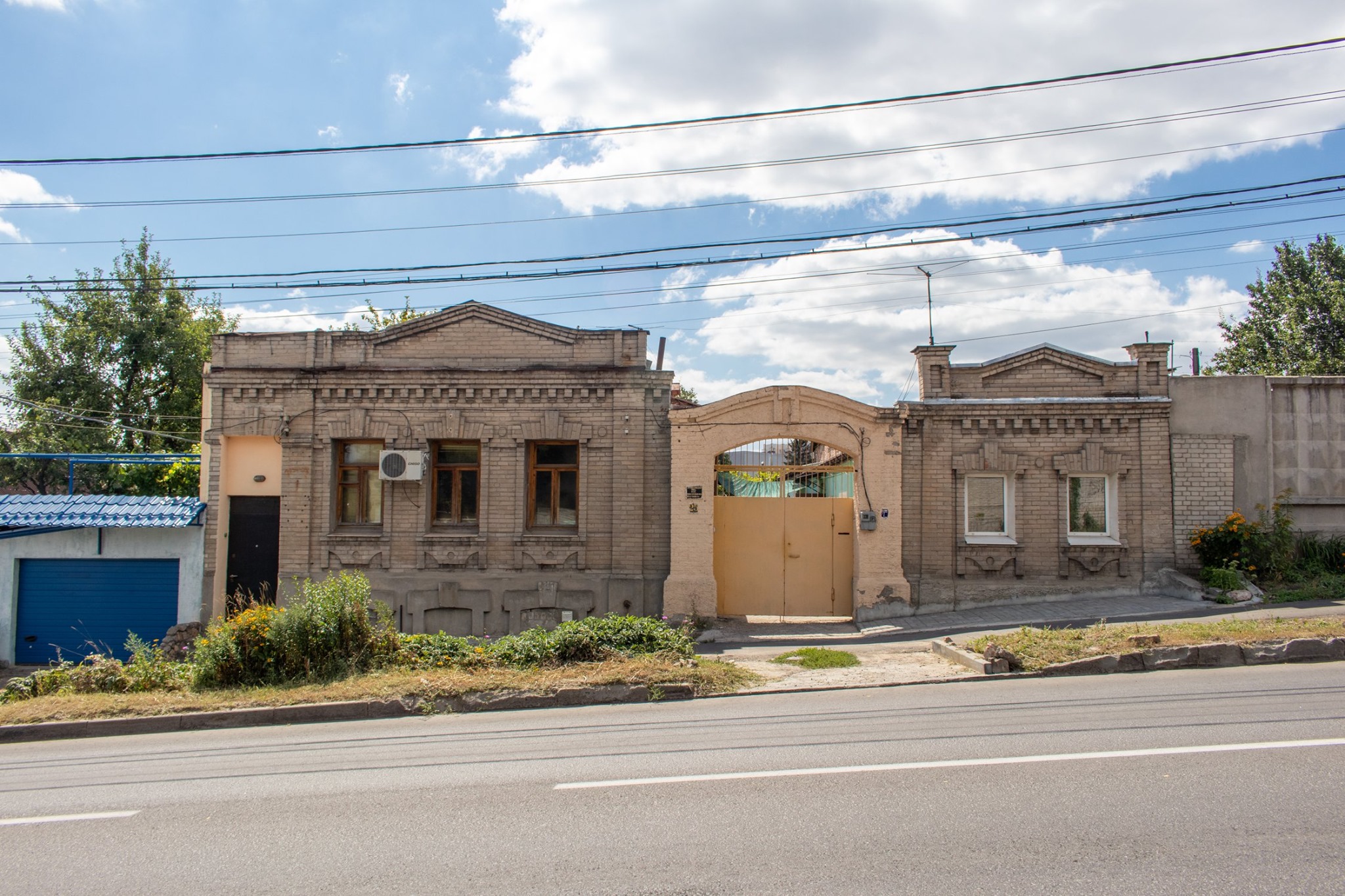
The large-scale construction of houses using “white” silicate brick began in the late 1940s, but the factories that produced it had already been established in the pre-revolutionary era.
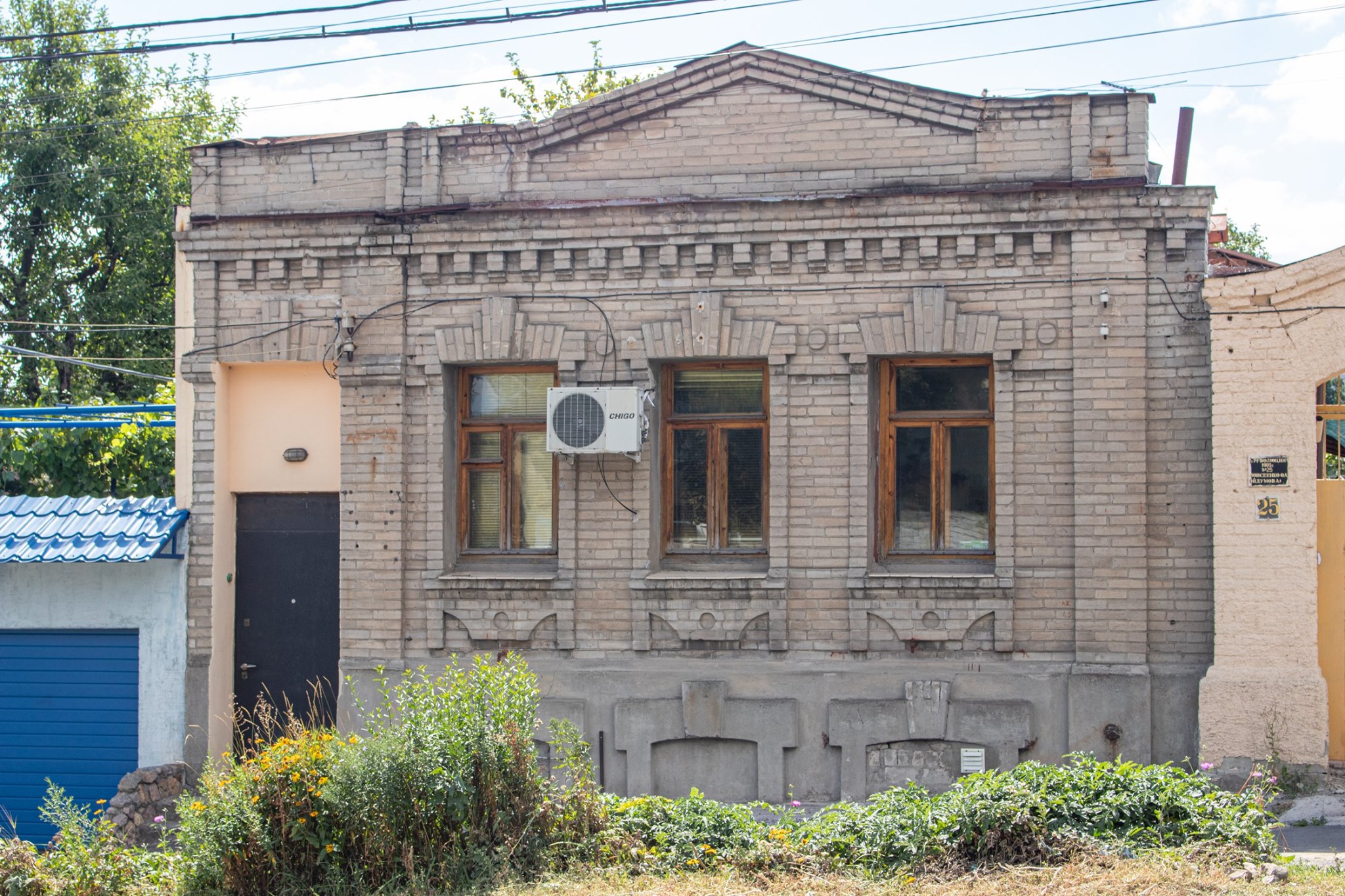
It was called “lime-sand” brick.
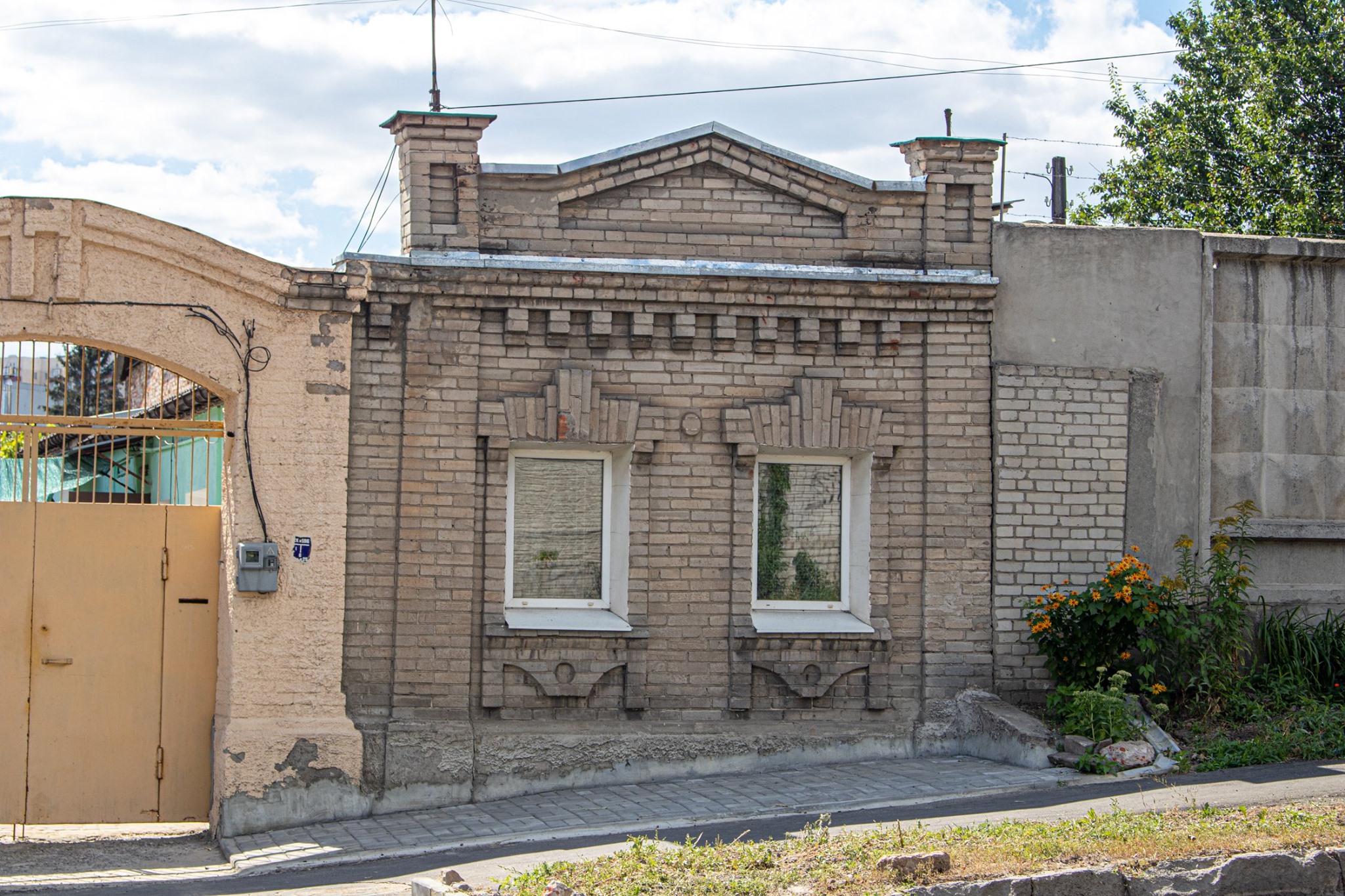
According to the 1909 list of homeowners, this house, like House No. 27 in the courtyard, belonged to Nikolai Petrovich Vugman, a townsperson.
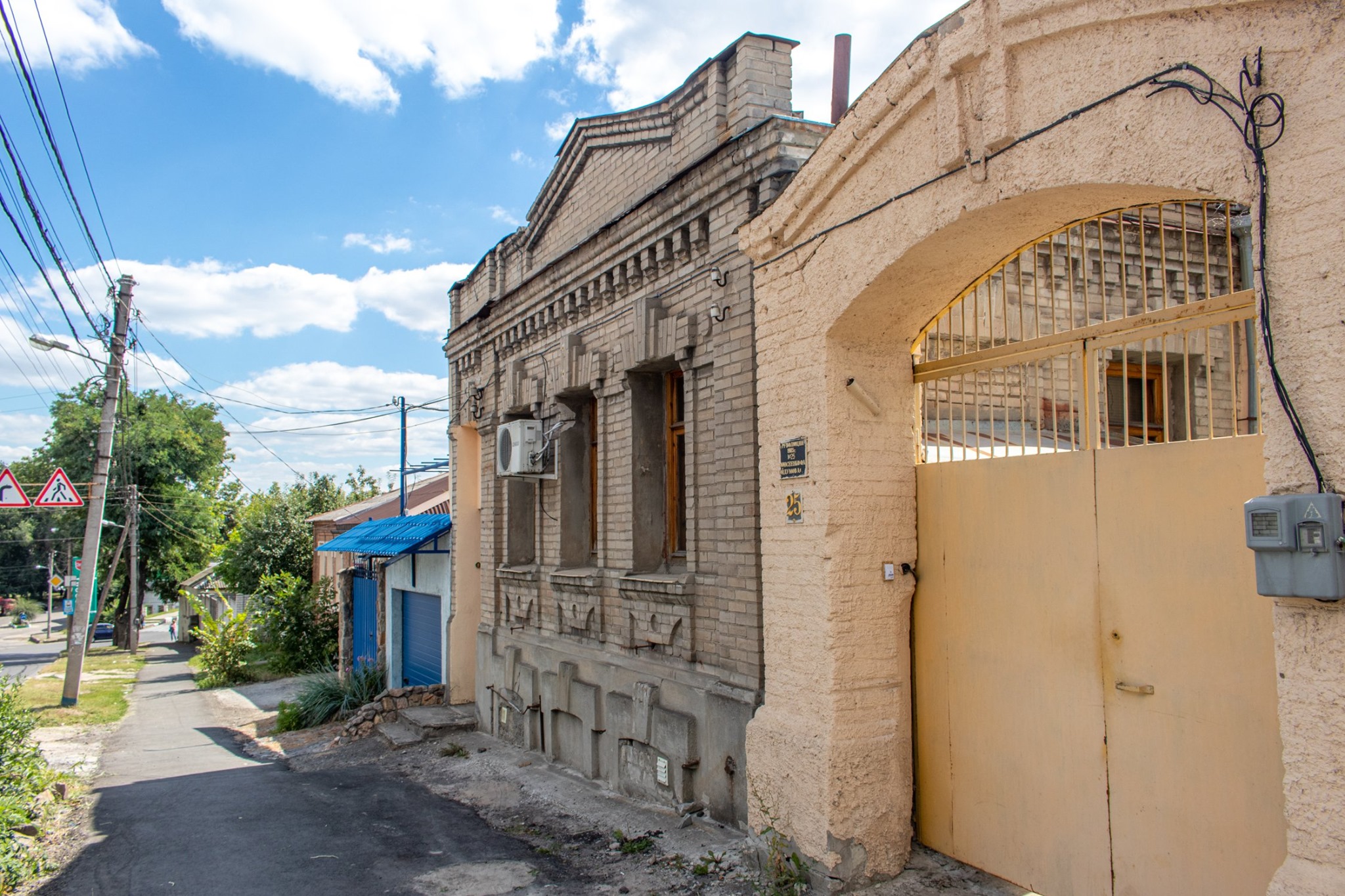
In 1909, the street was called Kuzinska Street; during the Soviet era, it was renamed 1905 Revolution Street; in 2023, its original name was restored.
Here is an excerpt from V. Ewald’s book *Building Materials: Their Preparation, Properties, and Testing* (1929–1930 editions):
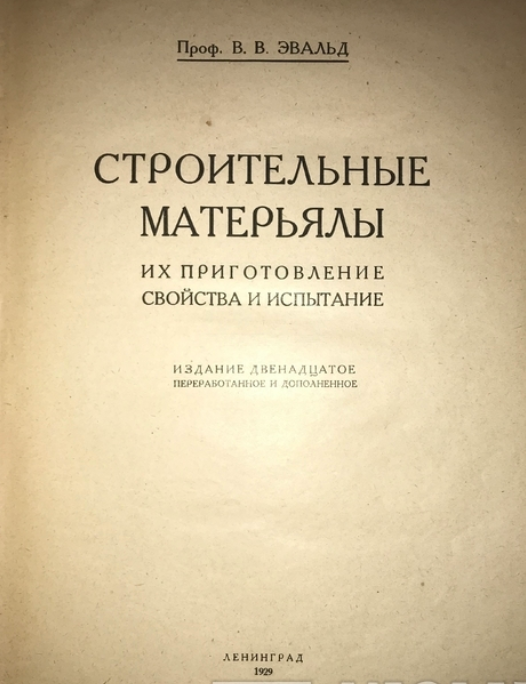
There were several lime-sand brick factories in Russia. The bricks are very light in color, a grayish-white; to add color, small amounts of mineral pigment are mixed into the mixture—for example, 0.5% iron oxide (red lead) for a light pink shade. In terms of production cost, lime-sand brick is quite expensive; in areas where good brick clay is available, it is unlikely to compete on price with clay brick; however, in areas abundant in quartz sand but lacking good brick clay, the production of silicate brick can be quite justified. Among the buildings constructed in our region using this material, we can mention, for example… in Kharkiv—the Vashchenkov and Moskalev barracks, the Southern Railways Administration Building, the former Alexandrovskaya Hospital, the municipal power plant, the synagogue, and others; in Dnipropetrovsk—the former commercial school, the girls’ gymnasium, and the city council building.

- Danylevs’koho Street, 19 - 13.10.2026
- Debunking the myth about one of the most famous Kharkiv photos - 12.10.2026
- The Architectural Evolution of the Kharkiv Theater - 26.09.2026