The ancient underground passages of Kharkiv and Sloboda Ukraine remain shrouded in a mythical aura of mystery and legend to this day.
People have come up with all sorts of stories and speculations about them! For example, you can find a text like this online (which, by the way, isn’t backed up by any documents).
Between 1852 and 1857, a fire broke out in Mordvinovsky Lane. As a result of the fire, an underground passage was discovered by chance. To explore the underground passages, city authorities offered two prisoners sentenced to death the opportunity to survey the tunnels and find out where they ended. The two lawbreakers agreed, stocked up on food, and set off into the underground. Three days later, they emerged near St. Nicholas Church, located on Nikolaevskaya Square (Constitution Square, at the corner of Pushkinskaya and Korolenko Streets). They then descended into the labyrinth again and, this time, emerged on the surface on Yekaterinoslavskaya Street in the governor’s courtyard (near Yekaterinoslavska Square). They reportedly passed beneath the bed of the Lopan River. The third and final exit to the surface occurred on Kholodnaya Gora near the prison. At that time, it was on the outskirts of the city. The prisoners declared that there were no more passages; they had explored everything they could, and as a reward, they received the promised pardon. But the most interesting and mysterious aspect of the legend is the large stone table with 12 chairs—allegedly discovered in the dungeon—along with an open book containing mystical prophecies.
And here’s a fascinating description of the village of Bugaevka from Wikipedia—a site so beloved by Kharkiv experts and tour guides:
…In those days, the village belonged to General D. M. Donets-Zakharzhevsky… The church took two years to build, and an underground passage was dug beneath it, leading to Trutov Yar, on the other side of the village. The general was killed in Buhaivka in 1872 by a bribed assassin.
However, the aforementioned “General” Dmitry Andreevich Donets-Zakharzhevsky (whose initials, incidentally, are D. M. in the text) was strangled by his nephew in real life, not in a fictional story.
There is no mention of the “underground passage” in the documents at all.
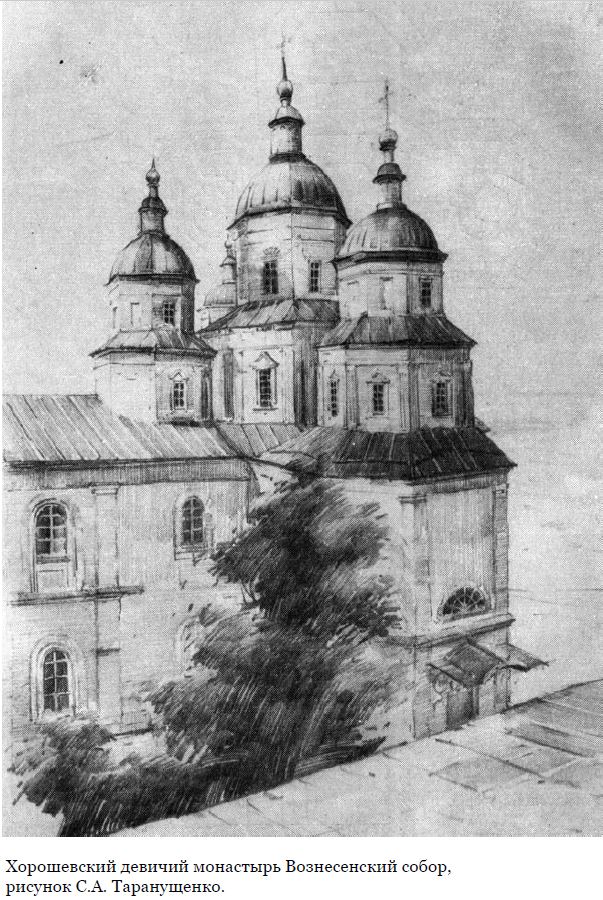
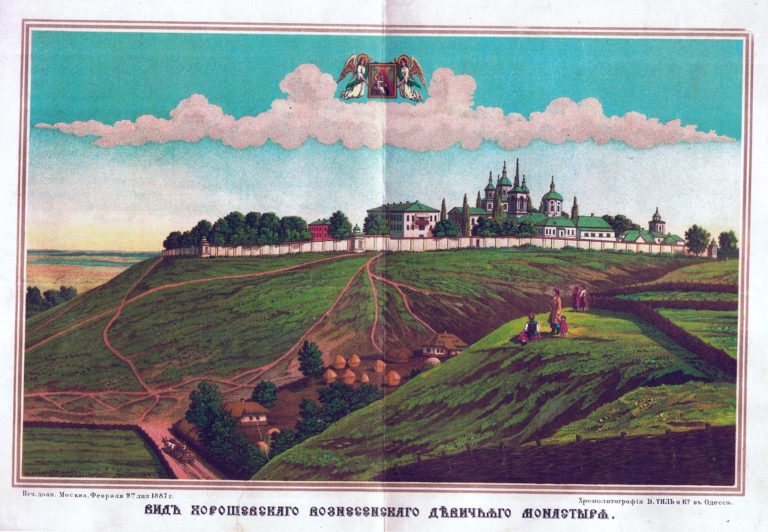
As for the underground chambers of the Khoroshevsky Voznesensky Convent (now the village of Khoroshevo, located not far from Babaevo and Bezlyudovka), there are references to them, and there is evidence to support this.
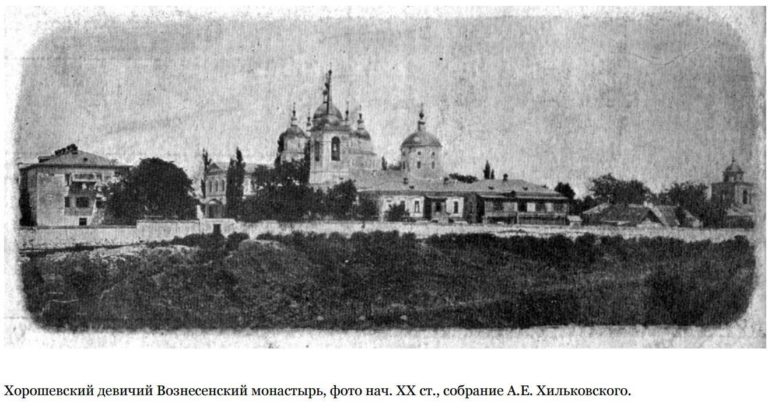
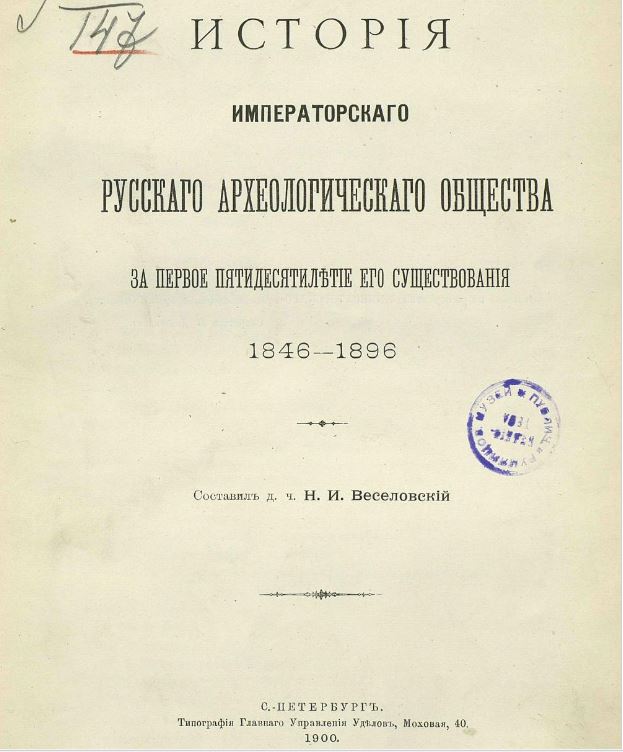
It is with this monastery that a very interesting—and, importantly, true—story about dungeons and treasure is associated. The monastery itself was founded way back in 1664. After a fire in 1744, stone buildings were erected to replace the wooden ones. In the 1900 publication *History of the Imperial Russian Archaeological Society for the First Fifty Years of Its Existence (1846–1896)*, we find the following account:
The iron door at the Khoroshevsky Monastery.
In the late 1930s, while erecting a stone fence to replace the wooden one at the Khoroshevsky Convent in the Kharkiv Governorate, workers digging the ground for the foundation, discovered an iron door, which, by order of Abbess Anatolia, was immediately sealed with stone and covered with earth. The Archbishop of Kharkiv, Filaret, later searched for this door, but without success*. At the request of the convent’s abbess, Olympiada, Bishop Savva of Kharkiv petitioned the Holy Synod in early 1877 to grant our Society the right to open the door and examine the room behind it. Through the Ministry of Public Education, this petition reached the Society in February of that same year and was referred for discussion to the Department of Russian and Slavic Archaeology. The department deemed it desirable to conduct an investigation of the passage but first wished to obtain precise information regarding the location of the door through test trenching. The General Assembly approved this conclusion at its meeting on March 18. In June 1877, a survey of the area was conducted under the direction of Professor Shchelkova of Kharkiv University, but it yielded no conclusive results, as the Society was informed by a letter from the Director of the Ministry of Public Education, dated September 20, 1878.
*In Archbishop Filaret’s description of the Kharkiv Diocese, the following is stated about this iron door:
To this day, an underground passageway leading from the monastery to the outer wall—with iron doors—still remains intact; it was built to provide a secret escape route from the monastery in the event of a siege of the monastery hill by the Tatars.
However, the Bishop of Kharkiv and Akhtyr mentioned in the document (December 7, 1874—April 23, 1879) Savva (Tikhomirov), in the fifth volume of his autobiographical memoirs, *Chronicle of My Life*, recounts a far more detailed, interesting, yet somewhat different story about the iron door at the Khoroshevsky Monastery. In his own words, he adds vivid color, as it were, to the somewhat dry account of events provided by the archaeological society.
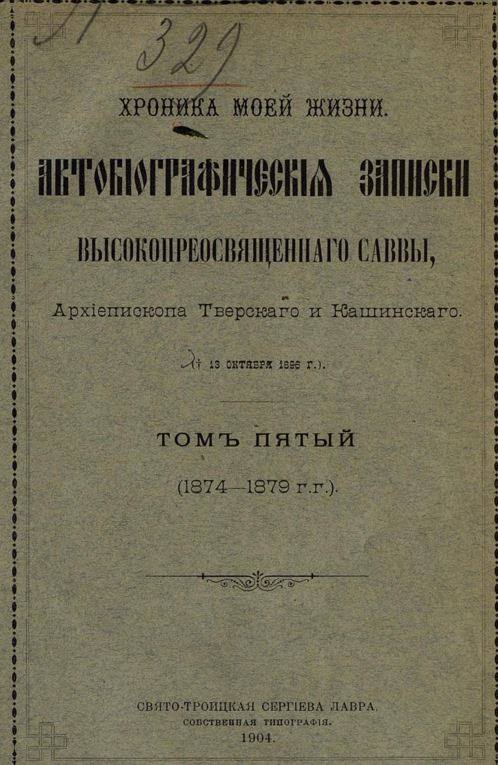
On the 26th, Yuri Ivanovich Morozov, a professor of physical geography at Kharkiv University, presented me with a plan of the fence surrounding the Khoroshevsky Monastery, bearing the following signature:
“According to the nuns’ instructions, the search for the iron door and the room hidden behind it was conducted along the western section of the fence, primarily on the inner side—which is marked by a thick black line—over a total length of more than 40 sazhens; on the outer side of the fence, a smaller excavation was carried out. At the point marked with the letter A, a structure resembling an arch was found in the fence’s foundation—one that could have been built above a door—but the door itself was not found there; perhaps it was secretly removed by the people who built the fence; the room behind the door, however, likely collapsed long before the fence was built. I must explain the reason this plan of the fence was drawn up and the meaning of the inscription beneath it.
Two telegraph operators on the Kharkiv Railroad, who had heard from a relative of theirs living at the Khoroshevsky Monastery that, during the construction of a new stone fence in the 1940s, a locked iron door had been found buried in the ground, behind which, it was believed, some treasures were hidden, but which, on the abbess’s orders, had been filled in again with earth, — submitted a petition to the Minister of Internal Affairs requesting permission to locate this door and make use of the hidden treasures behind it. This petition was forwarded by the Minister to the Chief Prosecutor of the Holy Synod, who in turn forwarded it to me for my discretion. I approached the University Administration with a request to assign one of the professors to conduct excavations near the monastery wall in order to locate the iron door indicated by the telegraph operators. Professor Morozov undertook this task, but as is evident from the signature on the aforementioned plan of the wall, his efforts did not yield any positive results, a fact which I reported to the Synodal Chief Prosecutor.”
In the early 1920s, the Khoroshevsky Monastery was closed by the Bolsheviks. Today, practically nothing remains of the once-majestic buildings of the convent except for this fascinating story.
And the iron door—if it even exists—awaits the arrival of our beloved “Children of the Underground” on their expedition, to whom, I am sure, it will reveal all its secrets.
P.S. Since 2005, the Kharkiv Regional Charitable Foundation for the Promotion of Historical and Cultural Research “Children of the Underground” has been studying underground structures from the 17th–19th centuries in the city of Kharkiv and the Kharkiv region. The goal of the program proposed by the foundation is to promote the safety of construction work in the historic center of Kharkiv, protect buildings, structures, and urban infrastructure from damage, and create new and interesting historical and cultural sites in the city.

- About the military pilot school and the airfield in Kharkiv… - 04.11.2020
- Nikanor Savich—A Political Career by Mistake - 13.07.2020
- And once again, about the Cavalry Guards… - 21.01.2020