This week, many of us will be giving or sending New Year’s cards via social media as we wish our family and friends a Happy New Year.
However, back in those days, people couldn’t always do this in person. As we know, there were no phones or the Internet back then. And, by the way, postcards as we know them didn’t even exist 118 years ago.
Few people know that it was not until 1898 that the first artistic “open letters” were published in the Russian Empire in the run-up to Easter.
Our beloved Sloboda Ukraine, by the way, is directly connected to this. After all, the creator of these colorful and original greeting cards—which made it possible for thousands of people to exchange the phrase “Christ is Risen!” despite the distance— was a nobleman from the Kharkiv Governorate, the grandson of the founder of Kharkiv University—Nikolai Nikolayevich Karazin.
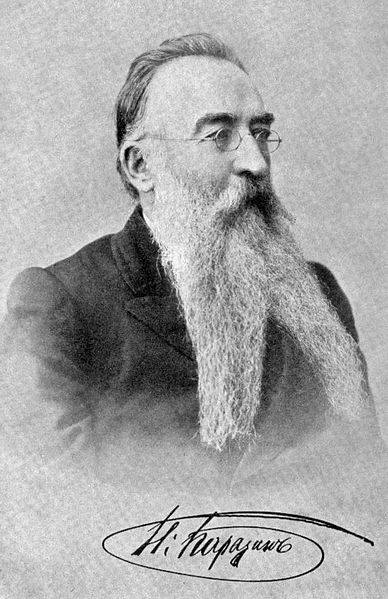
That is why, during these holidays, we would especially like to remember him.
Nikolai Karazin was born in 1842 on his family estate—the settlement of Novo-Borisoglebskaya (now the village of Kruchik) in the Bohodukhiv District. However, you will find neither a monument nor a memorial plaque in the hometown of our outstanding native son, even though he was recognized in his time as one of the most brilliant and talented artists of the Russian Empire.
On the earliest postcards, the back was originally intended solely for the address.
No special space was set aside for writing. The artists of that time—Nikolai Karazin in particular—went to great lengths to ensure that our ancestors could write down their wishes!
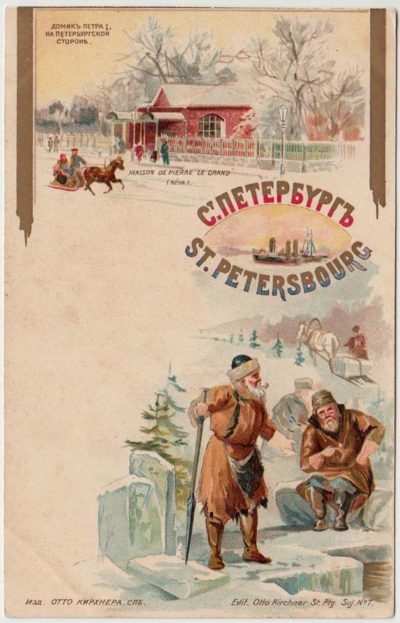
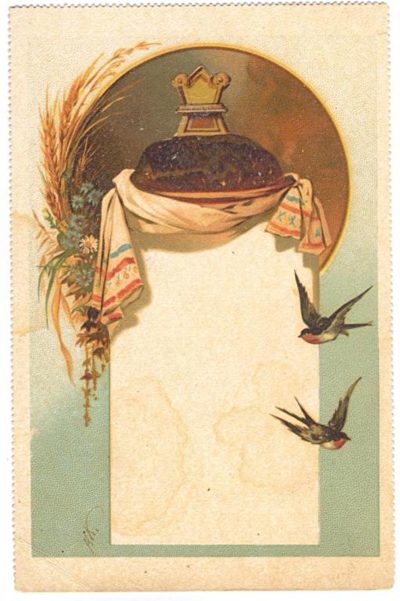
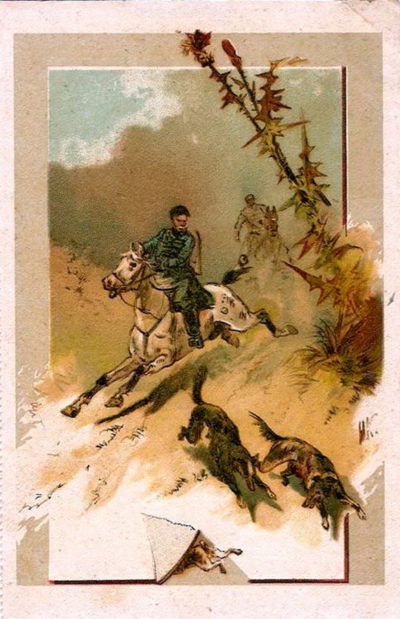
It wasn’t until February 1, 1904, that the Universal Postal Union allowed the address side to be divided into two parts: the right side was reserved for the address, and the left side for the message. They stopped leaving space on the front. However, artists kept up the tradition. As a result, postcards with text written on the front can still be purchased today. Here’s what it looked like a little over 100 years ago:


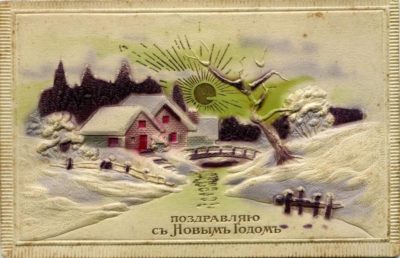
It goes without saying that they wouldn’t have entrusted the creation of the very first artistic postcards—especially ones with an Easter theme—to a mediocre artist.
Newspapers of the time, recalling Nikolai Karazin, noted that “there is scarcely an illustrated magazine in the Empire that has not at some point invited Karazin to contribute. For there is no subject that he could not depict.”
In addition to creating a large number of postcards, newspaper and book illustrations, Nikolai Karazin found time to write adventure novels, fairy tales, and paint extraordinarily beautiful pictures.
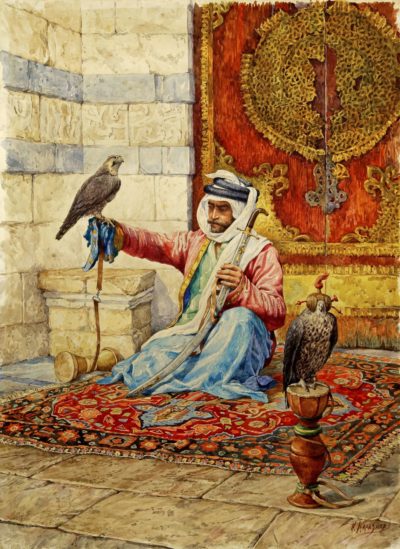

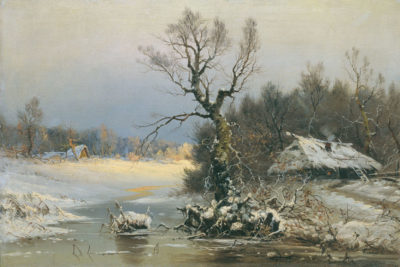
The multifaceted career of our fellow townsman Nikolai Karazin is a whole other story, but there’s one extremely amusing anecdote about him that I simply can’t leave out of this article.
After studying for just one year at the Imperial Academy of Arts under the guidance of the renowned battle painter B. P. Villevalde, N. N. Karazin was expelled from the academy following a conflict with the administration. He later spoke often about this episode. It has come down to us through the memoirs of Alexandra Petrovna Schneider—an artist with whom Karazin shared a long-standing friendship. This account is quite interesting, and it is worth quoting it in its entirety.
The course assigned a topic from the Bible: “The Three Angels’ Visit to Abraham.” Karazin interpreted it realistically: he drew a tent, three travelers sitting at a table, Sarah serving them, and Abraham conversing with them. For this interpretation of the theme, he received the following comment from the jury, written directly on the drawing itself (he had already spotted the inscription from a distance as he walked through the exhibition toward his drawing): “Why did you deprive the angels of their proper adornment—their wings?” Karazin immediately grabbed a pencil and wrote: “Because I considered Abraham to be more perceptive than the academicians, and that if he had seen angels with wings, he would have immediately guessed who they were.” For this, he was immediately expelled from the academy within 24 hours.
That’s what Sloboda Ukraine wit is all about. In general, however, there is one significant drawback to the story of Nikolai Karazin: it’s hard to stop reading. After all, this worthy man became famous not only for his paintings and original illustrations for open letters. He created illustrations for newspapers and magazines, designed the covers of a vast number of books, and was also the author of fairy tales and adventure novels. You can even find his unique drawings on products from one of the most famous porcelain factories—the Kornilov Brothers’ factory. So, more stories about our beloved city and its residents are sure to follow next year!

- About the military pilot school and the airfield in Kharkiv… - 04.11.2020
- Nikanor Savich—A Political Career by Mistake - 13.07.2020
- And once again, about the Cavalry Guards… - 21.01.2020