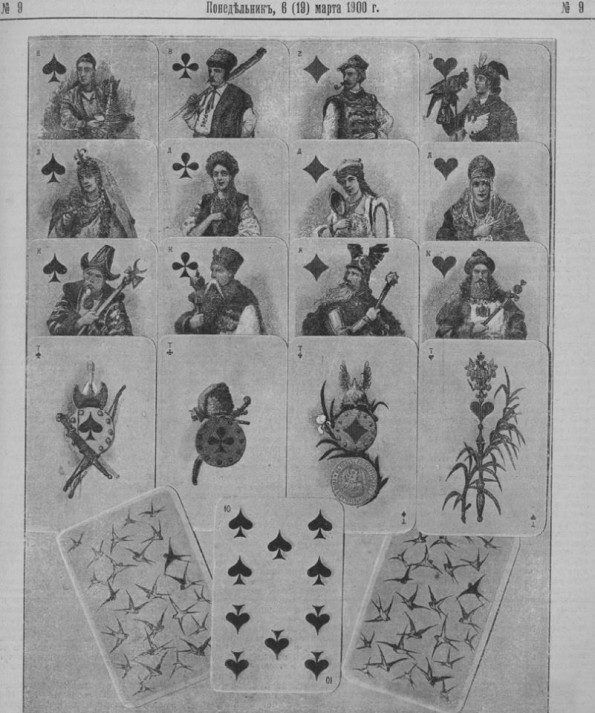
On the front page of the March 1900 issue of a national magazine is a picture of a deck of playing cards captioned “New Russian Cards.”
This is probably the only instance of its kind in the periodicals of the Russian Empire.
The description of the maps included in the journal itself is also quite interesting.
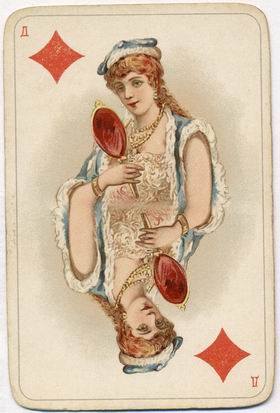
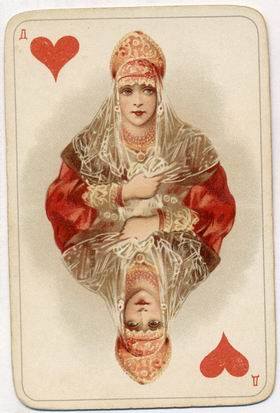
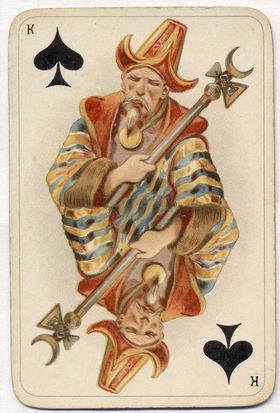
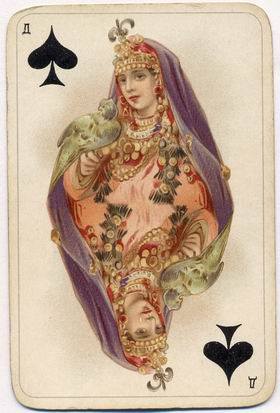
The Imperial Orphanage’s playing card factory has just released a new set of cards—which could be described as “national”—in limited quantities. The cards feature artistically rendered portraits of representatives of four nationalities that make up the Russian Empire. The Little Russian nationality was chosen for the clubs suit (description below the photo). The Kyrgyz or Bashkir ethnicity has been chosen for the spades suit (description below the photo). The Polish ethnicity has been chosen for the diamonds suit (description below the photo). The Great Russian ethnicity has been chosen for the hearts suit (description below the photo).
The rest of the new-style cards are the same as before. One of the features of the new cards is the following.
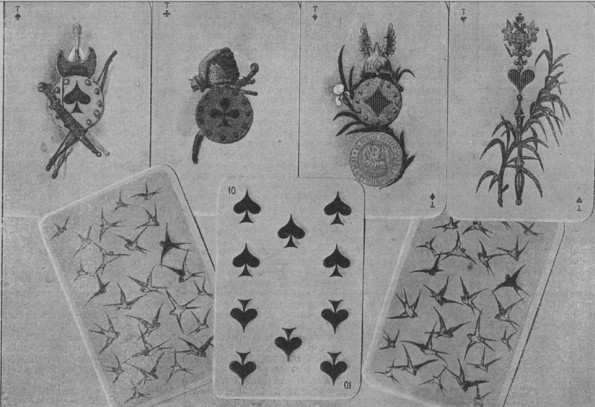
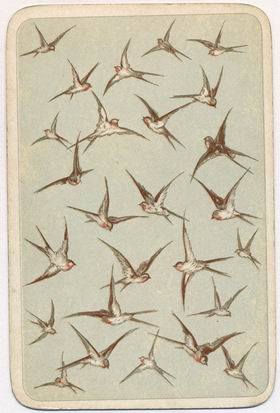
At the top left corner of each card, letters and numbers are printed. The so-called face cards are printed with the letters K for “king,” Q for “queen,” J for “jack,” and A for “ace.” On the other cards, the numbers 10, 9, 8, etc. (ten, nine, eight, etc.) are printed in that spot. The backs of the cards feature flying swallows against blue and pink backgrounds. No other backgrounds are available yet. The illustrations on the cards are based on the original artwork by N. N. Karazin. These designs consist of 24 colors (14 on the front and 10 on the back). The edges of all the cards are rounded for greater durability.
This raises the question: So what exactly makes this deck of playing cards so special and unique?
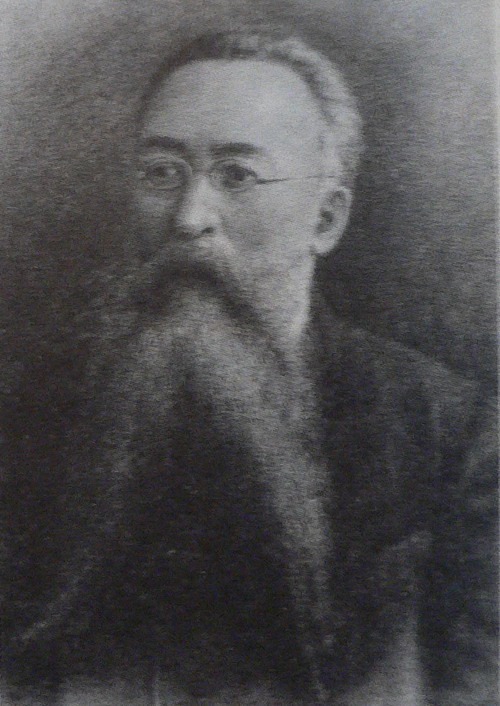
(1842–1908)
The answer is extremely simple:
- The Imperial Orphanage’s Playing Card Factory held a monopoly on the production of playing cards in the Russian Empire beginning in 1819. Up to 20,000 decks were produced daily, with an annual output valued at over 3 million rubles. In 1901, 5,460,000 decks were produced, and in 1912, over 12 million.
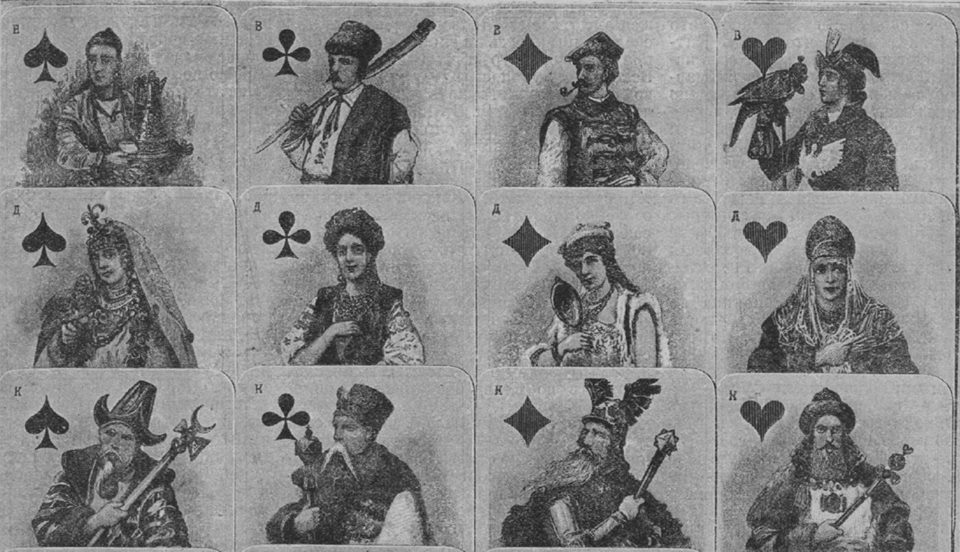
- In mass-produced decks of cards, the Jack of Clubs (the Ukrainian “parubok”) looks completely different. For this reason, the image on the newspaper’s cover is quite unique.
- The creator of this deck was Nikolai Nikolaevich Karazin, a nobleman from the Kharkiv Governorate and one of the most sought-after and popular artists of his time. He was also the equally great-grandson of Vasily Nazarovich Karazin, the founder of Kharkiv University;
- These were among the first artistic playing cards designed specifically by an artist from the Russian Empire. Later, other well-known artists—including I.Y. Bilibin and M.O. Mikeshin—also worked on the design of playing cards.
Take a look at the Jack of Clubs. There are only a limited number of these. In mass production, the card will look different.
The ace depicts an eagle and an ear of wheat, in addition to the “suit symbol.”
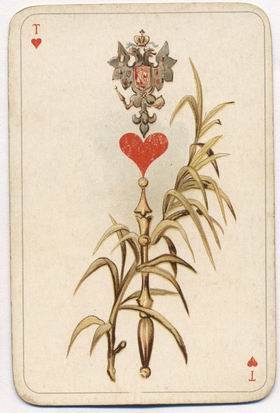
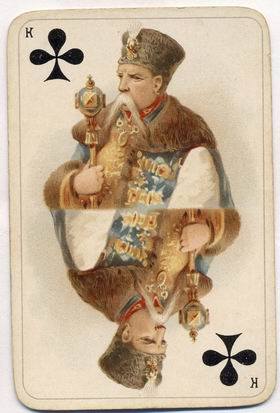
The king—an old man with a huge gray mustache, a Little Russian, wearing a massive sheepskin hat and holding a mace, dressed in a Little Russian shirt with a fur coat draped over his shoulders.
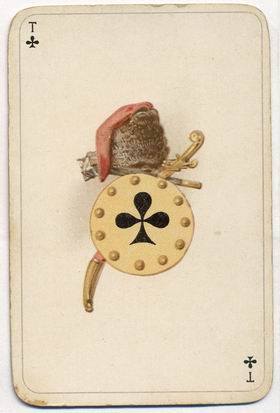
The ace depicts: a Little Russian cap, a saber, and a mace on a shield, along with a club “dot”
A young, beautiful Polish woman, dressed in traditional costume, with a mischievous smile on her pretty face, is looking into a round hand mirror.
A lady—a Russian boyarina in a sumptuous gown, with her veil slightly raised.
The king is an elderly Kyrgyz man wearing a traditional hat and holding a mace.
The king is an elderly Polish man with a long gray beard.
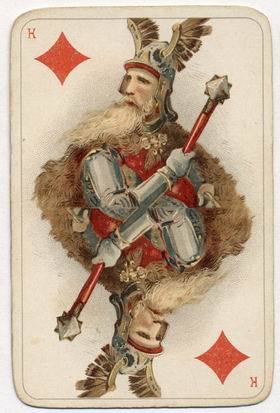
The ace depicts a suit of armor and a helmet. On either side of the helmet are two bird wings.
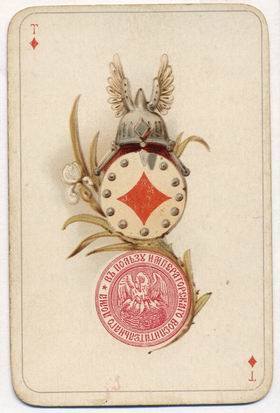
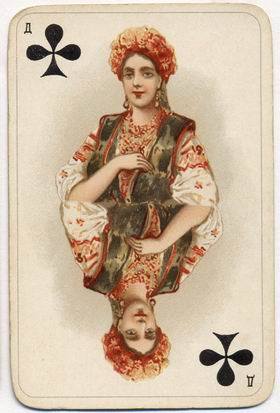
A woman—a Little Russian—dressed in a colorful folk costume.
Originally, the jack was supposed to look like this:
The Jack is a Little Russian young man wearing traditional Little Russian clothing, a fur-lined cap, and with a braid draped over his shoulder.
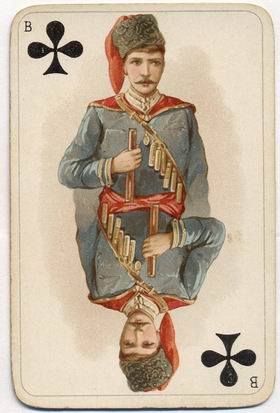
However, for reasons that remain unclear, the scythe was replaced with a musket, thereby transforming a participant in the popular uprising into a fully legitimate registered Cossack.)
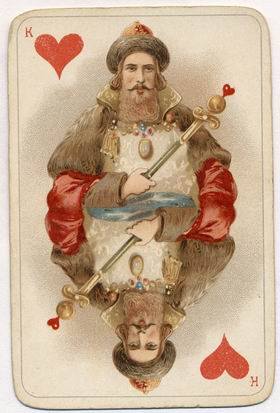
The King—an elderly boyar, dressed in lavish traditional boyar attire.
The Jack is a young Tatar man wearing an embroidered skullcap. He is holding a unique tray with a tall, narrow-necked pitcher and a glass on it.
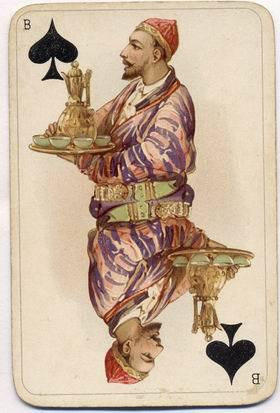
The Jack is a young Pole, dressed in traditional costume, standing with his hands on his hips, a smoking pipe clenched between his teeth.
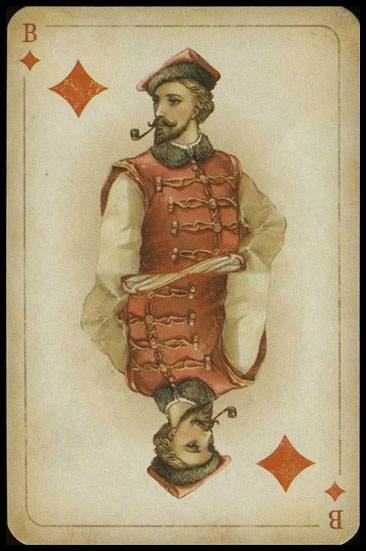
The Jack is a young royal chamberlain dressed in lavish attire with eagles on his chest and back.
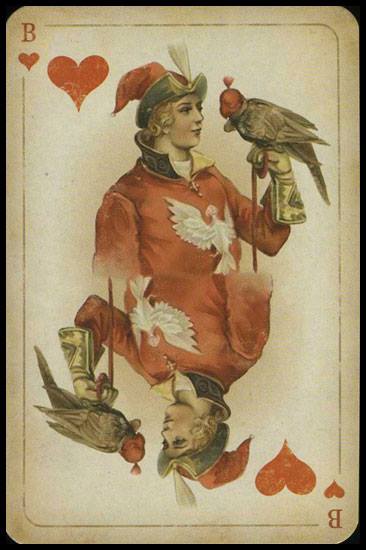
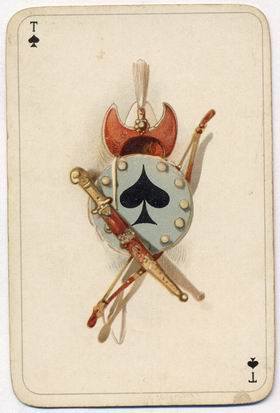
In addition to the “point,” the ace depicts a pointed Kalmyk hat, a bow, and a dagger.
The lady is replaced by a young, beautiful Tatar woman holding a green parrot.

- About the military pilot school and the airfield in Kharkiv… - 04.11.2020
- Nikanor Savich—A Political Career by Mistake - 13.07.2020
- And once again, about the Cavalry Guards… - 21.01.2020