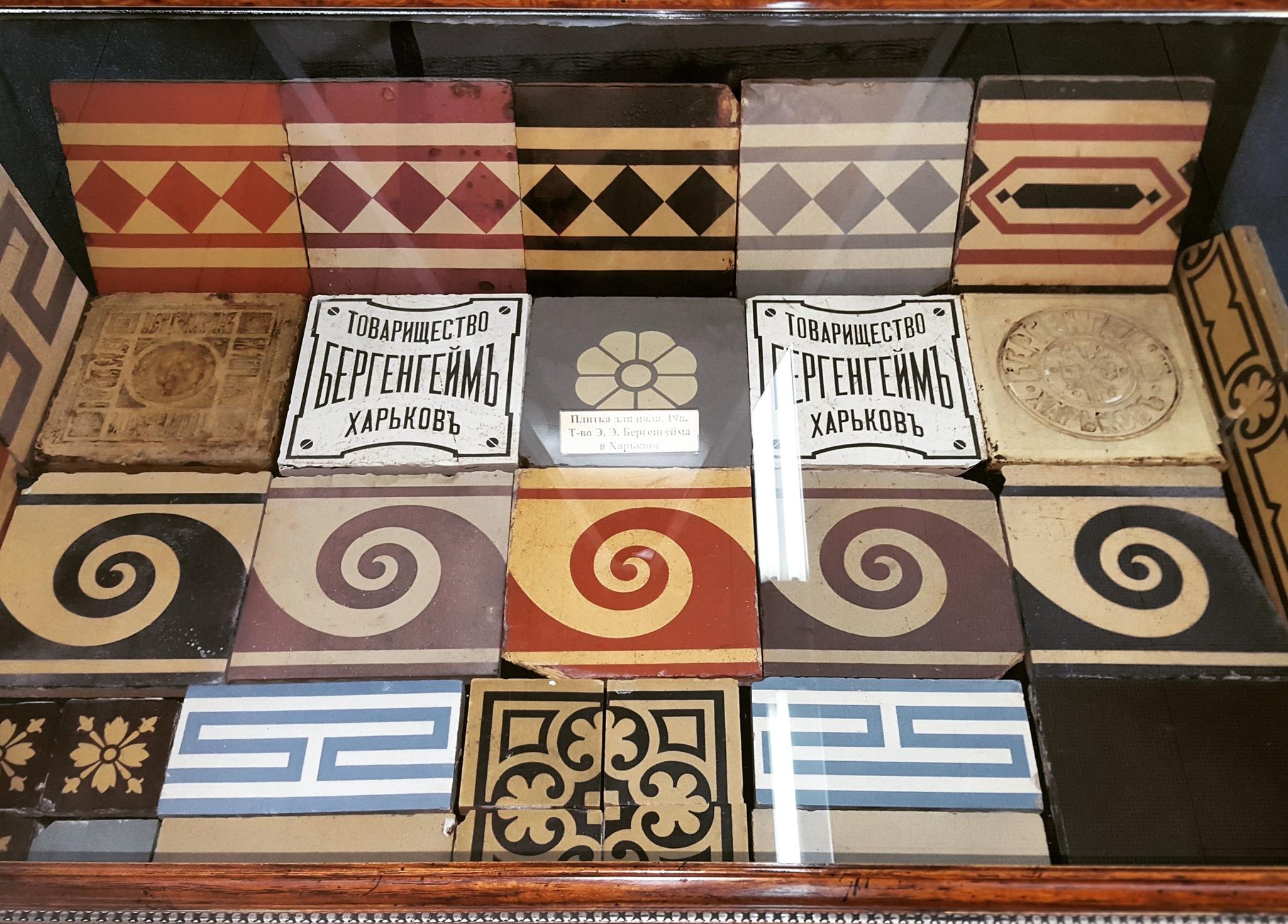
Pre-1917 tiles produced by Baron Bergenheim’s factory in Kharkiv can still be seen in many places throughout the city, particularly in old churches, schools, and the entryways of historic buildings. Edward Ferdinand Bergenheim, a native of Finland, founded a ceramic tile factory in 1876, which within a relatively short time became one of the largest in the empire. He produced not only tiles but also roof tiles, plumbing fixtures, bricks, pipes… The factory, which was located near the train station (in the Kuzinsky Bridge area), has survived only partially to this day. The Bergenheim partnership also owned an apartment building next to the factory.
The modern Kharkiv Tile Factory is now located in an entirely different place—near the “Industrialna” metro station. Some samples of Bergenheim tiles can be found at the Museum of Ceramic Tiles and Sanitary Ware, located at Heroes of Kharkiv Avenue, 257A.
The 67-page catalog of his products—one of the most sought-after items among enthusiasts of Kharkiv’s past—was published by Elena Rofe. Not all pages have been posted, but the catalog is still fascinating even in this form, as these scans are the highest quality ones available. What makes the catalog particularly interesting is that the texture of the tiles—where applicable—was embossed on the paper to replicate their real-life appearance. You can spot this special textured tile right behind the front door of some old houses; it still helps prevent people from slipping when they come in from the street in the rain or snow.

Bergenheim tiles competed with products from the Dzevulsky and Lange factories (in Sloviansk and Opoczno, Poland). They often had identical designs (they also copied the patterns of tiles from French and German manufacturers, such as Villeroy & Boch), so the manufacturer can only be identified by the mark on the back of the tile. Sometimes during stairwell renovations, tiles are flipped over, or a trace of this mark remains on the cement mortar where a missing tile once was. However, you can try to distinguish the tiles without removing them—Bergengheim tiles measured 16.5 x 16.5 cm, while those by Dziewulski and Lange measured 17 x 17 cm. The sizes differed so that, in the event of tile damage, the owner would purchase replacement tiles from the same manufacturer rather than “mixing” tiles from two different manufacturers within the same installation.
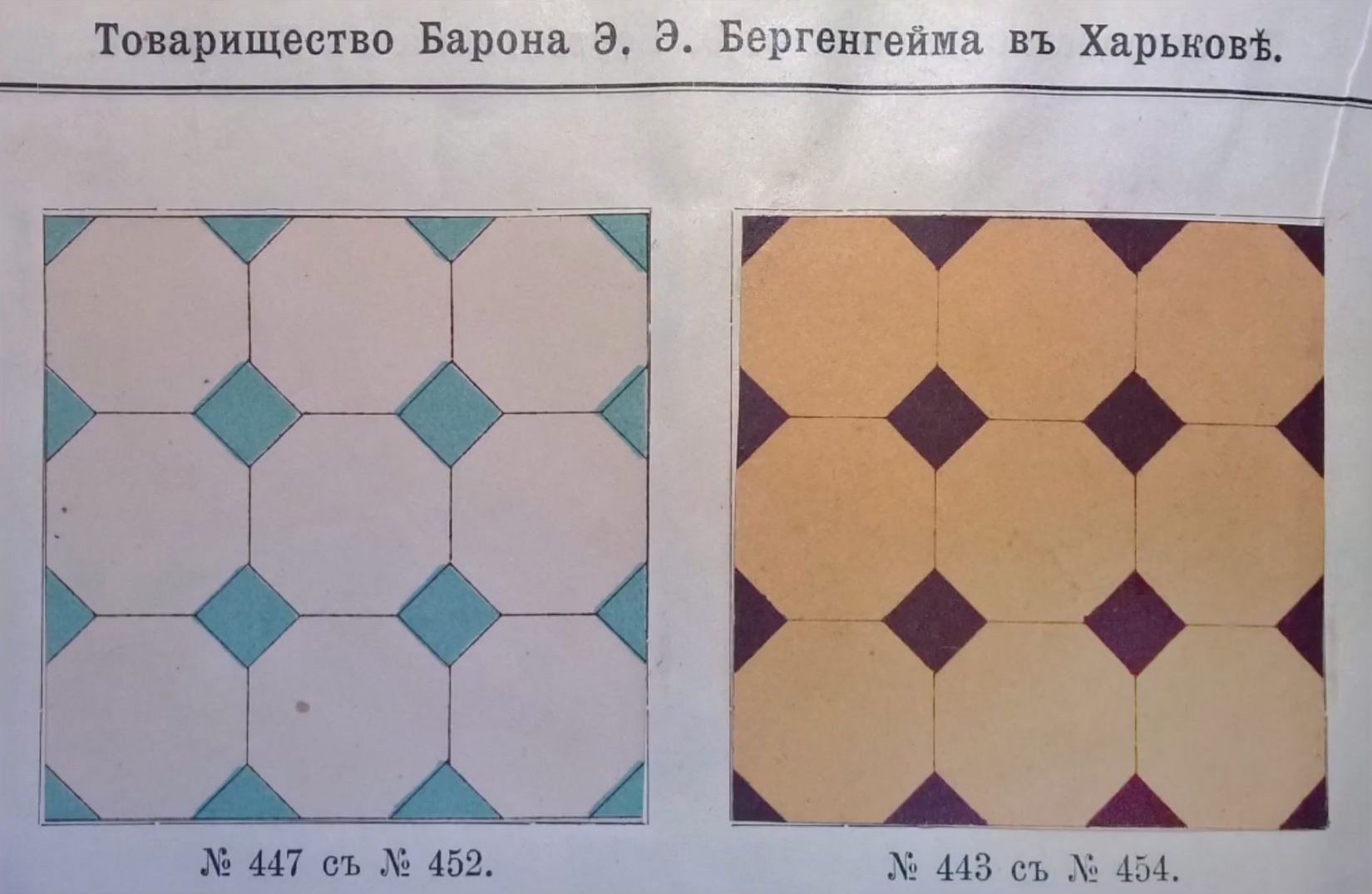
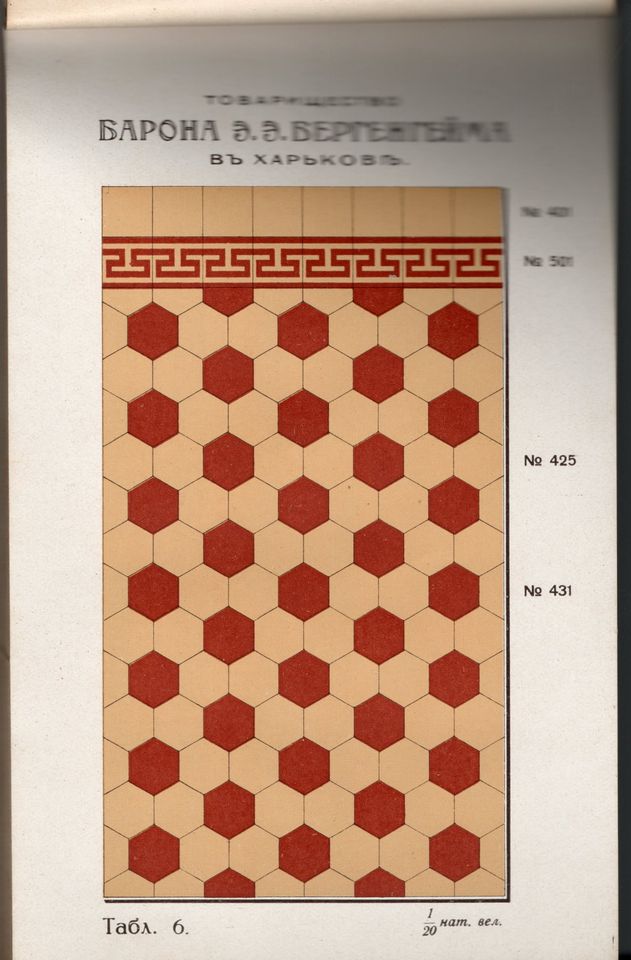
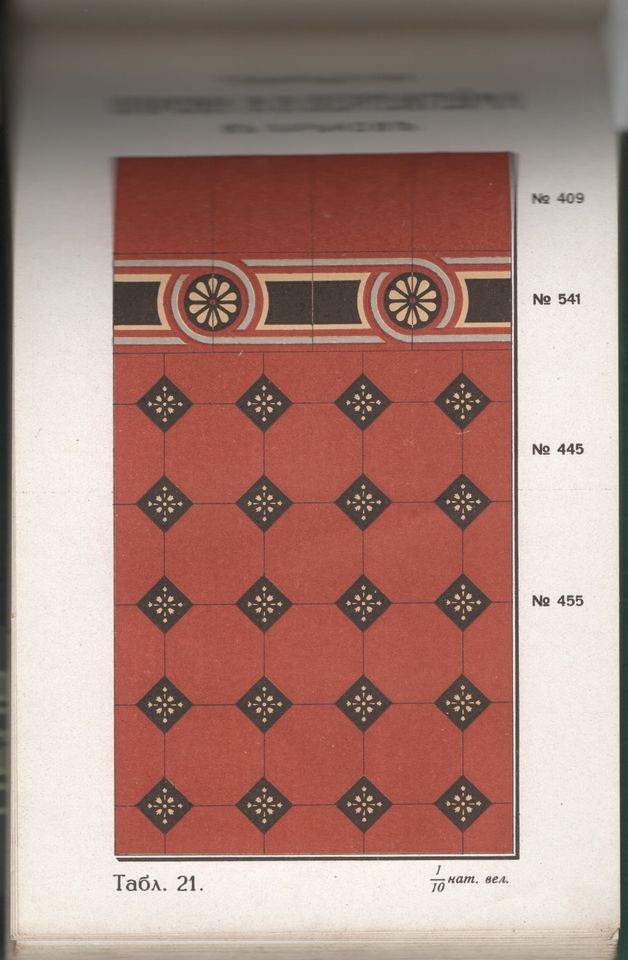
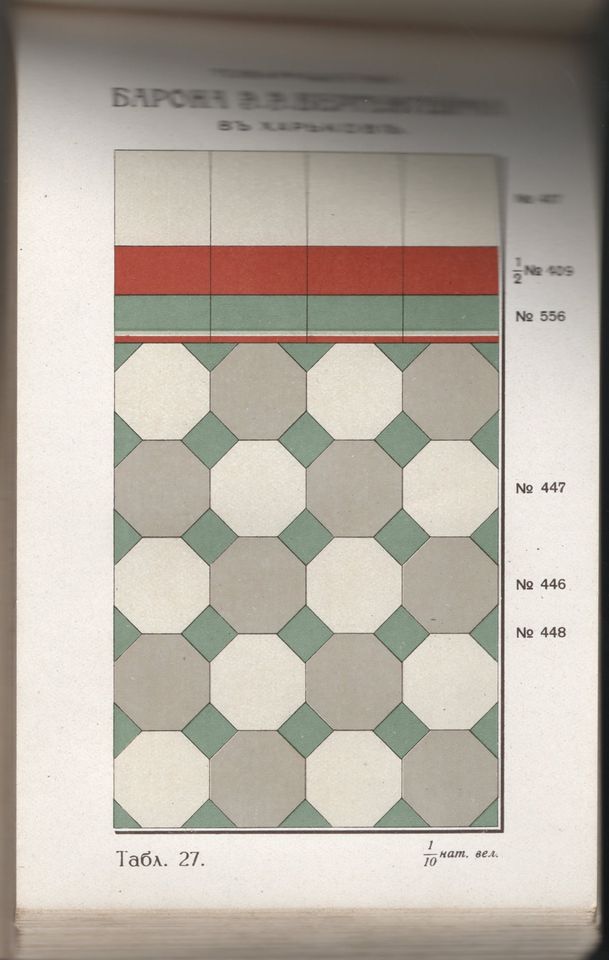
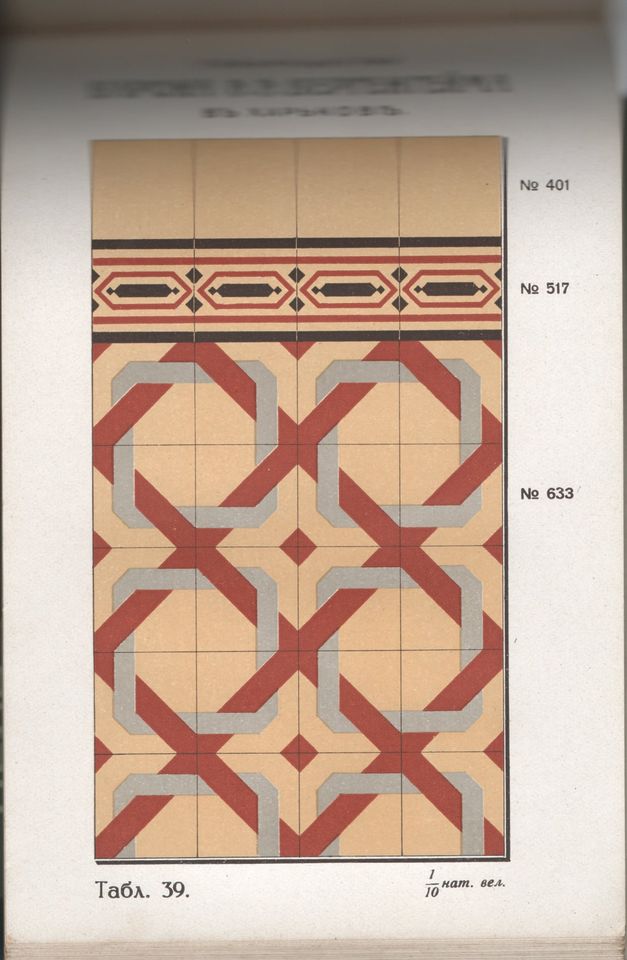
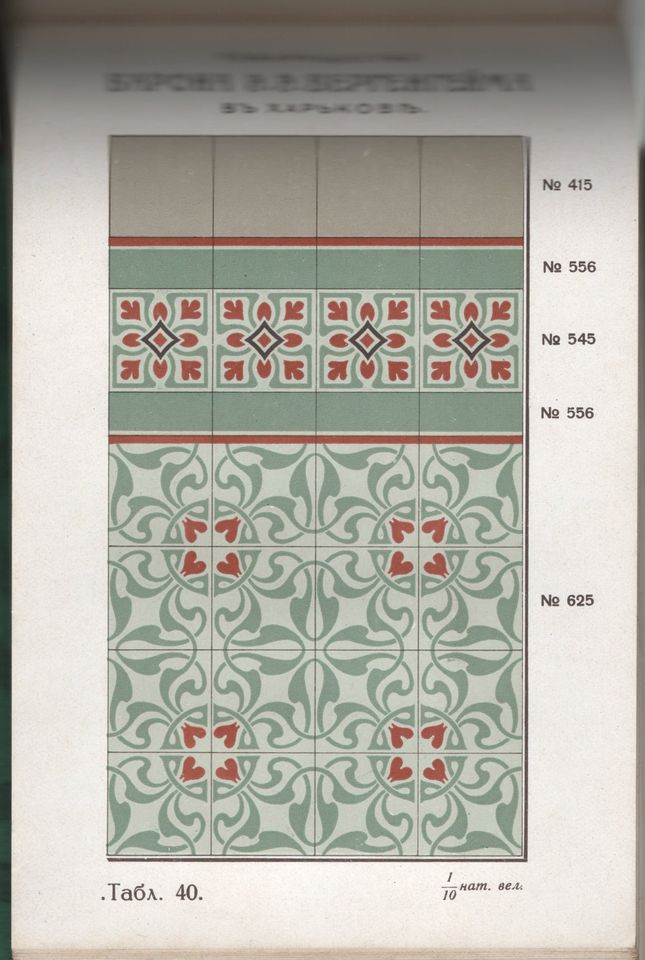
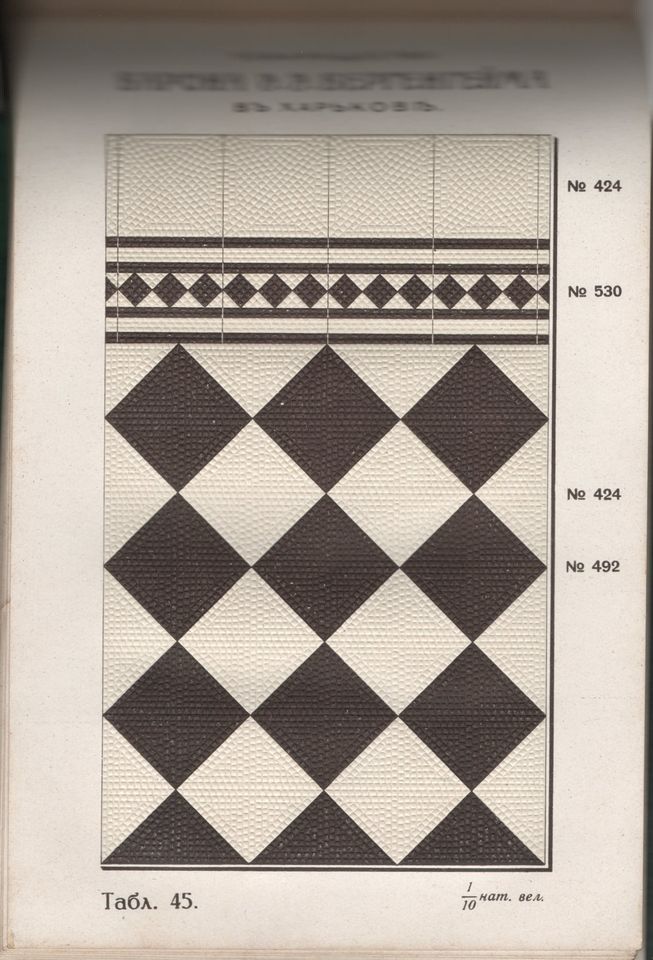
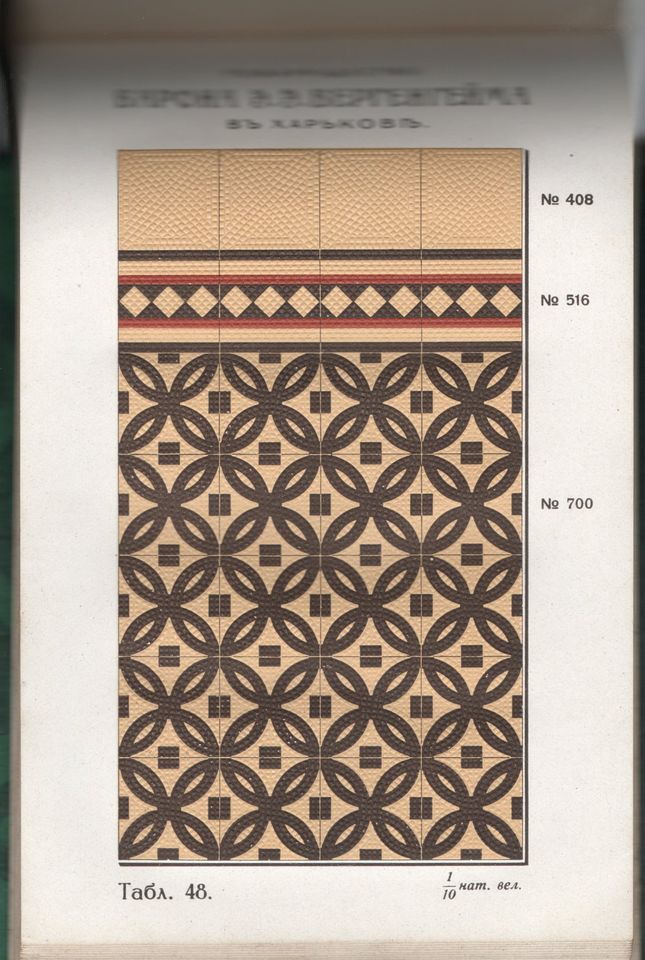
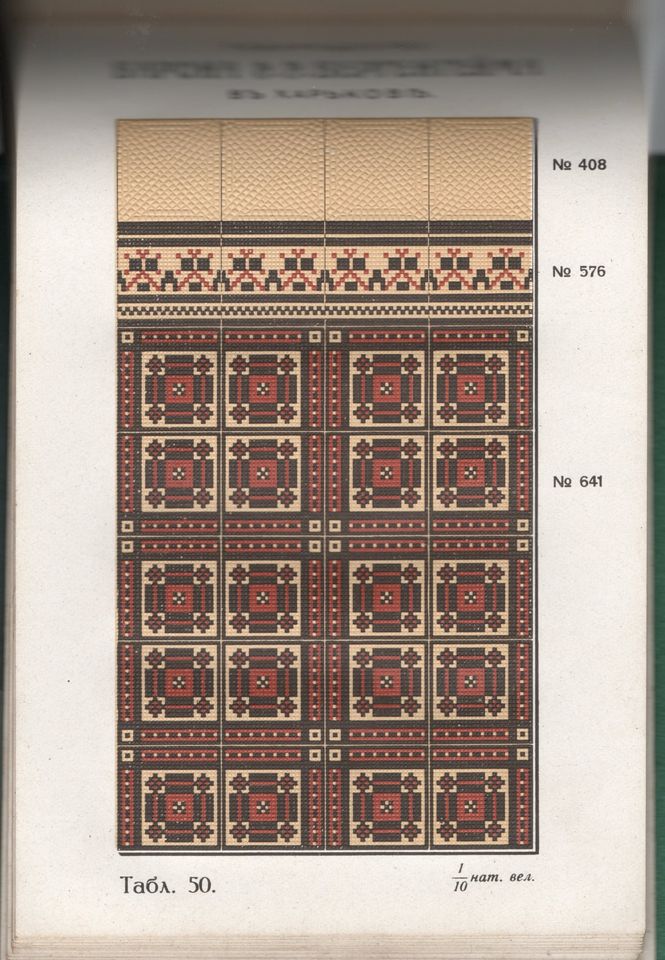
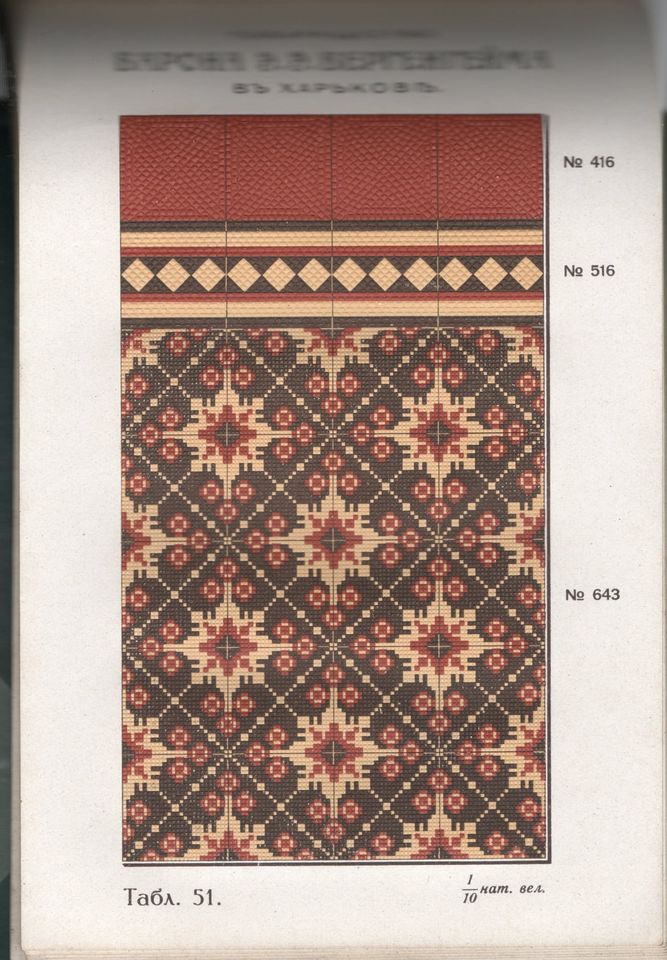
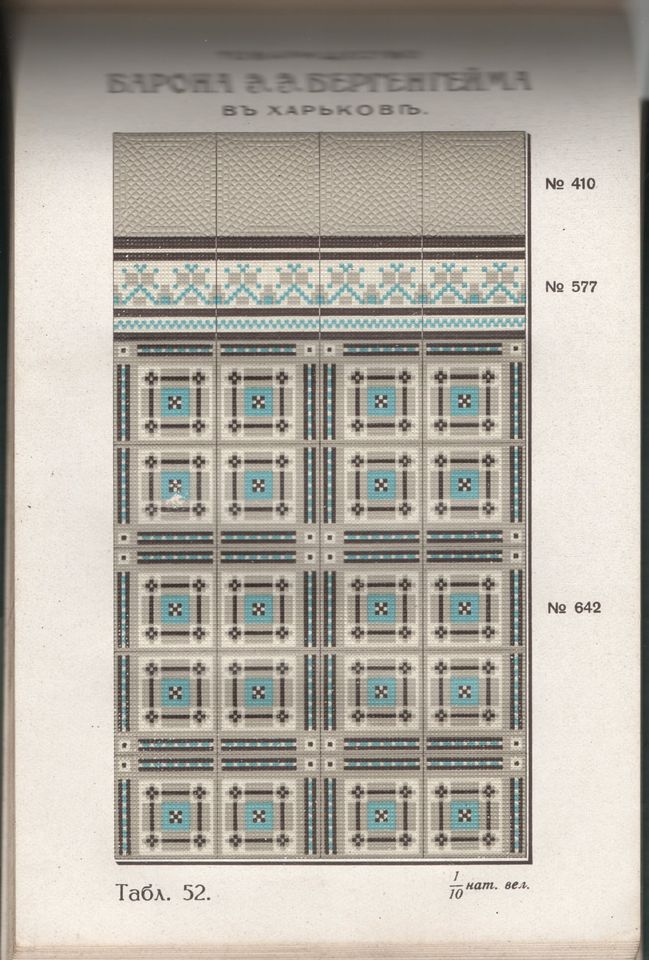
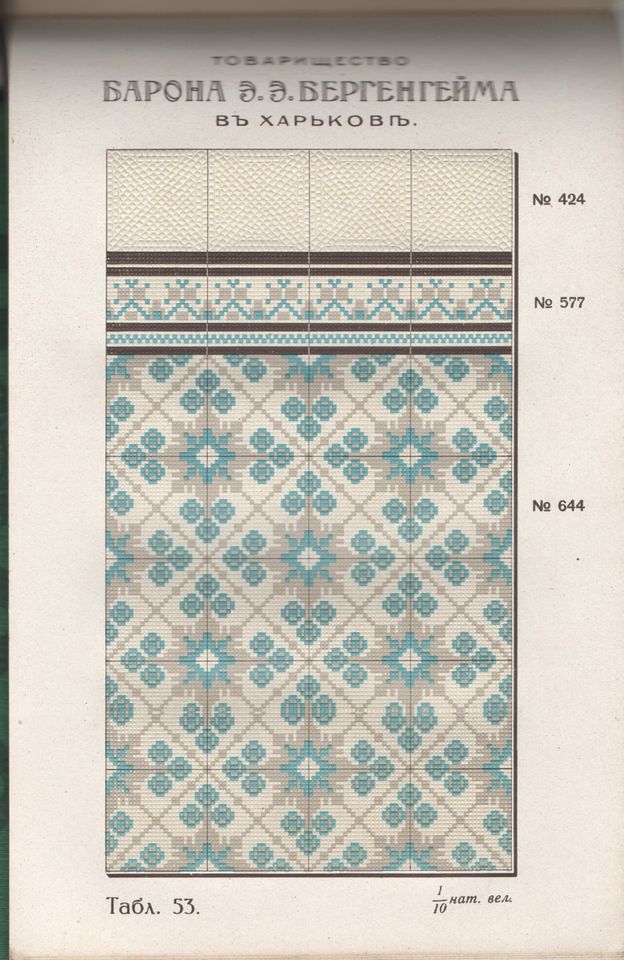
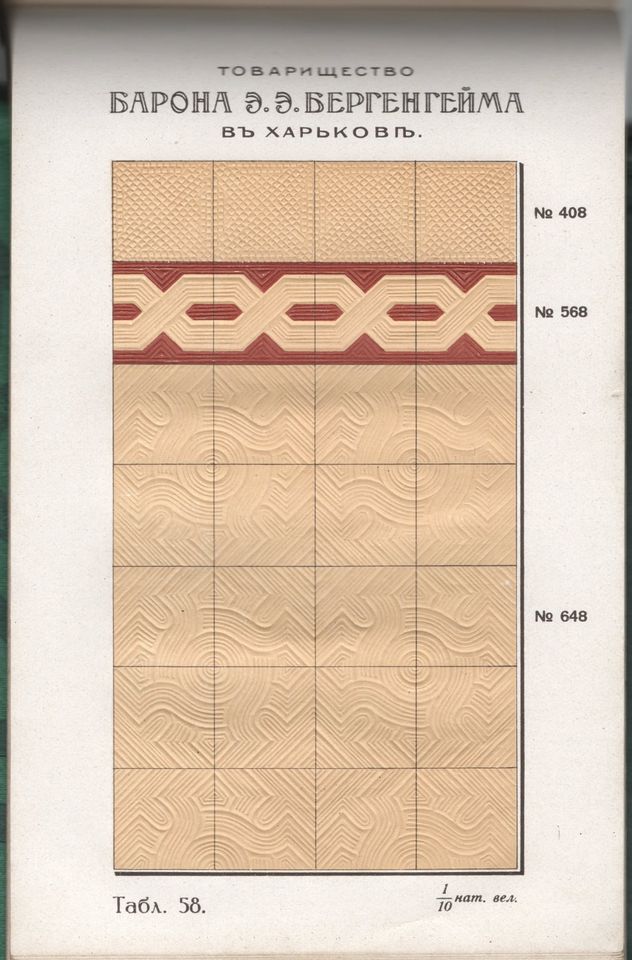
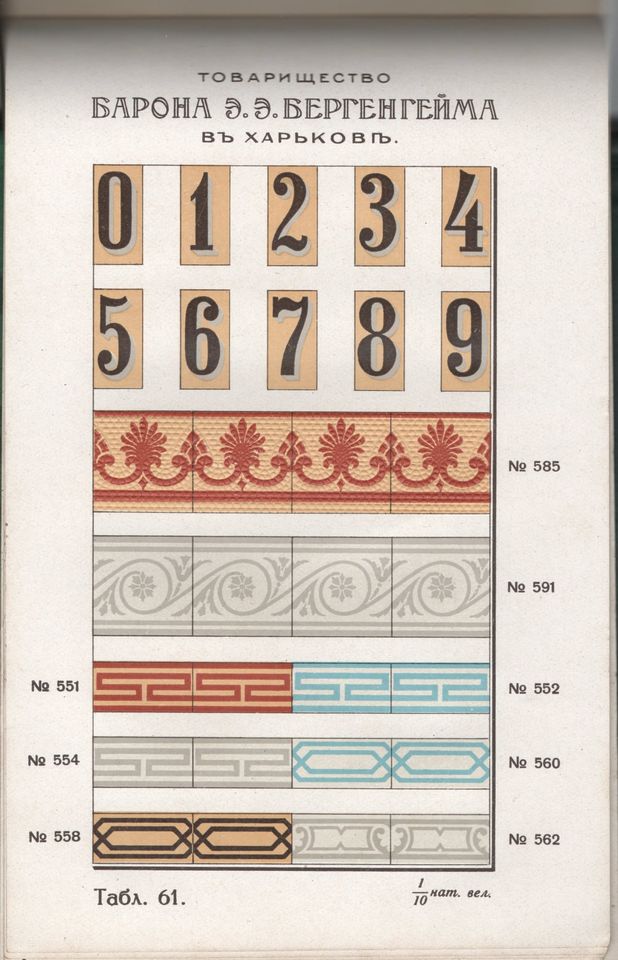
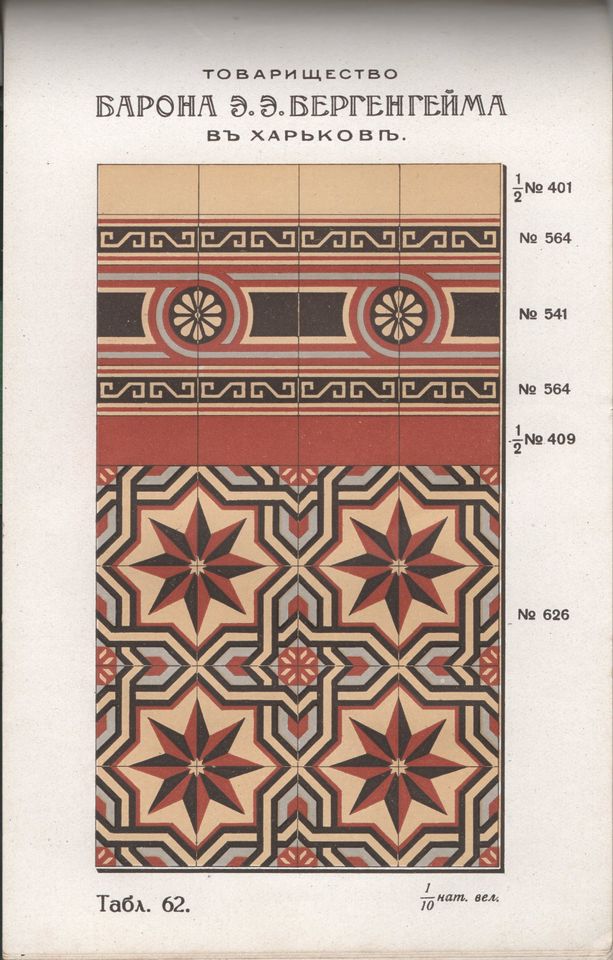
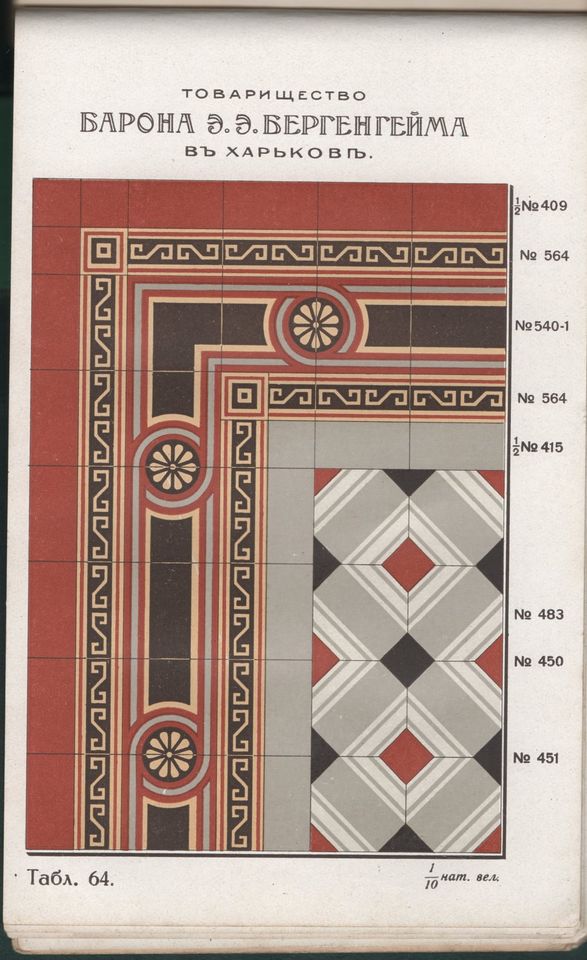
You can find lower-quality photos of some of the missing pages of the catalog at various auctions.
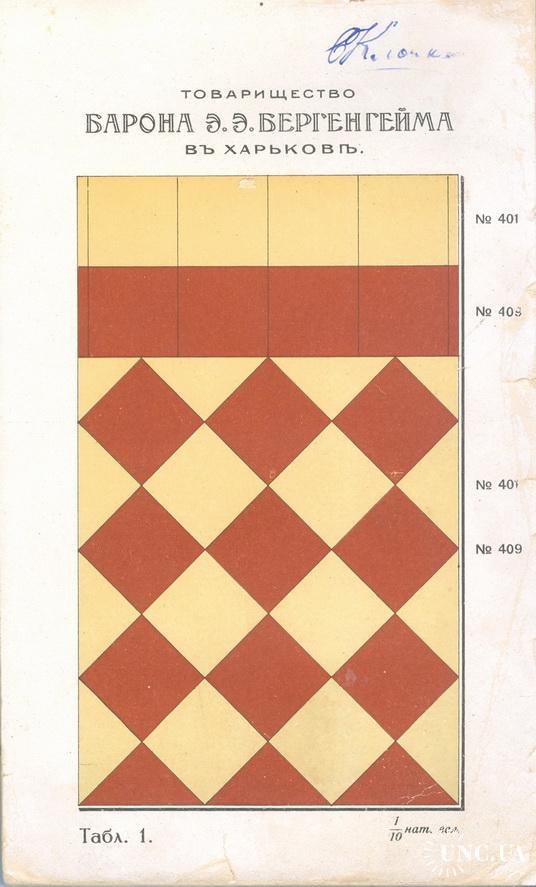
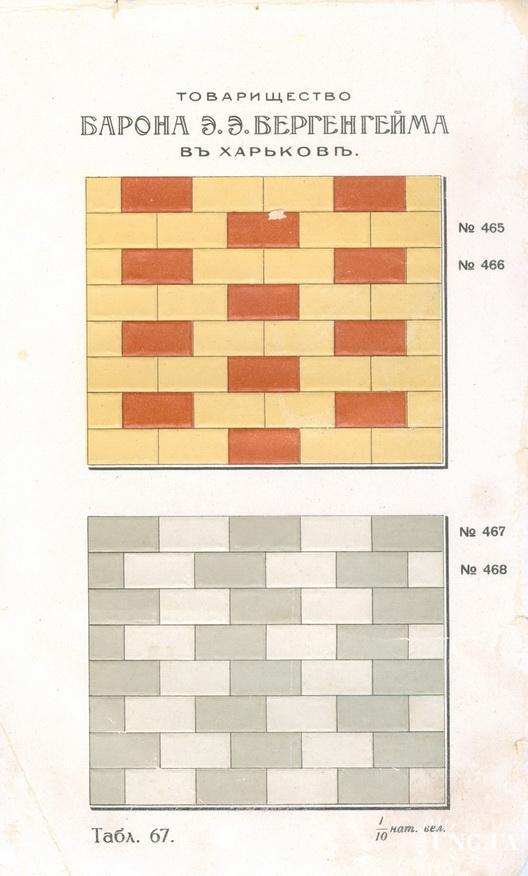
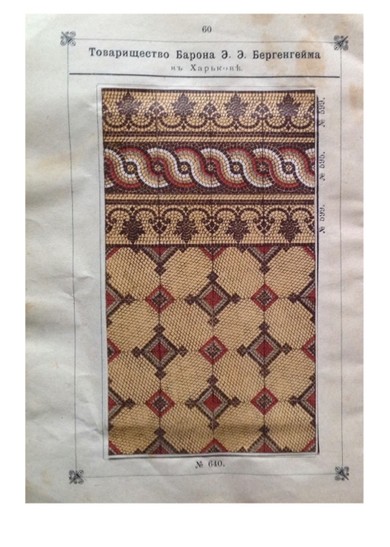
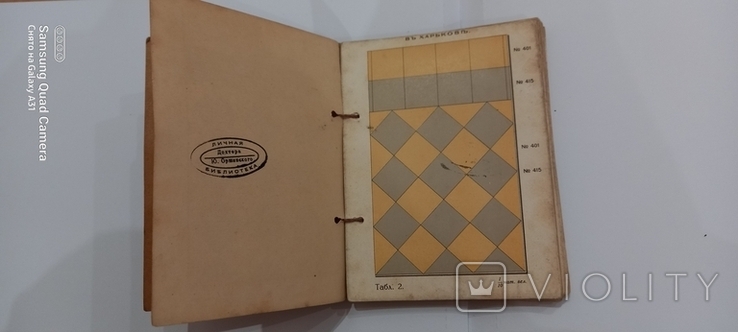
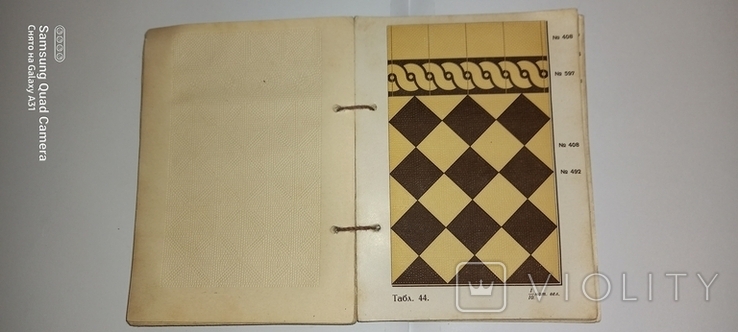
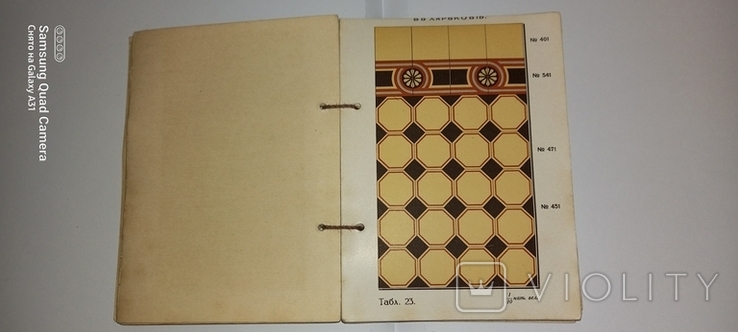
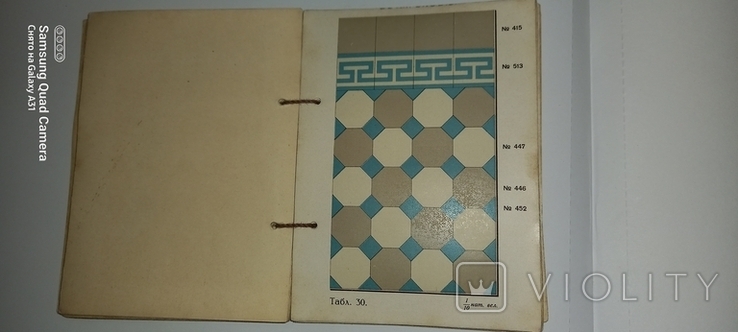
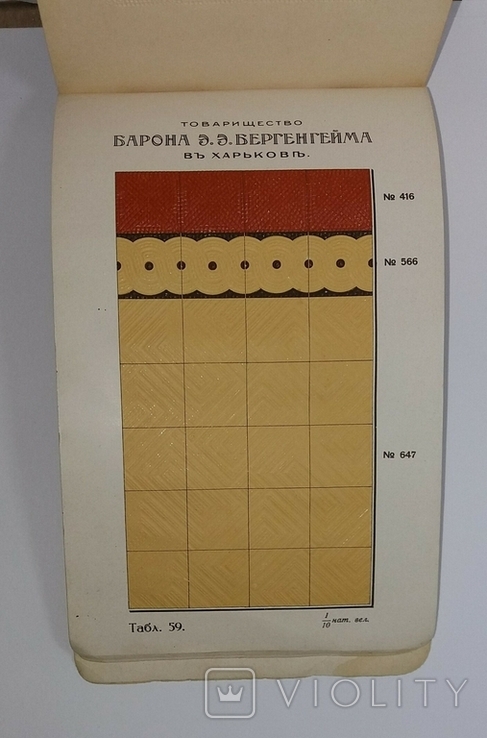
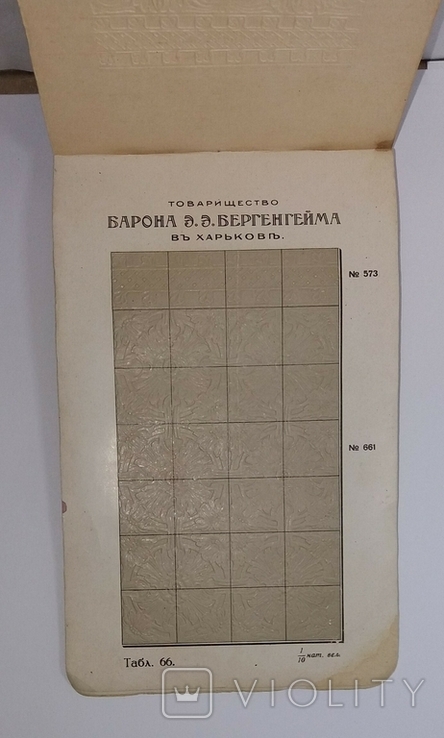
If you have photos of these pages or any missing pages from the catalog, please contact us.

- Danylevs’koho Street, 19 - 13.10.2026
- Debunking the myth about one of the most famous Kharkiv photos - 12.10.2026
- The Architectural Evolution of the Kharkiv Theater - 26.09.2026