Lately, our city has turned into one big construction site.
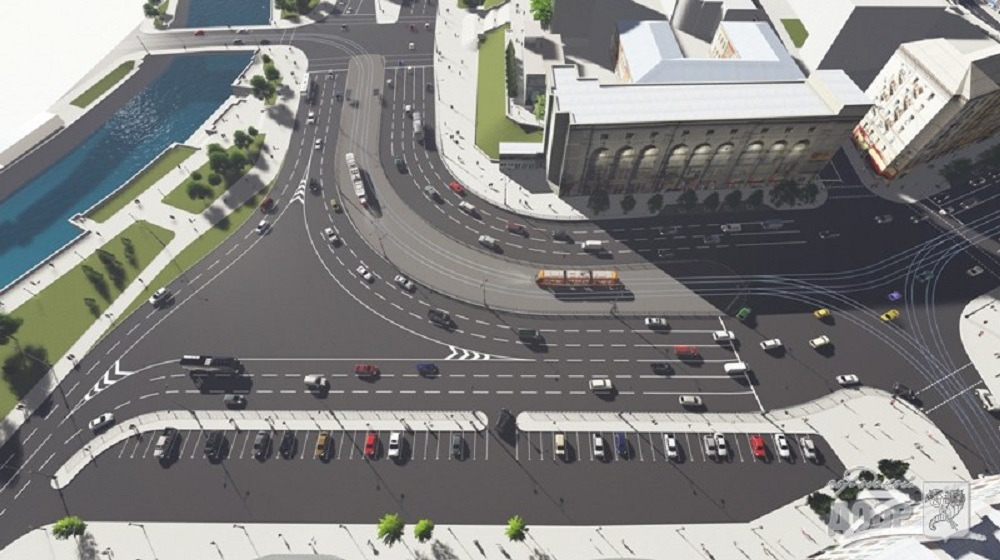
After many months of intensive renovation work, the trolleybus and bus stop at “Zirka” has been refurbished, and two beautiful historic mansions located nearby—which undoubtedly posed a safety hazard to the surrounding area—have been demolished. Residents of Kharkiv are eagerly awaiting the opening of the new and more convenient Pavlivskyi Square on August 23. To the great delight of the city’s residents, there will no longer be a pedestrian island there. Instead, the roadway will become much wider, and a large parking lot will be added.
Hidden from the eyes of envious onlookers and detractors, a section of the University Garden (now Shevchenko Park) is undergoing extensive landscaping and beautification efforts—all for the sole purpose of bringing joy to the people of Kharkiv.
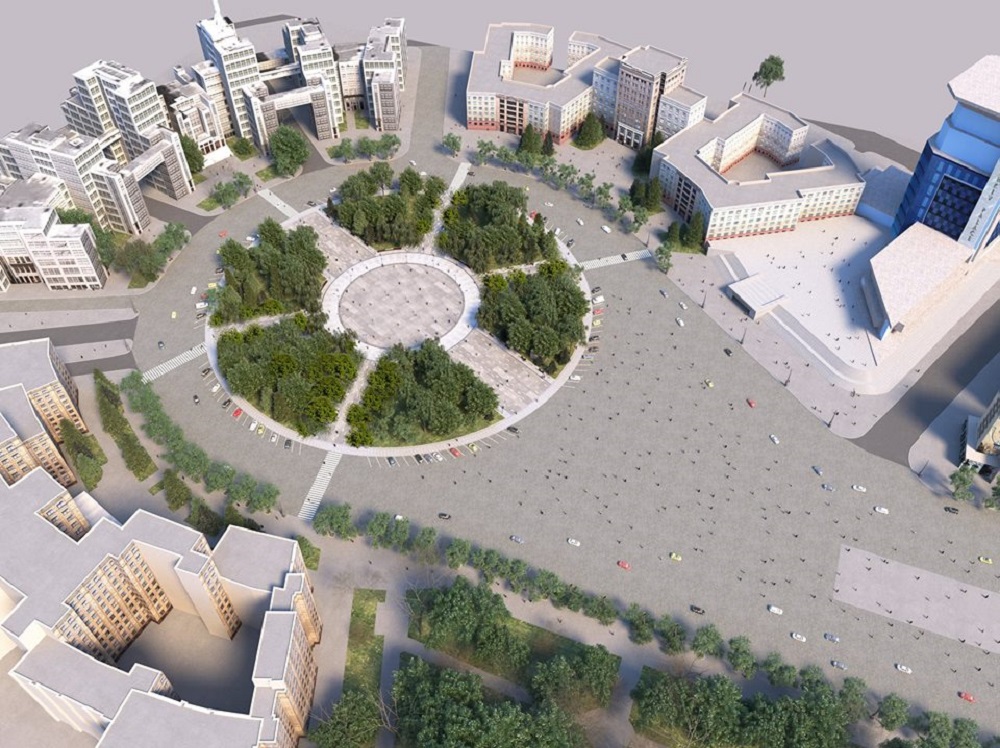
The long-awaited renovation of the park on Freedom Square has also begun.
All of the above facts clearly show that Kharkiv has not been affected by the country’s economic crisis!
From the remarks of our city’s deputy mayor, Igor Terekhov, it is clear that:
1) The square will be restored to its original, historic appearance.
2) Despite this restoration to its original form, the park will feature new flower beds and a special touch that remains a secret for now.
Residents of our city have expressed both positive and negative opinions about what is happening. Indeed, what was the park like before, in its original form, so to speak?
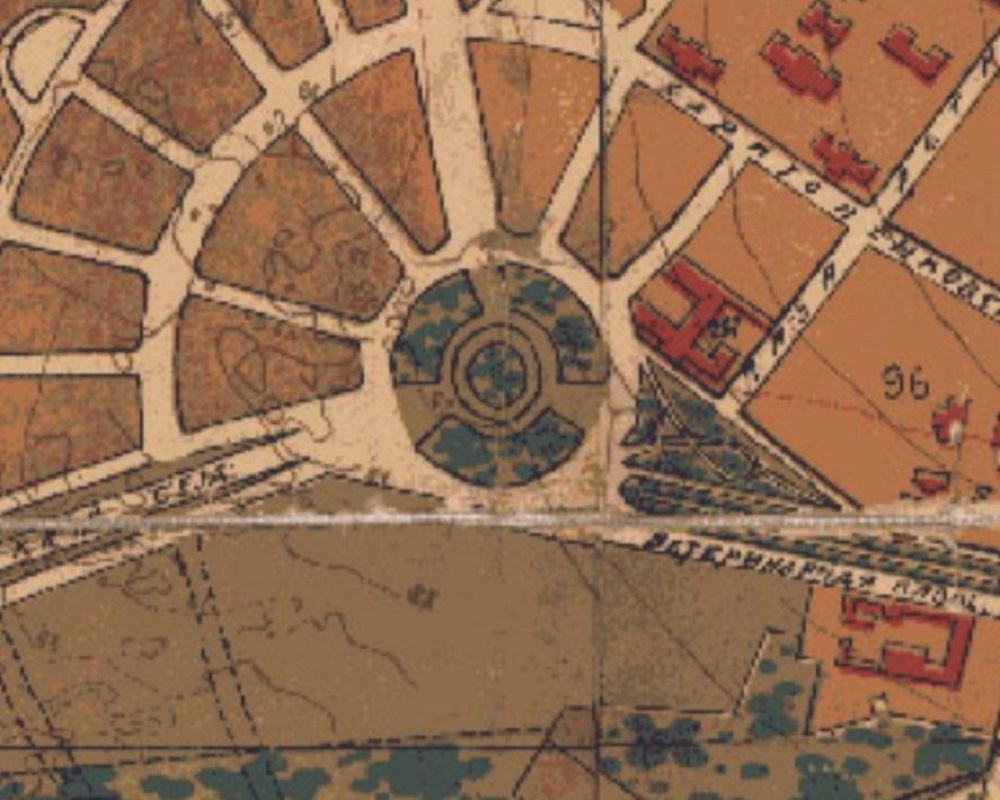
In the beginning, there was a vacant lot. And there was nothing there, except for a small, unpaved area called Veterinarna Square. This vacant lot belonged to Kharkiv University and was crisscrossed by ravines and gullies.
From the 1887 map of Kharkiv.
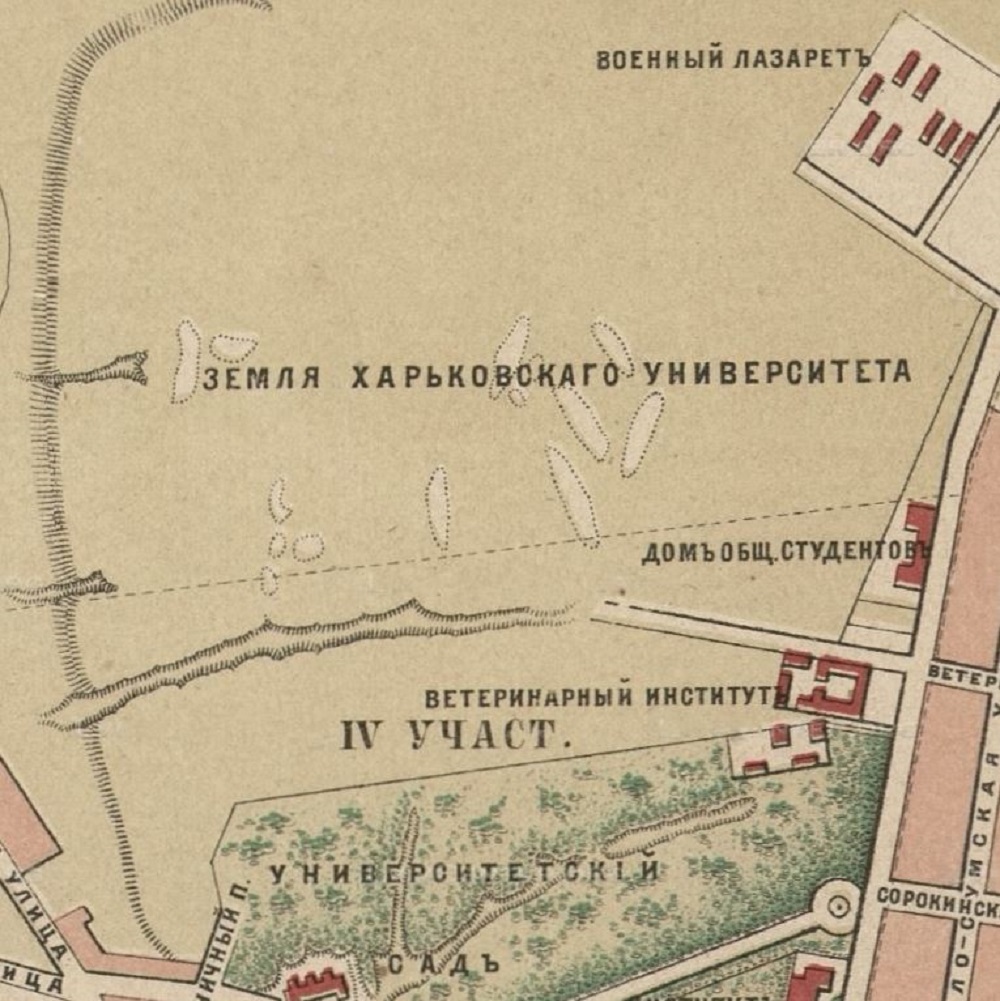
From the 1895 map of Kharkiv.
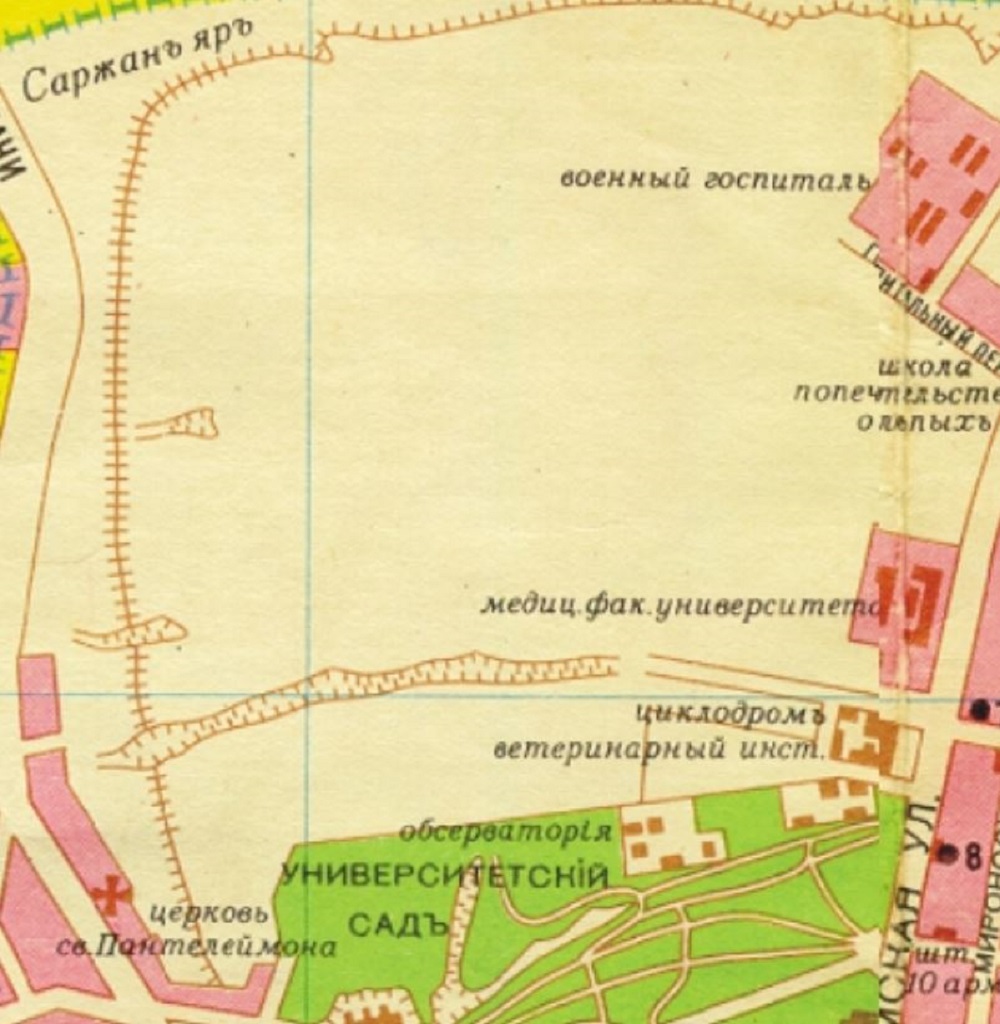
From the 1914 map of Kharkiv

The Soviet regime did not believe in God, but it knew all too well that “no holy place remains empty.”
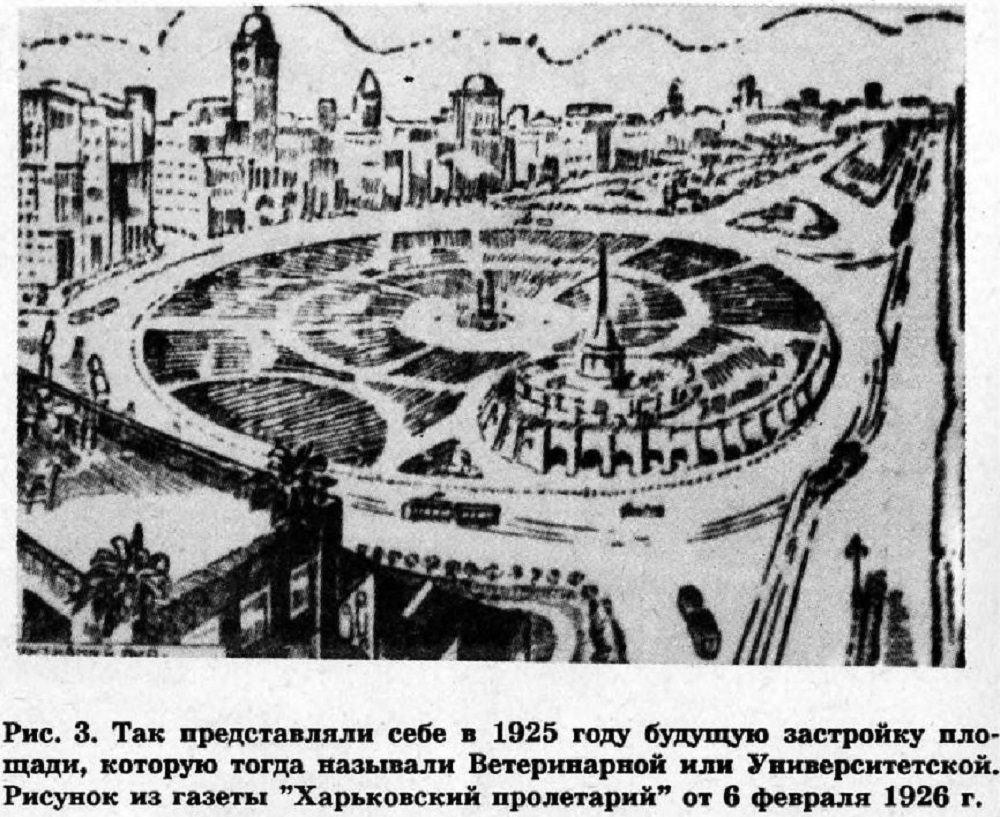
Kharkiv’s new civic center was built at the junction of the old and new parts of the city and was intended to become the focal point of political, economic, and social life in what was then the capital of Ukraine. In 1923, a closed competition was held for a preliminary design of the former university grounds in the northwestern part of the city, with the aim of developing the site into a new residential district and the public and business center of the capital of Soviet Ukraine.
The design by architect V. K. Trotsenko was selected for implementation. It was in his design that the idea of creating a circular plaza adjacent to the city park along Veterinarna Street (later Ivanova Street, now Svobody Street) was brought to life.
As a result, on the 1923 map of Kharkiv, we can already see the familiar outlines, although some buildings are not yet there.
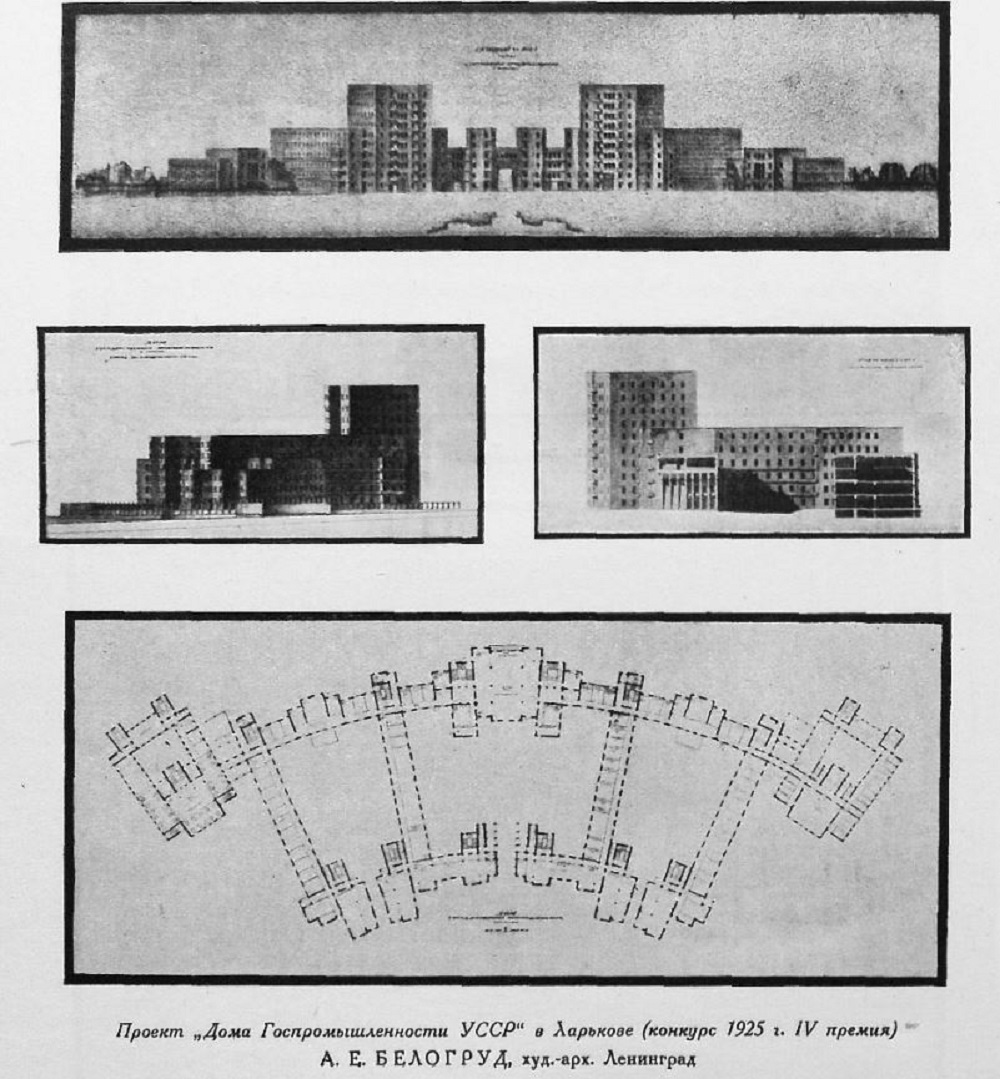
The All-Union competition for the design of the House of State Industry was announced on May 5, 1925. The deadline for submitting designs was August 5, 1925, for local architects and August 10 for those from other cities. A total of 19 designs were submitted to the competition.
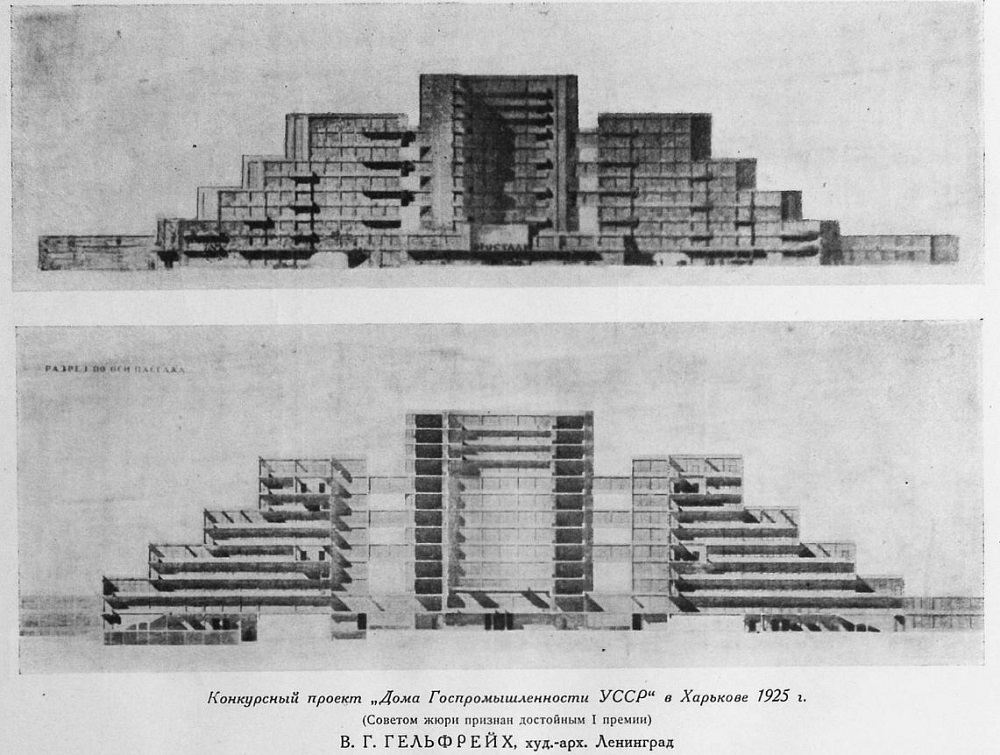
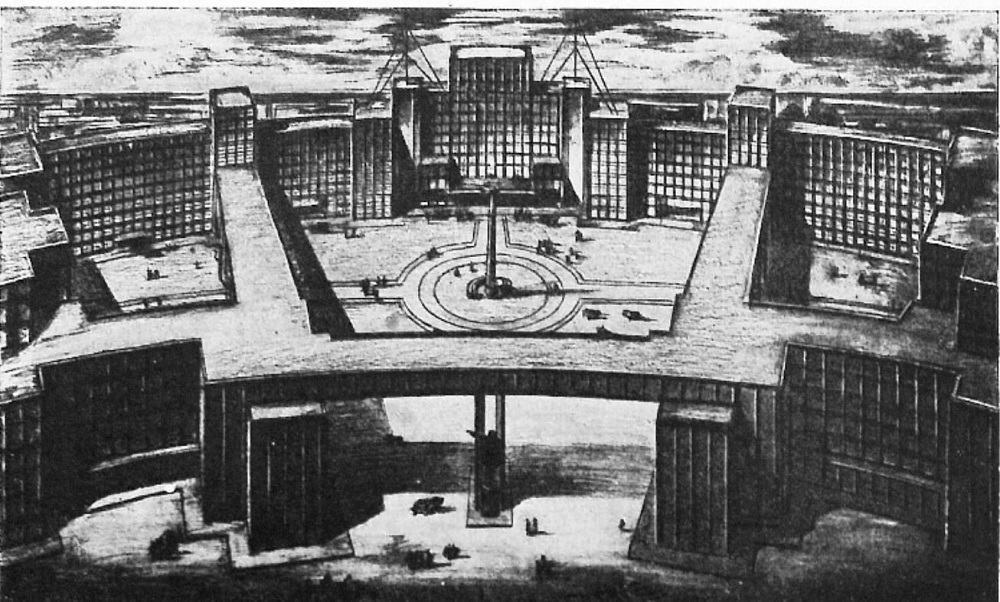

However, the first prize was awarded to a project titled “The Uninvited Guest” by Leningrad architects S. S. Serafimov, S. M. Kravets, and M. D. Felger.

The landscaping work on the square was largely completed by 1932. The ground was cut away in the circular section, from which 150,000 cubic meters of earth were removed. In the center of the circle, a huge flowerbed was laid out, covered with lawns and featuring paths lined with trimmed shrubs. In the 1930s, the square still looked desolate and austere.
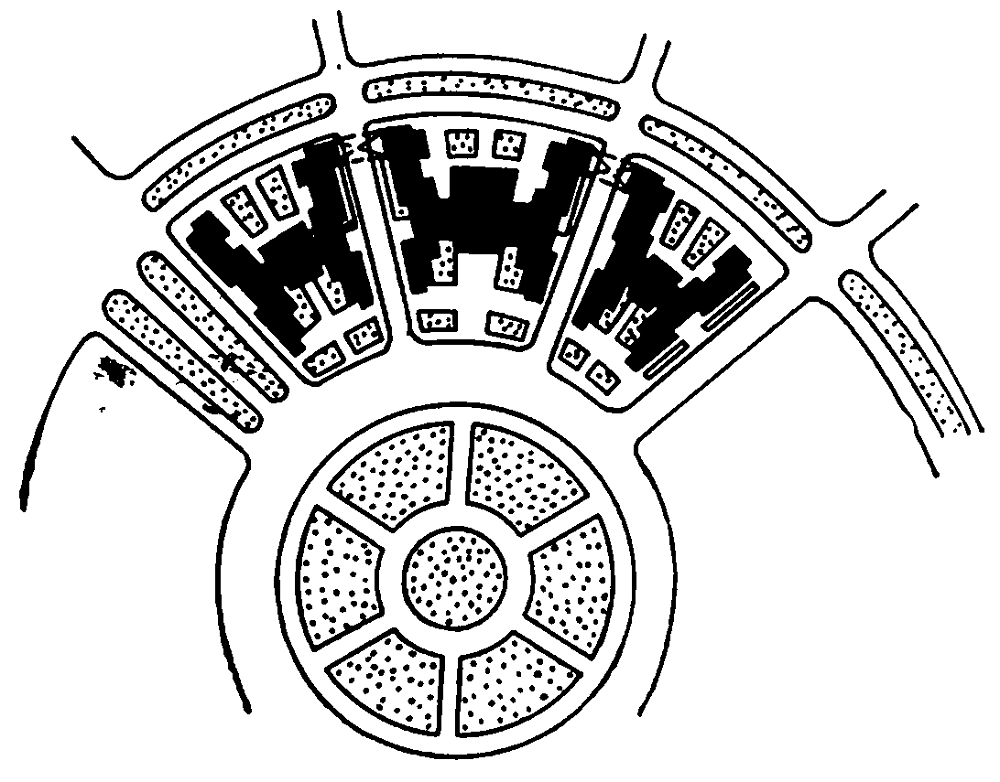
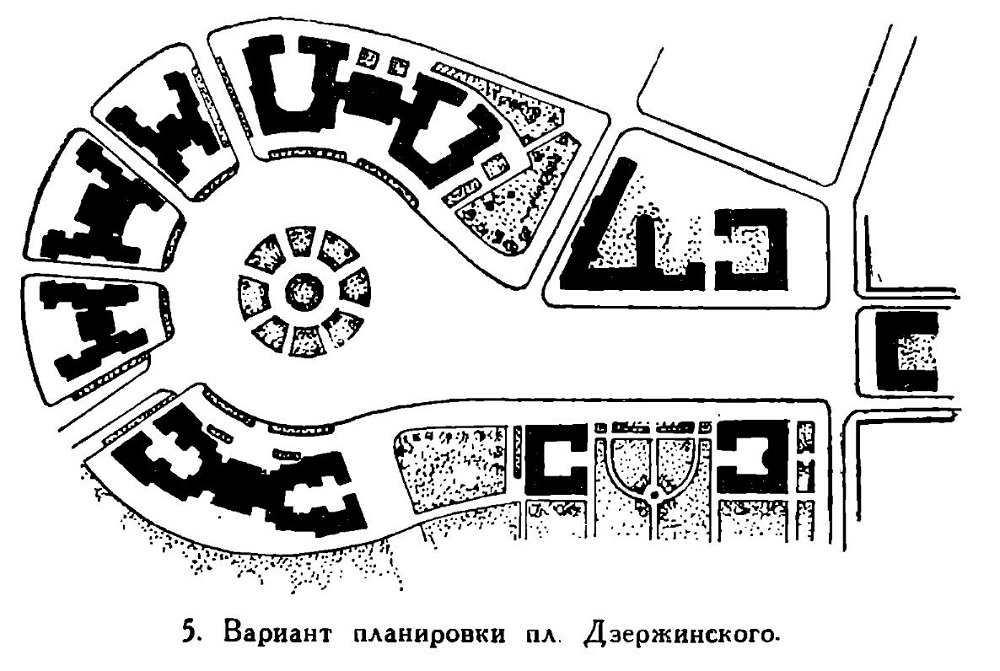
Another particularly interesting project was the one created in 1929 by the aforementioned architect V. K. Trotsenko.
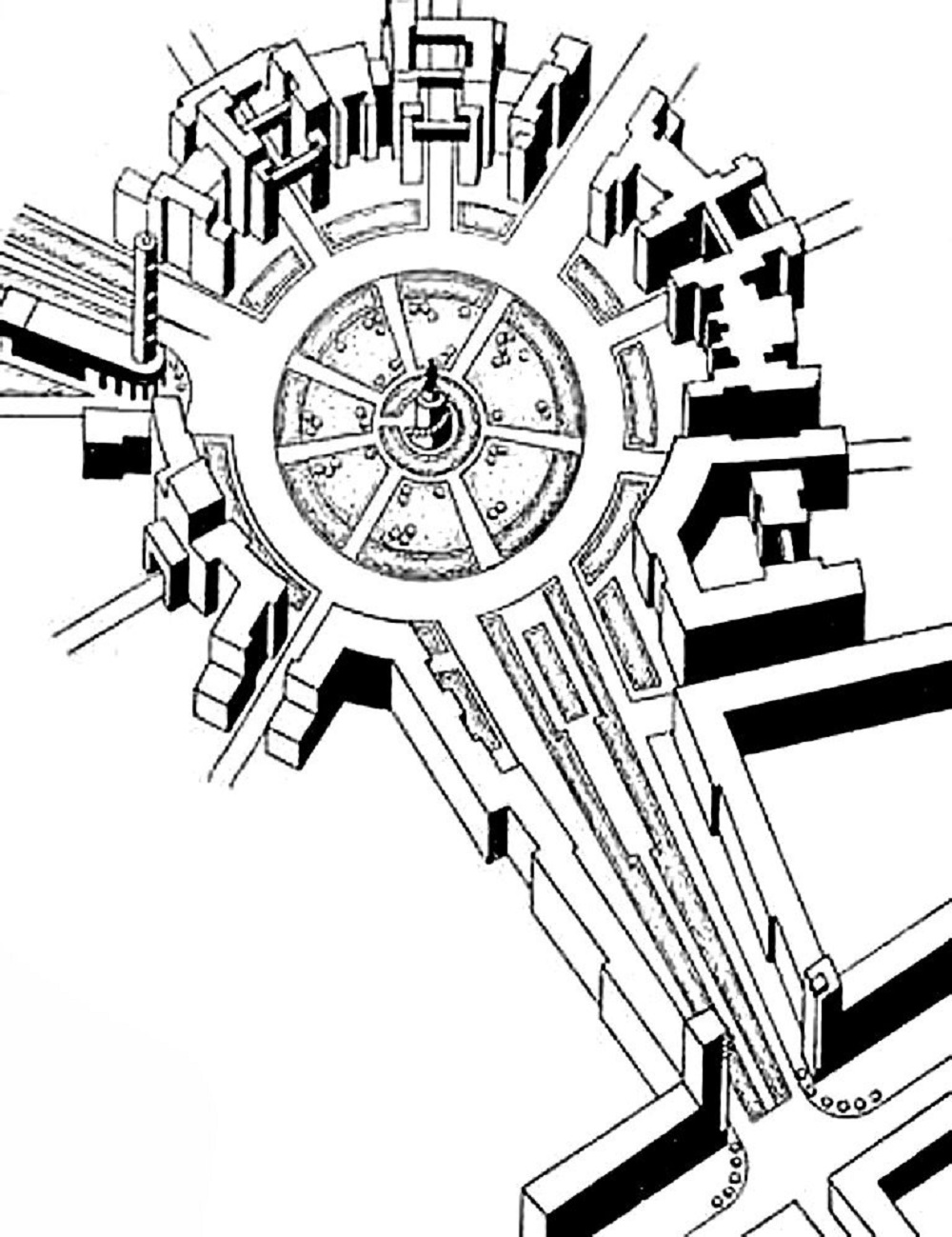
Here’s what the site of the current park looked like between 1929 and 1933.

In 1943, the situation was as follows.
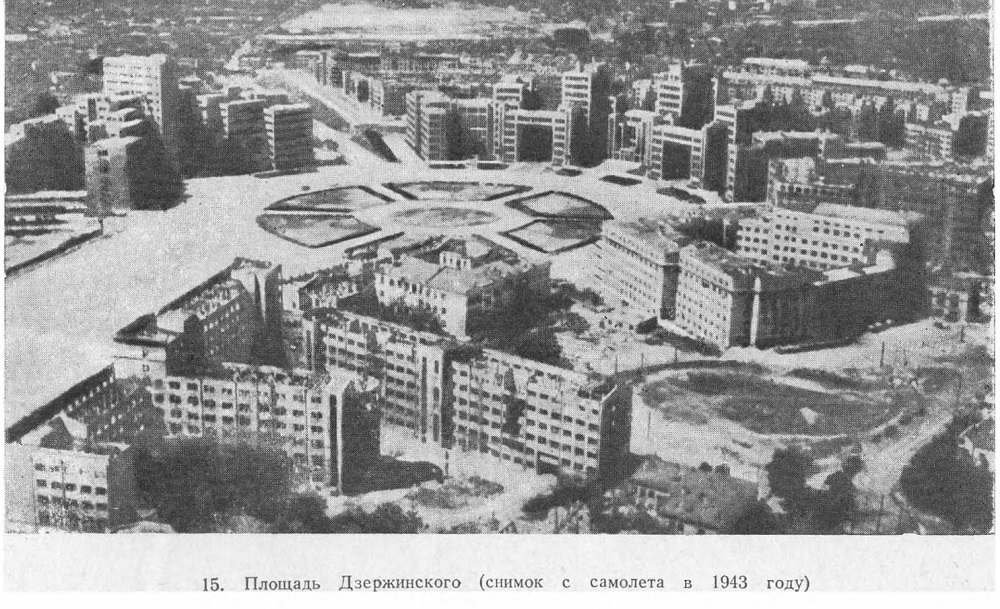
In the latter half of the 1940s, on the initiative of architect A. M. Kasyanov, mature linden trees brought from the village of Sharovki were planted around the entire square, and they took root in their new location. Here is what he himself writes on this subject in his book:
The square’s irregular shape and the location of the State Industry Building at its lower end are also commonly cited as drawbacks. There is no doubt that once the final development of the square is completed, along with its landscaping (in particular, plans call for landscaping the center of the circular part of the square) and the completion of Lenin Avenue, the square’s architecture will be more fully integrated with the architecture of the entire city and the surrounding thoroughfares
The most recent major renovations took place between 1963 and 1965. Based on a design by architects V. I. Korzh and P. I. Rusinov, the junction of the square’s rectangular and circular sections was given a wedge-shaped form, thereby altering the contours of the flowerbed and creating a small park.
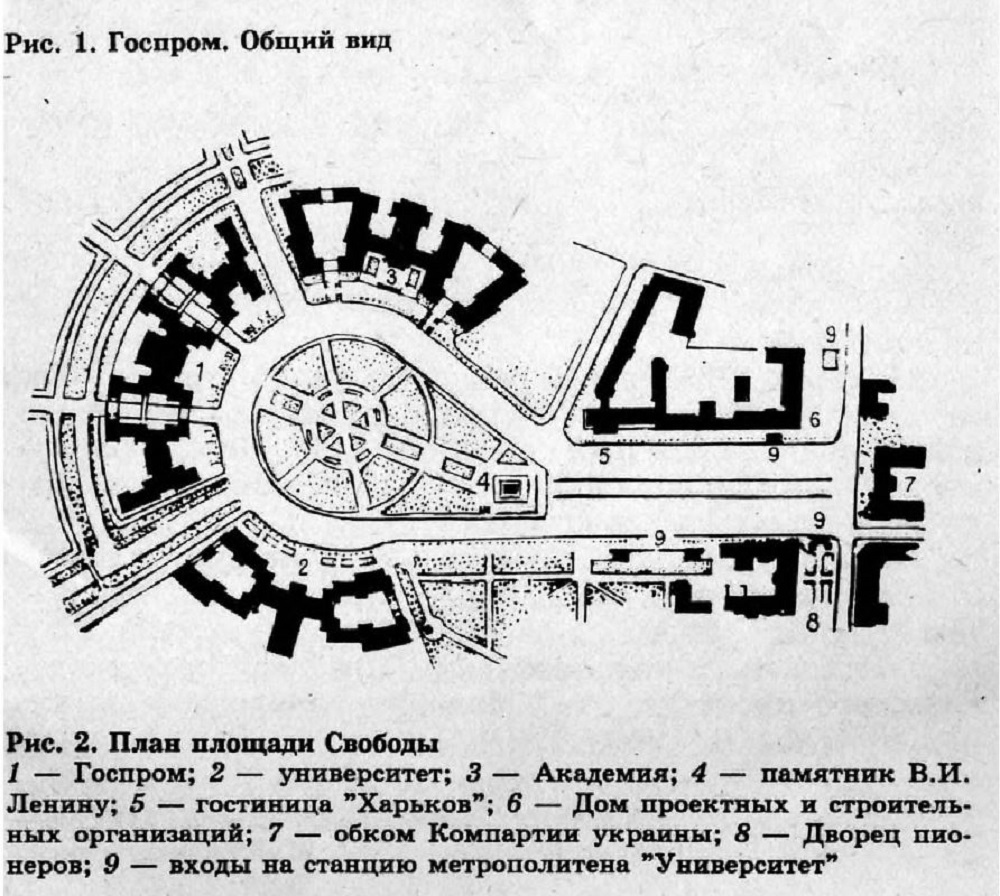
A monumental statue of V. I. Lenin was erected at the intersection, dividing the square into geometrically precise sections without obstructing the view of the buildings.
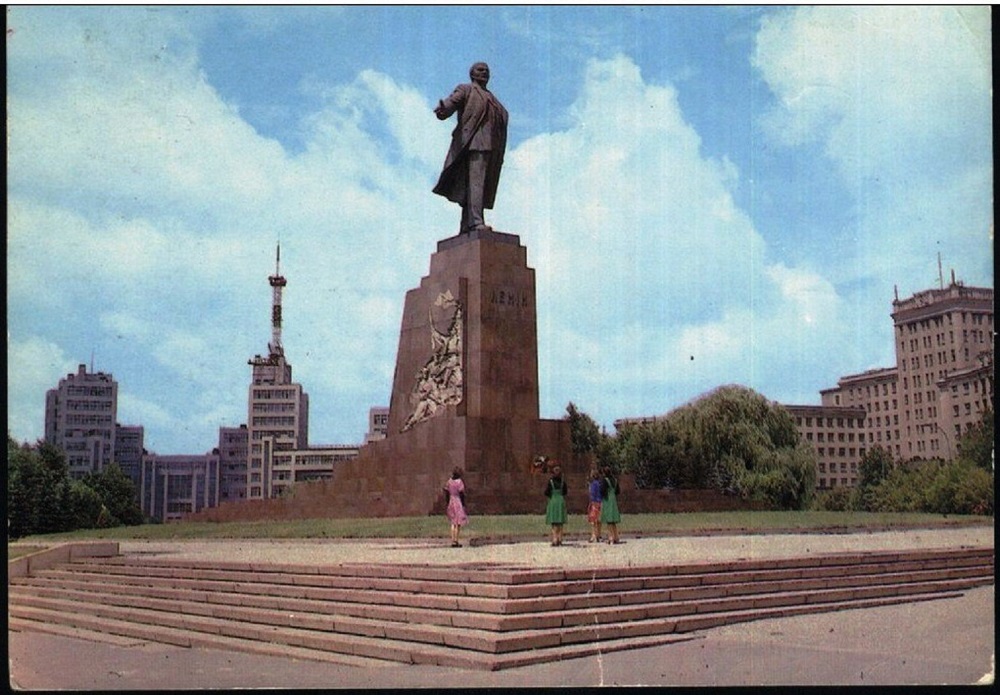
That being the case, whenever I hear talk of “restoring it to its original state,” I can’t help but wonder: what exactly does that mean? A vacant lot? A circular flower bed? A square lined with linden trees? Or perhaps the “original state” is something entirely new?

- About the military pilot school and the airfield in Kharkiv… - 04.11.2020
- Nikanor Savich—A Political Career by Mistake - 13.07.2020
- And once again, about the Cavalry Guards… - 21.01.2020