Having got into the car on June 7 at 8 am, our small but extremely friendly expedition consisting of me, Inna Romenska, Oleksiy Mazurchuk, Maksym Hrytsanenko and Dmytro Kryvuli set off on a journey through Sloboda Ukraine again. This time we decided to see what was left on the territory of the former Okhtyrsky and Sumy counties of the Kharkiv province.
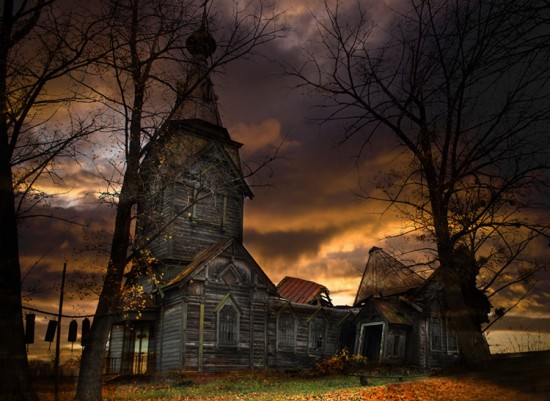
By the way, a huge number of wonderful old Sloboda Ukraine temples and estates have survived to this day on the territory of the current Sumy oblast. It would take several weeks and even months to see them all. Praise be to God that getting to them is much easier and closer than to the beauty of Western Ukraine, which our compatriots often know much better than their own. So, after a difficult choice, it was decided to visit 4 sites and painfully refuse to “stop by on the way…” about a dozen others.
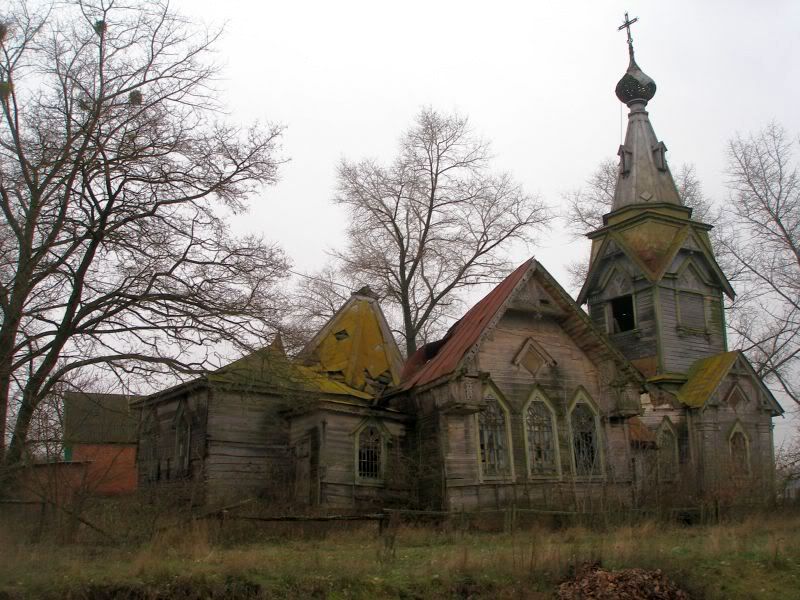
With impatience and a sinking heart, we drive up to the first place. We should not be impatient, because above Okhtyrka, in Bakyrivka, like a bird, the church of the Great Martyr Paraskeva Pyatnitsa soared on the high bank of one of the Vorskla bays.
It is believed that the temple itself was built in 1685 and during its long history has experienced more than one restoration and reconstruction (1712, 1801, 1864, 1901, 1903). It was wooden on a brick base. One of the features is the pentagonal elongated windows of the main volume and rectangular three-leaf windows on each of the faces of the octagon. The last time the temple was rebuilt was by the diocesan architect of the Warsaw-Kholm and Kharkiv dioceses, Volodymyr Nikolayevich Pokrovsky. V. N. Pokrovsky’s wooden buildings were absolutely unique in their architecture. The temple survived two wars… However, in 1989 it was closed due to a state of emergency. But it was still considered the only wooden creation of the great architect that has survived to this day. Thanks to numerous photographs on the Internet, we can still see this beauty.
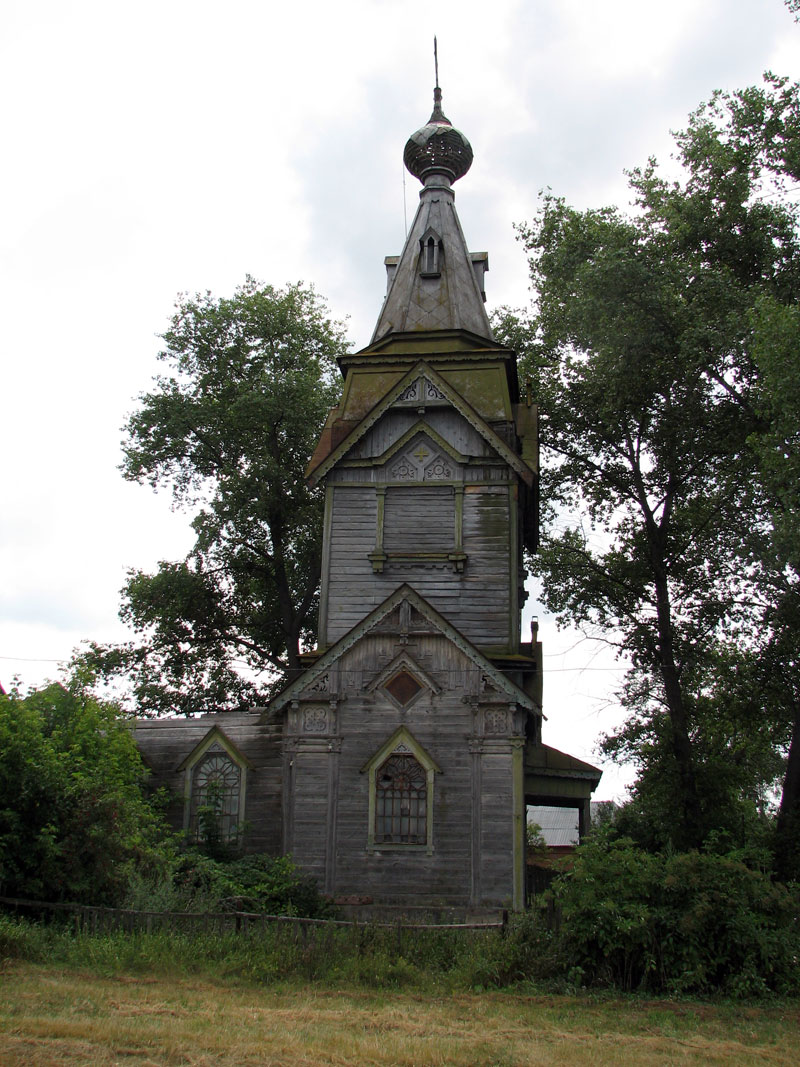
Unfortunately, on the morning of July 28, 2015, lightning struck the dome of the temple. The fire was extinguished only in the evening.
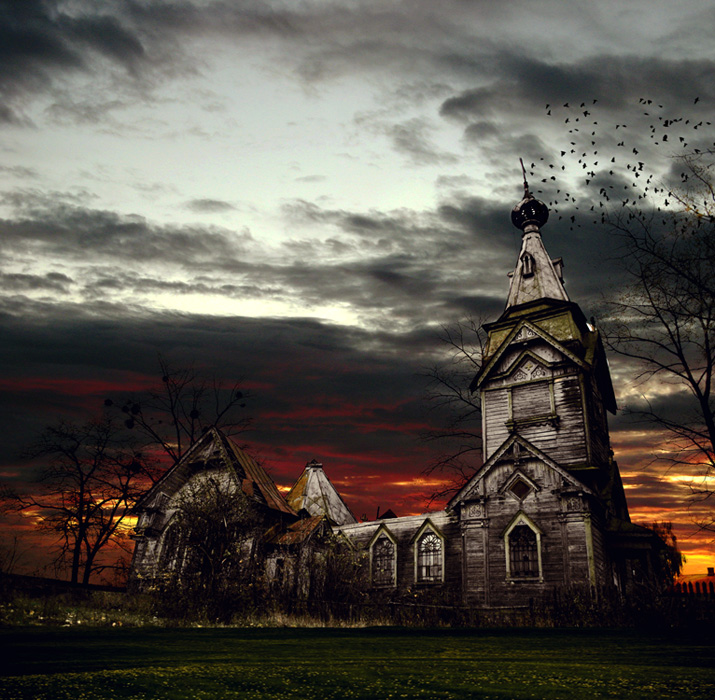
“As a result of the fire, the dome and its superstructures were destroyed, and walls over an area of up to 80 square meters were damaged,” the State Emergency Service said at the time.
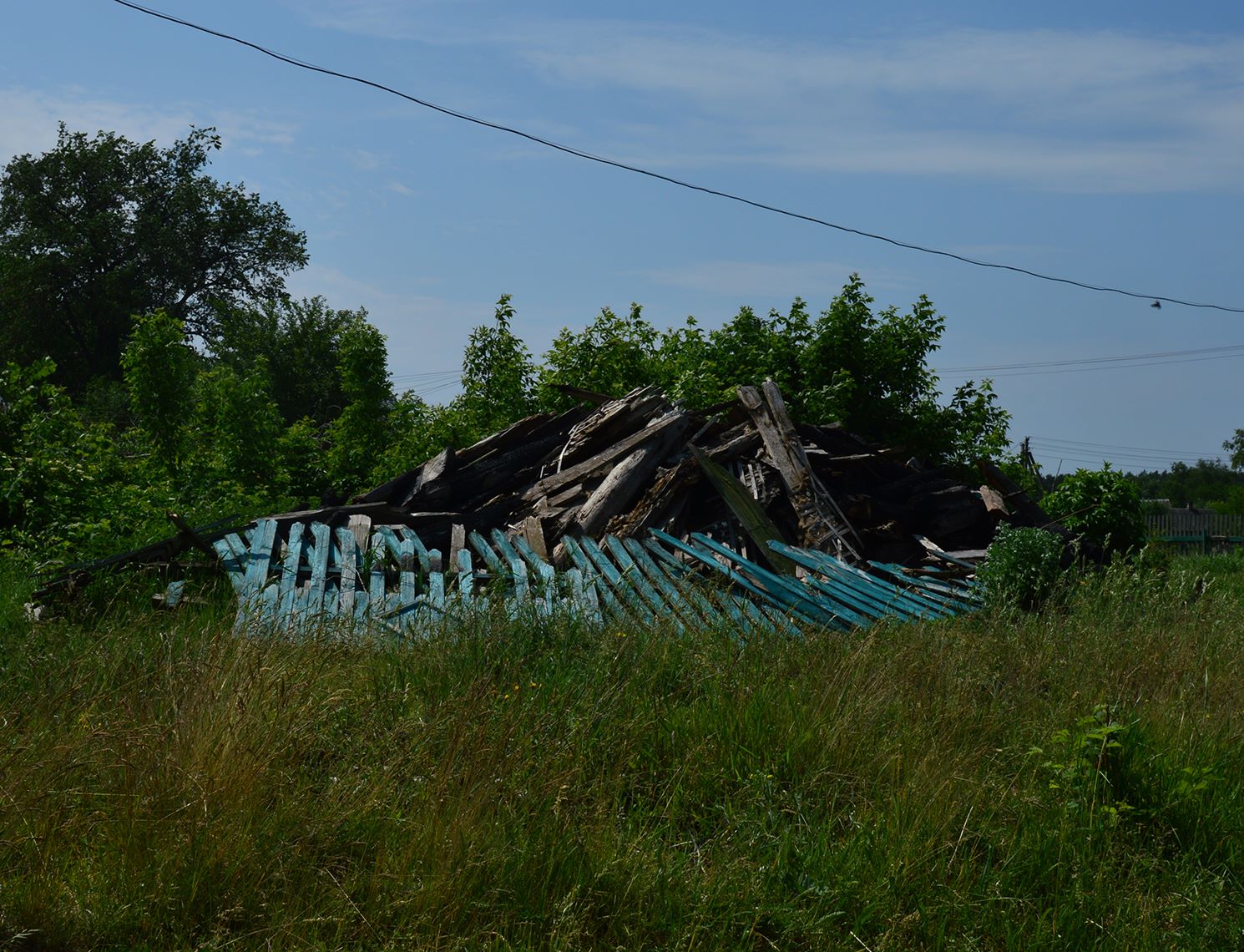
Arriving there, we hoped to see at least some remains. However, our eyes saw only piles of charred boards, which looked more like a landfill than the once beautiful temple…
Ahead of us were the estates in Hoten and Kyyanytsia, as well as the temple in Yunakivka. Therefore, we rushed through Trostyanets and Sumy without stopping, without even stopping at Boromly, Velyky Bobryk and Mogrytsa, giving ourselves the word to definitely get there next time.
Turning right to Pysarivka, we first go to Yunakivka. In K. Shchelkov’s book “Historical Chronology of the Kharkiv Province”, published in 1882, you can read the following about Yunakivka:

1710.
— Captain Semen Andriyovych Yunok, who founded and owned Yunakivka, sold it to Field Marshal Prince Mikhail Mikhailovich Golitsyn.1806.
— A stone church of the Nativity of the Virgin Mary was consecrated in Yunakivka, permitted for construction in 1793.
Historian Dmitry Vasilyevich Polenov in his book “Historical Information about the Catherine Commission for the Creation of a New Code Project” writes the following about Yunakivka:
Since ancient times, the settlement of Yunakivka, which was previously the property of the Sumy Cossack regiment, and through the sale of that Cossack to his nobility, Prince Golitsyn, came into possession, which his nobility, Prince Alexander Mikhailovich Golitsyn, still owns. And in that settlement of Yunakivka, the residents, the Cherkass subjects, have freedom in everything, such as wine smoking in the winter and summer months continuously, as well as free taverns and salt sales without interruption
According to data for 2001, the population of Yunakivka was a little over 1,700 people.
After all, earlier, in the middle of the 19th – early 20th centuries, from 5,000 to 8,000 residents lived here. There was an almshouse, Khomovsky’s weaving factory, which produced linen and sacks for 8,000 rubles a year, a post office, a Sunday market and 4 fairs a year, sugar, saltpeter and brick factories, more than a dozen shops. this day. In the center of the village there are still several magnificent mansions from the beginning of the 20th century, which are gradually turning into ruins.
The glorious family of princes Golitsyn owned Yunakivka for over 100 years, until the middle of the 19th century. Then, as a result of the marriage of Princess Alexandra Mikhailovna Golitsyna with the famous German diplomat and politician Georg Herbert zu Münster (German: Georg Herbert zu Münster), Yunakivka went to their son Alexander. In 1893, he sold the dilapidated estate to close relatives of the famous entrepreneur Ivan Kharitonenko – the Leshchinskys. However, it was precisely with those times when Yunakivka was owned by the Golitsyn princes that the reason for our arrival there was connected.
In his book “Historical and Statistical Description of the Kharkiv Eparchy” Filaret (D. G. Gumilevskiy) writes:
In what year the first church in Yunakivka was built is unknown. It is only known that it was in the name of Saint Nicholas, with a single throne. From the history of the increase in the population of Yunakivka under Peter, it is undoubtedly that around 1709 there was already a church in Yunakivka. In the case of 1748 in Yunakivka of the Sudzhansky district at the St. Nicholas church – two priests, one – Grigory Podolsky
In total, there were 3 churches in the settlement.
1) A stone three-altar church in honor of the Transfiguration of the Lord. It was built at the expense of parishioners and with the participation of the owner of the settlement, Prince Golitsyn, in 1784. The old wooden Transfiguration church was sold by the residents of Yunakivka to the village of Bilka, Sudzhansky district.
2) Nativity of the Virgin.
3) A stone single-altar Holy Trinity cemetery church, built in 1857 at the expense of parishioners and assigned to the church of the Nativity of the Virgin.
Of these, only one has survived to this day – the Nativity of the Virgin.
It was built on the site of an old wooden church for 13 years (from 1793 to 1806) at the expense of parishioners. The old wooden church was dismantled due to old age. The church was made of stone with four altars in the name of St. Nicholas, Archangel Michael, in honor of the Nativity of the Most Holy Theotokos, and in the choirs in honor of three saints: Basil the Great, Gregory the Theologian, and John Chrysostom. Since the altar of the Nativity of the Theotokos was the middle and main one, the church was named after it.
In 1823, the old bell tower was removed next to the church and a new three-tiered one was built with the money of the abbot of Korniliy Krasnokutsky. In 1874, a warm church in the name of the Three Saints was built in the lower basement of the church.
The name of the architect of the church is unknown, but since it was built in the neoclassical style, some are inclined to attribute its authorship to the most famous architect of that time, Giacomo Quarenghi.
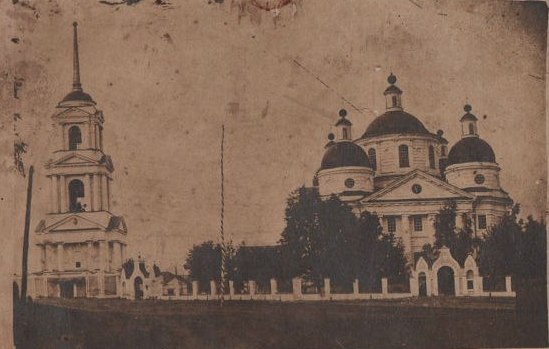
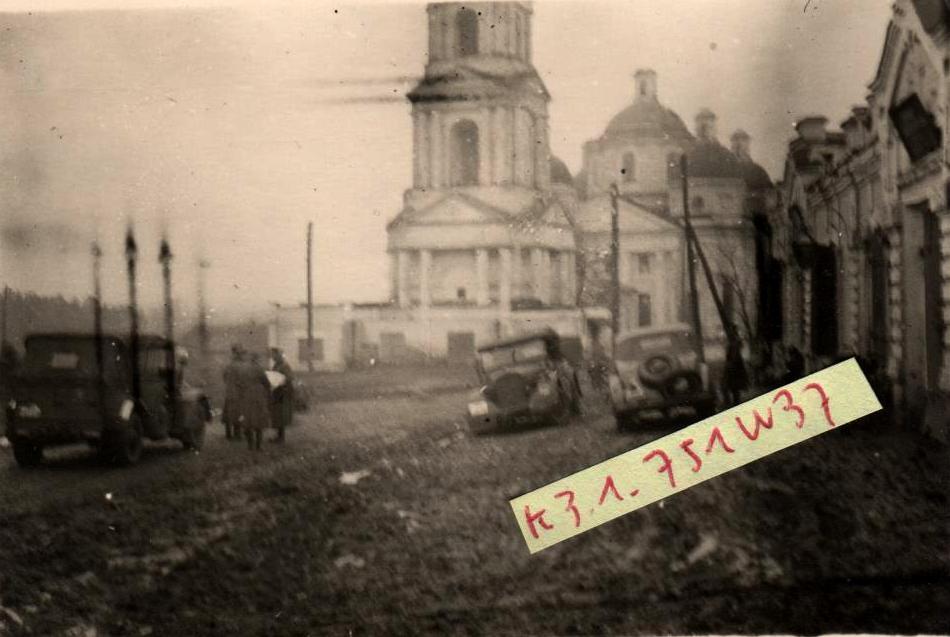
In the 1920s, the church looked like this:
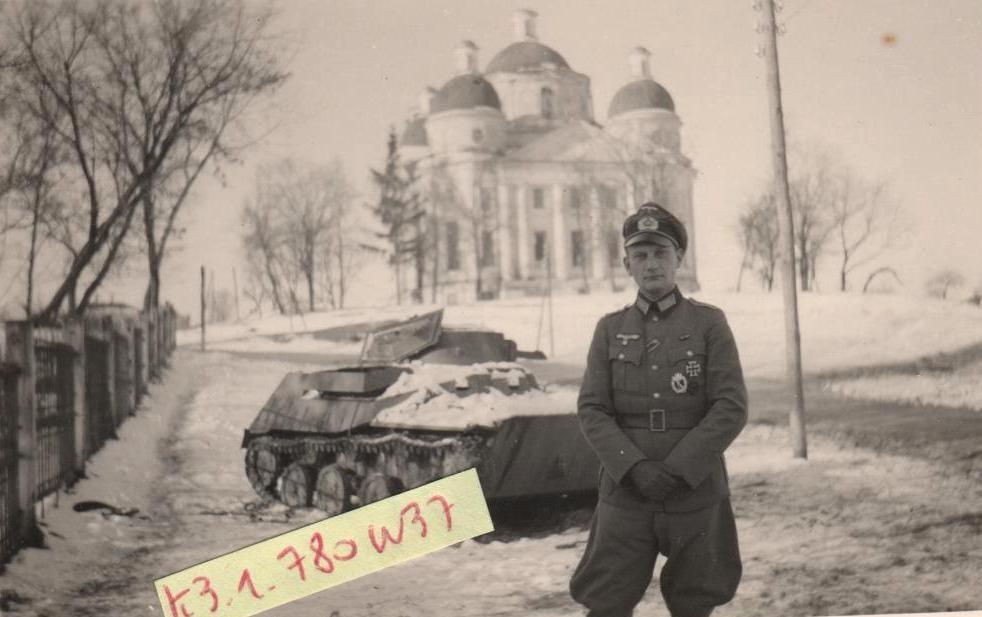
You can find many German wartime photographs taken against the backdrop of the church on online auctions.

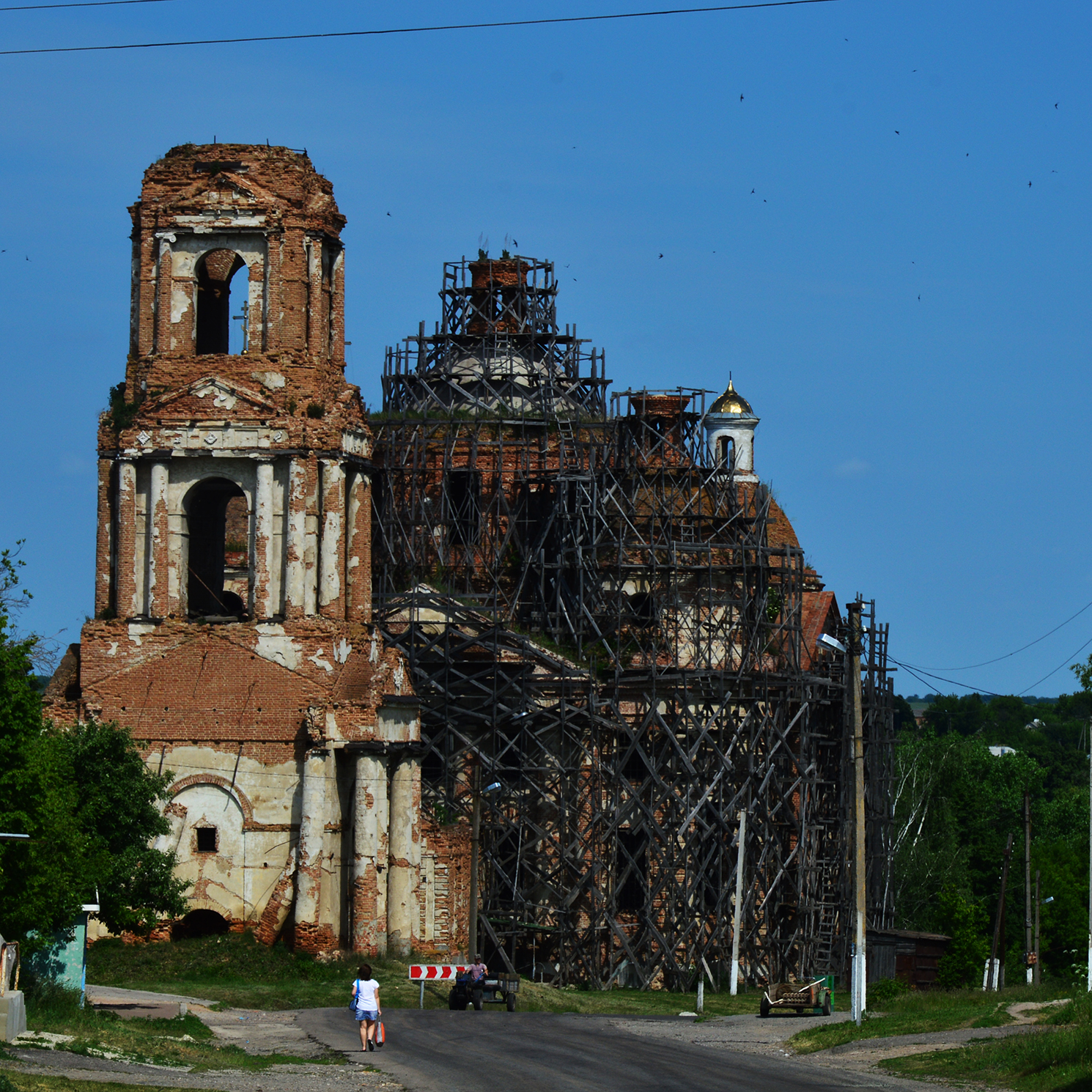
Today, the Church of the Nativity of the Virgin in Yunakivka, which is considered one of the best examples of neoclassical architecture in Ukraine, is striking in its beauty and unusual paintings, and has been in scaffolding for many years. But even now, to say that the church is beautiful is an understatement. To say that it is magnificent … in my opinion, one can simply remain silent.
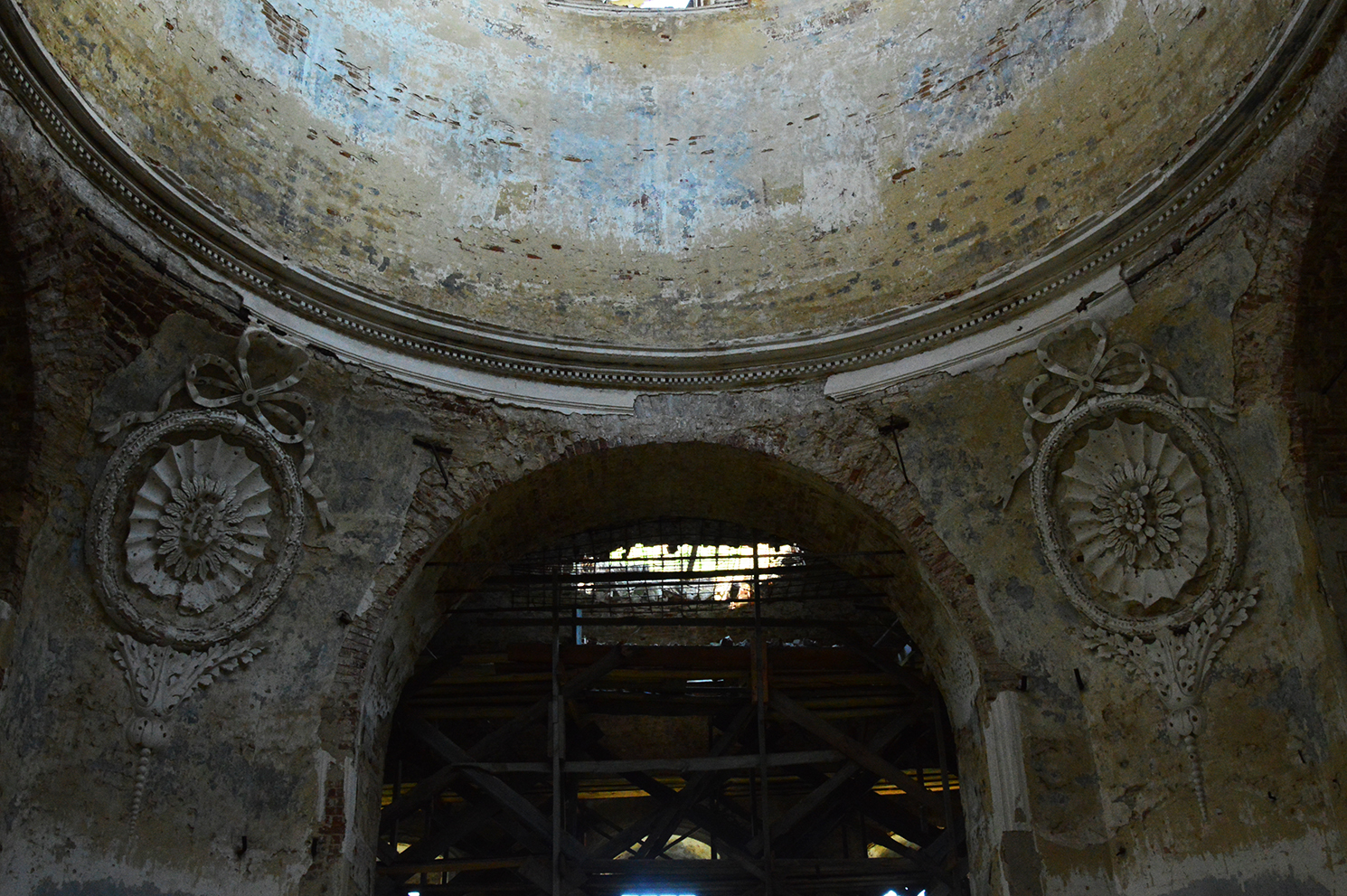

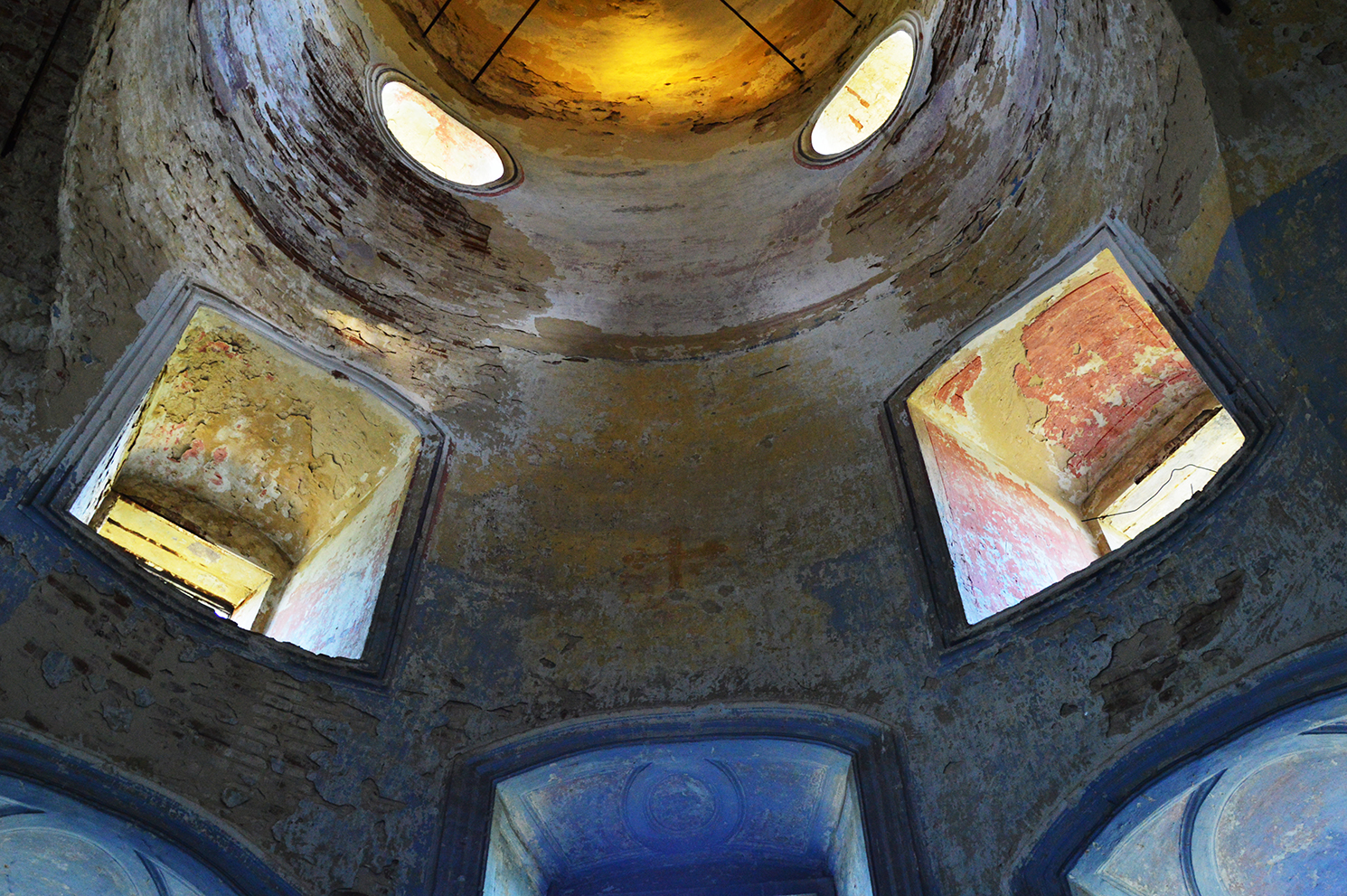
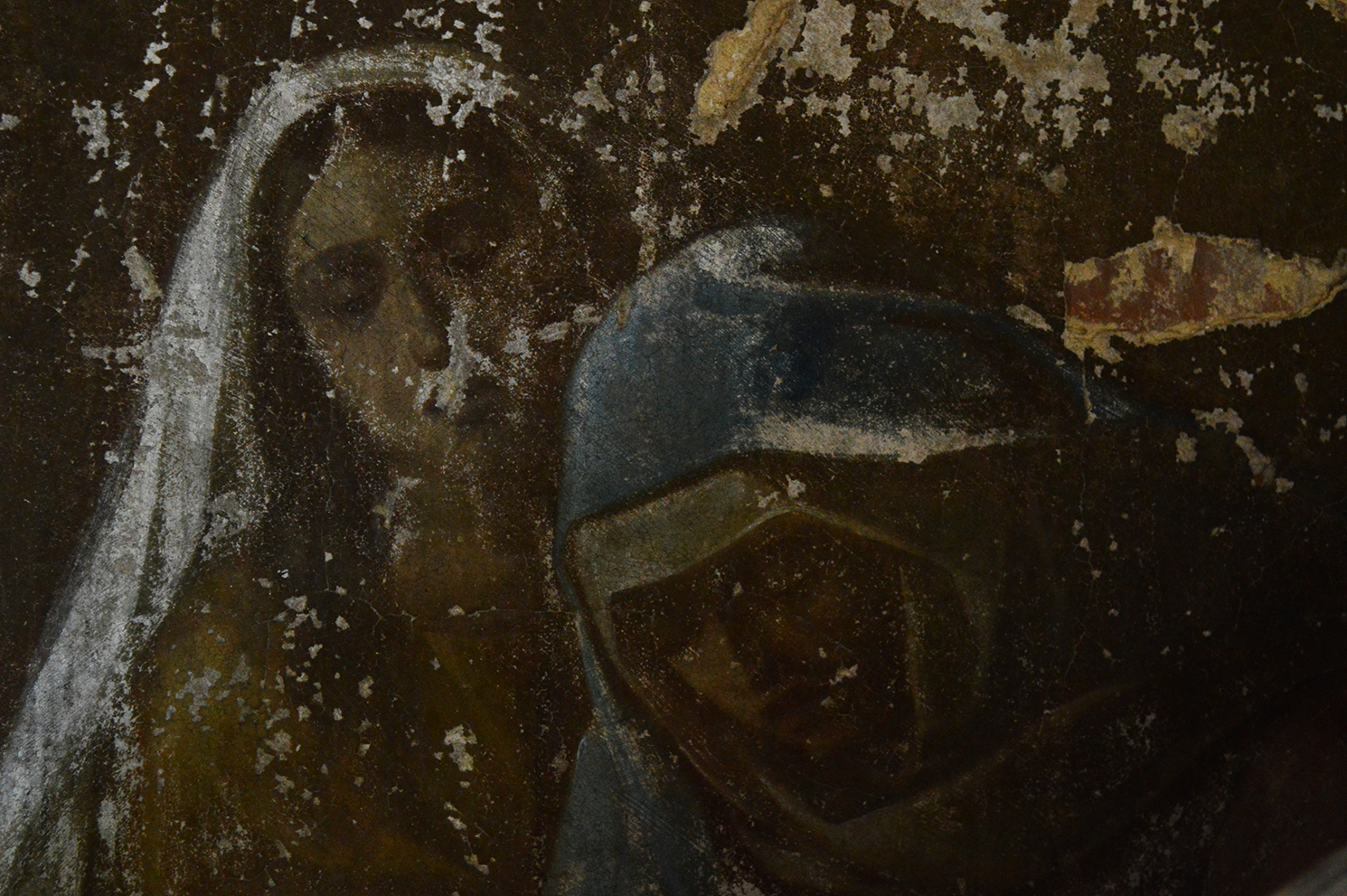
The local community is currently trying to restore the Church of the Nativity of the Virgin, the same one that for some reason is simply called “Golitsyn”. Services are held on the lower basement floor.
Long ago, when people believed that the earth was flat, they said that standing on its edge, you could feel dizziness. Being in Yunakivka, on the very edge of the Sloboda Ukraine world, your head became really dizzy–that’s true. But it’s not the height that makes you dizzy, but the admiration. Even from what’s left…
Each of us in Sloboda Ukraine has our favorite places. For me personally, one of those places is the ancient temple in Yunakivka. It’s the place you keep coming back to and don’t want to leave. However, no matter how much we wanted to stay there longer, we forced ourselves to get in the car and drive to Kyyanytsia – to meet what’s left of the Leszczynski estate.
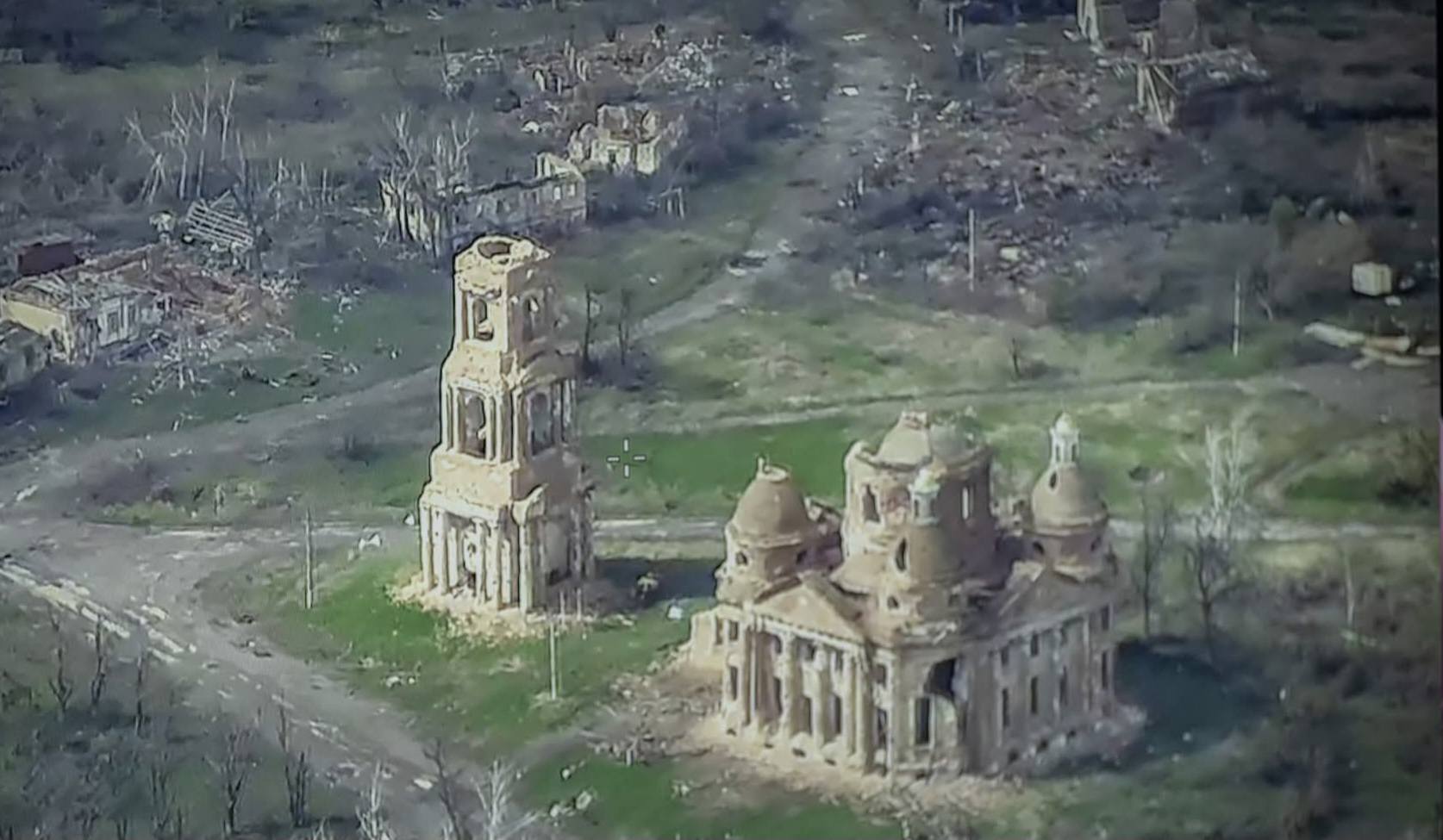
Update: The Church of the Nativity of the Virgin Mary was severely damaged by Russian shelling in 2024-2026 – domes were destroyed, and the walls and roof were significantly damaged.

- The Architectural Evolution of the Kharkiv Theater - 26.09.2026
- 1st Kharkiv Gymnasium - 17.09.2026
- The Oldest Movie Theater in Ukraine - 24.08.2026