The historic “Krasny Oktyabr” (Red October or “Novyi Pobut”) neighborhood is located in the northwest of Kharkiv. Little is known about its origins—the houses were built according to designs by architects Arkady Langman and Fyodor Mazulenko in the late 1920s and early 1930s for workers at the Kharkiv Machine-Building Plant.
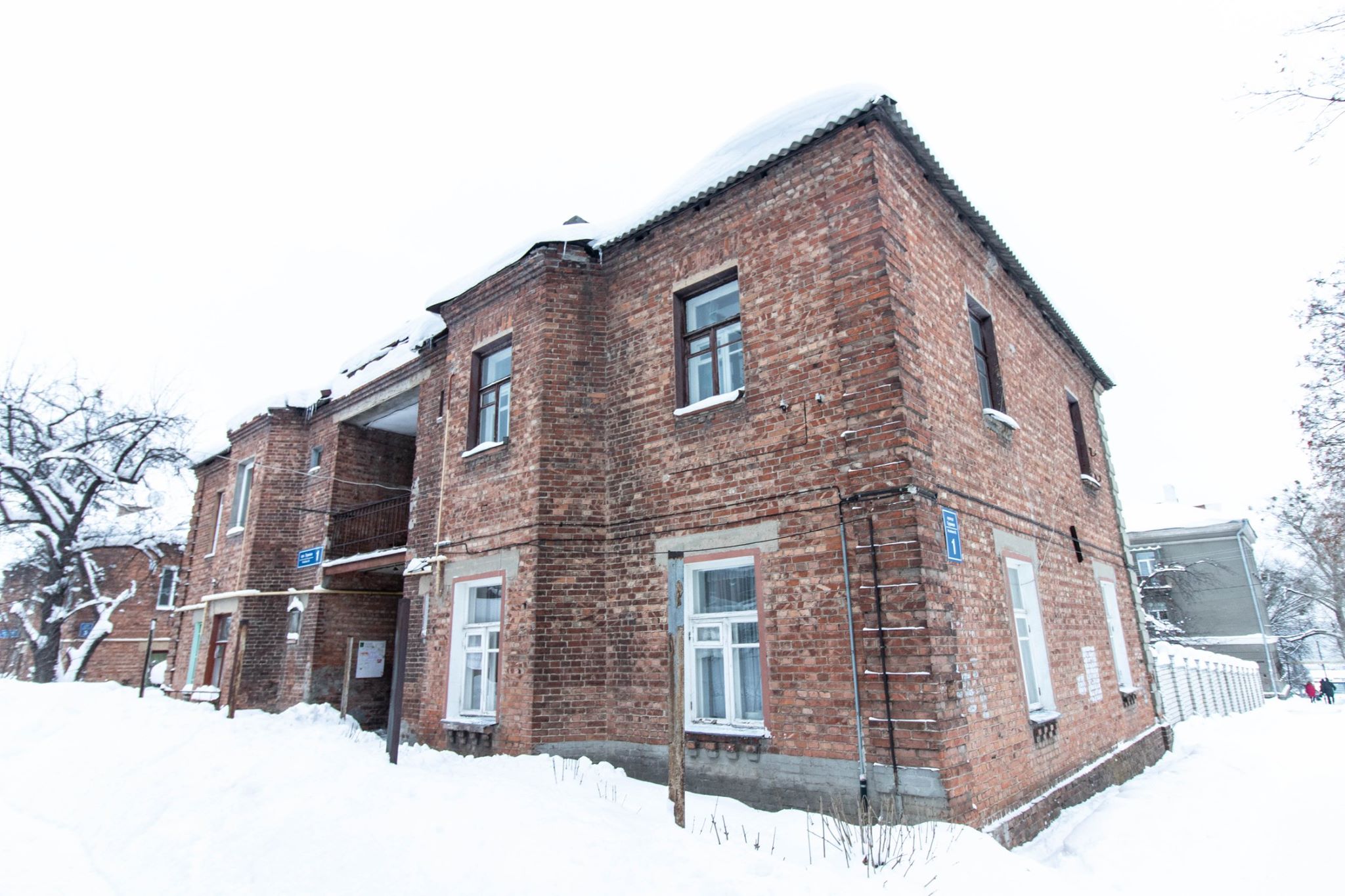
The neighborhood consists of many buildings of various styles. One of the largest is a three-story building in the Constructivist style located at Novyi Pobut Street, 2.
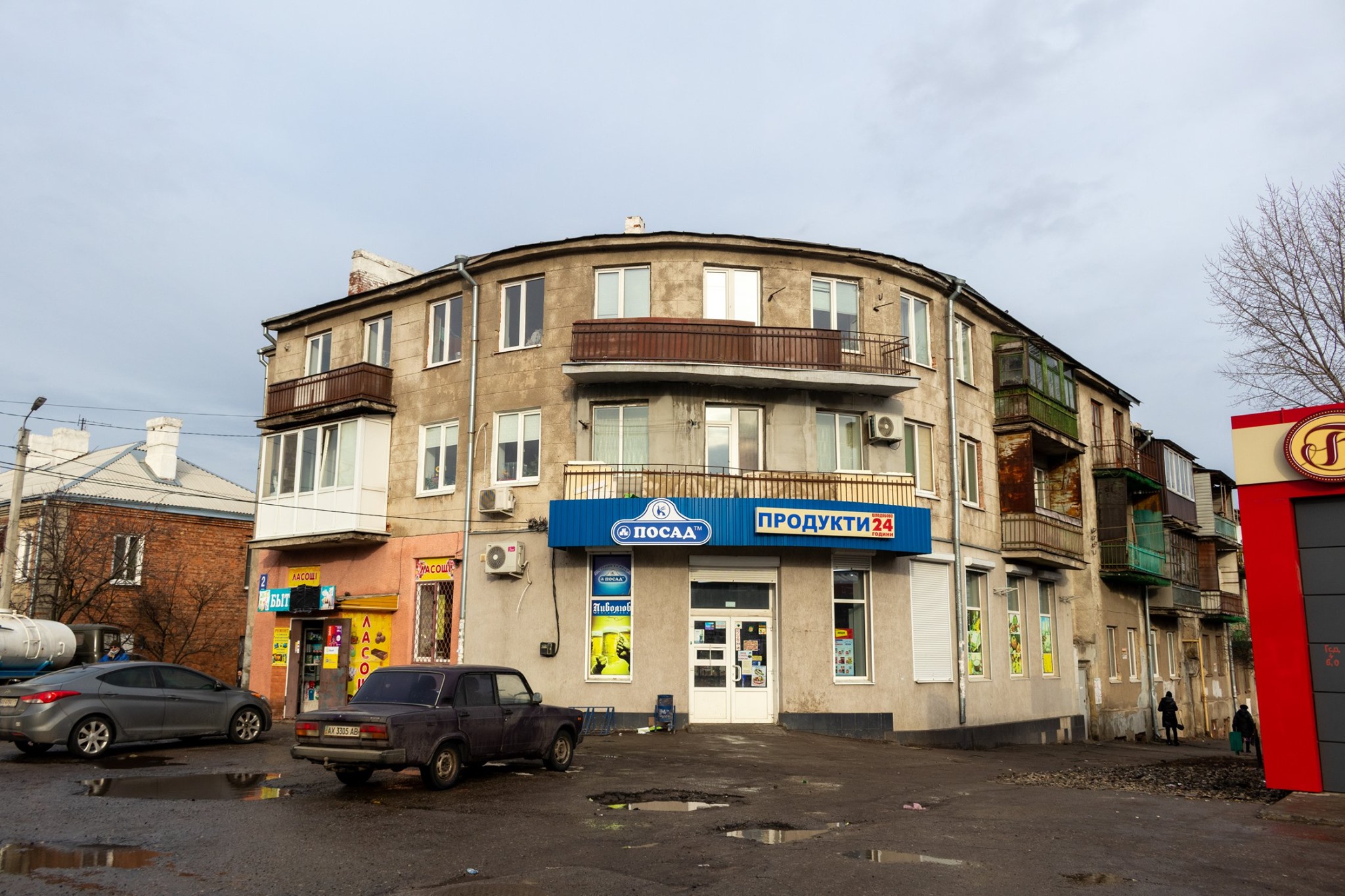
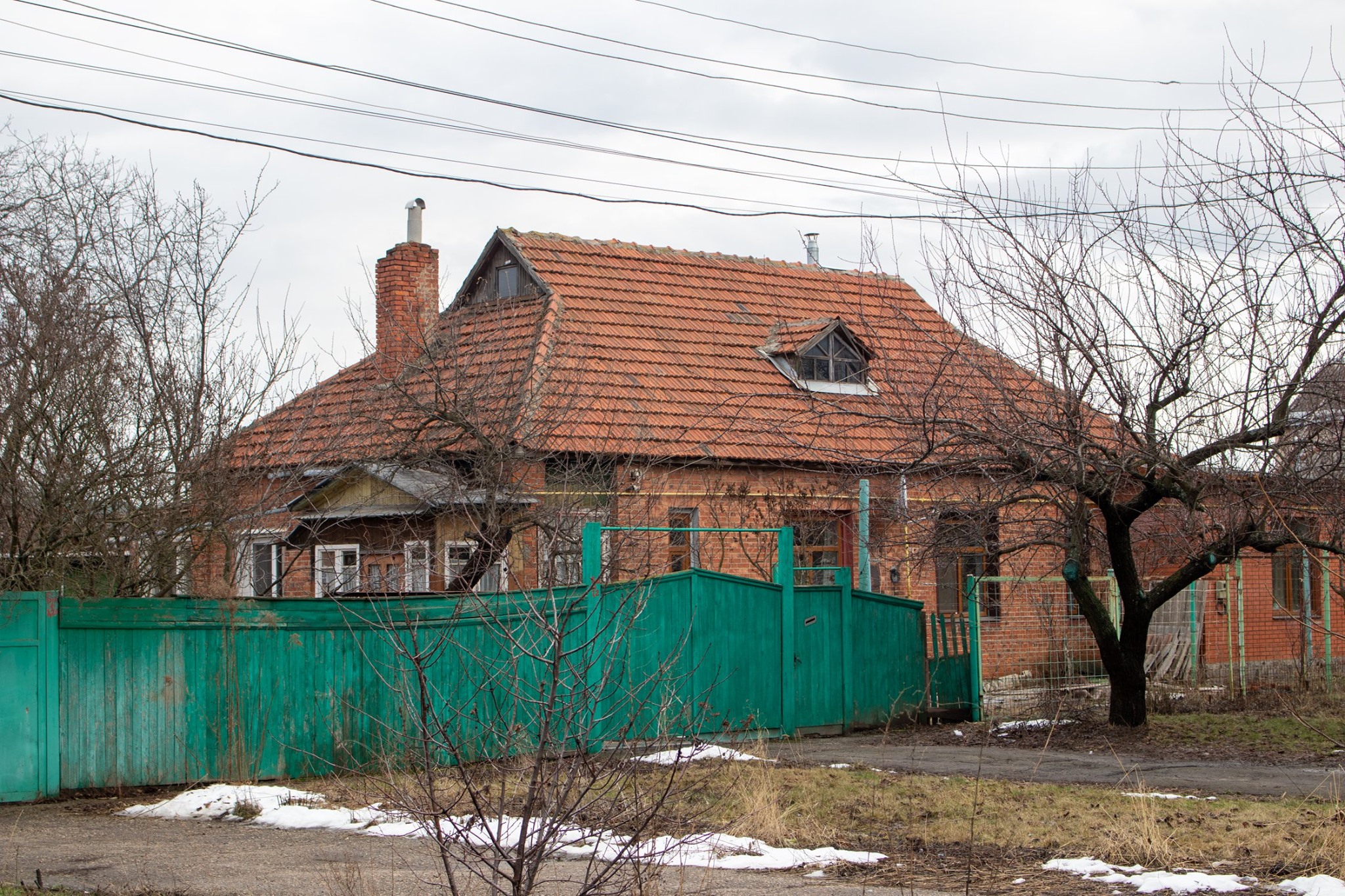
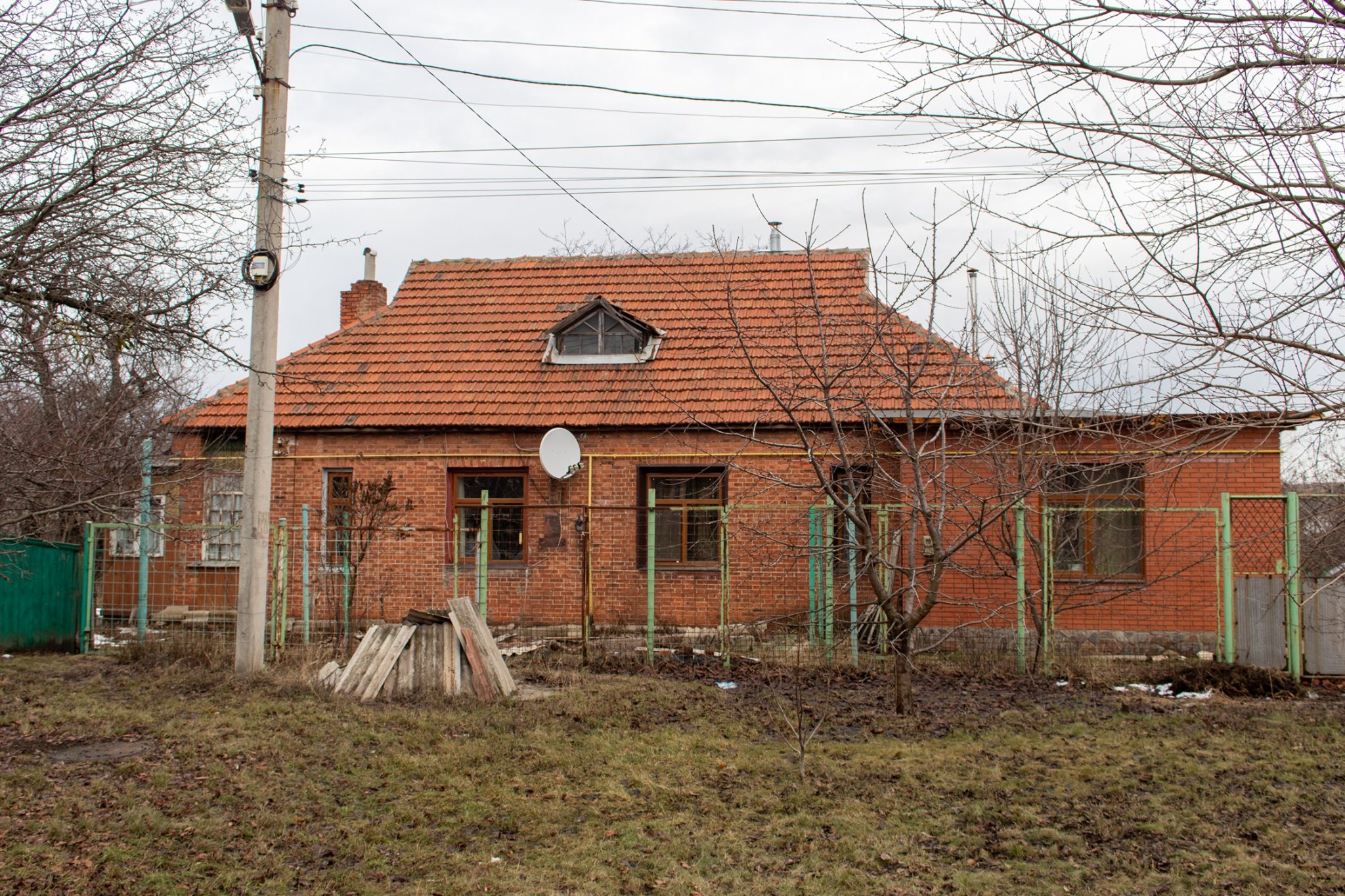
Deep within the district, one can see an example of an experiment with the so-called “Soviet suburb”—here you’ll find standard cottages designed for one or two families, with tiled roofs that closely resemble the roofs of the postwar Finnish panel houses we wrote about earlier. Originally, the settlement was built for railroad workers.
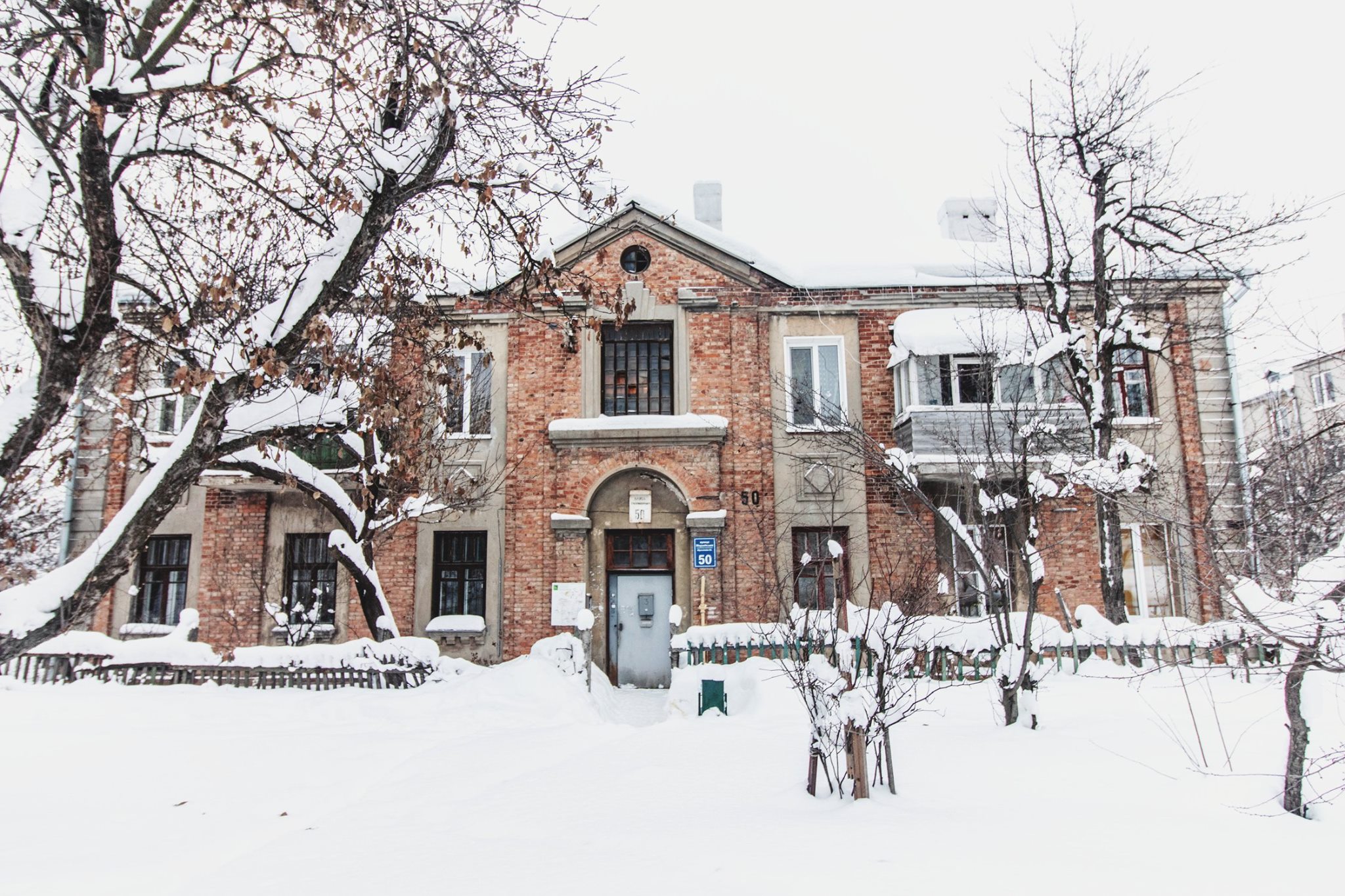
You can also see several two-story houses here with more elaborate facades; they were built in 1929.
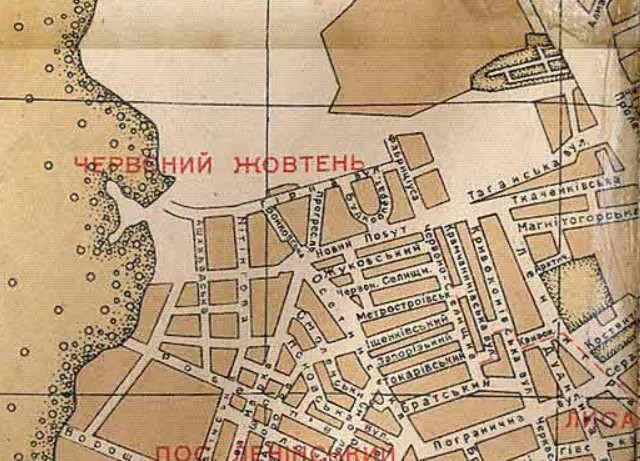
Many researchers have written that the layout of the streets radiating from the central “Red October” Square was originally designed in the shape of a five-pointed star, but on a 1938 map, the star already has six points, suggesting that this version is more likely a retroactive fabrication.
Near the district’s central square is Dobrodetsky Park, which features a monument erected in 2005.
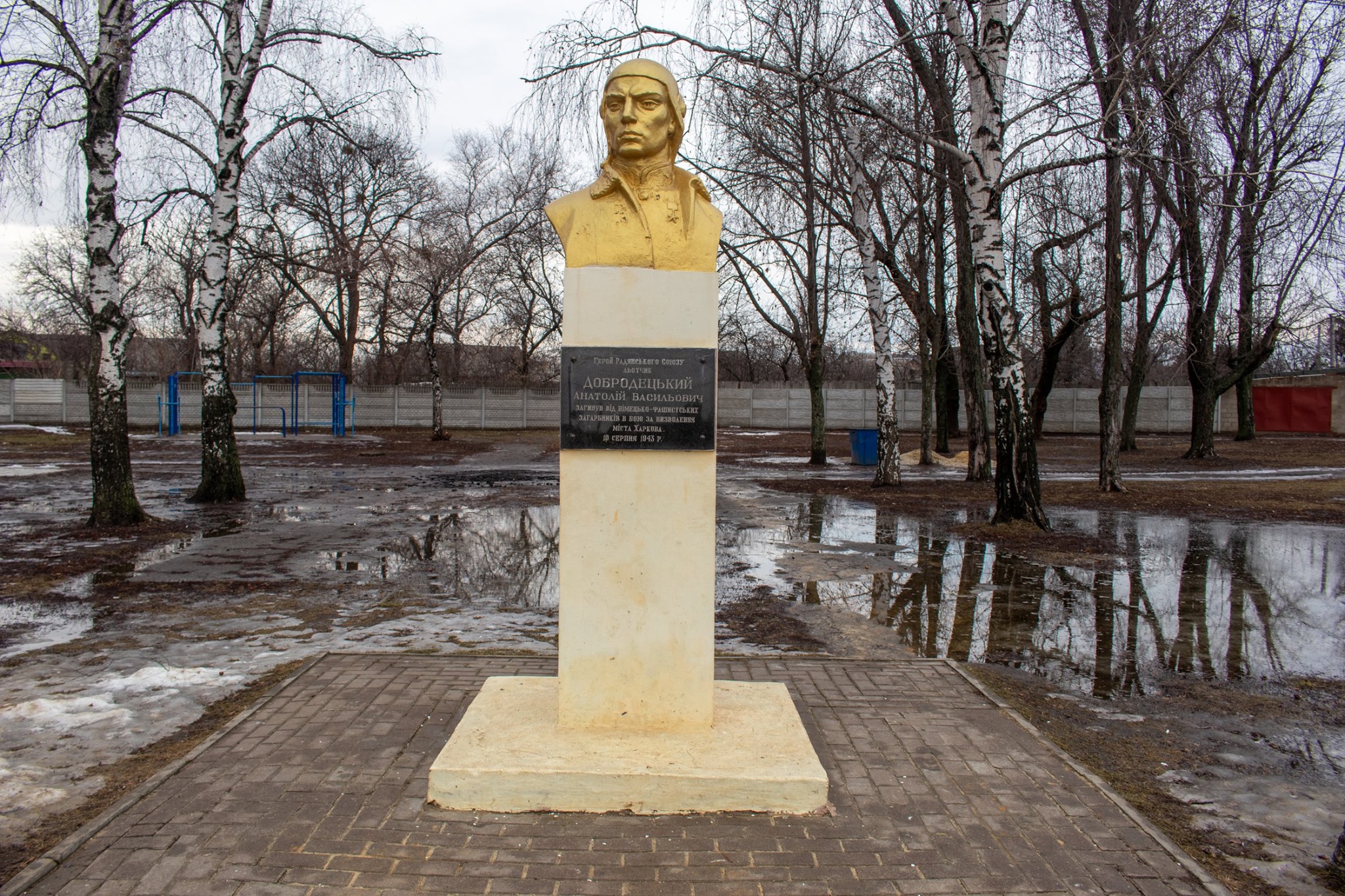
Anatoly Dobrodetsky was born in 1923 in Kharkiv. In 1942, he graduated from the Chuguev Military Aviation Pilot School (which had been evacuated to Kazakhstan) and initially served in the Transbaikal and Moscow Military Districts. He was on the front lines from June 1943, taking part in 11 aerial battles, shooting down 3 aircraft personally and 8 as part of a group. On July 15, he carried out a successful ramming maneuver, managing to land his damaged aircraft. On August 10, 1943, an aerial battle broke out near Ruska Lozova between a group of 10 Soviet fighters and more than 20 German bombers and fighters. After Dobrodetsky ran out of ammunition, he launched another ramming attack and was killed, destroying a German aircraft. The wreckage of the plane and Anatoly’s remains were found far from the site of the battle, in the Kytsivka area. He likely managed to fly for some time afterward but was unable to land safely. On February 4, 1944, Anatoly Dobrodetsky was posthumously awarded the title of Hero of the Soviet Union.
You can learn even more about the history of development in this area from Mikhail Kornilov’s video:

- The Architectural Evolution of the Kharkiv Theater - 26.09.2026
- 1st Kharkiv Gymnasium - 17.09.2026
- The Oldest Movie Theater in Ukraine - 24.08.2026