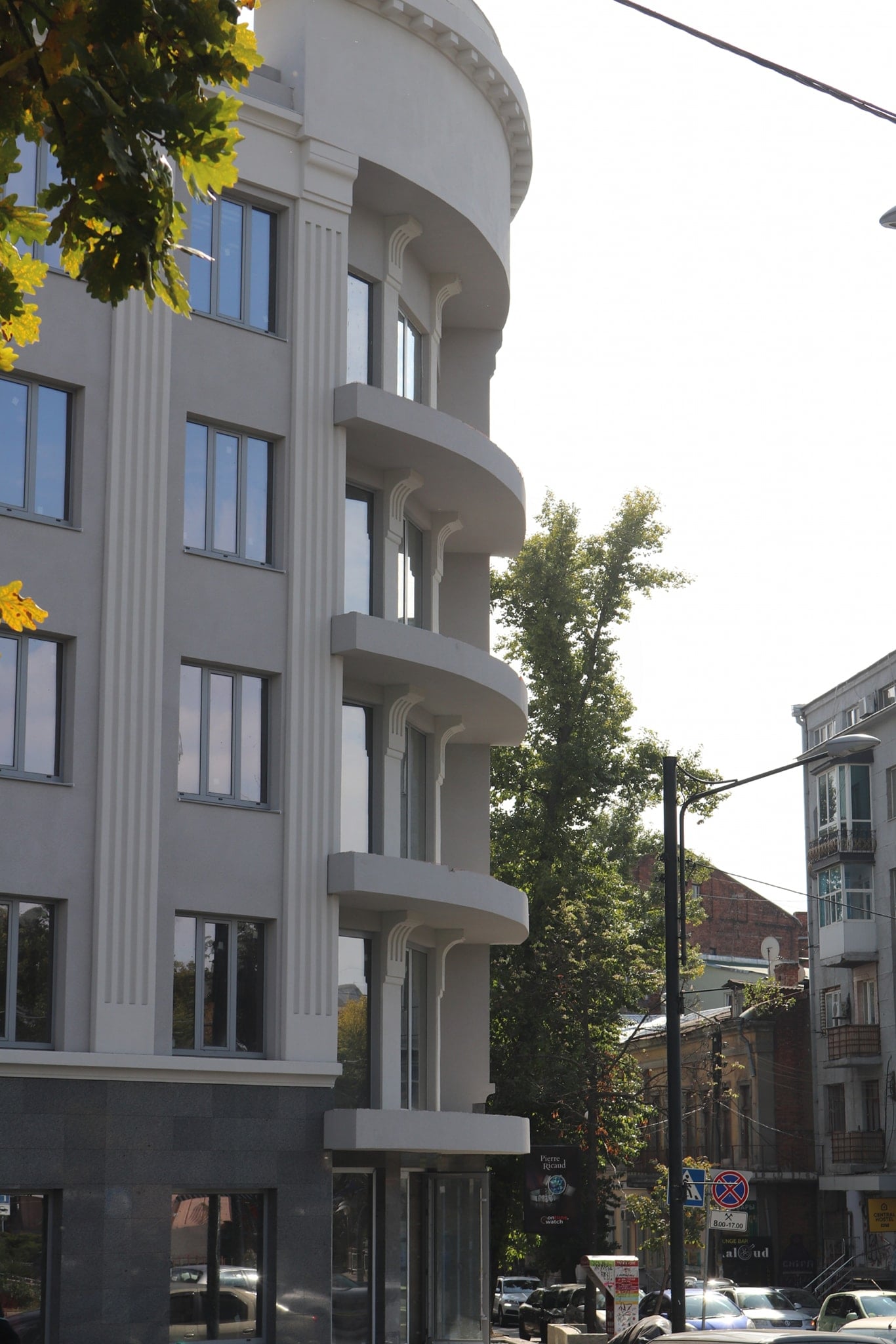
This house is a rare example of a relatively successful (by Kharkiv standards) renovation of an old building. It was built in the 1930s on the corner of Hryhoriia Skovorody and Chornoglazivska Streets; while it is not a designated historic landmark, the owner decided to dismantle the house and rebuild it almost from scratch, without altering the appearance of the facade in the slightest.
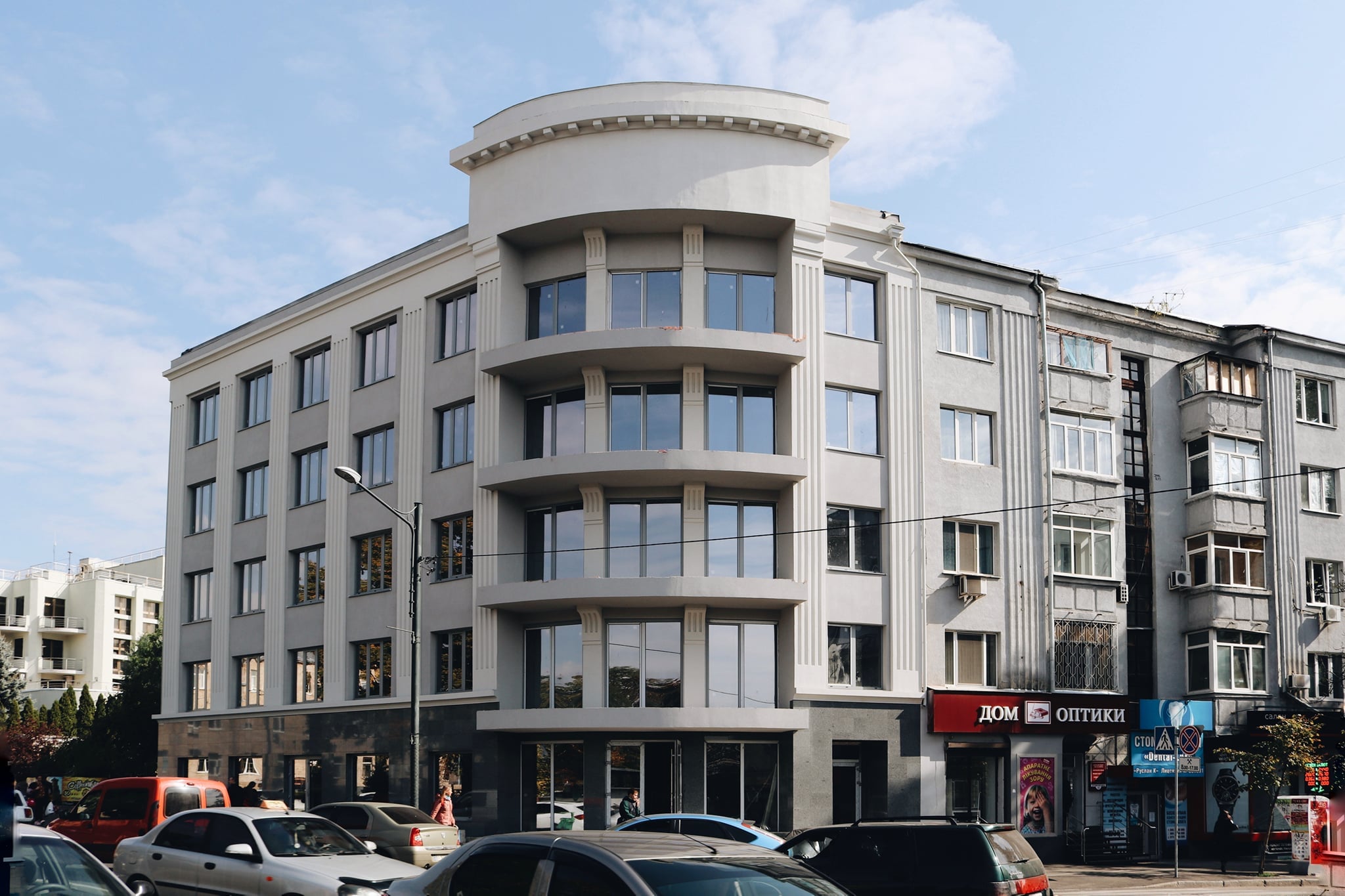
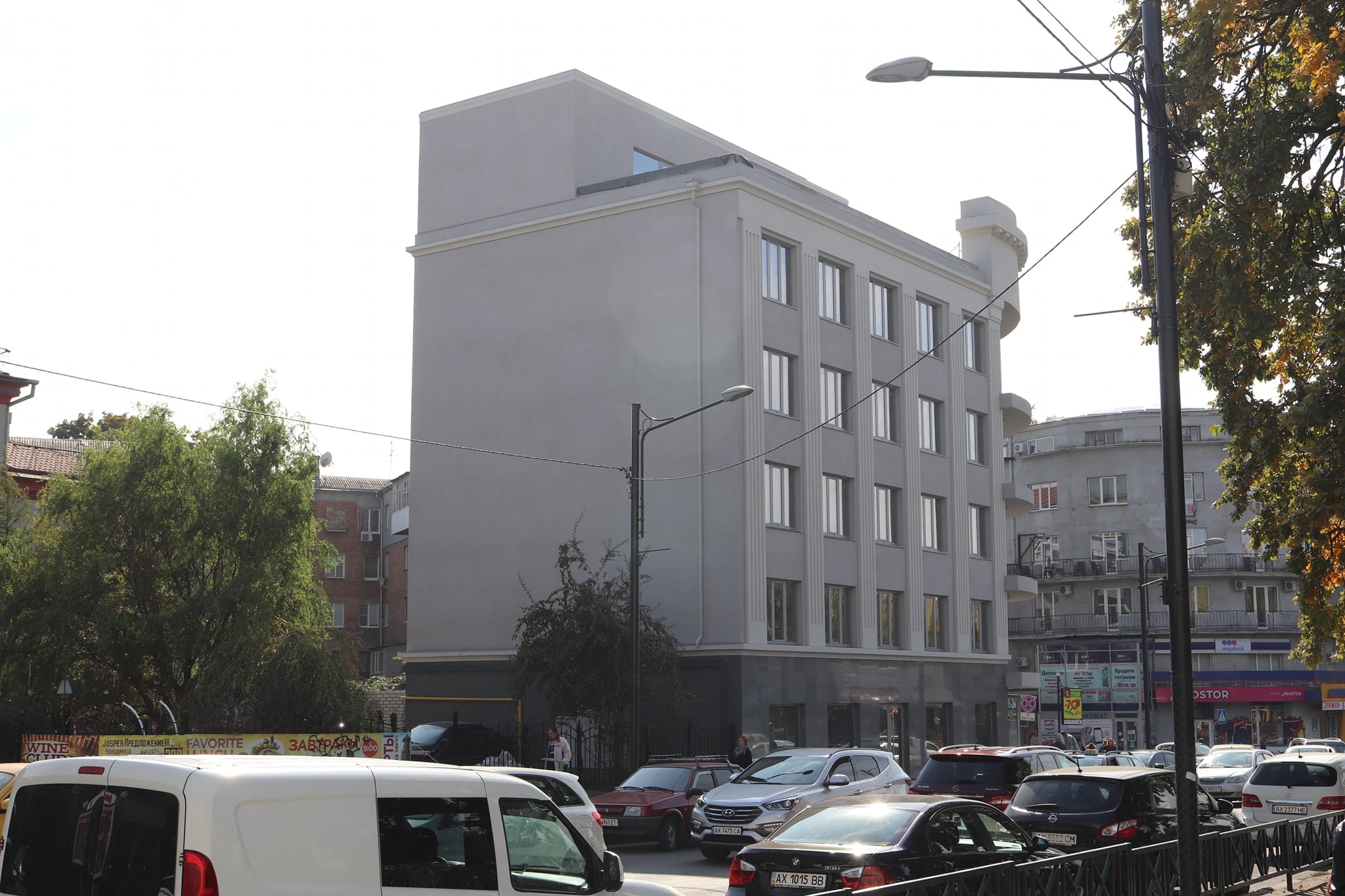
The addition on the upper floor is also located at the rear of the facade and is not particularly conspicuous. The building exhibits subtle Art Deco features and, overall, bears a resemblance in places to the works of Noy Podgorny, who is known for buildings in a style that bridges the gap between Constructivist and early Socialist classicism styles. However, the architect of the building has not yet been identified.
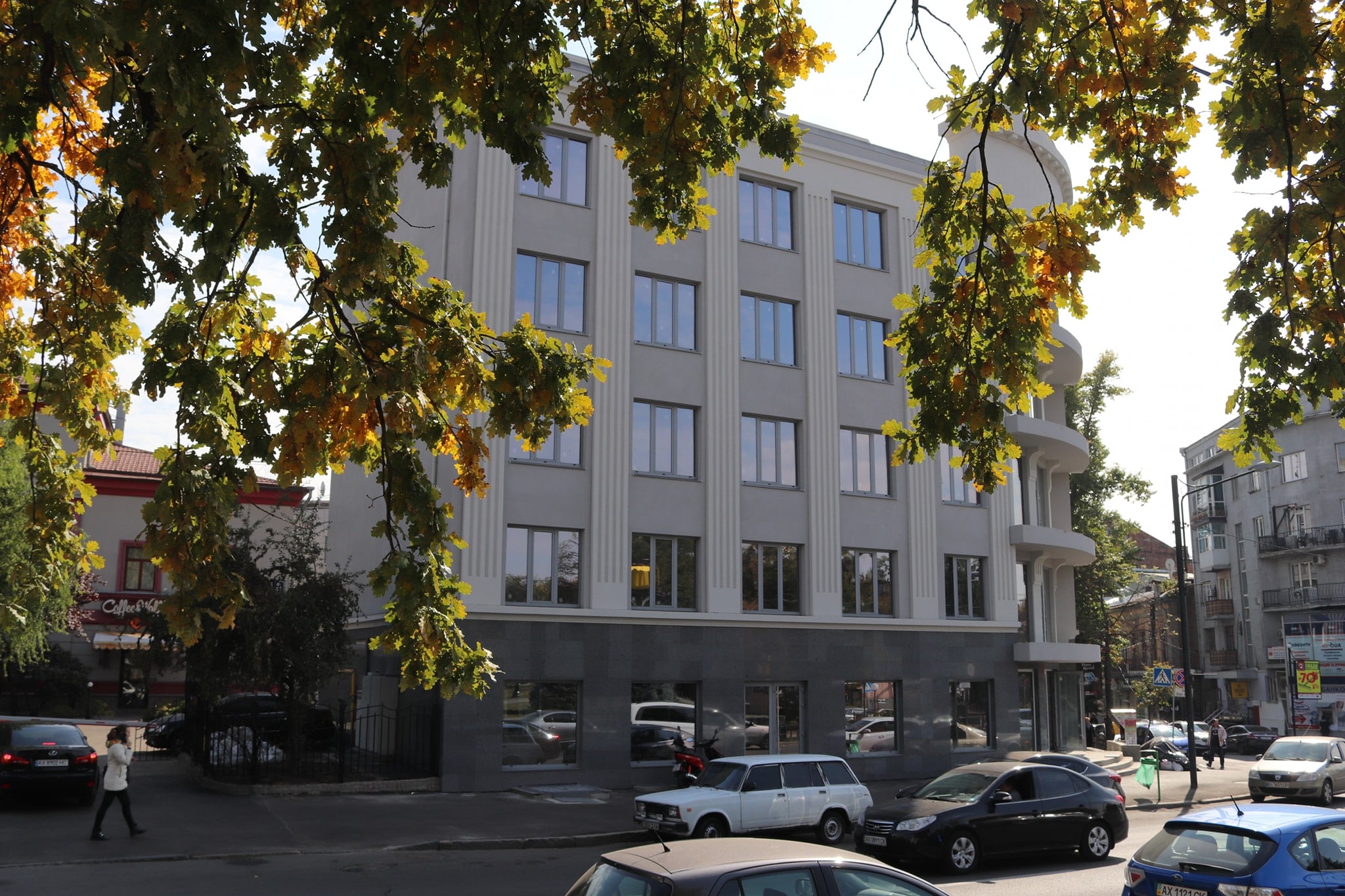
The renovation did not cover the entire building, but only its left and central sections, which are owned by a single owner. The part of the building on Chornoglazivska Street remains in its original state.
In the 1920s, a different building with an interesting history stood on the site of this building at Pushkinskaya Street, 42 (as Hryhoriia Skovorody Street was then called).
As we have already mentioned, in the early 1920s, a branch of the American Relief Administration (ARA)—a charitable organization dedicated to distributing aid to the starving in both Ukraine and the Volga region—was operating in Kharkiv.
The book *Double Agent*, which is the memoir of Vladimir Orlov, a White Army counterintelligence officer who infiltrated the Bolsheviks, contains several amusing stories about the diplomatic blunders of the Kharkiv Cheka in the early 1920s.

The Kharkiv office of the well-known American organization ARA was located at Pushkinskaya Street, 42, and the Bolsheviks took a keen interest in its correspondence. A Chekist named Voroshilov was appointed building superintendent, and one of the secretariat staff members was also an agent of the GPU.
The ARA office was located on the first floor of the building, while the Americans lived on the second floor. Voroshilov was tasked with finding out where the mail was kept, and the second agent was to steal the ARA’s official seal, with the intention of returning it to its place the next day. After all the details had been worked out, Voroshilov received orders to leave one of the windows facing the garden open overnight. At two o’clock in the morning, the Chekists, disguised as burglars, climbed through the window and, while the Americans slept peacefully on the floor above, stole the bag of mail.
The bag was taken to a secure location, opened, and its contents were carefully examined. After copying everything necessary from the letters, the bag was resealed and returned to its original location at five o’clock in the morning. For a long time, everything went smoothly, but one day several bulky bundles fell into the hands of the Chekists reviewing the mail. One of them contained a detailed report on the economic situation in Ukraine. They decided not to put the report back in the bag, as it was of too great an interest to the Cheka.
The bundles also contained banknotes totaling thirty-five billion rubles, which was a very substantial sum at the time. In addition, one of the bundles contained an expensive necklace and other jewelry.
It was simply impossible to return the money, so the Chekists kept it for themselves. In the morning, the Americans raised the alarm. They had been robbed. The police knew nothing about the GPU agents and sent a patrol to the scene. The dogs brought to the crime scene immediately picked up the scent and led the officers to the GPU building.
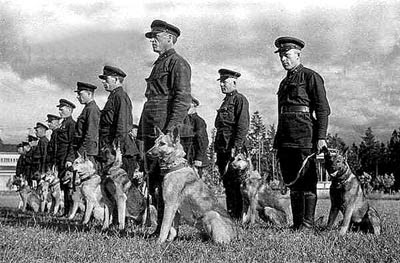
Comrade Galitsky, head of the Central Intelligence Department of the GPU, saw the dogs and the police through the window and immediately called the police chief, ordering him to remove the dogs at once.
But solving the problem turned out to be not so easy. One of the robbery suspects showed up at the ARA to “give a statement” wearing the same coat he had worn the night before. No sooner had he crossed the threshold than the dogs, held on a leash by one of the agents, lunged at him, barking viciously. Since by that time the Americans had discovered the missing financial report, they did not insist on continuing the search for the people who had stolen the money.
It is unclear how this amusing story unfolded. But to sum it up, dogs—and especially their sense of smell—are hard to fool, unlike humans.

- The Architectural Evolution of the Kharkiv Theater - 26.09.2026
- 1st Kharkiv Gymnasium - 17.09.2026
- The Oldest Movie Theater in Ukraine - 24.08.2026