On that distant day, January 29, 1879, in the city we all love, a child was born who was destined to become one of the most prominent figures of Ukrainian Art Nouveau.
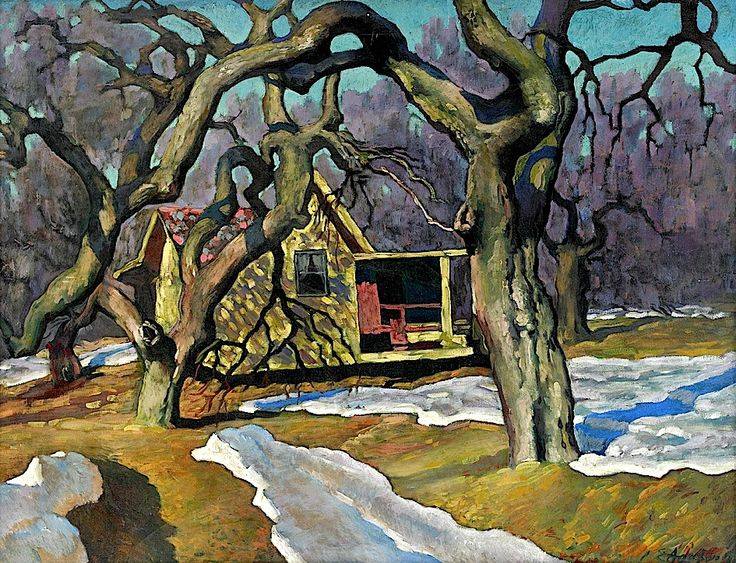
Yevhen Andriyovych Agafonov came from a merchant family. After graduating from the Kharkiv Real School and studying under the artist D. Bezperchy, he enrolled in the St. Petersburg Academy of Arts in 1899.
While studying at the academy, his teachers were P.O. Kovalevsky and F.A. Roubo.
In 1907, he was awarded the title of Artist.
From 1905 to 1907, he illustrated the Kharkiv satirical magazines *Shtyk*, *Mech*, *Zloi Duh*, and others. In March 1906, together with a group of young artists (V. D. and D. D. Burliuk, A. N. Grot), Agafonov took part in the largest (seventh) exhibition of the “Circle of Local Artists of Kharkiv” (1900–1908). From 1908, he actively exhibited with the “Kharkiv Artists’ Society,” at the “Zveno” exhibition in Kyiv (1908), and in Rostov-on-Don and Kursk.
In 1909 Yevhen Agafonov founded the experimental theater “Blue Eye” in Kharkiv, based on the “Blue Lily” studio, which consisted of avant-garde artists. He designed a number of productions for the theater, including A. Blok’s “The Stranger,” which was later staged in St. Petersburg.
In 1910, he was awarded a gold medal at the South Russian Regional Exhibition in Yekaterinoslav for his thesis, “Lomoviki.”
In 1911, after leaving the “Kharkiv Artists’ Society,” Agafonov founded the avant-garde group “The Ring” in our city, which existed until 1914.
Like many other residents of Kharkiv at the time, he then served in World War I. Upon his return to Kharkiv in 1918, the tireless Agafonov continued to play an active role in the city’s artistic life.
In the early 1920s, he emigrated to the United States.
There, he worked in easel painting, printmaking, and commercial art. He exhibited at the Society of Independent Artists (1929) and the French Gallery (1931) in New York, as well as at the Greenwich Public Library (1939) and in Derby, Connecticut (1943). He held solo exhibitions at the Caze-Delbo Gallery in New York (1931).
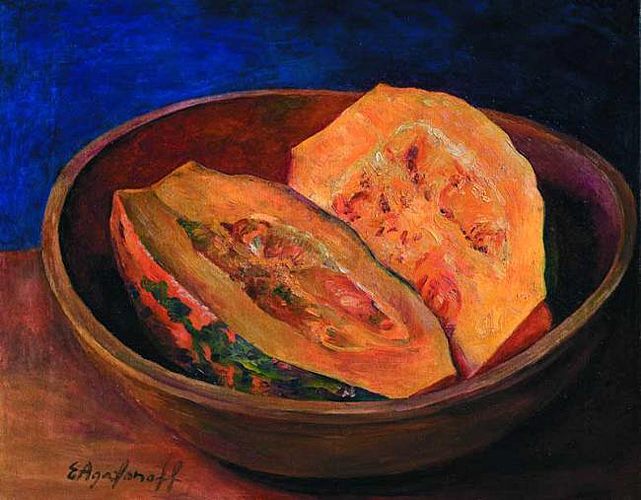
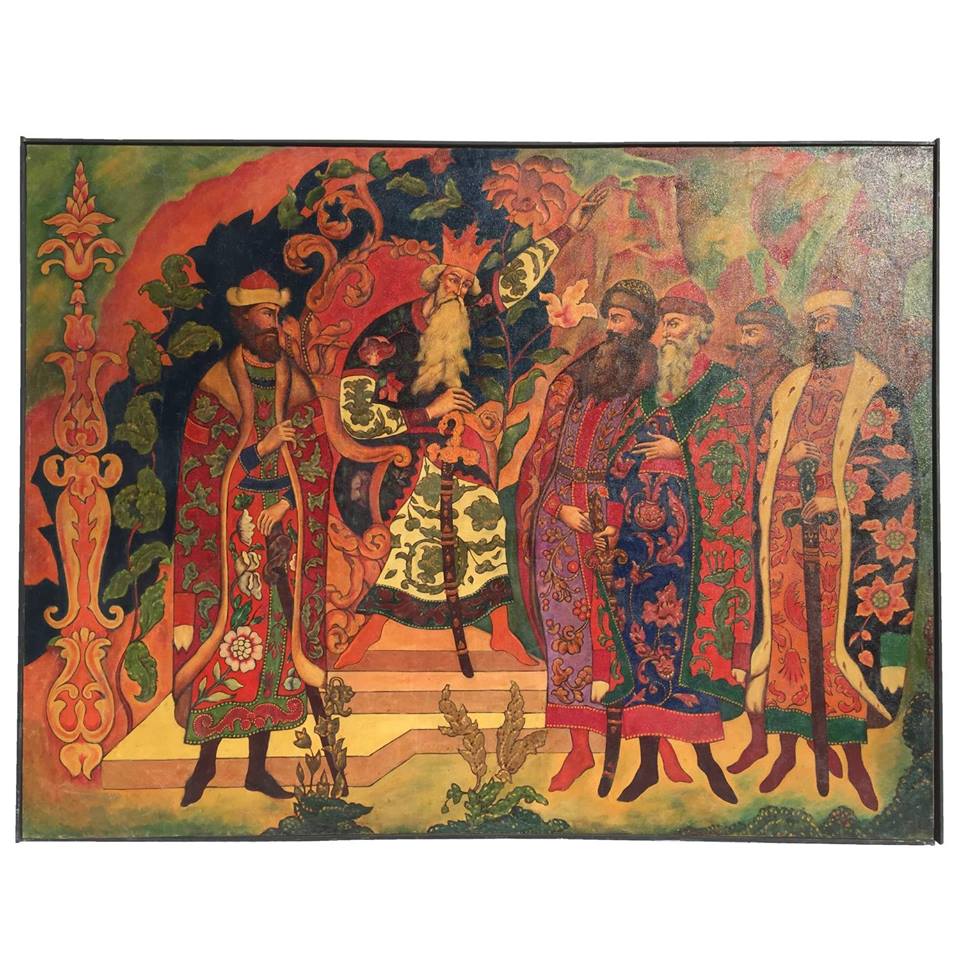
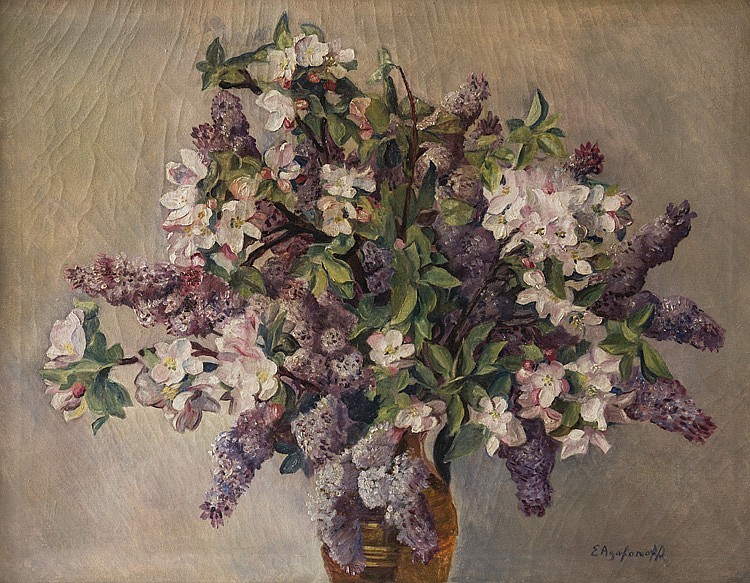
Yevhen Agafonov’s body of work is as multifaceted and diverse as he is. It includes portraits, landscapes, graphic works, and figures rendered in a stylized decorative manner, featuring a generous use of Ukrainian folk motifs.
In his book *Yesterday, the Day Before… An Artist’s Memoirs*, the renowned artist Vladimir Alekseevich Milashevsky describes his impressions of the mural on the staircase of the Kharkiv New Theater, created by Yevhen Agafonov, as follows:
Otherworldly maidens in the branches of unseen trees—something gray-lilac, ghostly-emerald, barely perceptible and almost imperceptible—are nothing like Perov’s, where one can grasp everything with one’s fingers and even get splinters or smear wax from one’s boots on them. Here, everything is a dream! Part Borisov-Musatov, part Vrubel, part English Pre-Raphaelites. Oh, Agafonov!
Yevhen Agafonov died on June 12, 1955, in Ansonia, Connecticut (USA).
The years have taken their toll on what little remains of his work in Kharkiv. The pieces that were housed in the Kharkiv Art Museum were lost during World War II. Only a few drawings and theatrical sketches have survived.
Yet the name of this world-famous Kharkiv native, who became one of the most prominent figures of Ukrainian Art Nouveau, remains, alas, little known to anyone in his hometown.

- About the military pilot school and the airfield in Kharkiv… - 04.11.2020
- Kharkiv Artisans and the 1887 Exhibition - 17.08.2020
- Nikanor Savich—A Political Career by Mistake - 13.07.2020