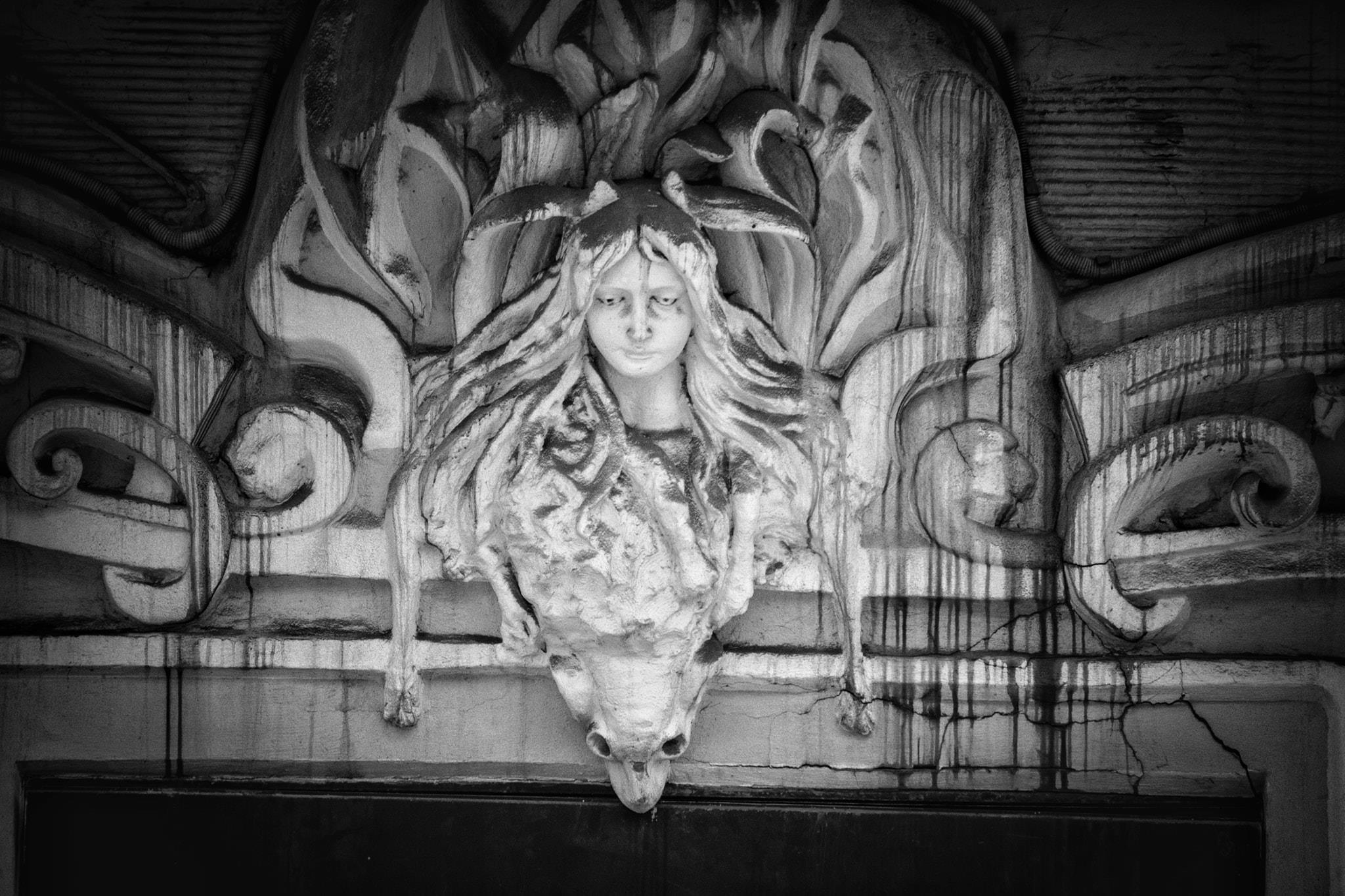
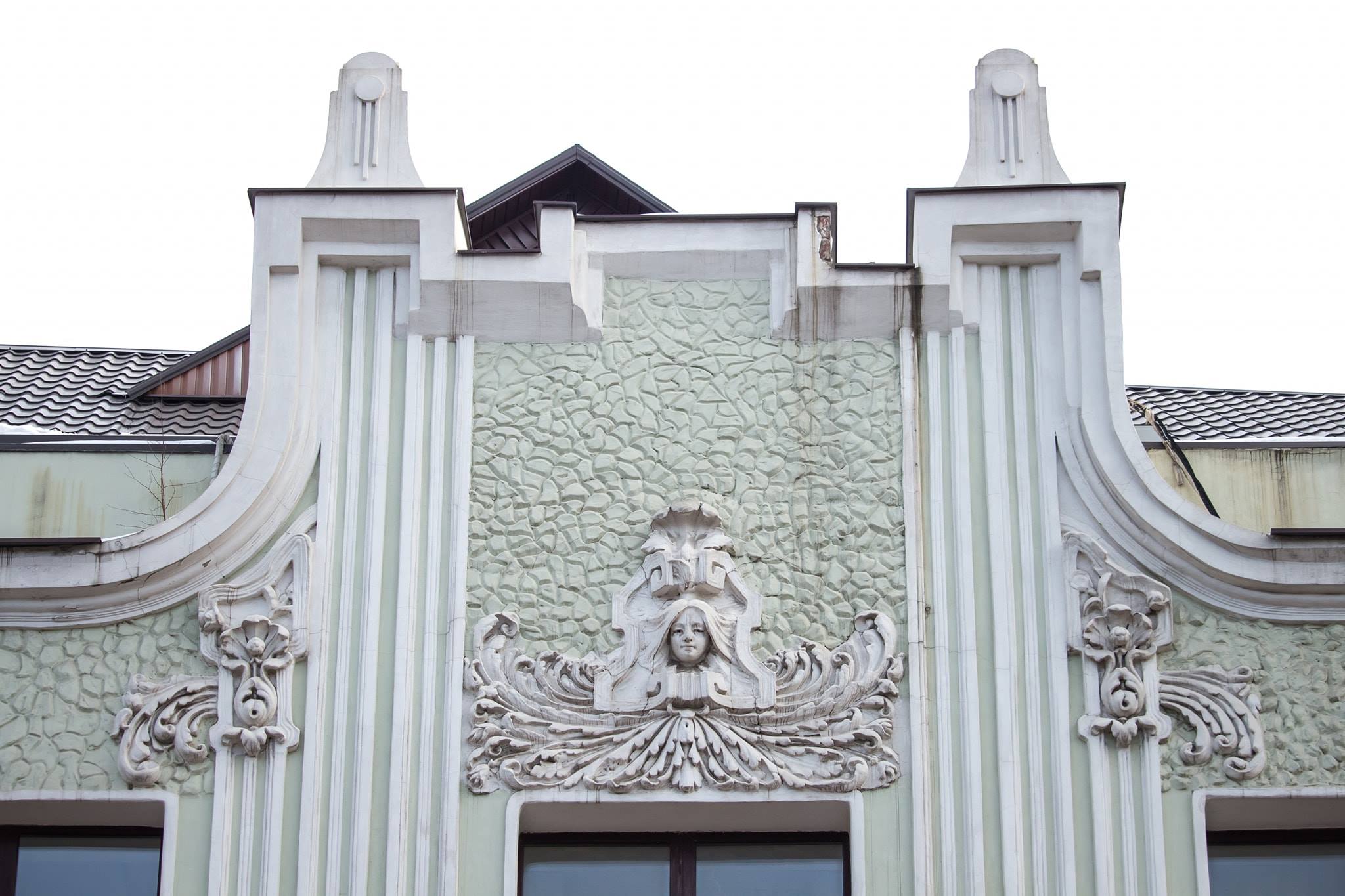
Kharkiv’s “House with the Chupacabra” (as journalists have dubbed it) is located at Sumska Street, 96. Its façade features a mascaron with a flower, from which a beautiful woman and her alter ego, a bat, peer out.
Moisei Dikansky built this apartment building in 1905 for himself; according to the 1909 homeowners’ directory, it was his.
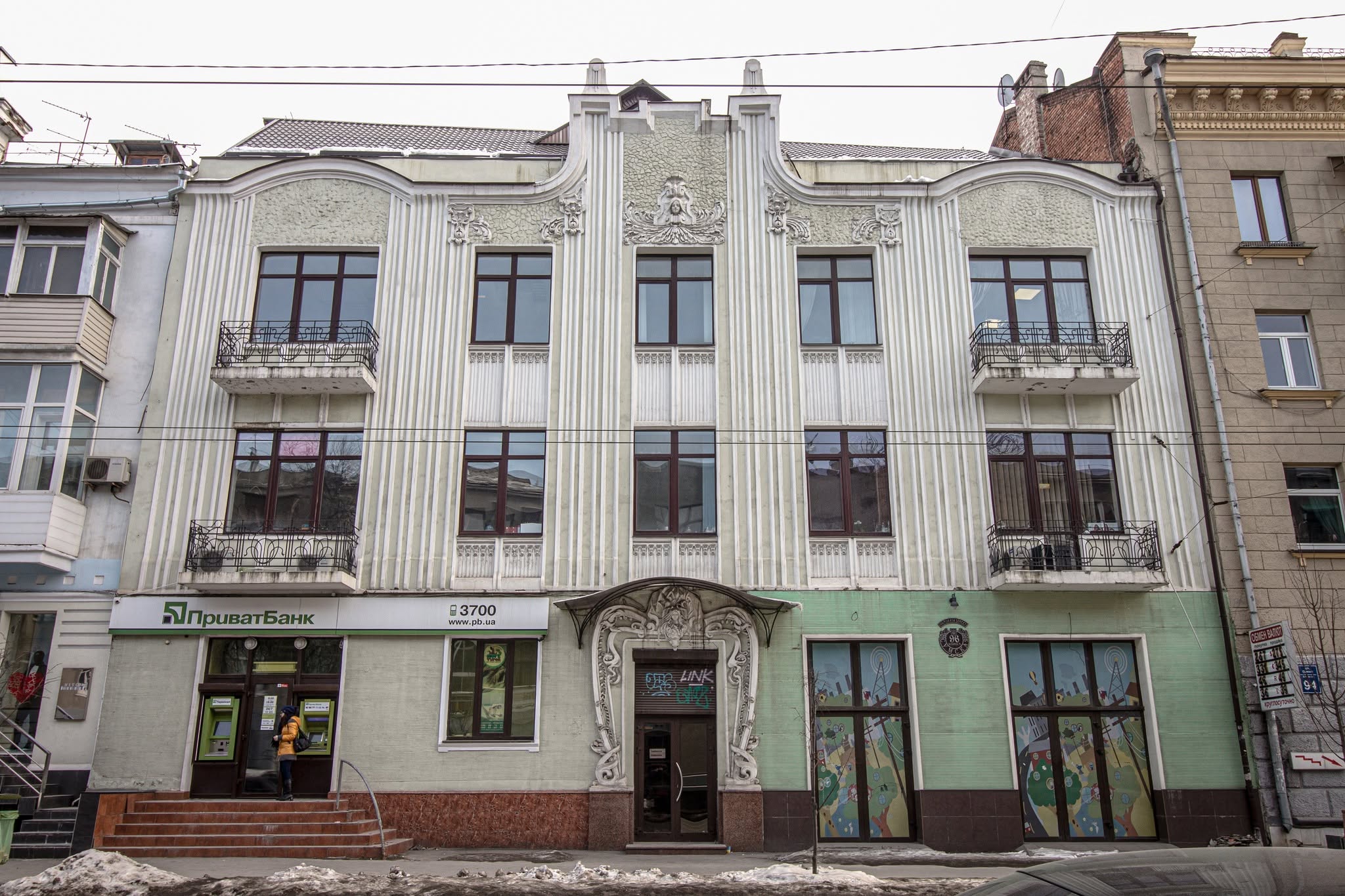
But it is worth remembering that Dikansky was not a qualified architect, but the owner of a construction firm, and the project itself could have been carried out by someone else in his firm.
According to A. Paramonov’s research, the building was equipped with the latest technology. Constructed on metal beams, it had artificial ventilation, sewerage, and centralized steam heating from a boiler room in the courtyard. A tank with a pump was installed in the attic to increase the water pressure. Chronic pressure problems persisted in the upper part of the Nagorny district until 1913, when a water tower based on the Shukhov design was built near the hippodrome.
Thanks to a pre-revolutionary photograph found by Anton Bondarev in city archive, we can assess the extent of the damage to the building.
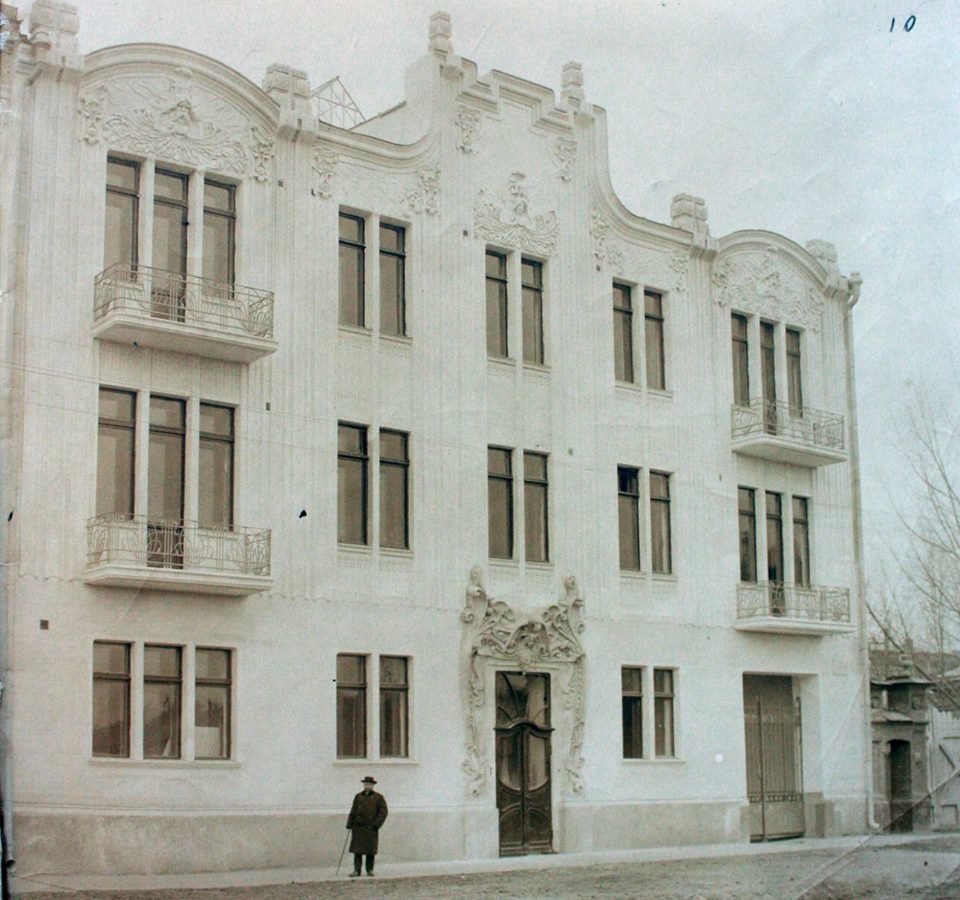
Above the upper side windows there was a molding with male mascarons. They were completely lost during the Soviet era, and instead they were made relief molding, part of which above the upper right window fell off in 2018. In August 2026, the facade of the Dykanskyi house was finally repaired and repainted in a darker shade of green. Unfortunately, the remains of the molding on the right were knocked down, the wall above the window became flat, and the decor under the cornice became asymmetrical, although, as we can see in the archival photo, it was already unoriginal.
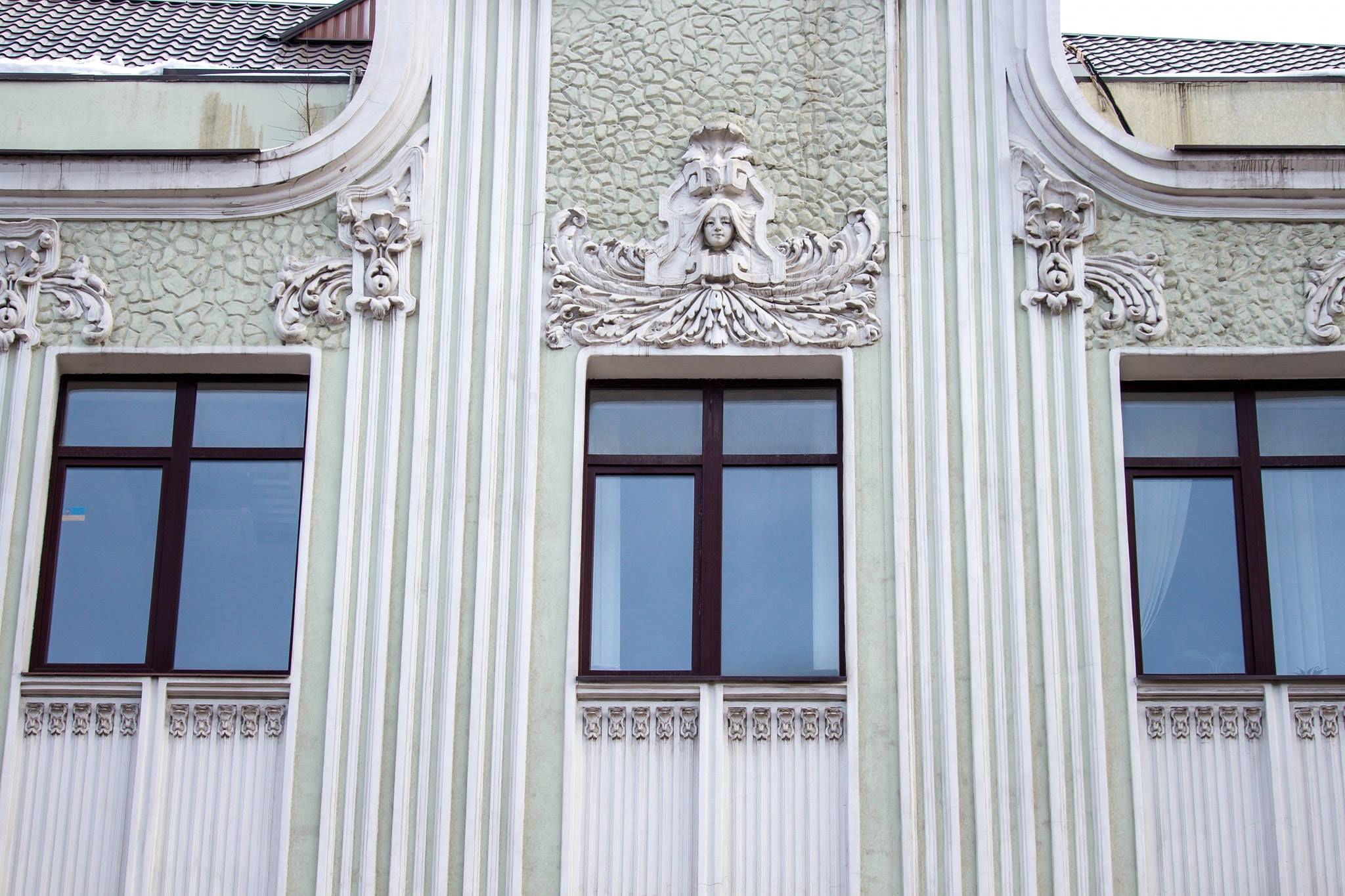
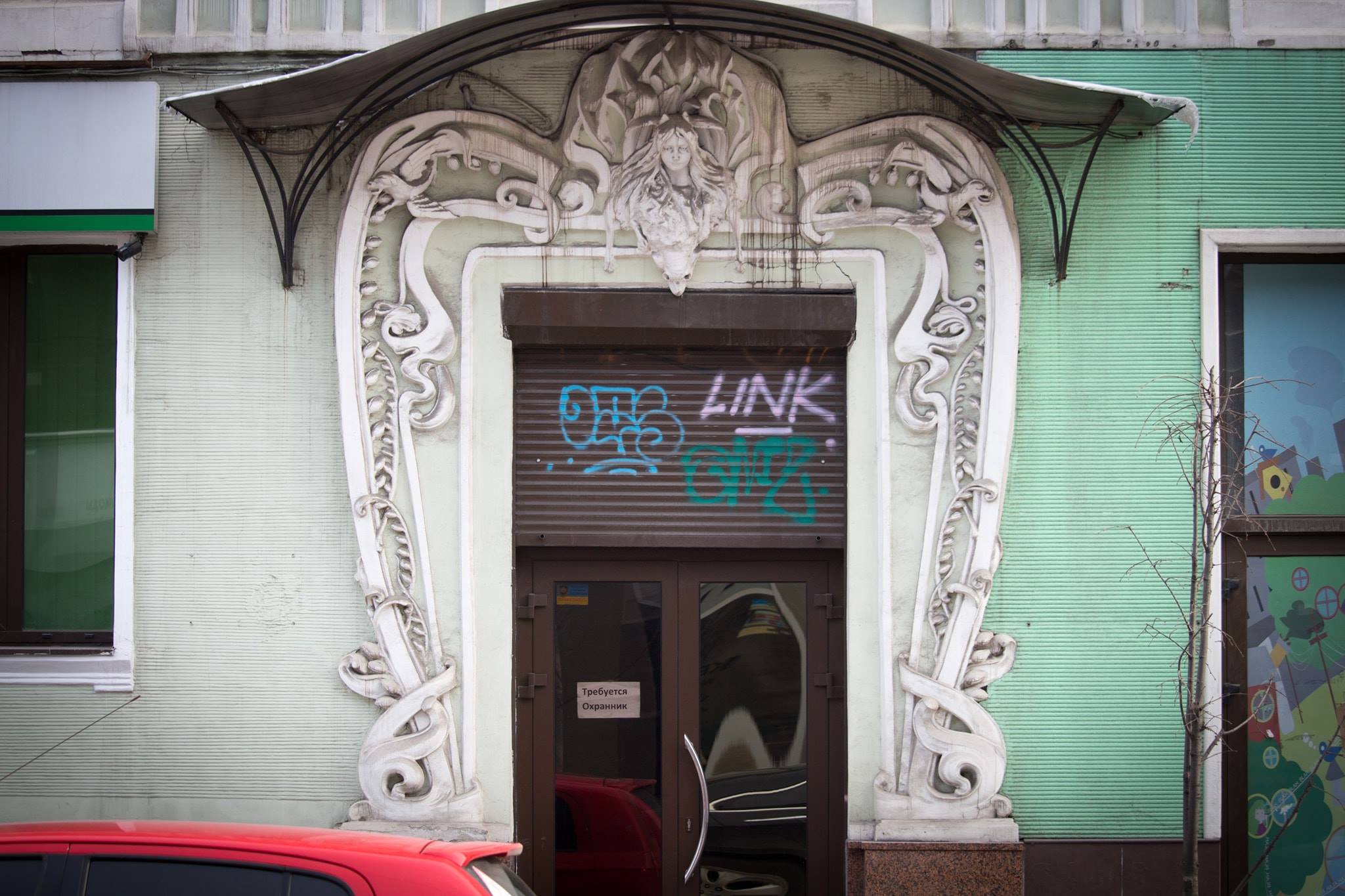
The side pillars that topped the roof’s eaves were also lost, and the remaining ones were reshaped. The skylight in the entryway is also gone, as are the luxurious Art Nouveau doors, the openwork transom above which could still be seen in a late Soviet photograph.
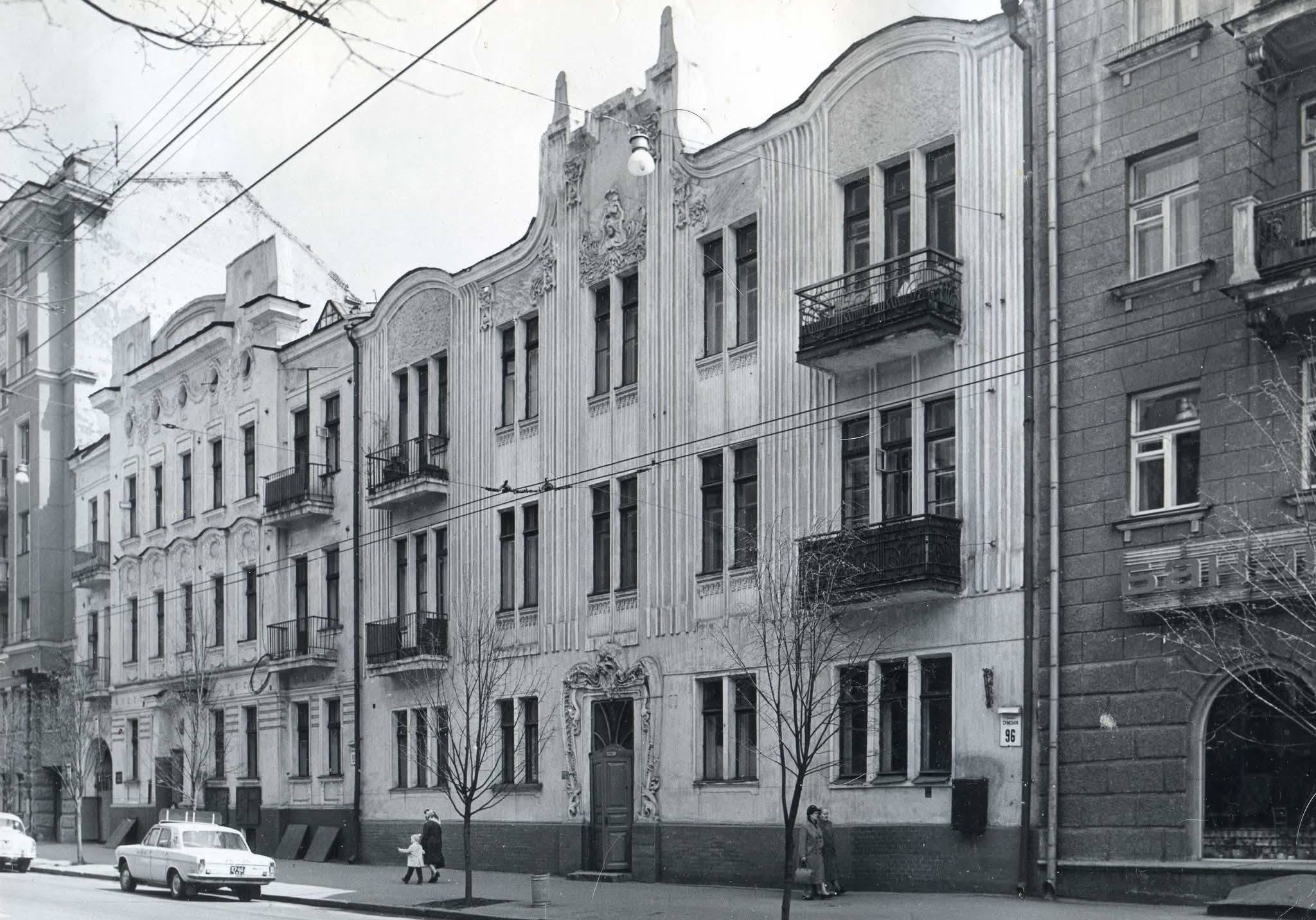
But most of the losses were due to illegal renovations during the Ukrainian independence era. The windows used to be narrow, two-pane, and three-pane above the balcony. It was in the 1990s and 2000s that the lintels between the windows were removed, and the windows became wider.
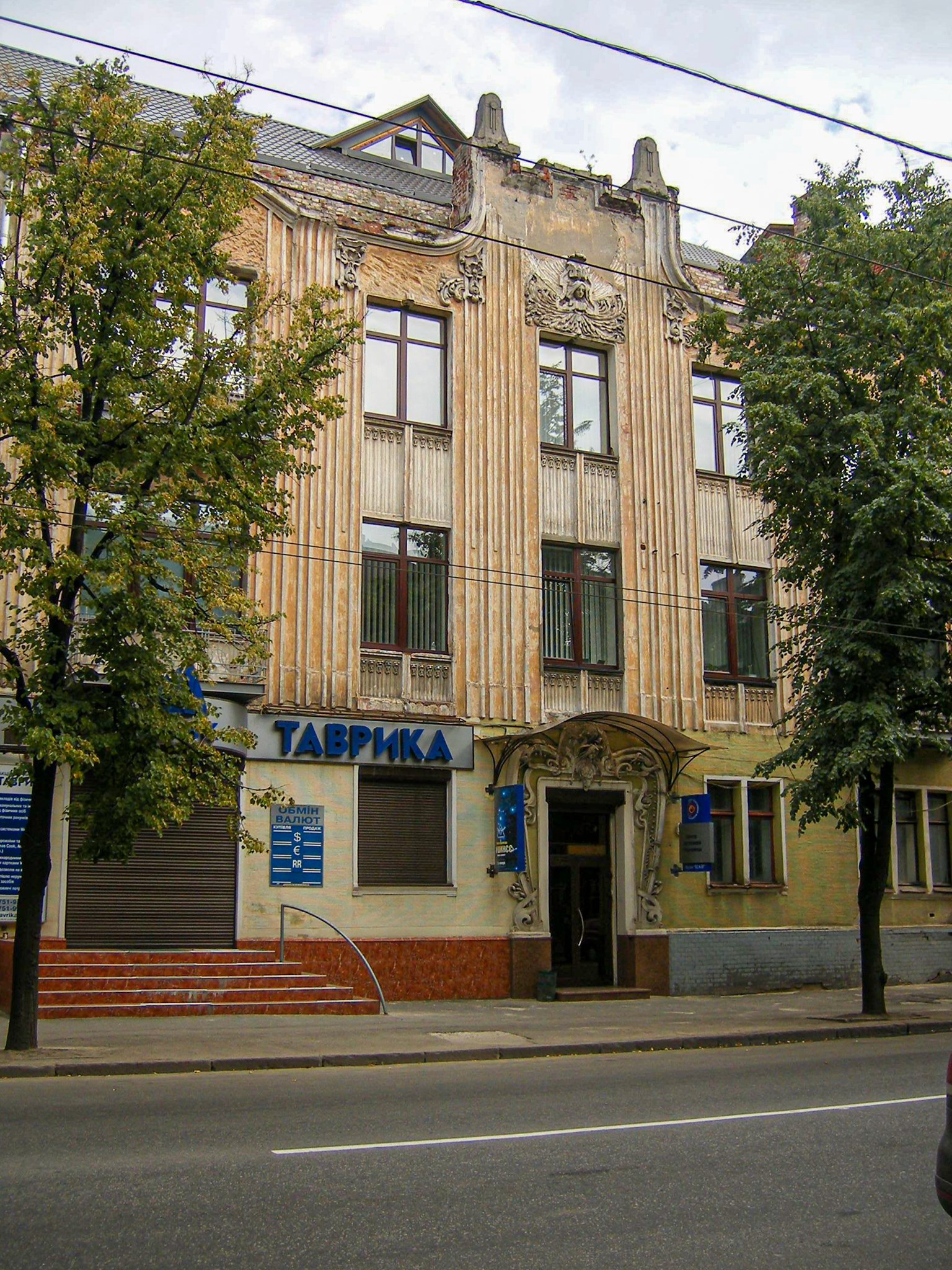
The driveway into the courtyard underwent a curious transformation – it had been blocked up long ago, replaced by a three-pane window. But in the early 2010s, relentless commercial development devoured both it and the last original window adjacent to it. New entrances were built in their place.
As you can see, the original building didn’t have a canopy, but it’s now been removed. Fortunately, the balconies remain intact. Despite all the losses, the building at Sumska Street, 96 remains one of the most delicate examples of Kharkiv’s Art Nouveau.

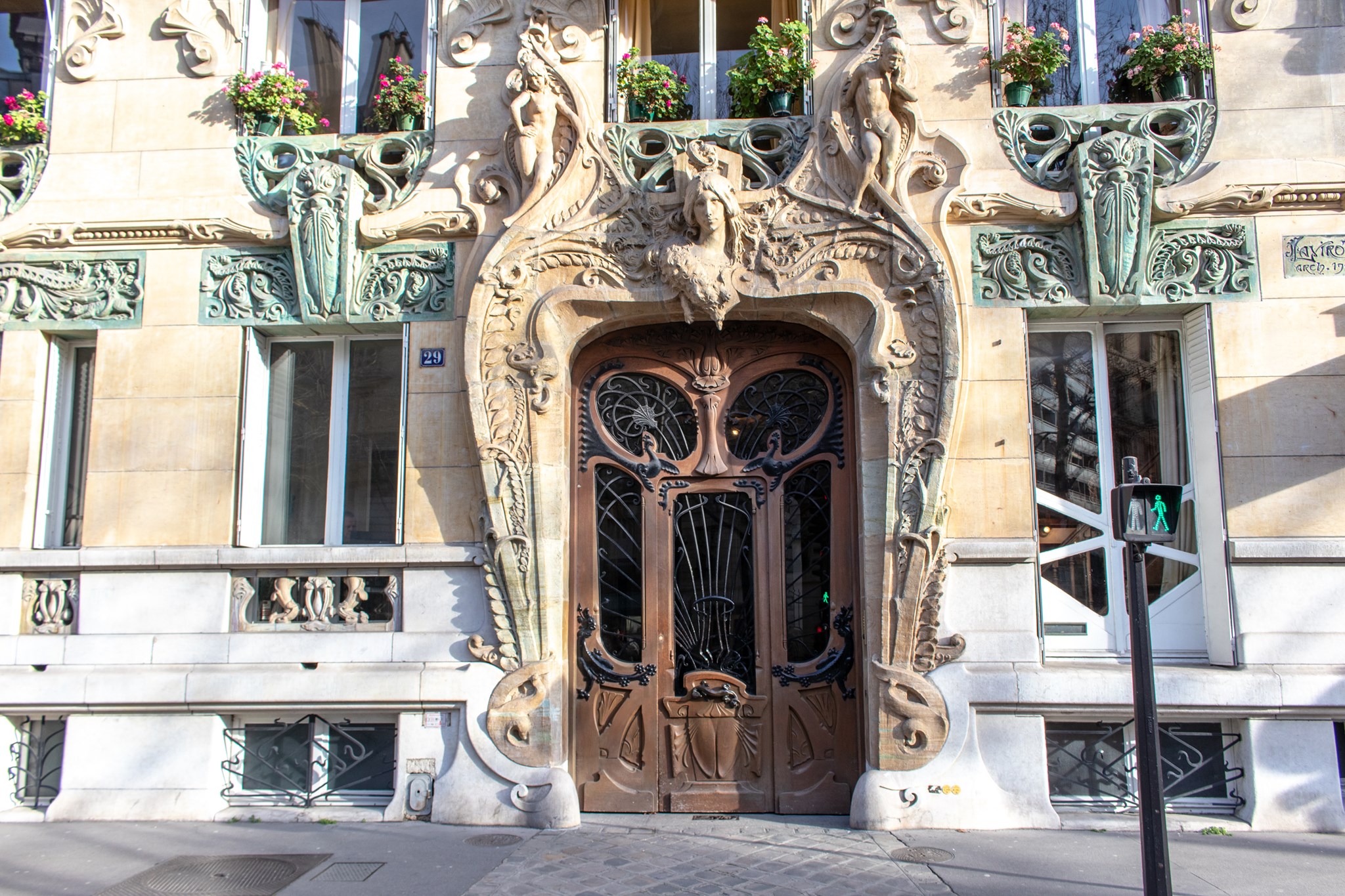
Floral mascarons are a key feature of Art Nouveau architecture, and many were standardized. According to research by architect V. Lopatko, there were factories that mass-produced them—which is why identical mascarons can be seen in the entryways of buildings designed by completely different architects. But this is unlikely to be the case with the “Dikansky Chupacabra.” Its entrance is a simplified homage to the decor of Lavirotte’s apartment building in Paris. This is one of the most famous Art Nouveau buildings in the world, built in 1900 in collaboration with ceramist Alexandre Bigot and a group of sculptors. Above the entrance, sculptor Jean-Baptiste Larrivé depicted Lavirotte’s wife, the artist Jane de Montchenu.

- "Noah's Ark" - 21.10.2026
- Blackie’s House on Maksymilianivska St - 19.10.2026
- Danylevs’koho Street, 19 - 13.10.2026