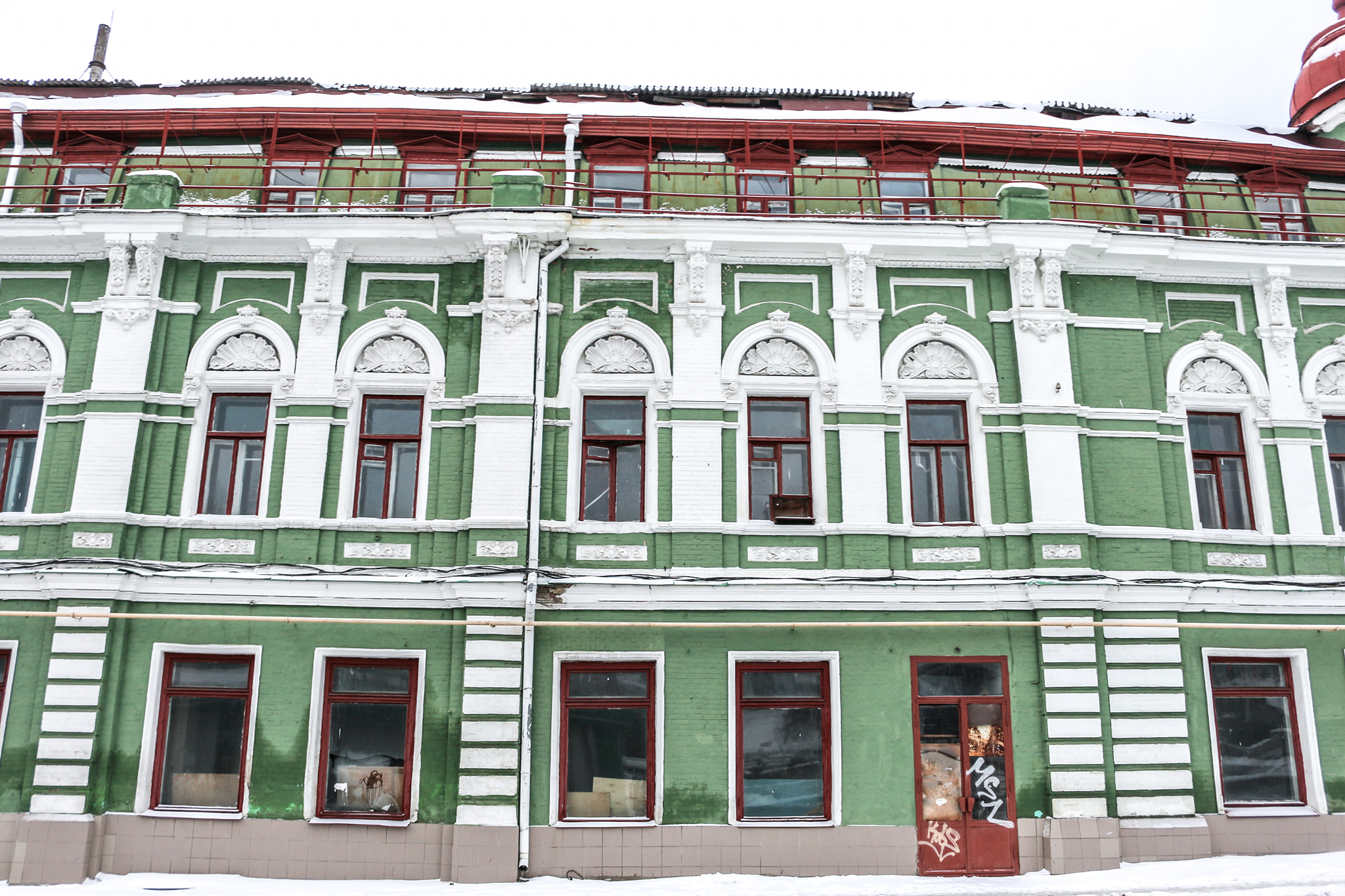
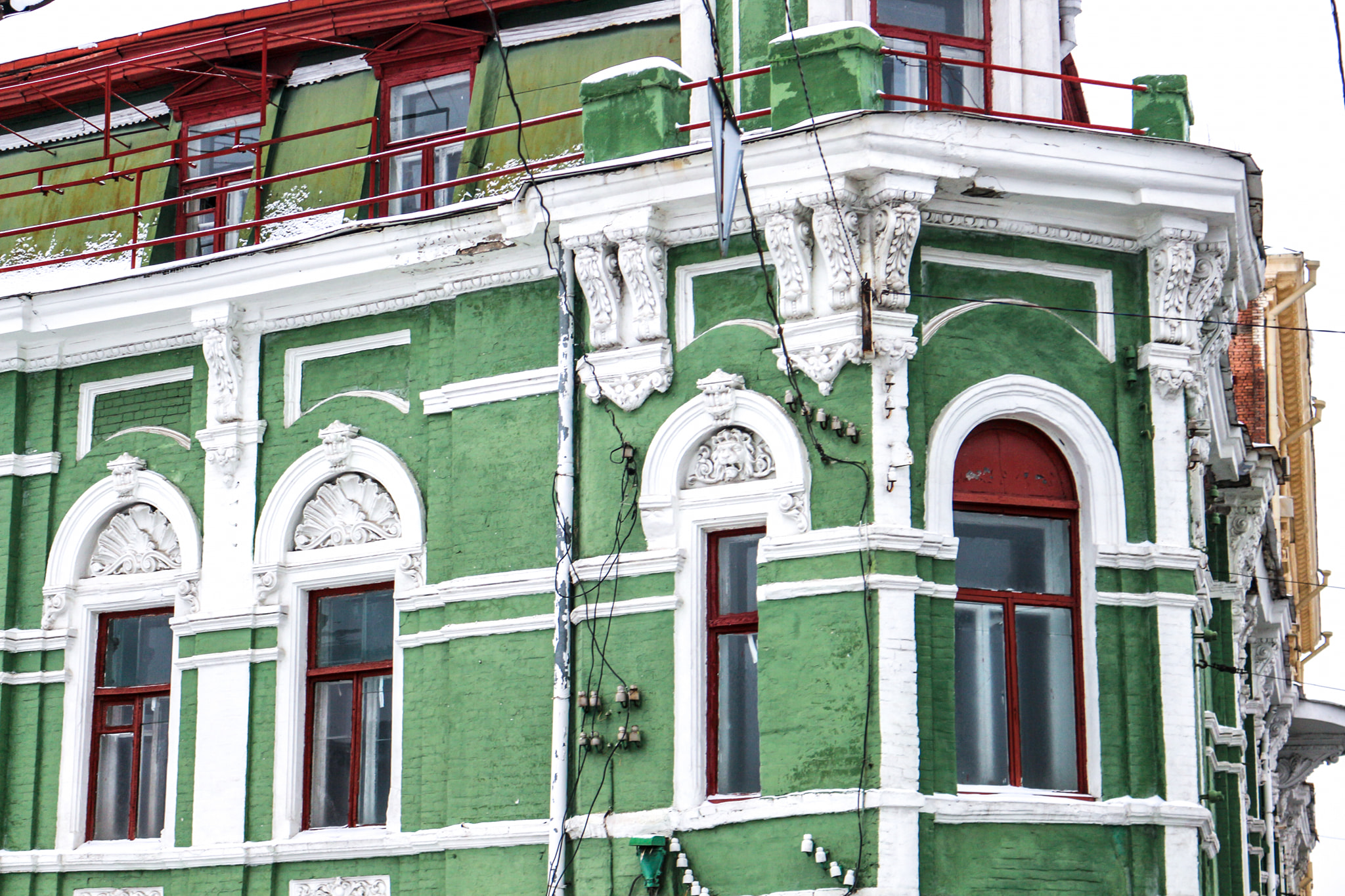
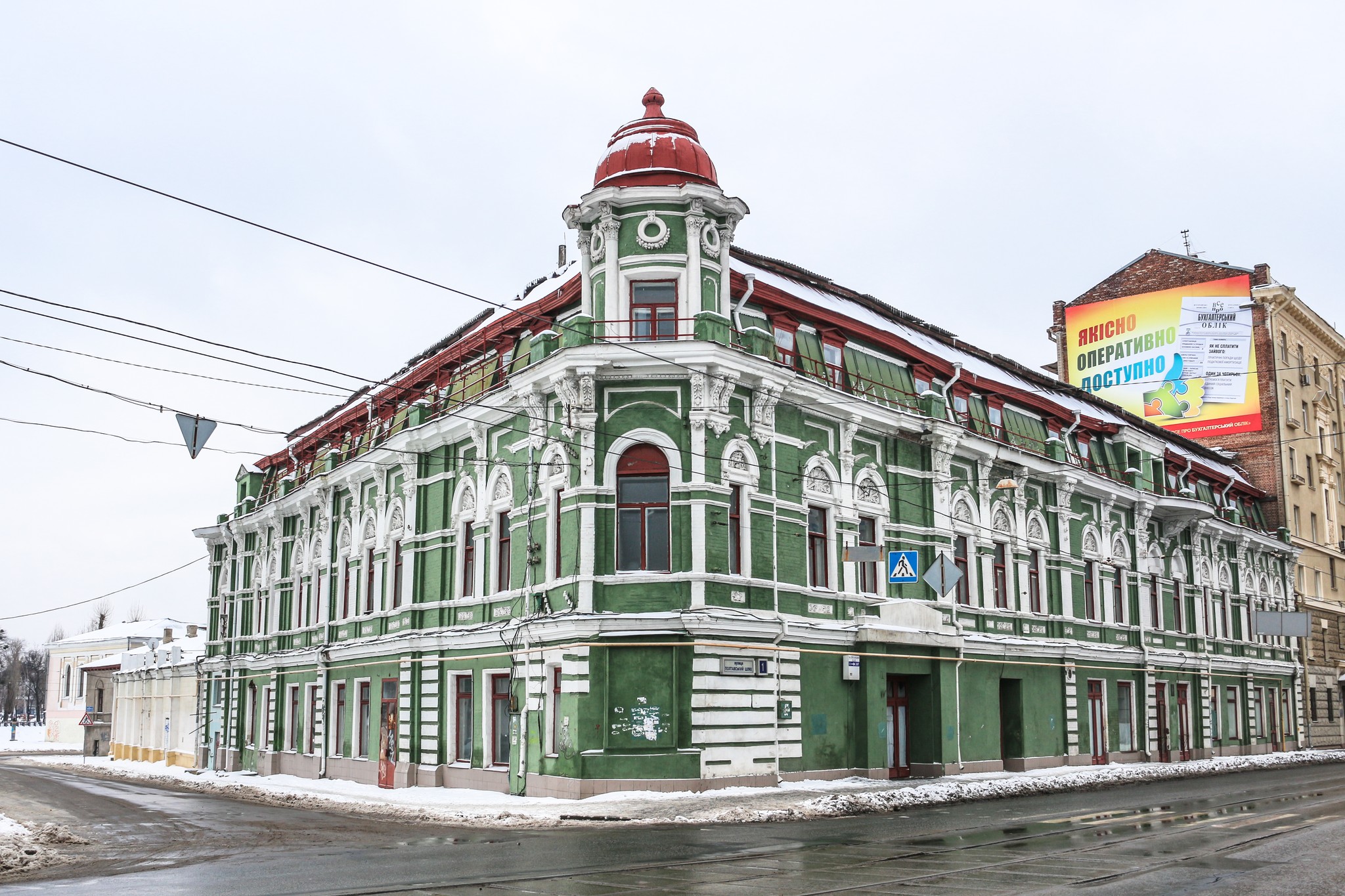
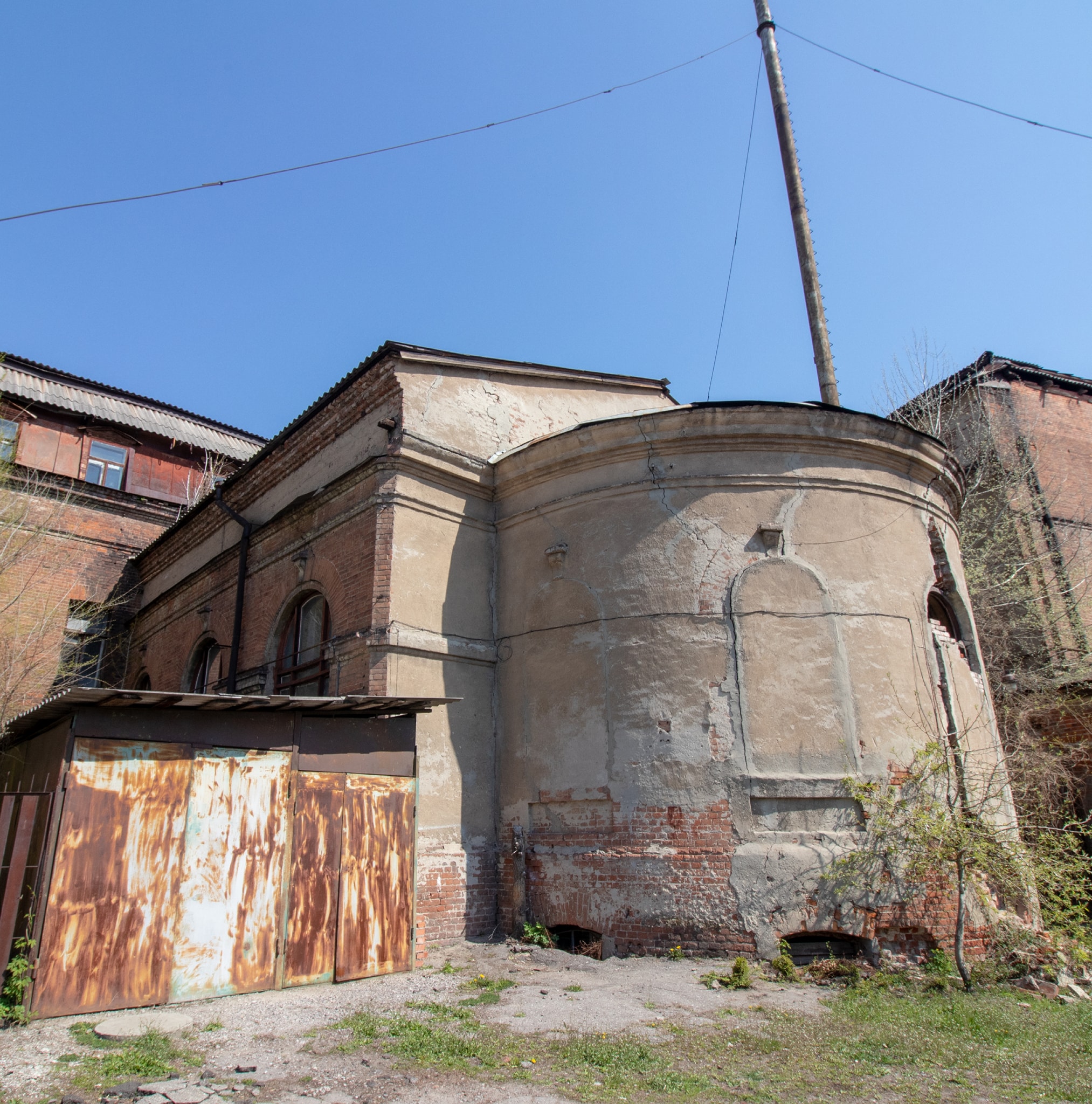
The house of Karl Burkevych at the beginning of Poltavskyi Shliakh Street is interesting not only for its complex facade, but also for the expansion in the yard.
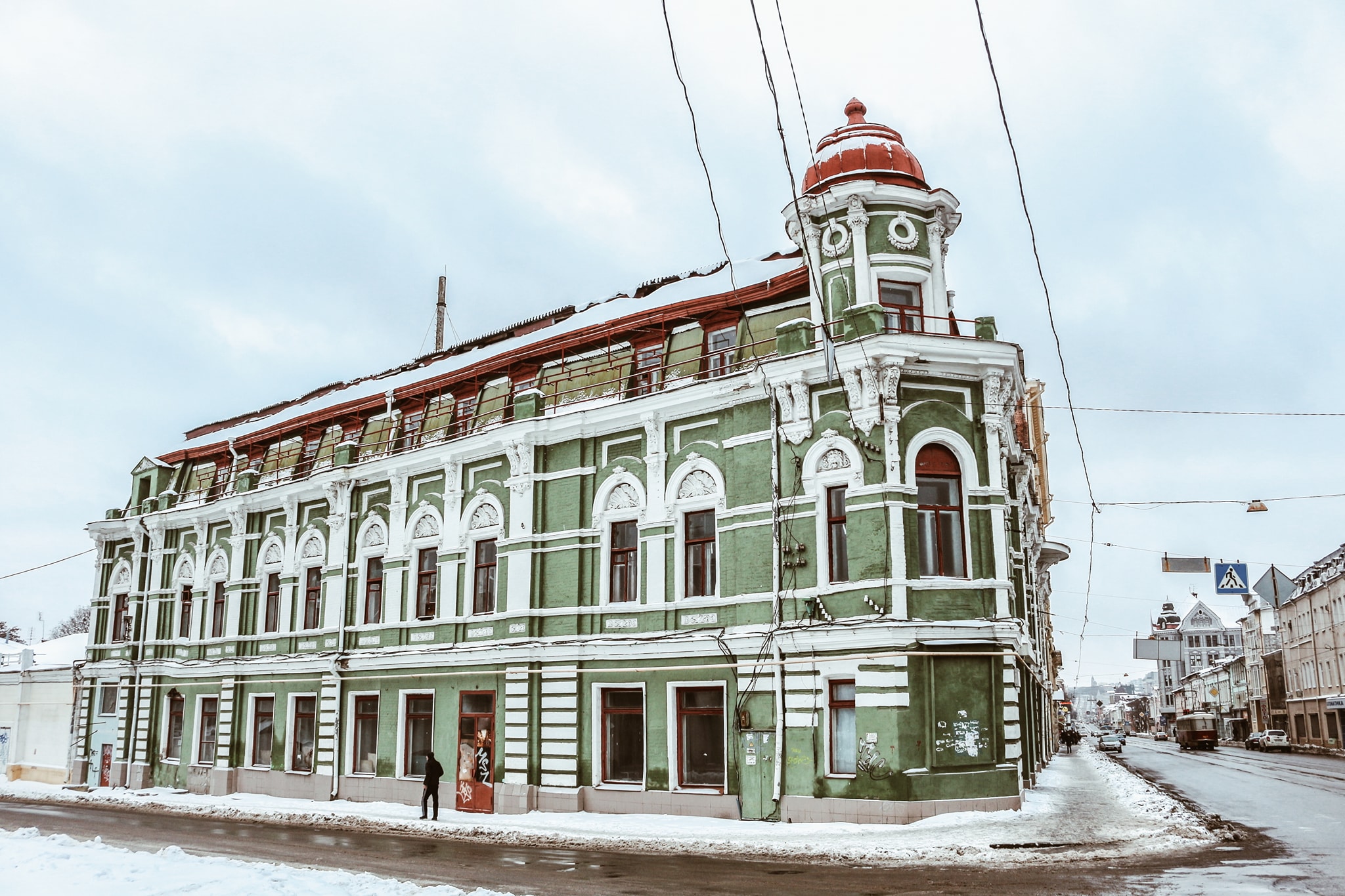
The building is an architectural landmark of Kharkiv.
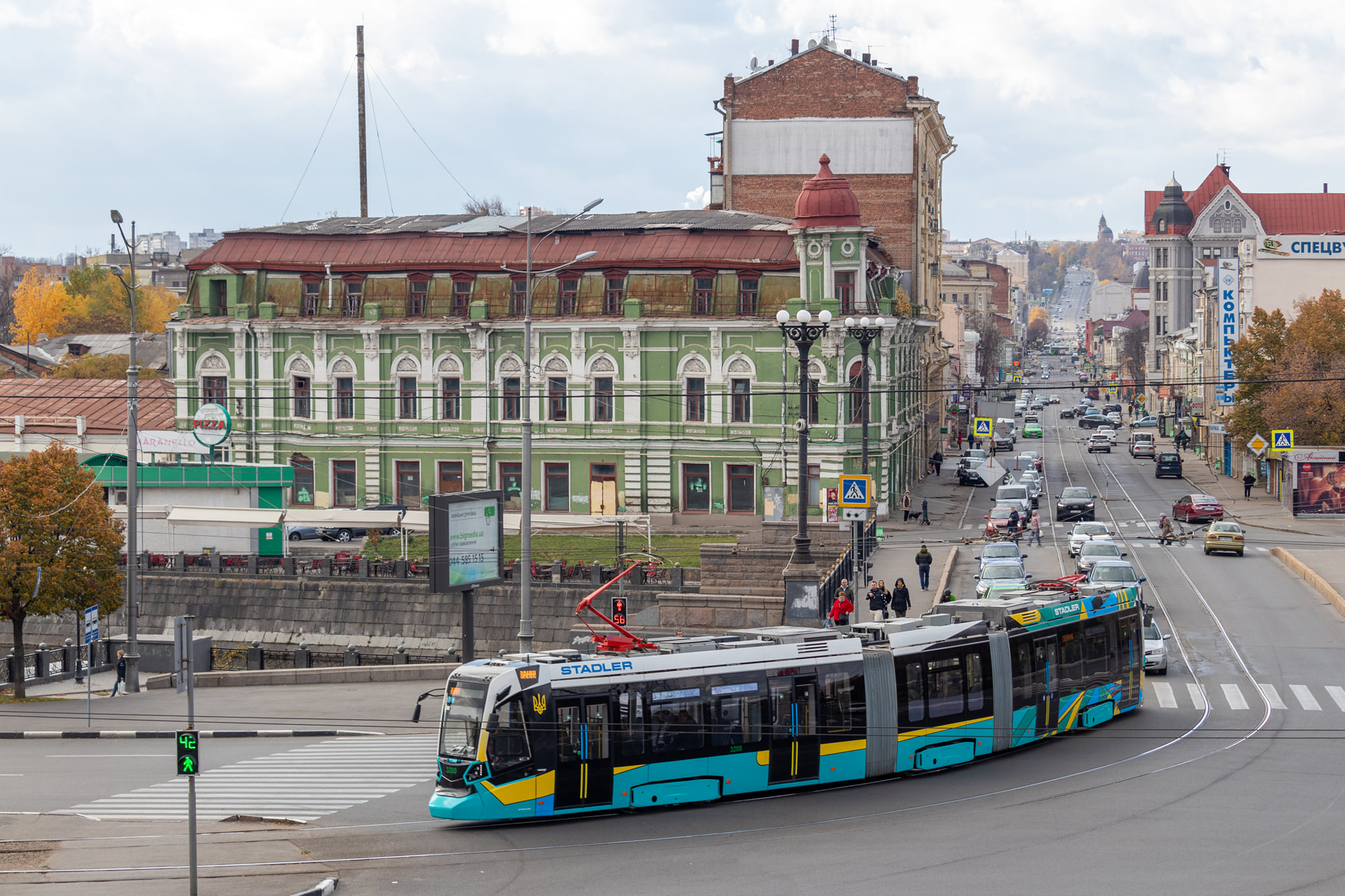
It immediately catches the eye at one of the main observation decks of the city – on the stairs on University Hill, from where a panorama of the Poltavskyi Shliakh Street opens.
The house was built in 1888 (design by Alexander Schiele, revised by architect Andrea-Moritz Thomson).
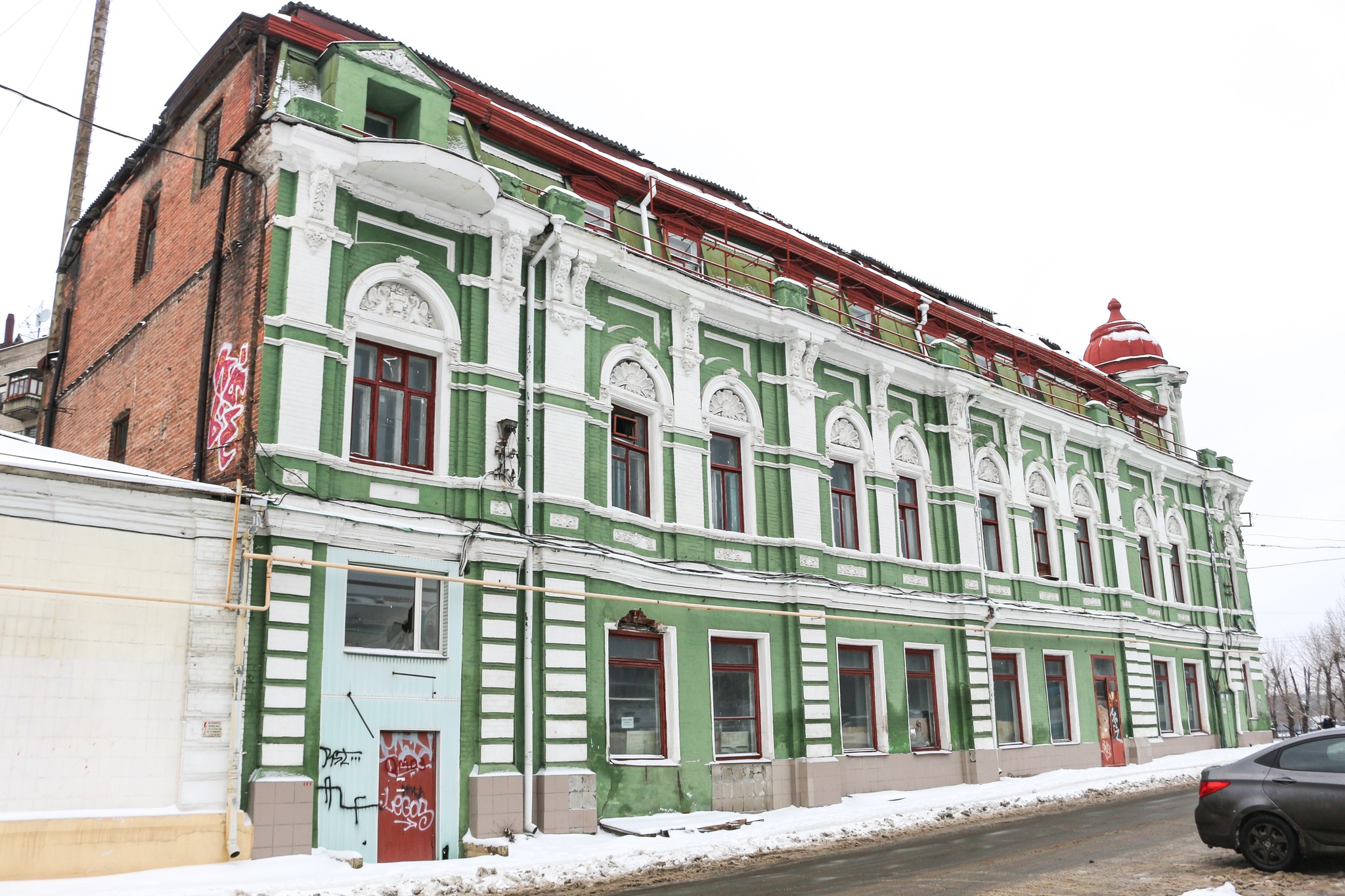
The next owner of the building in 1901 was Peter Ivanov, and the last owner from 1910 to 1917 was the merchant and part-time Swedish consul Adolf Münch.
He organized a shopping center in the building, and among other establishments, there was a beautiful Suvorin bookstore.
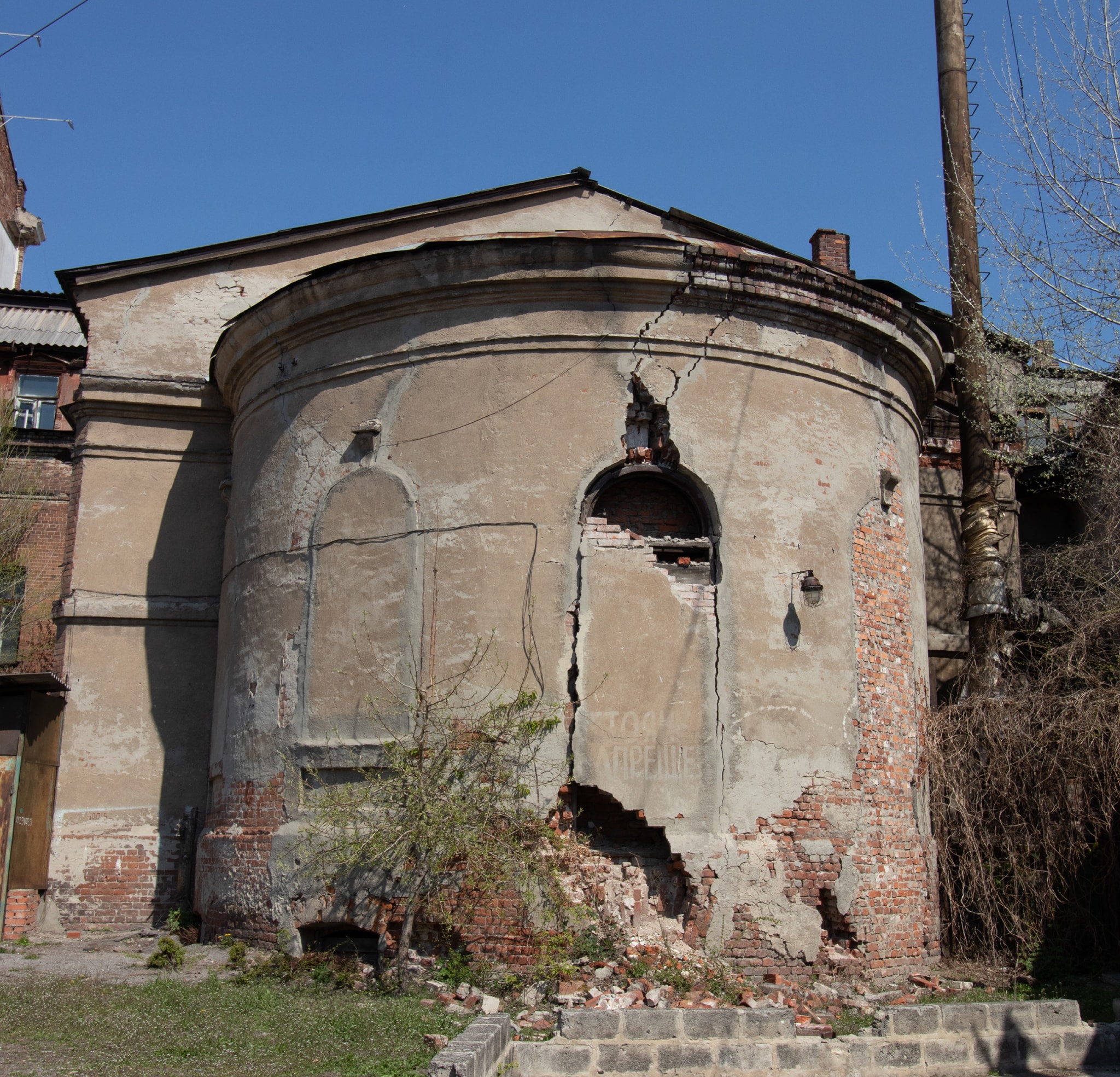
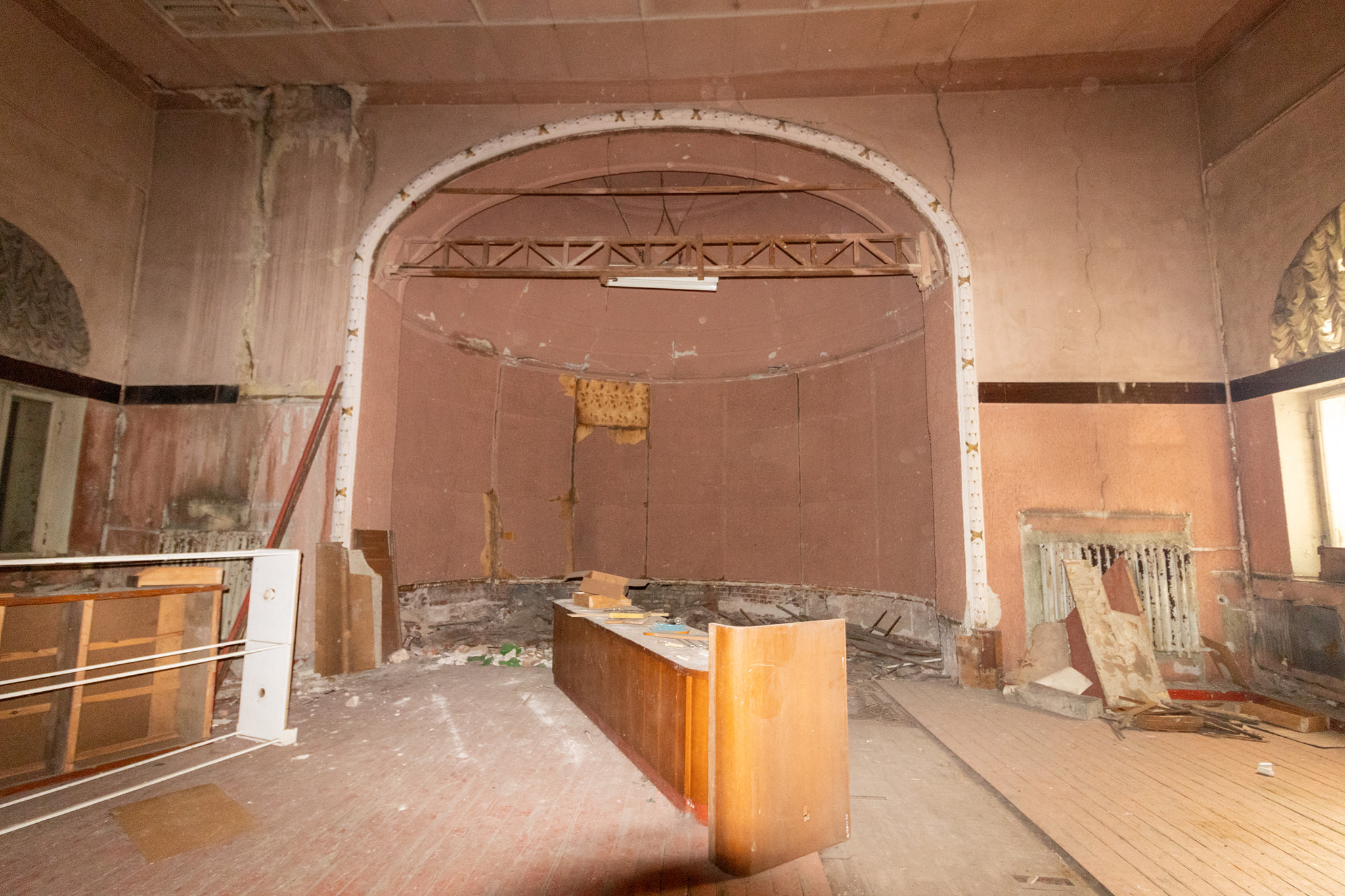
It is unclear when the extension appeared in the courtyard, most likely in the 1900s. Apparently, there was a ballroom or banquet hall here, it even has a balcony.
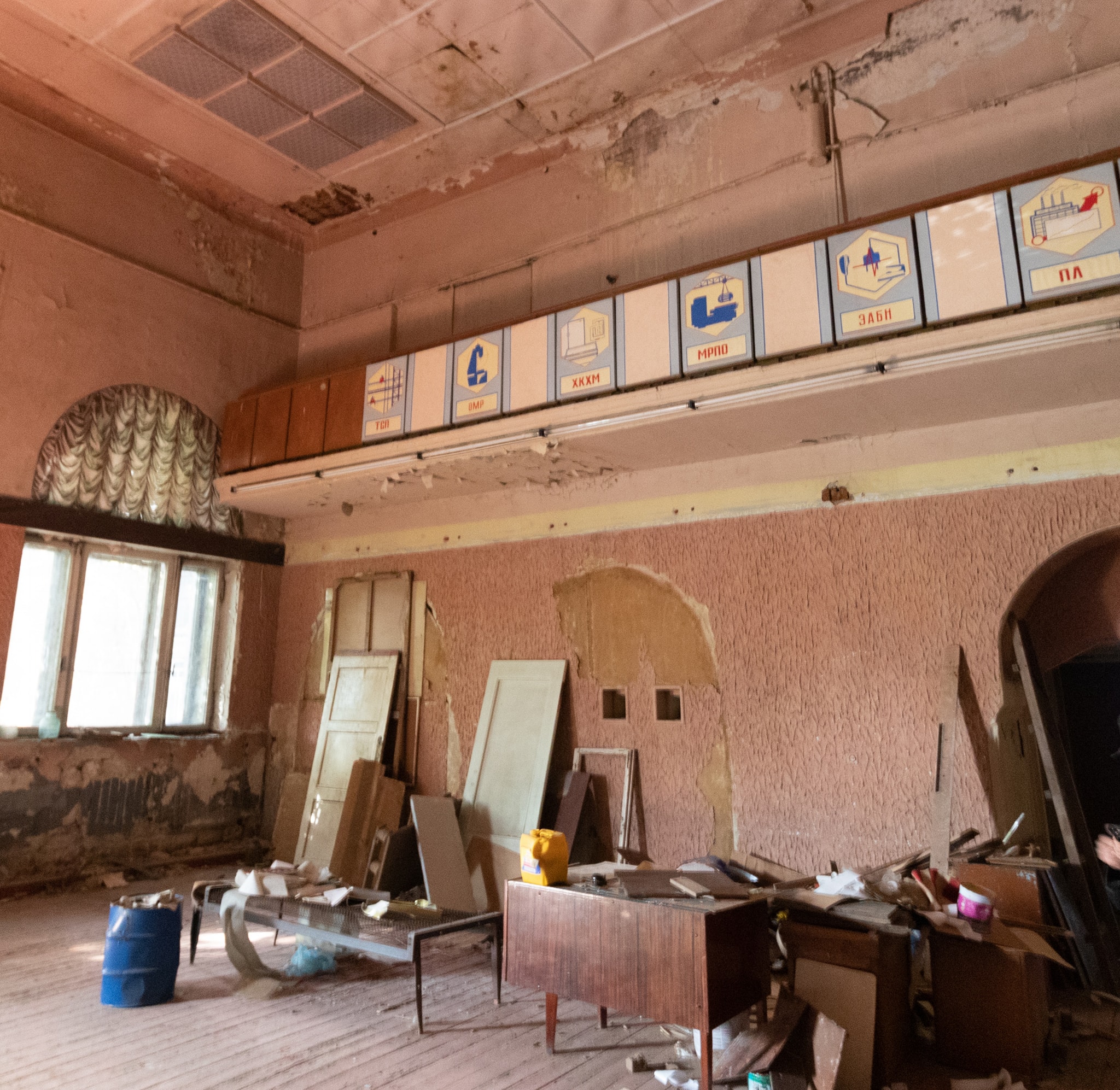
There appears to have been a niche at the end for musicians/orchestra. Later, the windows in the niche were filled in, and a cinema camera was placed in the hall.
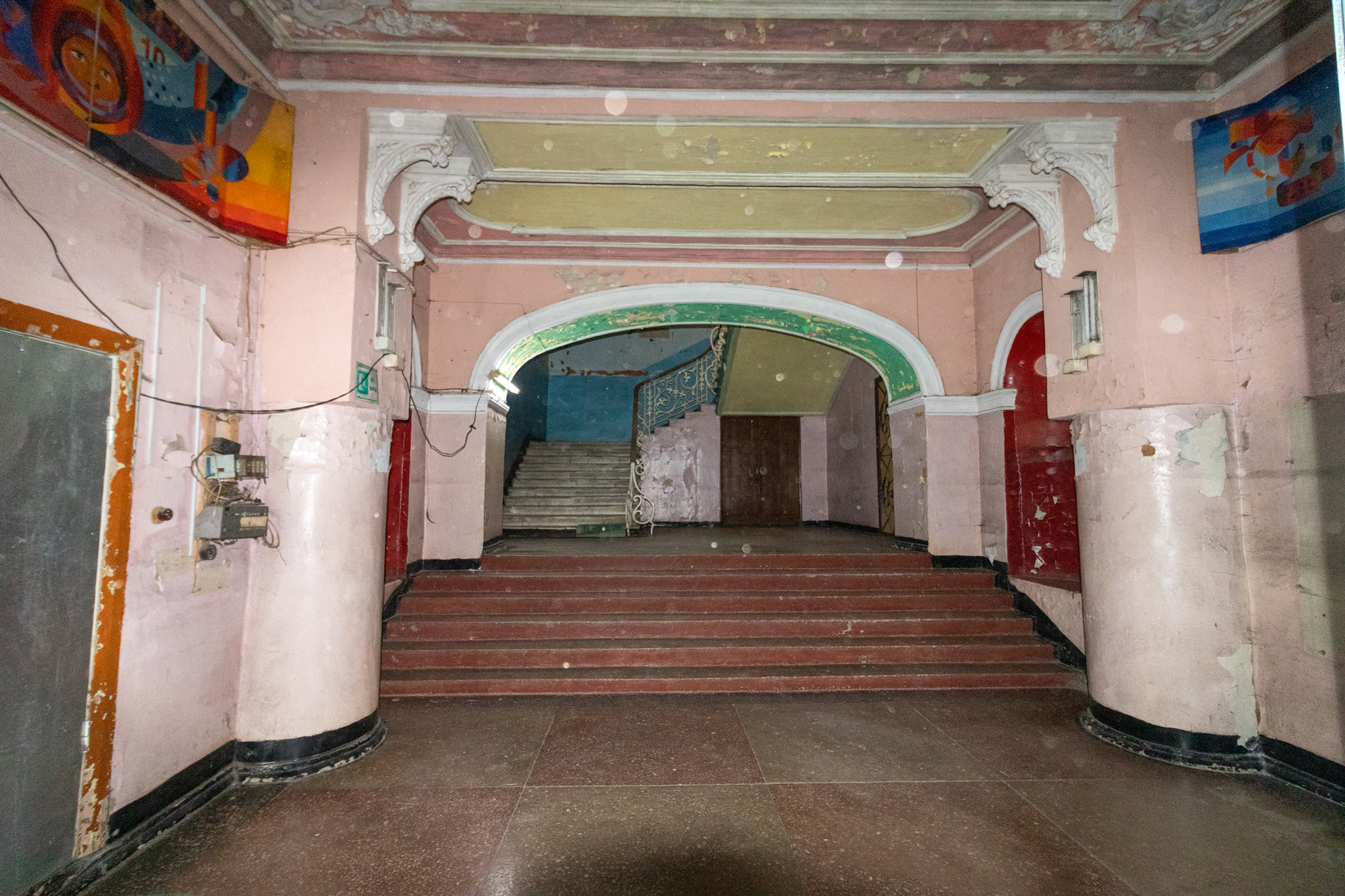
But do not confuse this hall with the Mignon cinema (named after Karl Marx), it was located in a different part of the building, its lobby is in the photo below:
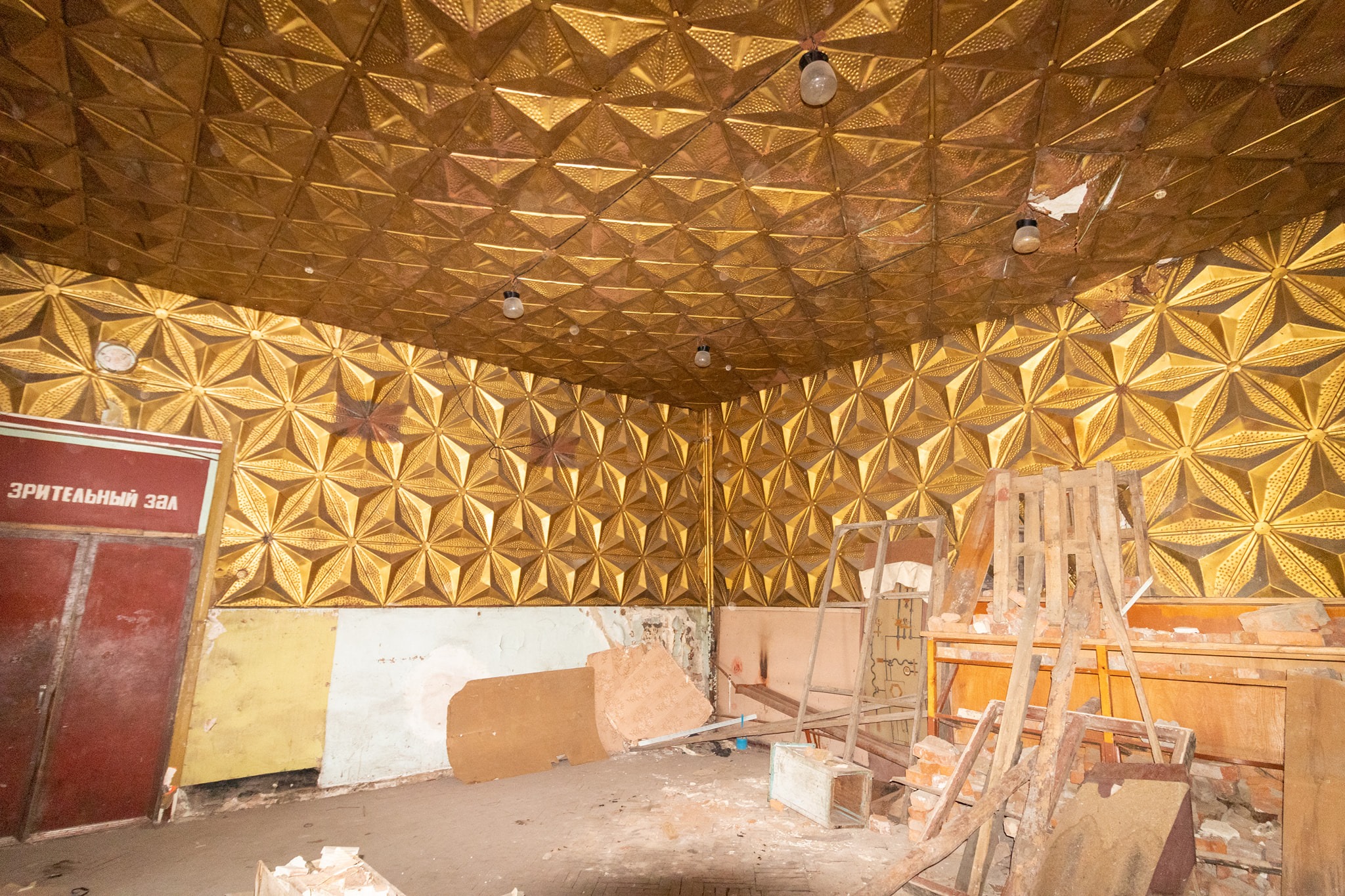
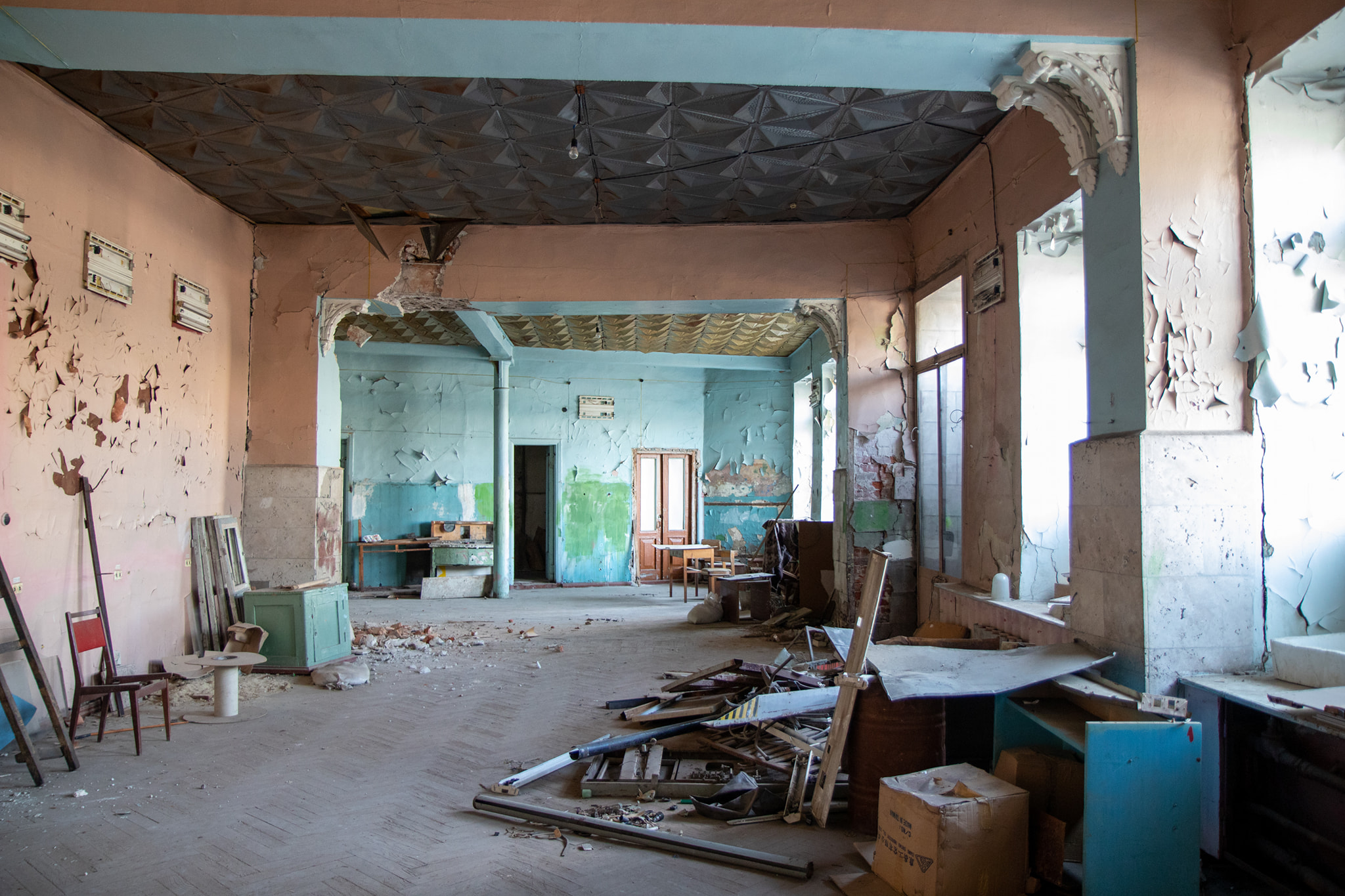
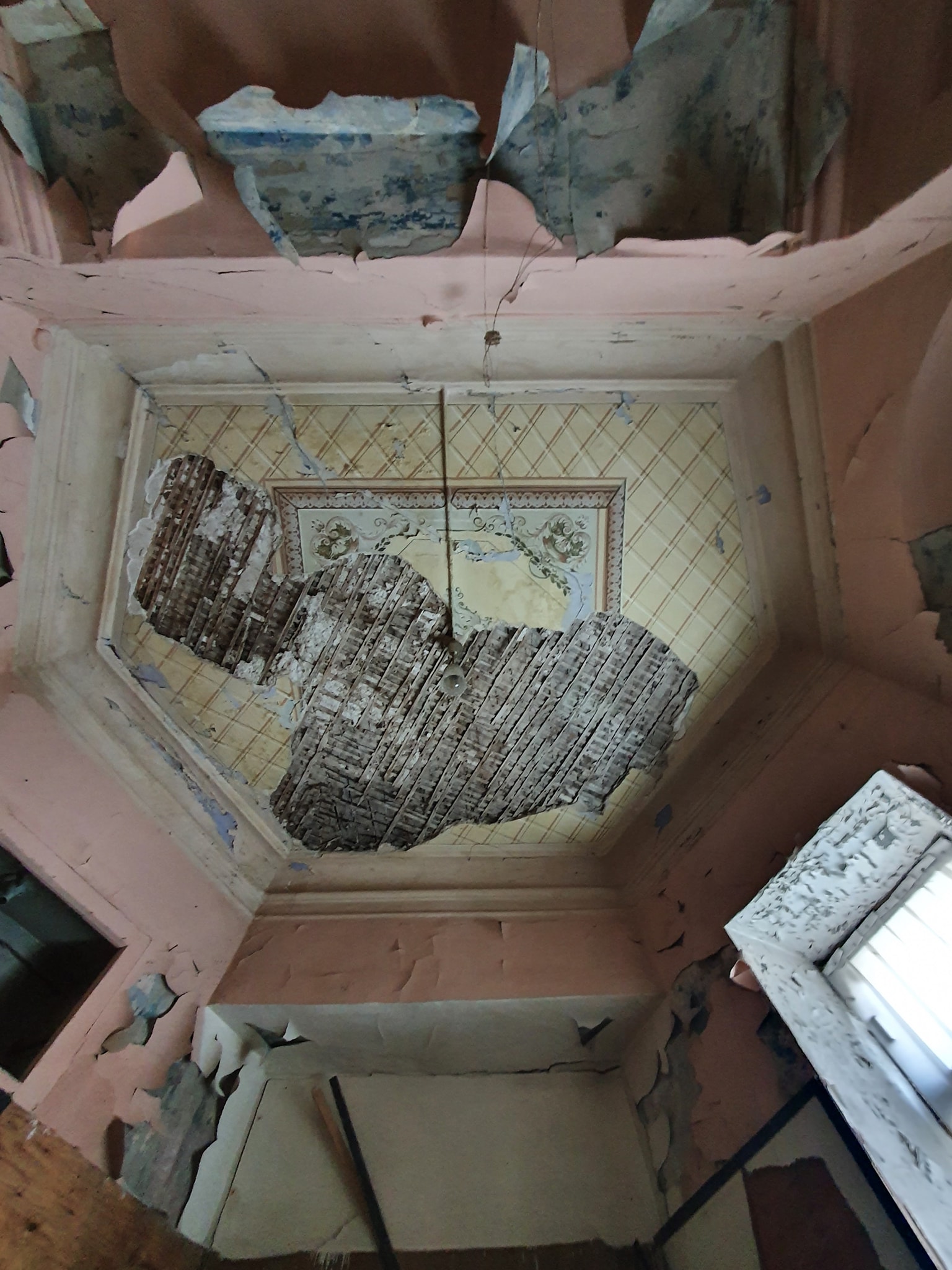
The ceiling of the room from the corner of the building on the first floor, with cinema posters hanging outside
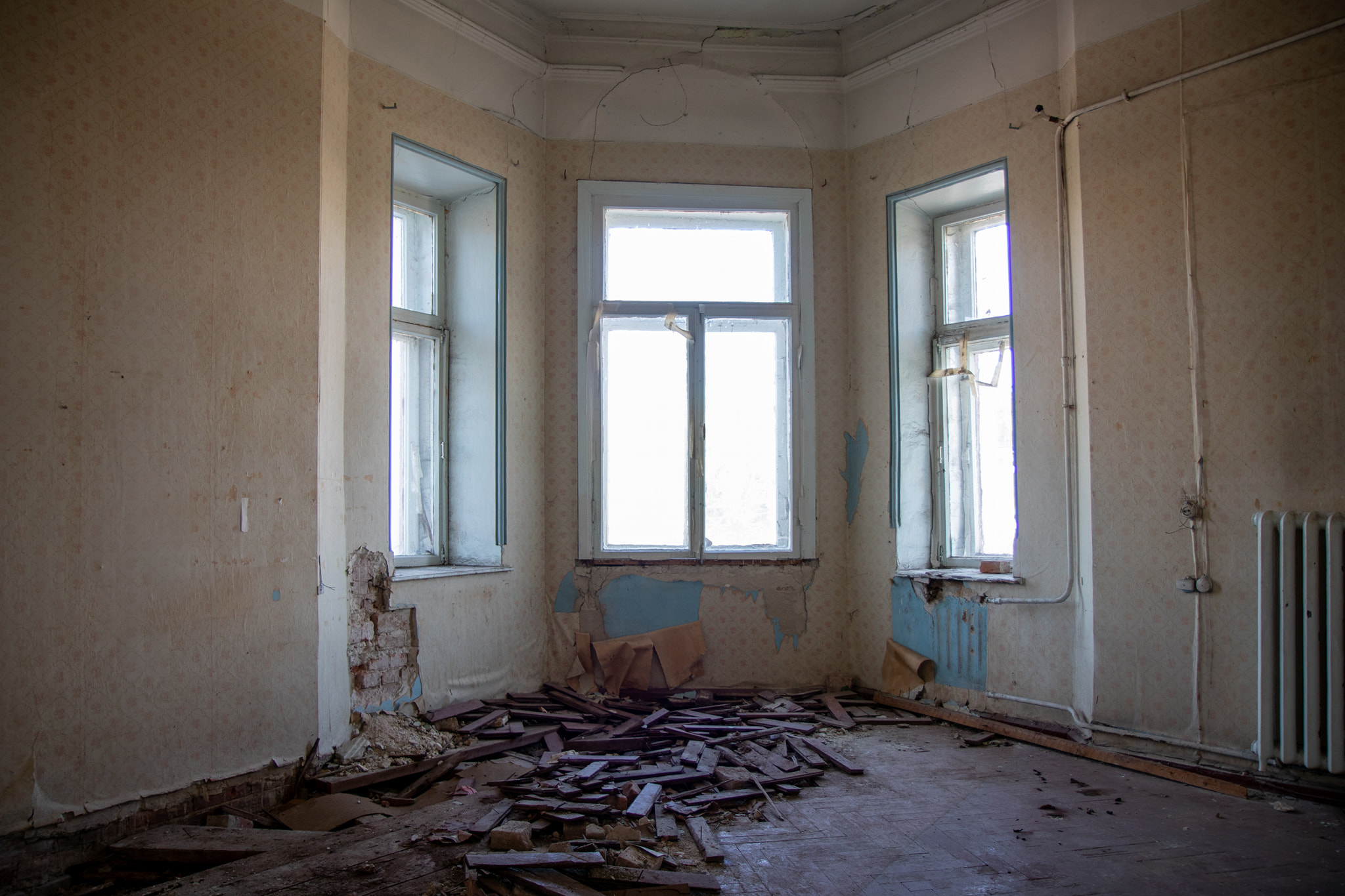
The same corner of the building, but floors higher
Entrance hall on the first floor:
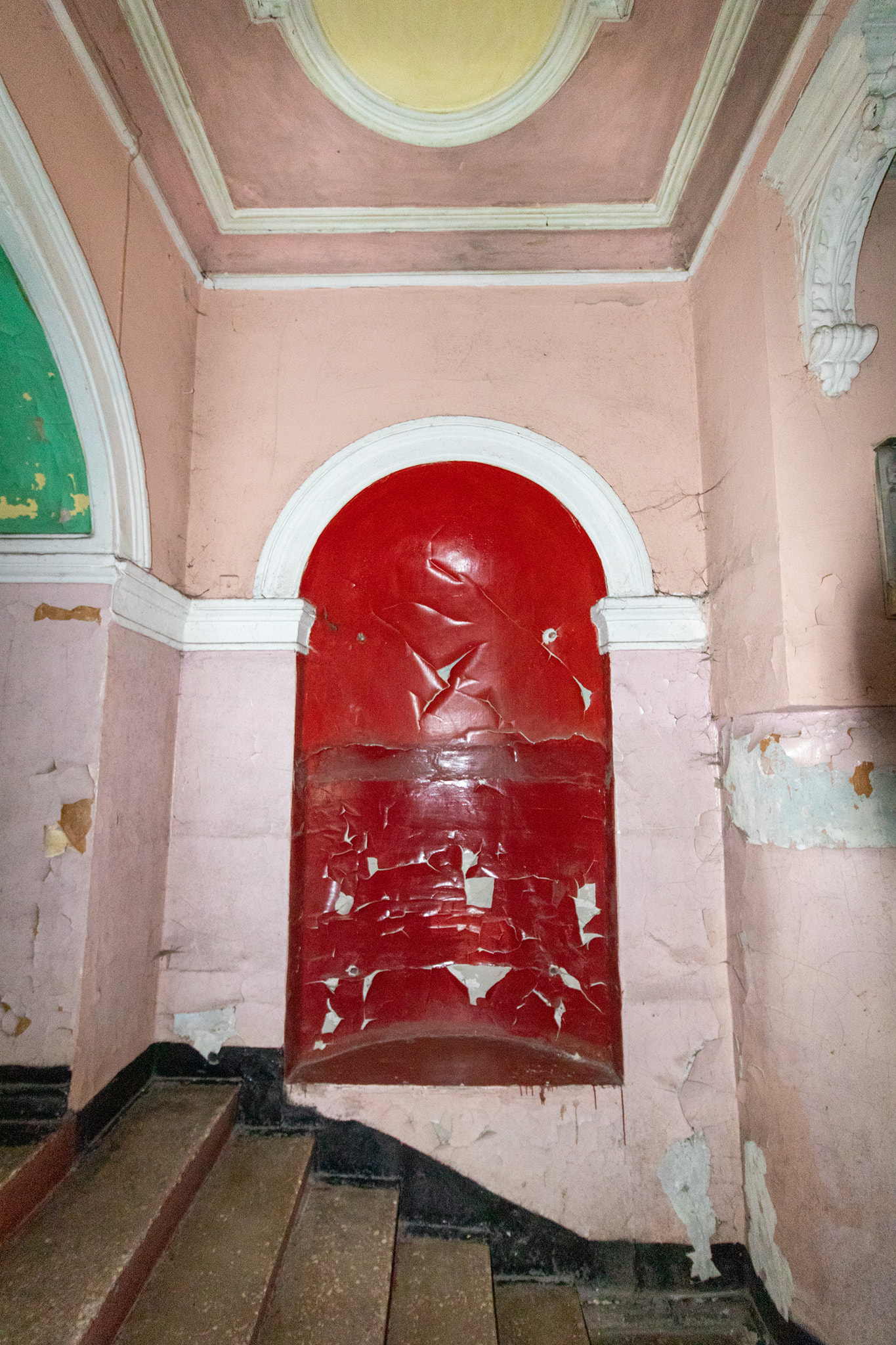
There were shops on the first floor, commercial apartments on the second, and rooms for rent on the third floor.
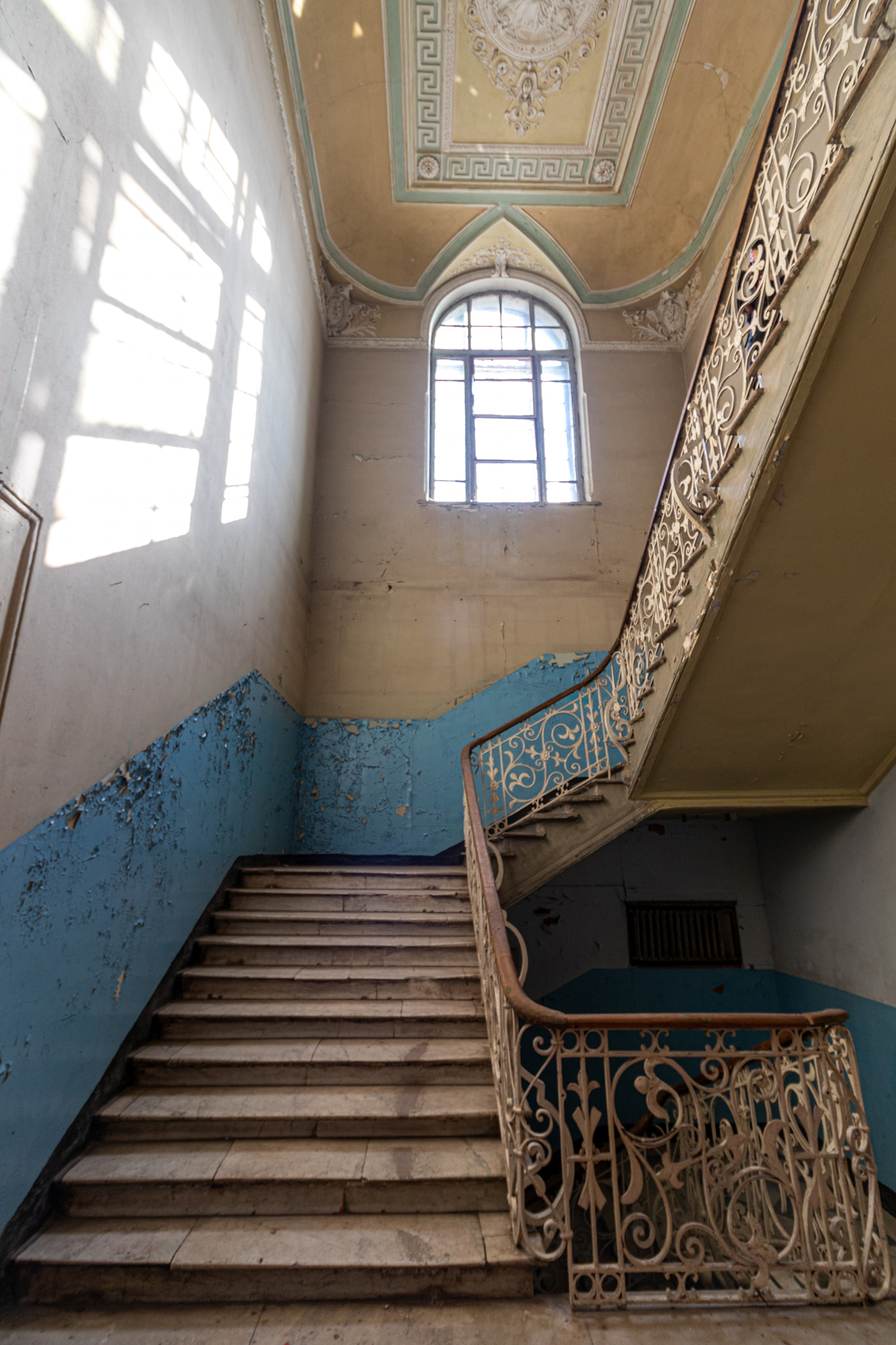
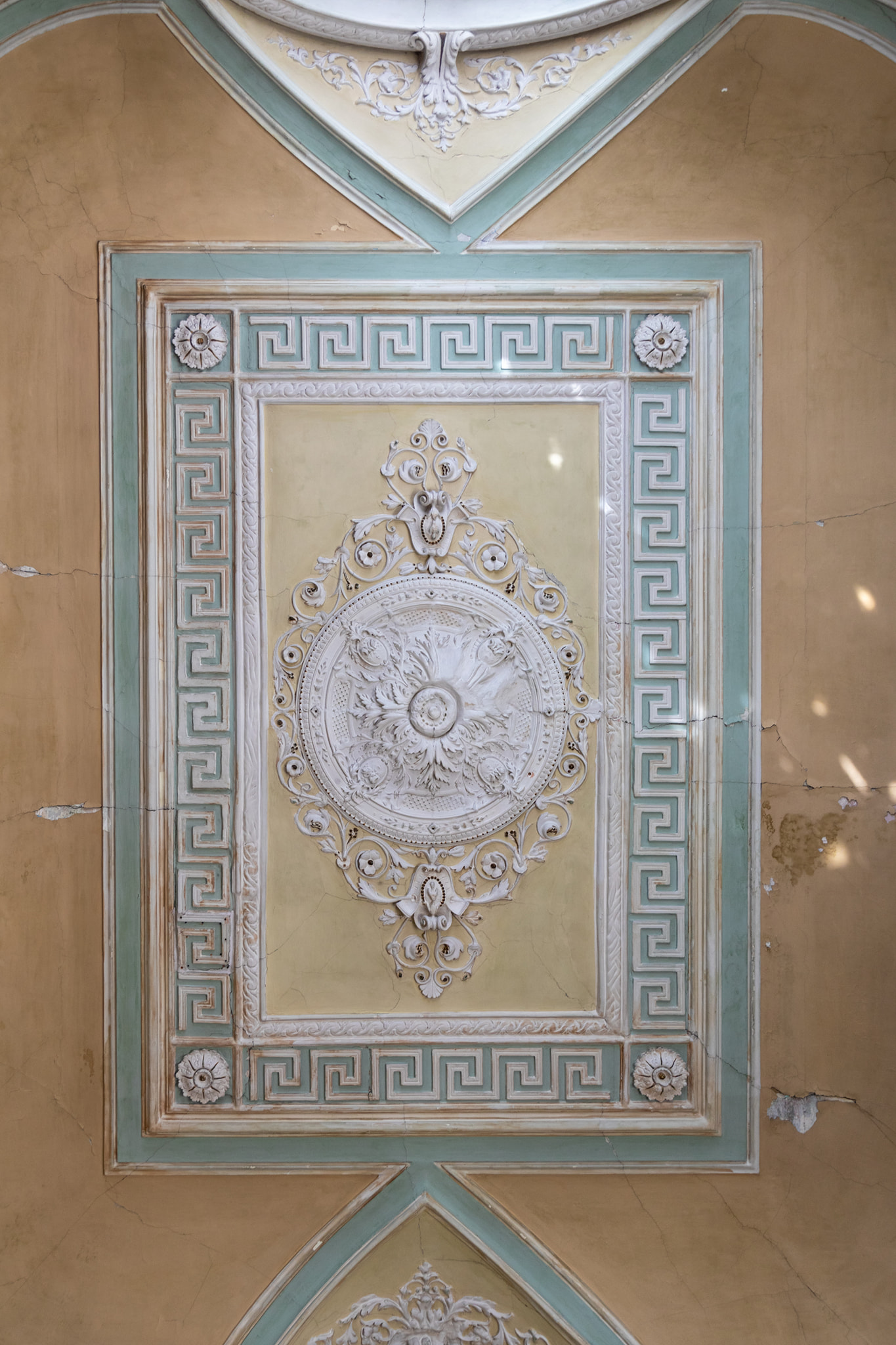
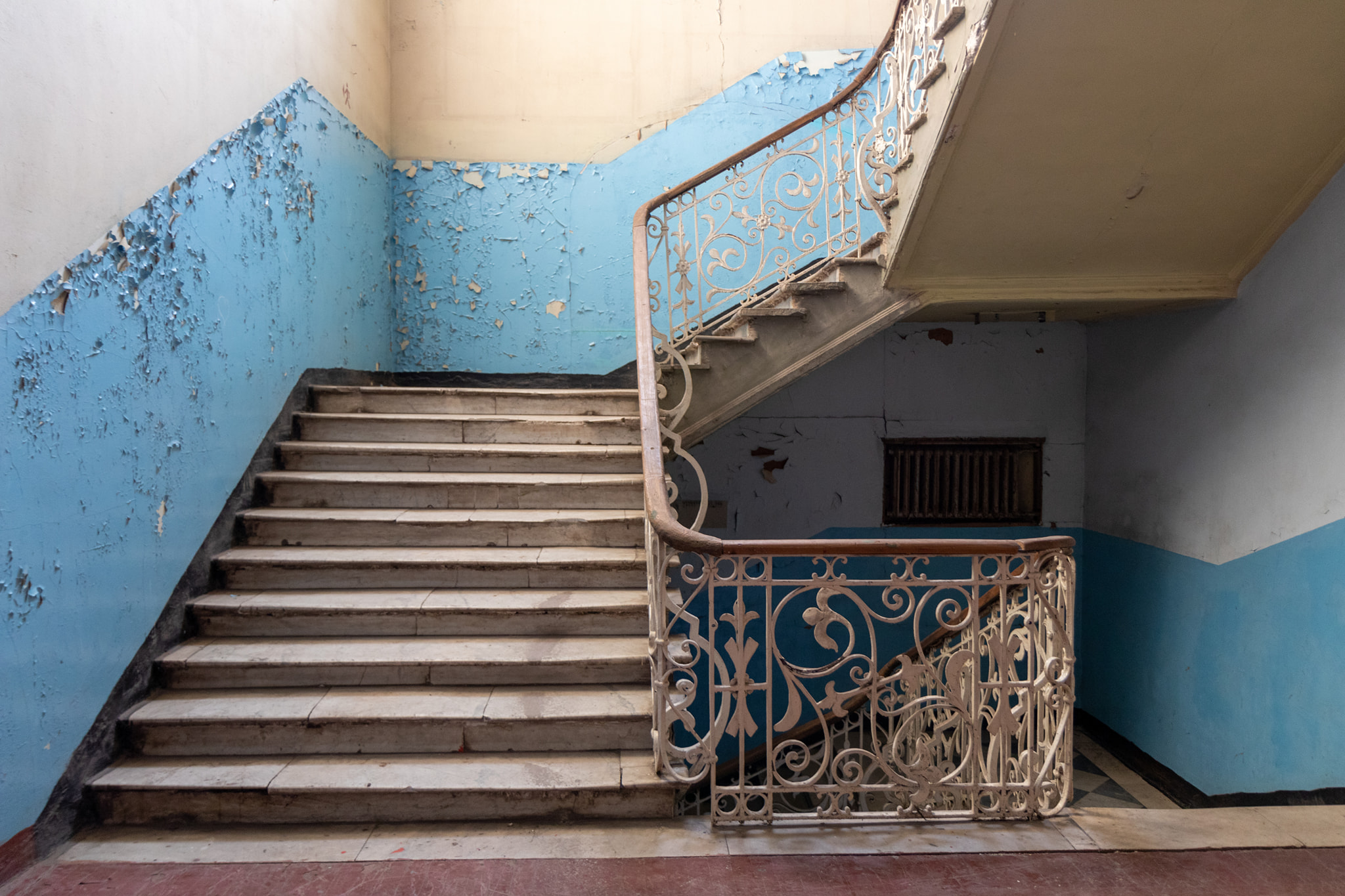
The marble staircase is the most memorable part of the building’s interior. The ceiling in the top floor of staircase is also magnificent.
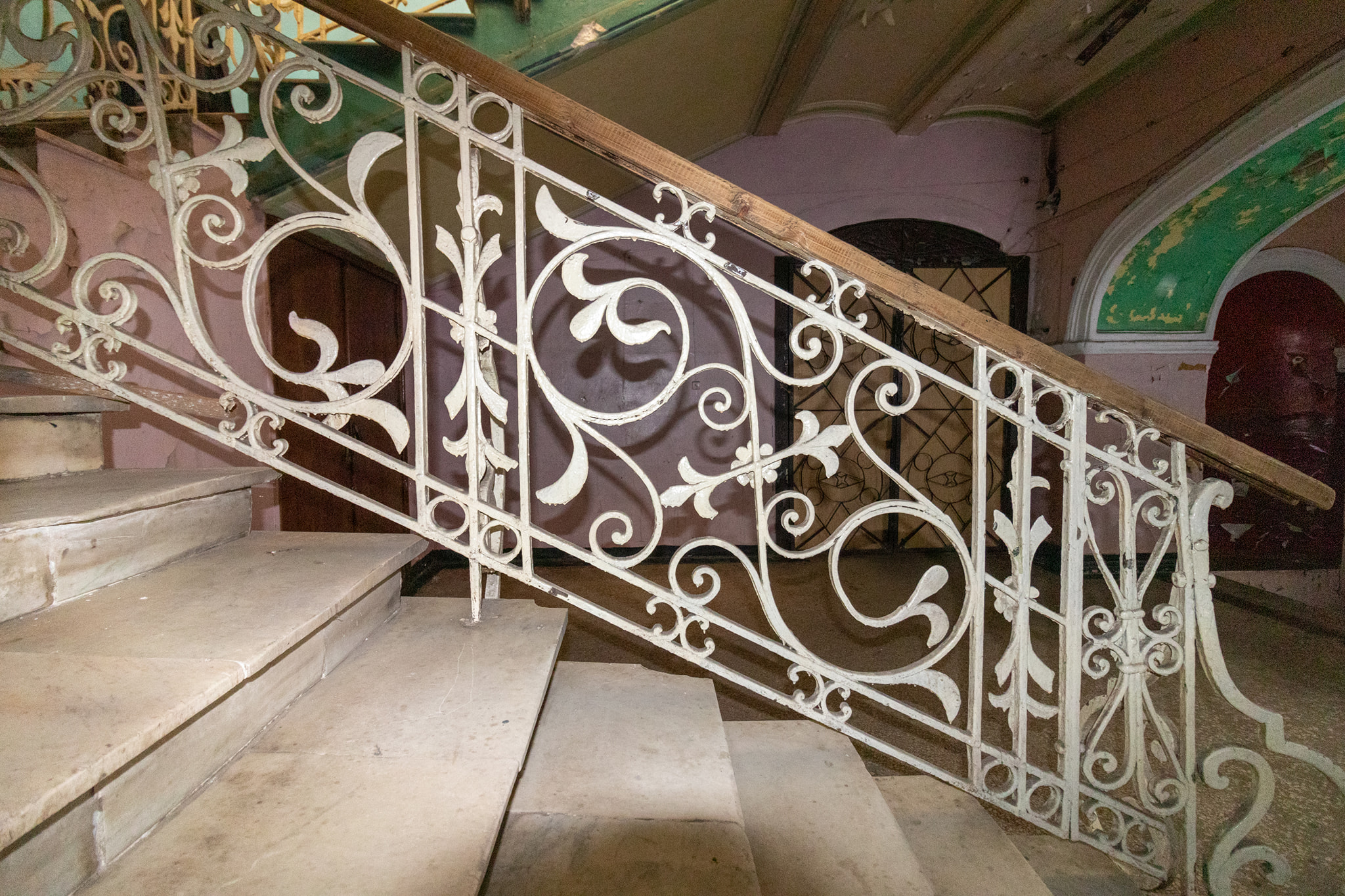
The staircase railing is very elegant.
The last institution located in the building was the Correspondence College of Mechanical Engineering, which moved out in 2006.
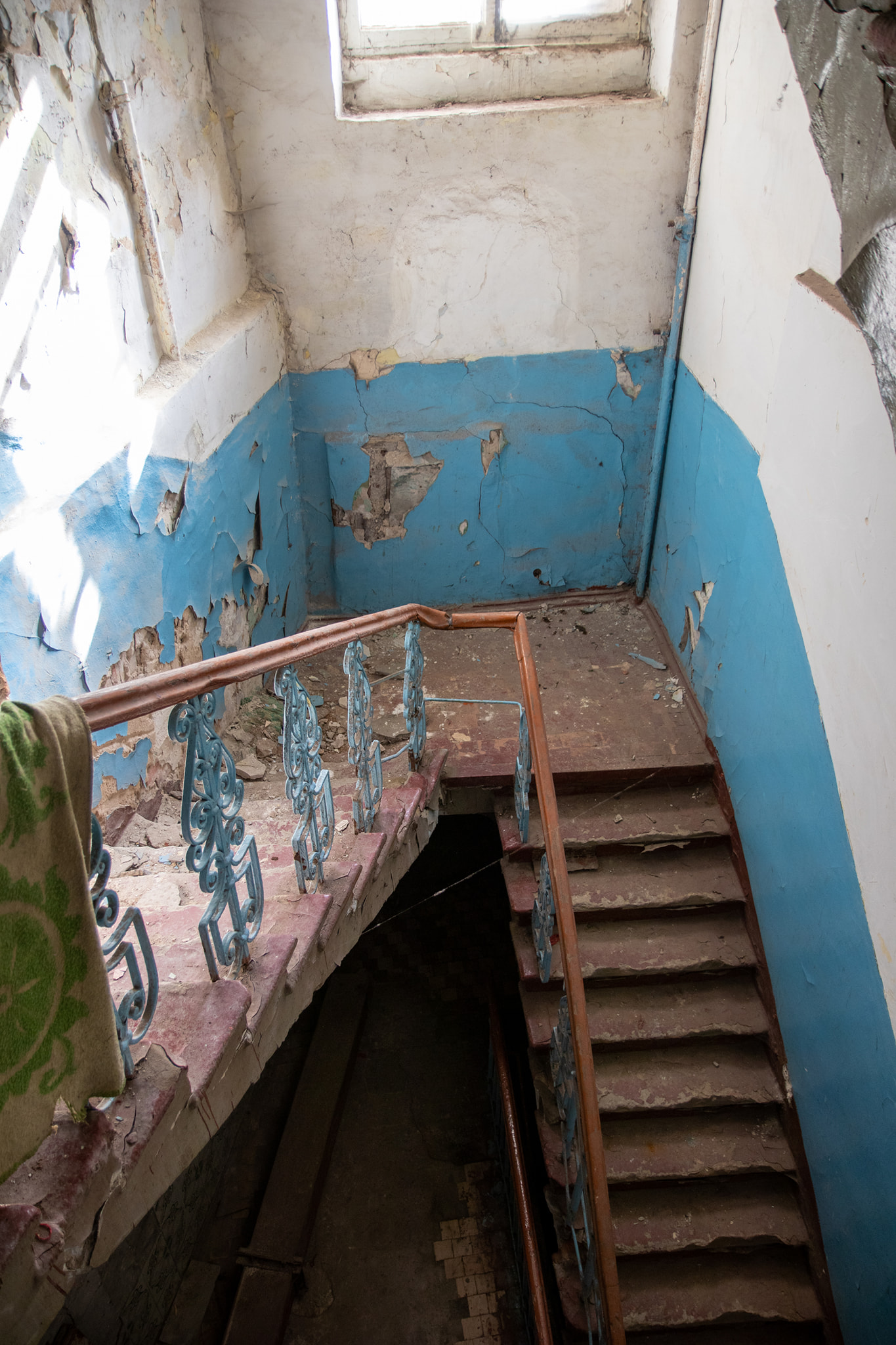
Since then, the building, which belongs to Kharkiv National University of Economics, has been without heating and is rapidly collapsing.
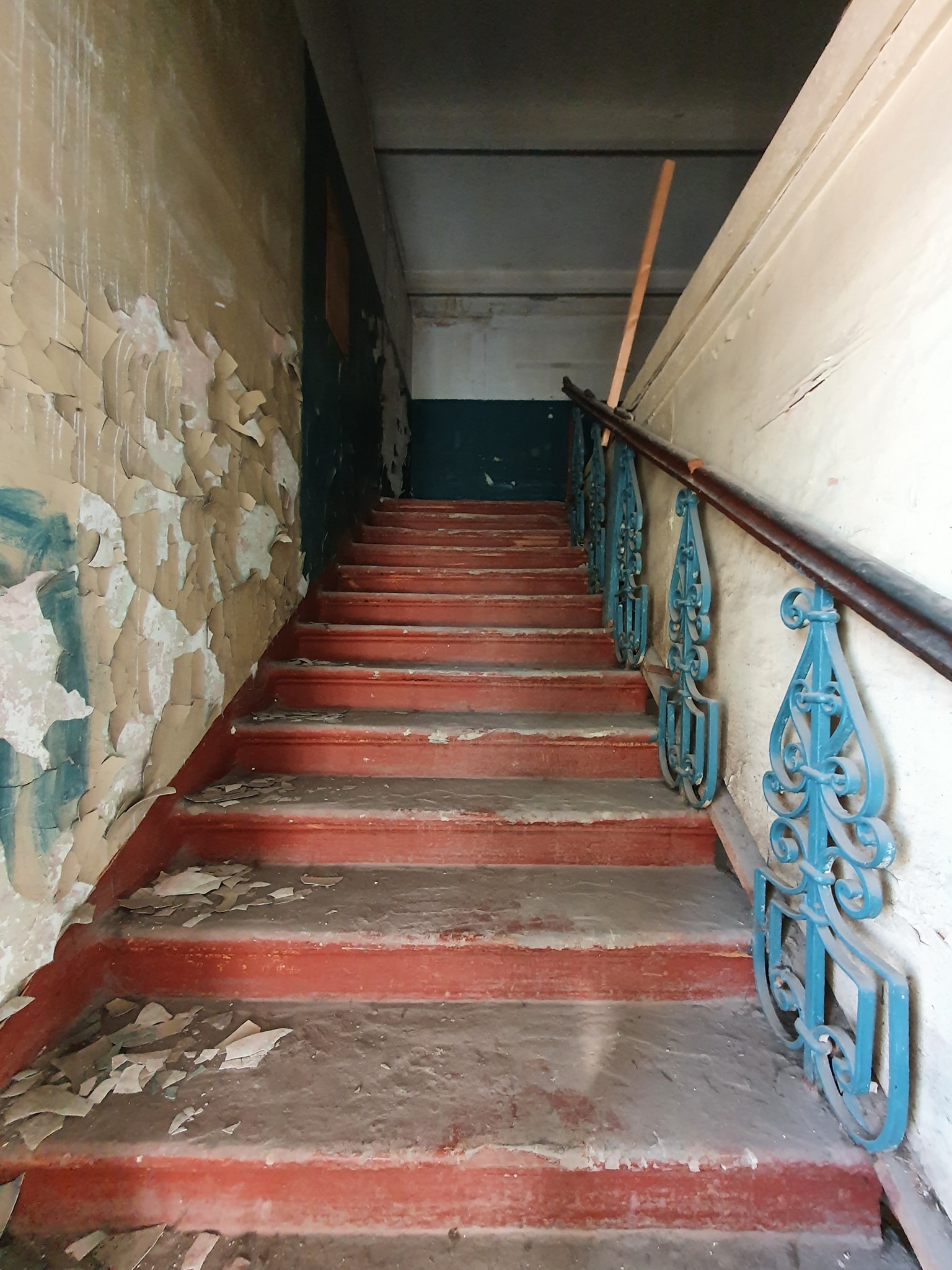
Work was carried out here to strengthen the interfloor ceilings with supports.
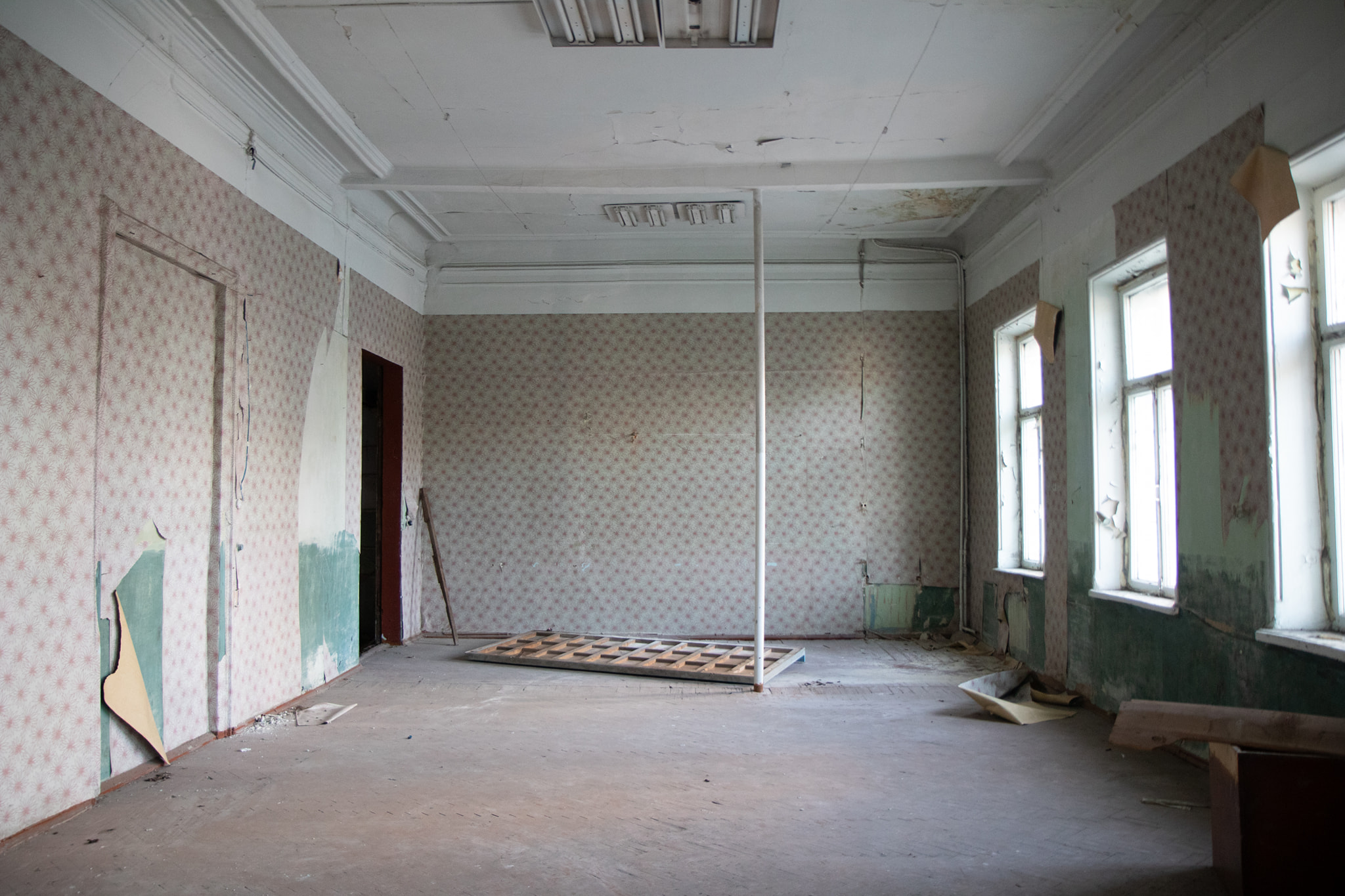
Floors and walls were also exposed to understand how bad the structures were.
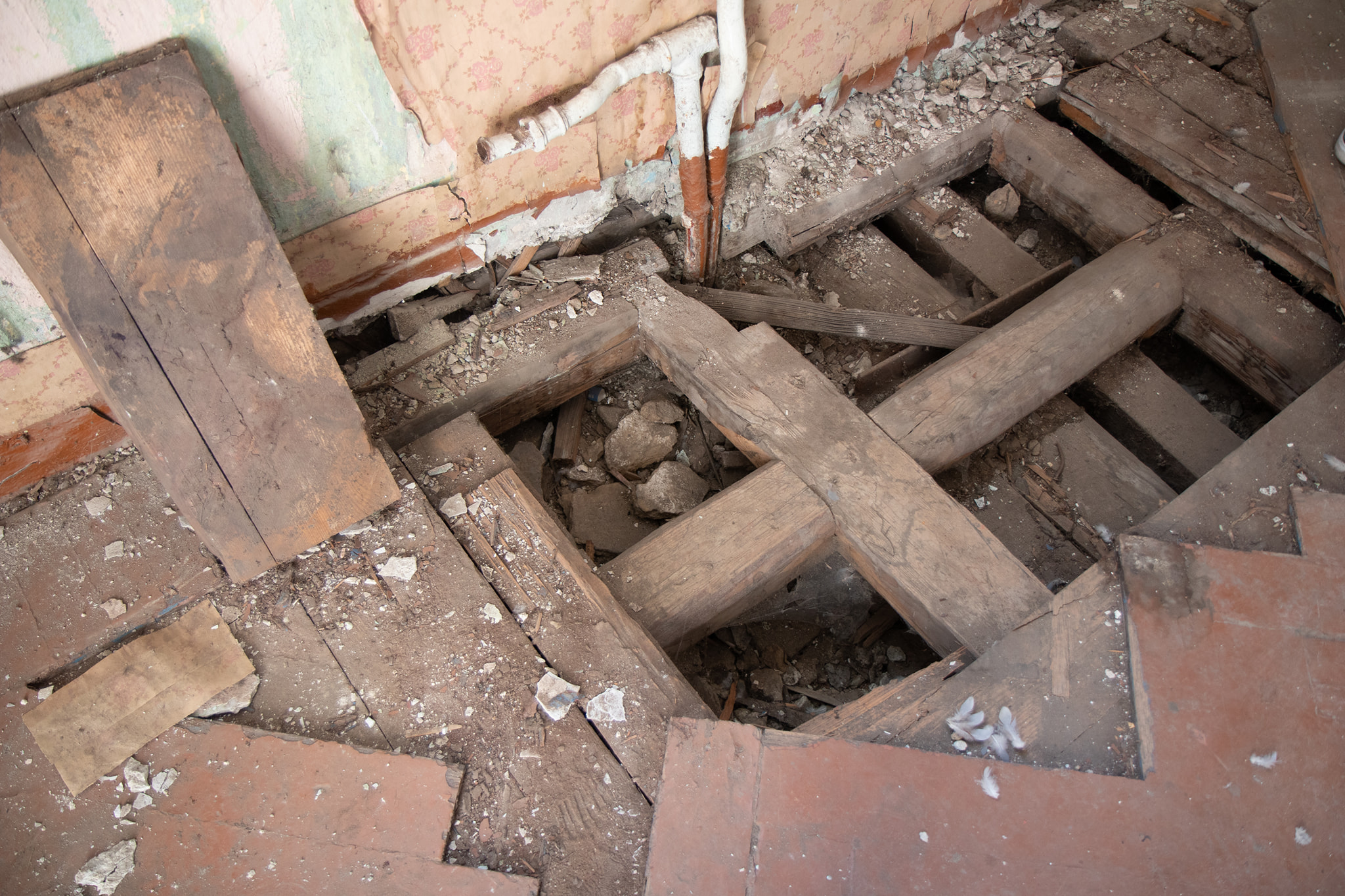
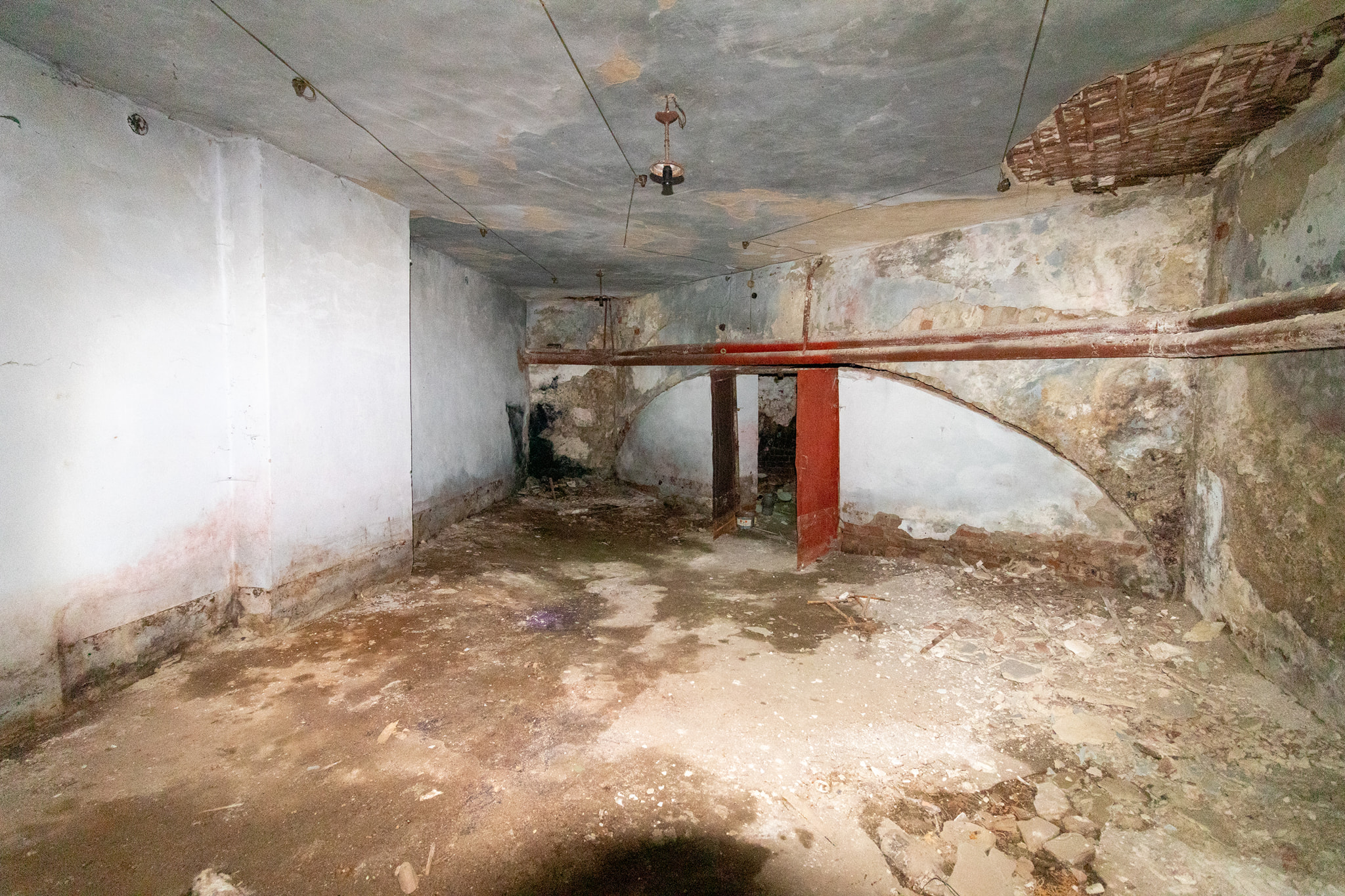
In fact, everything is very bad, you could say that the original structures of the building are doomed. Here, the basement was flooded, and the facade has long since sagged (this is visible from the skewed windows on the embankment side). The ceilings of the house are wooden, and moisture and cold are the death for wood.
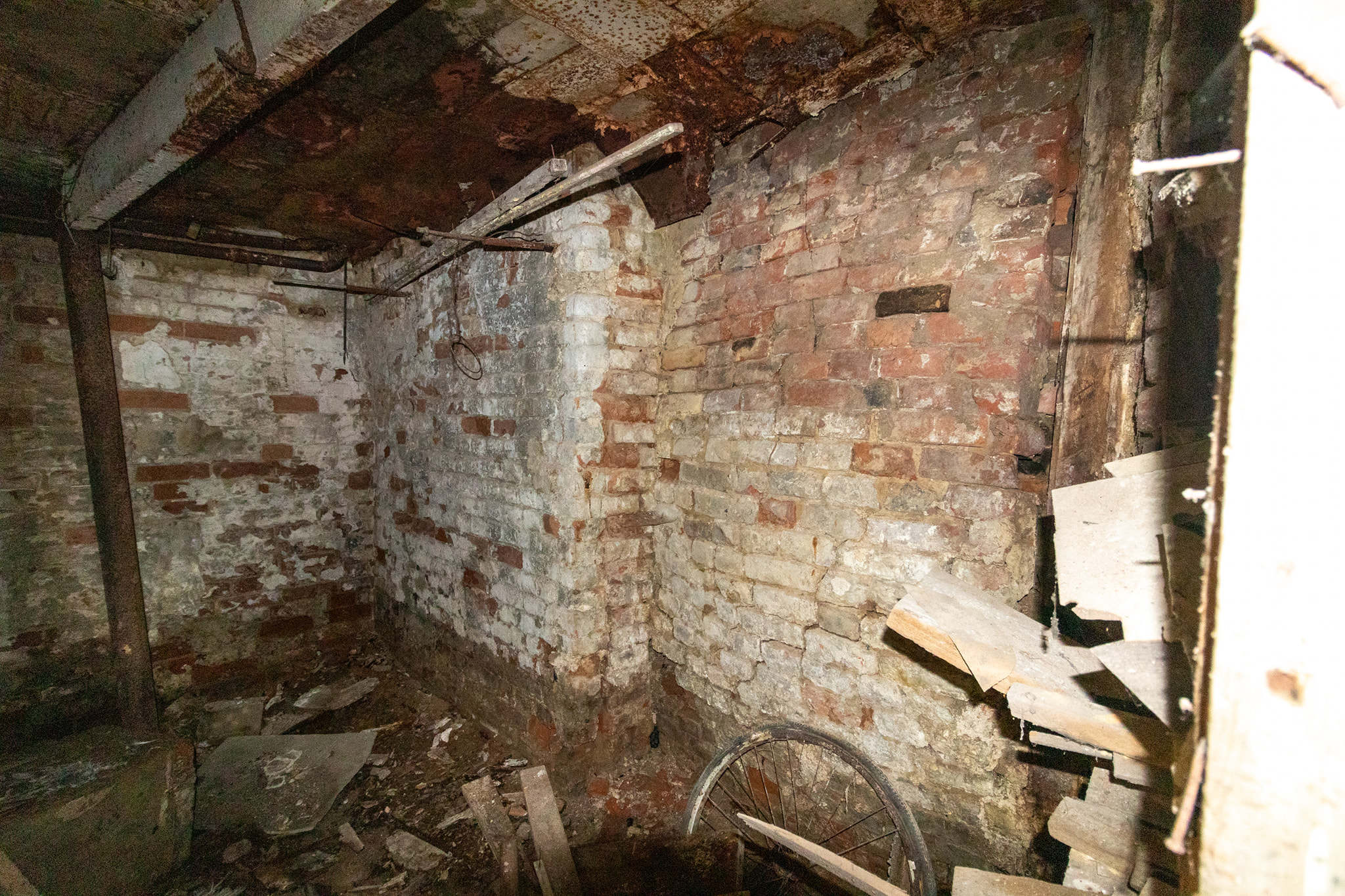
In the basement, in addition to utility rooms, there were also dressing rooms.
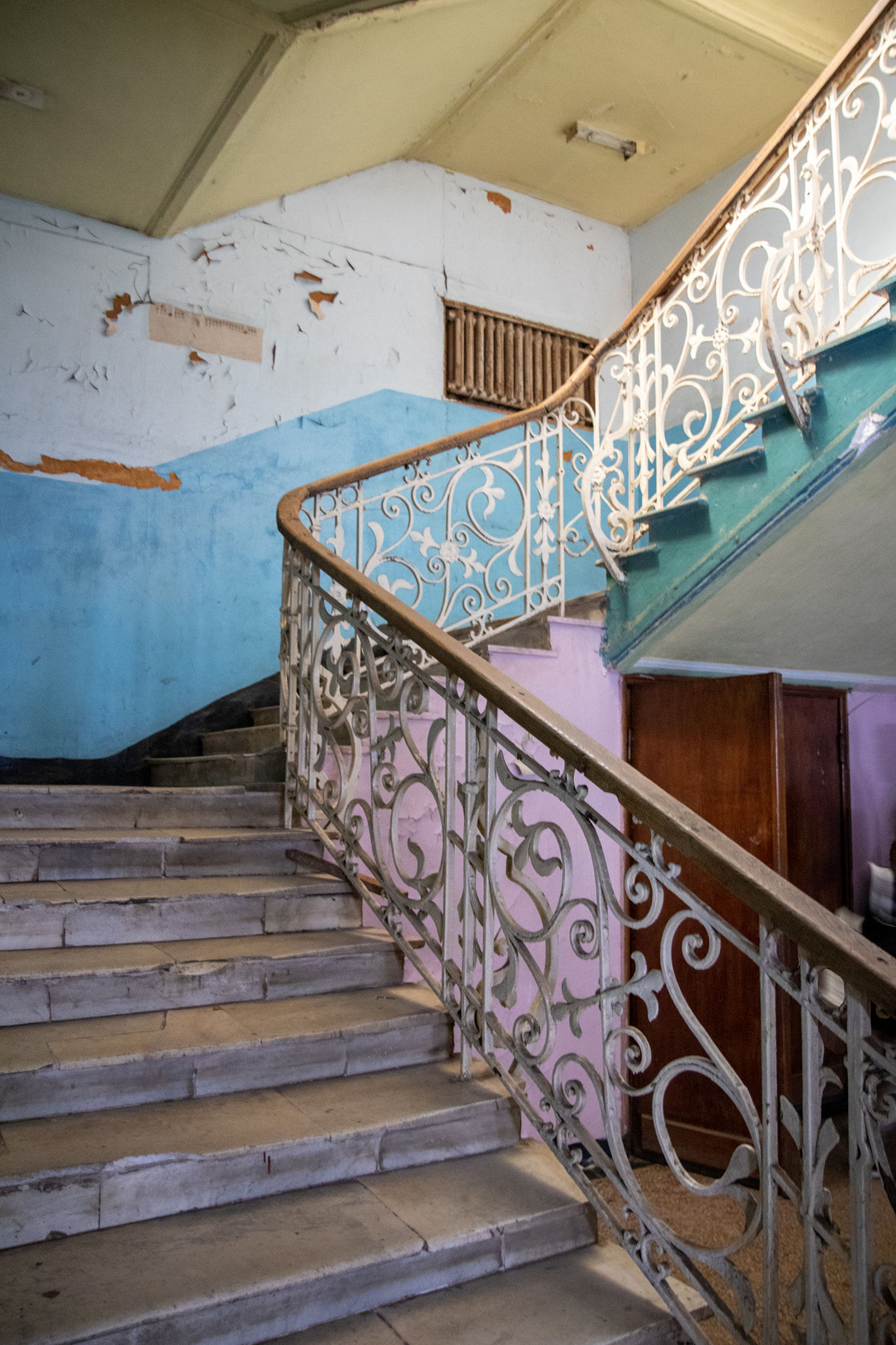
Some interior doors are original, some have been veneered.
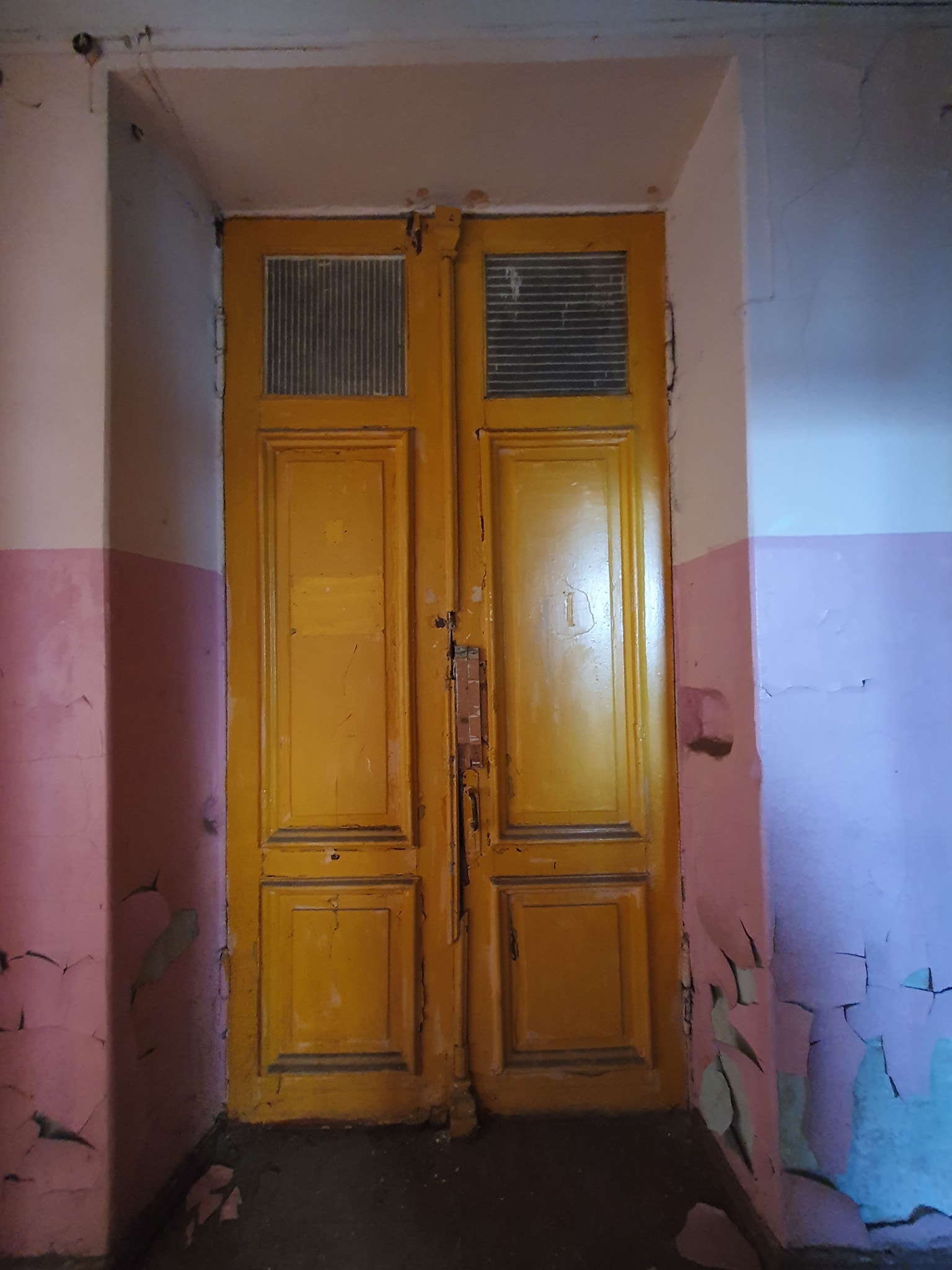
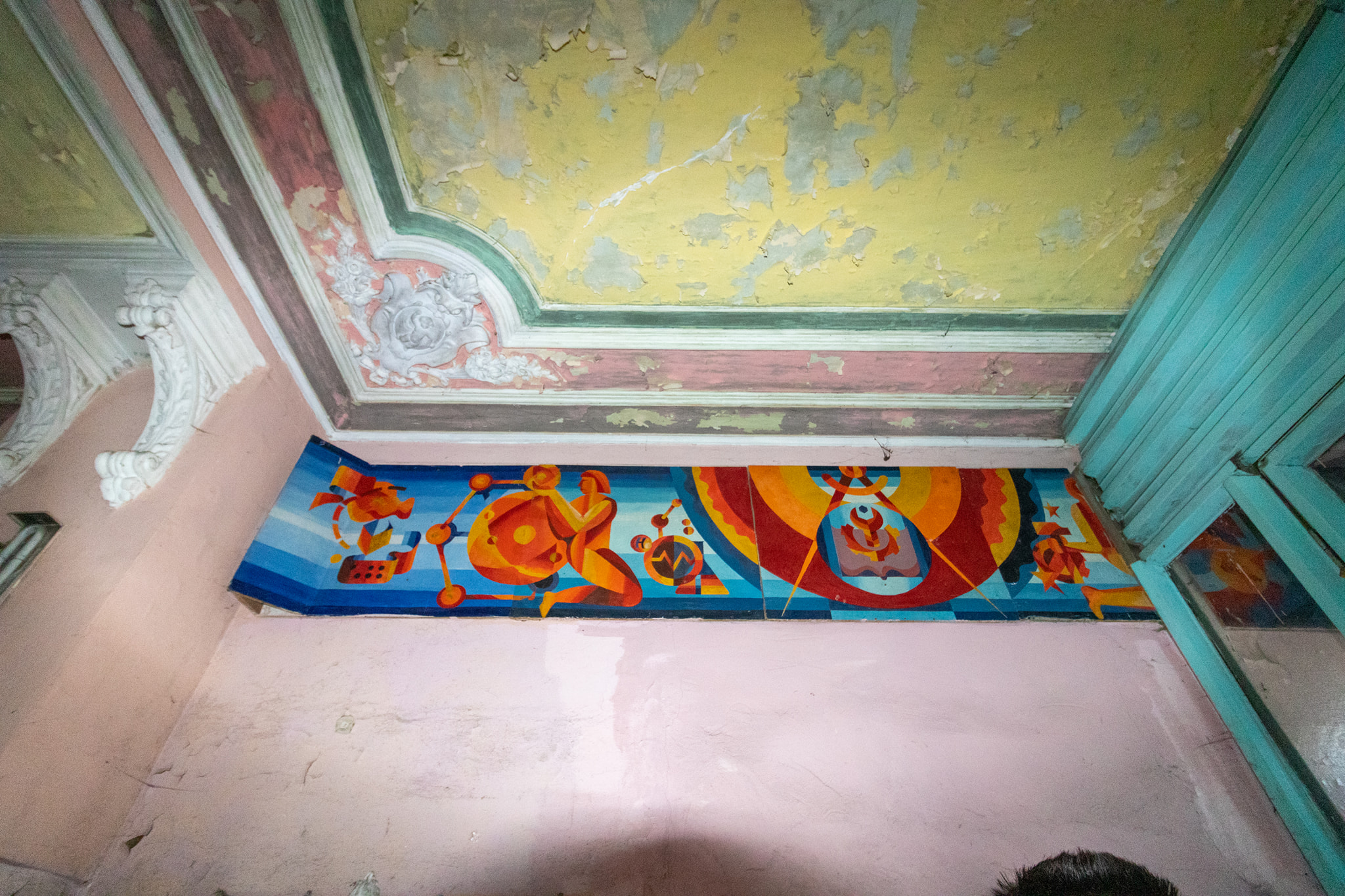
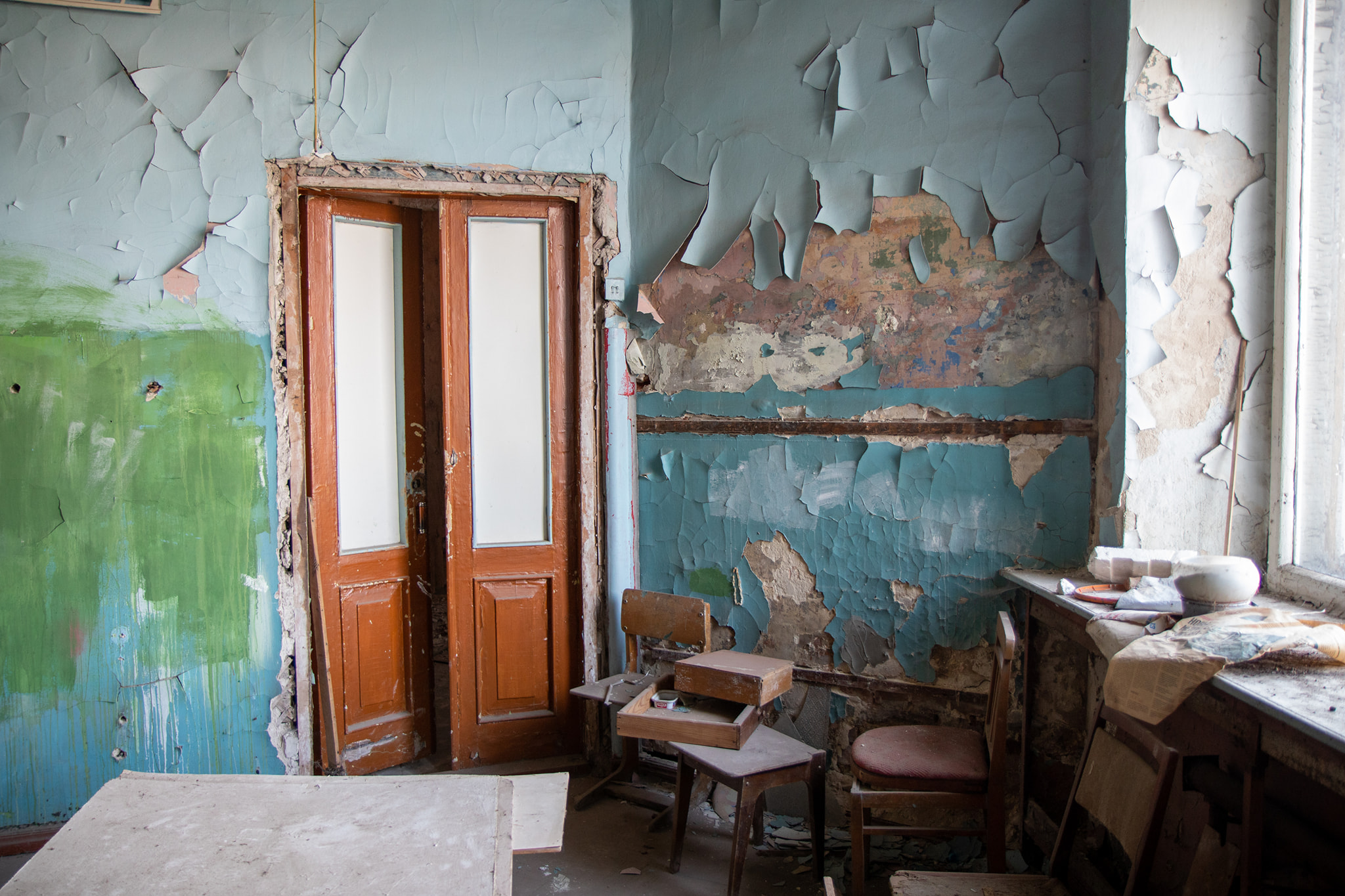
It seems that the only thing that can be done with the building is to preserve the facade and conduct a complete reconstruction inside using modern materials. We hope that the house will rise from the ruins, as happened with the abandoned houses at 31 and 35 Poltavskyi Shliakh.
On August 27, 2022, a Russian missile strike was launched on Pavlivskyi Sq, 350 meters from the building. Immediately after, the floors in the building collapsed – due to the neglected state of the building, they could not withstand the vibrations from the blast wave. At the end of 2023, some emergency conservation work was carried out on the building, but in April 2026, the roof in the central part collapsed inward.

- "Noah's Ark" - 21.10.2026
- Blackie’s House on Maksymilianivska St - 19.10.2026
- Danylevs’koho Street, 19 - 13.10.2026