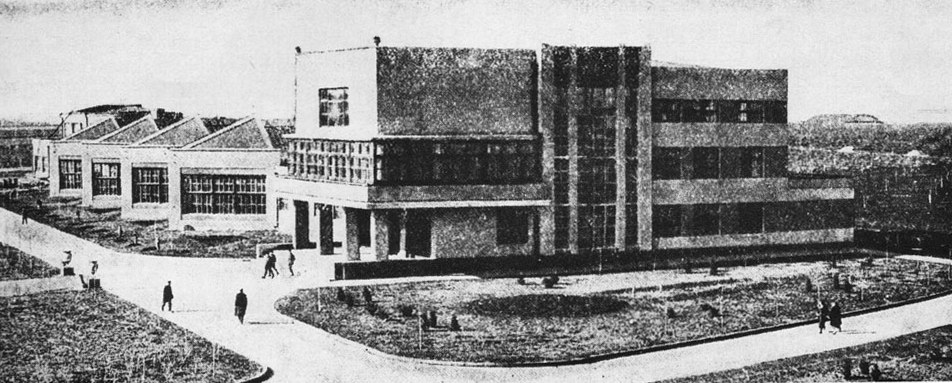
The FED plant and its history are well known to many Kharkiv residents, but the names of the people who laid the financial and material foundation for this enterprise back in the 1930s remain in the shadows. One of them was Yevgeny Leites, head of supplies for the Dzerzhinsky Kharkiv Commune. He was known as the “marshal of supplies” and a man with an ever-present notebook in which all the commune’s commercial secrets were recorded. In the pages of A. S. Makarenko’s essays, he is portrayed as the cool-headed tactician Leites, who masterfully outmaneuvered the Soviet bureaucracy. However, behind this literary character lies the real-life figure of the supply officer—Yevgeny Ilyich Leites, who worked at the commune and then at the FED factory for over forty years [1].
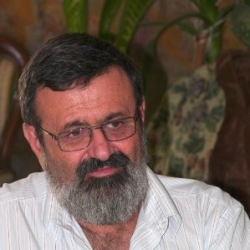
It is now difficult to piece together the story of Yevgeny Ilyich’s life. His son’s family repatriated to Israel in 1994. As a result, most of the materials from the family archive were lost. This work is based on materials found on the Internet, as well as documents and photographs preserved by the family of Yevgeny Ilyich’s grandson, Pavel Leites, and his memories of his grandfather.
Yevgeny Ilyich Leites was born in March 1894 in the town of Orsha, Mogilev Governorate (now in the Vitebsk Region of the Republic of Belarus). Unfortunately, no documentary sources have survived in the Leites family regarding his parents or his exact date of birth (Pavel Leites recalls that Yevgeny Ilyich’s birthday was celebrated in the first ten days of March). Pavel Bernshtam, who has spent many years researching the history of the Itkin family—which is related to the Leites family—interviewed relatives who have since passed away and studied surviving archival documents. He has information about the name of the newborn boy—Yona (Yona)—and the name of his father, Eli. Yona had three brothers: Sholom, Yuli, and Solomon, as well as a sister, Esya. Pavel Leites also recalls that close relatives called his grandfather Yona. He signed a photograph of himself taken in 1911 with that same name. Thus, we can conclude that Yona, the son of Eli Leites, became Yevgeny Ilyich Leites. It is known that, according to the 1897 All-Russian Population Census, 7,383 Jews lived in Orsha, accounting for about half of the city’s total population [2]. The Jewish population of the city and the county was engaged in wholesale and retail trade (in timber, flax, and agricultural products), crafts (tailors, shoemakers, blacksmiths, glassmakers), horse-drawn transportation (balaguly cart drivers), and operations at the river pier. Pavel Leites recalls his grandfather’s stories about how, before the revolution, he and a friend (the brother of his future wife, Esi Solomonovna) left Orsha for Voronezh, where they were involved in the textile business. The author of this article has no information on how Yevgeny Ilyich ended up in Kharkiv.
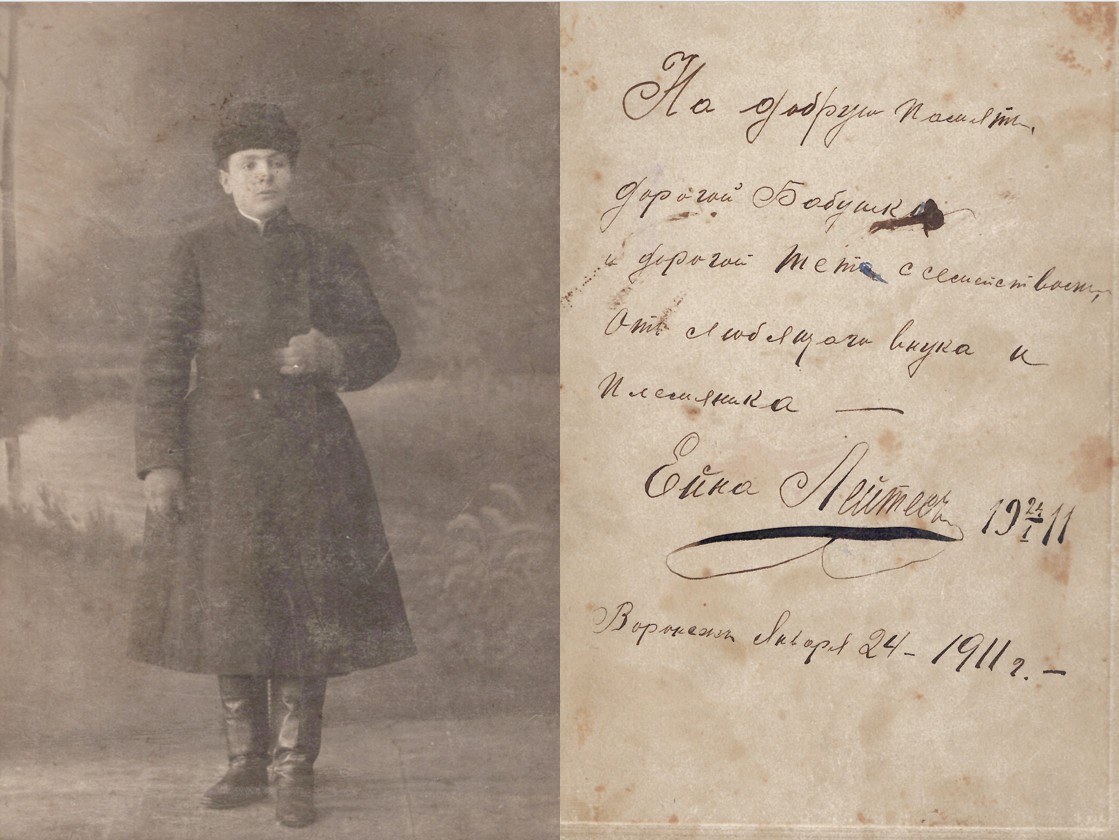
The photo is signed “Eina Leites” (Leites family archive)
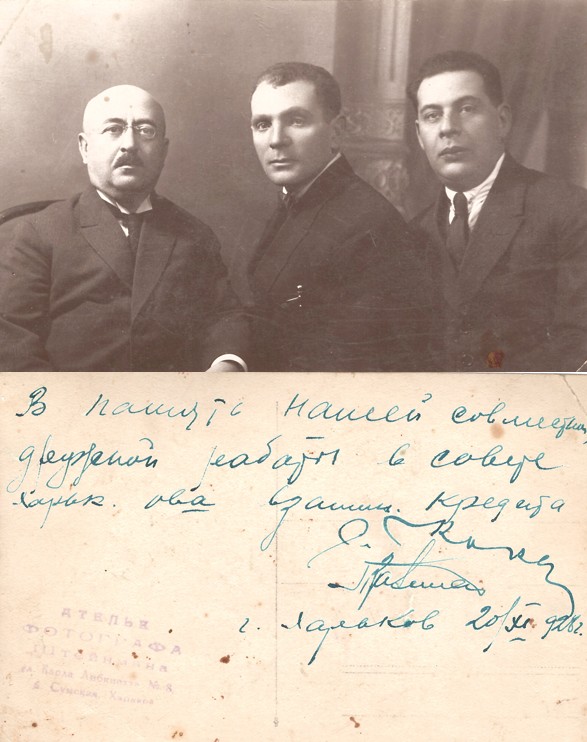
Archival materials [3] indicate that Yevgeny Ilyich was a prominent figure in the private sector during the NEP era in Kharkiv. His activities were primarily related to the textile industry and trade. He served as a founder and shareholder of the “Rozdribnik” trading company, as chairman of the board and a shareholder of the “Tekstil” joint-stock company, and as a partner in the South Russian Thread Manufactory General Partnership. These facts attest to his active participation in the formation and management of Kharkiv’s private-capitalist economic structures in the 1920s. Further evidence of Yevgeny Ilyich’s active commercial activities is a photograph presented to him by S. Kogan as a memento of their collaboration at the Kharkiv Mutual Credit Society.
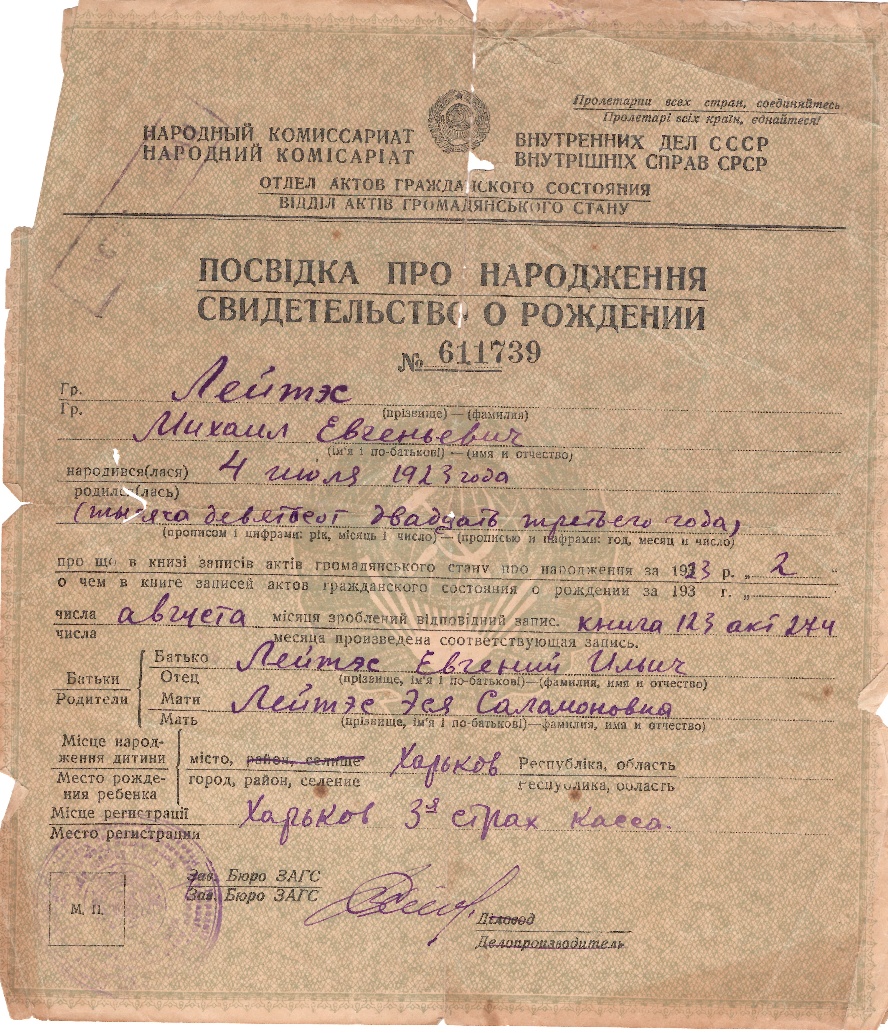
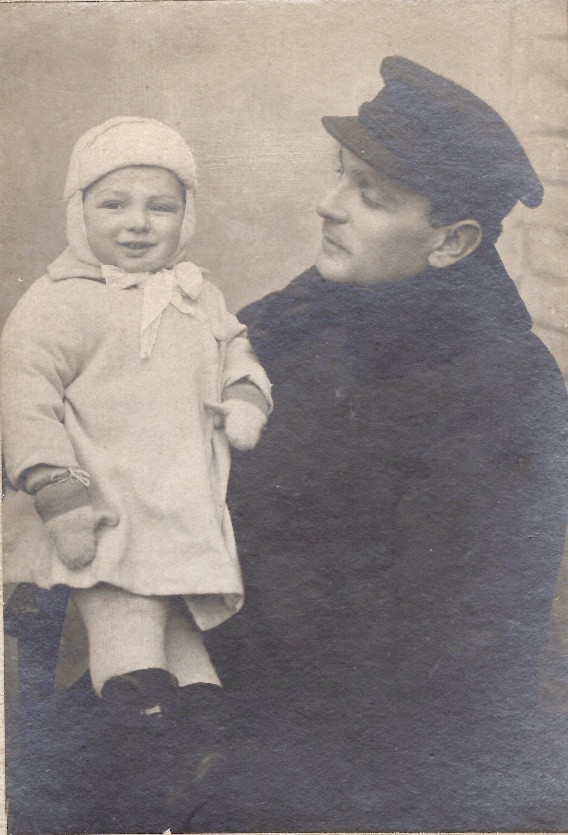
On July 4, 1923, the Leites family welcomed their son, Misha.
History does not explain how two prominent entrepreneurs of the NEP era came to serve as commercial directors of the F. E. Dzerzhinsky Commune. One might assume that Leites and Kogan’s business experience and organizational skills were in demand within the commune’s economic system. However, no documentary evidence has yet been found regarding the circumstances under which they were recruited for this work or who exactly decided to do so.
The Economic Council of the Kharkiv Labor Commune named after F. E. Dzerzhinsky was a well-coordinated team led by Solomon Borisovich Kogan, who had served as the head of production and supply for the Dzerzhinsky Commune since March 1930. In his writings, Makarenko—as did the commune members—referred to Kogan’s (or Levinson’s, in Makarenko’s works) the closest assistants as “marshals.” One of these marshals was E. I. Leites.
Leonid Konisevich’s book [4] describes a typical incident involving an inspection of the commune by a higher-ranking official (district director Alexander Osipovich Bronev):
One day in March, Bronevoy arrived… Surrounded by construction officials, he walked around the site. Leites, the head of supplies, hurriedly jotted down names and numbers with a notepad in his hand. Leites was Solomon Borisovich’s right-hand man, the silent guardian of his business secrets, but under Alexander Osipovich’s stern gaze, he played with a clean hand.
In one of the episodes of the fictional-documentary novella-essay “FD-1” [5], written in 1932, Makarenko describes a commercial transaction between the commune and one of the Kharkiv institutes. The commune manufactured furniture for the institute, but the client could not accept it immediately and effectively demanded that the commune’s production facilities be used as a warehouse. Solomon Borisovich refused to allow the commune’s production facilities to be used for storing someone else’s products and sold the manufactured sets to other organizations. After that, as Makarenko recounts with irony, “Marshal Leites, the agent for supplies and special assignments,” presented the original client with a bill for storing the furniture. At the end of 1931, the institute received its furniture and was forced to pay the corresponding storage fees. This episode is significant for characterizing Leites. It reveals him not only as a procurement specialist but also as a person entrusted with administrative and commercial operations related to the interests of the commune’s production unit. A. S. Makarenko’s correspondence from those years directly reflects that Leites helped resolve organizational issues at the highest level (for example, he arranged access to the GPU’s restricted-access dining halls) [6].
One of the most famous achievements of the F. E. Dzerzhinsky Kharkiv Labor Commune was the creation of the first Soviet mass-produced small-format camera, the FED. By the time work began, the commune members had already mastered the production of complex technical products. In 1932, the commune began manufacturing the first Soviet “electric drills,” as they were called at the time (electric drills), and soon the commune’s leadership set an even more ambitious goal: to master the production of a high-precision small-format camera modeled after the German Leica. Makarenko himself described the beginning of this project in a literary form in his novel *Flags on the Towers*, which features the now-famous line: “We’ll make ‘Leicas.’” The Leica, one of the most advanced cameras of its time, was chosen as the prototype. Before beginning work on the camera, the commune sent a request to E. I. Leites to the State Committee on Inventions under the Council of Labor and Defense, asking whether “Leika”-type cameras manufactured by the German firm “Leitz” had been patented in the USSR. The committee’s Novelty Bureau, located in Leningrad, replied that it had not received any applications from Leitz for the specified camera and that no patent for it had been issued in the USSR, “and therefore there are no obstacles from a patent law perspective to copying it in the USSR” [7]. Production required the development of several hundred parts with very tight tolerances, precision mechanics, and high-quality optics. For Soviet industry at that time, this was an extremely difficult task. Precision machine tools and high-quality materials were required. It was E. I. Leites who organized their procurement for the communes [8], and as early as 1932–1933, the first prototypes were manufactured, and in 1934, mass production began of cameras under the name FED, derived from the initials of Felix Edmundovich Dzerzhinsky. According to data cited in a study by the American historian of photographic technology Oscar Fricke [9], the first Soviet cameras were close copies of the Leica I, and production was subsequently retooled to produce a virtually identical counterpart to the Leica II with a built-in rangefinder. During the first year of mass production, approximately four thousand cameras were manufactured, after which production volumes grew rapidly.
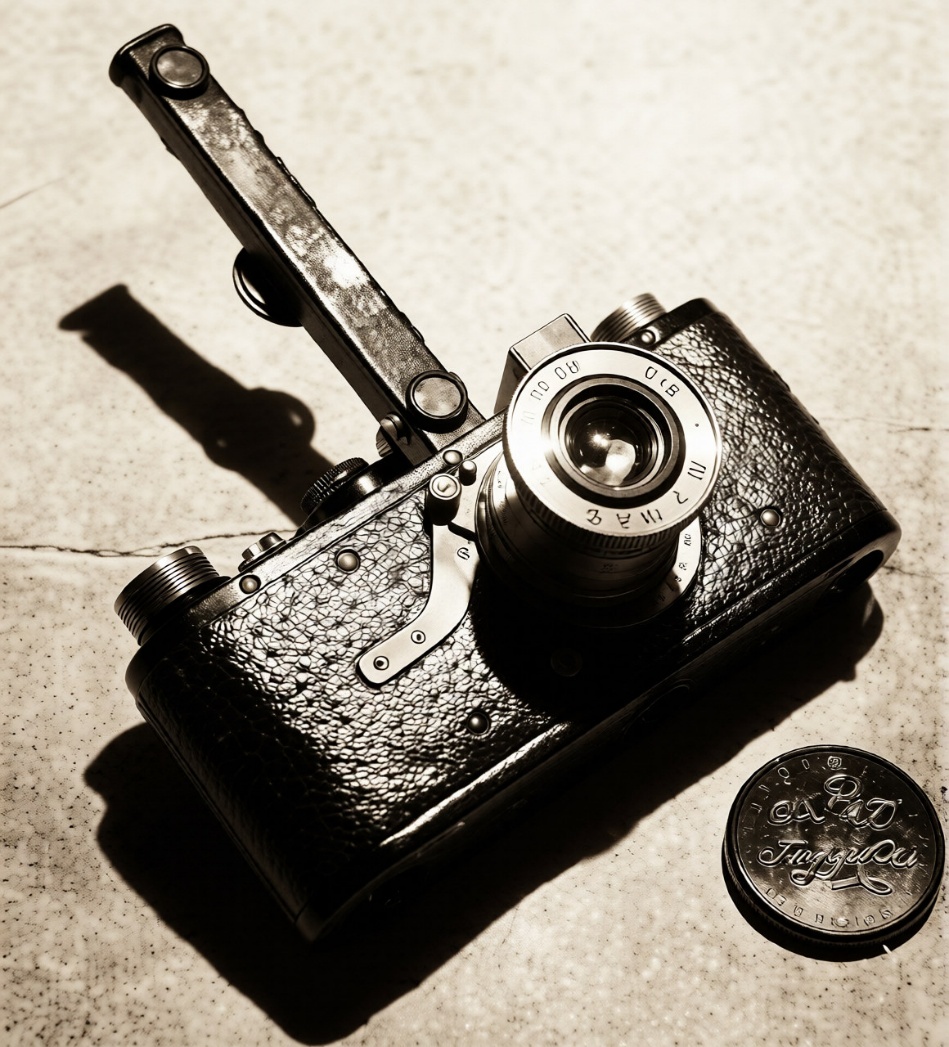
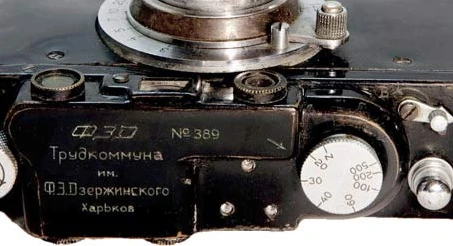
As E. I. Leites’s grandson recalls, each camera was originally engraved with its serial number. Their family had a camera like this, with a number in the first few hundred. The photo below shows the inscription on one of the first cameras produced.
For Makarenko himself, the significance of the project extended far beyond the realm of industry. The production of cameras was viewed as a means of education through complex and socially significant labor. In numerous speeches, he emphasized that former street children had managed to master technology that had previously been considered accessible only to specialists at leading European enterprises. In this sense, the history of FED became a symbol of Makarenko’s pedagogical concept, based on a combination of high responsibility, collective discipline, and professional mastery.
Once camera production was up and running, E. I. Leites took several of the first models to Sergo Ordzhonikidze, the People’s Commissar of Heavy Industry of the USSR. E. I. Leites later recalled:
When we were building the factory, we knew that photography is a way to speak to future generations, to tell them how we worked and lived. I was tasked with delivering the factory’s first samples to Comrade S. Ordzhonikidze. I still clearly remember the People’s Commissar’s joy as he said, ‘The Kharkiv Communist youths really know how to work.[1].
By a decree of the Presidium of the Supreme Soviet of the USSR dated April 29, 1939, “for outstanding achievements in equipping the Red Army and the Navy with military equipment, developing new models, and exceeding production quotas,” Yevgeny Ilyich Leites, deputy head of supply and distribution at the F. E. Dzerzhinsky NKVD Plant in Kharkiv, was awarded the “For Labor Valor” medal [12]. The award was personally presented by M. I. Kalinin, Chairman of the Presidium of the Supreme Soviet of the USSR.
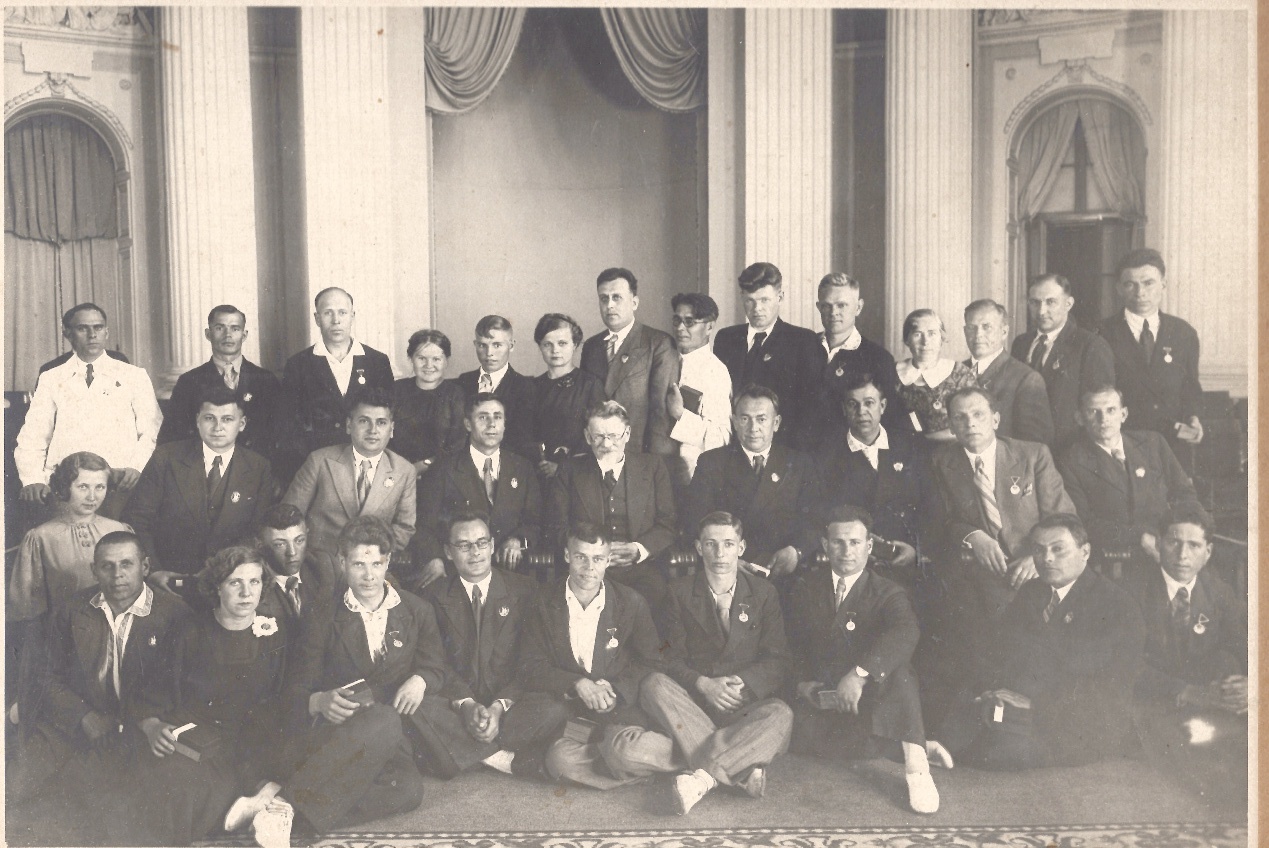
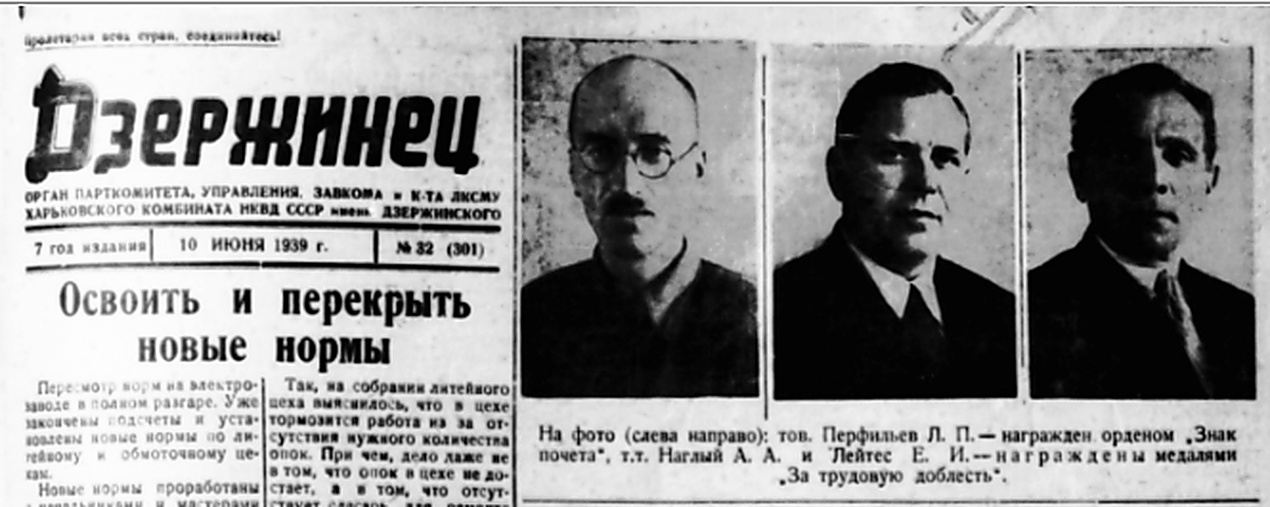
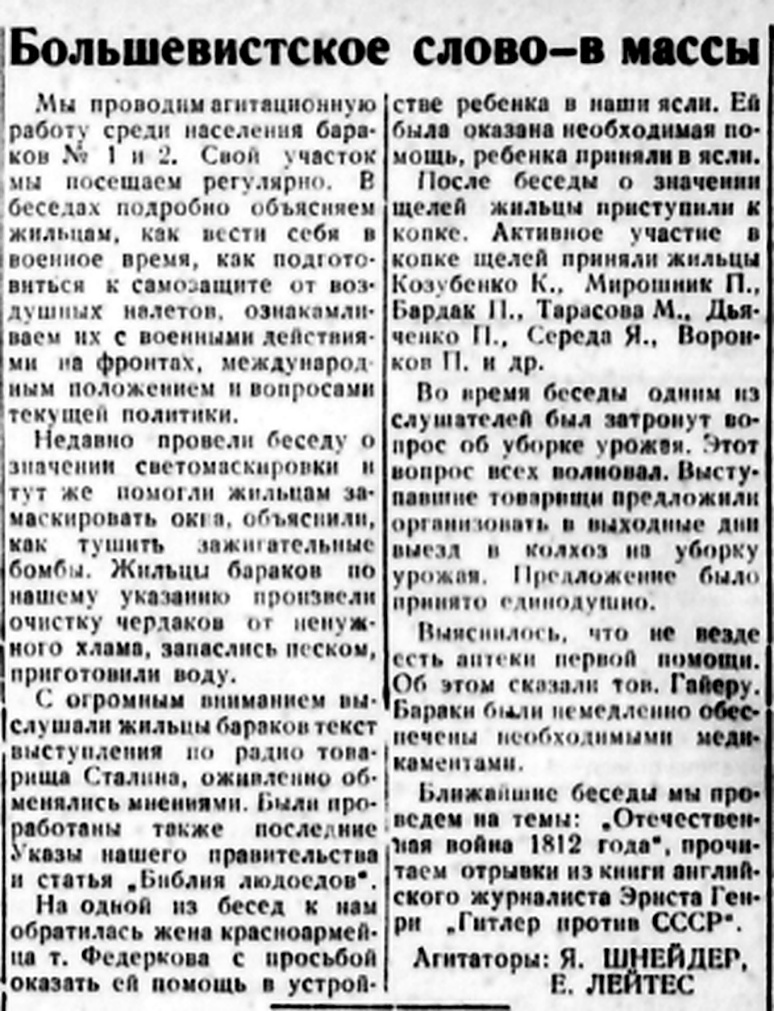
After Nazi Germany’s attack on the USSR, the factory remained in Kharkiv for some time. We learn about Yevgeny Ilyich’s social activities during this period from a note by agitators E. Leites and Y. Schneider, published in the factory newspaper on July 31, 1941.
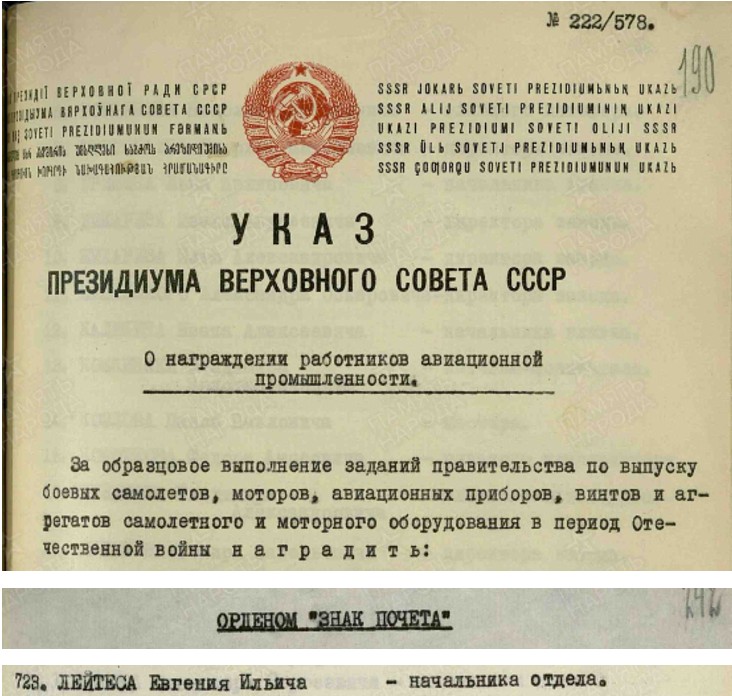
During the war against Nazi Germany, the FED plant was placed under the jurisdiction of the People’s Commissariat for the Aviation Industry and, in the fall of 1941, was evacuated to the city of Berdsk, where it began manufacturing panoramic artillery sights, trench periscopes, sights for sniper rifles, and direct-injection fuel pumps for the aircraft engines of the La-5 and La-7. On September 5, 1941, E. I. Leites joined a group led by Chief Engineer N. A. Gorbunov that was sent to the Novosibirsk area to prepare for the reception of workers and equipment from the evacuated plant. The group included managers from production, power engineering, capital construction, and mechanical services [13]. E. I. Leites was evacuated along with the plant. For his outstanding work in the production of instruments for the needs of the Red Army, Evgeny Ilyich was awarded the Order of the Badge of Honor.
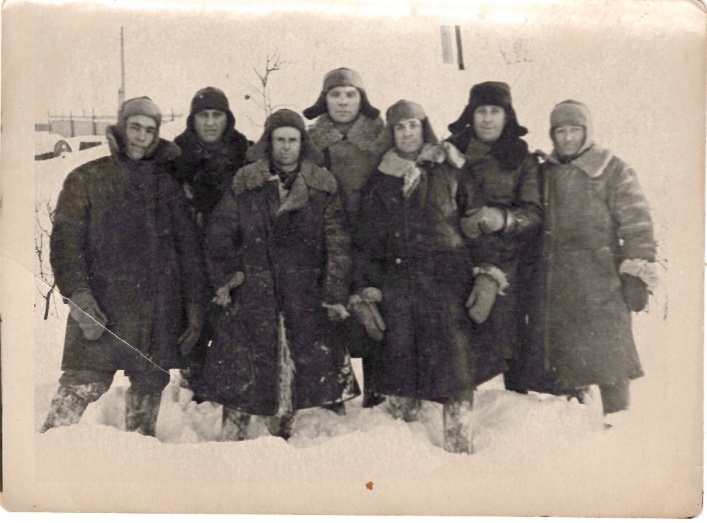
After the war with Nazi Germany ended, E. I. Leites was awarded the medal “For Valiant Labor in the Great Patriotic War of 1941–1945,”
In the postwar years, after returning to Kharkiv from evacuation, the plant continued to manufacture equipment for the aviation industry and other sectors of mechanical engineering. At the same time, production of the “FED” series of cameras continued. As before, E. I. Leites, deputy head of the procurement department, played an active role in the plant’s operations. In 1970, he was awarded the medal “For Valiant Labor in Commemoration of the 100th Anniversary of Vladimir Ilyich Lenin’s Birth.”
Yevgeny Ilyich worked at FED until he was very old, and it was only health problems (a sudden decline in his eyesight) that forced him to retire. He was highly respected by the plant’s staff. He was invited to anniversary celebrations, and articles about him were published in the plant newspaper.
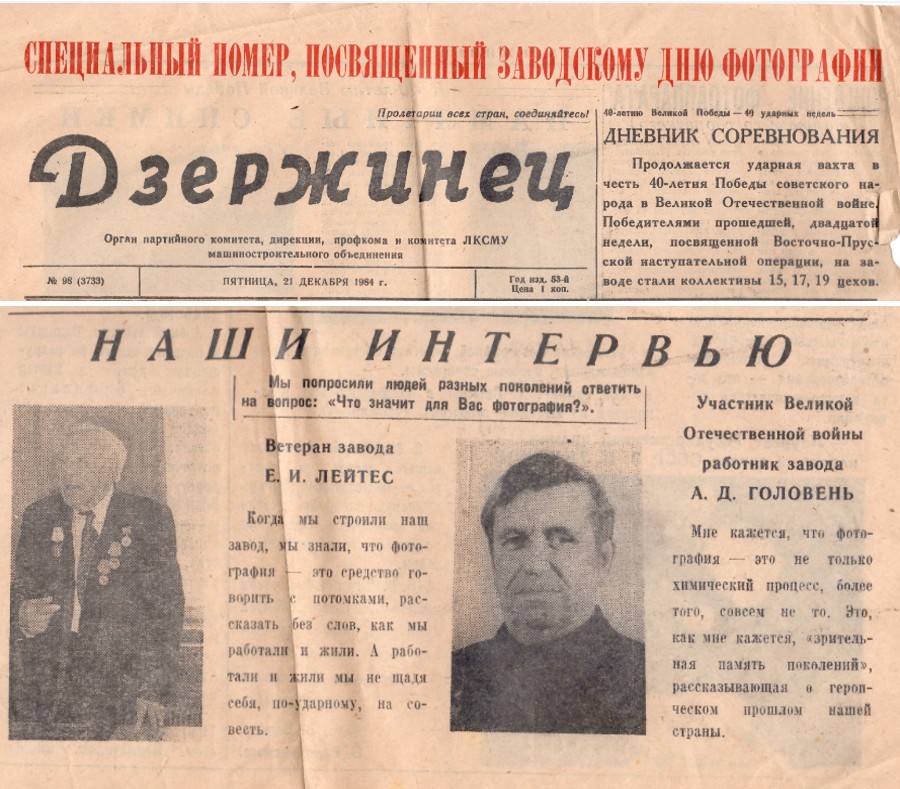
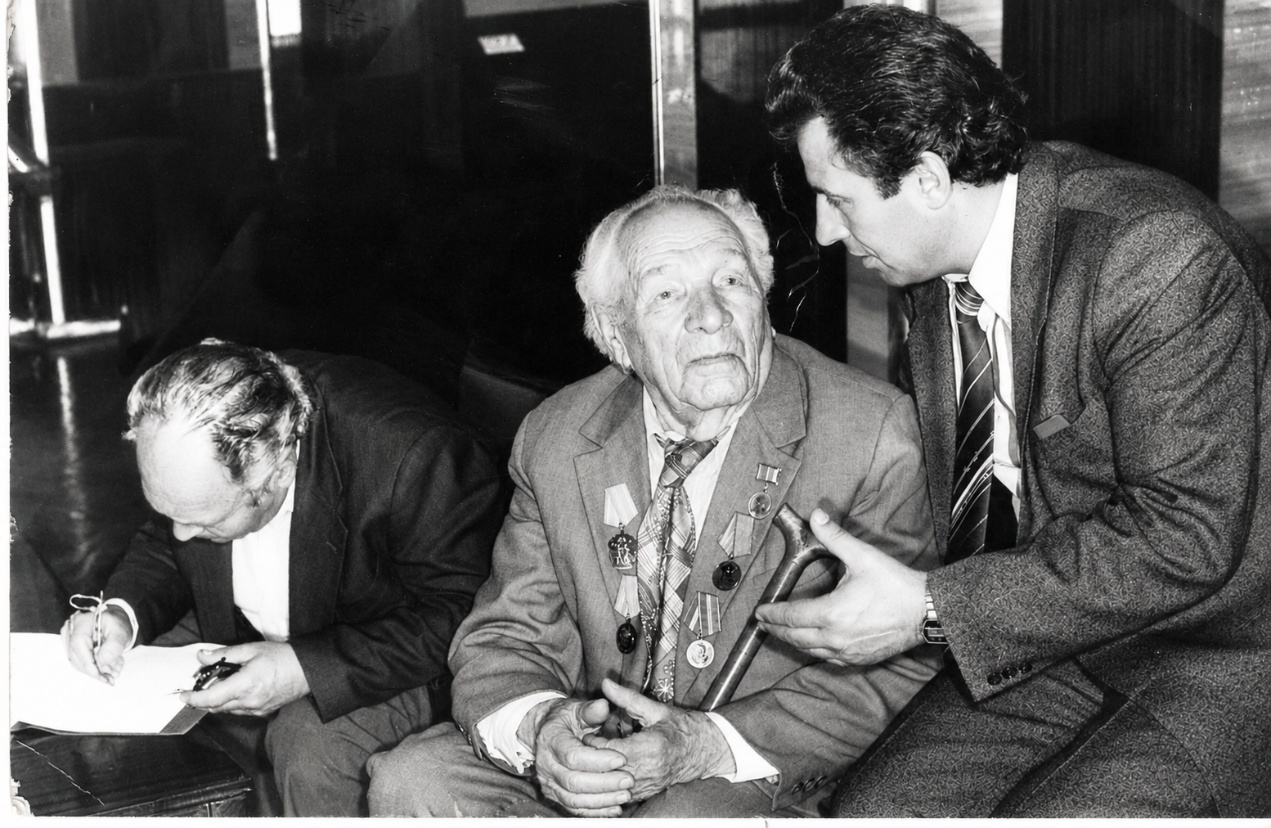
Pavel Leites—the grandson of Yevgeny Ilyich—told the author:
In 1964, the factory celebrated Yevgeny Ilyich’s 70th birthday. He was given a gold watch. He continued to work until 1968. Even in his very old age, he continued to go on business trips (mainly to Moscow). He was responsible for liaising with the ministry. In 1968, his eyesight deteriorated sharply, and he underwent surgery in Moscow at the Krasnov Institute (clinic). The surgery did not restore his vision. He could no longer read; he watched television by sitting very close to the screen. After retiring, he continued to lead an active life. He served as chairman of the plant’s veterans’ committee. In the winter of 1982 or 1983, the plant was celebrating some kind of anniversary, and I took him there, since he was no longer able to go to the plant on his own. The celebration took place in the factory’s auditorium, which was located in the front building; to get there, one did not need to enter the factory grounds. There was no presidium on stage. The speakers, who were introduced by the emcee, took the stage. Factory veterans and former members of the Commune spoke. When Yevgeny Ilyich was given the floor, I helped him up onto the stage, and for about 15 minutes, Yevgeny Ilyich shared his memories of the factory’s early days.
The FED plant sponsored several organizations in Kharkiv. Among them were the Kharkiv Circus, the racetrack, and the Dynamo Stadium. The Kharkiv Circus was always asking the plant for something—whether it was to carry out repairs or to manufacture equipment for a new act. Yevgeny Ilyich was responsible for the sponsored organizations, and he and I (his grandson) were always welcome guests at the circus. We never missed a single performance. We would constantly change in the circus director’s office and sit in the VIP box. The situation was similar with the racetrack, but my grandmother (Yevgeny Ilyich’s wife) didn’t approve of trips to the racetrack with her grandson. Sometimes we’d tell her we were going to Gorky Park, which is next to the racetrack, but we’d end up at the racetrack instead. I remember that during one of our visits to the racetrack, the races were interrupted by an announcement from the public address system about the launch into space of Valentina Tereshkova, the first female cosmonaut.
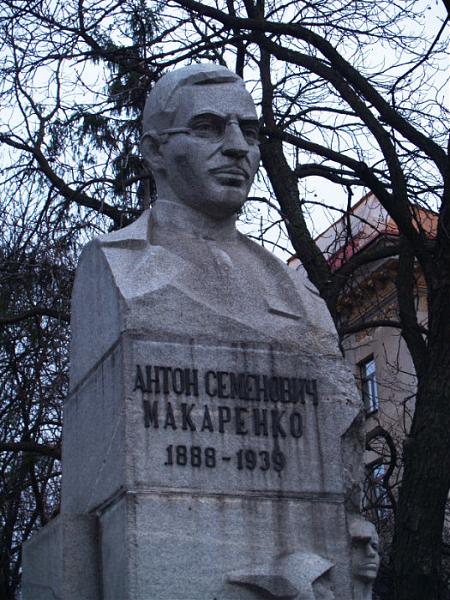
Pavel also recalls an incident involving the monument to A. S. Makarenko, which was erected in Kharkiv in 1968 across from the main entrance to Central Park (then known as Gorky Park) on the initiative of the staff of the FED plant (sculptor L. E. Ovsyankin, architect A. N. Cherkasov). (On October 24, 2011, the monument was dismantled during the renovation of the area and moved to the grounds of the FED plant.) The sculptor invited Yevgeny Ilyich several times to take a look at the sculpture so that he could confirm its resemblance to the original. Yevgeny Ilyich saw the resemblance, but something was missing. It was only after several visits to the sculptor that he realized the sculptural portrait was missing glasses. Thus, a granite Makarenko wearing glasses appeared on the pedestal.
Yevgeny Ilyich Leites belonged to a generation of people whose lives were closely intertwined with the sweeping transformations of the Soviet era. His involvement in Kharkiv’s commercial institutions during the NEP period, his work within the economic system of the F. E. Dzerzhinsky Commune, his involvement in organizing the production of the first Soviet small-format cameras, and his subsequent many years of work at the FED factory allow us to view the history of the enterprise through the life of one of its founders. Yevgeny Ilyich Leites died on September 28, 1985.
In conclusion, the author would like to thank Anna and Pavel Leites for the valuable information, photographs, and documents used in writing this article, as well as for their helpful comments and discussion of the text. The author is also grateful to his son, Pavel Bernstam, for information about Eli Leites’s children, and to Professor Andrei Tkachenko for photocopies of the newspaper *Dzerzhinec*.
The author would appreciate it if readers could send him additional information about Yevgeny Ilyich Leites and his activities to the following email address: fnbern@gmail.com.
Sources of Information
- FED: Biographical Sketches, Kharkiv, “PRAPOR,” 1987.
- Orsha, Electronic Jewish Encyclopedia, https://eleven.co.il/diaspora/communities/13098/
- Private Joint-Stock and Partnership Companies in Ukraine During the NEP Era, https://uacademic.info/download/file/0504U000634/disser–%D0%94%D0%BE%D0%B4%D0%B0%D1%82%D0%BA%D0%B8–%D0%94%D0%BE%D0%B4%D0%B0%D1%82%D0%BE%D0%BA%D0%91.doc
- Leonid Konisevich, *Makarenko Raised Us: Notes of a Commune Member*, Chelyabinsk, 1993
- A. S. Makarenko, FD-1, Selected Pedagogical Writings of A. S. Makarenko. Vol. 4. Moscow, 1949
- Makarenko, A. S. The School of Life, Work, and Education. A Textbook on the History, Theory, and Practice of Education. Part 3. Articles, Speeches, Letters, Book Excerpts, Plays, “Pedagogical Poem,” 1932–1934 / A. S. Makarenko; compiled and annotated by A. A. Frolov and E. Yu. Ilaltdinova. – Nizhny Novgorod: Volg-Vyatskaya Academy of Public Administration Press, 2008. – 365 pp.
- Tkachenko, Andriy Volodymyrovych, Professional Development of the Individual in the Practice of A. S. Makarenko: A Historical and Pedagogical Perspective (1920–1935). Poltava, 2013. 341 pp.
- A. A. Frolov, A. S. Makarenko in the USSR, Russia, and the World: A Historiography of the Study and Development of His Legacy (1939–2005, a Critical Analysis). Nizhny Novgorod: Published by the Volga-Vyatka Academy of Public Administration, 2006. – 417 pp.
- Oscar Fricke, “The Dzerzhinsky Commune: Birth of the Soviet 35 mm Camera Industry,” *History of Photography*, Vol. 3, No. 2, April 1979.
- A. S. Makarenko’s Digital Archive, https://antmakarenko.narod.ru/
- https://camerapedia.fandom.com/wiki/FED_ (Original)_(_FED_NKVD,_FED-S,_FED-1)
- News of the Soviets of Workers’ Deputies of the USSR. May 1, 1939.
- On the Wings of History: 75 Years of the FED Plant, Kharkiv: Maidan, 360 pp., 2002.