Today, I invite you to read a very timely article by Yuri Pikul titled “London and Kharkiv: Legends of the Underground. An Attempt at a Comparative Analysis.”
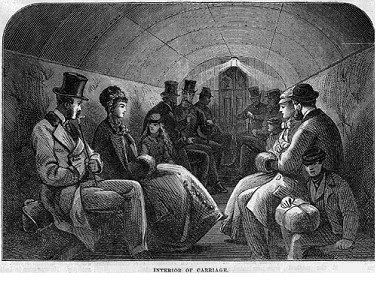
The Mysteries of the Underground… It’s no secret that this topic comes up quite often in the media. At the same time, in the pursuit of sensationalism, reality is often replaced by fantasies and idle speculation. This isn’t just the case here; London’s underground is also shrouded in a similar veil of mystery. In particular, the London Underground is also full of mysteries.
In this regard, the author has attempted to compare the underground legends of the two cities in order to identify their similarities and differences. Why the London Underground and the Kharkiv underground? The criterion is as follows: while the Kharkiv legends can be attributed to the pre-industrial era, the London legends are a product of the industrial city—the world’s industrial capital of the 19th century. In other words, we can trace how the very nature of the legends, their characters, and their behavior changed as the eras shifted. First and foremost, regarding their origins. It is not possible to pinpoint the exact beginning of Kharkiv’s underground. And although some researchers trace the creation of Kharkiv’s first underground passages to pre-Christian times, it is more or less reliable to say that their construction began with the founding of the Kharkiv fortress—that is, starting in the mid-17th century.
As for the London Underground, we know the exact date it began operating: 1863.
Let’s start with the most characteristic feature of dungeons around the world—namely, treasure. Whether it’s simply buried, looted and then buried again, or buried with a curse placed upon it, and so on. Well, there are none in the London Underground; the topic of buried treasure is a thing of the past, having given way to the reliability of savings in the banks of the City of London. As for Kharkiv’s buried treasure, the idea of its existence in the underground was actively discussed, and all sudden fortunes—especially during the economic boom of the late 19th and early 20th centuries—were invariably attributed to the patronage of evil spirits, who pointed the way to treasures hidden in the underground.
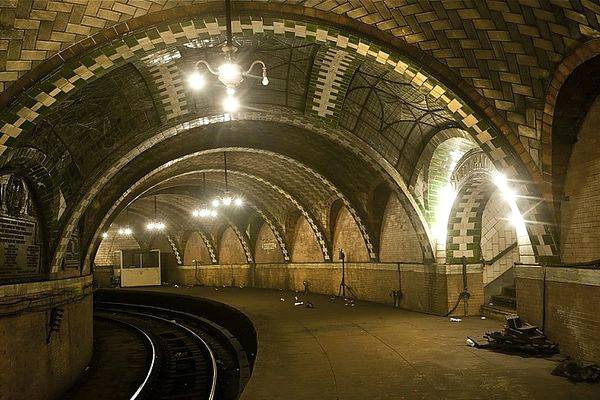
The second essential feature of dungeons is ghosts. As for those in Kharkiv, they are hardly ever mentioned. There is only one legend about a stone table surrounded by twelve stone chairs, with an open book lying on the table containing prophecies about people’s fates.
There are quite a few ghost stories in London, and those of medieval origin number approximately several thousand. Today, the British capital’s subway system has 270 stations, but about 40 of them are completely abandoned. Ghosts are the souls of the dead and of people deprived of their graves. How did they end up there? It’s very simple. The first subway was built using the open-cut method: a deep and wide trench was dug in the desired direction. Usually, they dug right across the roadway, but if houses were in the way, they had to be demolished. The walls of the trench were reinforced, arches were built on top, a deck was laid, and then the whole thing was backfilled with soil, paved with cobblestones, and the street was restored to its original appearance. However, running beneath it was now a shallow (up to five meters deep) but long and fairly wide tunnel, more than wide enough for a train to pass through.
Well, there’s a legend that while laying the first subway line, construction workers stumbled upon mass graves several times—hundreds of human bodies had clearly been haphazardly thrown into huge pits and covered with lime. Of course, the workers were not thrilled by such discoveries, especially after the authorities, after some hesitation, officially announced that the buried were victims of medieval plague epidemics. No one wanted to go through the trouble of reburying the “plague-stricken” remains, so the construction project’s owners had to pay a large sum of money just to have the bones removed from the road.
Let’s try to do the math: The “Black Death” of 1348–1349 wiped out two-thirds of the population of London and the surrounding villages, which, by the most conservative estimates, amounted to about 60,000 people. In 1666, the plague claimed another 70,000 unfortunate souls. Now, if we assume that the builders stumbled upon only a small fraction—say, one percent—of the graves, we still have more than a thousand ghosts on our hands, resentful of being deprived of their graves, however communal they may have been. Now these very ghosts have earned the full right to dwell in the subway’s underground tunnels, since their final resting places have been destroyed.
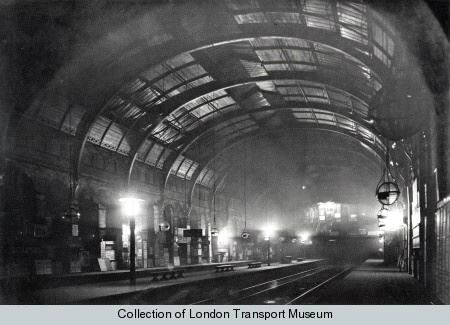
The third type of legend involves real inhabitants of the underground.
All sorts of people took refuge in the Kharkiv catacombs. There was the bandit Kharko and his gang, who hid there from the police and stashed their stolen goods, as well as the revolutionary Comrade Artem, who hid from the gendarmes in the underground tunnels beneath the Saburova Dacha. Red Army soldiers who hadn’t managed to retreat with their units also escaped the Germans through the underground tunnels.
As for London, it has its own unique charm—at the “British Museum” station, which has been closed since 1933, a genuine ancient Egyptian struts about brazenly. That is, of course, his ghost. No one knows what wind blew this visitor from the land of the Great Pyramids to Foggy Albion—and into the subway, no less. But Londoners firmly believe in the Egyptian.
Even before the war, a London newspaper offered a reward to anyone who wasn’t afraid of a ghost and dared to spend the night at the station, but no one stepped forward. Most likely, the legend’s origins are linked to a hit of that era—the film *The Mummy* (1932), starring the famous Boris Karloff. There are also ghosts of robbers who attack late-night travelers; true to tradition, they don’t accept bank cards—they take only cash.
But one thing you definitely won’t find in Kharkiv’s underground is any kind of mysterious train. Many of those who regularly pass through the “South Kensington” station say that they sometimes come across that very train in the tunnel—the one that mysteriously vanished in 1982. The train was empty and was headed for the depot. But after passing “South Kensington,” it seemed to vanish into thin air. It never showed up at the depot or at any other stations. No one has ever seen the train or its engineer again.
Thus, after this brief overview, we can draw the following conclusions: Legends do not arise out of thin air, and their evolution is shaped by the laws governing the development of society. All legends share a common foundation—the underground—a place of mystery, though the nature of that mystery itself can vary. This includes ghosts and bandits lurking in the darkness, which are common to all legends.
But then London entered the Industrial Age—and there was no longer any room for the treasures in the subway.
The age of cinema is dawning—and in the USSR, Comrade Artem and the Red Army soldiers are waging a heroic struggle against the Whites, while in London, *The Mummy* descends into the underground.
The Kharkiv Metro is still too new, but perhaps, in time, it, too, will get its own “mystical train.” Especially since there’s every reason to believe it will.
There is a legend about Kharkiv’s second metro line—a secret branch line from Saltovka that ran beneath the “Kyivska” station and led to Piatykhatky, and from there to Shatilovka.
The mines are located at a depth of 15–20 meters, and the tunnels are up to two or three meters wide. Eyewitnesses saw a narrow-gauge railway, a branched network, and mine cars. Although construction was abandoned in the late 1980s, it is quite possible that trains will still begin running there.
So, as we can see, the legends are largely identical. Whether the reason lies in human passions, a similar European mindset, technological development, or something else entirely—that is a matter for experts to painstakingly investigate. The author, however, believes that as progress marches on, new legends of the underworld will soon emerge. This time, they will be set in the post-industrial, computer age.
