As part of the “Kharkiv’s Underground” column—which many of you have already come to love—I invite you to read a very timely article by my colleague Yuri Pikul titled “Kharkiv’s Underground as Perceived by Its Residents.”
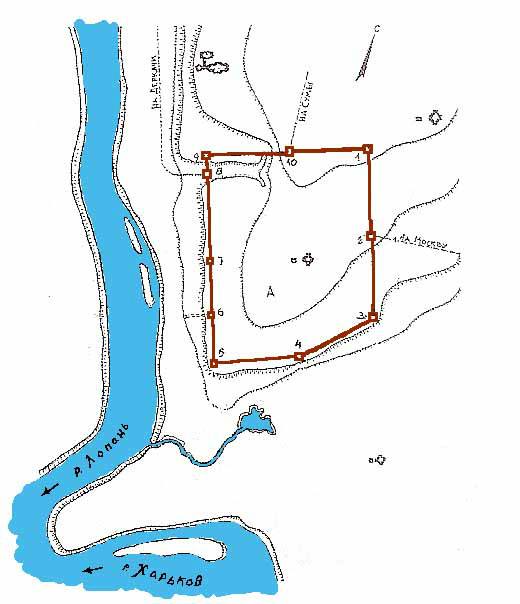
Underground passages, whether natural or man-made, have always captivated people. As a rule, they have been attributed with supernatural and magical properties, connections to other worlds, and other mysteries. Kharkiv’s underground passages are no exception. “Secrets of Kharkiv’s Underground,” “There Are No Ghosts in Kharkiv’s Underground,” “Invisible Kharkiv,” “Legends of Underground Kharkiv,” “Secrets of the Underground Labyrinths”—these are the headlines a search engine returns for the query “Kharkiv’s underground passages.” So what do these eye-catching online article titles reflect—Kharkiv residents’ own perceptions of local landmarks, or, conversely, is the local media imposing an air of mystery on the residents?
Let’s try to get to the bottom of this issue. But first, let’s turn to the question of how humans perceive a phenomenon such as underground space.
In any country, you’ll hear stories about vast underground passages in one region or another, and about mysterious incidents that have befallen those who tried to explore them. Very often, after reading adventure books and watching movies, the first thing we expect from an underground cave or passage is the appearance of a white ghost. In short, underground passages are imagined as habitats for various creatures or phenomena that have no place in the light of day. This perception of the underground world has become part of the “collective unconscious” of most people across different countries and cultures.
Let’s now turn our attention to the residents of Kharkiv and see how they feel about the existence of an underground world right beneath their feet.
And here we may encounter a paradox. The fact is that the underground passages don’t fit the established stereotype of Kharkiv. If you ask a Kharkiv resident what’s interesting about their city, the average respondent will answer: Derzhprom, Mirror Stream, the Taras Shevchenko monument, and—after a moment’s thought—the Blagoveshchensky, Pokrovsky, and Uspensky Cathedrals, as well as Central Park with its cable car and children’s train. The older generation will recall the giants of industry—the KhTZ and “Hammer and Sickle” factories. But few will mention the underground passages, which, in theory, are the city’s highlight and one of Kharkiv’s greatest mysteries.
What, then, is the reason for this lack of awareness? In the author’s view, it all comes down to the very perception of the city—the so-called “myth of Kharkiv”—that is, a certain set of stereotypes that shape the average person’s perception of the city. So how does the average Kharkiv resident perceive their hometown?
“The history of Kharkiv—one of the country’s largest industrial, scientific, and cultural centers—spans more than three centuries,” reads the opening line of one of the most famous guidebooks on Kharkiv—the book by N.T. Dyachenko’s book *Streets and Squares of Kharkiv*.
Everything seems to be correct, except for one aspect: the book only briefly mentions that Kharkiv originally emerged as a fortress, while the main focus is on the city’s subsequent cultural and scientific development. It is precisely this construction of the memory of Kharkiv’s history that has led to the underground passages being almost completely erased from the collective memory of Kharkiv’s residents.
It is telling that during the Soviet era, even if the history of their hometown was taught in Kharkiv’s schools, it was only touched upon briefly and as an elective course. The media constantly portray Kharkiv as a commercial, economic, cultural, and scientific center, while often leaving out one of the most important aspects of Kharkiv’s history—its military history.
Why is this so important for our research? The fact is that, as a rule, in the public consciousness, underground passages are seen as vestiges of military defensive structures—castles, fortresses, fortified monasteries, and the like. Unfortunately, as mentioned above, the military aspect of Kharkiv’s history is often overlooked by historians. And even when it does attract attention, it generally remains confined to professional discussions and publications, without being reflected in the media, which shapes not only the public consciousness but also historical memory.
Thus, if most of Kharkiv’s residents do not associate the city with a military stronghold, then there is no connection to one of its components—the underground passage.
At the same time, London, with its famous Tower of London prison, and Moscow, with the Kremlin, are firmly associated with secret dungeons, undiscovered passageways, and other mysterious elements typical of this phenomenon.
According to the author, this is precisely why there are no “mysterious underground passages” in the construct of the “Great Myth of Kharkiv”—in other words, the image of the city as perceived by its residents.
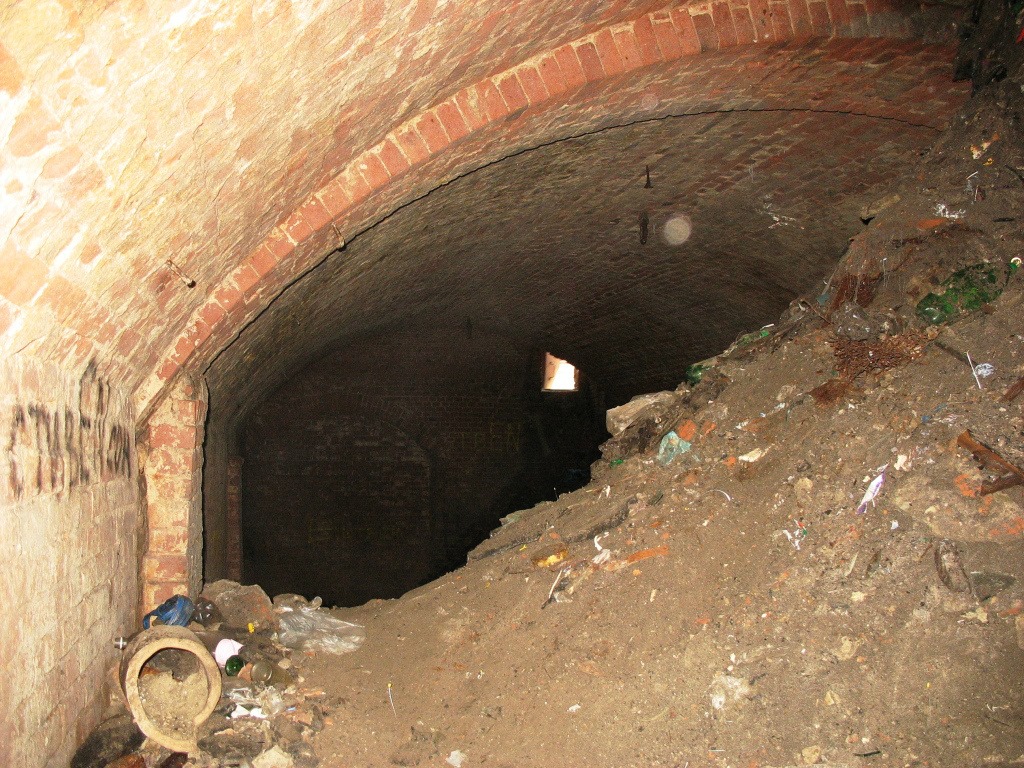
Still, even if not on the same scale as in Moscow, Odessa, or London, the residents of Kharkiv did take an interest in their own underground passages. Unfortunately, we do not know what the people of Kharkiv thought of their underground passages in the 17th century through the first half of the 19th century. In the book *History of the Kharkiv Sloboda Cossack Regiment* (1651–1765),” the author, Yevgeny Albovsky, mentions that in Kharkiv, as in any fortress of that time, there were underground passages, devoting a mere two paragraphs to this fact. However, throughout the 19th century, rumors circulated among Kharkiv residents about the existence of underground passages housing Zaporizhian Cossack hoards, and perhaps even the treasures of Kish otaman Ivan Sirko himself—who served as a Kharkiv colonel in 1660, 1664–1665, and 1667–1668. But these rumors never went beyond the realm of folk lore—or, in modern terminology, “urban legends”—and did not bring about a fundamental shift in the existence of the “Kharkiv myth.”
From time to time, the underground passages would make their presence known, as, for example, in the mid-19th century, when a gendarme fell through a passageway. The “explorers” who set out to investigate the underground passages —two prisoners sentenced to death—allegedly discovered a stone table there, surrounded by twelve chairs, with an open book on the table containing prophecies about people’s fates. But despite this and similar stories, the Kharkiv underground remained the subject of idle gossip, rumors, and the like, essentially a marginal topic for serious Kharkiv scholars.
The only period during which underground passages became the focus of scientific research was the late 19th and early 20th centuries.
It all began with the construction of a number of buildings in downtown Kharkiv; fragments of underground passages were discovered during the foundation work. Naturally, these discoveries became the subject of a whole series of sensational newspaper stories. It was thanks to the media that the residents of Kharkiv learned about the underground passages in their hometown.
To conduct a thorough investigation of the issue, the City Council established a special commission, whose work served as the basis for the first maps of the discovered underground passages. The topic was raised several more times later on.
For example, in articles accompanied by photographs by the Kharkiv local historian Ivolgin, published in the magazine *Plamya* in the 1920s and in the limited-edition book *Staryi Kharkiv* (1929). It is also worth mentioning the archive of Kharkiv architect P.I. Romanov, which contains a significant collection of materials on the underground passages. It would seem that there is a substantial body of serious research on the subject, which should have served as the basis for a fundamental scholarly work—and, building on that, a popular science publication for the residents of Kharkiv. But no such work has been produced.
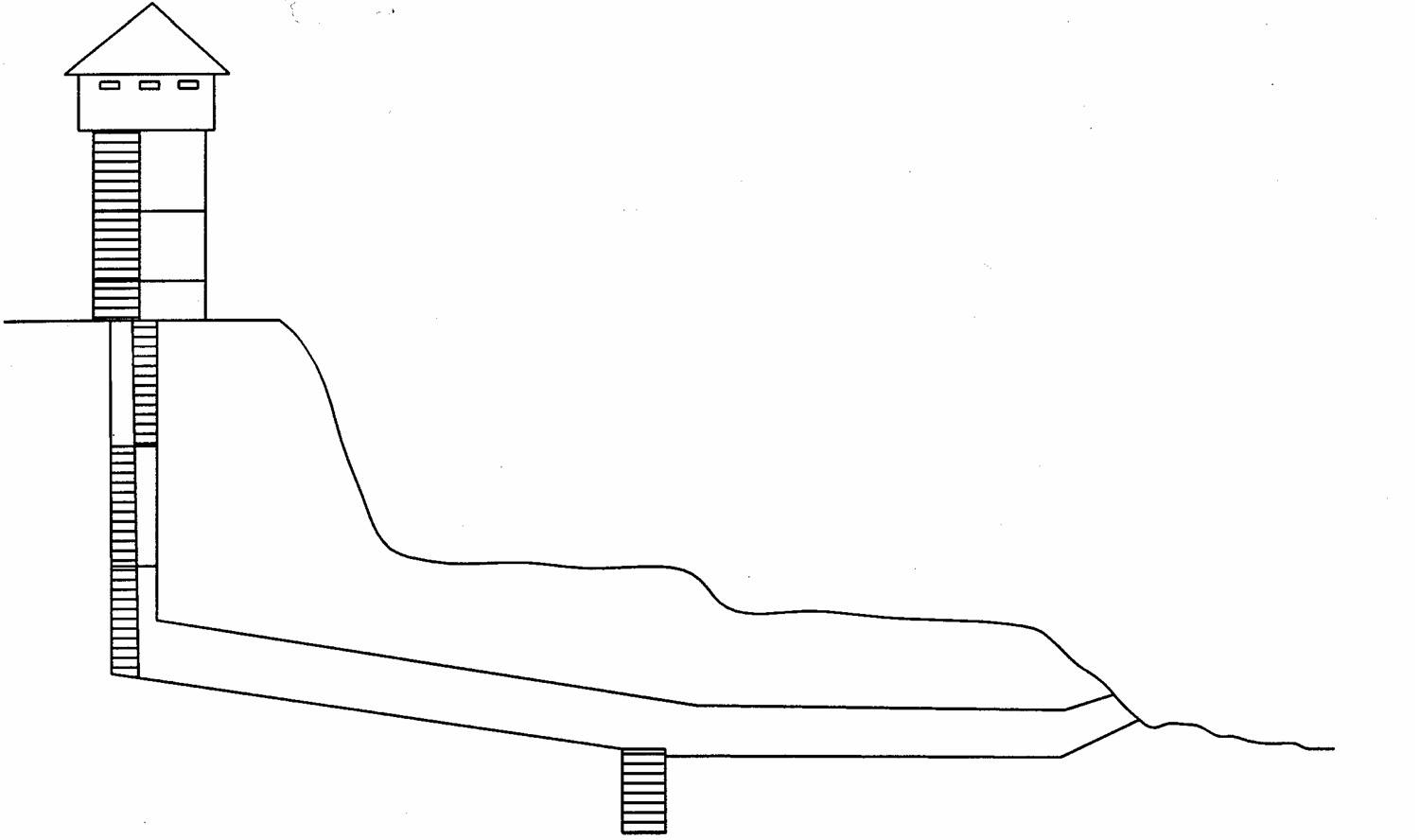
There may be several reasons for this. These include insufficient funding for research (or rather, a complete lack thereof), the neglect of these passages, and a number of other equally important factors. It is precisely this factor that serves as yet another explanation for the current situation, in which more and more Kharkiv residents have heard something about the local underground passages, but only in passing, dismissing it as a tall tale, a prank, a joke, and so on. In other words, the underground tunnels occupy a place on the periphery of people’s consciousness, having very little connection to the established collective memory of Kharkiv. After all, even the most recent textbook, *Kharkiv Regional Studies* (2011), does not mention this phenomenon at all. Yet it is precisely textbooks that primarily shape the historical consciousness of the majority of the population.
To sum up, we can say the following. Unfortunately, one of Kharkiv’s unique features—its underground passages—has yet to secure a permanent place in the “collective memory” of the average Kharkiv resident. As a rule, this phenomenon is relegated to the categories of “sensational stories,” “urban legends,” and the like. It’s a shame, because the city’s underground passages could serve as one of the factors attracting tourists to the city and contributing to its growing popularity. Here, I would like to thank the public organization Kharkiv Foundation for the Promotion of Historical and Cultural Research “Children of the Underground” for their enthusiasm in researching this little-studied chapter of Kharkiv’s history. The author hopes that the researchers’ efforts will result in the publication of a high-quality work dedicated to Kharkiv’s underground passages, thanks to which this chapter of Kharkiv’s history will take its rightful place in the city’s image.
