The events that took place in Kharkiv in November of the distant year 1881 served as the basis for the plots of many literary works.
A famous actress falls passionately in love with an officer. A romance blossoms. But her lover, who came from an impoverished noble family, soon decides to get married and begins looking for a wealthy match. Trying to escape her emotional anguish, the actress throws herself into her work.
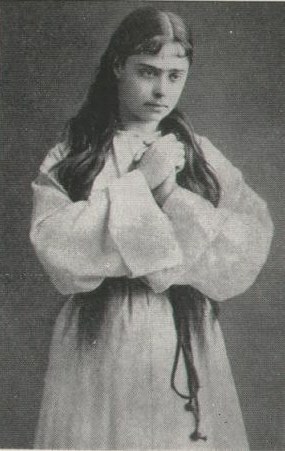
However, on November 4 (16), 1881, the officer attended a performance with his fiancée, in which his former lover was appearing. That day, she was playing the lead role in A. Ostrovsky’s play *Vasilisa Melentyeva*. Suddenly, from the audience, she spotted her beloved in a box with his fiancée. During intermission, the actress found a box of matches in the dressing room, snapped off the phosphorus heads, mixed them with tea, and drank the concoction. The bell rang; the actress went on stage and began to perform, but to the horror of the front rows, she suddenly turned deathly pale and collapsed unconscious. The curtain fell, and the performance, of course, was stopped. The doctors were unable to do anything. The actress died six days later in terrible agony. She had just turned 28…
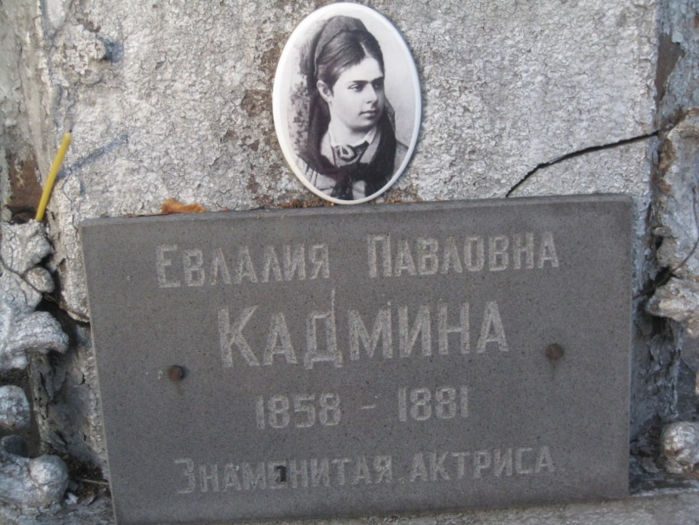
The actress’s name was Evlalia Pavlovna Kadmina.
As is well known, book magnate Alexei Sergeyevich Suvorin opened his third store in our city in 1885 (the first, incidentally, to be a book supermarket in Ukraine). However, few people know that Alexei Sergeyevich, in addition to being a brilliant entrepreneur, was also a successful playwright.
The following plays were written based on the story of Kadmina’s suicide:
- In 1882, Ivan Turgenev’s novella “After Death” (“Clara Milich”)
- In 1884, Nikolai Leskov’s short story “Theatrical Character.”
- And, by the way, in 1889, cadet Alexander Kuprin’s first published story, “The Last Debut,” was published in the magazine *Russian Satirical Leaflet*; for this publication, Kuprin was sent to the guardhouse, since cadets were not allowed to publish their works without permission from their superiors.
But the greatest success was enjoyed by the play “Tatiana Repina,” written by Alexei Sergeyevich Suvorin and published in 1889. In fact, the success of Suvorin’s play was so overwhelming that A. P. Chekhov, who was friends with Suvorin at the time, wrote a one-act “sequel” to *Tatyana Repina* under the same title and featuring the same characters. Suvorin published Chekhov’s play—which he highly praised—as a limited-edition separate offprint at the *Novoye Vremya* printing house (a full-scale publication and staging were impossible due to censorship restrictions).
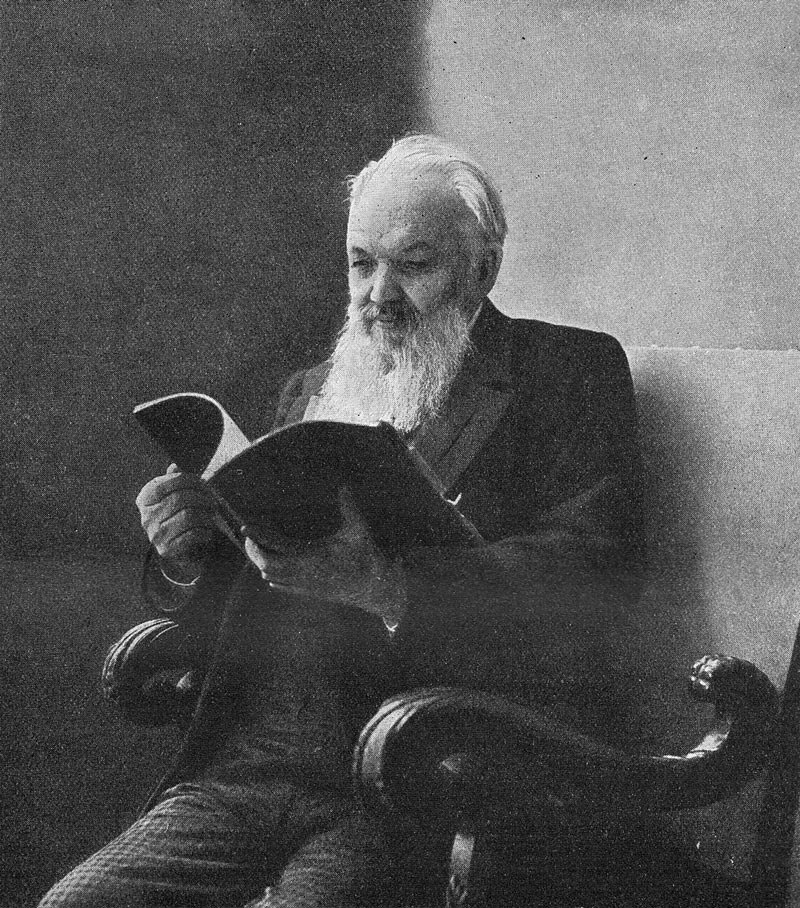
However, the most interesting aspect here lies in the name “Tatyana Repina.” What did Suvorin mean by this? Was he hinting that the event took place in Kharkiv, a city inextricably linked to the name of the great artist Ilya Efimovich Repin? We do not yet know the answer to this mystery…
The remains of Evlalia Pavlovna Kadmina herself rest at City Cemetery No. 13, where they were transferred in 1970 from the St. John the Forerunner Cemetery (now Youth Park).
P.S. A keen-eyed reader will immediately notice an inaccuracy.
After all, the date of birth listed on the grave is 1858. However, this is a mistake! The headstone is from our time. What can you do… Even back then, there were pseudo-historians in Kharkiv.)

- About the military pilot school and the airfield in Kharkiv… - 04.11.2020
- Nikanor Savich—A Political Career by Mistake - 13.07.2020
- And once again, about the Cavalry Guards… - 21.01.2020