Few people remember that from 1900 to 1907, the man who would later be called the “King of Laughter in Exile” lived and worked in Kharkiv.
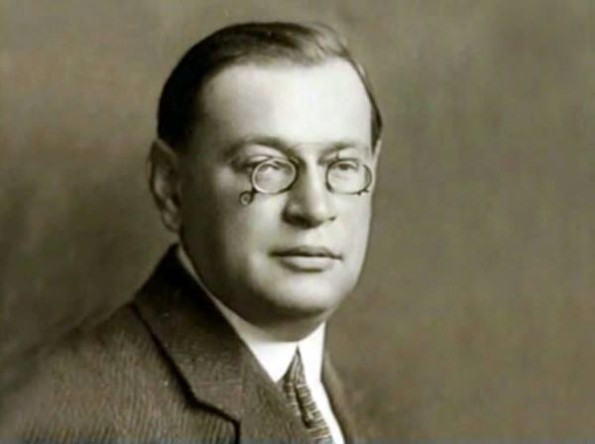
Arkady Timofeyevich Averchenko, an outstanding writer, satirist, and theater critic, lived in our hometown for about seven years and was fired from his job in Kharkiv with the words, “You’re a good person, but you’re not worth a damn.”
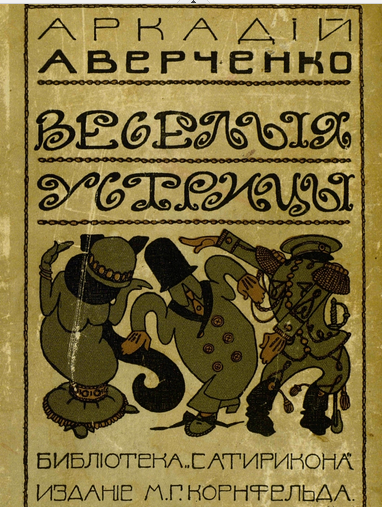
Averchenko knew and loved Kharkiv, which is precisely why his work features so much of Kharkiv and its people.
But let the “King of Laughter” himself briefly tell us about his time in Kharkiv—a time before he would, a few years later, go into exile aboard one of Wrangel’s last steamships…
When the administration of the mines was moved to Kharkiv, I was taken there as well, and my spirit was revived and my body grew stronger…
I would wander around the city all day long, my hat pulled down crookedly over my eyes, whistling nonchalantly the most rousing tunes I’d overheard in the summer shanties—a place that had initially captivated me to the very depths of my soul…
I did a terrible job at the office, and to this day I’m baffled as to why they kept me there for another six years—a lazy employee who viewed work with disgust and who, at the slightest provocation, would get into long and heated arguments and debates not only with the accountant but also with the director.
Probably because I was a cheerful person who looked joyfully upon God’s vast world, always ready to put work aside for a laugh, jokes, and a string of clever anecdotes—which refreshed those around me, who were bogged down in work, tedious calculations, and petty squabbles…
My literary career began in 1905, and it seemed to me to be a complete triumph. First, I wrote a short story… Second, I submitted it to *Yuzhny Krai*. And third—(I still believe this is the most important thing about a short story)—it was published!
For some reason, I didn’t receive any payment for it, and this is all the more unfair given that as soon as it was published, the newspaper’s subscriptions and retail sales immediately doubled…
Those same envious, malicious gossips who tried to link my birthday to some other holiday also linked the rise in retail prices to the outbreak of the Russo-Japanese War.
Well, you and I, dear reader, know where the truth lies…
After writing four short stories over the course of two years, I decided I had done enough to contribute to my country’s literature and resolved to take a well-deserved break, but then 1905 rolled around and, sweeping me up, spun me around like a twig.
I began editing the magazine *Shtyk*, which was a huge success in Kharkiv, and completely neglected my military duties… I wrote feverishly, drew cartoons, edited, and proofread, and by the ninth issue, I had gone so far that Governor-General Peshkov fined me 500 rubles, expecting me to pay it immediately out of my own pocket money.
I refused for many reasons, the main ones being: a lack of money and a reluctance to indulge the whims of a frivolous administrator.
Seeing that I was unyielding (the fine was not replaceable with a prison sentence), Peshkov lowered the price to 100 rubles.I refused. We haggled like street vendors, and I went to see him nearly ten times. He never managed to squeeze any money out of me!
Then, taking offense, he said
, “One of us has to leave Kharkiv!
” “Your Excellency!” ” I objected. “Let’s ask the people of Kharkiv: let them choose. Since I was well-liked in the city—and I’d even heard vague rumors that the citizens wanted to immortalize me with a monument—Mr. Peshkov didn’t want to risk his popularity.”
And so I left, having managed, after all, to publish three issues of the magazine *Mech* before my departure; it was so popular that copies of it could even be found at the Public Library.

- About the military pilot school and the airfield in Kharkiv… - 04.11.2020
- Nikanor Savich—A Political Career by Mistake - 13.07.2020
- And once again, about the Cavalry Guards… - 21.01.2020