Our region is beautiful in every season and in any weather, so early in the morning on November 28, our close-knit Nakipelo-UAR team set out once again. Due to the rapidly shortening daylight hours, this eighth outing was kept as short as possible, both in terms of distance and the number of sites visited.
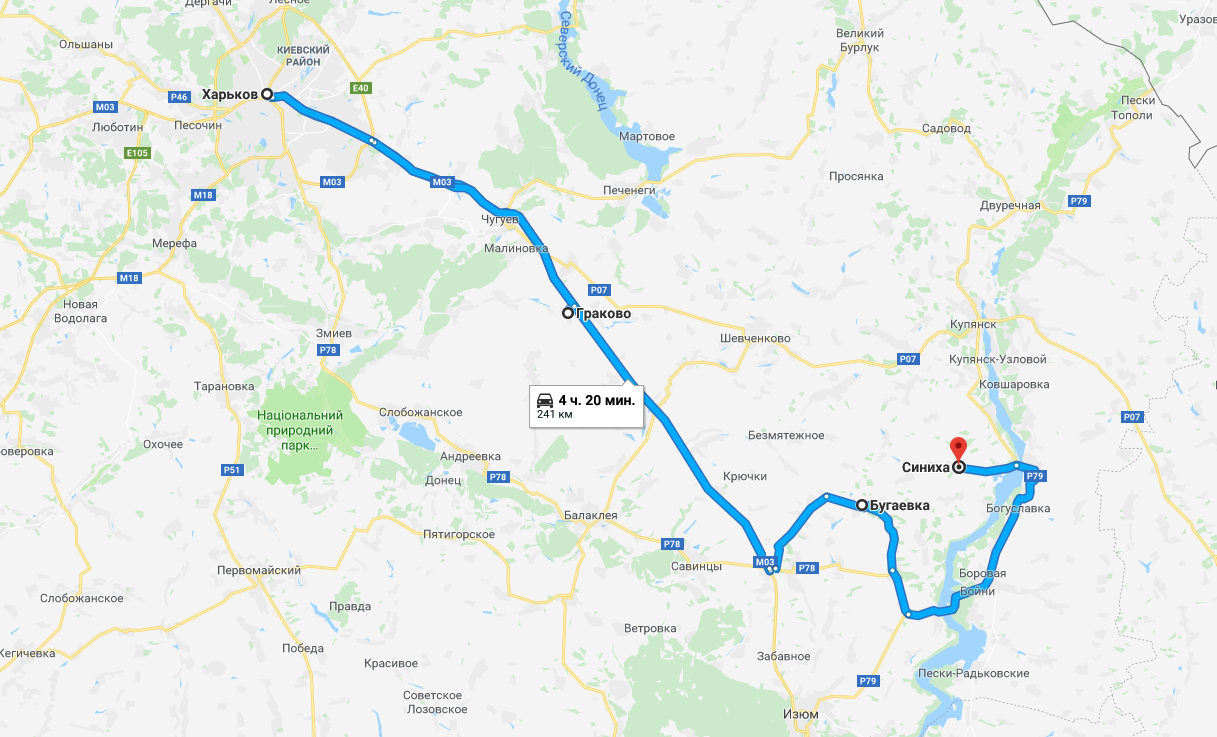
After a short while, we enter Hrakove, a former settlement in Zmiyevsky District. The first stop on our journey is located practically in the very center of the town. The stone Trinity Church was built with funds from the residents in 1810. At the beginning of the 20th century, the total number of parishioners of both sexes was about 3,000. It’s heartening to see that the church is being restored. There is definitely a difference between 2003 and 2017.
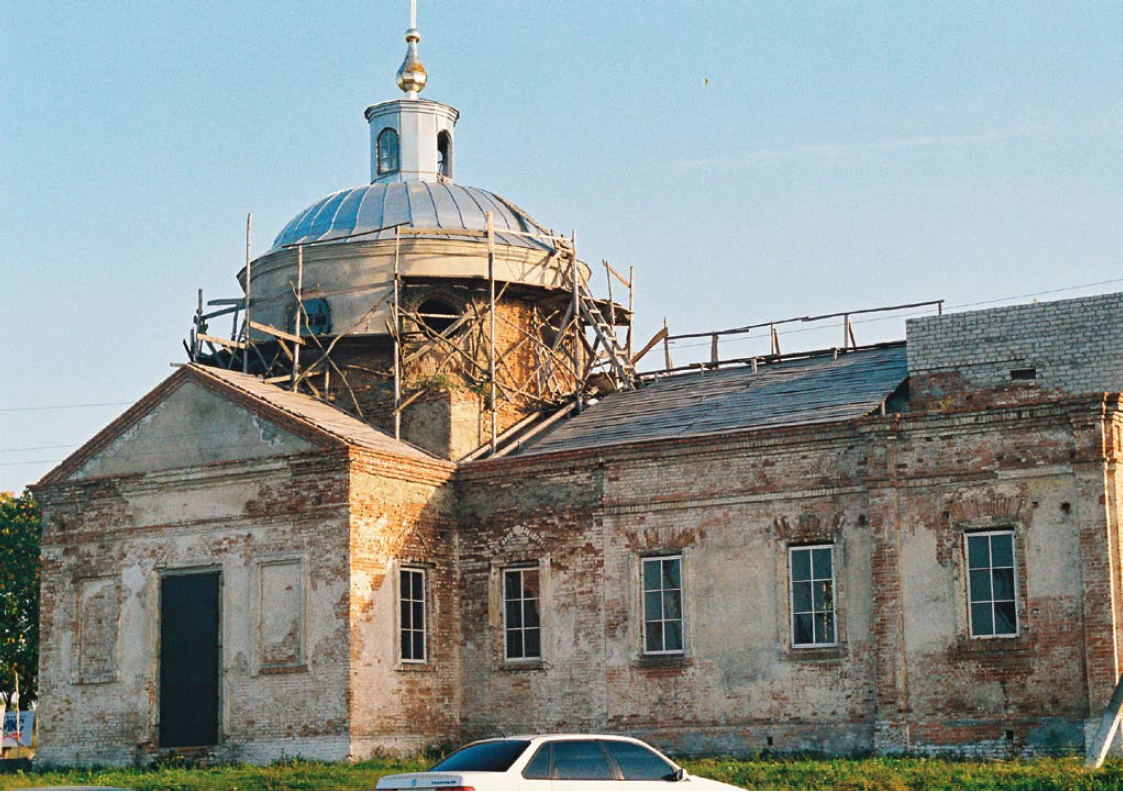

Local residents passing by, shivering from the cold, look on in surprise at the seven people who have appeared out of nowhere, rushing around the ancient temple with cameras and a video camera. “What’s all the fuss about?”—their eyes seem to ask.
The further we travel from the heart of Sloboda Ukraine, the harder it is to take in the reality around us. The fields and trees are blanketed in snow. It’s hard to believe that our Kharkiv looks so different at this time of year. We stop several times to take pictures of all this white splendor.

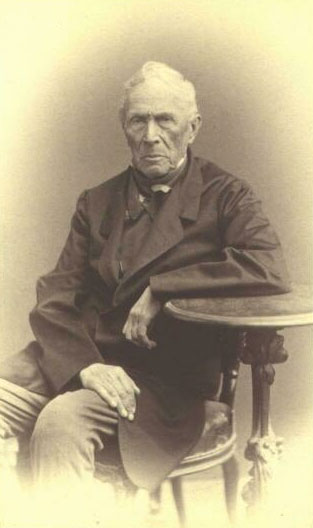
And here before us is the settlement of Bugaevka in the Izyum District—also known as Izyumets. The settlement was founded in the late 17th century by members of the illustrious family of the Sloboda colonels, who owned it until the death of its last representative, Dmitry Andreevich Donets-Zakharzhevsky (who was strangled by his own nephew in 1871).
The church itself, built in Buhaivka in 1819, is also linked to this noble family. Legend has it that in the early 19th century, the settlement was owned by two brothers: Pyotr and Vasily Mikhailovich Donets-Zakharzhevsky. Before Vasily left his estate to take up a position in St. Petersburg, his mother gave him a simple icon of the Okhtyrka Mother of God as a parting gift. On the way, the young nobleman, lost in dreams of a brilliant career in the city on the Neva, threw the icon away. Once in St. Petersburg, he told his old servant about this. The servant was horrified and said that Vasily Mikhailovich would find no happiness, since by throwing away the icon, he had deprived himself of his mother’s blessing and protection. And indeed, things did not go well for Vasily in St. Petersburg; various troubles began to arise. After news arrived from Buhaivka of his mother’s death, the old servant advised the young master to return and search for the icon after all.
After leaving his post in St. Petersburg, Vasily was returning to his family estate. Suddenly, the horses bolted and overturned the carriage. When the coachman and the servant found the young master, he was unconscious, his face covered in blood, and lying beneath his head was the very icon he had once thrown away. Upon returning to Buhaivka, the landowner built a beautiful church at his own expense, which he dedicated to the icon of the Okhtyrka Mother of God.
The very first wooden church dedicated to John the Theologian was built in the settlement in 1742.
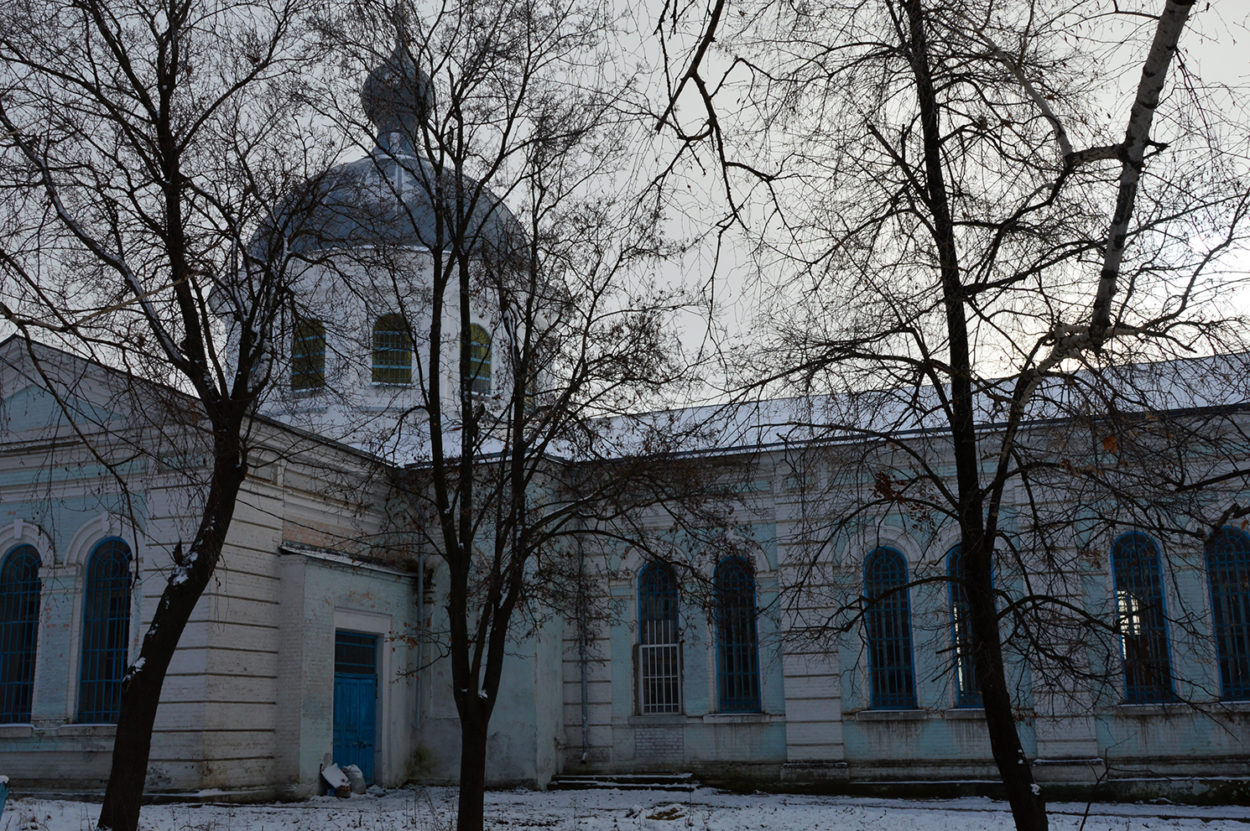
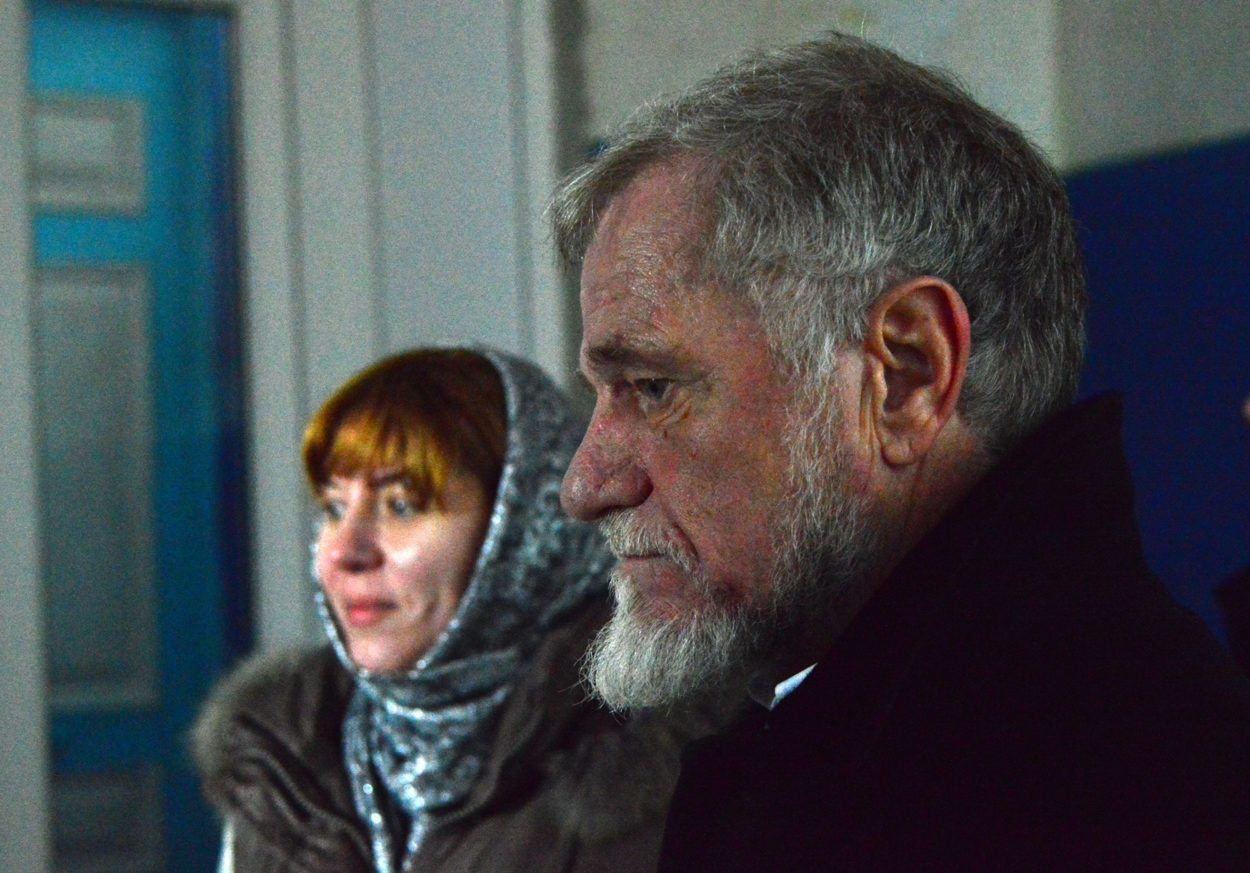
We were lucky. Seeing us wandering around the church, the rector, Father Anatoly, approached us and invited us inside. A little later, the choir director also joined us. The tour and lecture on the church’s history lasted about 40 minutes. We were told about Buhaivka’s past and the church’s reconstruction in the early 20th century. As a parting gift, we were presented with a reprint of the 1876 book *The Legend of the Church Icon in the Church of the Buhaivka Settlement, Kharkiv Province Izyum District” and “The Kovalevskys: The History of One Family.” It’s truly heartening to see how passionate people are about the history of their village and church. We’ve rarely encountered anything like this on our trips through Sloboda Ukraine.
And even though the only reminder of the Donets-Zakharzhevskys now is the church, as we drove away from Buhaivka, we saw it through the eyes of the 19th-century author of the book he gifted to us, and outside the car windows, it wasn’t gray houses that flashed by, but Pyotr Mikhailovich’s wooden, single-story estate. Or Vasily Mikhailovich’s two-story stone house—with balconies, columns, a picturesque ballroom, richly decorated rooms, parquet floors, velvet-upholstered furniture, and a garden with an artificial island at its center…

A small stone chapel stood on the site of the first wooden church as early as the mid-19th century. Not far from it was a stone building constructed in the style of a small stone church. Pyotr Mikhailovich was buried in its crypt.
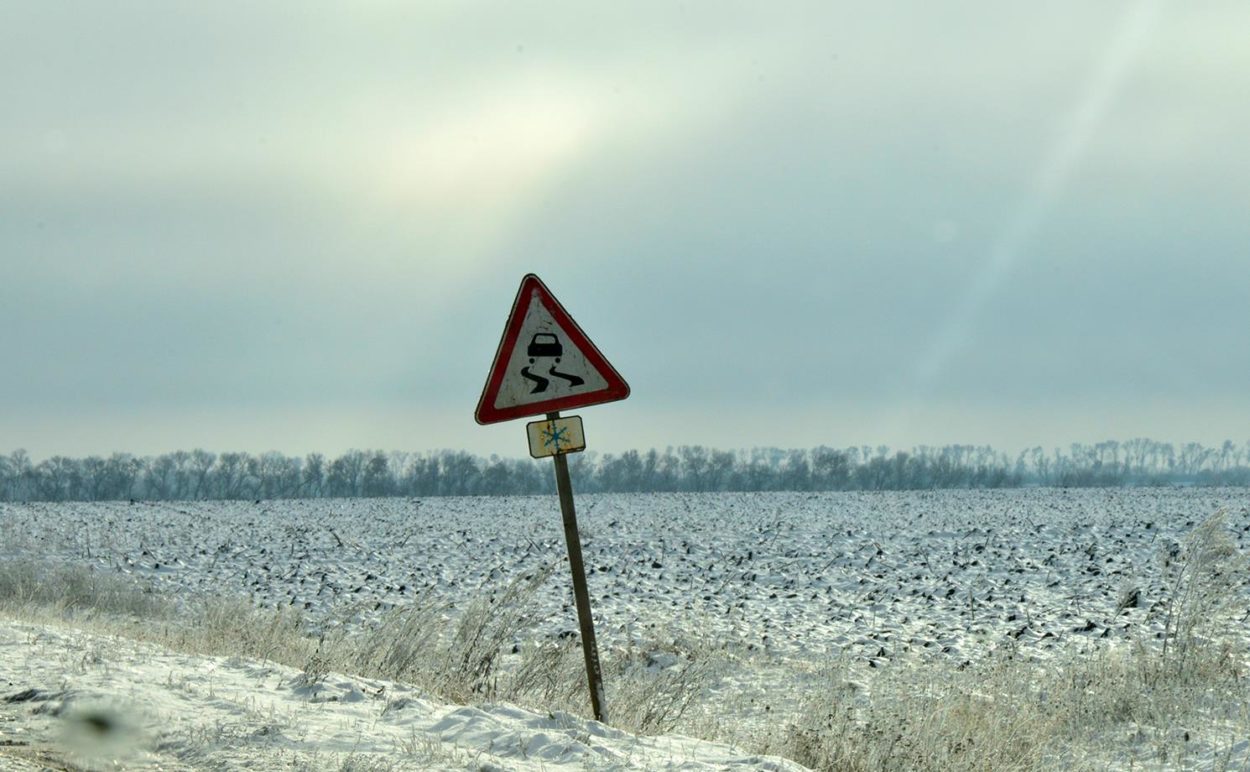
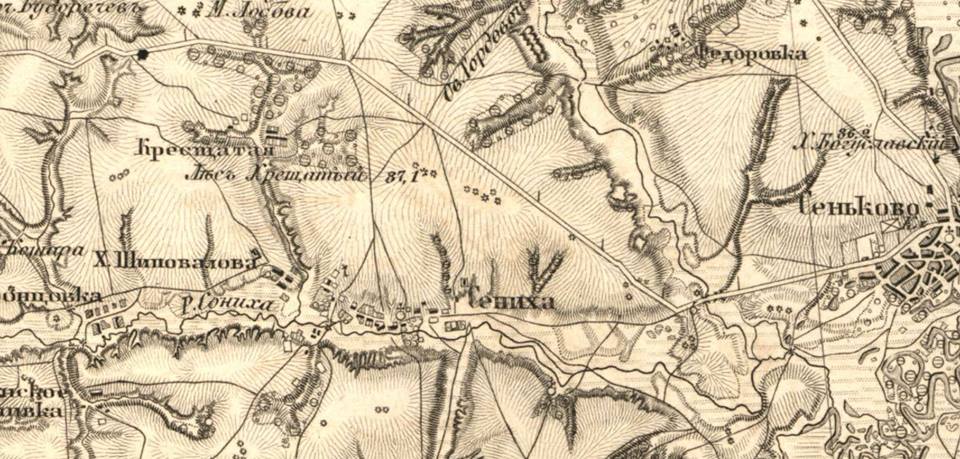
With bated breath, we drive up to the Tikhotsky estate in Synykha. The roads are in pretty bad shape.
The settlement itself was founded by the Boguslavsky family, a line of senior officers. The 1723 census of the Sloboda Regiments states:
The settlement of Synykha, belonging to Ivan Bogoslavsky (Boguslavsky), a centurion of the Izyum Regiment, with a population of 298 souls.
In the first half of the 19th century, Synykha passed to the Tikhotskys as a dowry, and it was thanks to them that the estate came into being. The founder of the family, Andrei Ivanov Tikhotsky, left Poland for Russia in 1712. In the 18th century, his descent from the ancient Polish nobility was officially recognized, as a result of which the Tikhotsky family was counted among the ancient nobility and entered into the sixth section of the genealogical register of the Voronezh, and later the Kharkiv, Governorate.
The first two generations of this family—Andrei Ivanov, son of Tikhotsky, and his five sons, Ivan, Yakov, Fyodor, Mikhail, and Pavel—devoted themselves exclusively to military service in the Kharkiv and Izyum Sloboda Cossack regiments. From these same five brothers sprang the five branches of the Tikhotsky family. The ancestral home of this noble clan, which had grown quite large, was located in the Classicist-style estate they built in the early 19th century in Synykha.
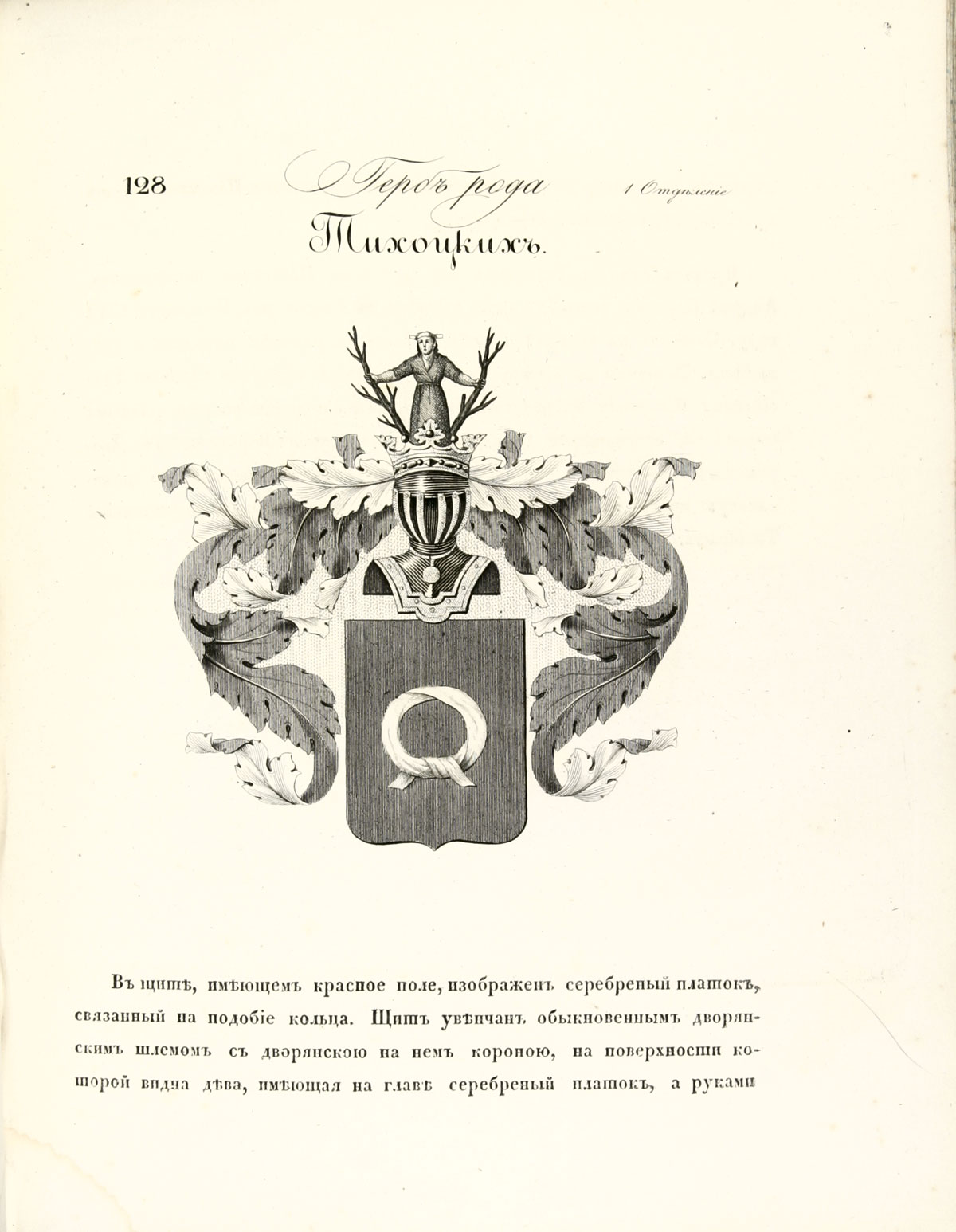
In the Kharkiv, Izyum, Kup’yans’k, Zmiiv, Bohodukhiv, Vovchansk, and Valki districts, as well as in the cities of Kharkiv, Izyum, Kup’yans’k, and Slovyansk, the Tikhotskys owned land, estates, and houses. This distinguished family also played a significant role in the establishment, funding, and opening of Kharkiv University. A petition addressed to the emperor requesting permission to establish this educational institution in our city bears the signatures of four members of the Tikhotsky family. Later, scholarships established by the Tikhotskys were introduced at the university, the Institute for Noble Young Ladies, and a number of other educational institutions. Numerous members of this family became renowned military officers, engineers, and lawyers. And on the eve of the “Congress of Descendants of the Tikhotsky Family,” dedicated to the family’s 300th anniversary and held from August 20 to August 23, 2012, in St. Petersburg, invitations were sent to 30 cities and 8 countries.
During the Soviet era, the Dovzhenko Film Studio took an interest in the estate. Film industry figures planned to turn it into a studio for shooting historical films, but the local collective farm refused to relinquish the estate. As recently as 1990, it housed a school. But that’s all just history. What matters is what’s there now. To be honest, in all our travels through Sloboda Ukraine, we’ve never seen anything like this. The estate’s condition can only be described as “utterly appalling”—I can’t bring myself to call it anything else. At the very beginning of our trip, I wondered why guided tours didn’t visit such a beautiful (judging by the photos) estate, and why so few people even knew about it (except, perhaps, my colleagues at the archive). Now, however, I can answer those questions.
1) The road to Synykha is, to put it mildly, in poor condition.
2) The estate itself is located on the outskirts, and you could easily drive right past it or fail to find it. The reason is simple: the building is situated between two private farms that block the view of the property.
But let’s say you’re lucky and you’ve actually found the estate. You happily get out of the car, eager to see this beautiful architectural landmark, which seems to be listed on the national register. What awaits travelers there? We were personally greeted by barking dogs, a flock of geese, and a local woman. When we timidly asked, “Can we take a look around the estate?” she generously agreed. That said, she did ask us several times if we might be interested in buying the estate itself, and also told us how many people—”even from Kyiv’s academic institutions”—had already visited here. We move on. The first thing we see is a blocked-off entrance.

Behind what looks like a little fence, cows are grazing peacefully. They live right there—in the architectural landmark, that is.
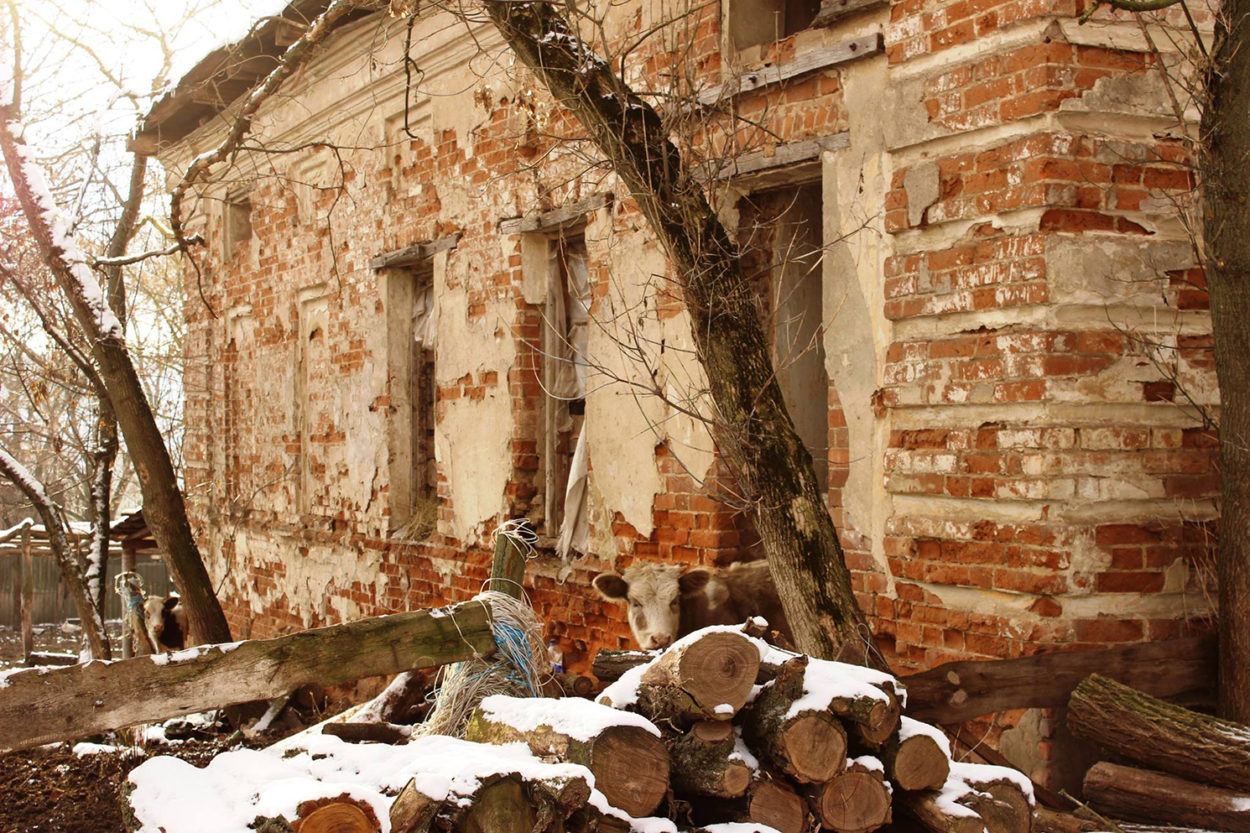
We carefully walk around the building, which was built in the Neoclassical style, in order to enter it through another entrance.
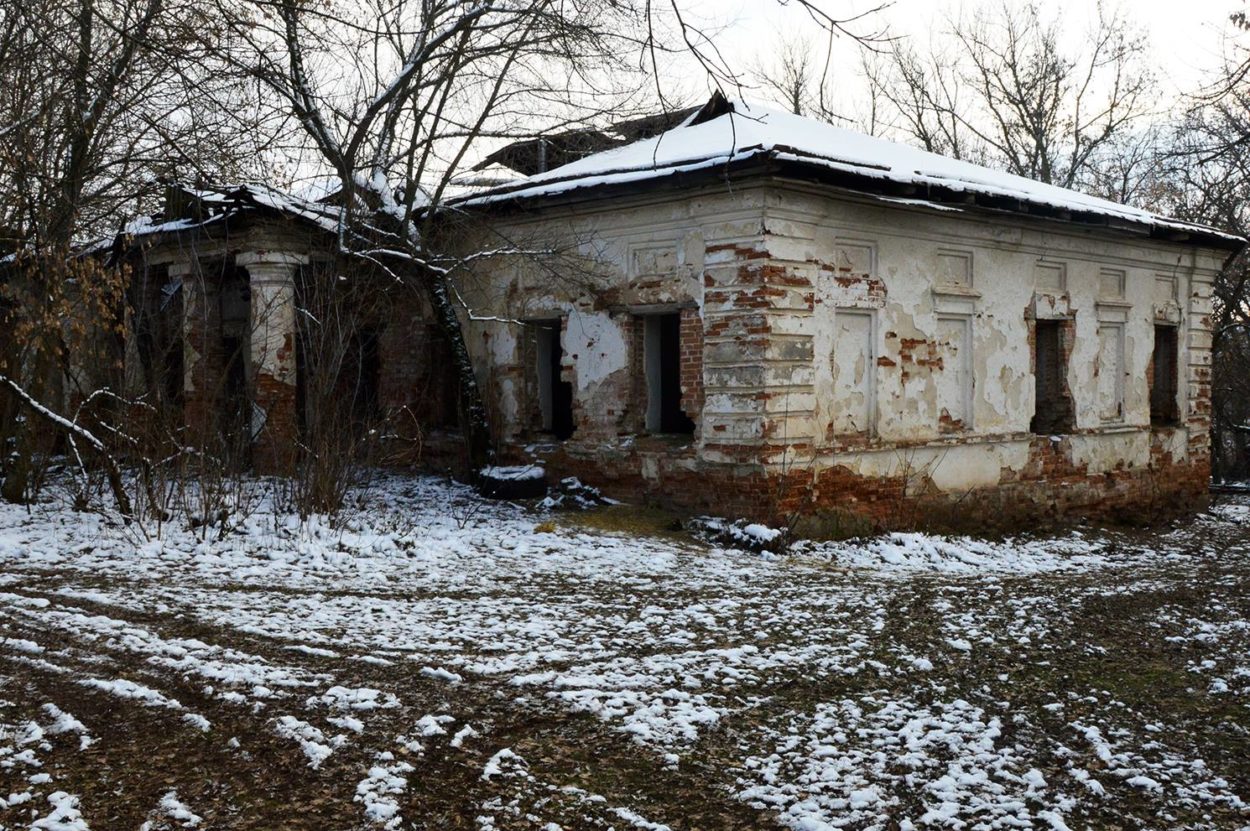
The columns are crumbling. The roof is caving in in places. Inside, there are remnants of stucco, traces of fireplaces, and a partition… In one section (where the roof hasn’t collapsed), hay is stored. And in the other, as we already know, animals live.
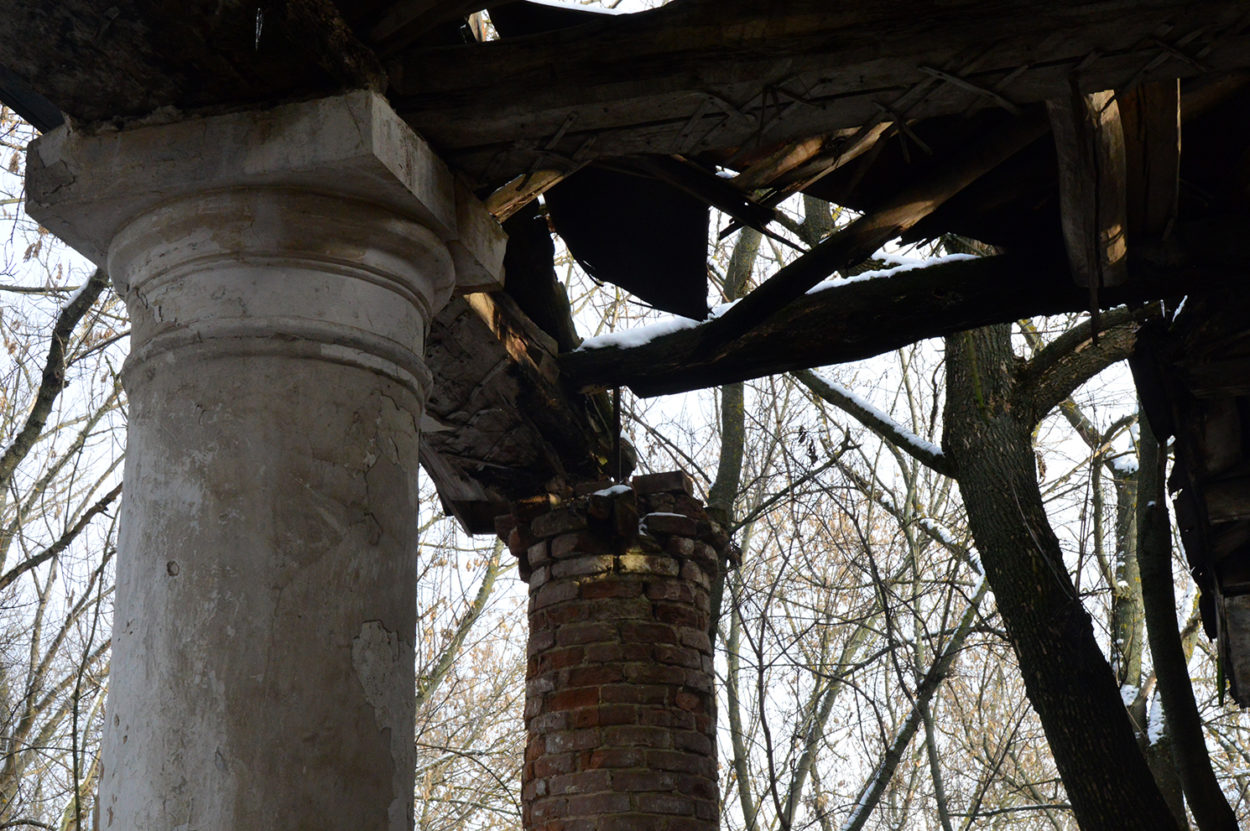
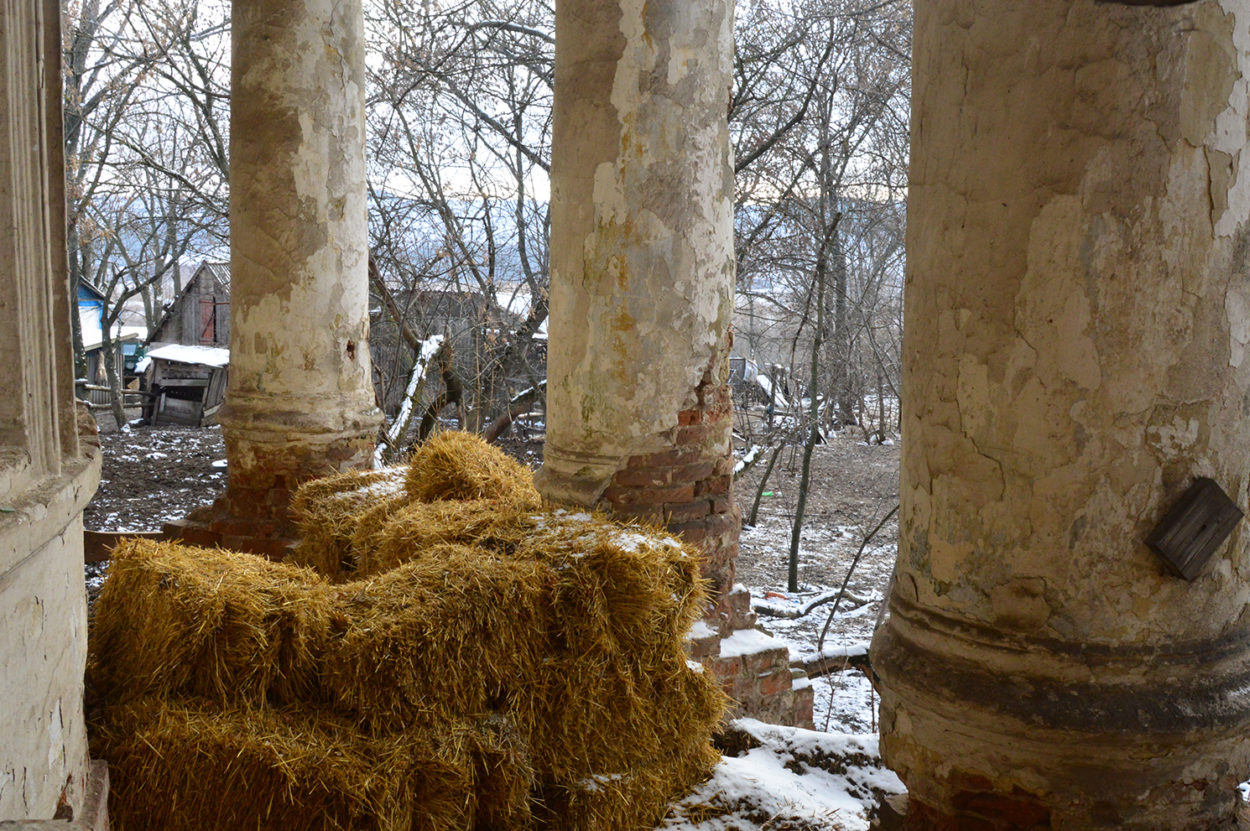
Because of the freezing temperatures, the battery on Dima Krivuli’s quadcopter flat-out refuses to work. Vladislav Lyashchenko selflessly steps up to the plate, filming literally every centimeter of what remains of the manor house. Tired and dejected, we return to the car, taking a few final shots on the way. Suddenly appearing literally out of nowhere, the owner of the elite cows begins, with a wild scream, to demand that we show her the documents authorizing us to “film her property.” So, if you ever do decide to visit Synykha, keep in mind that it’s not just the dogs and geese that might bite—but also the self-proclaimed owners of the old barns. After all, for us visitors, the house in Synykha is an estate of cultural and historical value. For the locals, however, it’s simply a building that can be adapted to their needs. I don’t know who’s to blame for this. Is it our government, which allows this to happen? The regional or district administration? Or perhaps it’s simply the people themselves? Some might argue that the farmers who divided the estate among themselves aren’t to blame—after all, times are tough right now, and everyone is just trying to survive as best they can… But then the question arises: why haven’t the other estates we visited this year been turned into barns yet? Perhaps the problem lies, after all, in a total lack of cultural awareness? How many more of these once-beautiful estates in our Sloboda Ukraine region—about which we know nothing—are being used by local residents as ordinary sheds, or have been completely destroyed because they’re no longer needed?
Synykha asked us too many questions that went unanswered. Still in awe of Buhaivka and reeling from Synykha, we returned to Kharkiv…