An ancient legend tells that at the end of the 17th century, 20 versts from the town of Okhtyrka, in the village of Kaplunivka, lived the pious Father Ioann Ilyich Umanov. In 1689, a miraculous icon of the Mother of God appeared to him.
On the Feast of the Nativity of the Mother of God (September 8), a priest had a dream in which an elder appeared and told him that in three days, three icon painters would come to him: one 70 years old, another 80, and the third 90. He was to take a bundle of icons from the eldest, return the top seven to the iconographer, and keep the eighth—which would be the Kazan Icon—for himself. In return, the priest was promised mercy and grace from the Mother of God. Struck by this dream, Father John fasted for several days and celebrated the Liturgy. On the third day, just as the elder had said, everything came to pass. On his way home from church, the priest met the icon painters coming toward him and warmly invited them into his home. Upon seeing a bundle of icons carried by the senior icon painter, Umanov asked the elder to give him the eighth icon, which, just as had been foretold to him in his dream, turned out to be a copy of the Kazan Icon of the Mother of God. The elder gave him the icon without accepting the money offered for it.
For the next two weeks, this icon remained in the priest’s home. Then, during the third week, on the night between Saturday and Sunday, Father John had another dream in which a Virgin of extraordinary beauty appeared to him and said: “Priest John, do not keep me in your chapel; take me to the temple of God.” Upon waking, the priest saw that his room was bathed in bright light. Gathering his courage, he approached the icon and saw that tears were streaming down the board from the eyes of the Mother of God. Immediately afterward, he gathered the people and told them about the events of the past few weeks. Then, after a prayer service, the icon was solemnly carried to the church. It came to be known as the Kaplunivska Icon, named after the village.
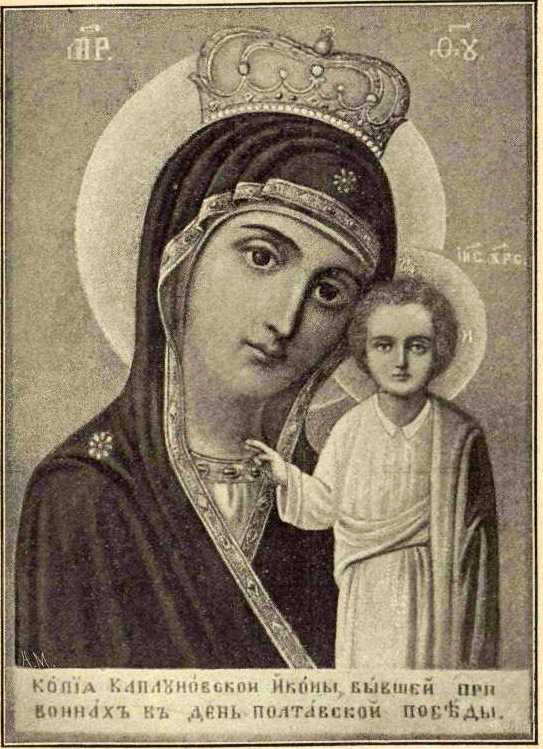
It goes without saying that the newly revealed icon began to attract the attention of the faithful. In 1709, as Charles XII’s Swedish army approached Sloboda Ukraine, the diocesan authorities ordered Ioann Umanov to transfer the miraculous Kaplunivska Icon to Kharkiv for greater safety.
After the Swedish army captured Kaplunivka, Charles XII took up quarters in the empty house of Father Ioann Umanov. Charles’s soldiers, as they ravaged the village, attempted to set the church on fire. But all three of their attempts failed. According to legend, this greatly surprised Charles XII, and he allegedly asked Ivan Mazepa, who was accompanying him, what could have caused such strange failures. Mazepa replied, “The local church is famous for the miracles of the icon of the Mother of God.” On the Swedish king’s orders, the soldiers began searching for people who could tell them more about the miraculous icon—and, while they were at it, where Tsar Peter’s army was located. Eventually, they found a shepherd named Grigory Zhuravlya, whom they brought before the Swedish king.
“Where is Tsar Peter?” Charles XII asked him.
To which the shepherd replied:
“Rumor has it that it’s in Kharkiv.”
– Where’s your icon?
– On orders from her superiors, she was taken to Kharkiv by a priest.
At that point, Charles, turning to Mazepa, reportedly said, “Look, if we couldn’t burn down a church without an icon, then where the icon itself is present, we have little hope of success.”
It is known that on the eve of the Battle of Poltava, Tsar Peter prayed before the miraculous icon of Our Lady of Kaplunovo, asking for her blessing and victory. Also, before the battle, the icon was carried throughout the army, and the soldiers were blessed with it. Priest Ioann Umanov remained by the miraculous icon the entire time.
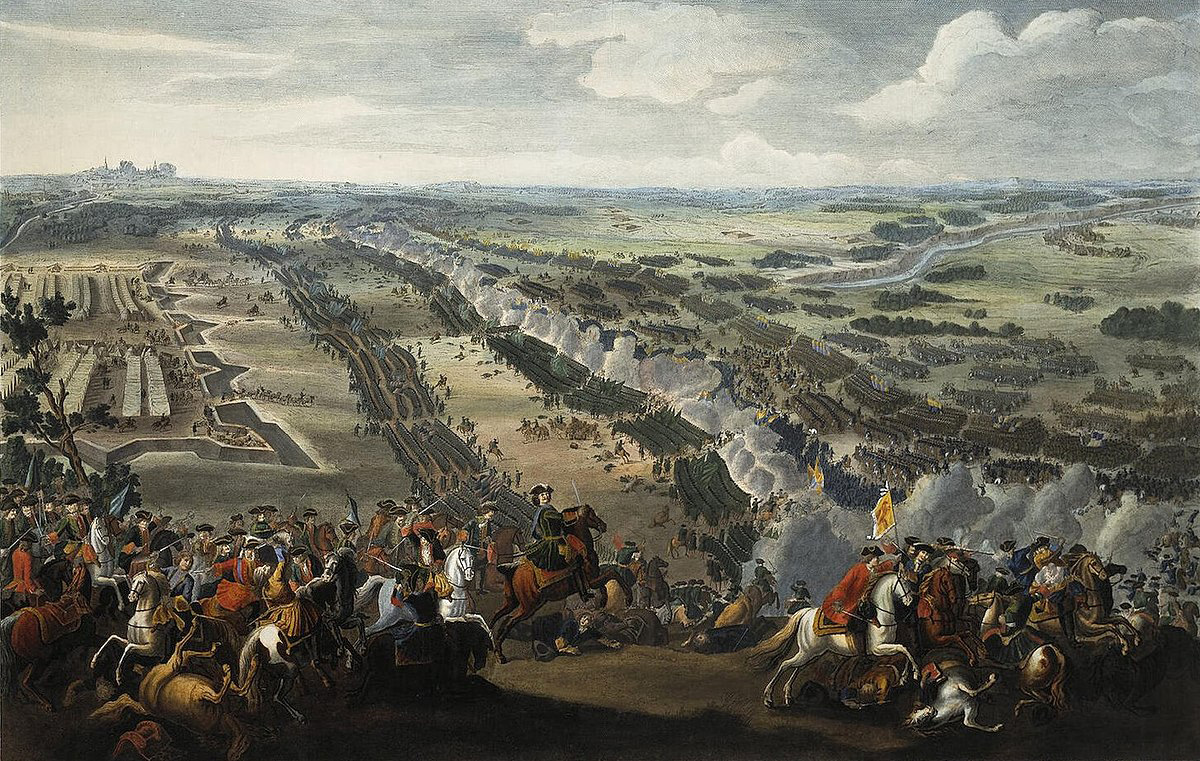
Over time, the icon of Our Lady of Kaplunovo became one of the most important holy relics in our region. As early as 1744, a narrative about this miraculous icon was compiled in Kharkiv based on information provided by Father Ioann Umanov. Later, accounts of subsequent healings and miracles attributed to the icon were added to the narrative.
In Kaplunivka itself, the old church was eventually rebuilt. The new church was consecrated on June 29, 1798, and by 1804, the Kaplunivska Church was already considered one of the most majestic and beautiful in the Kharkiv Governorate. In the 19th century, in Bohodukhiv alone, up to eight processions were held carrying this icon from one church to another.
There used to be a Kaplunivska Church in our town, too.

After 1917, all trace of the miraculous icon was lost. The fate of Ioann Umanov’s descendants is particularly interesting. His son, grandson, and great-grandson served as priests at the church in Kaplunivka. In the first half of the 19th century, the Kaplunovsky family was ennobled. A distant descendant of Father Umanov, however, became no less famous than his ancestor.
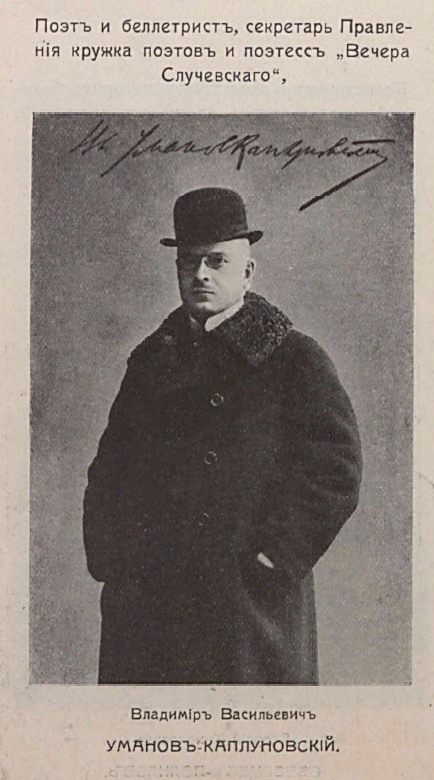
On December 21, 1865, Vladimir Vasilyevich Kaplunovsky was born in our beloved city. He received his primary education at the 3rd Kharkiv Classical Gymnasium. After graduating, Vladimir enrolled in the Faculty of History and Philology at Saint Petersburg University, but after some time transferred to the law school. After receiving his bachelor’s degree in 1890, Vladimir Kaplunovsky worked in the Civil Cassation Department of the Senate. He then worked in the Department of Salary Taxes at the Ministry of Finance.

He later worked as a clerk in the Land and Factory Department of His Imperial Majesty’s Cabinet (the agency responsible for managing the imperial family’s private property).
As is well known, poets—both men and women—would gather twice a month, on Fridays, at the apartment of the poet K. K. Sluchevsky. After Sluchevsky’s death (September 25, 1904), the members of “Fridays” decided to continue meeting at the homes of regular participants, naming the gatherings “Sluchevsky Evenings” in memory of the late poet. Vladimir Kaplunovsky, who skillfully balanced public service with his literary pursuits, was one of the co-founders of this circle. He was later elected secretary of the board. It should be noted that he had developed a passion for literature in his early years. Vladimir Vasilevich’s first published works appeared right here in our city in 1884. It is possible that around that time, in memory of his ancestors, he added the second part of his surname—Umanov—to his name as a literary pseudonym. In addition to writing poems, novels, novellas, and short stories—which were published in numerous literary journals of the time—Umanov-Kaplunovsky was actively involved in translating West Slavic literature. Thanks to this, during the pre-revolutionary years (from 1885 to 1905) V. V. Umanov-Kaplunovsky published books of translations of works by Bulgarian and Serbo-Croatian poets, as well as Bosnian, Slovak, and Rusyn folk songs. Vladimir Vasilyevich also corresponded with one of the most famous Bulgarian poets of the 20th century, the “patriarch of Bulgarian literature,” Ivan Vazov. His collection *The Slavic Muse* was translated into Russian by Umanov-Kaplunovsky, who also wrote a wonderful essay titled “Ivan Vazov—Bulgarian People’s Poet and Citizen” in issue No. 112 of the 1908 edition of the journal *Istorichesky Vestnik*.
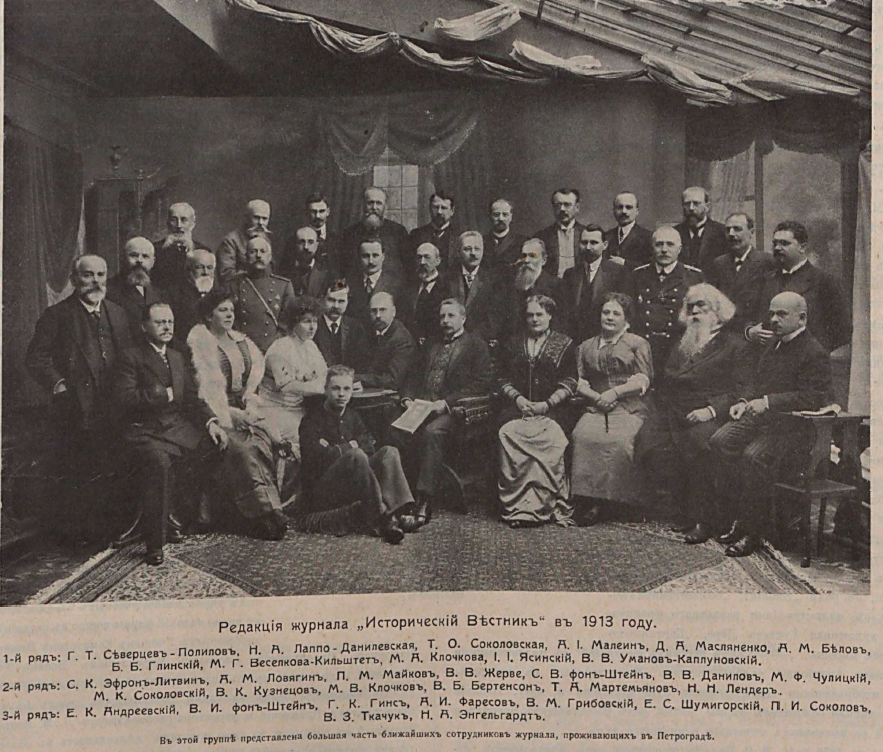
Umanov-Kaplunovsky is also credited with one of the translations of “La Marseillaise” and Saint-Ogan Lefèvre’s comedy *The Old Age of Don Juan*.
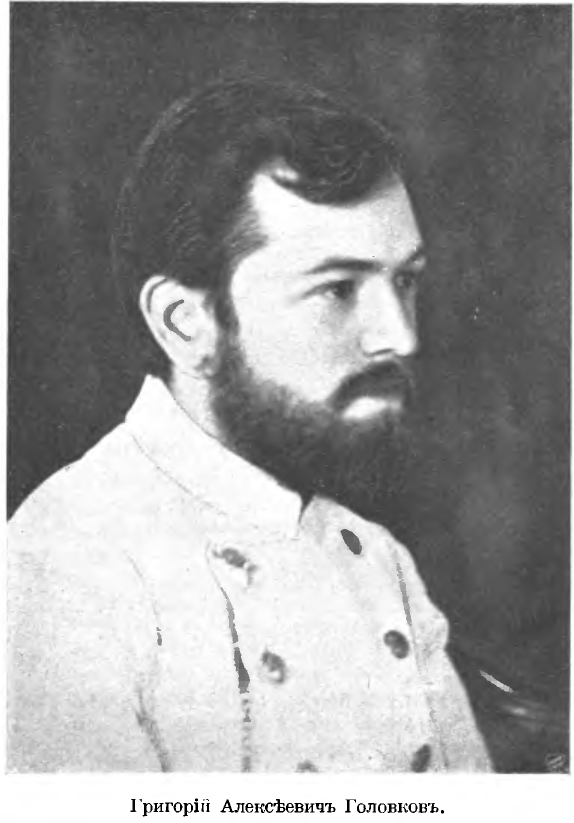
In the magazine *Stolitsa i Usadba*, with which we are already familiar, Umanov-Kaplunovsky was a member of the so-called “informal poetry section.” The topics of Vladimir Vasilyevich’s articles in the magazine *Historical Herald* are no less interesting. Umanov-Kaplunovsky dedicated his articles to France Prešeren—an outstanding Slovenian poet, the founder of modern Slovenian literature, and the author of the lyrics to the Slovenian national anthem. He wrote memoirs about Evlalia Kadmina, who remains well-known in Kharkiv to this day. In 1906, he wrote about M. L. Kropyvnytskyi and his Ukrainian theater. And in his 1914 essay “The Poet Grigory Golovkov,” Umanov sadly recalls his classmate from the Kharkiv Gymnasium, the talented poet Golovkov, who took his own life in 1892.
The home of the Umanov-Kaplunovsky couple in St. Petersburg (Bolshaya Pushkarskaya Street, 69; Vyazovaya Street, 7) and in Chuhuiv (where Vladimir Vasilevich’s father lived) readily opened its doors to the writers of that era. For example, the brilliant Silver Age poet Dmitry Mikhailovich Tsensor, who was once a guest there in 1915, jokingly dedicated a poem to Kaplunovsky’s wife, Varvara Alexandrovna:
May all creatures
know once and for all
That Varya,
our hostess, serves wonderful food!
The Umanov-Kaplunovskys were also friends with Ilya Repin.
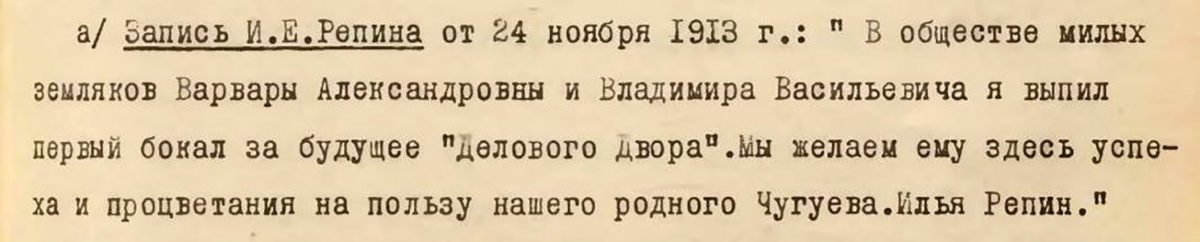
After 1917, Vladimir Vasilevich accepted Soviet rule; during the Soviet era, he was a member of the Writers’ Union. He died in 1939. Today, Umanov-Kaplunovsky’s papers are preserved in several archives abroad.
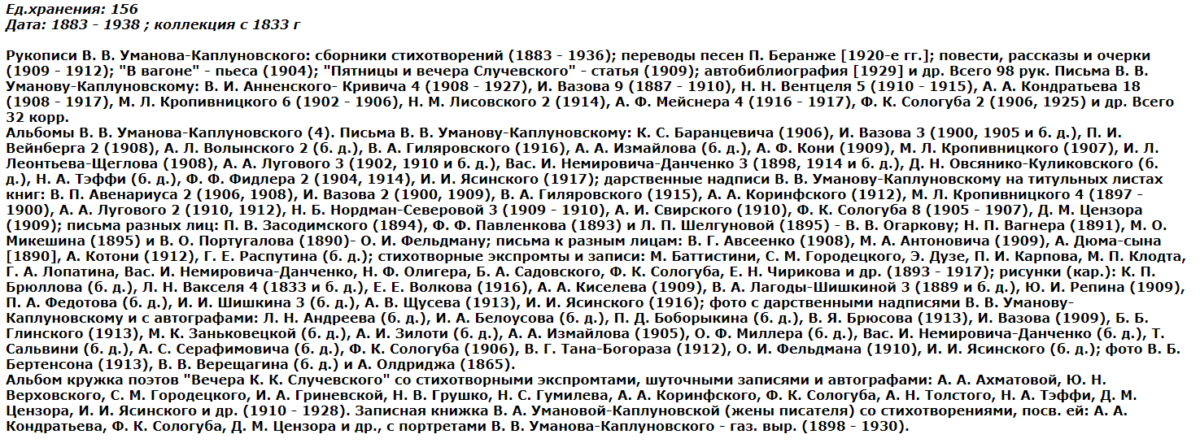
In the hometown of this wonderful and famous writer, poet, prose writer, and translator, unfortunately, very few people remember him these days…

- About the military pilot school and the airfield in Kharkiv… - 04.11.2020
- Nikanor Savich—A Political Career by Mistake - 13.07.2020
- And once again, about the Cavalry Guards… - 21.01.2020