Today, let’s remember another writer from Kharkiv who has been completely forgotten. After the 1917 revolution, he emigrated, but lived abroad for only four years—a period that, for Soviet historians, overshadowed the 44 years he spent in his homeland, leading them to erase him from history.
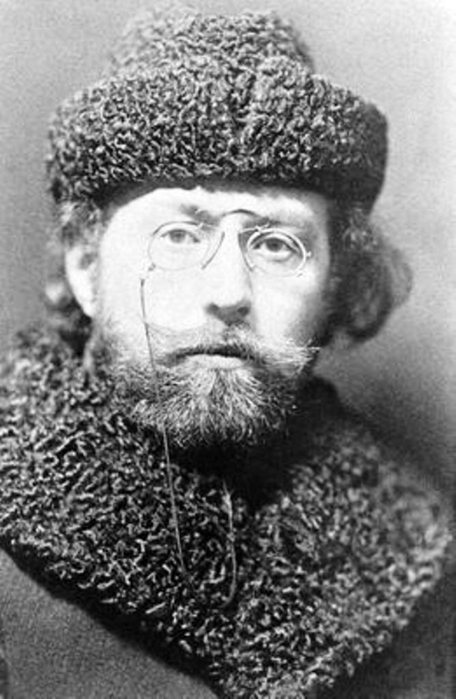
Mikhail Petrovich Artsybashev was born in 1878 in the Okhtyrsky Uyezd of the Kharkiv Governorate (the village of Dobroslavivka). The Artsybashev family belonged to an “impoverished” noble lineage; Mikhail’s father was a district official in Okhtyrka. Mikhail completed five grades at the Okhtyrka Gymnasium; he then intended to become an artist and studied at the Kharkiv School of Painting. But he was not destined to become an artist (his son eventually became one). Artsybashev chose the path of a writer.
He published his first short story in 1895 in *Yuzhny Krai* newspaper to earn money for paints. But Mikhail soon grew tired of painting and turned to writing. Artsybashev continued to publish in *Yuzhny Krai* until he moved to St. Petersburg in 1898. He wrote numerous short stories, novels, novellas, and plays.
He is best known for his novel *Sanin* (1907). Artsybashev first attempted to publish it in 1903 in *Mir Bozhiy*, but was rejected. Ultimately, the novel appeared in the magazine *Sovremenny Mir* in 1907, where it was published in installments. It immediately caused a stir in the press—the final part of the manuscript was confiscated by the police, and, as the press joked, “the police died of shame.” The author had to rewrite it… The novel was received with diametrically opposed reactions by society. Young people embraced it like a banner, while the older generation dragged it through the mud and had it banned by the authorities. But let’s take it one step at a time.

After reading it, one gets the impression that *Sanin* is an explosive blend of Dostoevsky, Turgenev, and Bunin… it’s hard to find comparisons—the narrative style is highly original, even if not perfect. In *Sanin*, the cornerstone of the story is the protagonist, who, as usual, stands in contrast to those around him. But here, the protagonist is very unusual. His central belief is that anything that brings pleasure to himself and others, yet harms no one, is natural. Sanin is very intelligent, sincere to the extreme, and, like a wandering philosopher, attached to nothing material. He mocks outdated moral norms and conventions as the husks of a passing era and cuts through them like a hot knife through butter. He loves life intensely in all its manifestations and hates everything that limits, cripples, or kills it.
Artsybashev’s writing is realistic; there are many deaths in the book, and they are described as if the author had experienced them himself.
Judging by indirect clues, the story takes place in the Kharkiv Governorate—in Svyatohirs’k and a nearby provincial town (presumably Izyum or Slovyansk). One cannot help but recall the Seversky Donets River in all its splendor, as well as the Ukrainian embroidered blouses that pretty young ladies love to wear on picnics…
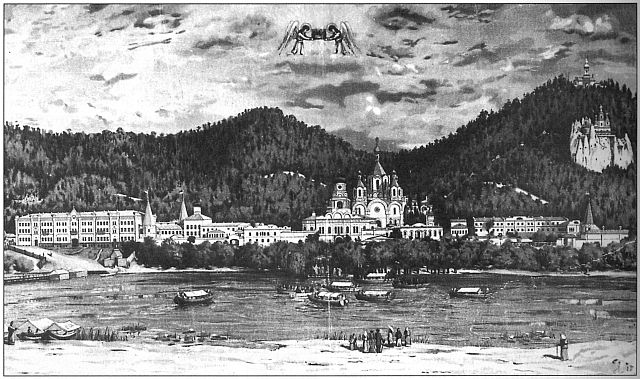
Of course, there are also the endless vacillations of the intelligentsia and their fruitless attempts to “go among the people” following the failed revolution of 1905… Debates raged until everyone was hoarse over the role of religion and Christianity in human history… And disappointment with the hypocrisy that had permeated society almost entirely. A society that was bound to explode…
The novel was incredibly popular; it was read by students, workers, the intelligentsia, and even criminals in prisons. It sold out completely, but was later banned from being reprinted due to excessive frivolity and licentiousness. Although I didn’t see anything in it that crossed the line of explicitness, one should take the era into account.
Artsybashev was deeply distressed by these accusations; he said that the press was focusing all its attention on insignificant details of the novel, while the essence of the work was escaping the reviewers… Intellectuals and students organized lectures and public readings of Sanin’s works at universities (and, after the book was banned, in private apartments).
The “Saninites” and “Artsybashevites” emerged, free from the conventions that had given rise to the “free love leagues”—a sort of early-20th-century proto-hippies. They became particularly widespread in large provincial cities such as Kazan and, especially, Minsk.
“Sanin” was also popular abroad; the novel was translated into many languages, including Arabic and Japanese, and sparked a storm of controversy in the press. In Germany, it was even adapted for the screen twice. Interestingly, the St. Petersburg Committee on Press Affairs wrote in April 1908 that Sanin was not a figment of the author’s imagination, but a character based on real life, representing an evolution of the 19th-century nihilists.
Before the 1917 Revolution, other works by Artsybashev had been adapted for the screen in Russia, and his stage productions were popular.

The writer’s own life was just as complicated as that of his characters. He underwent a craniotomy due to a severe case of tuberculosis and, in his youth, survived a failed suicide attempt, which left him virtually deaf. He wore a student’s uniform, even though he had never been a student.
As Artsybashev said, he was tricked into marrying his first wife after they got her so drunk she lost consciousness. In the end, he abandoned his wife and child.
His son, Boris, became a talented artist and spent decades illustrating the covers of *Time*, *Life*, and *Fortune* magazines in the United States.
His second marriage, which lasted 12 years, ended just as dramatically. After the writer became wealthy and transferred most of his fortune to his wife, she left him for a mediocre actor. This is definitely a good reminder that what goes around comes around.
Artsybashev’s third wife accompanied him to his grave… Mikhail Petrovich never truly embraced the Bolsheviks. In 1923, he left for Poland under the pretext of seeking medical treatment, and remained there, obtaining Polish citizenship (he had Polish roots on his mother’s side). He served as an anti-Soviet mouthpiece in local émigré newspapers… Alas, due to failing health, he died at the age of 48 in 1927.
During the Soviet era, his work was banned, and only now is interest in Artsybashev—once the most popular pre-revolutionary writer—reviving.

- "Noah's Ark" - 21.10.2026
- Blackie’s House on Maksymilianivska St - 19.10.2026
- Danylevs’koho Street, 19 - 13.10.2026