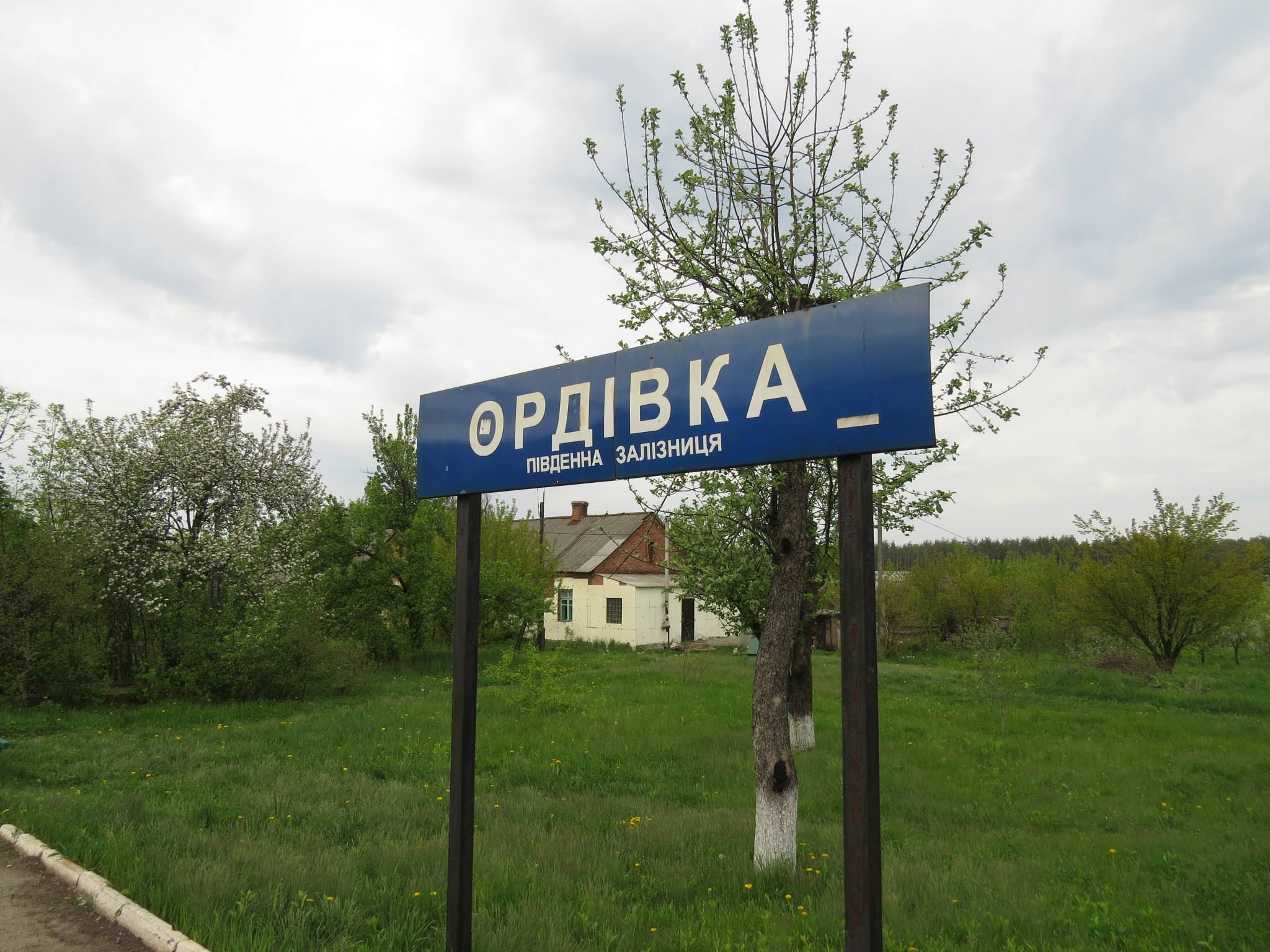
About 40 km from Kharkiv, in the village of Rokytne (Nova Vodolaha Raion), lies one of the best-preserved estates in our region. There are several ways to get there. Buses run there from Kholodna Hora. But I recommend another option to anyone who wants to see the beautiful Kulikovsky estate. Namely: take the commuter train from the South Station toward Berestyn, get off at Ordivka Station, and from there, take a walk through the picturesque forest to see all the beauty Rokytne has to offer.
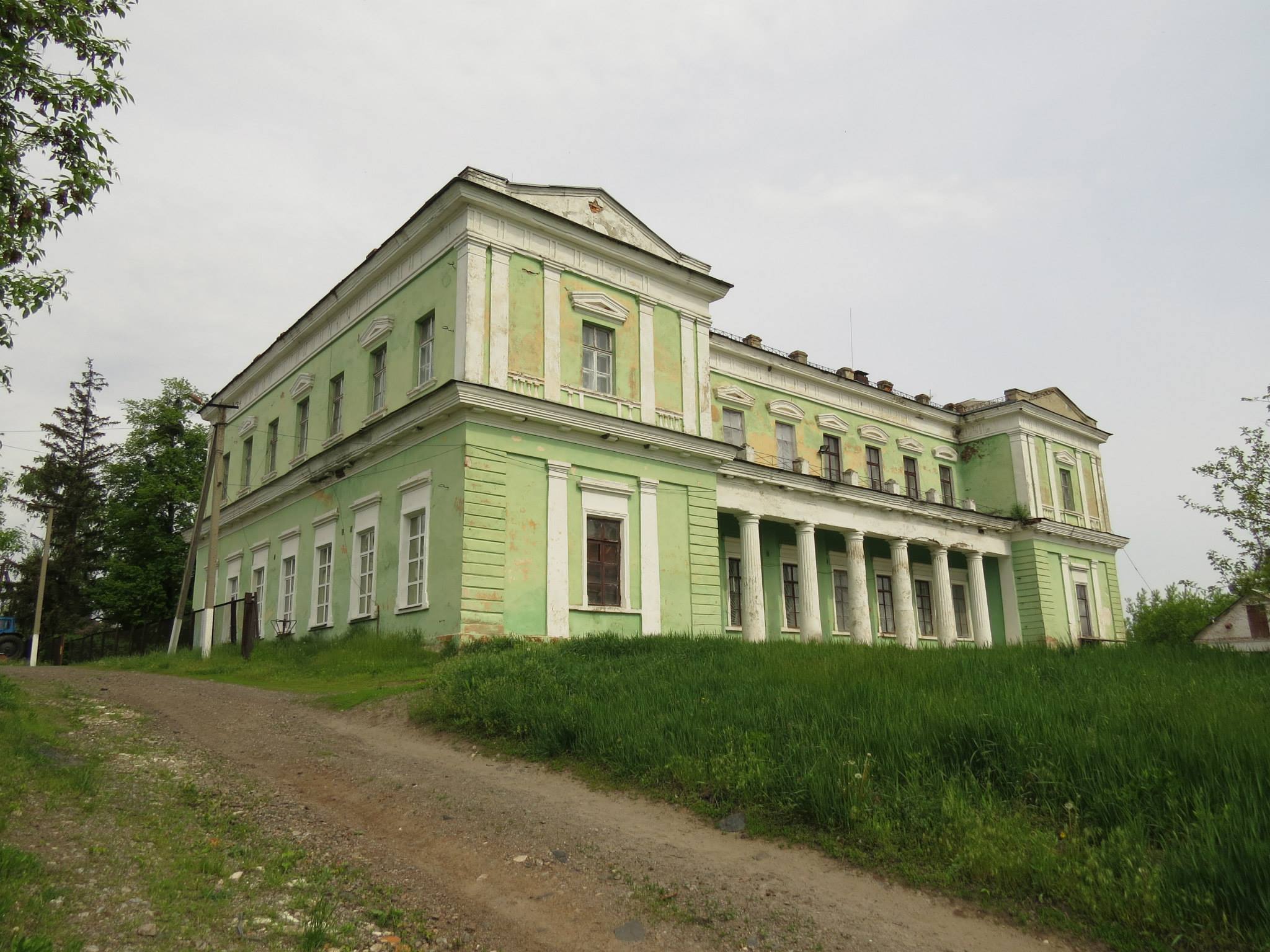
Before heading there, it’s important to keep one thing in mind. The estate building currently houses the “Rakitnyansky Professional Agricultural Lyceum,” so out of respect for the people who have helped preserve this historic structure, I don’t think we should disrupt the educational process. This is what the architectural landmark looks like today.
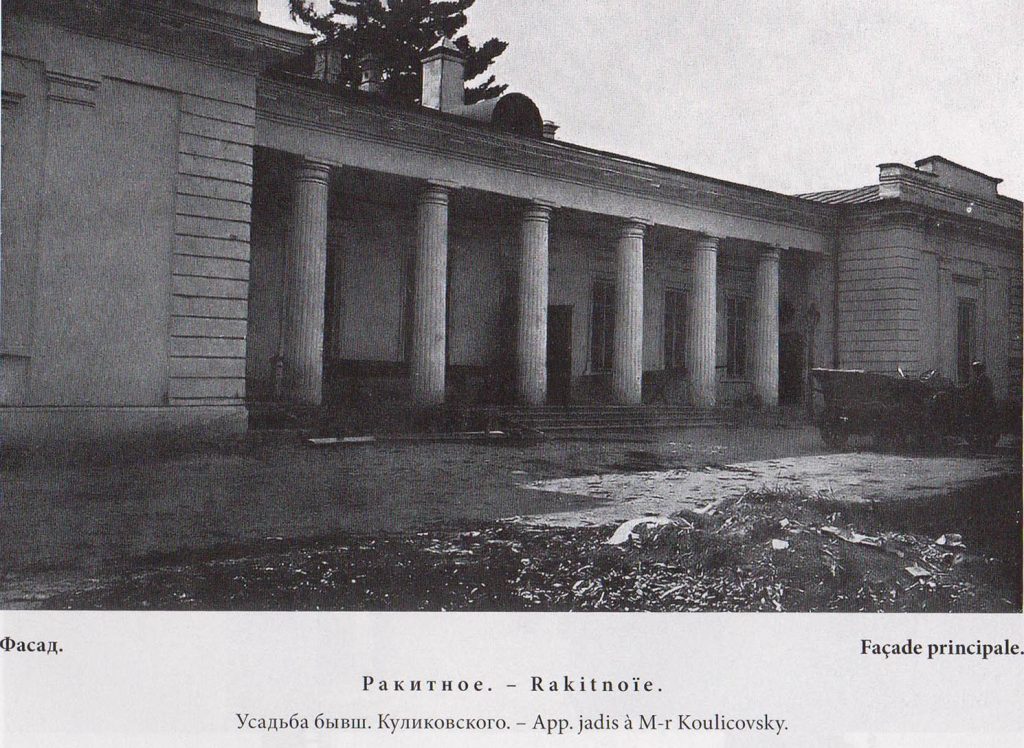
Georgy Kreskentievich Lukomsky, in his book *Ancient Estates of the Kharkiv Governorate*, describes it as follows:
Rokytne, a country estate situated in a relatively picturesque location, was founded by Mikhail Matveyevich Kulikovsky. The estate still features an old house (now a horticultural school) and a church, while the park contains a gazebo. Much has been altered, and the garden has shrunk, although some oak trees of rare size remain. The history of this estate is a sad one. After M. M. Kulikovsky’s death, all his property passed to his two daughters—Khlopova and Perekrestova-Osipova. Khlopova traded Rokytne to Andreev, who died childless. Claimants, including Countess Verzilina, failed to have the estate recognized as theirs. Someone forged a will, and finally, as escheat property, the estate was transferred about 40 years ago to the state treasury, specifically to the Ministry of Agriculture. It was around this time that alterations were made to the buildings and even theft of property occurred. The main house has remained the same as before (it is almost unbelievable, as local old-timers claim, that it was once a two-story building). In our opinion, the house has remained almost entirely intact: the very type of its colonnade indicates that it was originally a single-story structure. It is true that in Slavgorodok we will see a similar two-story house with a colonnade, but there it serves a purely decorative purpose, whereas the houses in Zheleznjak and elsewhere resemble the facade described here…
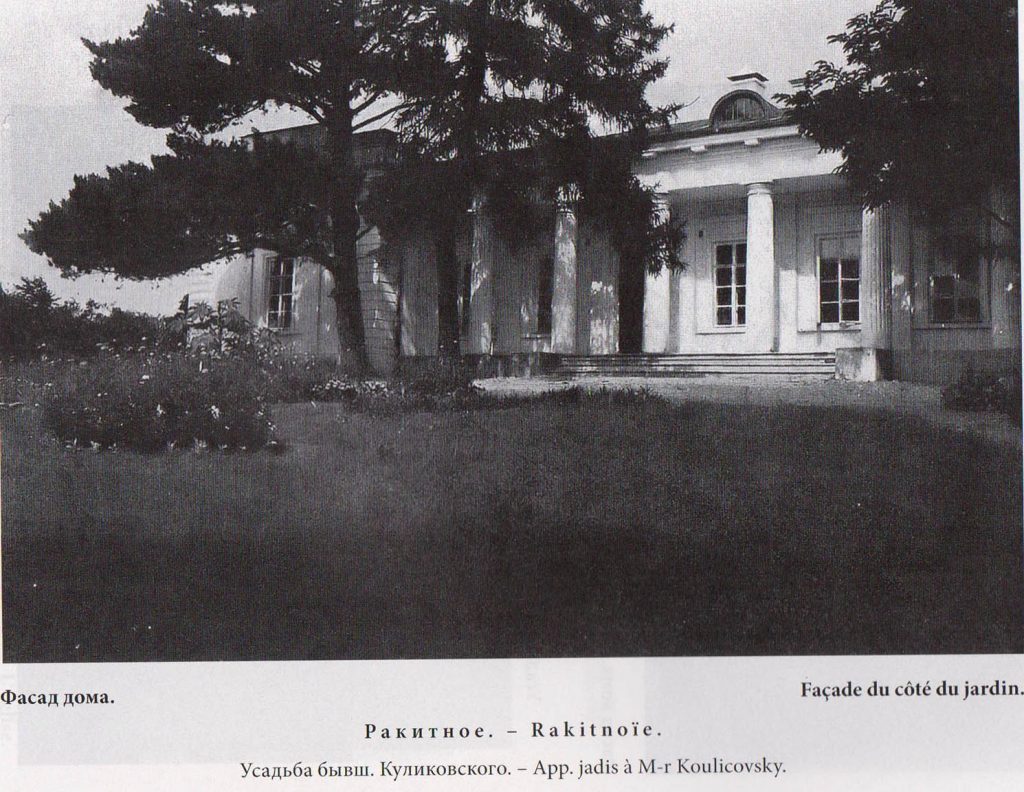
…Architecturally, the house makes an extremely pleasant impression. Flanked on both sides by colonnades, its floor plan is very logical and cozy. The fluted Doric columns are set back a considerable distance from the wall of the house’s central section. The colonnades, flanked by the projections of the side sections, form a sort of elongated loggia. However, their depth is not so great as to obscure the interior rooms or prevent light from entering the windows. The windows themselves are of elegant, elongated proportions. The house is set on a very low base, which gives its proportions a cozy character. The cornice is beautifully rendered and adorned with modillions. The treatment of the protruding side sections with rustication and pilasters is also well executed.
I think many of you have noticed the differences between a photograph taken today and one taken in the early 20th century. And I’m sure you also noticed the phrase, “It’s almost unbelievable, as the local old-timers say, that it used to be a two-story building,” right?
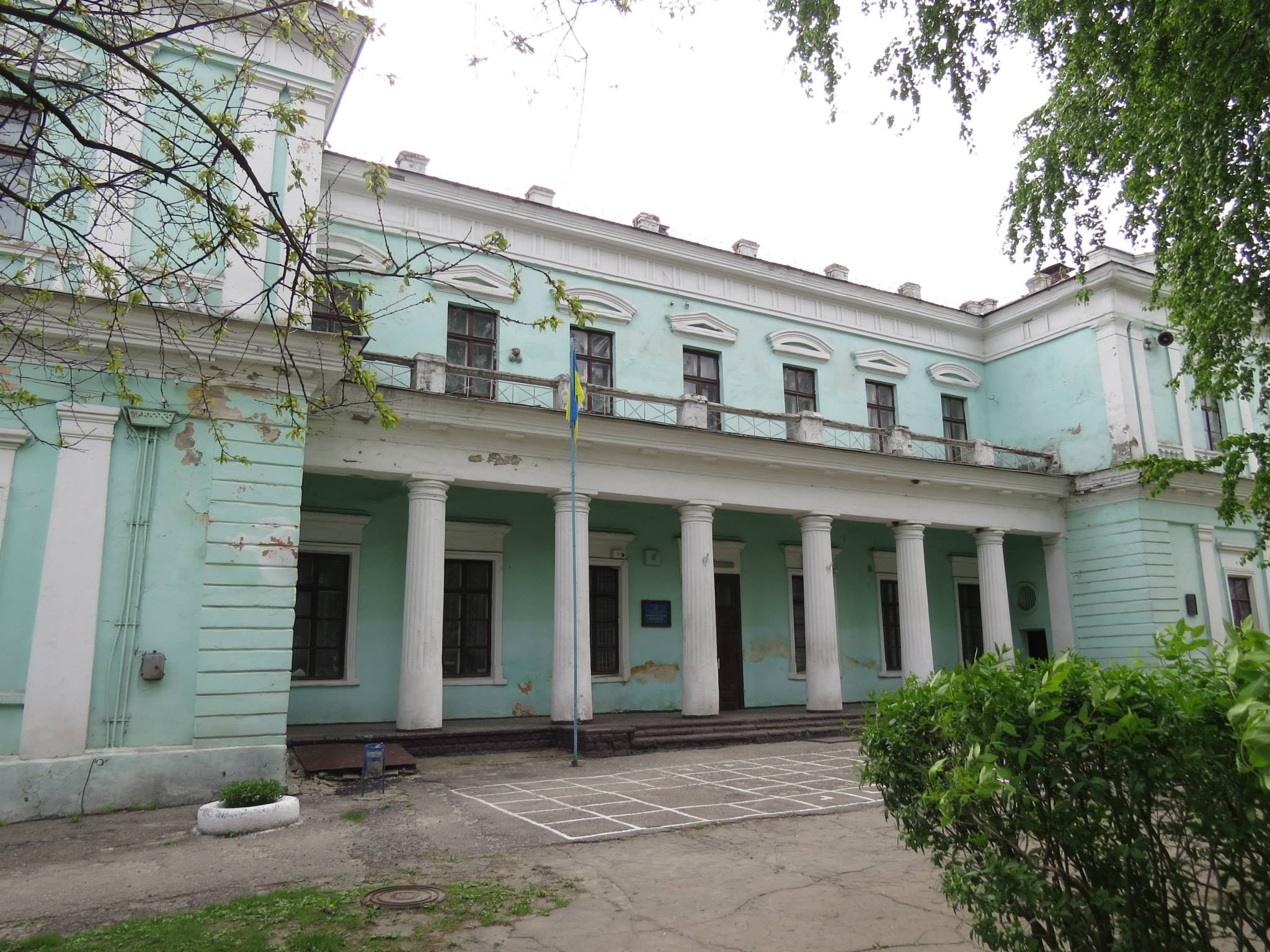
Where did the second floor come from, what is the “secret of the estate,” and were the assumptions of the esteemed Georgy Lukomsky correct? That is the subject of today’s story.
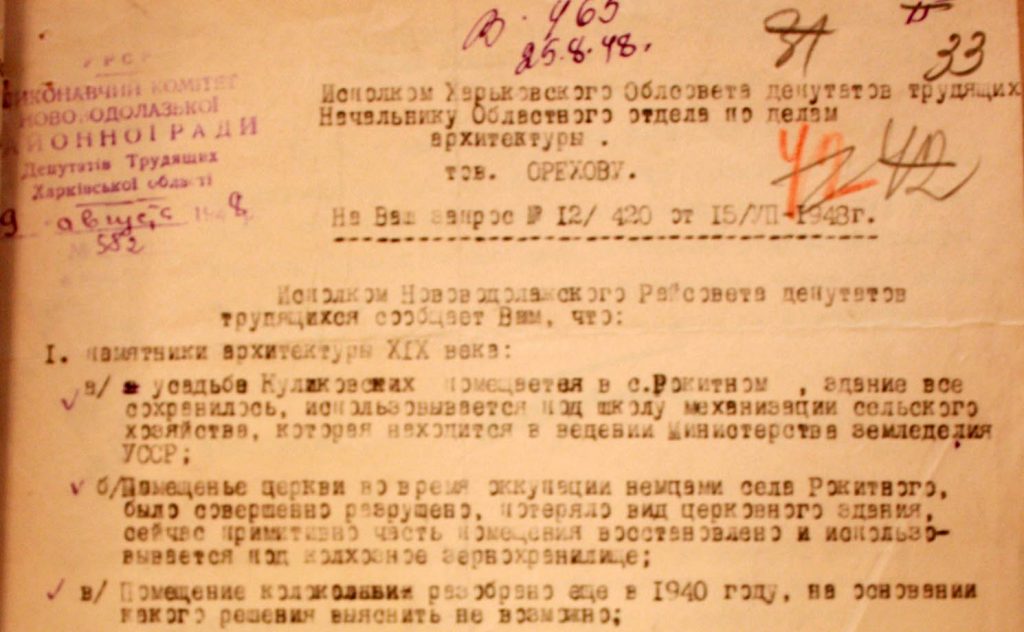
Let’s start by noting that, unlike many others in our region, the condition of this building in the post-WWII period was not all that bad. For example, in the summer of 1948, the Executive Committee of the Kharkiv Regional Council reported to the head of architectural affairs:
– The Kulikovsky estate is located in the village of Rokytne; the building has been preserved in its entirety and is used as a school for agricultural mechanization, which is administered by the Ministry of Agriculture of the Ukrainian SSR.
— The church building was completely destroyed during the German occupation of the village and no longer resembles a church; currently, some of the rooms have been rudimentarily restored and are used as a collective farm grain storage facility.
— The bell tower was dismantled as early as 1940; it is impossible to determine on what basis this decision was made.
In September 1951, R. Kutepov, an inspector for the preservation of architectural landmarks, was sent to Rokytne to inspect the site and to conclude two conservation agreements; following this, a decision was made to restore the estate’s buildings. In November of that same year, architect V. S. Vyrodov was sent to Rokytne to conduct a detailed inspection and take measurements, during which he made an important discovery.
A detailed inspection revealed that the remains of the second-floor walls, approximately 1 meter high and featuring openings, had been preserved in the attic under the roof. It turned out that two rows of walls had actually survived: one row aligned with the colonnade of the first floor, and the other aligned with the load-bearing walls. These wall remains make it possible to reconstruct the house’s original appearance to a significant extent. In addition, information has been obtained that, prior to the war, the Kharkiv Historical Museum housed a painting depicting the house in the village of Rokytne (according to a former gardener—an elderly man who had studied at a horticultural school before the WWI).
Based on this, they decided to add a second story. Not right away, though. In December, the head of the Kharkiv Regional Department of Architecture noted in a letter to the deputy chairman of the Kharkiv Department of Agriculture:
— The planned addition involves complex work related both to the renovation of the building itself and to the restoration of its original appearance.
— To carry out this type of work, permission must be obtained from the Architecture Department of the Council of Ministers of the Ukrainian SSR, as well as from the Department of Architectural Heritage Preservation.
— A detailed report on the feasibility of adding a second floor must also be submitted to these agencies.
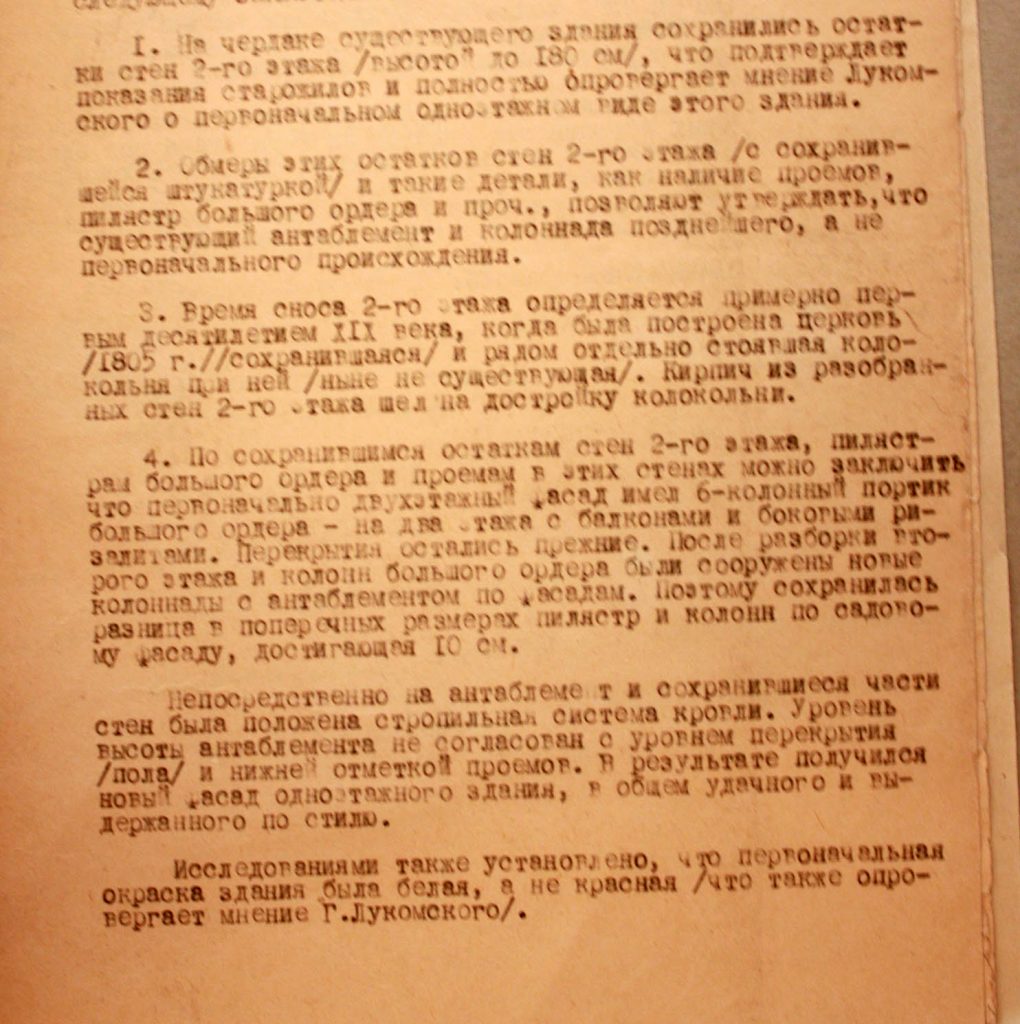
Before long, all of this had been completed. In the text of the report on the estate in Rokytne, compiled in late 1951, we read:
1. Remnants of the second-floor walls (up to 180 cm high) have been preserved in the building’s attic, which confirms the accounts of long-time residents and completely refutes Lukomsky’s view that the building was originally a single-story structure.
2. Measurements of these remnants of the second-floor walls (with preserved plaster) and details such as the presence of openings, pilasters of a large order, and other features, allow us to conclude that the existing entablature and colonnade are of later, rather than original, origin.
3. The demolition of the second floor is estimated to have taken place around the first decade of the 19th century, when the church (1805, still standing) and the adjacent, freestanding bell tower (no longer in existence) were built. Brick from the dismantled walls of the second story was used to complete the bell tower.
4. Based on the surviving remnants of the second-story walls, the pilasters of the grand order, and the openings in these walls, it can be concluded that the original two-story facade featured a six-column portico of the grand order extending over two stories, with balconies and side risalits. The floor slabs remained unchanged. After the second story and the columns of the grand order were dismantled, new colonnades with an entablature were constructed along the facades. As a result, a difference in the width of the pilasters and columns along the garden facade, reaching 10 cm, has been preserved.
The roof truss system was installed directly on the entablature and the surviving sections of the walls. The height of the entablature does not align with the level of the floor slab or the lower edge of the openings. The result is a new facade of a single-story building, which is generally successful and stylistically consistent.
Research has also established that the building’s original color was white, not red (which also refutes Lukomsky’s opinion).
Thus, the existing facade should be dated to the early 19th century, and the building as a whole to the late 18th century.
Next, our city’s architects proposed two options for adding a second story.
Under the first option, “reconstruction of the existing facade,” complex work was unavoidable, involving the replacement of the entire surviving colonnade and entablature, as well as the construction of a two-story colonnade of a large order. It was also noted that “an element of uncertainty and arbitrariness is inevitable.”
The second option called for the second-floor addition to be designed in full accordance with the existing architecture of the first floor.
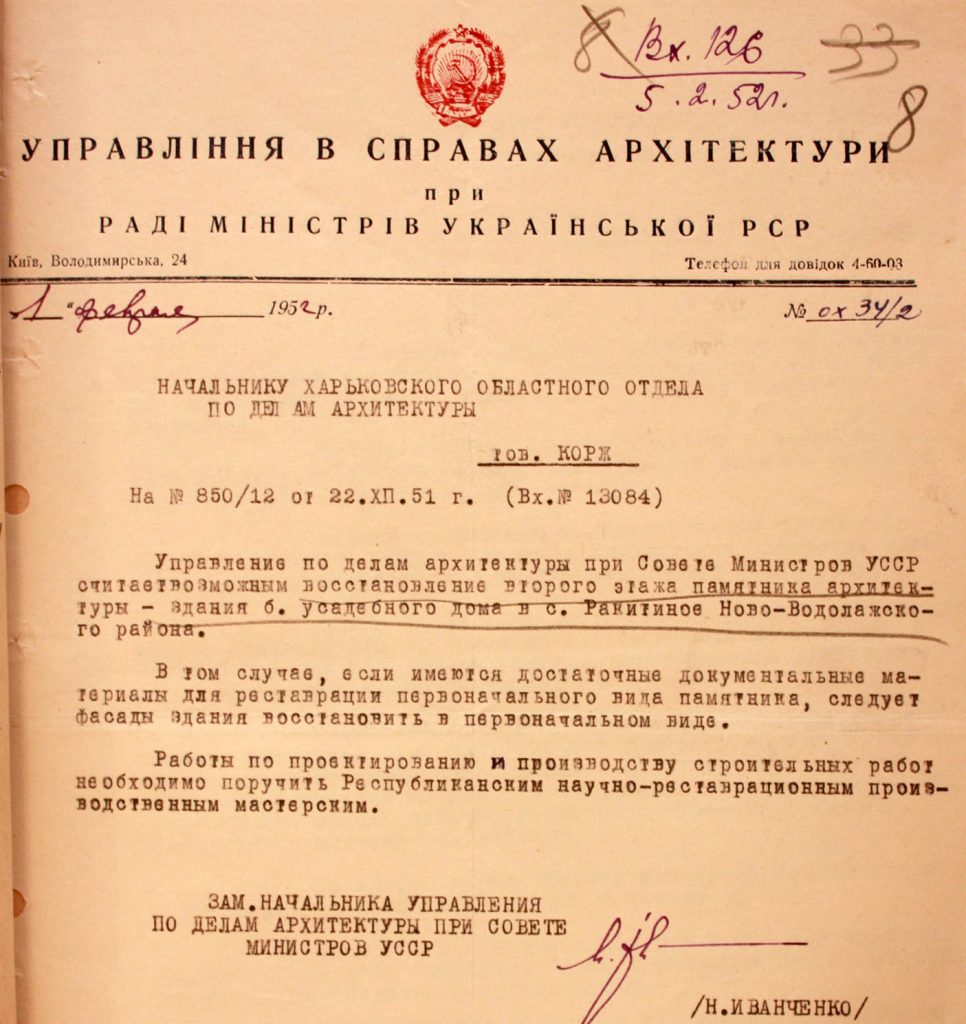
A response from the Department of Architectural Affairs under the Council of Ministers of the Ukrainian SSR arrived in Kharkiv on February 1, 1952. Permission was granted to restore the second floor:
If there is sufficient documentary evidence to restore the landmark to its original appearance, the building’s facades should be restored to their original form.
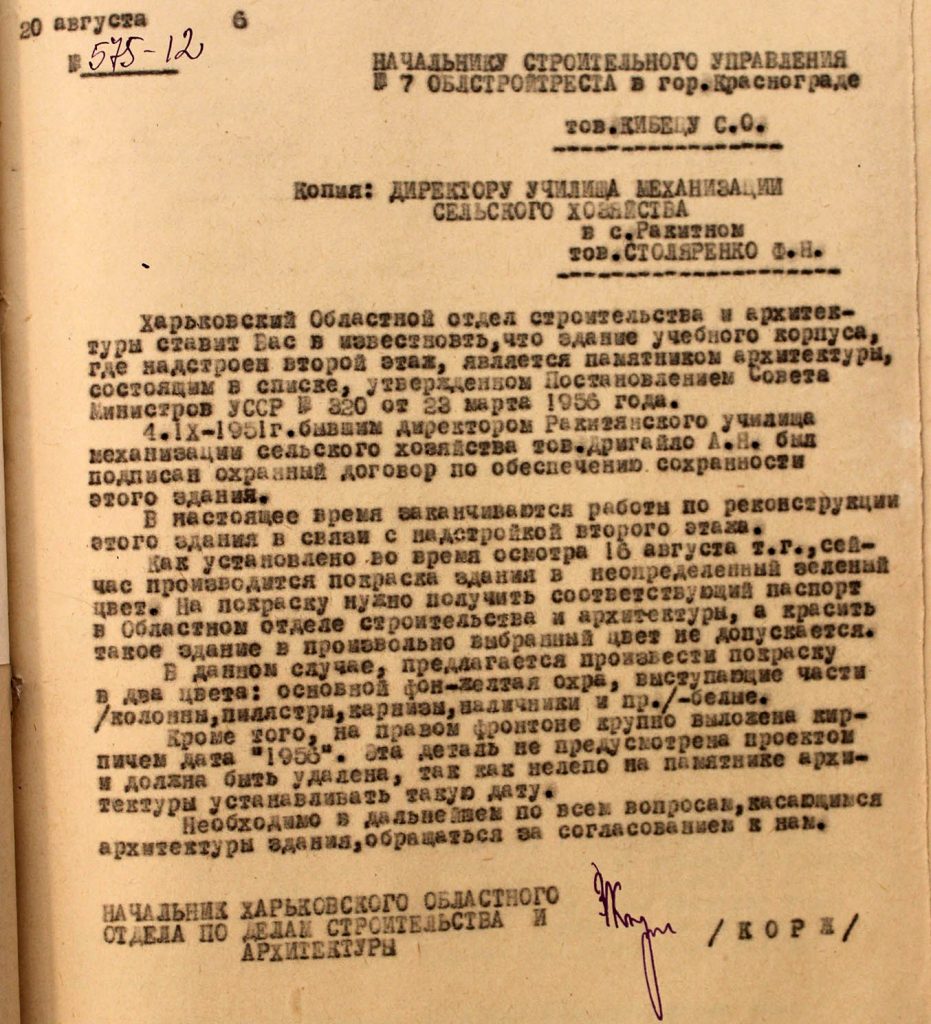
By August 1956, the addition of the second floor was nearly complete. Unfortunately, however, the project was not without its violations. Archival documents indicate that during an inspection of the site on August 15 by representatives of the regional department of construction and architecture, it was found that:
— The building has been painted an indeterminate shade of green without any authorization, even though the original plan was to restore the architectural landmark to its original appearance;
— The main background color is yellow ochre;
— the protruding elements (columns, pilasters, cornices, window casings, etc.) are white;
— The date “1956” was prominently laid out in brick on the right facade, and “this detail is not part of the design and must be removed, as it is absurd to place such a date on an architectural landmark.”
After that, the “1956” was removed, but they didn’t repaint the huge estate. It’s still that same “indeterminate color,” by the way.
These days, unauthorized additions keep popping up on historic buildings, completely spoiling the appearance of these old structures. Amid all this chaos, perhaps the only exception is the second story added to the Kulikovsky estate—a structure that blends so harmoniously with the building—which stands as an example of the skilled and painstaking work of architects and restorers.

- About the military pilot school and the airfield in Kharkiv… - 04.11.2020
- Kharkiv Artisans and the 1887 Exhibition - 17.08.2020
- Nikanor Savich—A Political Career by Mistake - 13.07.2020