I am certain that if one were to compile the legends about the appearance of miraculous icons in the lands of Sloboda Ukraine along with descriptions of the miracles associated with them, the result would be a very substantial book.
For example, the Icon of St. Michael was highly revered at the Church of the Dormition in the village of Velyka Pysarivka. Legend has it that long ago, a St. Michael’s Church stood on the site of this church, along with a shelter house intended to provide refuge for travelers and the homeless. One day, a traveler fell ill there and remained bedridden for about a year. Everyone who visited the almshouse considered him incurable and thought he would die soon. But then one day, people saw him walking toward the church, carrying an icon of the Mother of God in his hands. When questioned, the man, now recovered, explained that one night, as he lay on his bed suffering from his illness, he heard a voice commanding him to carry the icon from the almshouse to the Church of the Mother of God, for which he was promised a recovery. The sick man got up, but then lay down again. The next morning, the command came a second time. Then he rose from his bed and saw the icon of the Mother of God on the table. With reverence, he approached the icon, wiped the dust from it, went to the church, and at that moment felt completely healthy. Over time, this image of the Mother of God came to be known as the Mikhailovskaya Icon, after the Mikhailovskaya Church where it had previously been kept.
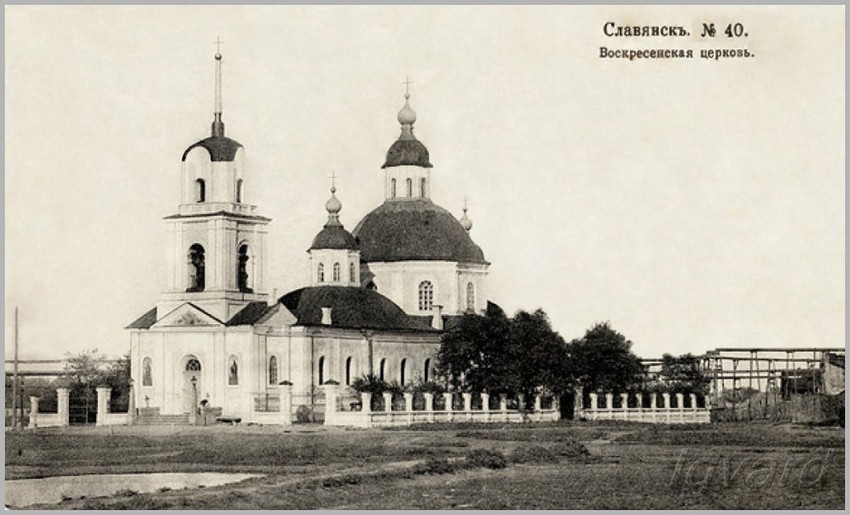
Another legend states that in 1822, in the town of Sloviansk in the Kharkiv Governorate, arson fires became more frequent. The local residents did not know what to do. Then a devout elderly woman named Belnitskaya had a vision in a dream revealing that if an icon of the “Unburnt Bush” were painted and a prayer service were held before it, the fires would cease. The devout old woman, of course, told Archpriest Kostich about her dream. The icon was painted immediately, and a prayer service was held before it after the Liturgy. That very same day, another fire broke out, and the arsonist—a mentally disabled young woman named Mavra—was immediately identified. It turned out that she was the one who had started all the fires. According to legend, the arson attacks ceased after that, and the grateful residents erected a shrine for the icon, which stands in the Trinity Church, bearing the inscription: “In memory of 1822, for saving the city from fire.”
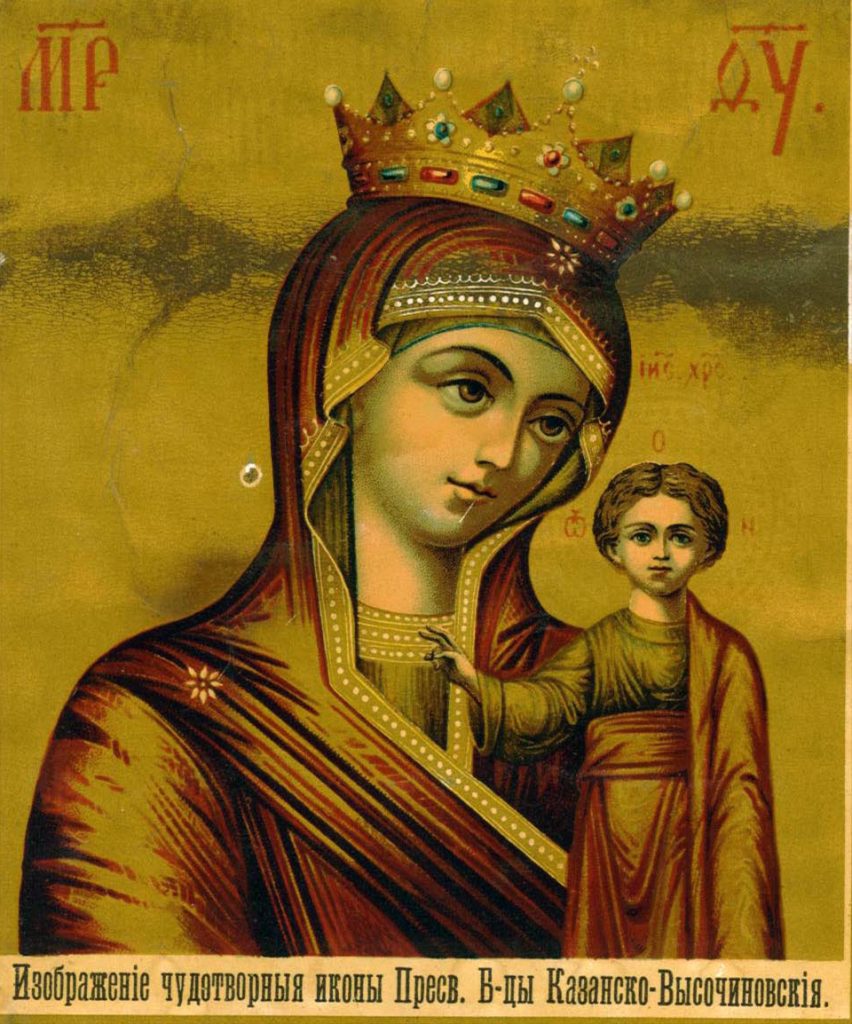
Copies of the miraculous icon of Our Lady of Kazan could be found in many villages throughout our region. The oldest of these was located in the settlement of Murafa in the Bogodukhovsky District. And the icon from the Church of the Ascension in the settlement of Peski, Izyum County, became particularly renowned for its miracles during the cholera epidemics of 1831, 1848, and 1854.
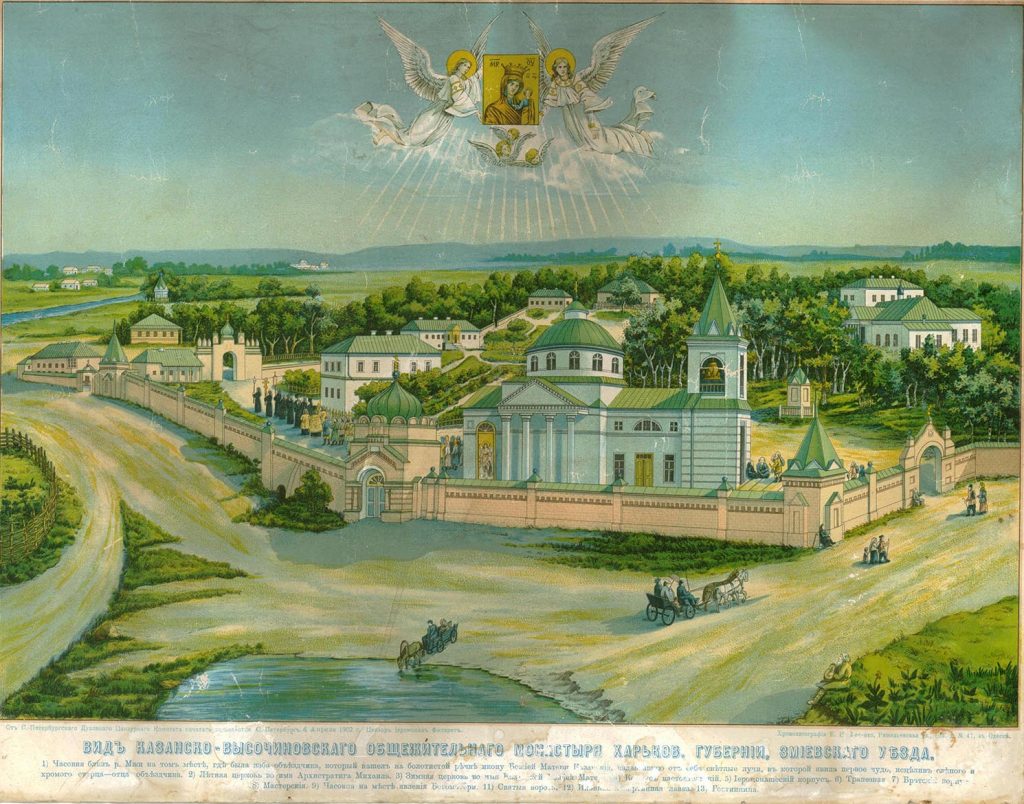
In the vicinity of the town of Zmiiv, the Kazan Icon of Vysochinovo was venerated; it was housed in the Vysochinovo Monastery, which has existed since 1886. Legend has it that during the reign of Peter I, the area where the monastery would later be built was a pine forest belonging to the state. It was guarded by lower-ranking officials and gunners who lived in log cabins. In one of these log cabins on the banks of the Mzha River lived a gunner with his wife, children, and elderly blind father, who spent most of his time lying on the stove; when he did move about, it was only with the help of his grandson and crutches. One day, while patrolling his section, the gunner saw a Kazan icon shining with rays of light on a marshy mound. When he picked it up, a spring of clear water gushed forth from beneath the mound. After that, the gunner took the icon he had found, carried it home, and placed it on the shelf with the others.
It was harvest time, and the whole family had gone out to the fields; only a frail old man and his 10-year-old grandson remained at home. One evening, the Kazan Icon standing in the corner began to radiate light—so strong and bright that it hurt to look at it. The gunner’s son was frightened and, in his fear, began calling out to his grandfather, shouting that the corner of the hut was on fire. Somehow, the old man slid down from the stove and hobbled over to the icon. When the whole family returned home from the fields, they found the gunner’s father not only able to see but also walking briskly about the hut. The next morning, the caretaker’s family held a thanksgiving service at the parish church in Artyukhovo. And although the local priest placed the icon in the church, it moved back to the caretaker’s hut on its own twice. And the third time, it returned to the gunner’s home from the cathedral church in the town of Zmiiv, where it had been transferred. And so the icon remained for a long time in the home of a simple gunner, performing numerous healings for all those in need. After 1709, the area in the forest where the icon was located was granted to Centurion Vasily Vysotchin, who moved a wooden church from Artyukhovka to the site of the watchman’s hut. By 1795, a stone church had been built on the site of the wooden church housing the miraculous icon.
In the village of Martova, in the Volchansky District, the Church of the Nativity of the Mother of God housed the Vladimir Icon. It is believed that it was brought there from the Arkadievsky Monastery of the Mother of God, which, due to its antiquity, was the second oldest in our region after the Sviatohirsk Monastery. However, as Filaret Gumilevsky writes:
In 1802, the dilapidated church was dismantled, and its sacred vessels were transferred to the church in the Martova settlement. The Arkadyev Icon of the Mother of God, which had been the object of special veneration in the hermitage, was also transferred to the Martov Church, where a side chapel dedicated to the Nativity of the Mother of God was established in the choir loft in memory of the hermitage.
It is said that it was precisely thanks to this icon that the settlement of Martova escaped the various disasters that befell the neighboring areas. For example, the locust plague of 1822, the cholera epidemic of 1830, and the scurvy outbreak of 1849. However, it should be noted that such miracles did not always occur. For instance, in July 1848, more than 200 of the church’s 4,000 parishioners died of cholera.
In various parts of Sloboda Ukraine, there were copies of the Kursk Icon “The Sign,” which, like the original, were renowned for all manner of miracles. One such copy was in the village of Lyubotyn. It is known that the local residents of Lyubotin revere the Lyubotyn icon as miraculous and turn to it in their times of need with reverence and faith. In 1847–48, during a cholera epidemic that raged there, the peasants carried this holy icon from house to house without ceasing for two months, offering fervent prayers, and the cholera outbreak, as the legend goes, soon came to an end. In gratitude for their deliverance from this devastating disease, all the parishioners of Lyubotino unanimously decided to hold a solemn prayer service before the icon on Sundays before the Liturgy.
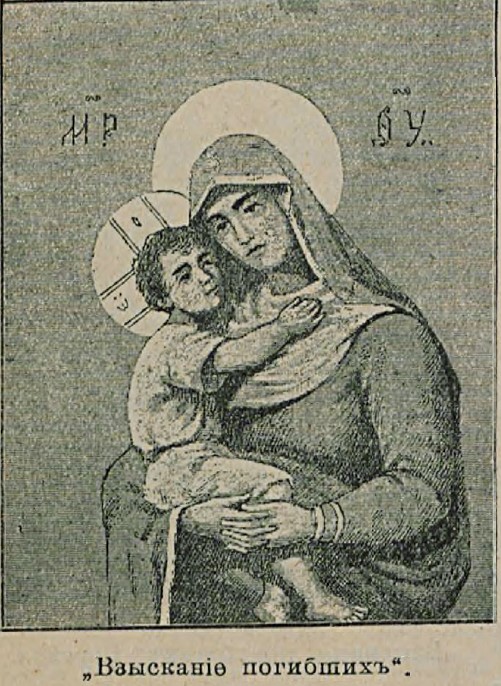
The ancient miraculous icon “The Recovery of the Dead” was located in the village of Malyzhino in the Bogodukhiv District. According to legend, it was discovered around 1770 and became renowned for healing the landowner Lesnitskaya, as well as for saving the region from cholera on three separate occasions.
A copy of the Czestochowa Icon of the Mother of God was housed in the Church of the Dormition in the settlement of Verkhnyaya Syrovatka, Sumy County, where it was highly revered. It is not known for certain how it came to be there, but some local residents in the 19th and early 20th centuries claimed that a Polish nobleman had brought it from Częstochowa itself to the former wooden church as early as 1660. This icon subsequently became famous for many miracles. One legend states that back in 1848, a landowner from the village of Bezdrika named Alferov accidentally shot himself in the leg while hunting. The wound was severe, and the doctors were unable to heal it. Having lost all hope in their help, Alferov set out for the settlement of Verkhnyaya Syrovatka. There he fell prostrate before the icon of Częstochowa, prayed for a long time, and, through his sincere prayer, was soon healed. In gratitude for this, the landowner built a stone fence around the stone church.
According to legend, Major General’s wife Elizaveta Rakhmanova, the landowner of the village of Velykiy Bobrik, was also healed by this same icon. Suffering from a severe ailment of the ears and tongue, she could neither hear nor speak. Finding herself in such a dire and hopeless situation, she wrote to the local priest, asking him to bring the Czestochowa Icon of the Mother of God to the village of Bobrik. When the bells began to ring as the icon was carried into the village of Bobrik, the sick woman heard the sound of the bells for the first time. When the icon of the Mother of God was brought into the landowner’s house, she rose of her own accord from her bed—from which she had been bedridden for several days due to her illness—knelt down, and began to recite prayers aloud in full view of everyone.
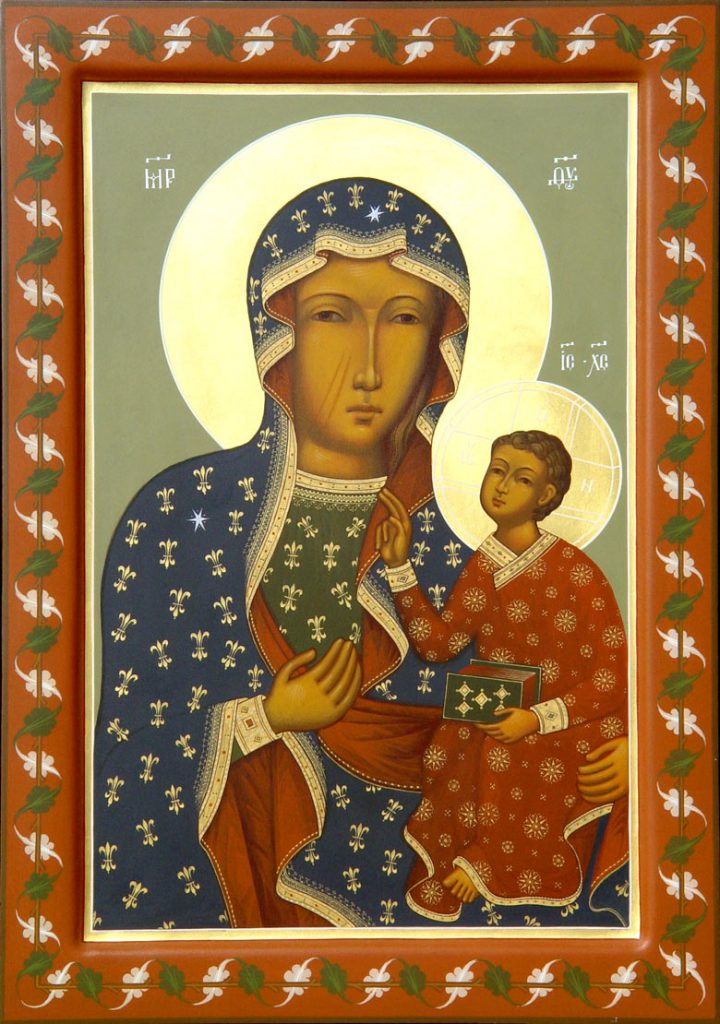
And, of course, when speaking of the legends and miracles associated with icons, one cannot fail to mention one of the most important holy relics of Sloboda Ukraine—the Okhtyrka Icon of the Mother of God, copies of which could be found in many churches throughout our region.
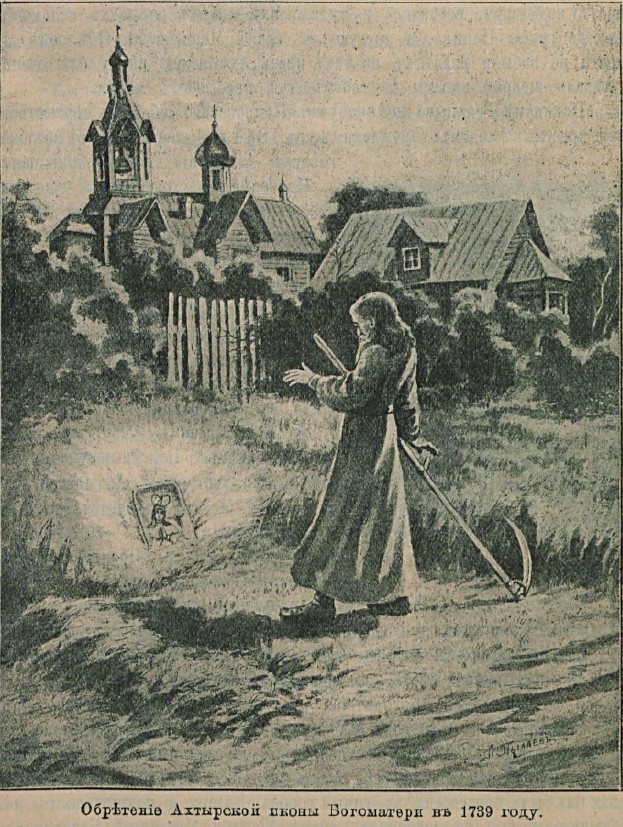
For example, there is a beautiful legend associated with it about the origins of the church in the village of Bugaevka. In the early 19th century, this village was owned by two brothers: Pyotr and Vasily Mikhailovich Donets-Zakharzhevsky. Before Vasily left his estate to take up a position in St. Petersburg, his mother gave him a simple icon of the Akhtyrsk Mother of God as a parting gift. On the way, the young nobleman, lost in dreams of a brilliant career in the city on the Neva, thoughtlessly threw the icon away. Once in St. Petersburg, he told his old servant about this. The servant was horrified and said that Vasily Mikhailovich would find no happiness, since by throwing away the icon, he had deprived himself of his mother’s blessing and protection. And indeed, things did not go well for Vasily in St. Petersburg; various troubles began to arise. After news of his mother’s death arrived from Bugaevka, the old servant advised the young master to return and search for the icon after all. Leaving his post in St. Petersburg, Vasily was returning to the family estate. Suddenly, the horses bolted and overturned the carriage. When the coachman and the servant found the young master, he was unconscious, his face covered in blood, and lying beneath his head was the very icon he had once thrown away. Upon returning to Bugaevka, the landowner repented and, at his own expense, built a beautiful church, which he dedicated to the Okhtyrka Mother of God icon.
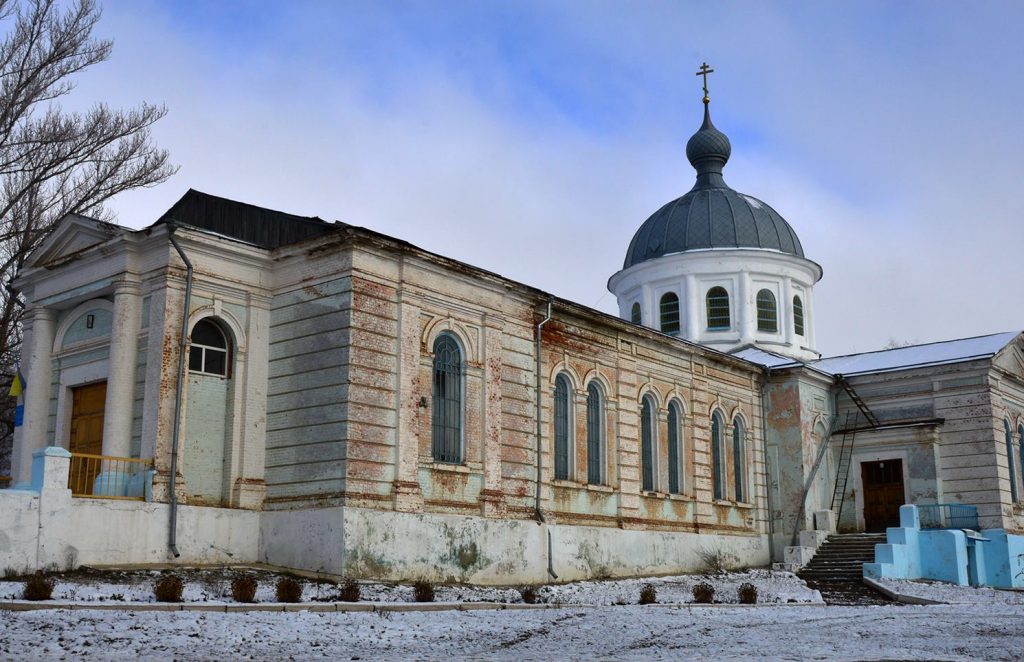
All the healings attributed to the miraculous icon in Okhtyrka were meticulously recorded by church authorities. Some of these documents from the mid-18th century were eventually published—for example, in Volume 32, published in 1915, of *Descriptions of Documents and Cases Held in the Archive of the Most Holy Governing Synod*.
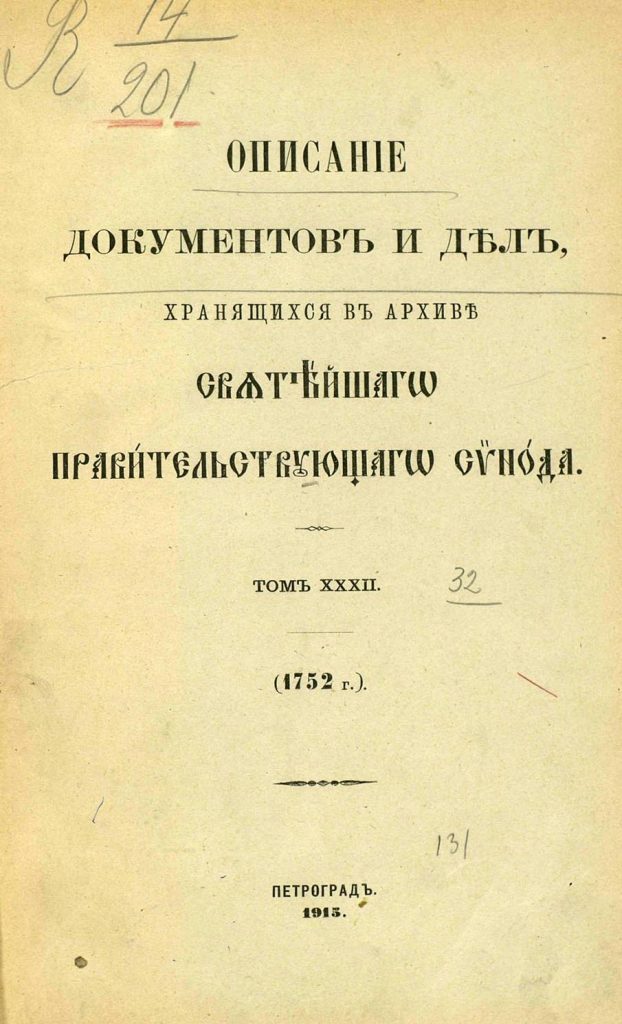
Among the many stories there, we read:
In March 1751, Judge Ivan Kovalevsky of the Kharkiv Regiment suffered from a dental ailment; when his diseased tooth was extracted, the doctor’s lack of skill caused damage to his jaw, both cheekbones, and his eyes, leaving him in a critical condition. When he, Kovalevsky, summoned a priest to his home and, before the icon of the Okhtyrka Mother of God kept there, held a prayer service and applied oil from the lamp to the wound; at that very moment, he was completely restored to health, and Kovalevsky reported this healing in writing.
On September 22, 1754, Centurion Andrean Semonov of the Izyum Regiment, son of Podkolzin, had lost the use of both his arms and legs; three years later, when he vowed to travel to the city of Okhtyrka and pay homage to the miraculous icon, he was cured of that illness.
On May 24, 1758, Christina, the wife of Fyodor Nastasenkova, a resident of Kharkiv, announced that she had been suffering from a headache and a sore throat for five weeks; as a result of this illness, she began to hear a ringing in her head, and a sore had developed in her throat, and when she resolved to venerate the miraculous Okhtyrka Holy Mother of God, she soon felt relief from both ailments in her own home, thanks to her faith and earnest intention, and within seven days she was completely restored to health
Nowadays, many believers venerate the icons found in churches. Whether or not to believe in the miracles associated with them is, of course, a personal matter for each individual. However, all these legends and traditions, which describe events that took place 200–300 years ago, are in any case an integral part of the history of our Sloboda Ukraine—and thus of our own history as well.