This man was destined to become a student of such renowned artists as Roberto Bompiani in Rome and Rodolphe Julian in Paris. The drawings and architectural measurements of churches created by this master were acquired by the Academy of Arts, and some by the Byzantine Museum at the Sorbonne in Paris. Copies of the frescoes from the Church of the Savior at Nereditsa were published in an album by decision of the Academy. Later, the renowned French Byzantinist Gabriel Millet (1867–1953) used the artist’s copies in his book, published by the Sorbonne.
An educational portal on the architecture and art of Ancient Rus, using the example of the Church of the Transfiguration of Christ on Nereditsky Hill in Novgorod and its surroundings, utilized Brailovsky’s surviving watercolors when developing a methodology for three-dimensional reconstruction. In 1905, he was not afraid to join the Peredvizhniki artists in signing an open letter from figures in the visual arts, which called for a complete overhaul of the state system.

A very interesting assessment of the artistic quality of this wonderful artist’s early works has survived:
Proof that graduates of the architecture class often drew and painted in watercolor just as well as professional painters can be found in the works of ***, whose work serves as a prime example of wet-on-wet watercolor painting. *** had mastered this difficult technique, which allows for no corrections, to perfection.
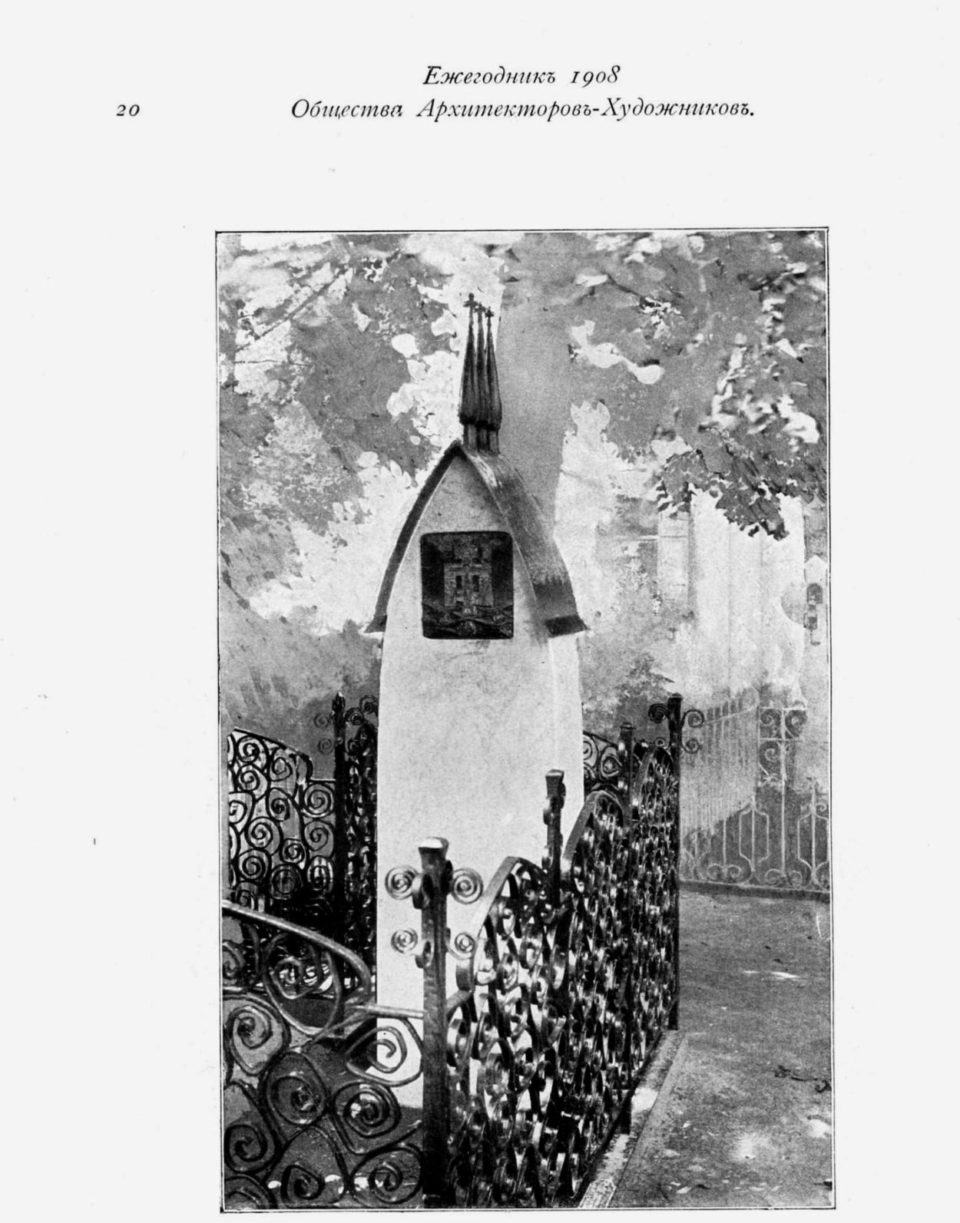
This artist can rightly be called a master of Art Nouveau villas in Miskhor. His work in Crimea has not been forgotten. For example, May 23, 2012, was included in the “Calendar of Significant and Memorable Dates in Crimea for 2012”: the 145th anniversary of the birth of “Russian architect, artist, and set designer Brailovsky.” It was he who designed the tombstone for A. P. Chekhov, with whom he was very close friends.
In 1916, the artist was elected a member of the Academy of Arts, becoming the last person to receive this title during the imperial period.
In 1922, he and his wife moved to Belgrade, in the Kingdom of Serbs, Croats, and Slovenes. There, Leonid Mikhailovich founded and directed the art workshop of the National Theater in Belgrade, and did much to promote the arts in that beautiful city.
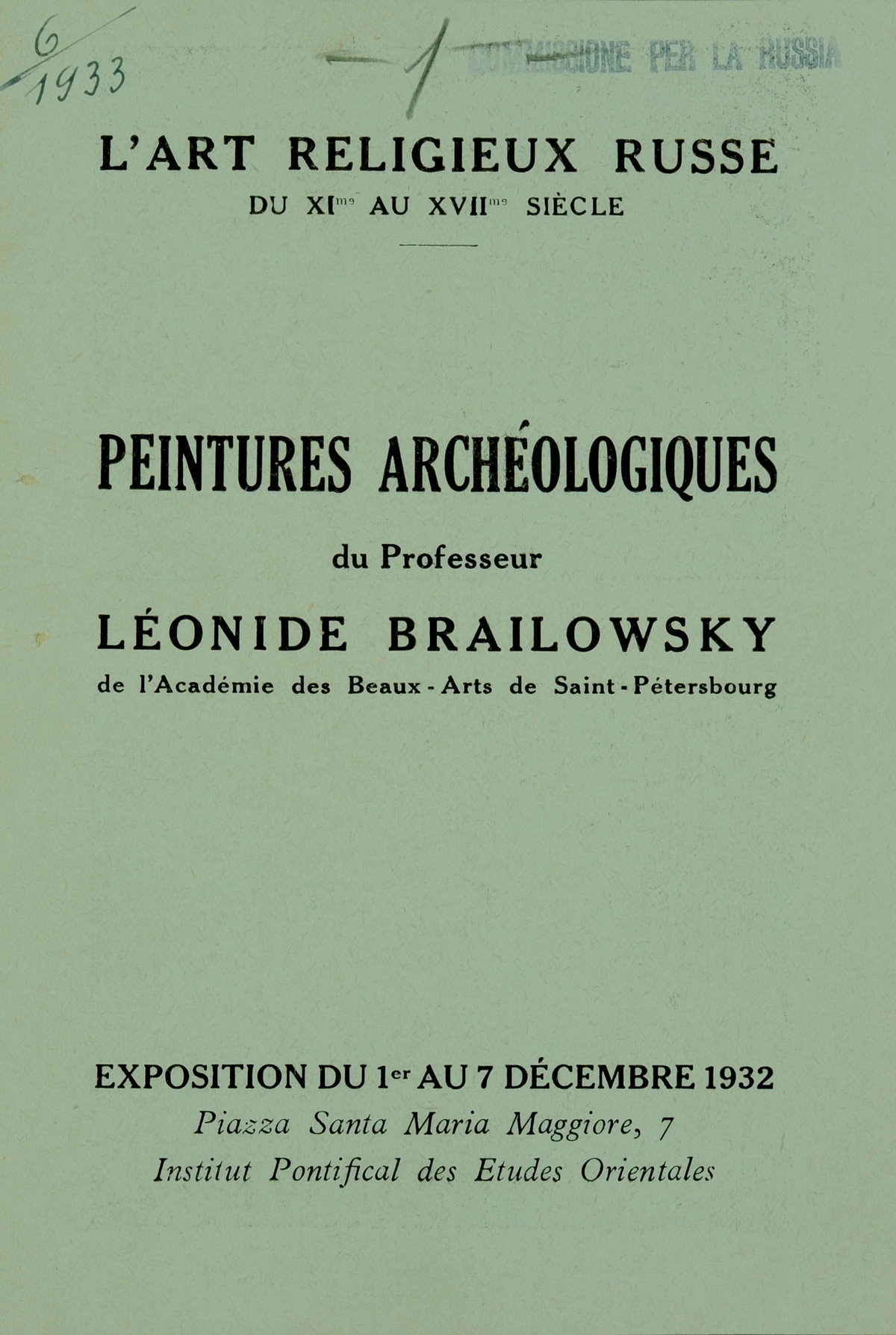
In 1932, an exhibition of 40 paintings was held at the Pontifical Oriental Institute, featuring works by the Braylovsky couple depicting monuments of Old Russian religious art. Later, this collection was gifted (according to other sources, purchased) to Pope Pius XI, and the new owner even decided to establish a special painting section for it in the Vatican.
And on February 14, 1935, a section dedicated to monuments of ecclesiastical painting in Russia was opened at the Vatican, featuring 100 paintings and 20 plans depicting the art and architecture of churches in Kyiv, Novgorod, Moscow, Rostov, and Suzdal. Thus, thanks to the émigré artist, the Museum of Russian Religious Architecture was founded under the Congregation for the Oriental Churches in the Vatican.
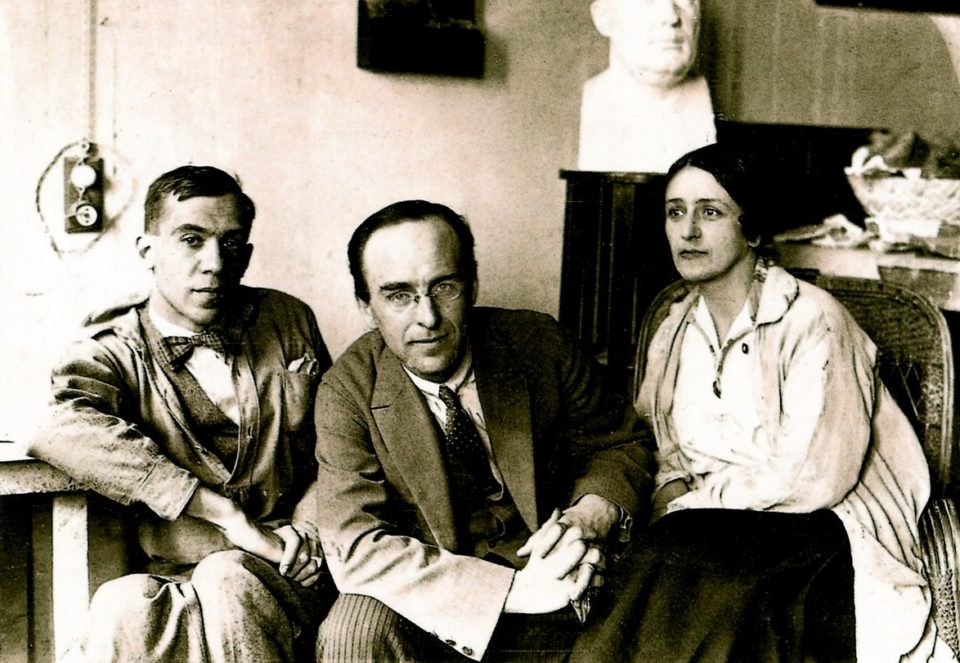
Works by this brilliant artist can be found in museum collections across Russia, Europe, Paris, and the Vatican Museums. Many of his works are also held in private collections, particularly in the United States.
Meanwhile, researchers from St. Petersburg and Rome spend days on end in archives, gathering information about his life. After all, to them, this artist is one of their own.

But what does the name of the brilliant architect, sculptor, designer, and decorator Leonid Mikhailovich Brailovsky mean to the residents of his native Kharkiv? Probably absolutely nothing. It just so happens that people who have lived in our city for a year or two and have no sense of belonging here are considered “great Kharkivites” in our eyes. Articles are written in their honor, people demand that streets be named after them, museums be opened, and exhibitions be held… Yet those who were born and took their very first steps in Kharkiv, who worked here and considered it their home, are for some reason deemed unworthy of this high honor. For this reason, two questions involuntarily come to mind. First: “Is Kharkiv important for preserving the memory of Leonid Brailovsky?” And second: “Does our city even need Leonid Brailovsky?”

Let’s start with the first point. Leonid Brailovsky’s periods in Moscow, St. Petersburg, Serbia, and Italy have been thoroughly documented by foreign scholars. The most comprehensive work is Antonina Albertovna Shakhanova’s 2015 dissertation, “The Art of L. M. Brailovsky in the Context of Russian and European Artistic Life in the First Half of the 20th Century.” The sheer volume of sources she has examined is simply staggering. It is extremely difficult to call this work a research study—it is more like a masterpiece created by a master jeweler. The situation in Kharkiv is also quite interesting.
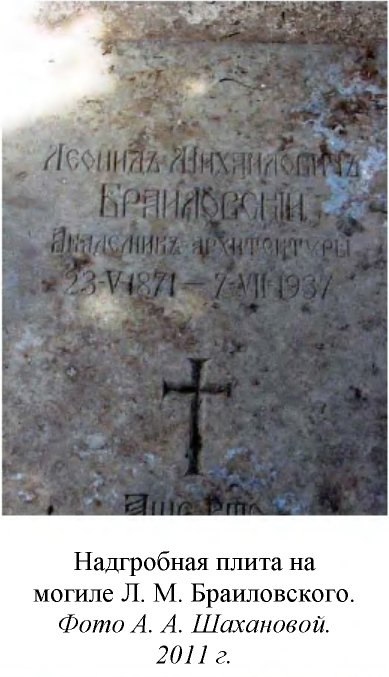
Leonid Mikhailovich was born in our city on May 23, 1867. However, his gravestone at the Campo Verano Cemetery in Rome lists a different year—1871. The church where Leonid was baptized, as well as the names of his godparents, have yet to be determined.
His mother was Sofia Stepanovna (née Sidlyarevskaya). Apart from the fact that the Sidlyarevskys were Ukrainian nobles and that Sofia Stepanovna graduated from the Poltava Institute for Noble Young Ladies in 1857, nothing else is known at this time.
So far, I have been able to establish the following about the father of the brilliant Kharkiv artist.
Mikhail Vladimirovich Brailovsky was born in 1828 (I hope to determine his place of birth and education in the future with the help of documents from the Kharkiv Regional Archives). In virtually all foreign works devoted to Brailovsky, one can find the following phrase: “His father, Court Counselor Mikhail Vladimirovich Brailovsky, was mayor.” But this is not entirely accurate. It has been established that from 1871 until his death, the artist’s father was a councilor of the Kharkiv City Duma, and from 1875 to 1884 he held the position of “acting mayor.”
In the early 1980s, the future artist’s father headed an appraisal committee under the city administration for several years and served for many years on the board of directors as a representative of the “Kharkiv Society for Mutual Fire Insurance.”
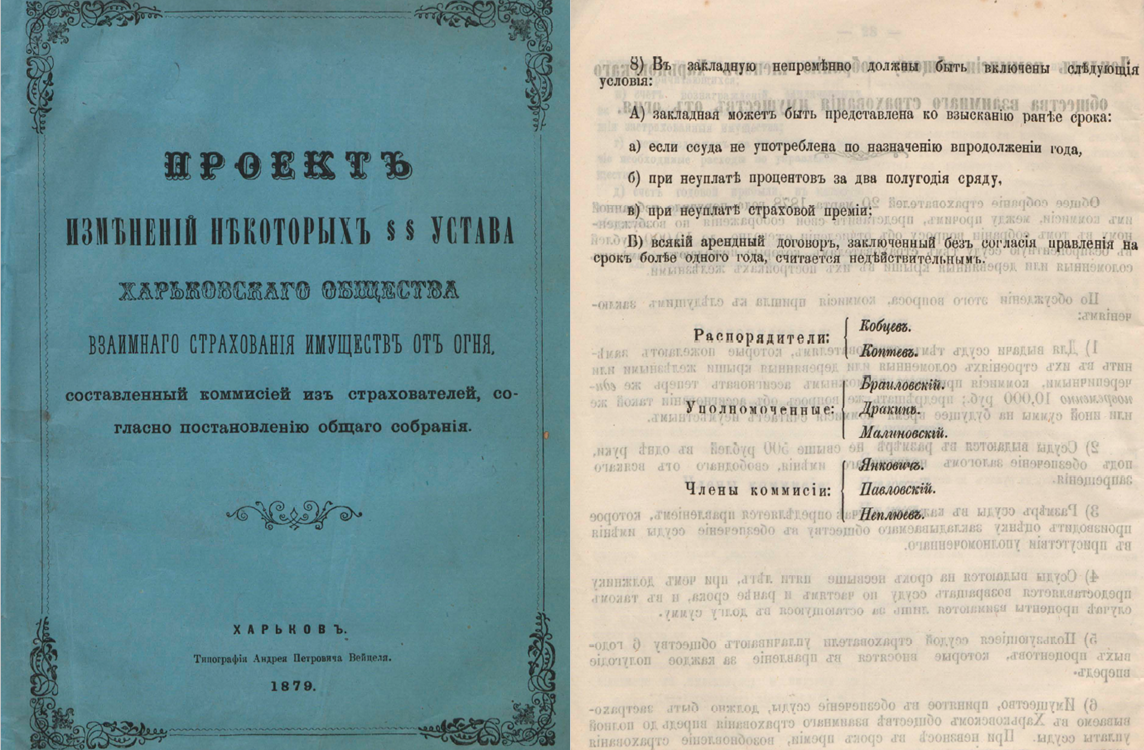
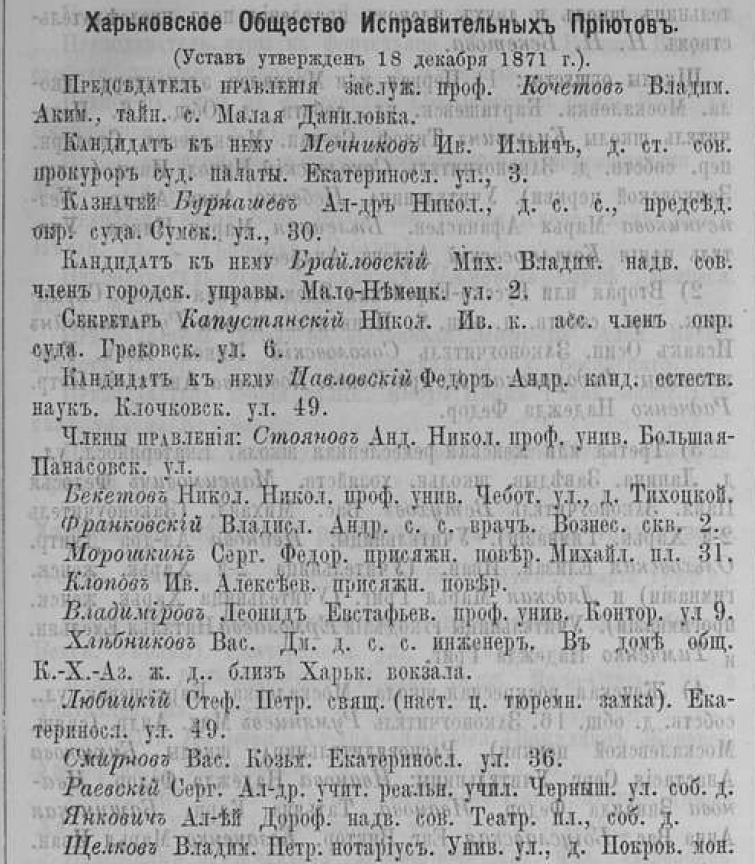
Brylovsky Sr. also served on the board of the “Kharkiv Society of Correctional Institutions,” where he worked closely with such prominent figures in our city as Kristina Danilovna Alchevskaya, Ivan Ilyich Mechnikov, Nikolai Nikolaevich Beketov, and Vladislav Andreevich Frankovsky. Incidentally, Mikhail Brailovsky also worked with the latter at the City Children’s Hospital on Dvoryanskaya Street, which was, in essence, the first provincial children’s hospital in the Russian Empire. Vladislav Frankovsky served as its trustee, and for several years, Mikhail Vladimirovich was responsible for the administrative affairs on behalf of the Kharkiv City Council.
After completing his primary education at the Kharkiv Real School, the young Leonid Brailovsky traveled to St. Petersburg in 1886, where he continued his studies as an architect and artist at the Imperial Academy of Arts. However, Brailovsky’s successful completion of his theoretical coursework in the fall of 1890 was overshadowed by a personal family tragedy. Leonid Mikhailovich’s father died on October 8, 1889, and his mother on January 4, 1890. Leonid Brailovsky sold the house on Malonemetskaya Street (now Donets’-Zakharzhevs’koho Street) where he was born and where his family had lived for several decades. It would seem that nothing else connected him to Kharkiv… However, that is not entirely true. Together with the son of an acquaintance of his late father, the young architect Oleksiy Beketov (whom Leonid Mikhailovich most likely knew from childhood), Academician Brailovsky participated in the realization of his first major architectural project. Namely, the building of the Alexander III Kharkiv Commercial School, now known to most as the Law Academy building.

In her study, Antonina Albertovna Shakhanova cites a document by Oleksiy Beketov that she discovered in the Russian State Historical Archive:
…I hereby certify that Leonid Mikhailovich Brailovsky, an architect and member of the Academy, served as my assistant during the construction of the Kharkiv Commercial School in 1890 and 1891. In addition to the Commercial School, he has also served as my assistant in the construction of Mr. Alchevsky’s mansion from 1889 to the present day. First-Class Architectural Artist A. Beketov. August 27, 1891.
Later, in 1894, having attached detailed drawings and heating calculations to this certificate, Brailovsky submitted an application to enter the competition for gold medals, which, for Academy graduates, were essentially a ticket to a successful career. Receiving the Grand Gold Medal provided the opportunity to take scholarship trips abroad to study the world’s finest examples of painting, sculpture, and architecture, as well as to refine one’s knowledge and skill. Which, in fact, is exactly what Brailovsky achieved. On November 5, 1894, signed by the president of the Imperial Academy of Arts, Grand Duke Vladimir Alexandrovich, and the rector, Ilya Efimovich Repin, Leonid Brailovsky was issued a certificate of graduation and the right to a post-graduation study trip.
At that time, the most exciting phase of the world-renowned artist’s career was just beginning. Later, while working as a teacher at the Stroganov School starting in 1899, Leonid Brailovsky became close friends with the talented artist Konstantin Konstantinovich Pervukhin (1863–1915).

Interestingly, in addition to their shared interests, the two painters were connected by the city where they were both born and by the long-standing friendship between their fathers, who had worked together. It is therefore quite likely that they knew each other from childhood. Was the “Kharkiv factor” really that significant in Brailovsky’s life? The question remains open to this day. However, there is no point in denying that Kharkiv played a role in the artist’s life. Nor is there any denying that a search for documents in the Kharkiv Regional Archives related to the Brailovsky family and Leonid Mikhailovich himself could significantly enrich his biography. Therefore, the answer to the question “Is Kharkiv important for preserving the memory of Leonid Brailovsky?” is unequivocal: yes.
The Brailovsky House on Donets’-Zakharzhevs’koho Street has not survived. The Real School building remains a sight to behold to this day, as do the Commercial School and the Alchevsky House. Thus, the city has at least one site and three mansions directly linked to the world-renowned artist who was born and lived here. Therefore, in answering the second question, “Does our city need Leonid Brailovsky?” I, of course, will also say “yes.” After all, he was not originally a Moscow, St. Petersburg, Serbian, or Italian artist. He was our own, our native Kharkiv Leonid, who became a great artist.

A recording of the “Kharkiv Online Day” program on the OTB channel from July 20, 2015. Anton Bondarev, head of the “Alluring Kharkiv” Foundation, talks about a great native of Kharkiv.