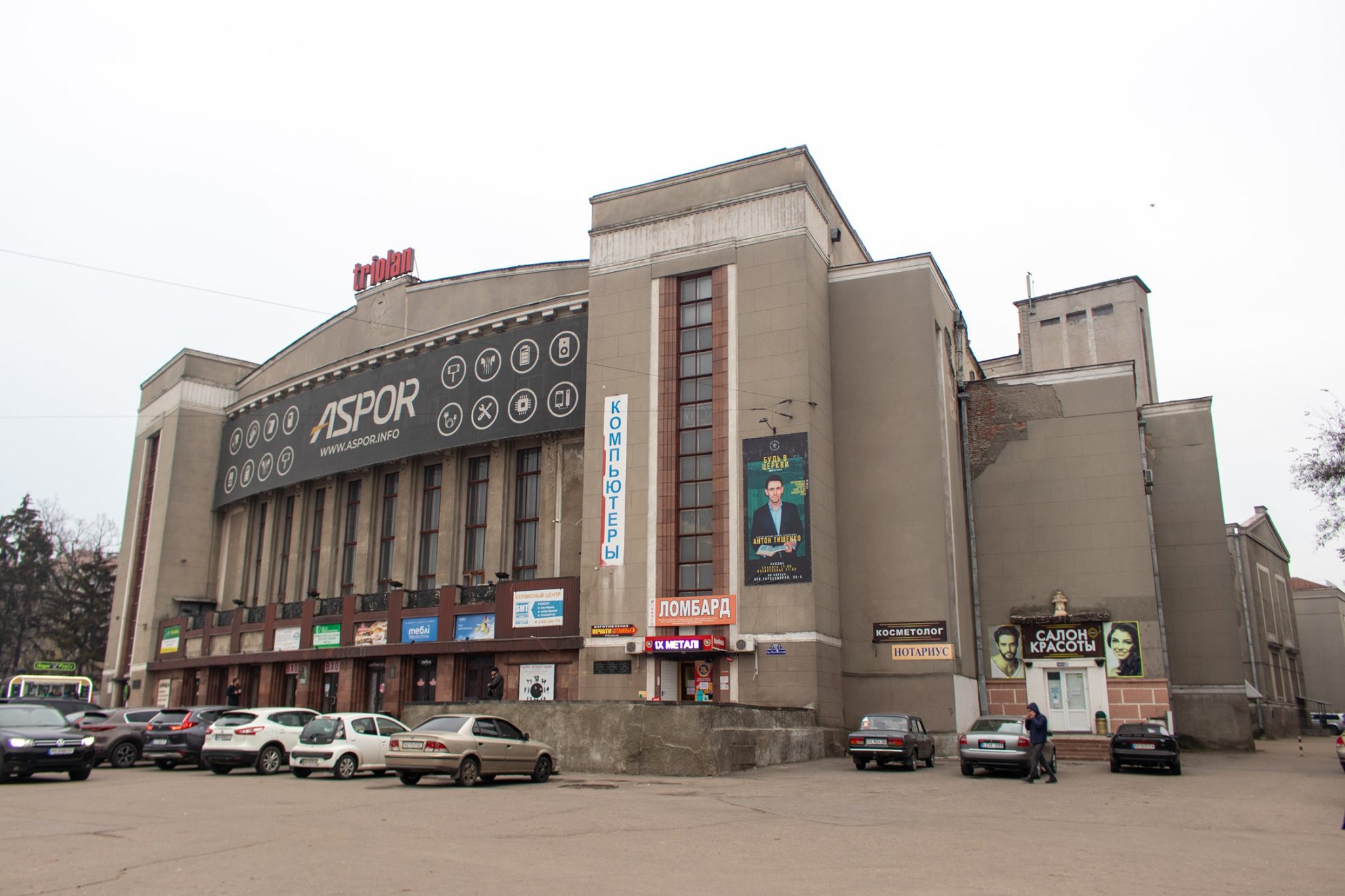
Behind the imposing building of the Palace of Culture of the Kharkiv Electromechanical Plant (KhEMZ), located at Heroes of Kharkiv Avenue, 94 lies a fascinating story.
Originally, this site was home to an equally impressive Renaissance Revival People’s House, which belonged to the Kharkiv Society for the Promotion of Literacy Among the People. The building was constructed between 1900 and 1903 using donations from numerous individuals and organizations; in addition to the aforementioned society, funds were provided by the provincial authorities, the “Committee for the Promotion of Public Sobriety,” and the magnate Pavlo Kharitonenko. The building was designed by Alexander Vincent.
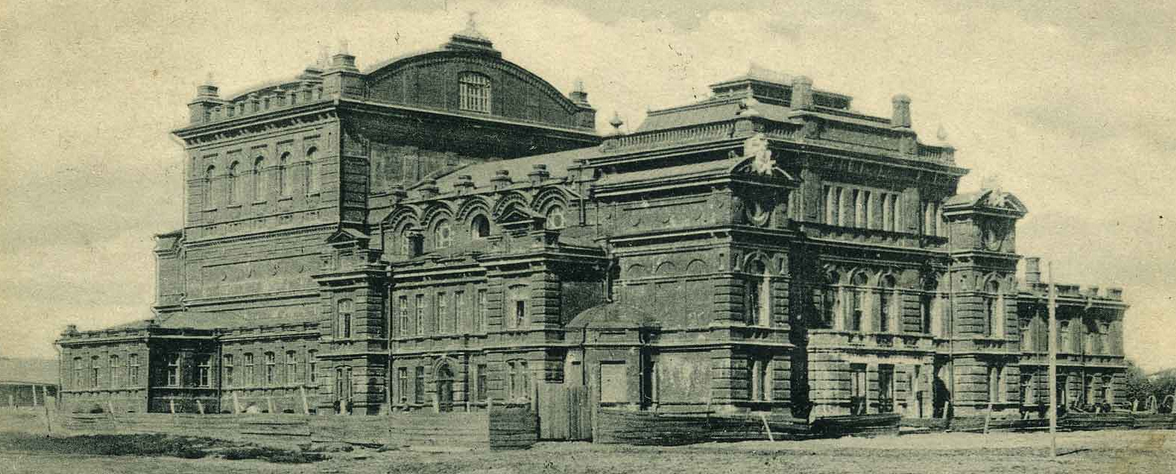
The People’s House, whose primary goal was to promote literacy and culture among ordinary Kharkiv residents on a voluntary basis, hosted concerts and housed numerous clubs, classes, and night schools, as well as a library and two concert halls. One of the clubs was led by the renowned ethnographer and bandura player Hnat Khotkevych.
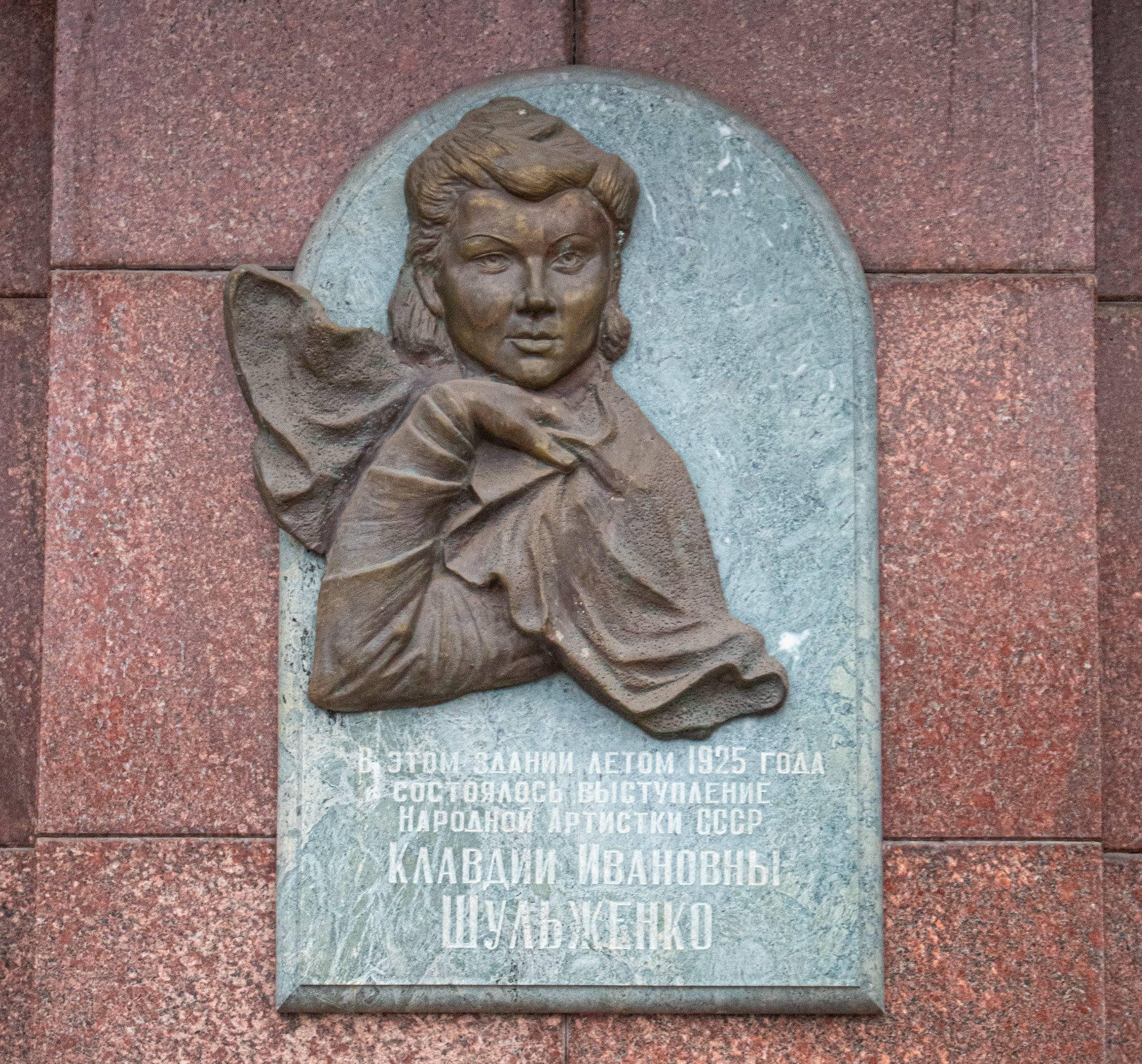
In 1925, Klavdiya Shulzhenko performed in this building, as indicated by the plaque. However, she actually performed in the old building, not the current one that we can see today.
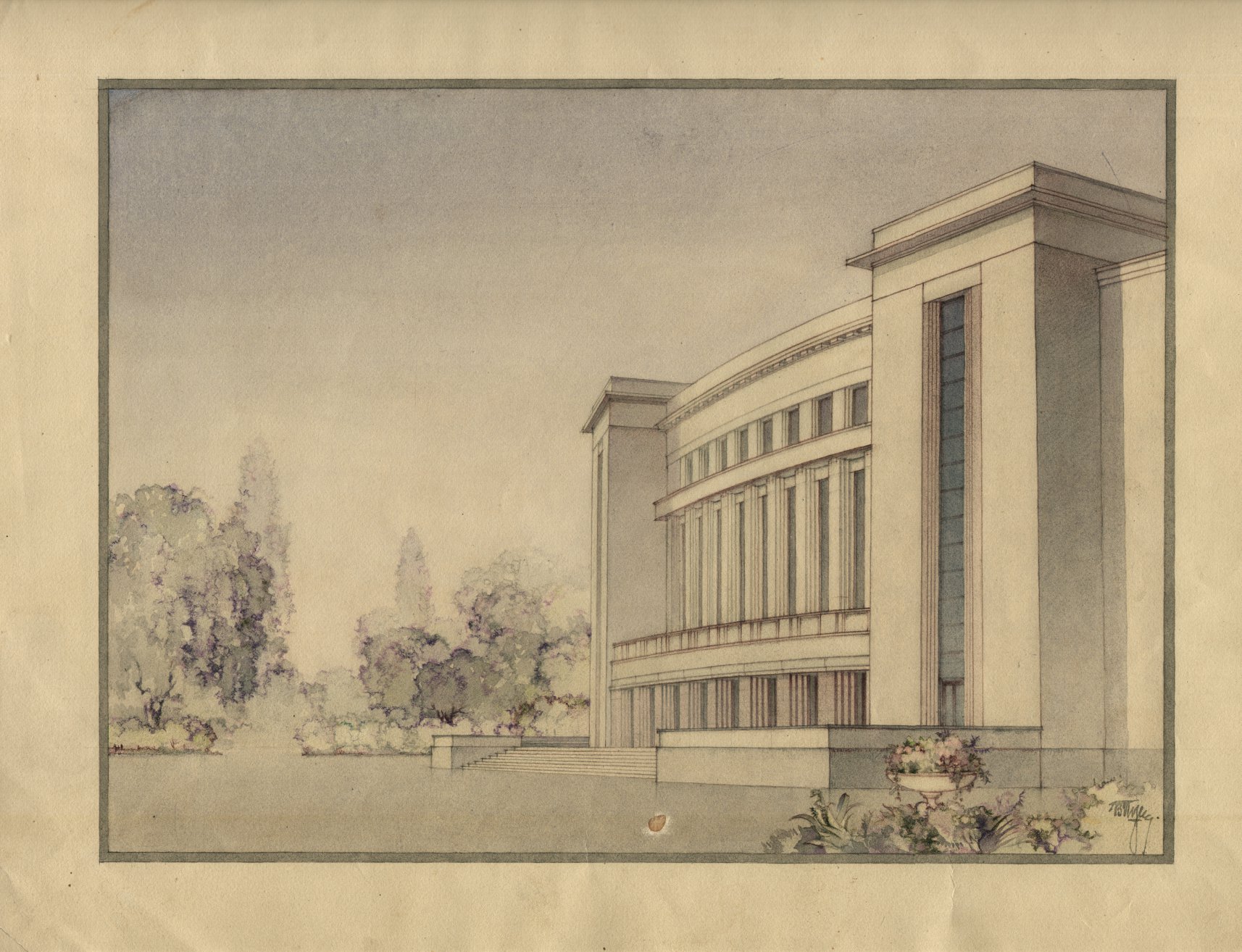
In 1931, the People’s House building was severely damaged in a fire. It was decided to demolish it and build a new Krasnozavodsky Theater in the Constructivist style on the site, based on a design by Valentin Pushkarev and Vladimir Peti. A group of monumentalist artists, students of Mykhailo Boychuk, participated in the work on the murals inside the theater. Due to the repressions to which the Boychukists were subjected, the murals were destroyed.
Construction of the Krasnozavodsky Theater was completed in 1938 with some modifications; Oleksiy Beketov and Viktor Trotsenko gave the building a more socialist classicism appearance, a style that was gaining popularity at the time.
The building housed a 500-seat movie theater and a main auditorium with 1,800 seats.
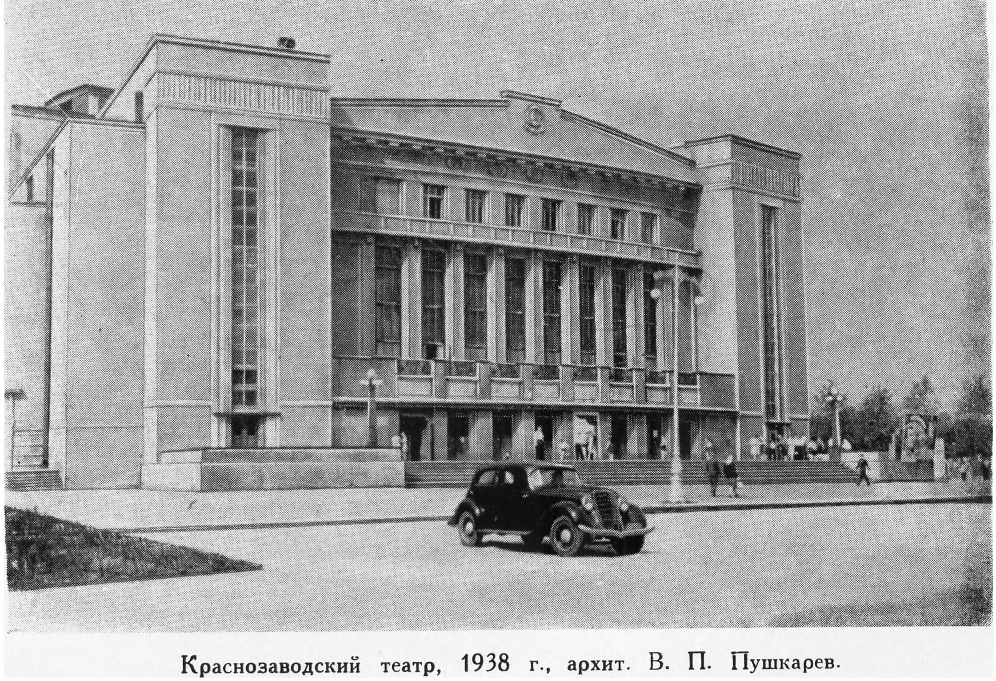
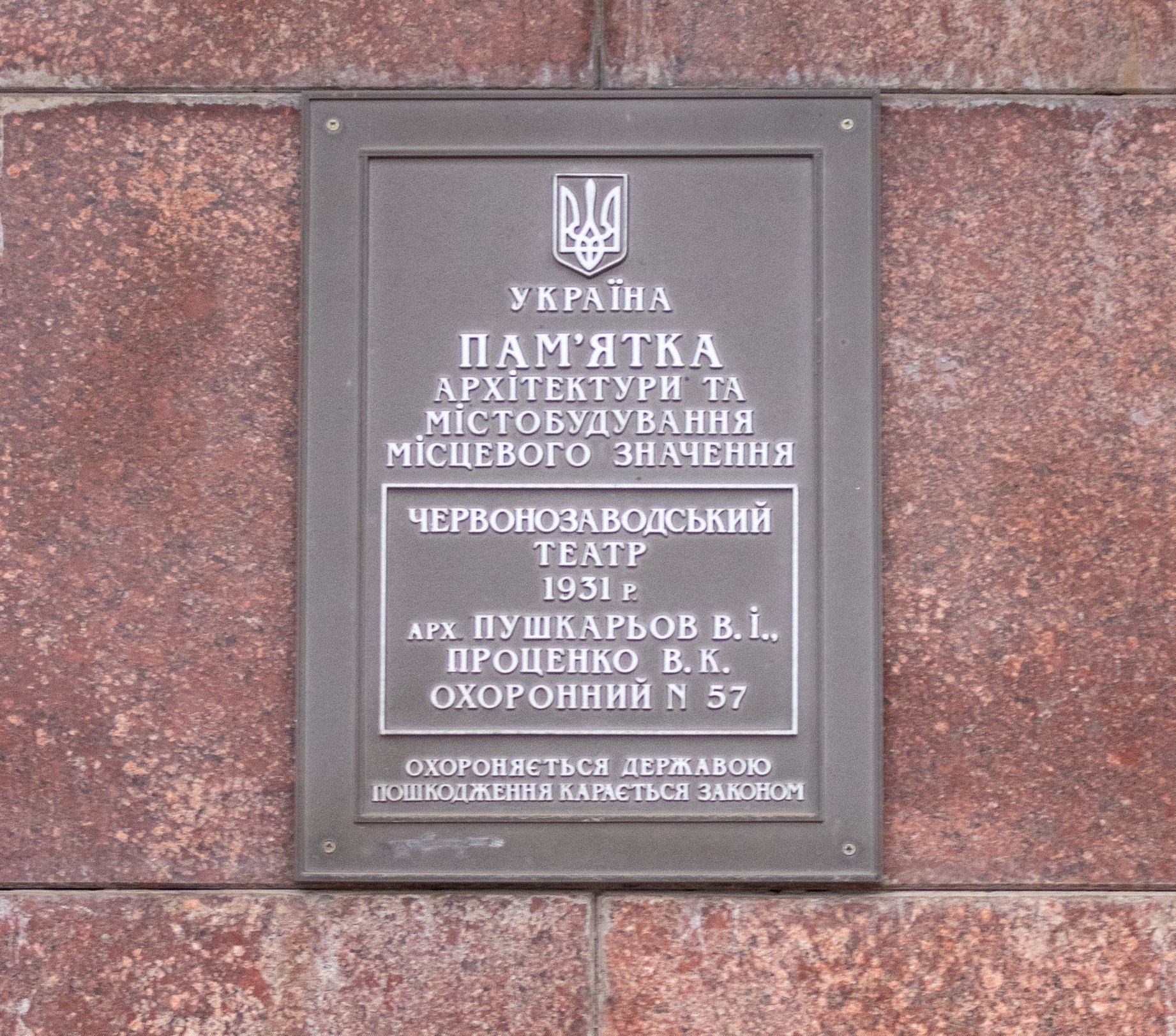
During World War II, the theater was damaged and was renovated in 1963 based on a design by architects P. Rusinov and E. Lyubomilova. The building is a landmark of architecture and urban planning.

- Danylevs’koho Street, 19 - 13.10.2026
- Debunking the myth about one of the most famous Kharkiv photos - 12.10.2026
- The Architectural Evolution of the Kharkiv Theater - 26.09.2026