After taking our fill of the views of the old buildings in Stare Selo, we set off for the next stop on our journey. Our route took us past villages with evocative names like Kharkivshchyna, Shpilivka, and Valky.
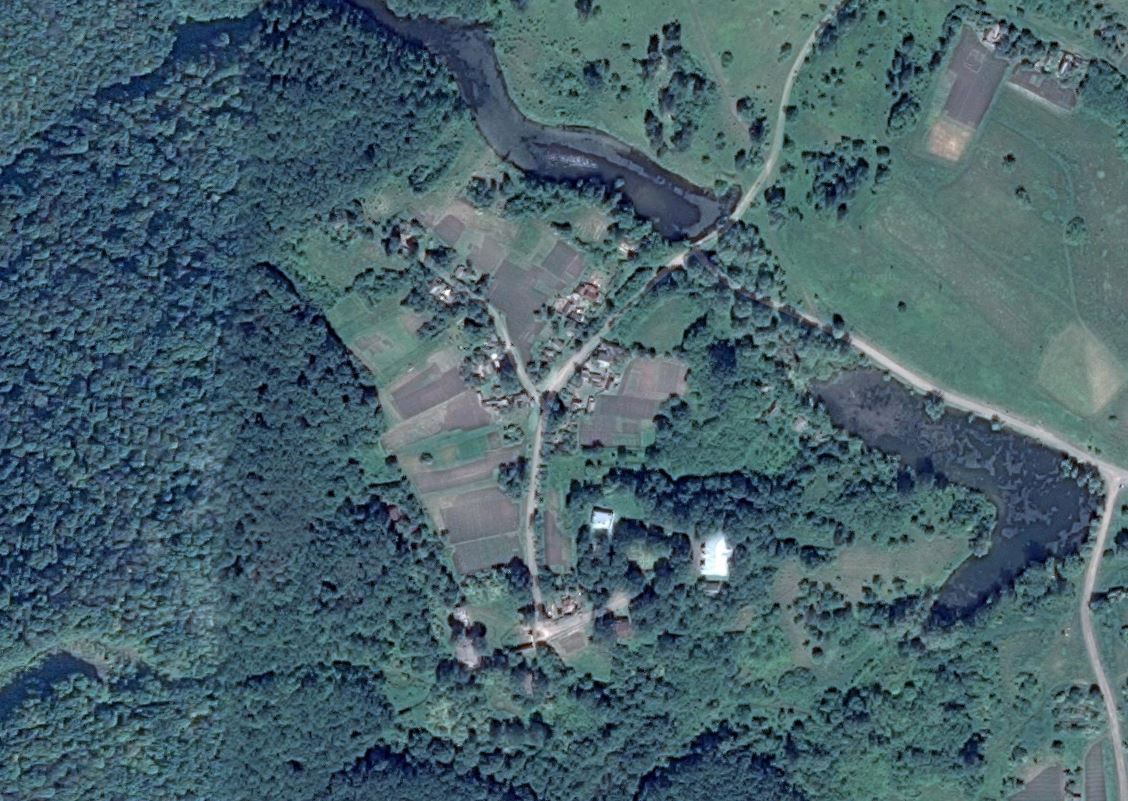
How often do fairy tales begin like this: “Over the hills, beyond the rivers, surrounded by dense forests, stands a beautiful palace…” It turns out that in some parts of Sloboda Ukraine, fairy tales come to life. Lifino is living proof of this. The indescribably beautiful (I would even say magical) nature surrounds the ancient estate like an exquisite setting for a precious gem. On the way there, our hearts skipped a beat several times; we simply stopped and got out of the car just to admire the splendor and silence that reigned all around us.
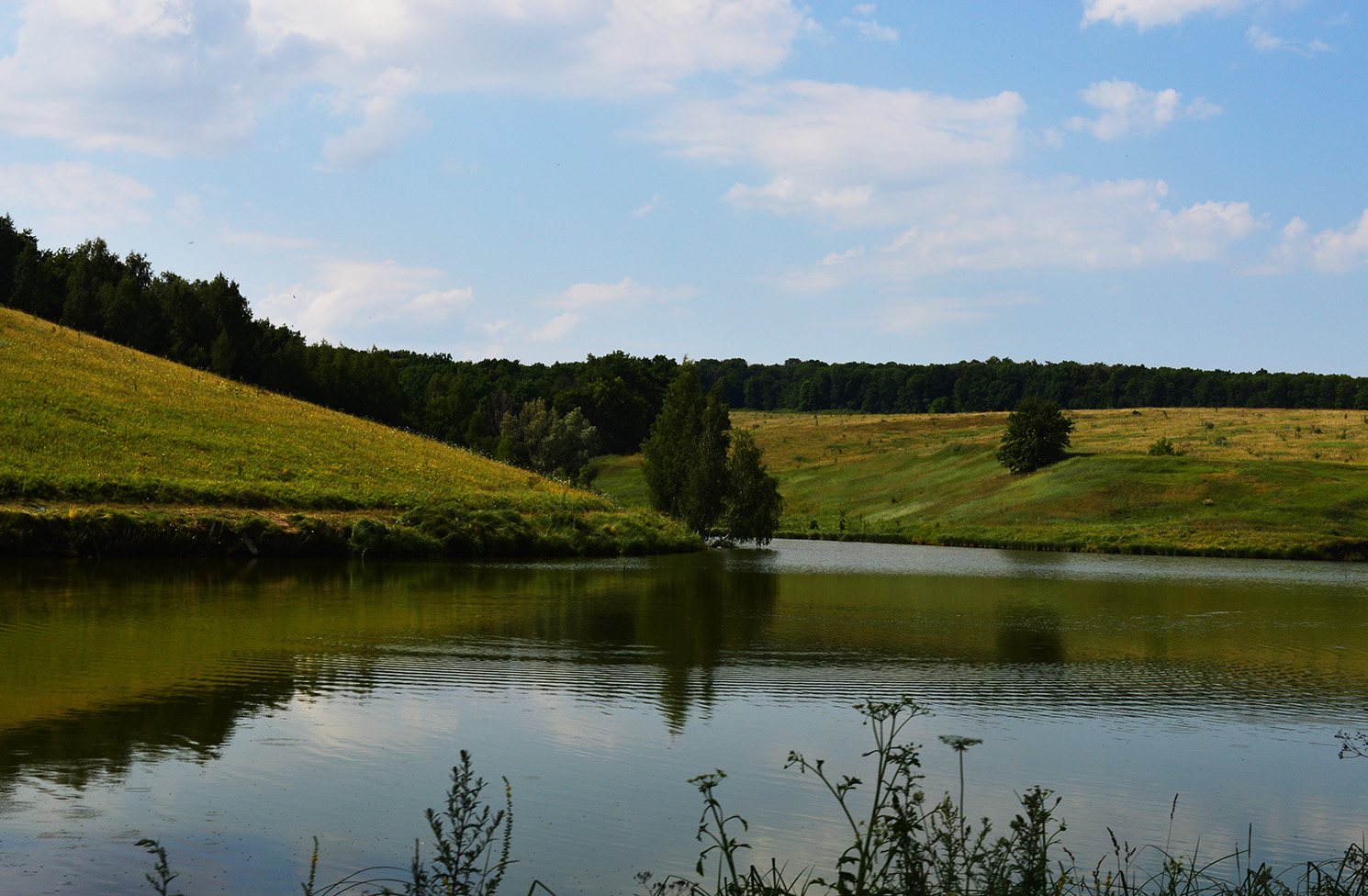
For those of us who arrived there on July 22, there was a strong sense that this farmstead had been frozen in time or had somehow become lost between worlds. After all, very little has changed there over the past 239 years.
In 1778 (the earliest documented mention of the village), only 179 people lived there. At that time, it belonged to the Alferovs, a prominent family among the local nobility. The village was later owned by the Somovs, and in the early 19th century, Lifino passed to the Khrushchev family as part of a wife’s dowry.
In documents from 1860, we read:
“Lebedinsky Uyezd
.—Natalya Alexandrovna Khrushcheva—the village of Pechishchi with two farmsteads.”
The Khrushchev family itself was listed in Part VI of the Kharkiv Governorate’s Book of Noble Genealogy.
As we recall, this section included ancient noble families. “Ancient noble families are none other than those whose evidence of noble status dates back a hundred years or more; their noble origins, however, are shrouded in obscurity.”
The Khrushchev family traces its ancient noble lineage back to the chamberlain Ustin and his sons, who were also chamberlains: Afanasy, Ivan, and Timofey Ustinovich Khrushchov, who were granted, for their service, real estate estates by letters from the Great Sovereigns, Tsars and Grand Dukes of Russia, John and Peter Alexeyevich. In 1651, the estate of the village of Basovo in the Tula Governorate was inherited by the children of the chamberlain Ustin Khrushchev, who were also chamberlains: Afanasy and Ivan; thereafter, both the inherited estates and those personally granted by the Sovereigns were passed down through two lines of succession…
The coat of arms of the owners of the Lifinskaya estate is equally interesting:
“A black salamander on a silver shield within a gules flame. The shield is surmounted by a noble crowned helmet. Crest: a peacock’s tail. Mantling: on the right, black and silver; on the left, gules and silver.”
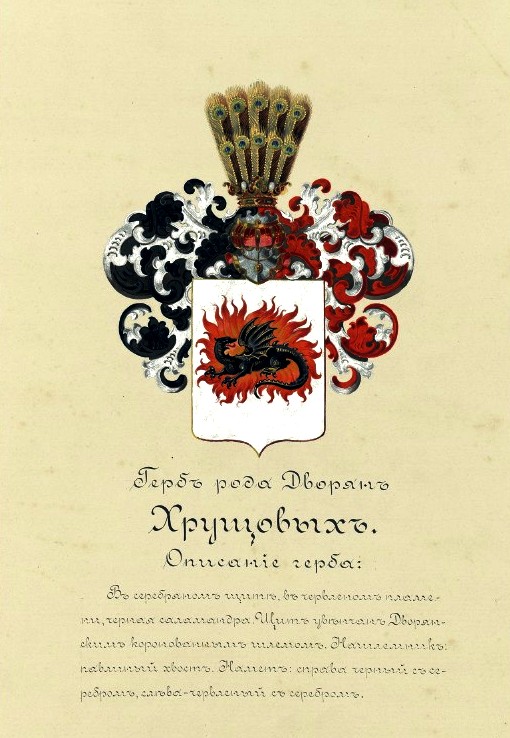
But this family was renowned not only for its long history and beautiful coat of arms. By the mid-19th century, the Khrushchev family owned estates in six of the eleven districts of the entire Kharkiv Governorate…
And now we arrive at the main destination of our journey—the Lifino estate. It was built by Natalya Alexandrovna’s husband, Dmitry Alexandrovich Khrushchev.
He was a very interesting and active man. He received his education at the Imperial University of Kharkiv. He freed some of his serfs several years before the abolition of serfdom. From 1858 to 1859, he served as a member of the Kharkiv Provincial Committee, where he worked to improve the living conditions of the landowners’ peasants. In 1861, he received a medal from the government “for his efforts toward the emancipation of the peasants.” From June 1865 to April 1867, he served as the Lebedyn District Leader of the Nobility.
In early 1859, Dmitry Khrushchev met Taras Shevchenko in St. Petersburg. After returning to Ukraine, the legendary poet stayed in Lifino from June 6 to 9, in the wing opposite the main manor house. A poem he wrote there has been preserved as a memento of this visit:
Oh, a rose blooms on the hill,
A Cossack walks through the valley,
And asks in sorrow:
“Where does fate take pride?”“Is it in the taverns with the rich?
Or in the steppes with the wagon drivers?
Or out in the open fields, blowing
freely with the wind?”Not there, not there, my friend,
With the girl in a stranger’s house,
Wrapped in a towel and a scarf,
Hidden in a new chest.
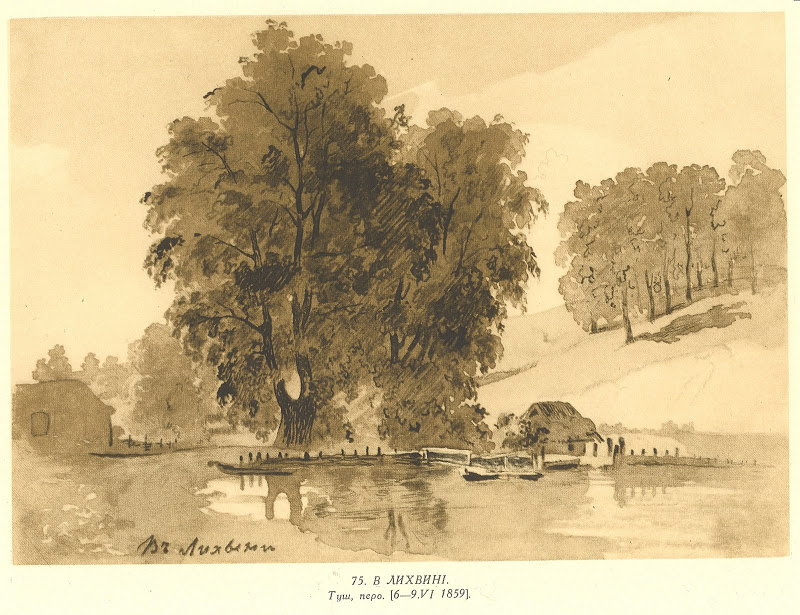
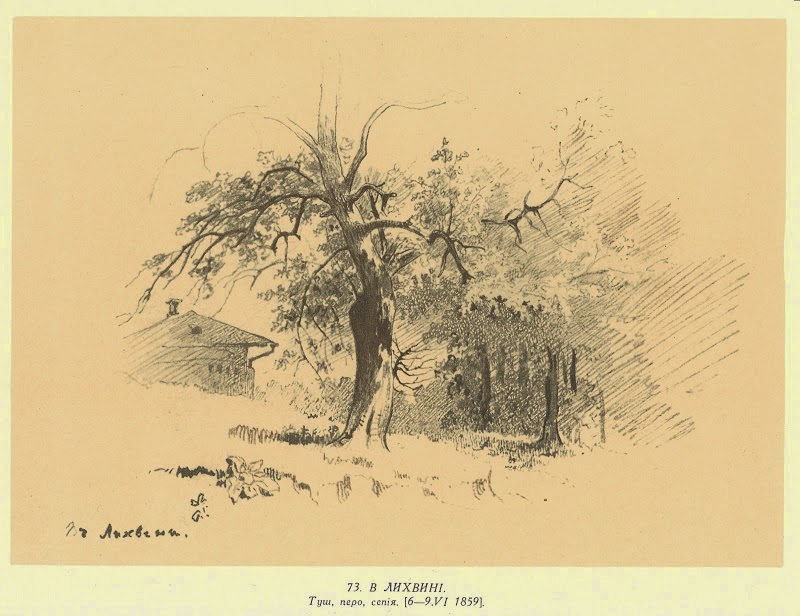
In addition to his poems, the famous guest left behind two landscape paintings, *In Likhvino*, and a sketch titled *The Oak*, as mementos of his visit.

In 1992, the distinguished architectural historian and art historian Viktor Vasylovych Vechersky visited the estate and conducted comprehensive research on it. He published the results of his research, as well as a historical and architectural reference plan of the village, in a book of great importance to us, *The Heritage of Urban Planning in Ukraine: Theory and Practice of Historical and Urban Planning Research on the Preservation of Settlements*.
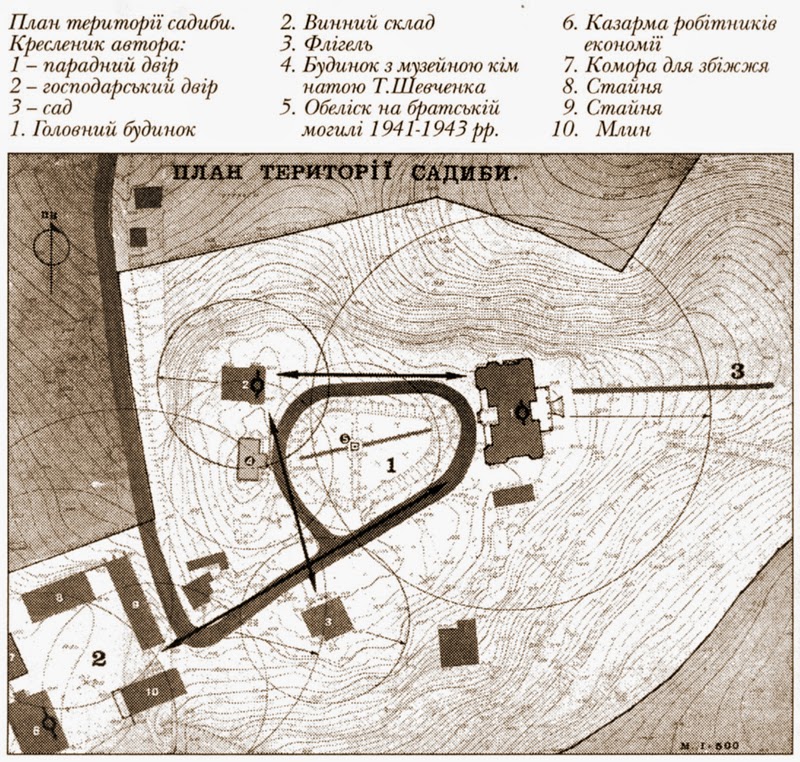
The researcher has given the area around Lifino the lovely name “Lebedyn Switzerland.”
We have found that the village’s distinctive character is largely due to its unique landscape, whose striking visual appeal has led to it being metaphorically referred to as “Lebedin Switzerland.”
Viktor Vechersky goes on to write:
The village has preserved the traditional architectural styles characteristic of the Sloboda Ukraine. However, of all the buildings, the Khrushchev estate complex holds the greatest historical and cultural value; it consists of two distinct sections: the formal courtyard and the service courtyard. The formal courtyard occupies the summit of a hill surrounded by deep valleys. Only on the west does it merge with a plateau where the service courtyard, rectangular in plan and oriented to the cardinal directions, is located. Within the ceremonial courtyard are single-story buildings: to the east—the main house; opposite it, in the northwest corner of the courtyard—a wine cellar; to the south—a wing
…The main house is wooden, built on a brick foundation, and was constructed in the 1830s. In the 1880s, it was clad with brick on the exterior, and at the same time, modifications were made to the roof, resulting in the building acquiring stylistic features of the French Neo-Renaissance rather than those of the Late Classical period.
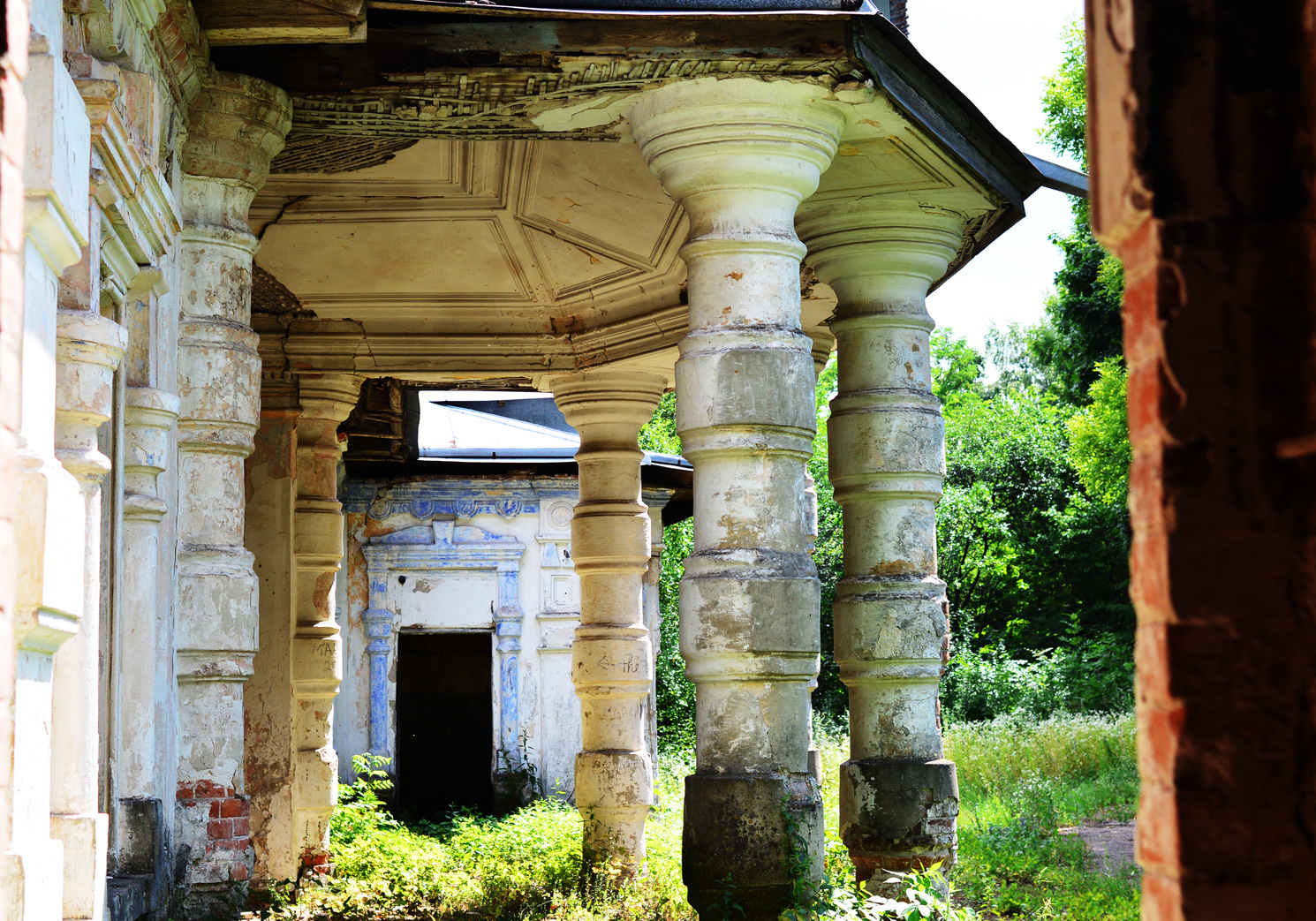
The wine cellar is a single-story, with a basement-level, two-chambered structure with a rectangular floor plan and risalits on the side facades. The facades feature brick decoration in the form of spandrels, rusticated corners, pointed arches, and arching below the cornice. The building’s silhouette is enhanced by gables and dormer windows on the roof.
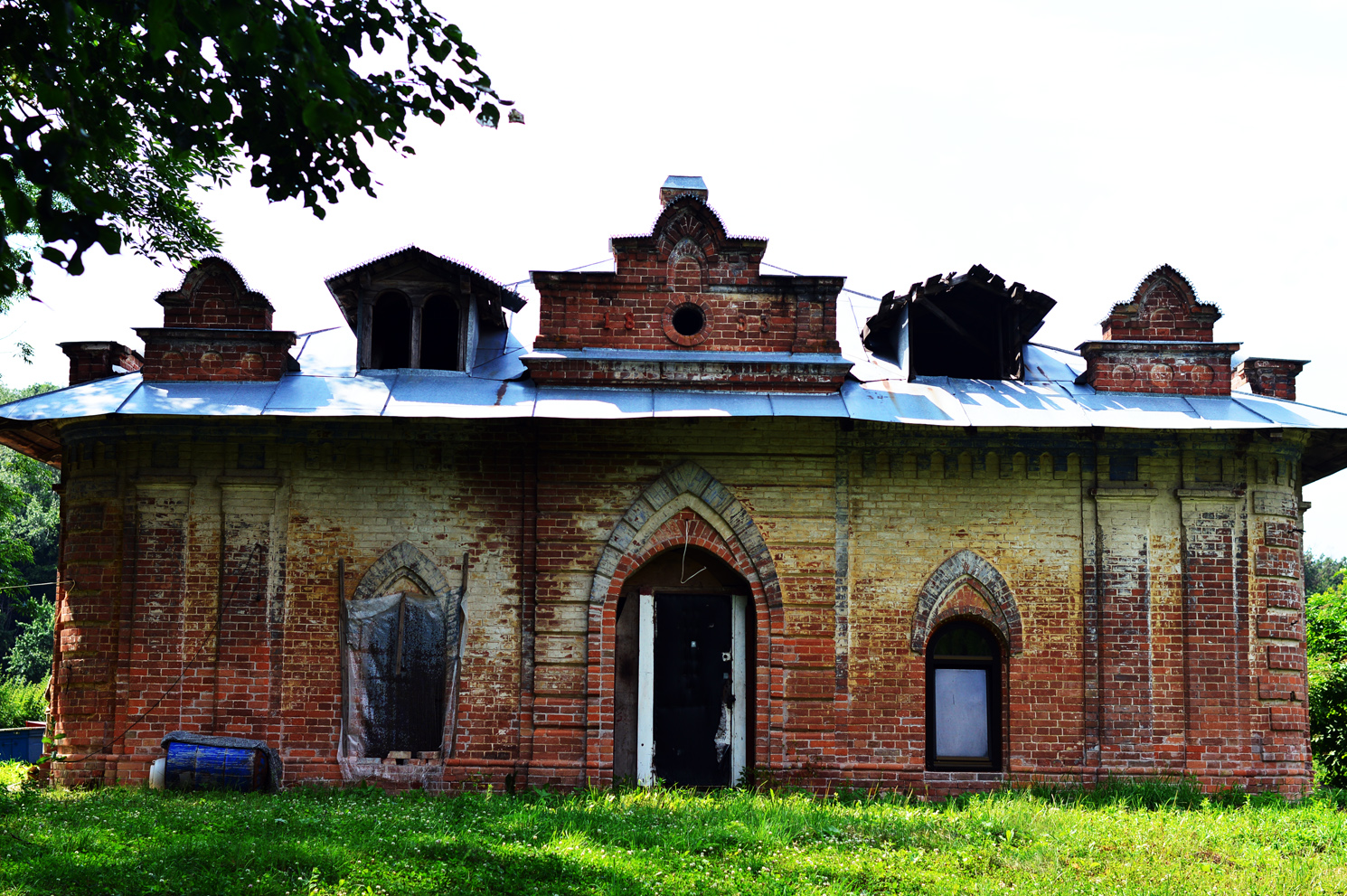
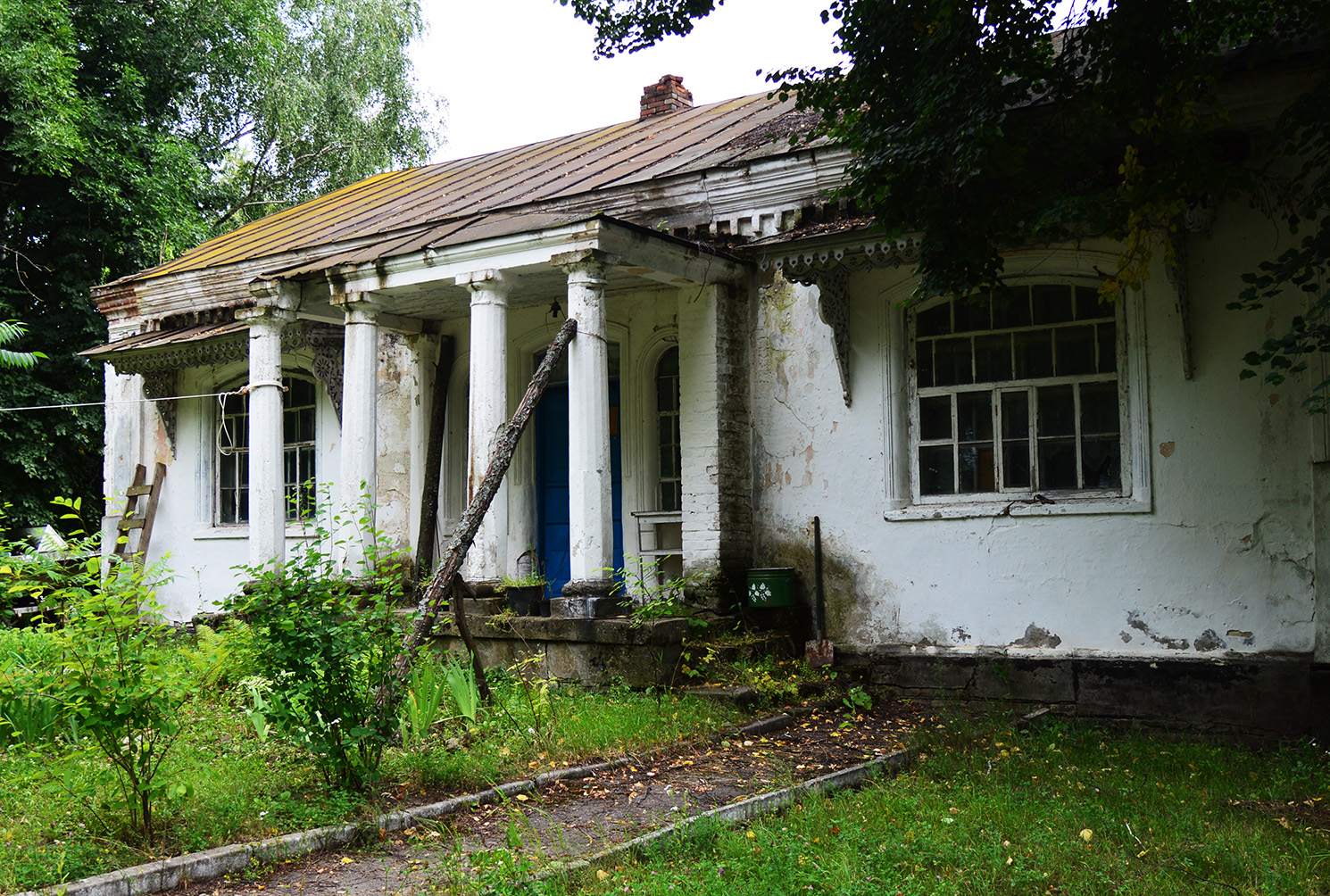
The wing in the southwest corner of the front courtyard has a rectangular floor plan and a symmetrical design, featuring a four-column portico-porch on the front facade and large windows with arched lintels and carved wooden trim.
The owners themselves visited the estate only occasionally. The estate was managed on a permanent basis by tenants. In 1862, the Khrushchevs built a distillery in Lifino, which employed 13 workers. The manager was a Jewish man named Chaim Gurevich.
The farm buildings located across from the estate consisted of five structures arranged along the perimeter of a rectangle, forming a unified architectural complex. To this day, the two-story barracks for the estate’s workers remains impressive in both scale and beauty.

On the way to the estate, we saw a church under construction. Until 1917, there had been no church in Lifino. At that time, the residents of the farmstead were married, baptized, and buried at the stone Transfiguration Church in the village of Vorozhba.
In 1921, one of the first communes in the Sumy region—”Novy Mir”—was established in the buildings of the former estate.
Today, not a trace remains of the house where Ukraine’s great poet once lived. The commemorative plaque installed in 1964 to mark Taras Shevchenko’s stay at the estate is gone, as is the museum room…
Apparently, in a country where portraits of Shevchenko hang in many institutions, it is easier to erect monuments and hold events funded by the state budget than to take care of the actual sites associated with Shevchenko. The estate itself, which is a monument of architecture and urban planning, continues to delight the eye to this day. However, this is in no way thanks to the “sensitive” care of our government. The private owner who currently owns the estate, unable to restore it, literally saved Lifino.
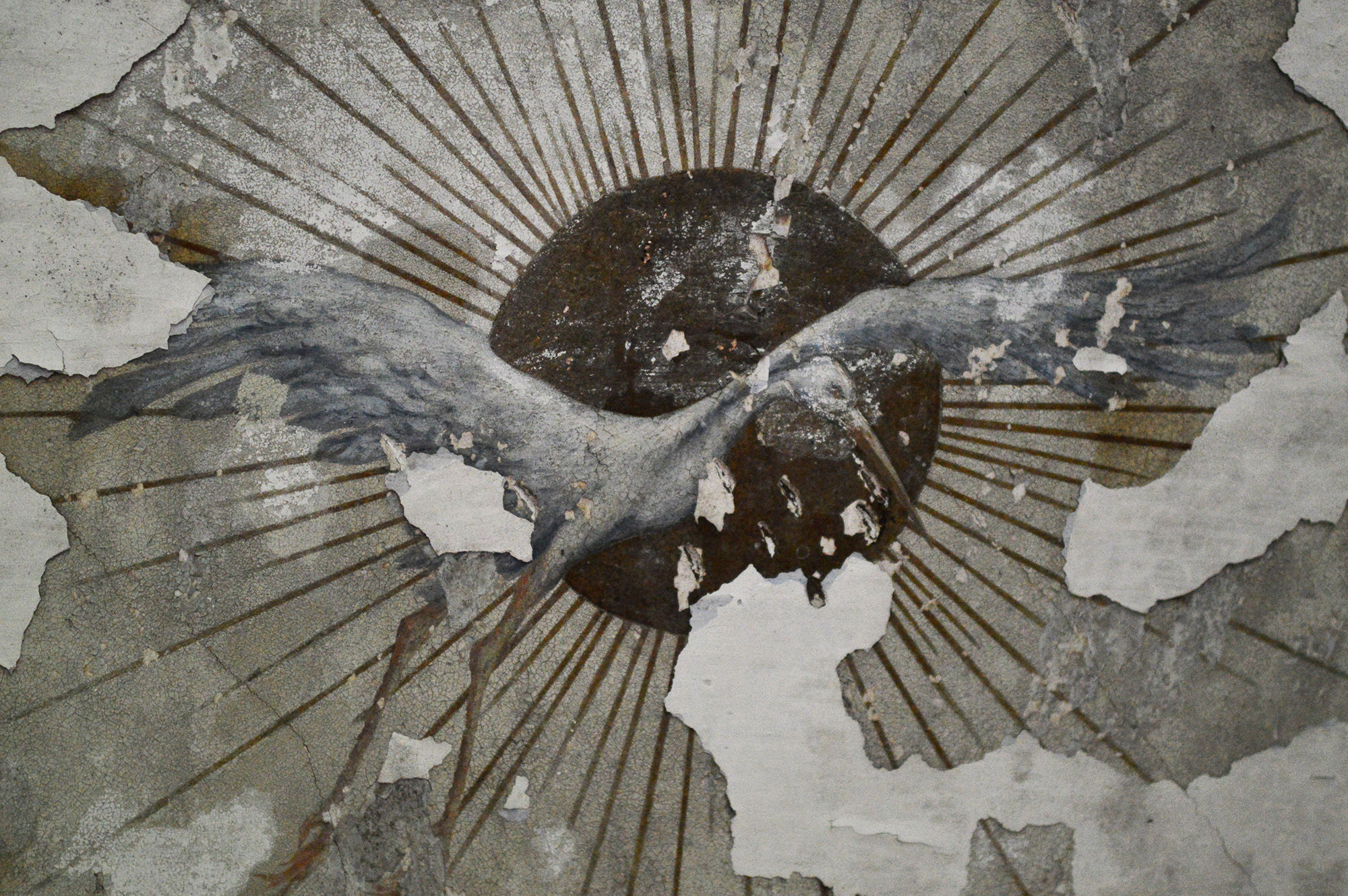
It is only thanks to the high mesh fence and constant security that the estate complex has been spared from destruction and looting. In this regard, the Lifino Estate has perhaps been luckier than many other historical monuments in Sloboda Ukraine. Had there been no fence, it would have been literally torn down brick by brick, buried in trash by those seeking a “cultural getaway,” and dug up by treasure hunters (after all, everyone knows that every manor house hides a treasure trove of fist-sized diamonds!).

According to data from 2001, 50 people lived in Lifino. Now, apparently, there are even fewer. Groceries are delivered to the village, since there is no store there (nor a pharmacy, nor many other amenities). Do the citizens of Ukraine deserve a life in which, if something bad happens to them, an ambulance simply cannot reach them because there are simply no roads there?! Does a village with enormous tourism potential deserve such a bleak existence?
It was with these mixed feelings of joy and sadness that we left the Lifino estate and set off in search of Lake Shelekhovske…
Updated: November 16, 2025. The Lifino estate was severely damaged by a Russian strike—the wooden upper structures and the roof were burned down.


- About the military pilot school and the airfield in Kharkiv… - 04.11.2020
- Nikanor Savich—A Political Career by Mistake - 13.07.2020
- And once again, about the Cavalry Guards… - 21.01.2020