As is well known, one of the distinctive features of Odesa as a tourist destination is the history of its colourful underworld. Numerous literary works have been written about the exploits of Odesa’s famous gangsters. Legendary Odesa con artists such as Sonka ‘Golden Hand’, Yaponchik and others have become the protagonists of a number of popular television series. Naturally, thanks to numerous tour guides, anyone can take a stroll through the criminal hotspots of ‘Odesa-Mama’ and learn a great deal of interesting information. Various tours (including costumed ones) with names such as ‘Gangster Odesa’, ‘Criminal Odesa’, ‘Legends of the Underworld’ and similar are in regular demand among tourists. And both the ‘People’s Museum of the Militia’ and the ‘Museum of Smuggling’ attract a great many visitors. Lviv and Kyiv are also keeping pace with Southern Palmyra in this regard. All these cities have managed to turn their criminal past not merely into a good tourist product, but into something that is popular and arouses interest among both locals and visitors.
Our beloved city, however, stands apart in this regard. It is as if there were no swindlers, no high-profile crimes, and no legendary law enforcement officers here at all in the 19th and 20th centuries. This situation is hardly surprising. It is only recently that people in Kharkiv have begun to realise that the city has enormous tourist potential and that it needs to be developed. Admittedly, authors of articles with sensational headlines such as ‘The Antics of Sonya Golden Hand in Kharkiv’ are sometimes unable to specify even the year the legendary swindler spent in our city, let alone provide references to archival records. Yet the real past of Kharkiv’s criminal underworld held plenty of intrigue.

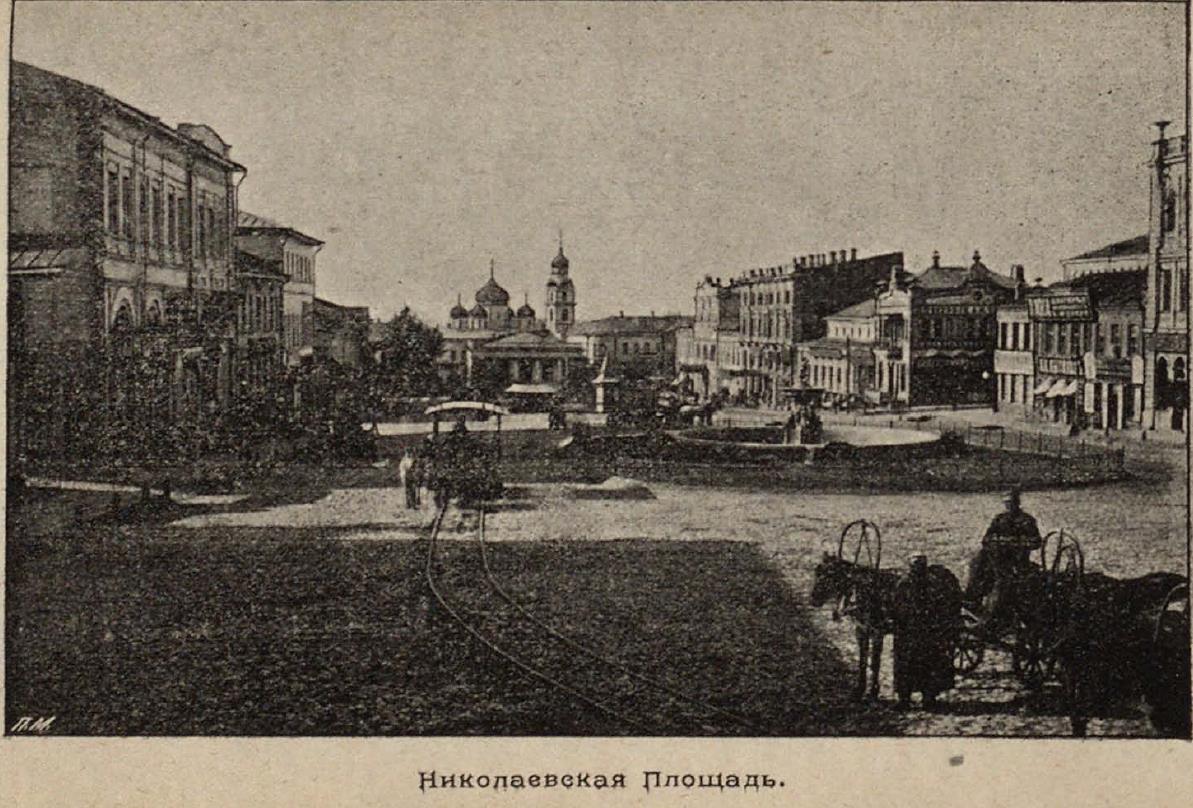
No doubt, many in our city are familiar with the old building situated on the corner of what is now Pletnivs’kyi Lane and Pavlivskyi Square. However, few know that this is not merely an old building, but a place directly linked to what might be called the ‘heist of the century’.
On the morning of 28 December 1916, the news spread like wildfire through virtually all the major imperial newspapers: unknown perpetrators had robbed the Kharkiv branch of the Mutual Credit Society of Clerks. The amount stolen was so great that there had been no similar precedent in the history of the Russian Empire at that time. This is understandable. After all, an unprecedented sum for those times had been stolen — 2,500,000 roubles’ worth of securities.
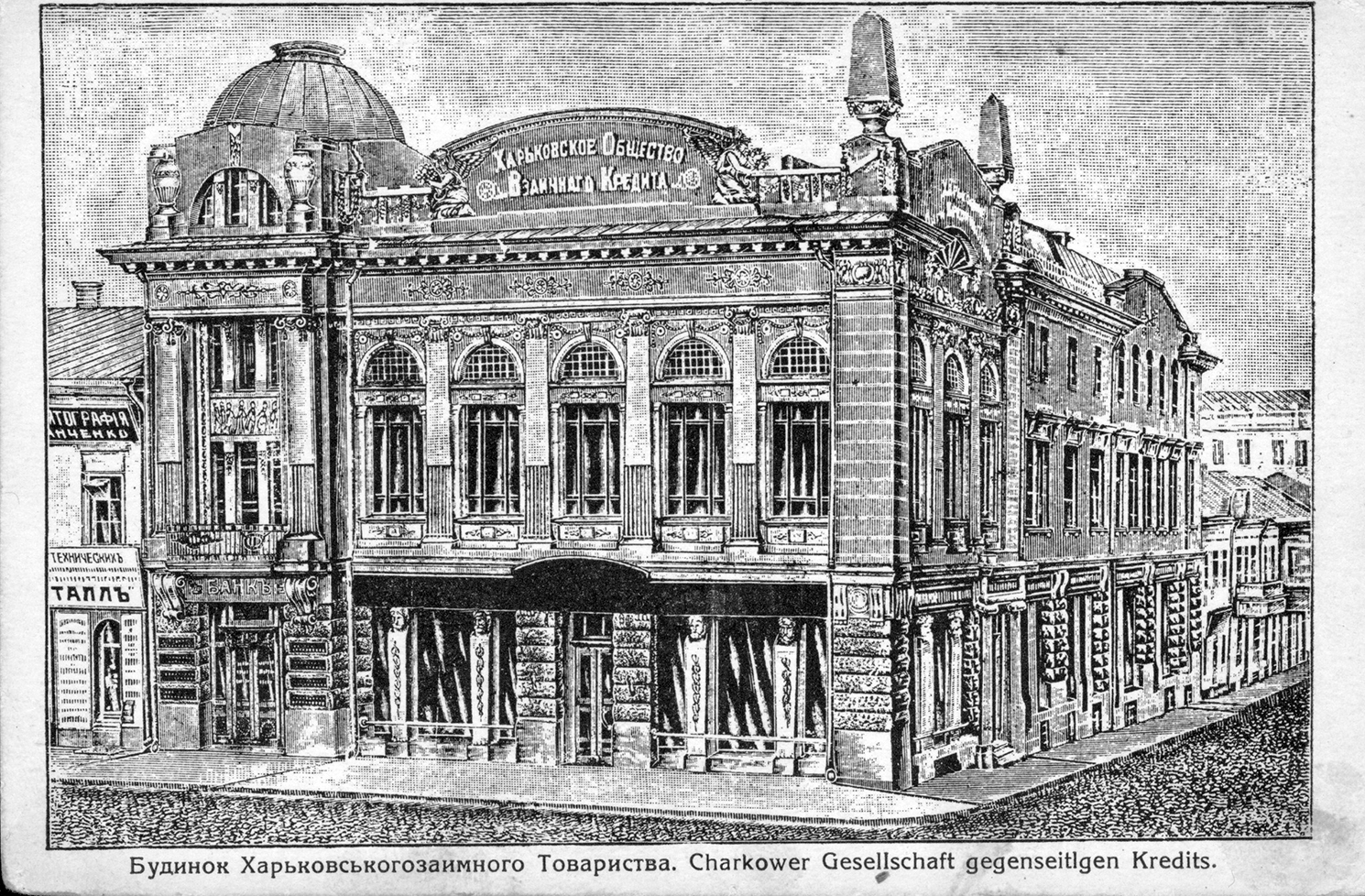
The criminals acted with extreme audacity. Over the Christmas period (from 24 to 28 December), they dug a tunnel from the courtyard of a house adjacent to the bank. This time was chosen deliberately, as Kharkiv’s official institutions were closed during this period. Having breached the building’s double stone wall, which was nearly one and a half metres thick, the robbers sawed through and cut open the steel fireproof safes and carried off the securities.
On the same day, Lapsin, the deputy head of the Kharkiv Criminal Investigation Department, sent an encrypted telegram from Kharkiv to St Petersburg. At 11 am, the head of the criminal investigation department, Arkady Franzovich Koshko, received it and read the report about the theft itself and the fact that one of the bank’s employees, suspected of complicity in the crime, had been detained and temporarily arrested. News of the Kharkiv robbery appeared in one of the morning newspapers and came to the attention of the Emperor himself, who personally expressed to the Minister of the Interior his desire to see this crime solved as quickly as possible. And by 16:00, the Director of the Police Department, Alexei Tikhonovich Vasilyev (the very same man who had investigated the murder of Grigory Rasputin), informed Koshko that the Minister had entrusted him with the investigation of this case.
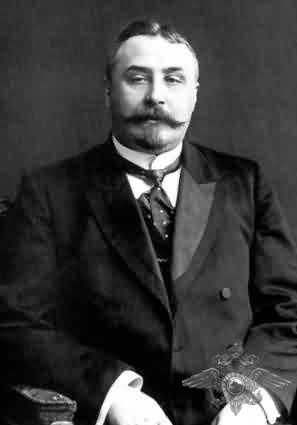
However, Arkady Frantsevich was unable to travel to our city that same day, as the Kharkiv express train had already departed. Koshko spent the rest of the day preparing for the journey. From the department’s database of over two million photographs containing fingerprints and marks of criminals and suspects, he took with him to Kharkiv 20 photographs of particularly cunning and daring ‘Warsaw’ thieves. It was they, in Koshko’s opinion, who had committed the Kharkiv robbery. In his memoirs, the legendary detective tells us the following on this subject:
This audacious theft troubled me in every respect: not to mention the exceptionally large sum stolen, which had caught the Emperor’s attention, but the circumstances of the case also gave me no confidence in the success of my investigations. The fact is that the thieves had taken advantage of the Christmas holidays, that is, the two days during which the bank was closed; consequently, 48 hours had elapsed between the time the crime was committed and the time it was discovered. During this period, the thieves could have thoroughly covered their tracks, or even fled abroad. The overall picture of the crime suggested that so-called ‘Warsaw’ thieves were at work in this case. This breed of thieves was quite unusual and starkly different from our own, Great Russian, thieves. The typical ‘Warsaw’ thieves are generally as follows: they are people who are always impeccably dressed, lead a lavish lifestyle, and frequent only first-class hotels and restaurants. When setting out to commit a theft, they do not bother with trifles; that is, they always select only items of significant value as their targets. Preparing for a planned heist costs them a great deal of money: bribery is widely practised, and the most sophisticated and expensive tools are used, which are discarded immediately at the scene of the crime.
They are persistent and patient. They are always well-armed. When caught, they do not deny their guilt and calmly tell the whole story, but do not betray their accomplices as far as possible.

Koshko brought with him to our city a native of Poland, the extremely capable agent Linder. Upon arriving in Kharkiv on the evening of 31 December, Arkady Frantsovich immediately summoned to him Lapsin, the deputy head of the criminal investigation department, whom we are already familiar with. Lapsin reported new details, in particular, the grounds on which the bank clerk had been arrested. It turned out that:
- The tunnel leading to the vault had been dug from a small woodshed in the courtyard next to the bank. And the woodshed belonged to the very flat occupied by the bank employee.
- This employee had an extremely poor reputation.
- At the time of the theft, he was not in the city, as he had gone with his wife somewhere out of town for the two-day holiday.
However, despite such a watertight alibi, the police believed the employee was involved in the robbery. The tunnelling had been going on for at least two weeks, and since they were digging near the wall of the flat, the official simply could not have failed to hear the noise of the shovels and pickaxes. On 1 January, Koshko personally inspected the crime scene. What did he see there?
The bank’s steel vault presented a most curious sight: two steel cabinets with walls nearly a quarter of an arshin thick (17 cm) had been mangled and riddled with holes as if by cannonballs. All over the room lay various sophisticated burglary tools. There were electric saws, gas cylinders, jars of acid, and all manner of ingenious drills and batteries; in short, the tools left behind by the thieves were worth several thousand roubles.
Arkady Frantsevich then personally interrogated the detainee, who turned out to be a ‘die-hard Pole’ as well. Naturally, apart from denials of guilt and complaints about the unlawful arrest, Koshko heard nothing else. Given that the preparation for the robbery had taken the criminals quite some time, the investigator, taking with him the 20 photographs of Warsaw thieves and the identity card of the arrested official, began to visit all the hotels in Kharkiv, accompanied by Linder and local agents.
Success was not long in coming. Six professional thieves (including Stanislav Kwiatkowski, Zdislav Goroshka and Jan Sandayevsky) were identified. Although they had been staying in different hotels for about a month, they all left on the same day, namely 26 December. A new lead also emerged in the case. A bellboy at the hotel where Kvyatkovsky and Goroshka were staying recognised the arrested bank official. Koshko recalls:
This bellboy, a sharp lad, not only immediately recognised both thieves and the official, but also recounted with a chuckle the various incidents in which he had been an indirect participant whilst these gentlemen were staying at his hotel. According to him, the arrested official often visited Goroshka, and especially Kwiatkowski, and what is more: Kwiatkowski was, apparently, having an affair with the official’s wife, who suspected nothing. This woman visited Kwiatkowski’s hotel on more than one occasion, and it was not uncommon for him, the valet, to have to carry little notes back and forth between them. From these secret notes, the curious valet was convinced, much to his satisfaction, of their affair. This first day of the New Year did not seem to me to have been wasted, and I fell asleep peacefully.
He also managed to uncover new details about the arrested man’s past. It turned out that, before arriving in our city, he had worked in Helsinki at the Lyon Credit branch, from where he had been dismissed on suspicion of complicity in a planned attempted robbery at that bank. However, the suspect, a bank clerk, continued to deny his involvement in the robbery. Naturally, the legendary detective found a way to get him to talk.
On his orders, Agent Linder, posing as a friend of Kwiatkowski, was to visit the unfaithful wife with greetings from her lover. As proof, he had a photograph of Kwiatkowski with a friendly inscription in Polish, forged by the police, on the back. The main purpose of this visit was to obtain from the lady in question any letter or note addressed to Kwiatkowski. Linder brilliantly accomplished the task. Although he was initially met with suspicion, the unfaithful wife eventually placed her complete trust in him. As he was leaving, he casually asked the lady:
‘Perhaps you would like to write something to Stas, in which case I would be happy to pass on your note to him.’ In response, the lady was delighted by the opportunity and immediately wrote a tender message to her lover, concluding it with the phrase: ‘…What a pity, my beloved Stas, that you are not with me now, when my husband is in prison!’

Strangely enough, it was precisely because of this phrase that the largest robbery in the history of the Russian Empire, which took place in Kharkiv, was solved. After Linder’s report, Koshko summoned the arrested official for questioning, who, as before, continued to deny his involvement in the robbery. He also denied knowing Mr Kwiatkowski.
― I don’t know any Kwiatkowski!
― And your wife doesn’t know Mr Kwiatkowski?
― Of course not! Who is Kwiatkowski?
― Your wife’s lover!
“Well, you know, that won’t fly! My wife is a saintly woman, and I believe in her marital fidelity as surely as I breathe!”
After further debate, Koshko handed the official the envelope containing the letter he had received earlier from Linder. Having read the text, the arrested man, who knew his ‘holy’ wife’s handwriting perfectly, flew into a rage.
As he read, his face grew redder and redder, his hands began to tremble, and his breathing became ragged. Finally, having finished reading, he furiously crumpled the paper, shot a wild glance and, slamming his fist on the table, exclaimed:
‘Damn it! Well, all right, Mr Stanislav, you won’t be visiting here any time soon! And if you do visit, it won’t be to see my wife! You scoundrel, you wretch! Well, just you wait! Even if I perish myself, I’ll drag you down with me! ‘Sir,’ he turned to me, ‘please ask me whatever you like; I’ll tell you everything now, I’m only too happy to help you arrest that wretch Kwiatkowski!’
What was to be expected came to pass. The betrayed man told all.
It turned out that the ‘Warsaw’ thieves, after a successful robbery, had gone to Moscow, and their leaders could be found at Goroshko’s mistress’s place on Pereyaslavska Street. All the stolen goods, of course, would be in their possession. Being extremely cautious, they were waiting for a certain ‘dealer’ named Hamileinen to arrive in Kharkiv from Helsinki to exchange the securities for cash. Having received a cover letter from a bank clerk, he will travel with it to Moscow, and then sell the securities for roughly half their face value. Incidentally, this letter addressed to Kwiatkowski was written voluntarily by the arrested man, who made no secret of his joy, and he also named all the participants in the robbery, who, together with him, Kwiatkowski and Goroshko, turned out to be nine people.
After that, Arkady Frantsevich acted very swiftly. He sent photographs of the five thieves, who had been identified in hotels in our city, to Marshalko, the head of the Moscow Criminal Investigation Department. Orders were given to place Kwiatkowski and Goroshko under surveillance on Pereyaslavska Street. There was nothing further to investigate in Kharkiv. Anyone interested can read further details of the special operation to apprehend the criminals in Koshko’s memoirs, published in Paris in 1929 (they are freely available), which have been cited here on numerous occasions. Agent Linder, having received a letter from Kharkiv, performed the role of Hamileinen admirably. He also haggled with the criminals to such an extent that it was agreed to sell the papers, worth two and a half million roubles, for 1,200,000 roubles. In the process, he got so into character that during the arrest of the criminals, he himself was mistaken by the police for a gangster and was ‘a bit roughed up’. As a result, eight of the nine robbers were caught. The ninth managed to escape and was never found.
In the ‘Events’ section, however, the Kharkiv newspaper ‘Pivdennyi Krai’ informed its readers that ‘all 15 of those arrested are residents of the Kingdom of Poland’.
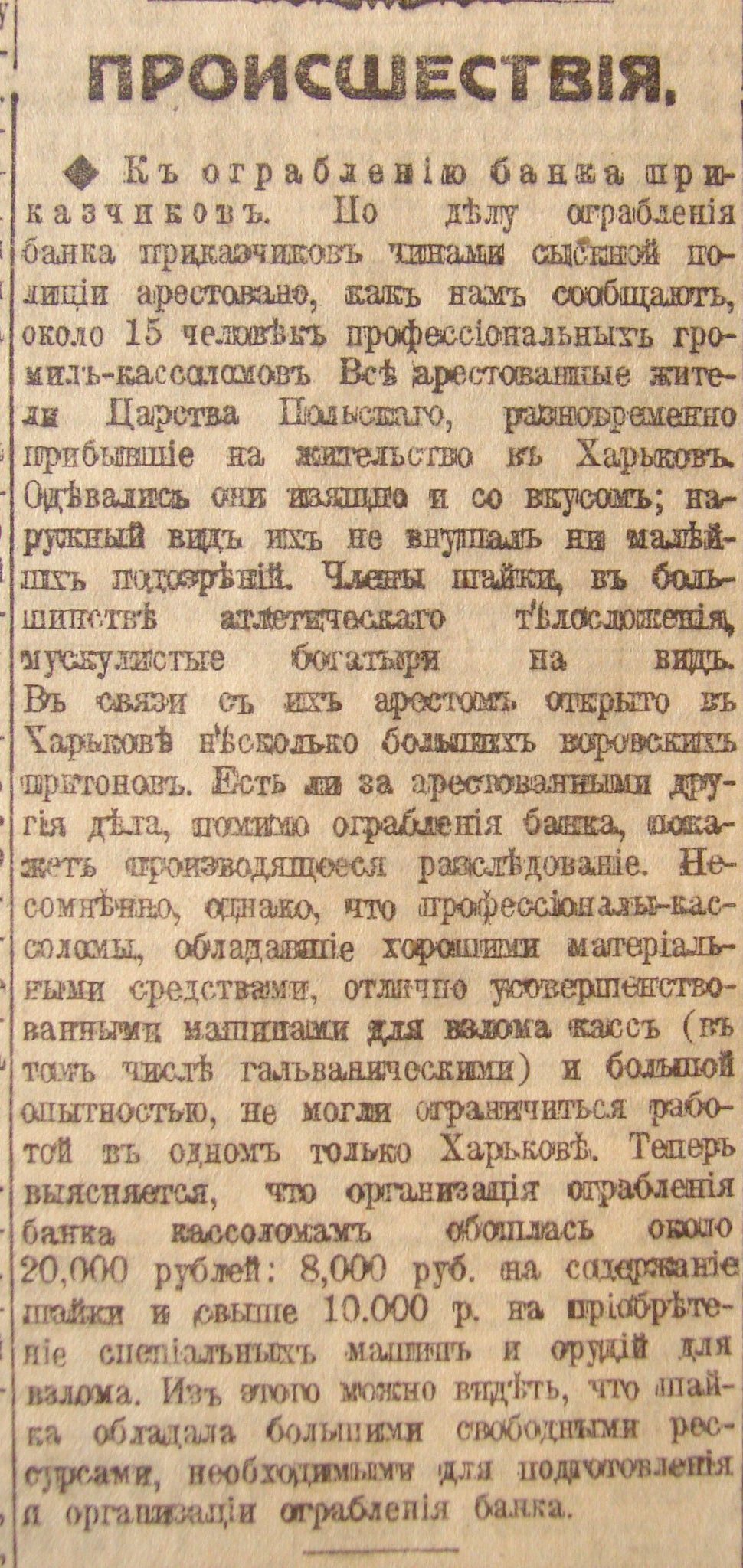
Well, all right, because, according to rumours circulating among the locals, the sum stolen exceeded 3 million. Be that as it may, the robbery was solved in a matter of days, the criminals were caught and the securities were returned. For Arkady Frantsovich Koshko, the solving of the Kharkiv case was the crowning glory of his investigative skills.
Lapsin, assistant to the head of the Kharkiv Criminal Investigation Department, received a cash bonus from the state for his involvement. Agent Linder was promoted out of turn. Kurtanovsky, the former head of the Warsaw Investigation Department, who had played an active role in apprehending the criminals, was awarded the Order of St Vladimir, 4th class, and two weeks later was transferred to our city to take up the post of head of the Kharkiv Investigation Department.
Subsequently, the fates of all those involved took different turns. In early 1917, thanks to the Provisional Government, Kurtanovsky found himself in Kharkiv prison. There he met Goroshko, Kwiatkowski and other participants in the robbery known to us. To the credit of the ‘Warsaw’ thieves, it should be noted that they did him no harm whilst he was there. Thanks to Koshko’s personal intervention with Prince G. E. Lvov (the de facto head of state at the time), Kurtanovsky was released. In 1918, he emigrated to Poland and took up the post of head of the Warsaw Criminal Investigation Department. Later, Linder moved there too. However, the talented agent did not join the law enforcement agencies but went into business. Having learnt of his impending arrest, in 1918 Arkady Koshko fled Moscow with his son, posing as an actor and set designer in a theatre troupe, and made his way to Kyiv.
When the city was captured by the Reds, he happened to meet Kwiatkowski and Goroshko on one of the streets. However, the former robbers not only did him no harm and did not hand him over to the Bolsheviks, but, seeing Koshko’s tattered clothes, offered him money. He, of course, refused. From Kyiv, the former legendary detective moved to Odesa, then to Crimea, Constantinople and, finally, to Paris. While trading in furs to survive in the French capital, Koshko received an offer from the British to take up a post at Scotland Yard. However, he was forced to decline, as working for the British police required him to take British citizenship. The eminent criminal investigator died in Paris on 24 December 1928. Koshko never revealed the full name of the Kharkiv bank clerk who had betrayed the entire gang.

So, as you pass by the building on the corner of what is now Pletnevs’kyi Lane and Pavlivskyi Square once again, recall the wonderful story of the ‘heist of the century’, talented detectives, noble gangsters and a duped man. After all, our Kharkiv stories are also fascinating and worthy of remembrance.
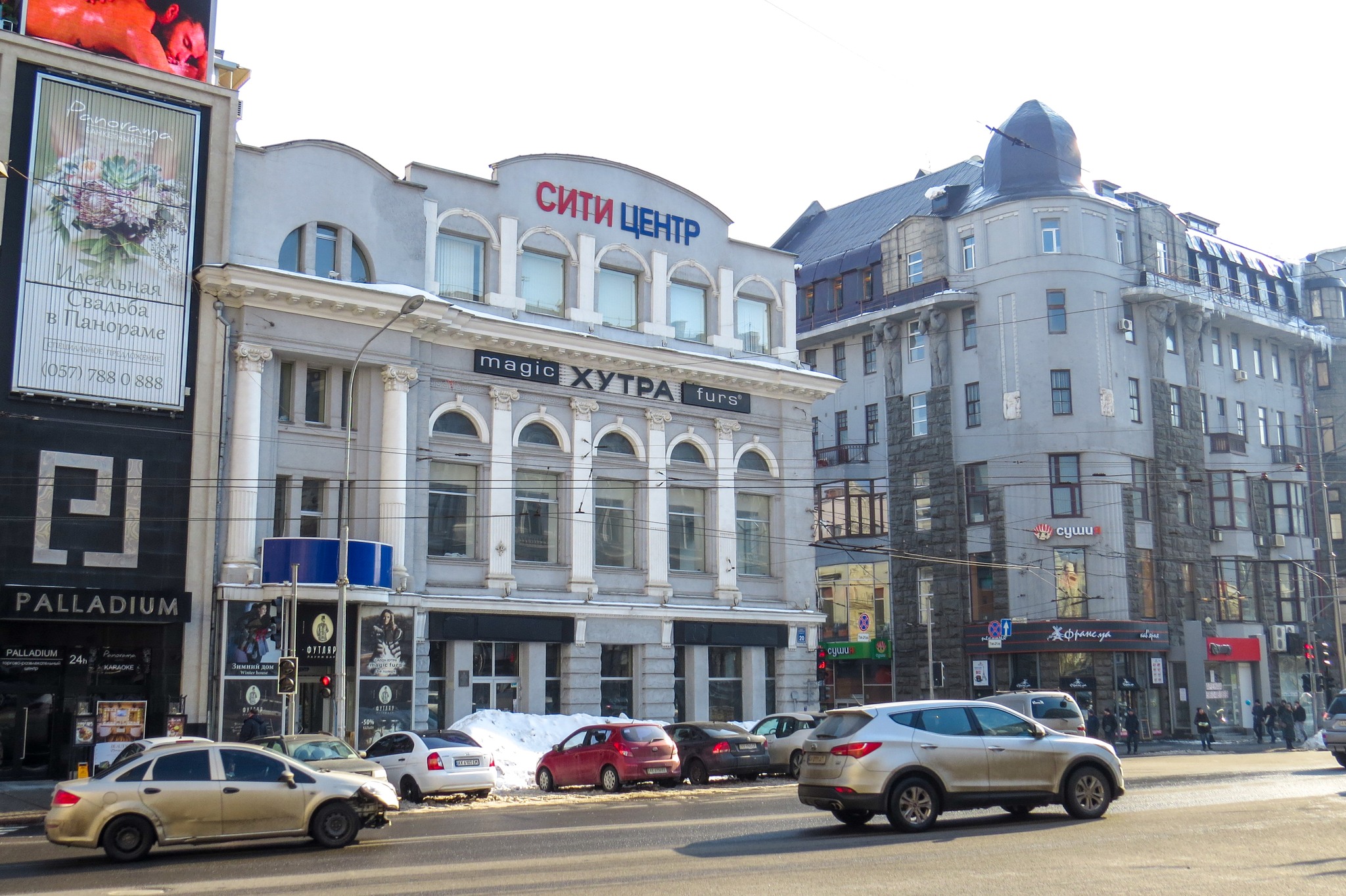
In 2022, the building of the former Kharkiv Bank of the Mutual Credit Society (now the City Centre shopping centre), located at Pavlivskyi Square, 20, was damaged as a result of Russian missile strikes and lost its glazing.

- "Noah's Ark" - 21.10.2026
- Blackie’s House on Maksymilianivska St - 19.10.2026
- Danylevs’koho Street, 19 - 13.10.2026