The large brick building at Goncharivsky Blvd, 10/2 is a fine example of late 19th-century industrial architecture in Kharkiv.
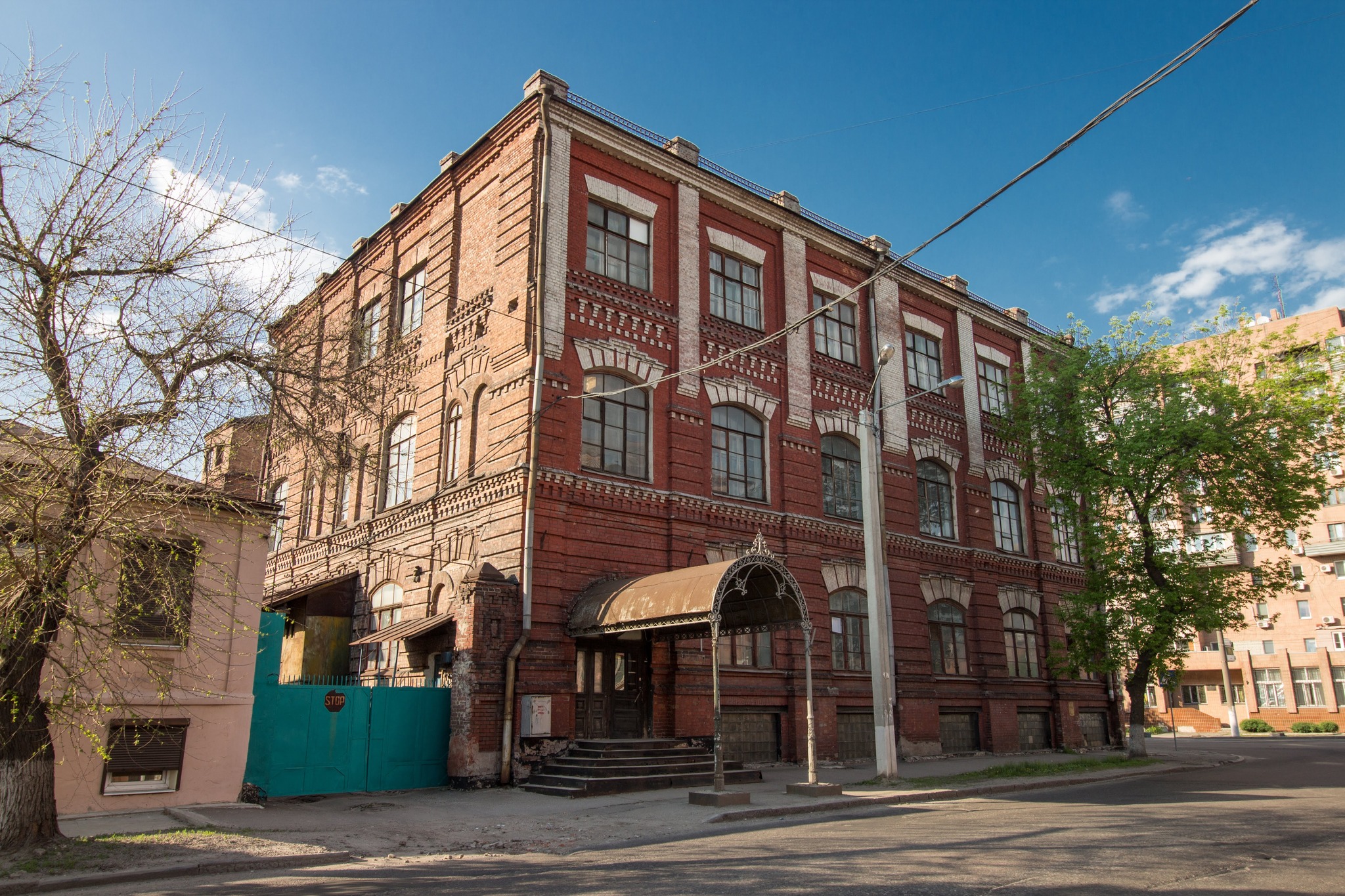
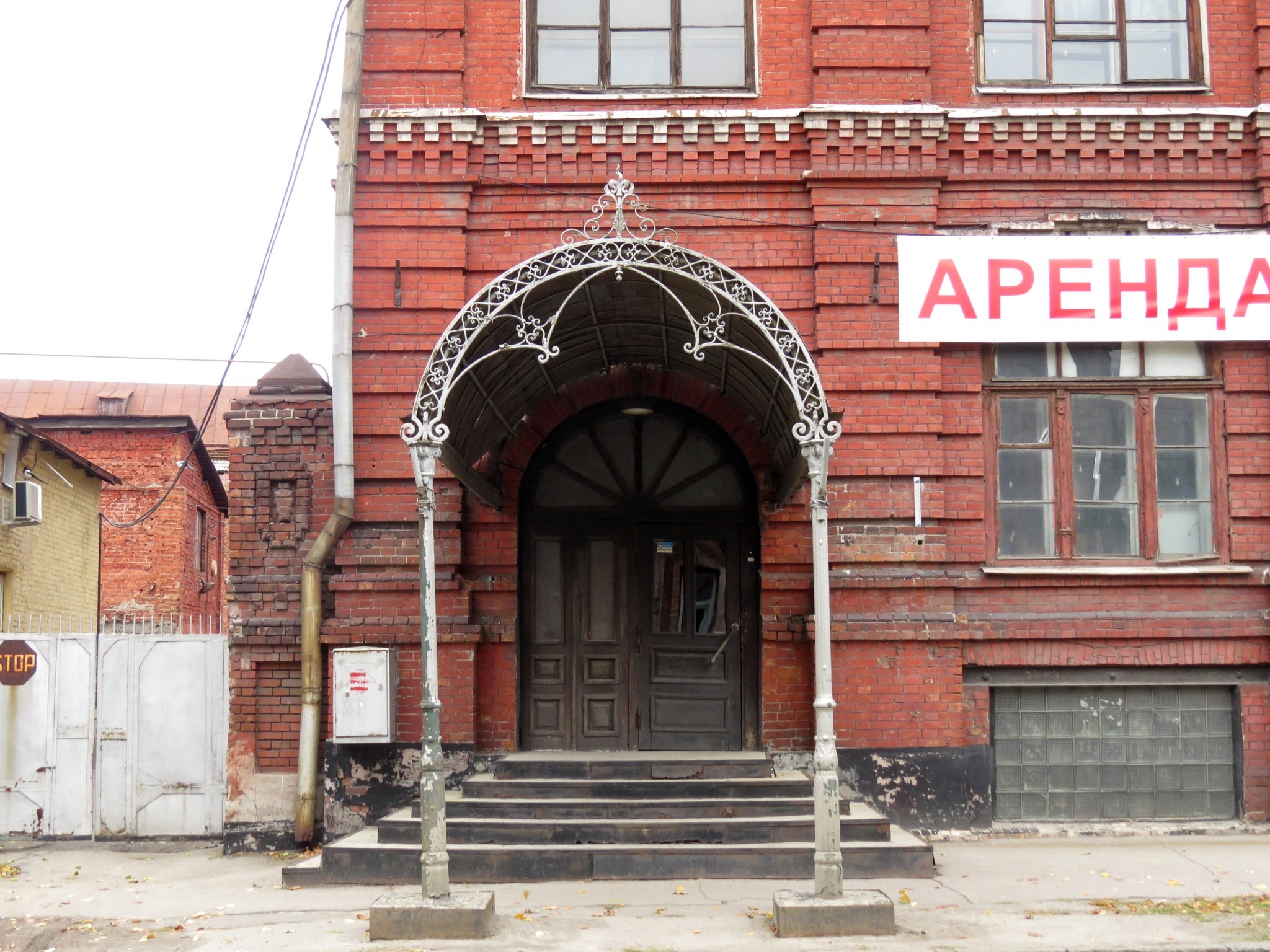
This architectural landmark is particularly memorable for its ornate, old-fashioned canopy over the main entrance, which extended as far as the carriageway of Velyka Honcharivska Street. Such long canopies were usually installed at hotels or estates so that people arriving by carriage would not get wet in the rain or snow. It is quite possible that this canopy could have protected the printing house’s products from the elements whilst they were being loaded onto vehicles – when there was no time to drive into the courtyard.
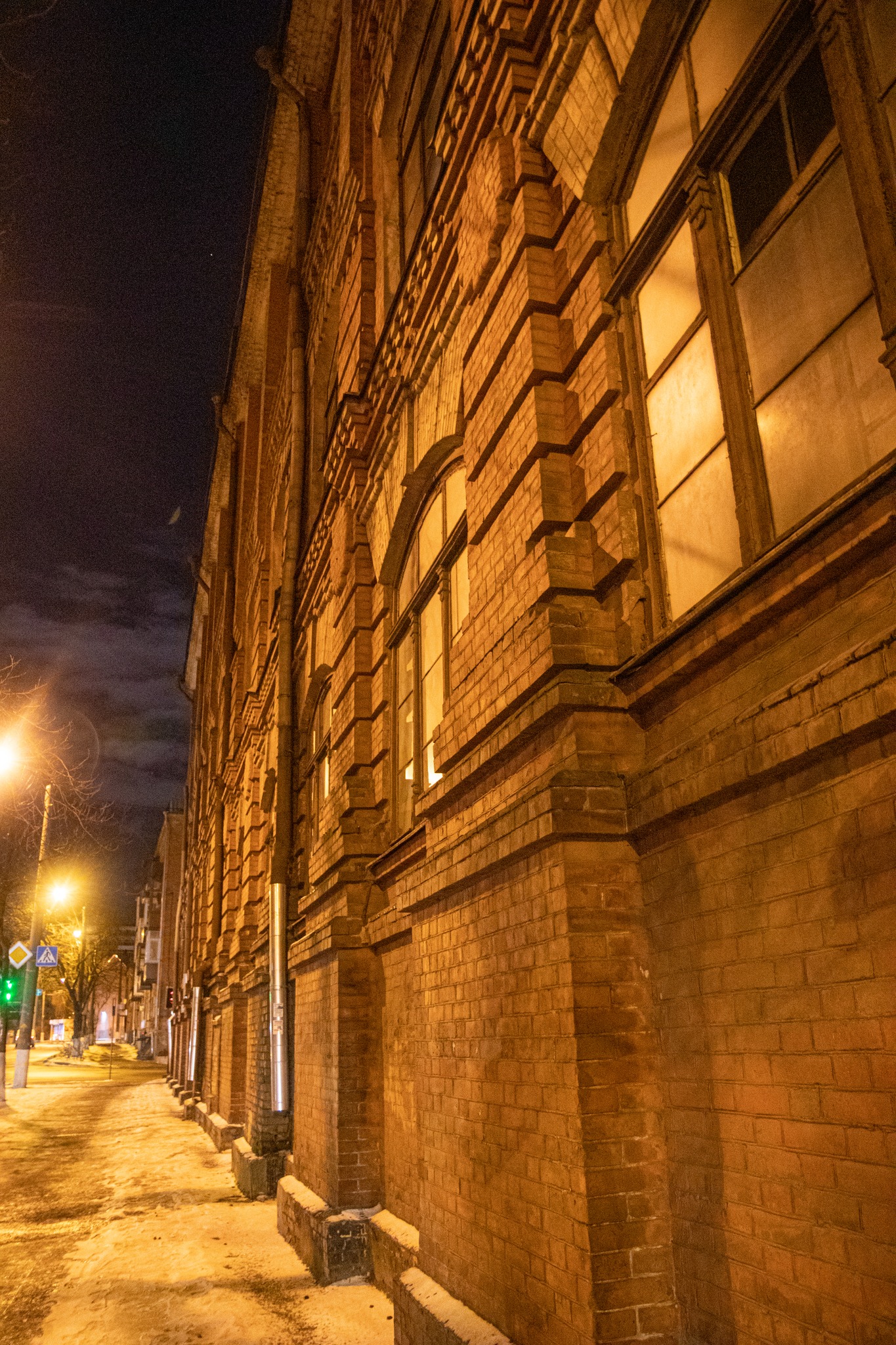
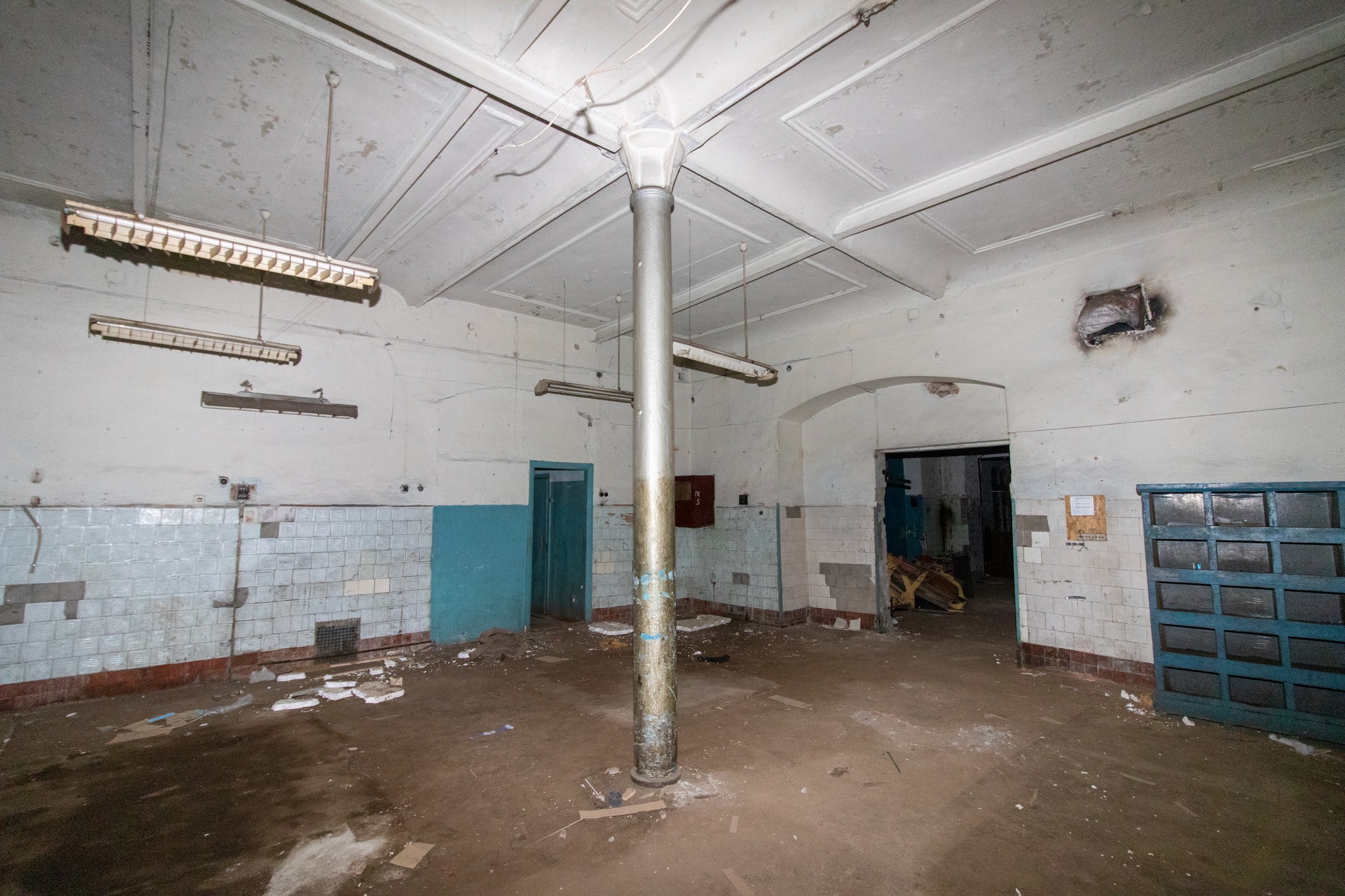
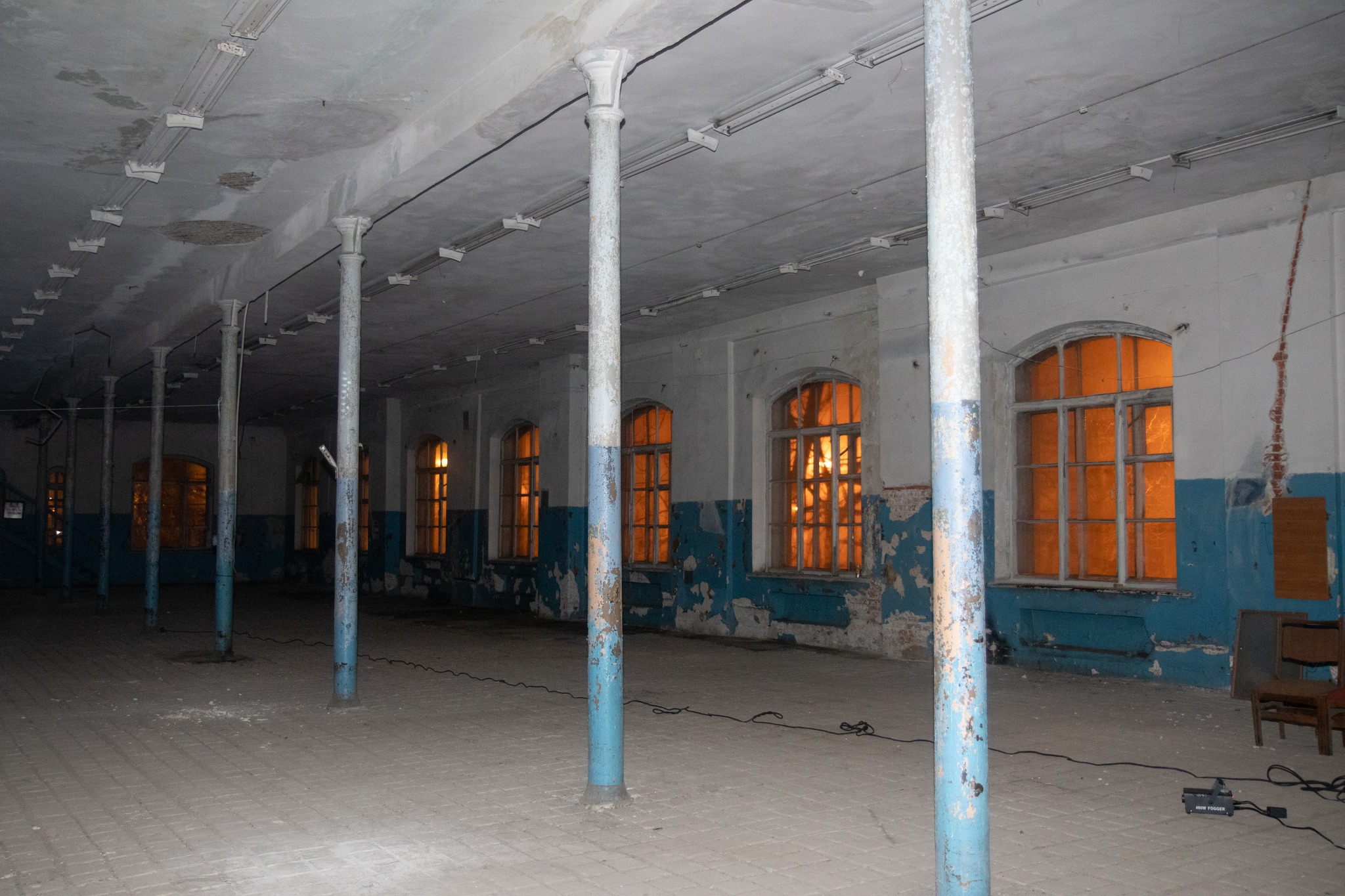
The building, in an eclectic, ‘brick’ style, was constructed between 1898 and 1900 (the architect, unfortunately, is unknown). The décor of such buildings bore a very distant resemblance to that of ancient fortresses or castles. At the same time, the printing house’s construction utilised reinforced concrete floors—a progressive feature for the late 1890s—which were further supported by cast-iron columns and massive I-beams, all of which have survived to this day.
The owner of the property at the junction of Goncharivsky Boulevard and Velyka Honcharivs’ka Street, as listed in the 1909 register of property owners, is the ‘S.P. Yakovlev Printing House’ Society.
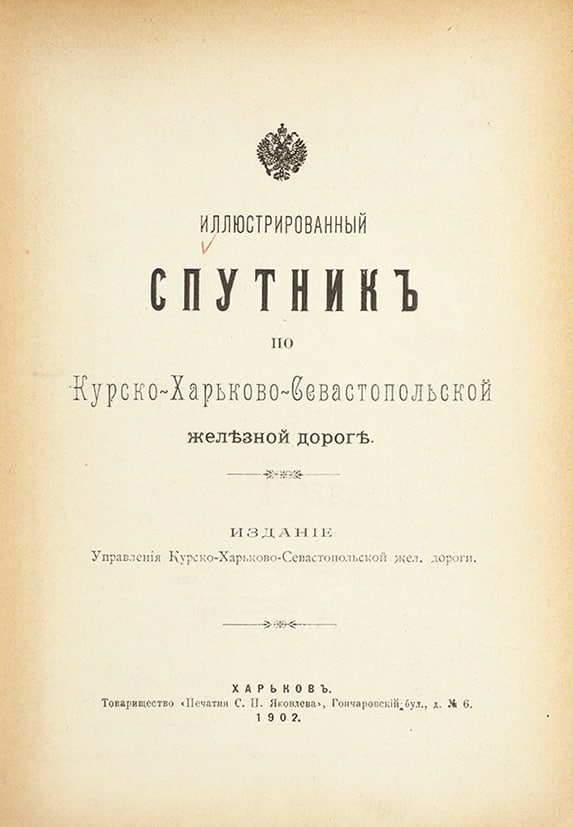
Sergei Pavlovich Yakovlev (1839–1906) was a nobleman who became a magnate of the printing industry. He founded his first printing house in Moscow in 1868. The railways, which were developing rapidly in those years, became some of his main clients, so Yakovlev’s business also grew rapidly. Branches of his printing house were opened in Saint Petersburg, Saratov, Kyiv, and Katerynoslav (now Dnipro). The Kharkiv branch was established in 1872.

The printing house did not limit itself solely to ‘railway’ products – tickets, internal documentation or forms. It also published periodicals (for example, the well-known satirical magazine ‘Zhalo’) and a variety of books, predominantly non-fiction.

Among the printing house’s products, one could find posters, tea wrappers, restaurant menus, business cards, or even forms for the census and luxurious invitations to balls, printed on imported paper with gold embossing.
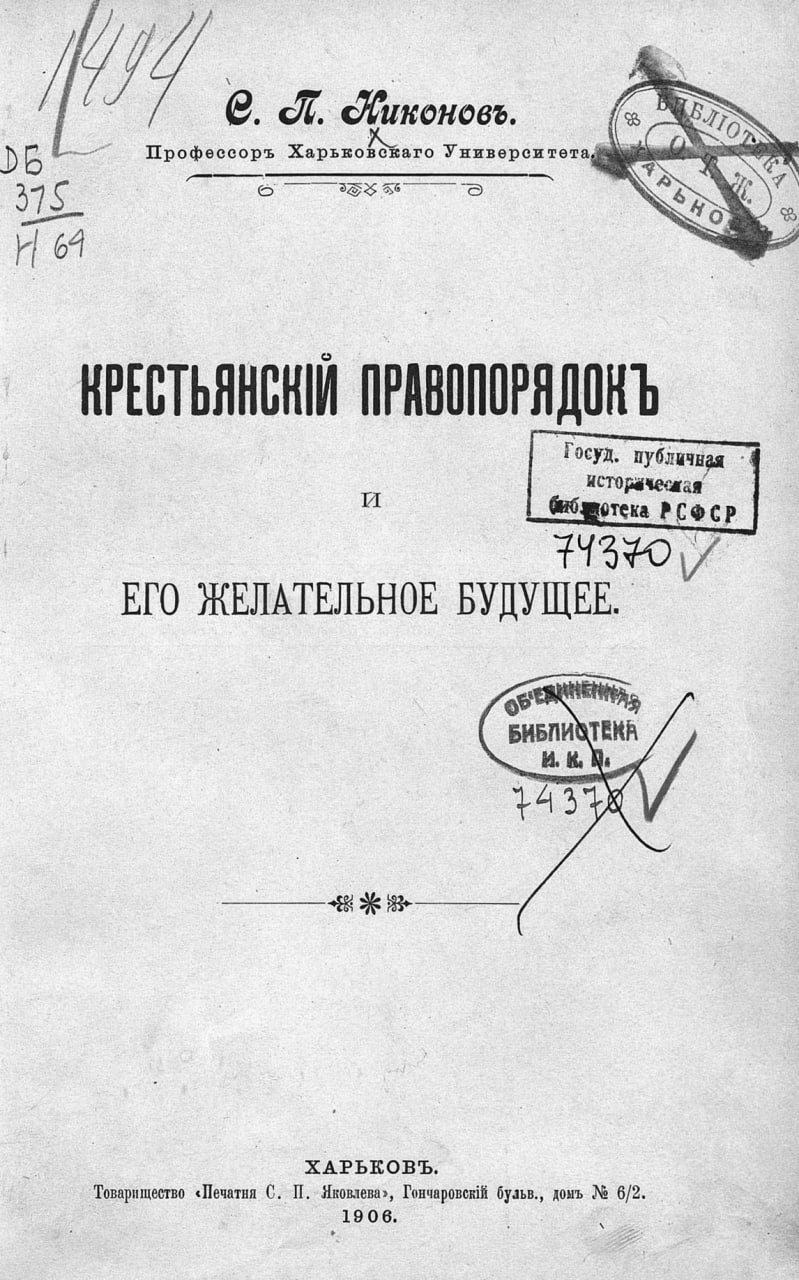
In the 19th century, the printing house grew rapidly, so it frequently changed its addresses. Initially, it was located on Yaroslavska Street, then moved to Katerynoslavska Street (Poltavskyi Shliakh), where it changed addresses twice. In the 1890s, it was situated in Gazetnyi Lane (Pavlivska Square), in the house of the porcelain magnate Kuznetsov (building has not survived).
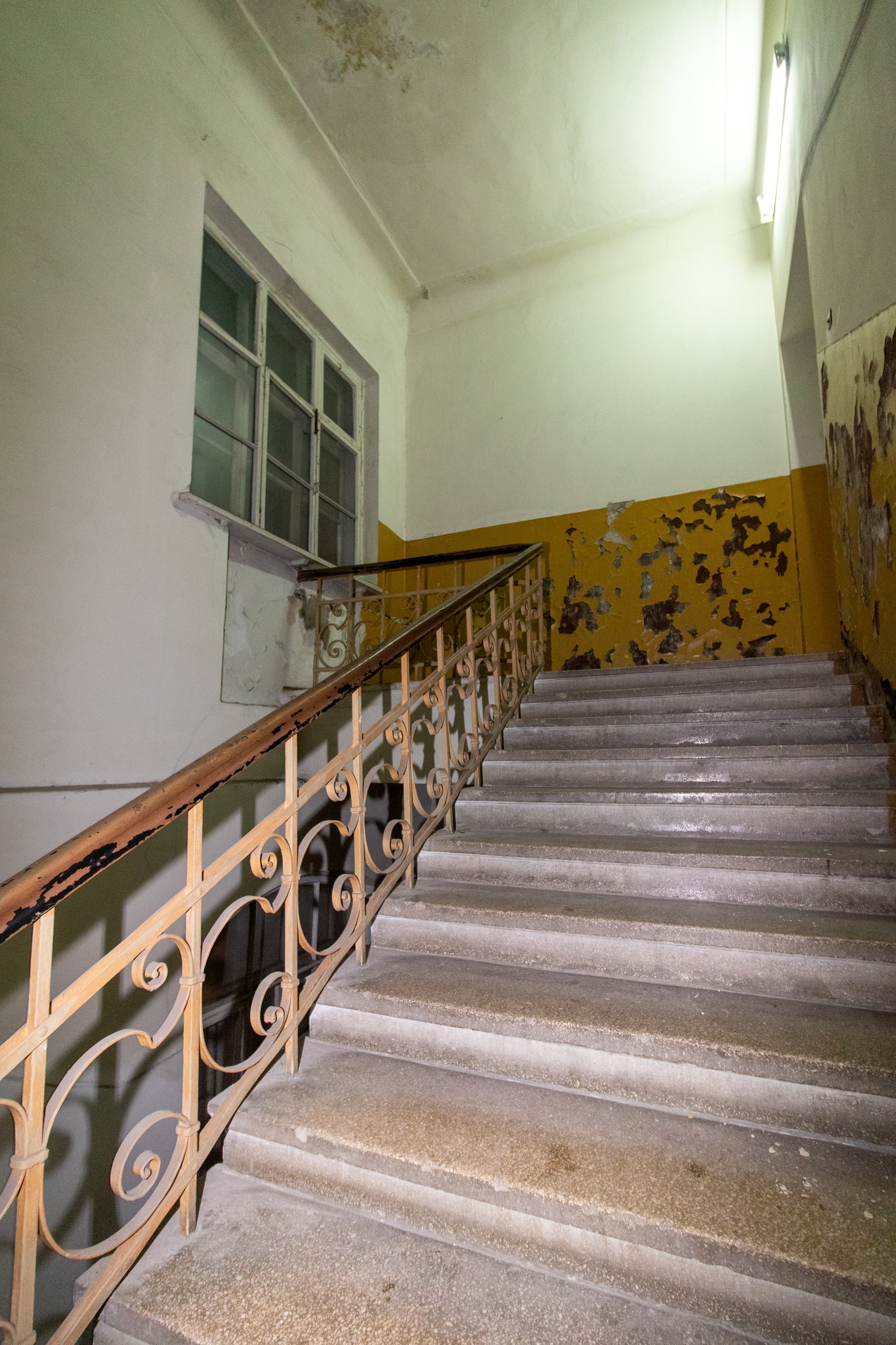
Due to the expansion of the printing house, a new, purpose-built building was constructed for it in Honcharivka neighborhood.

The architect designed tall, spacious workshops with high ceilings, housing 15 high-speed printing presses. The printing works also had space set aside for a further 15 machines. Over 150 workers were employed at the enterprise. In addition to the printing workshops, there were typesetting, bookbinding and stereotype workshops.

The printing house was equipped with steam heating, electric lighting and ‘excellent ventilation’, as the newspaper ‘Utro’ reported in October 1900. The construction was supervised by engineer A.A. Astafiev.
Although the ‘S.P. Yakovlev Printing House Company’ tried to look after its workers and engaged in charitable work, this did not save the Kharkiv enterprise from strikes in 1905, when workers demanded, among other things, a standardised 8-hour working day. The strikes remained largely fruitless.
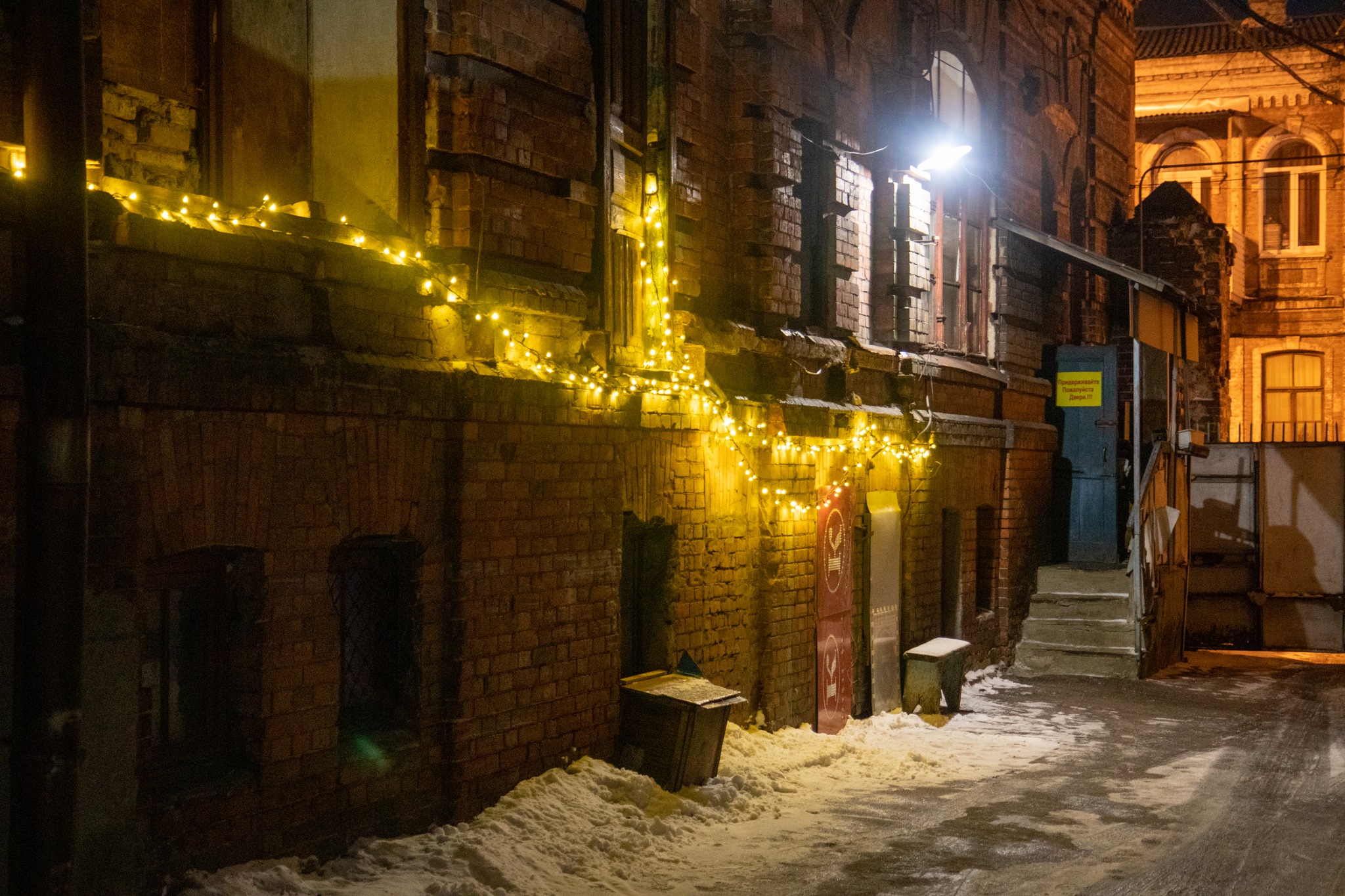
During the revolutionary years (1917–1919), the printing house suffered significantly; most of its equipment was looted and destroyed. In the early 1920s, restoration of the complex began. It housed the 4th Transdruk Printing House (after 1946 – the Ministry of Transport), which continued to supply the railway with specialised printed materials.
Originally, the printing house was a three-storey building (including a basement). It is thought that in the early 1930s, a one more floor was added to the structure. This is evident from the simplified décor of the extension, although the unknown architect made a great effort to preserve the building’s style. He adorned the windows of the added storey with imitation ashlar, and continued the lines of the projecting lintels between the windows with capitals on the roof, somewhat reminiscent of the battlements of a fortress. A goods lift was also installed during those years.

In the post-WWII period, a whole row of extensions appeared at the rear of the printing house, housing storage and technical rooms that enclosed the site.
The names of the printing house’s managers from the second half of the 1940s onwards are Yaroshenko, Bubnov, Zalishchansky, and I. Suchkov – the latter served as director from the 1970s until 2008.
After Printing House No. 4 of the Ministry of Railways left the ‘Transzheldorizdat’ association, it was renamed Printing House No. 17. Then, following a further reorganisation, probably in the 1970s, the printing house was designated No. 2. Alongside producing materials for the Ministry of Transport (Tram and Trolleybus Department), it also printed posters and books. It is known that posters continued to be printed on a pre-WWI printing press.
Printing House No. 2 operated until the late 2000s; premises were also let out here, but by the 2010s, most of the complex had been abandoned and was no longer in use.
The building’s revival began in 2021, when Alter Development initiated the revitalisation and restoration of the printing works complex. A few months later, the DRUK Cultural and Community Centre opened there. The ground floor was converted into a modern, safe space – the ‘Artistic Shelter’. The former printing works now houses venues for concerts, conferences and theatre performances, as well as co-working spaces and premises for permanent residents. Notable among these are an independent theatre, galleries, a music collective, a poetry and urbanism studio, as well as pottery, restoration and other workshops. DRUK has become a unique example of a ‘living’ cultural centre, rapidly developing in a frontline town despite scepticism, threats and the risks of war.

On 1 March 2025, the building’s historic glazing was damaged by a Russian ‘Shahed’-type drone striking nearby. Nevertheless, many of the original windows, with their intricate carved frames, have been preserved and are continuing to be restored.