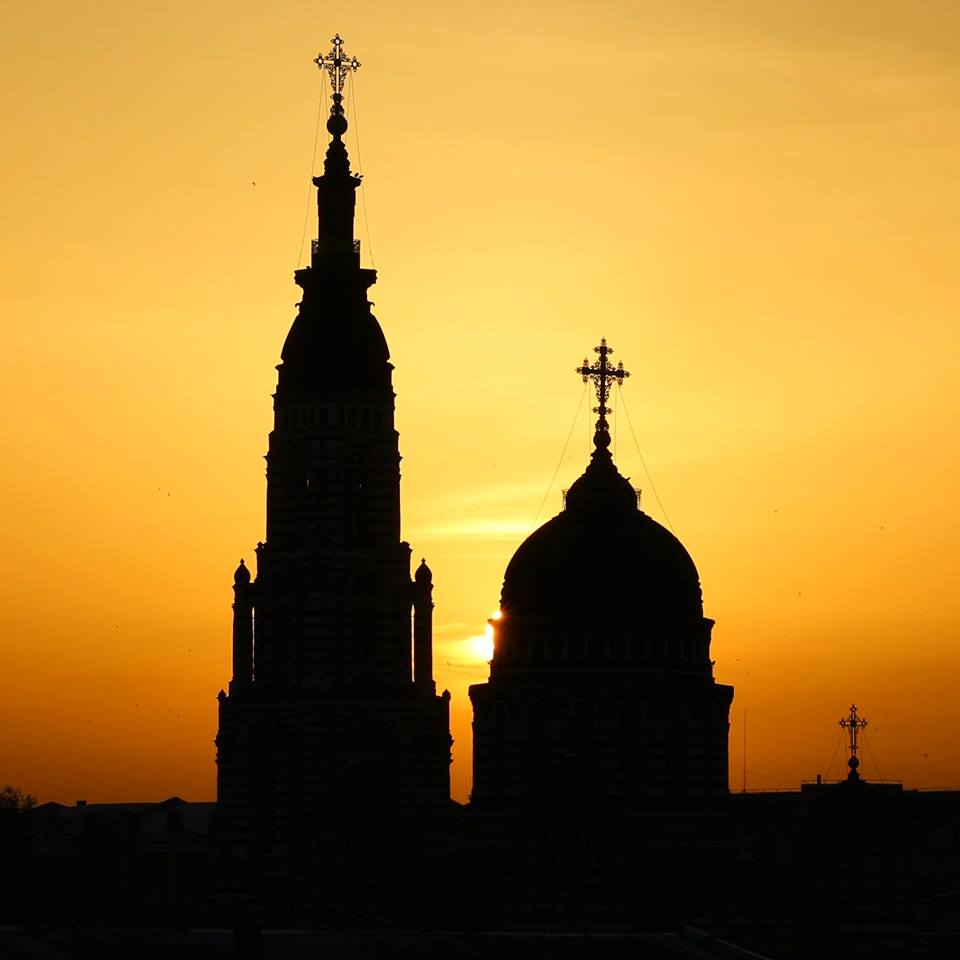
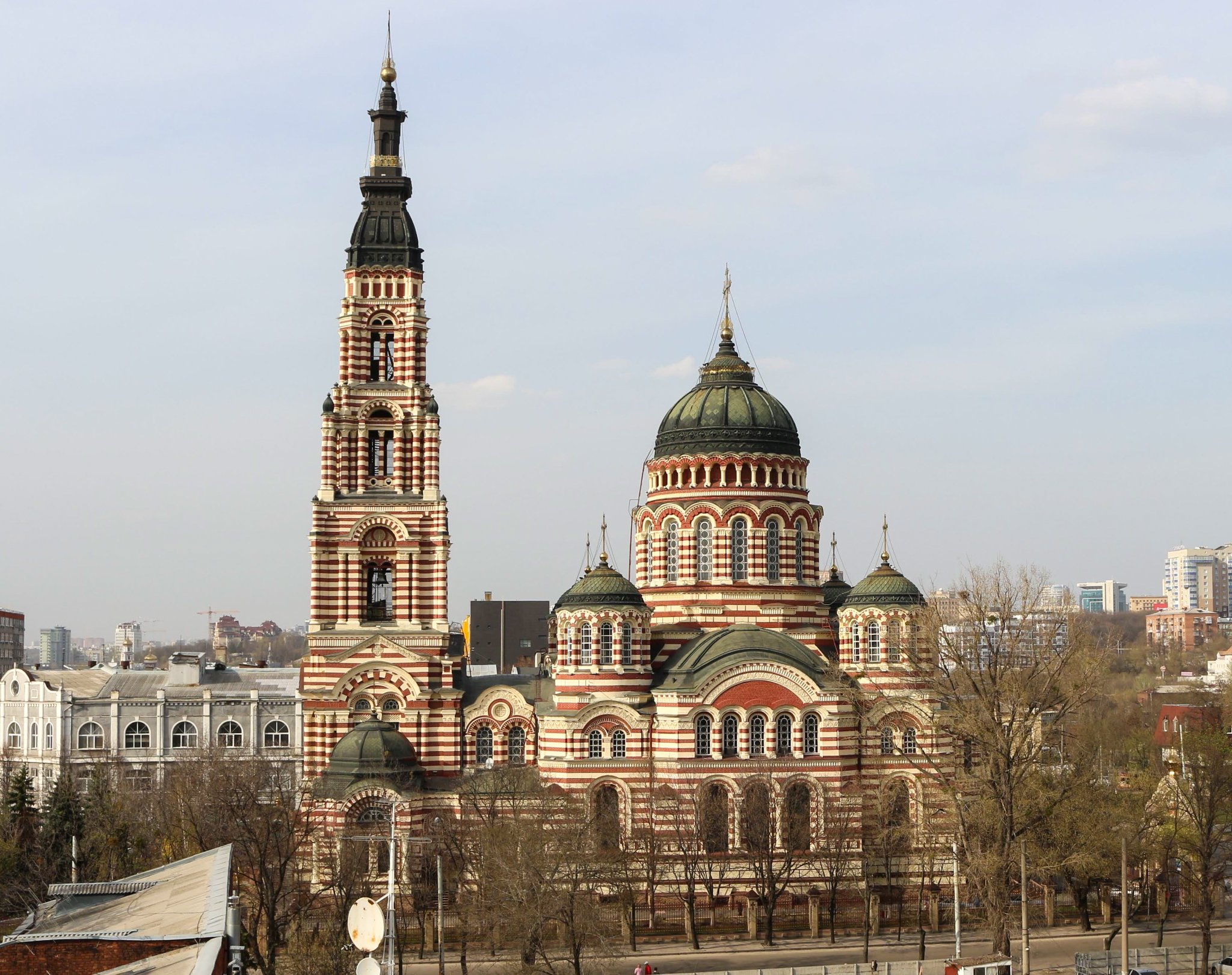
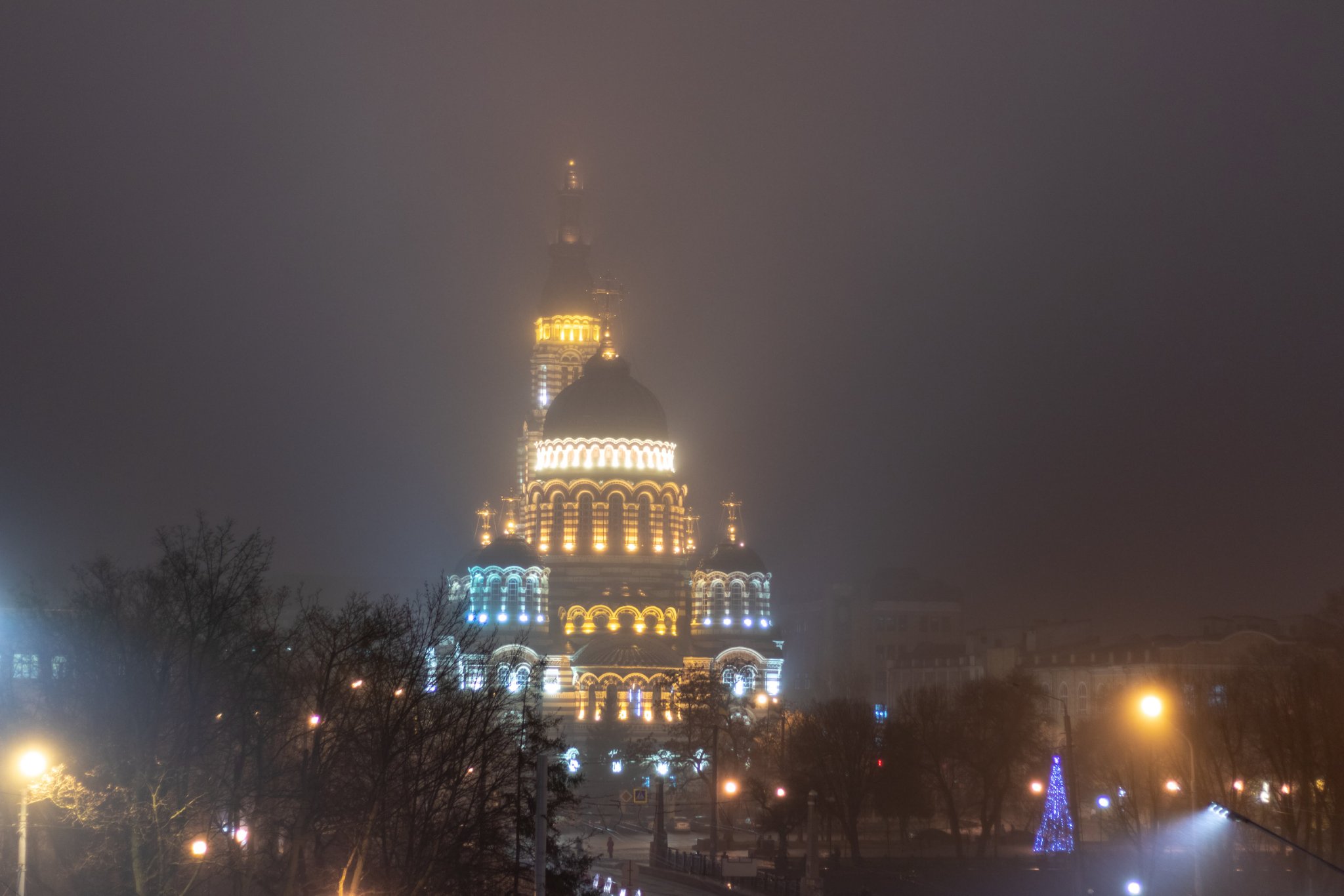
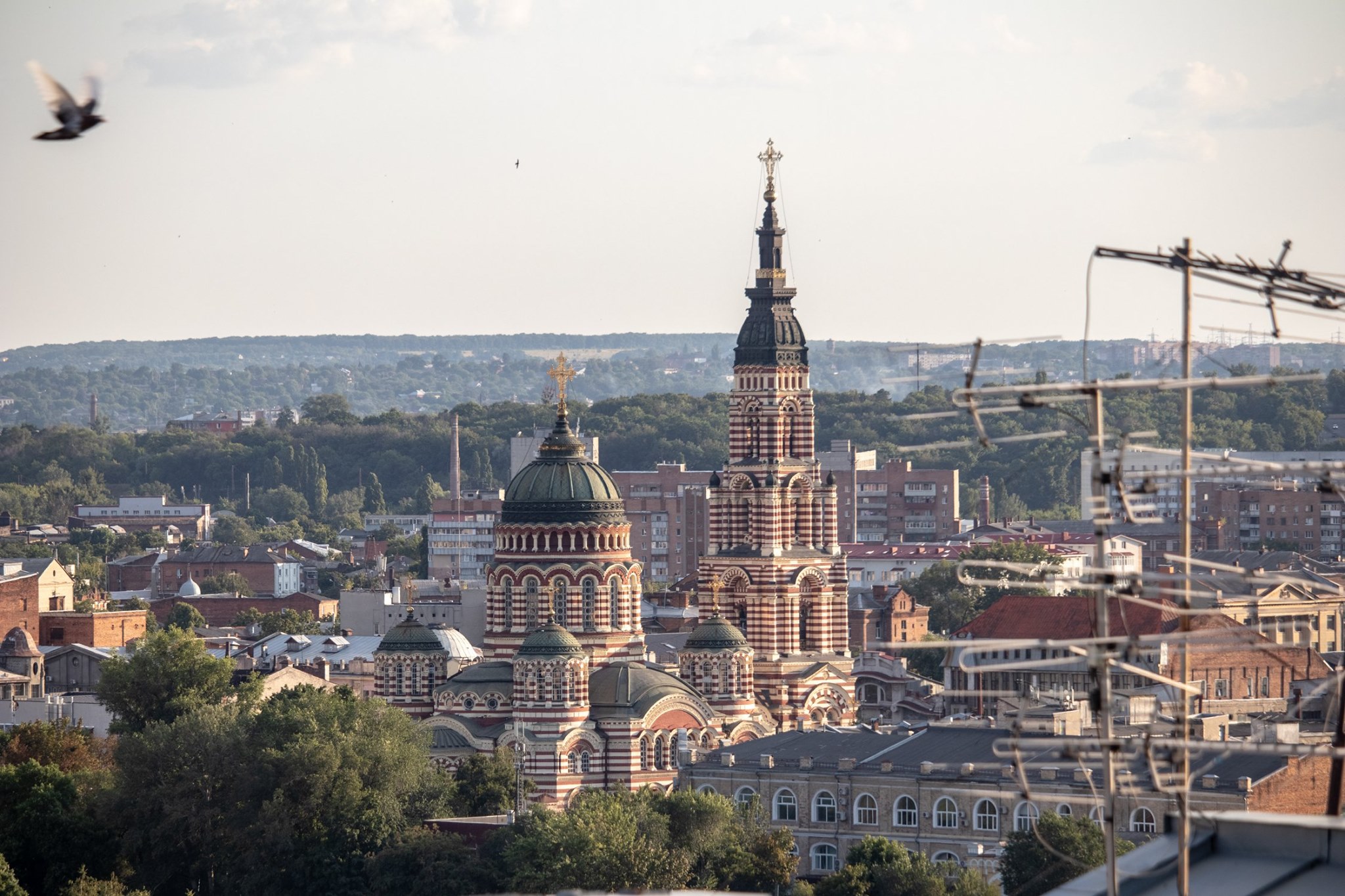
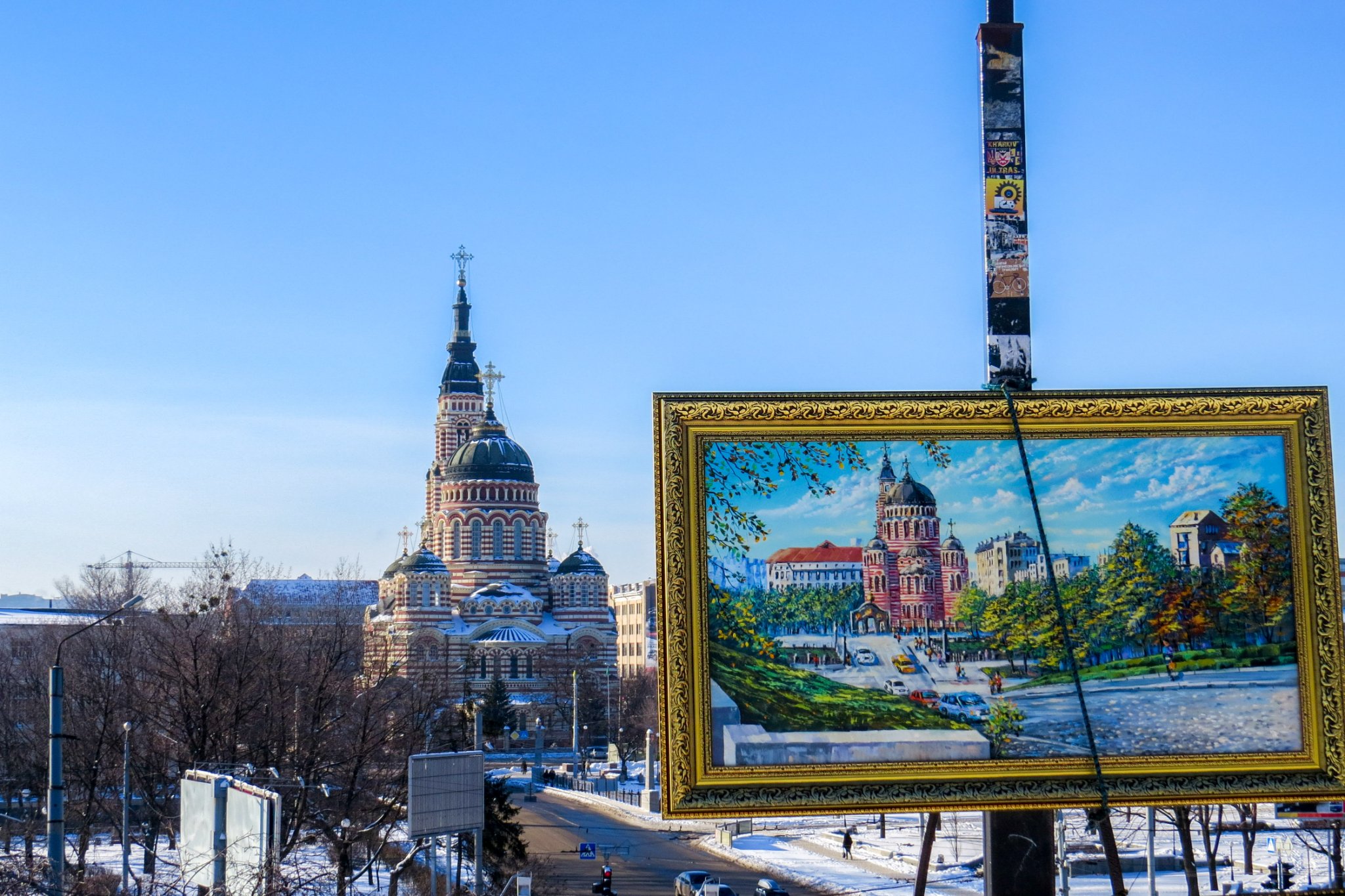
The Annunciation Cathedral is one of Kharkiv’s main symbols. Visitors to the city are instantly familiar with its distinctive striped design. The best view of the cathedral can be enjoyed from the observation deck in the Eternal Flame Square.
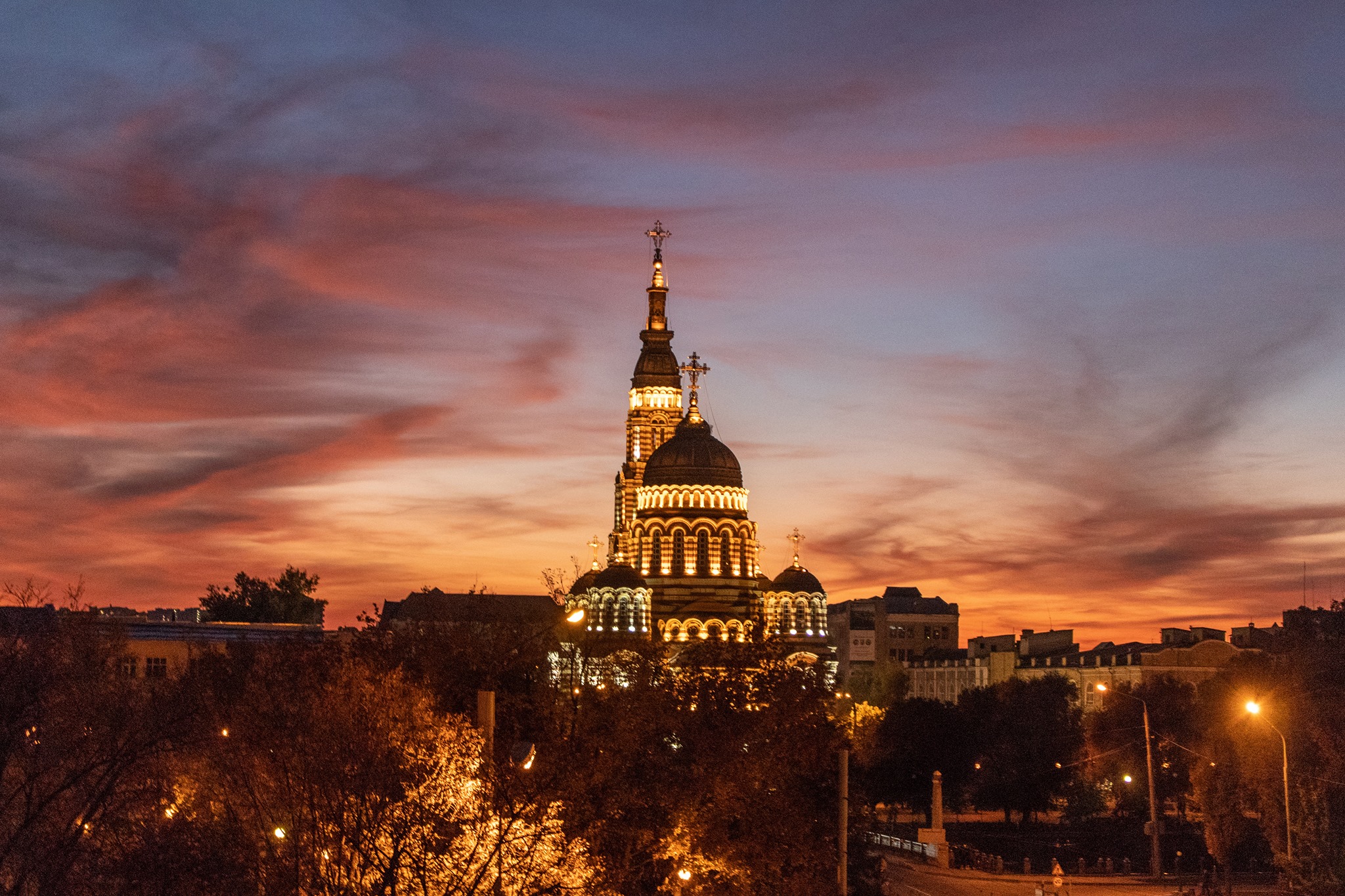
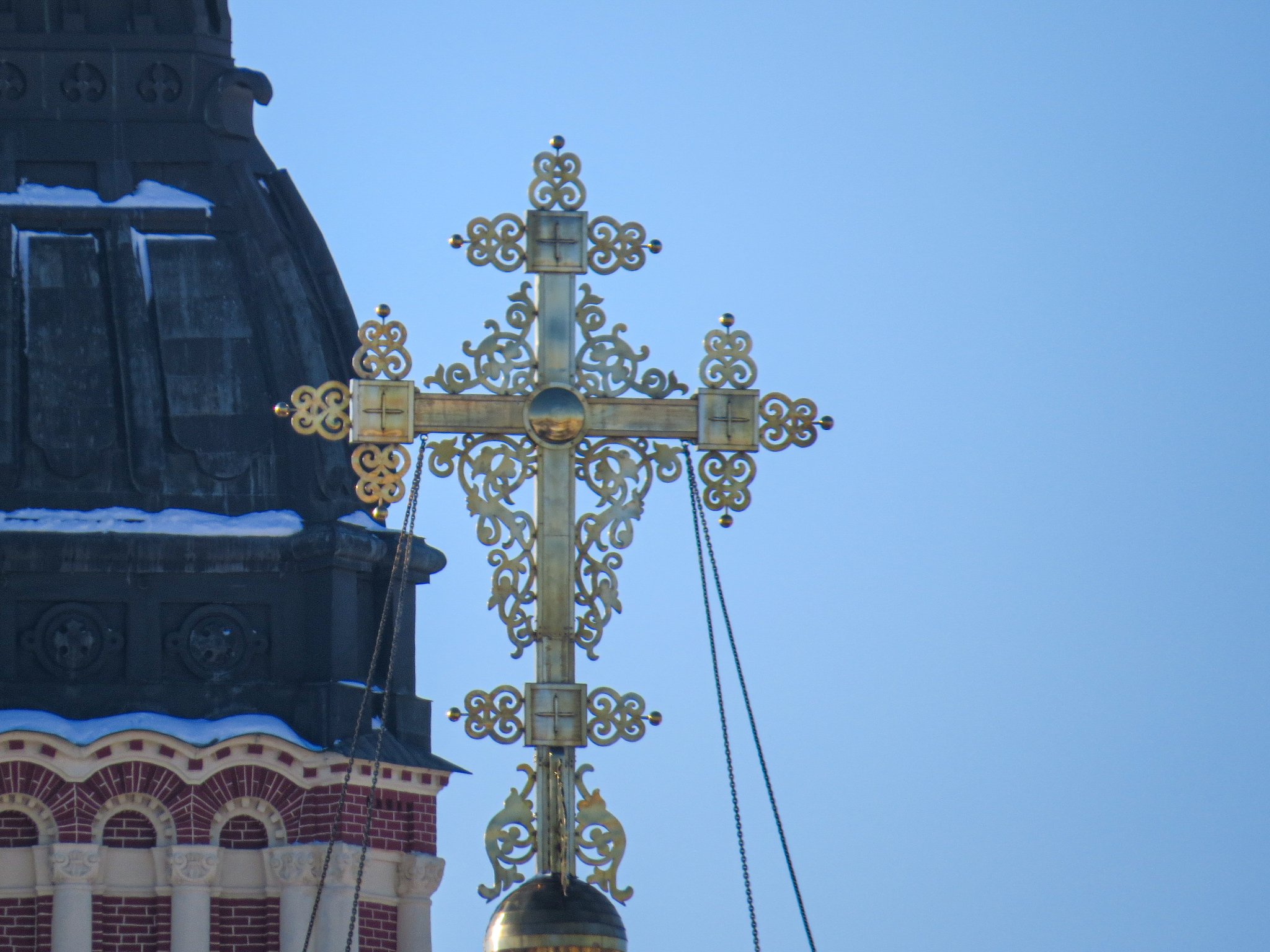
The color scheme of the cathedral, built in the neo-Byzantine style fashionable in the late 19th century, imitates the “striped” churches of the Kievan Rus era, where flat plinth brick alternated with a wide strip of mortar.
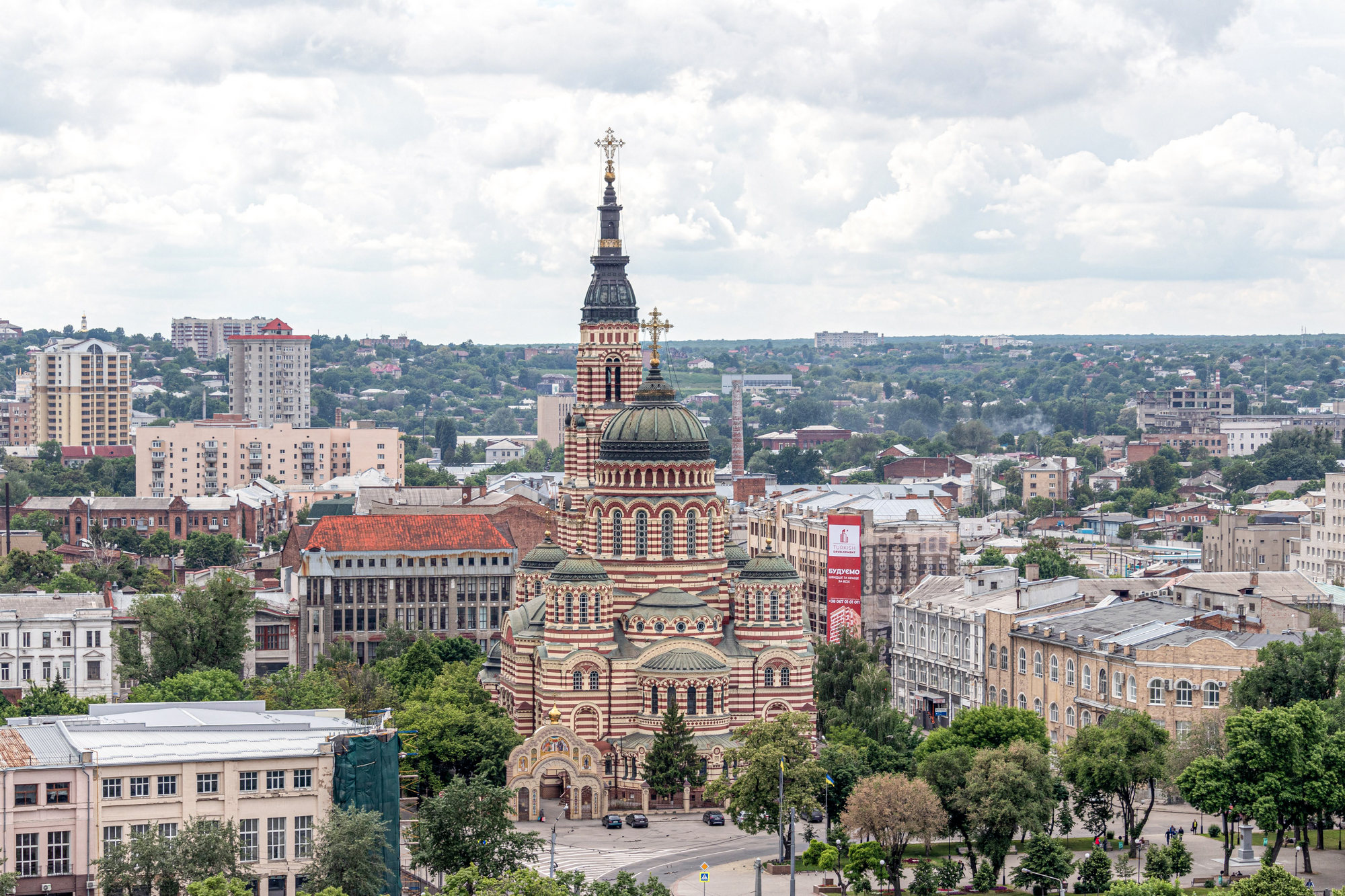
The bell tower is atypical for the style of the cathedral itself – it partially gravitates towards the neo-Gothic style (height 80 m).
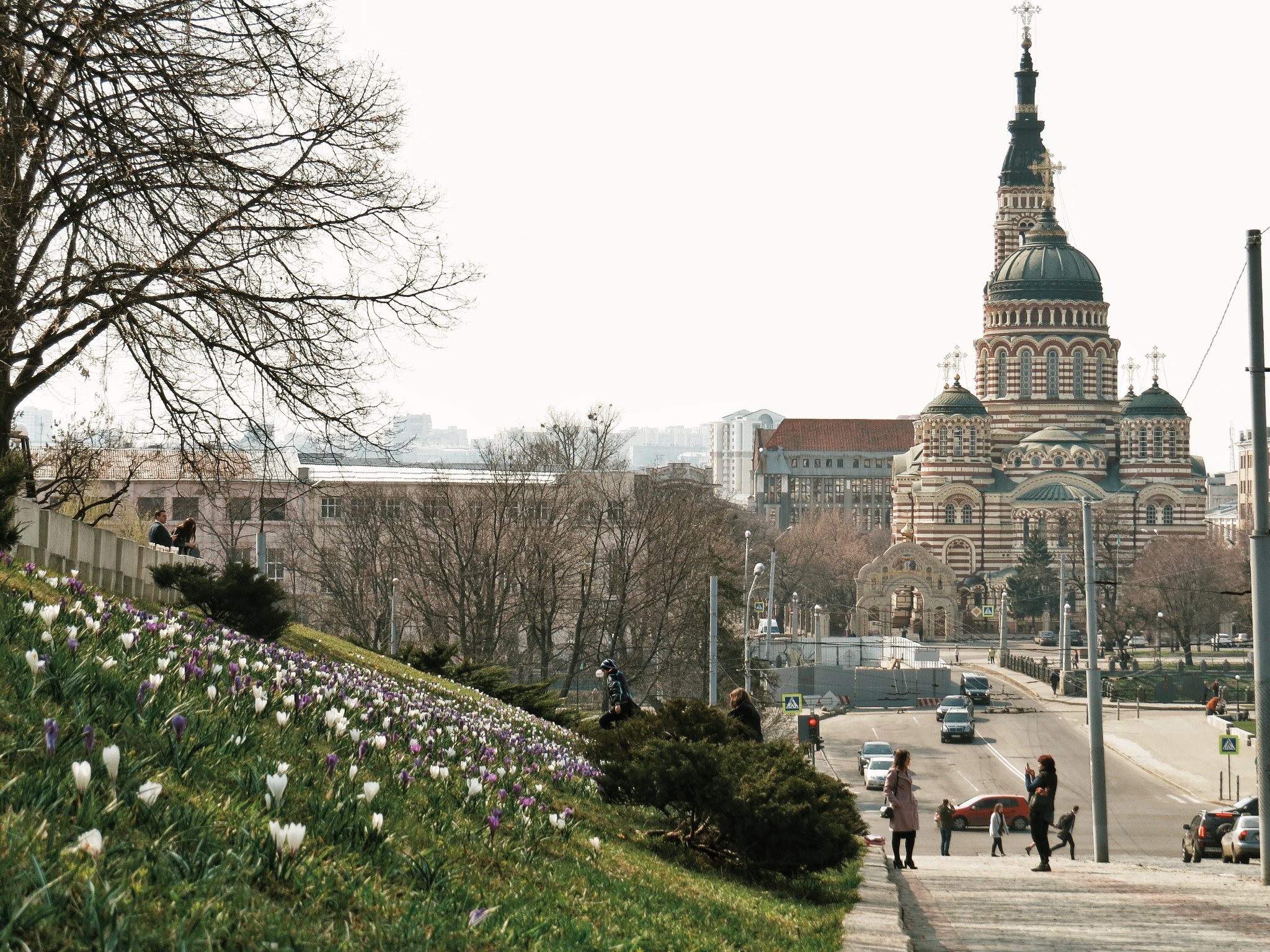
The author of the church project is Mikhail Lovtsov.
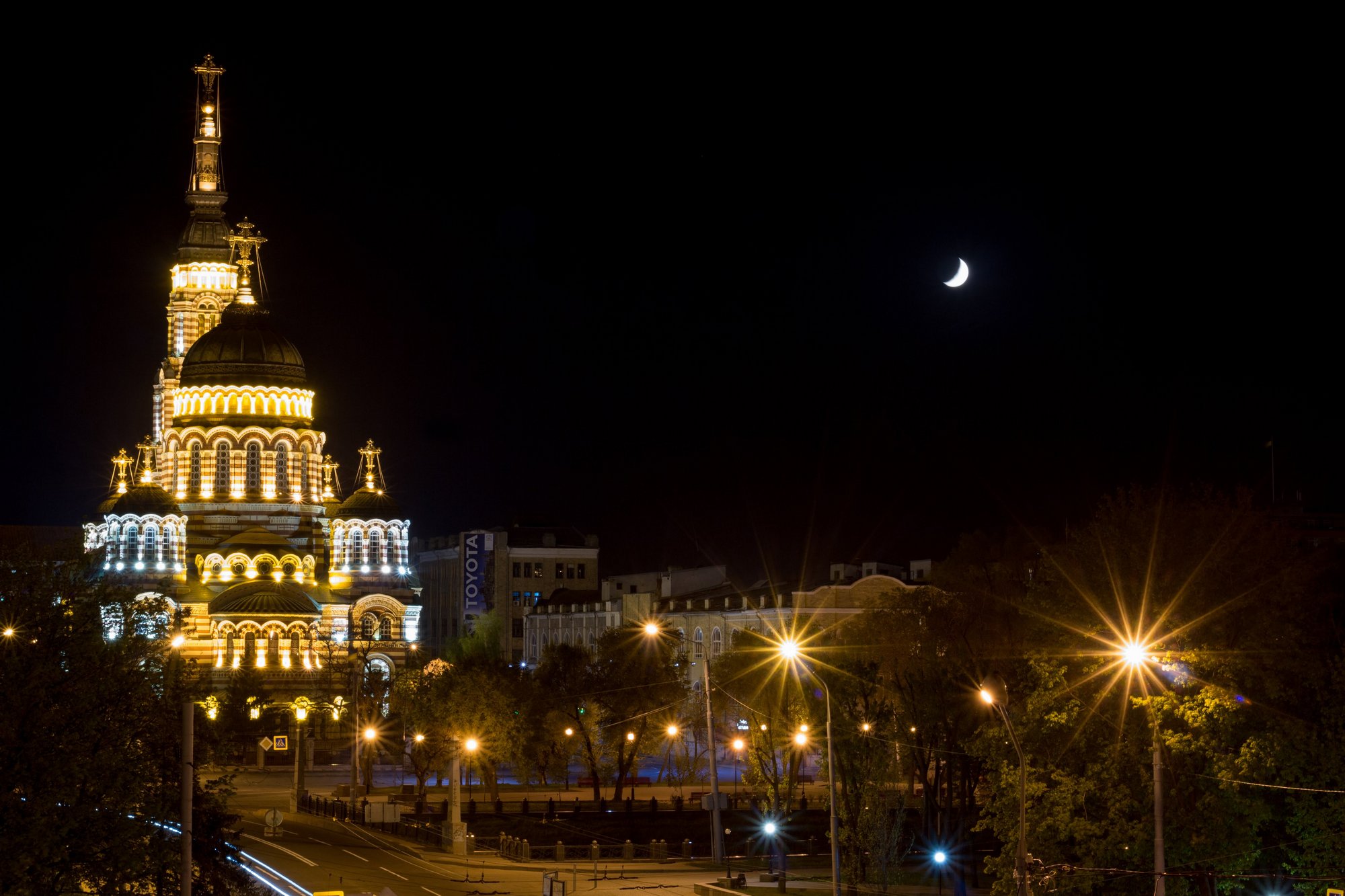
It’s worth remembering that most of Kharkiv’s churches had “several generations,” the first of which were built immediately after the city’s founding.
The Annunciation Church was built around 1659, and, like other buildings in the city, it was wooden.
The wood deteriorated over the years, creating a need for a stone church, which was built in 1789-1794 according to the design of Peter Yaroslavsky.
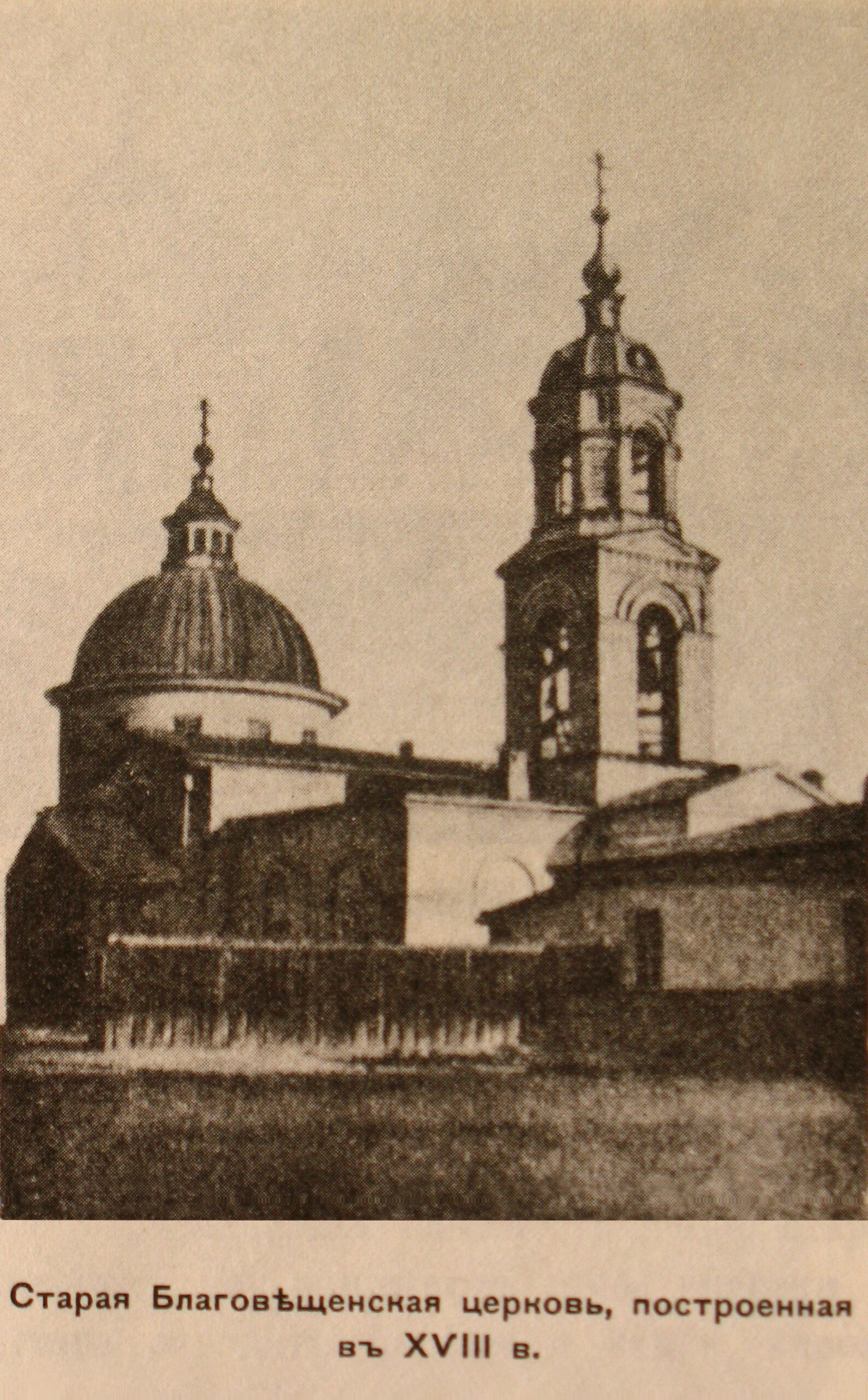
At the beginning of the 19th century, a bell tower was built, and in 1839 and 1858 the church was expanded.
However, as the years passed, Kharkiv’s population grew, and the church could no longer accommodate everyone who wanted to attend.
The construction of the new church lasted from 1888 to 1901 and cost patrons and ordinary parishioners 400 thousand rubles in donations.
The church can accommodate up to 4,000 people.
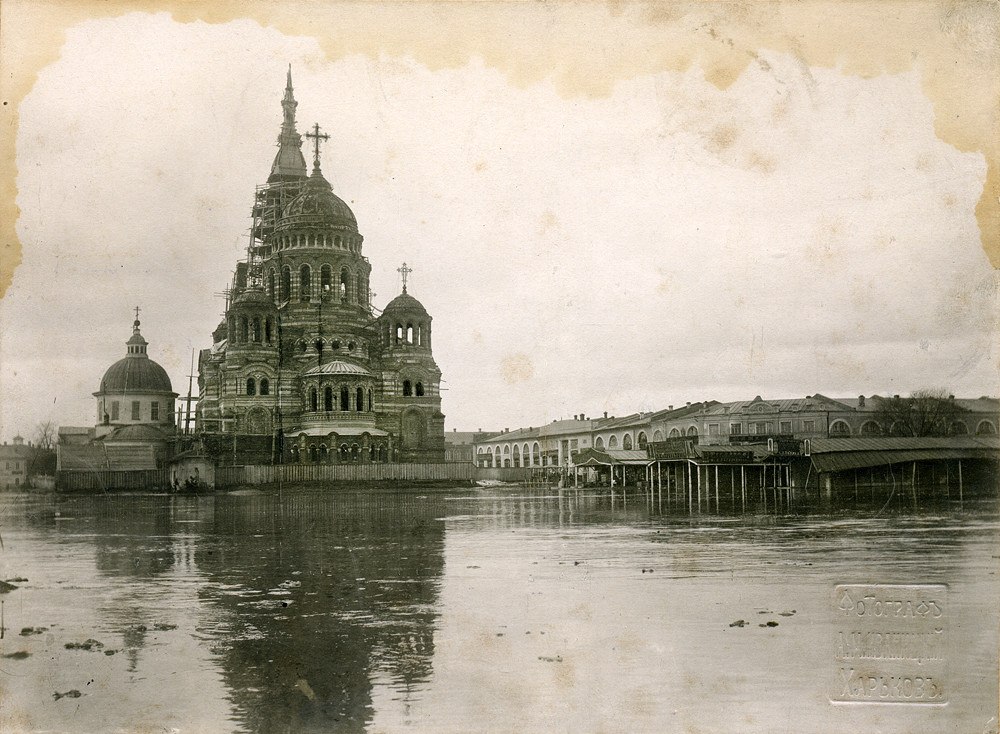
For some time, the old and new Annunciation churches stood side by side, and only then was the old one dismantled.
The church was closed for services in 1930, but services were resumed during the WWII Nazi occupation.
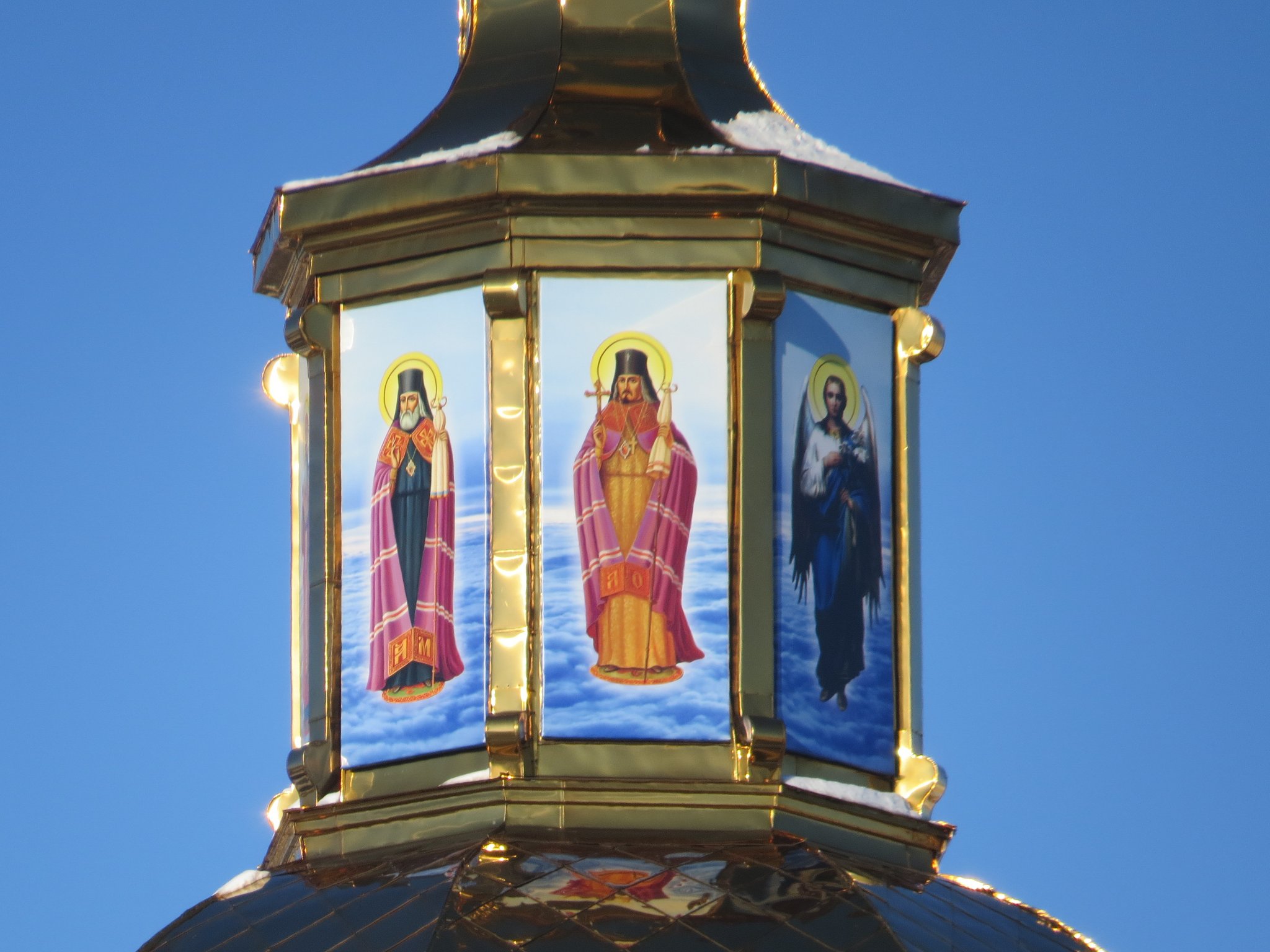
In 1948, the relics of St. Meletius of Kharkiv were transferred here from the Pokrovsky Monastery, and the relics of St. Athanasius, Patriarch of Constantinople, were transferred from the Historical Museum. These are the church’s main relics now.
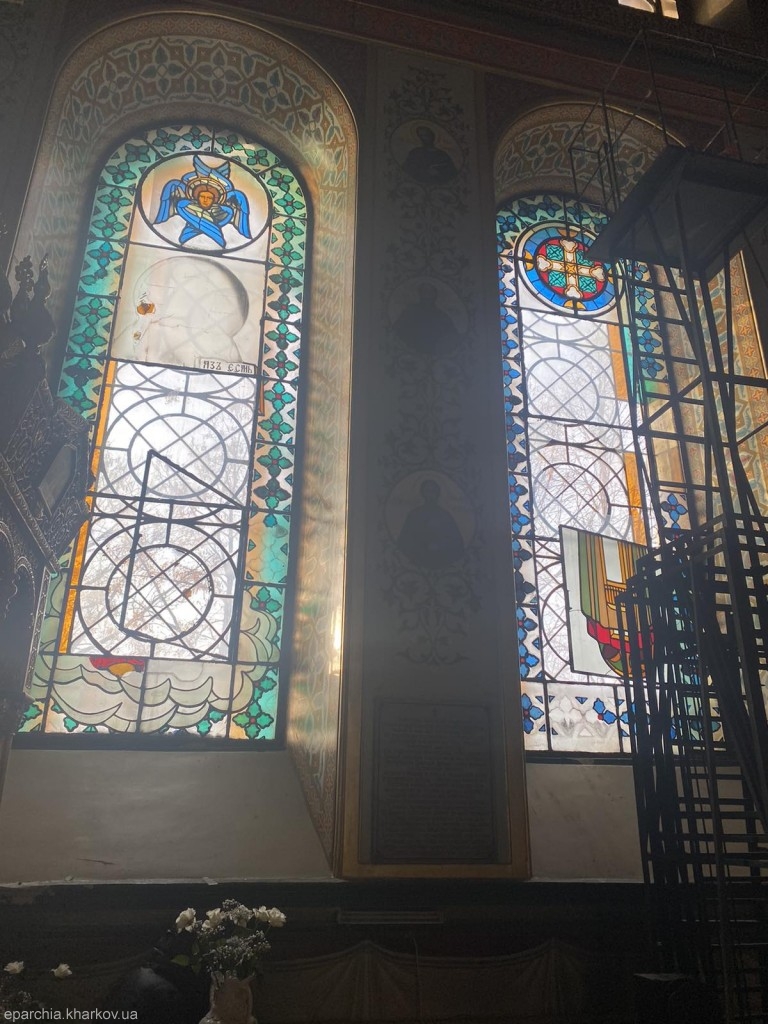
As a result of Russian missile attacks on January 23, 2024, windows and stained glass were broken and the interior of the cathedral was damaged.

- 1st Kharkiv Gymnasium - 17.09.2026
- The Oldest Movie Theater in Ukraine - 24.08.2026
- The Alkhovsky Estate - 14.08.2026