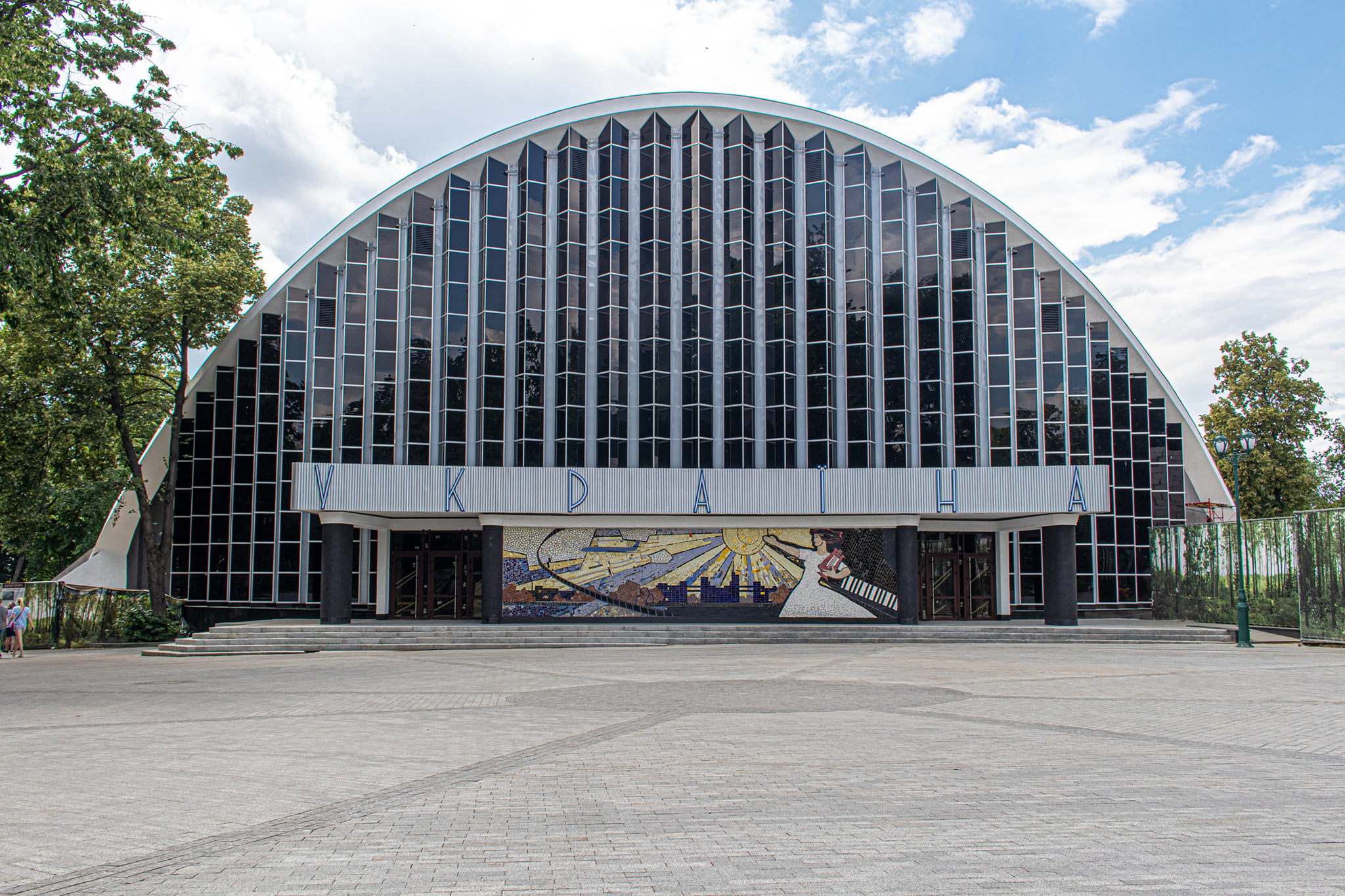
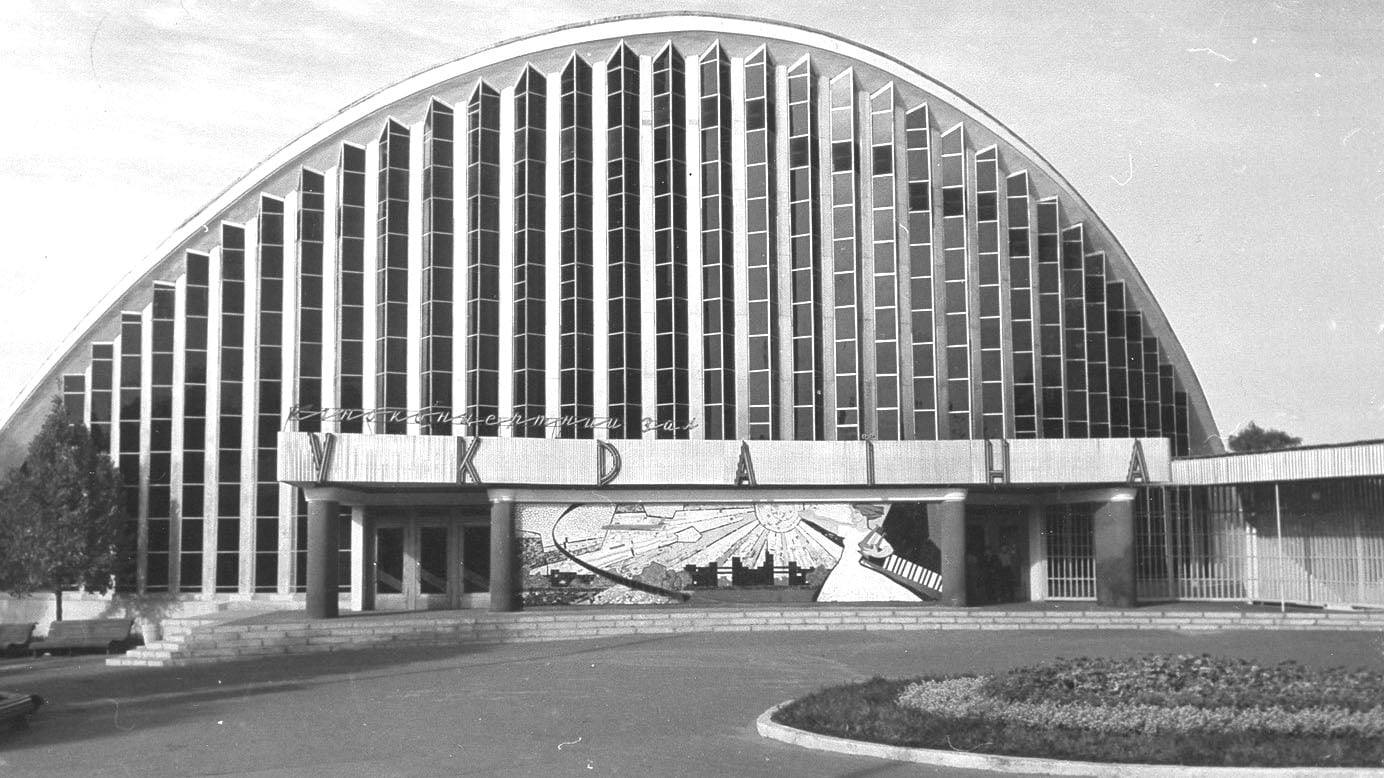
The “Ukraine” Concert Hall in Shevchenko Park is Kharkiv’s only Soviet architectural modernism building on the official list of the city’s architectural landmarks.
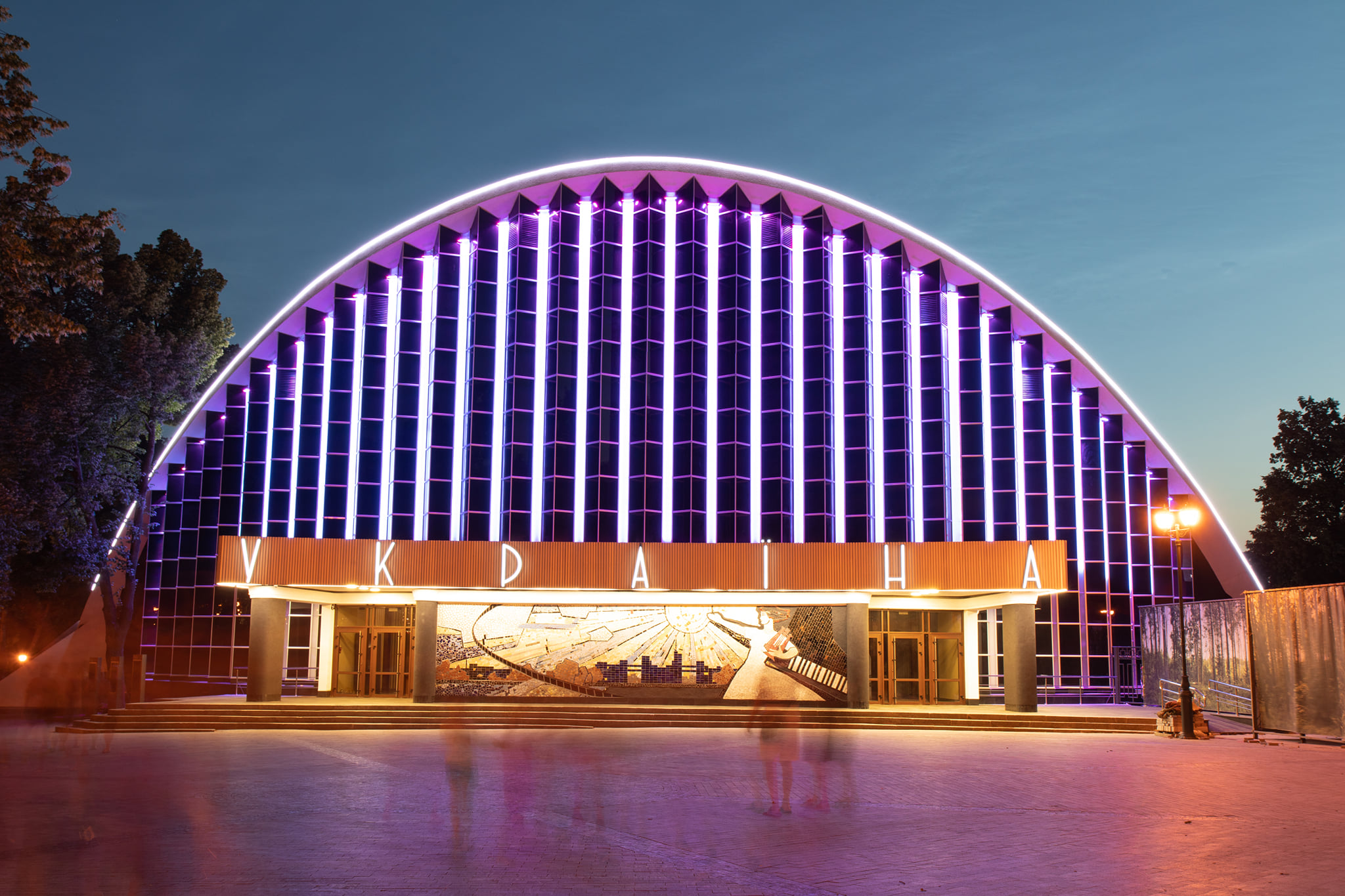
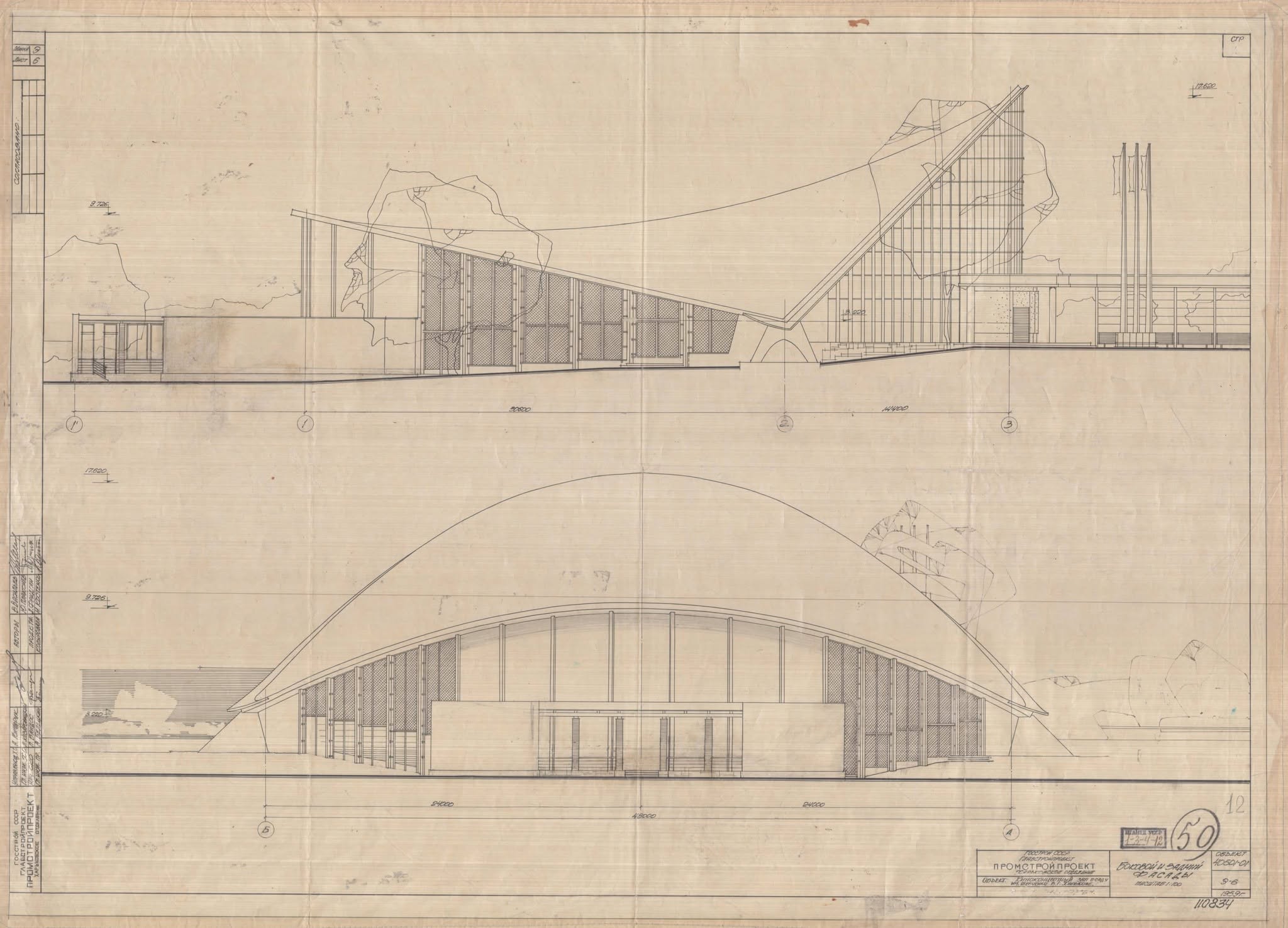
Originally, the “Ukraine” Concert Hall was an 1,800-seat open-air theater built in 1946–1947 according to a design by architects N. Arefiev, E. Lyubomilov, and A. Mayak. The acoustic design was carried out by Oleksander Ginzburg; this may have been the last project by the esteemed master of Kharkiv Art Nouveau. In 1958, it was decided to enclose the theater with a roof. The design by architects V. Vasilyev, Y. Plaksiev, and V. Reusov, as well as engineer L. Fridgan, was complex and unusual for the Soviet Union at that time.

The main load-bearing structures of the Concert Hall consist of two large reinforced concrete horseshoe arches.

Its implementation saved a significant amount of resources and building materials. Construction of the Concert Hall took place from 1960 to 1963.
Precisely because the Concert Hall was originally designed as a open-air theater, it had very few indoor spaces, which were instead housed in separate buildings. In 1970, the design was reused in the construction of the “Yubileiny” KKZ in Kherson.
Over the first 50 years of its operation, the “Ukraine” Concert Hall has welcomed more than 10 million visitors.
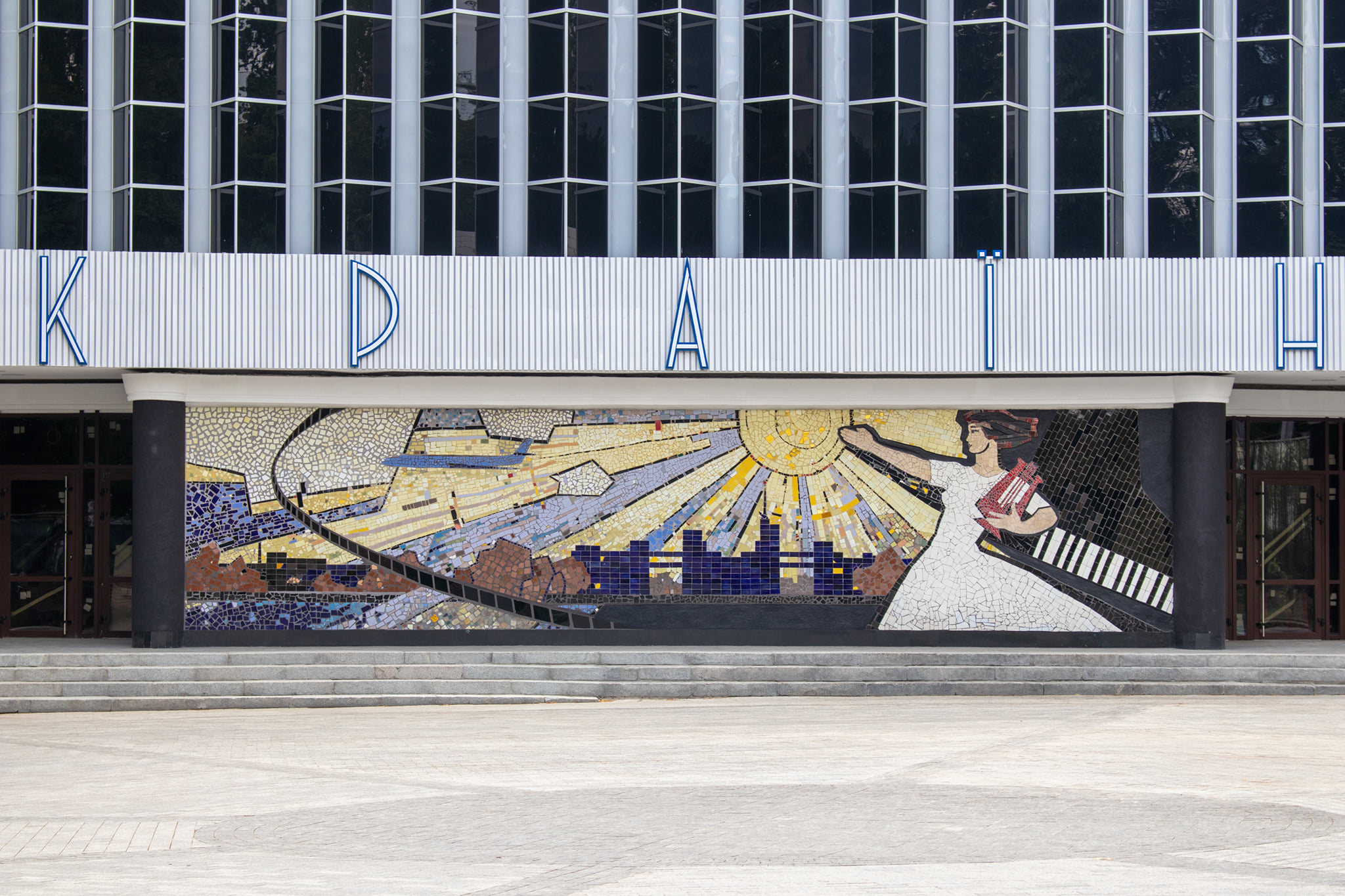
The “Ukraine” Concert Hall is notable for its mosaic. Researcher Dmitry Solovyov attributes the right side of the mosaic (the figure of a woman with a lyre) to E. Roganova. Most of the mosaic was completed by the architect Vadim Vasilyev himself based on a revised sketch—Roganova did not like the original sketch and left the project.
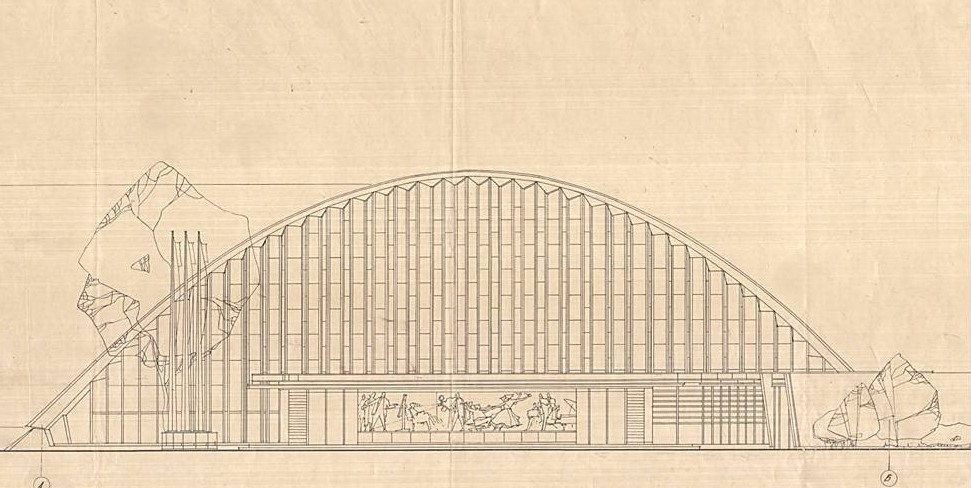
During the renovation carried out from 2019 to 2021, restrooms were installed inside the concert hall itself, the seats were replaced, and backstage areas were added; significant work was also done to improve the hall’s acoustics. Some of the work was coordinated with one of the original designers. The sign with the original fonts was also restored, and modern facade lighting was installed.

- Blackie’s House on Maksymilianivska St - 19.10.2026
- Danylevs’koho Street, 19 - 13.10.2026
- Debunking the myth about one of the most famous Kharkiv photos - 12.10.2026