News of all kinds of traffic accidents appears regularly in Kharkiv’s modern media. One moment a tram derails; the next, a drunk driver hits pedestrians, or a pedestrian, apparently imagining himself to be an immortal “Highlander,” decides to cross the street in the wrong place… Most often, these incidents involve hitting pedestrians and speeding. Such situations are typical not only for our city but also for other cities in Ukraine. But what was the situation like over 100 years ago? You’ll be surprised by the similarities—we’ll now look at examples of car accidents that occurred in 1913.
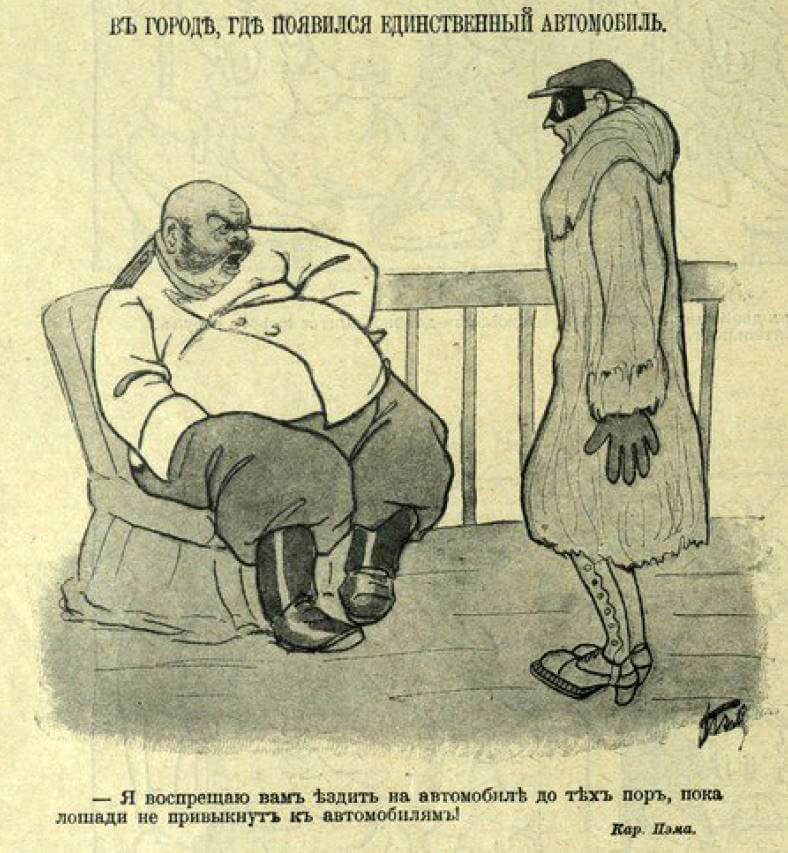
For example, on June 28, the newspaper *Yuzhny Krai* published an article titled “On the Tram Line.”
The other day, around 11 a.m., a car of city electric tram No. 94, traveling from Pavlovskaya Square to Panasovskaya Street, failed to stop at the stop across from the swimming pool, at the corner of Malaya and Bolshaya Panasovskaya Streets, and drove on. At that moment, a cab appeared from the opposite direction, turning from the fountain onto Malaya Panasovskaya Street. The tram car nearly struck the cab’s body. The frightened lady sitting in the cab, who turned out to be Mrs. Litvinova, the wife of an officer, jumped in fright from the cab onto the pavement right next to the tram line and did so so awkwardly that, stumbling, she tore her dress on the cobblestones and sustained more or less significant bruises. The tram car flew past the lady at such a close distance that it was only by some miracle that she did not end up under the car. Mrs. Litvinova suffered a severe nervous shock. Bystanders helped her climb back into the cab, and it drove her home.
A chilling story, wouldn’t you agree? The most interesting thing is that, according to the report by the Kharkiv police chief, the reality was relatively different. Here’s what happened. While driving down Bolshaya Panasovskaya Street near house No. 86, the wife of reserve warrant officer Alexander Litvinov noticed a tram catching up to them. Believing that the carriage wouldn’t have time to swerve out of the way, she jumped out of the carriage onto the pavement, tearing her dress in the fall and sustaining minor bruises. The driver himself, however, calmly managed to swerve out of the way. The passing tram car did not hit either the carriage or Litvinova, who “does not blame anyone in this situation.”
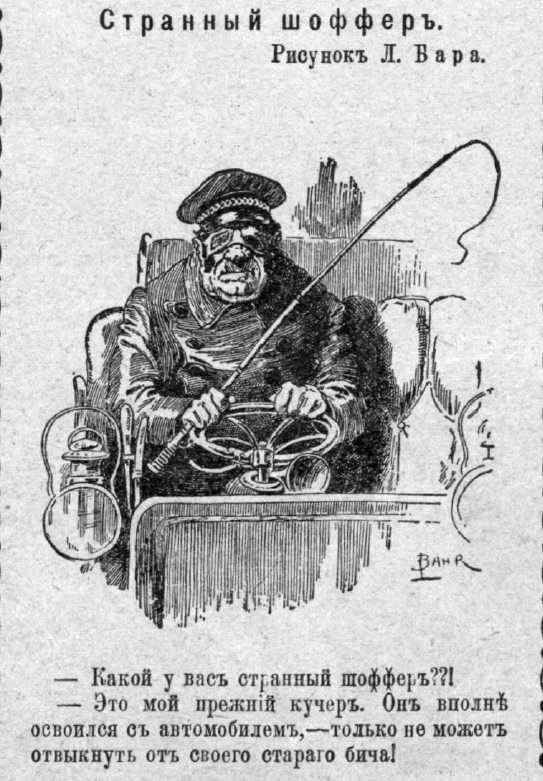
There were also instances of speeding. For example, on June 18, just after 10 a.m., a car was speeding down Sumskaya Street at a staggering speed; according to newspaper reporters, the passengers—a man and a woman—were screaming obscenities, shouting, “Help!” On Nikolayevskaya Square, the car nearly crashed into a kiosk standing there, but the driver managed to steer it toward Pavlovskaya Square in time, and then along Yekaterinoslavskaya Street. By some miracle, the driver still managed to stop the car, and neither he nor the passengers were injured. During the investigation, it was determined that the car’s owner was Nikolai Klink, a resident of Kyiv. According to him, the incident occurred because the car’s brakes failed, as a result of which the fine for speeding and failure to comply with police orders was reduced.
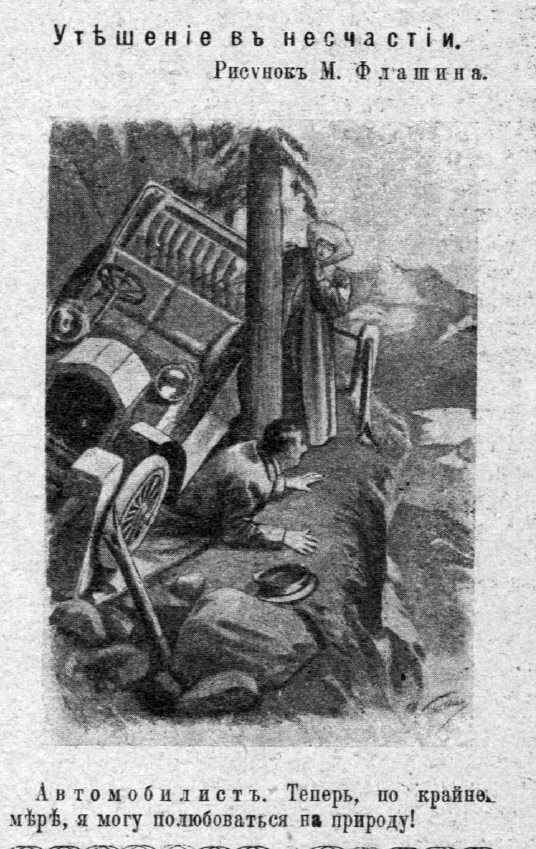
Unfortunately, there were casualties in the accident on July 6. Early that morning, a car was sent from Dunin’s garage at 130 Sumskaya Street to a repair shop for painting. Near the Land Bank, the car’s right wheel broke due to a bump on the broken pavement. Having lost control, the car overturned and was smashed to pieces. The driver, Fesenko, who was behind the wheel, suffered severe facial injuries, but after receiving medical attention, his condition was deemed satisfactory. His assistant, Ivan Zaitsev, fared much worse in the accident, sustaining head and liver contusions as well as an injury to his right arm. Zaitsev was taken to Alexandrovskaya Hospital in an ambulance while unconscious; by a lucky coincidence, the ambulance happened to be passing by the accident. The remains of the car were loaded onto a cart and sent back to the garage. During the police investigation, some interesting details came to light. As it turned out, the car had arrived in our city on July 5 by rail from Sumy for repairs. However, instead of sending the vehicle to the repair shop by horse-drawn cart, the driver took the risk of driving it himself, knowing that the car’s steering rod was bent. That is precisely why the accident occurred.
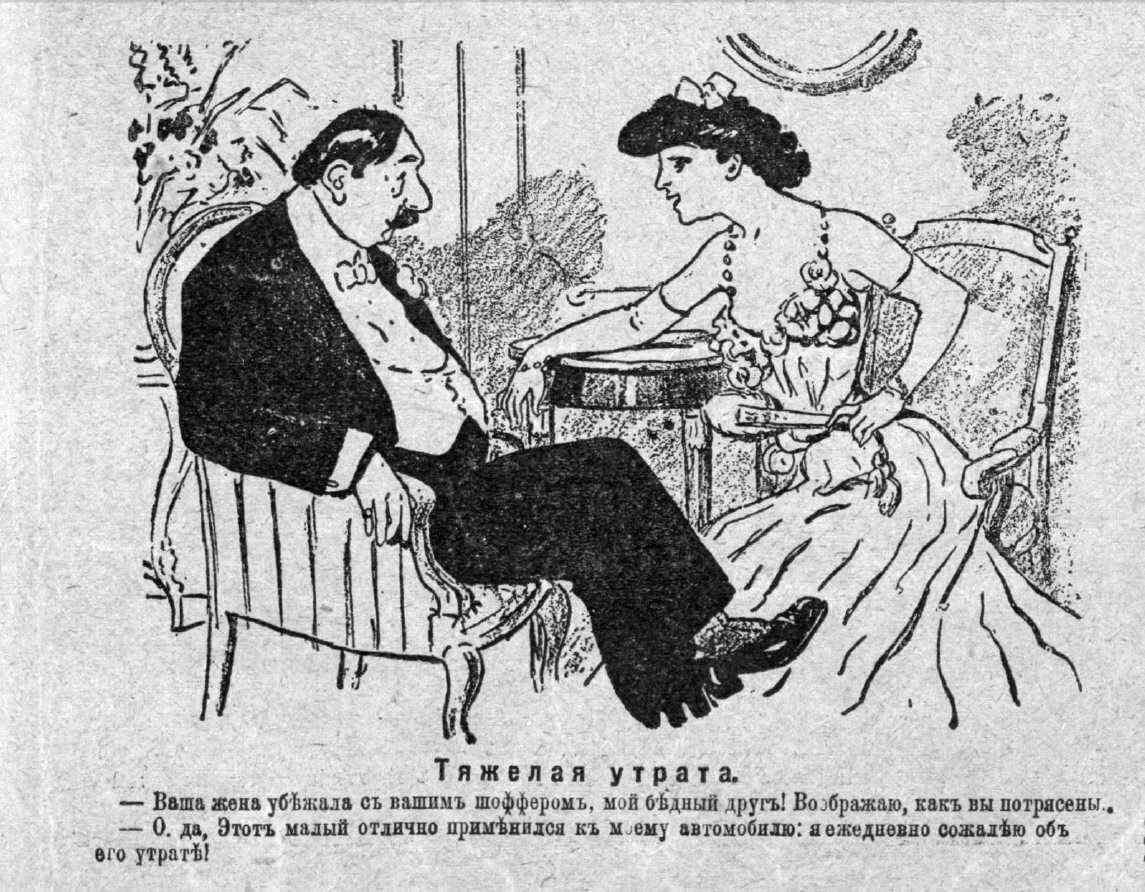
Of course, there were also incidents involving pedestrians being hit by cars. Though not all of them ended tragically. Around 4 p.m. on August 16, 16-year-old Mikhail Sviridenko, who was working part-time at a bakery, was peacefully pushing a wheelbarrow loaded with bread down Sumskaya Street. In front of house No. 54, he was struck by a car driven by Viktor Asmolov, the chauffeur of Trofim Ishchenko. The cart was destroyed, and the bread scattered across the street. Sviridenko was unharmed. The driver, who was at fault for reckless driving, was held accountable by the police.
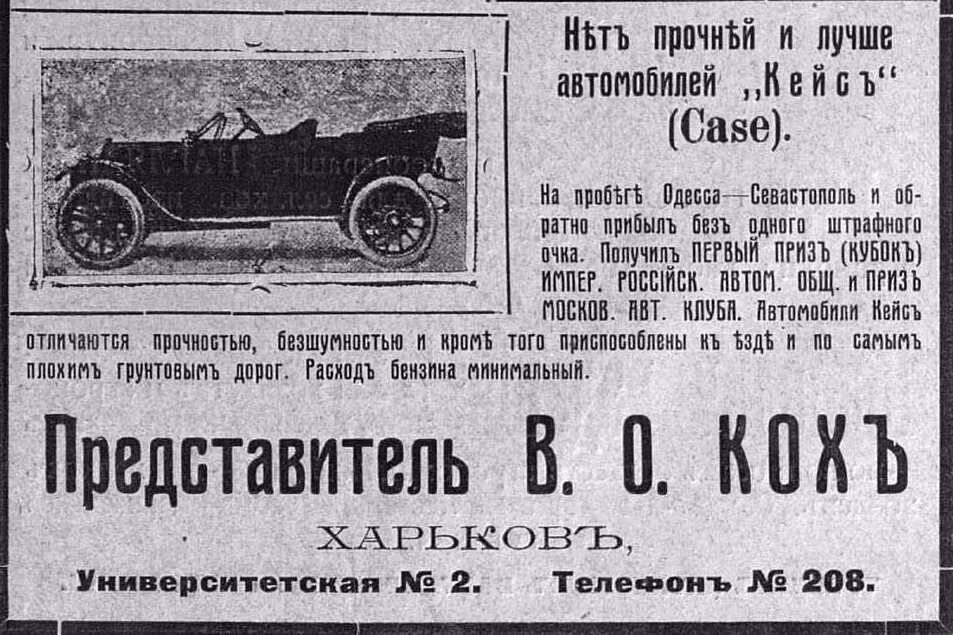
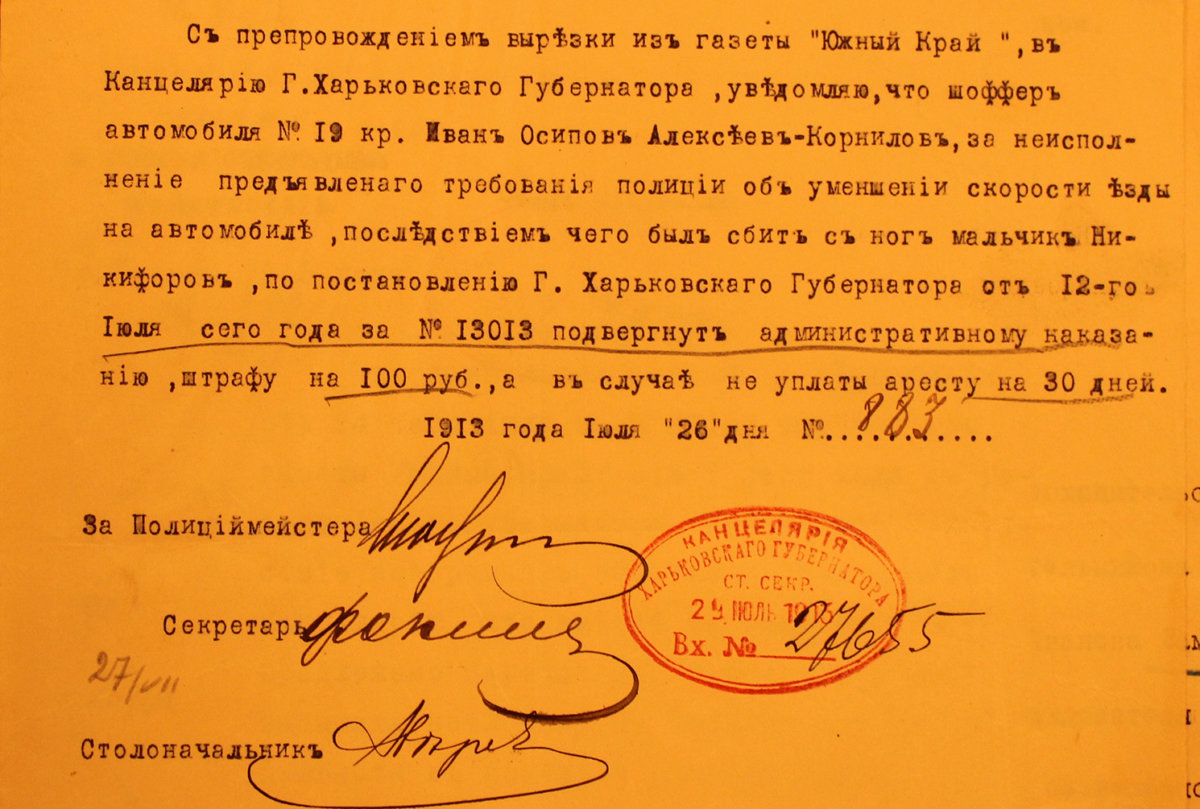
It is worth noting that, despite crackdowns by the city administration, drivers continued to speed through the city. The media of the time sadly reported that in Kharkiv, “Almost every day, cars run into either horse-drawn carriages or pedestrians on the street, causing not only bruises but also maiming and killing people”. On July 4, 16-year-old Grigory Nikiforov became the latest victim of reckless driving. The boy left the “Ponomarev and Ryzhov” stationery store on Pavlovskaya Square around noon and headed toward Nikolayevskaya Street. At that moment, a car belonging to Alexander Bulatsel was speeding past the same spot. The driver, Ivan Kornilov, ignored police warnings to slow down. Only just before hitting Grigory Nikiforov did the driver sound his horn. The boy, naturally, was startled and was knocked down by the car. After being struck by the vehicle, the victim was taken to the Medical Society’s clinic in an unconscious state with head and leg injuries. His condition was deemed severe.
For failing to comply with the police’s order to slow down, which resulted in the pedestrian being struck, the driver was fined 100 rubles pursuant to a decree issued by the Kharkiv governor on July 12. Failure to pay the fine would result in a 30-day arrest.
It’s truly heartening that the punishment for such a crime is much harsher these days. So things weren’t always better in Kharkiv at the beginning of the 20th century than they are today.

- About the military pilot school and the airfield in Kharkiv… - 04.11.2020
- Nikanor Savich—A Political Career by Mistake - 13.07.2020
- And once again, about the Cavalry Guards… - 21.01.2020