As many residents of Kharkiv know, from the time it began operations in 1897 until 1922, the Malyshev Plant was known as the Kharkiv Locomotive Works. It was renowned both during those decades and for many years afterward precisely for its core product—namely, locomotives. Numerous studies have been devoted to the history of the plant, but many of them contain conflicting information regarding which specific locomotive model was actually the first to be produced.
For example, the chronological index of the book *KhPZ—The Malyshev Plant, 1895–1995*, commissioned by the plant, states that the first locomotive produced in 1897 was a No-series locomotive.
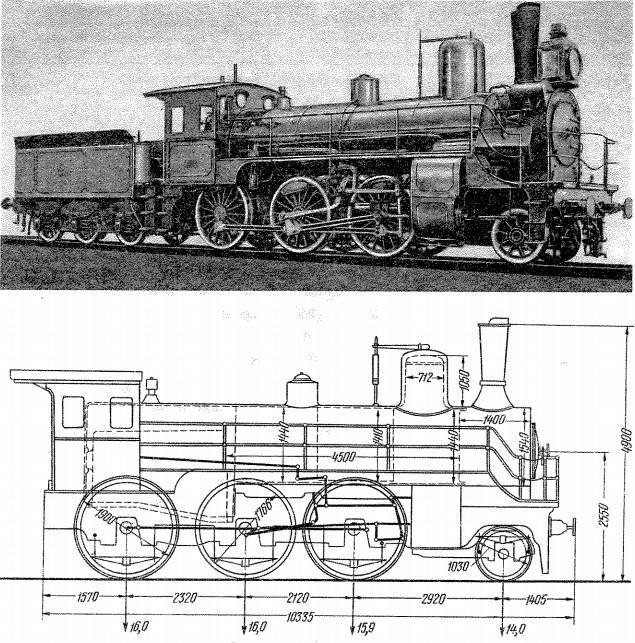
It was a high-speed passenger steam locomotive known as a “courier” locomotive and designed to operate at speeds exceeding 80 km/h. However, the list of locomotives in another section of the book includes only four series produced before the 1917 Revolution: “O,” “Shch,” “Э,” and “S.” The “No” series is not among them. The text of a telegram sent on December 5, 1897, to the Ministry of Railways is also included:
“The first locomotive hauled a freight train to Rogan Southeast Station today. It returned safely.”
It would be a bit illogical to send the “No” passenger steam locomotive with freight cars. Furthermore, among the book’s illustrations, the model of the “firstborn” is an entirely different machine—a small shunting tank locomotive (i.e., one carrying coal and water “on board” rather than in a tender car), which, moreover, is not labeled in any way.

Judging by its design features, this is a Project No. 2345 steam locomotive with a 0-3-0 wheel arrangement, developed at the factory itself in 1897.
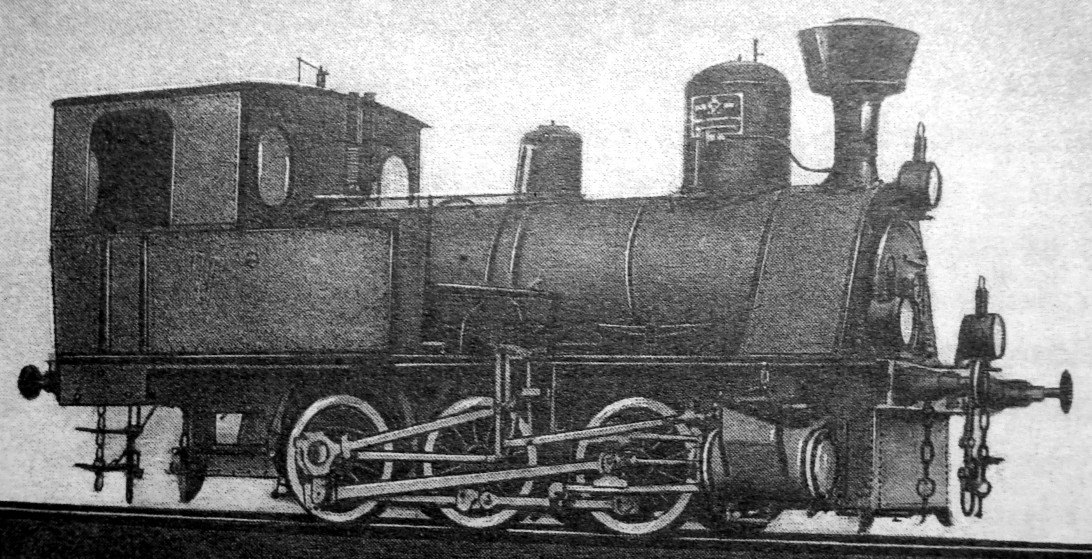
Vitaly Rakov’s book *Locomotives of the Soviet Railways: 1845–1955* mentions as many as 17 series of steam locomotives manufactured at the Kharkiv Locomotive Plant. According to his data, “N” series locomotives were indeed produced in Kharkiv, but only in 1911–1912, and this was the “Nu” modification, not the “No”… In other words, they could not have been the first locomotives produced by the Kharkiv Locomotive Plant. However, the Kharkiv “little ones” of Project No. 2345 became the most numerous shunting locomotives at enterprises and factories throughout the empire until 1918—62 units were produced. The tank locomotives were light and compact—this allowed them to successfully navigate tight curves, and it is precisely such tracks, with sharp turns between production buildings, that typically crisscross factories. Kharkiv “three-axle” locomotives were also operated at the Russo-Balt factories, as well as in the Far East, Kuban, Crimea, the factories of the Donetsk-Yurievsky Metallurgical Society, and many others… However, this was not the only type of Kharkiv shunting locomotive—there were even smaller counterparts. For example, the two-axle shunting locomotives of the “B” series. They were structurally very similar to design No. 2345, and 15 units were produced.
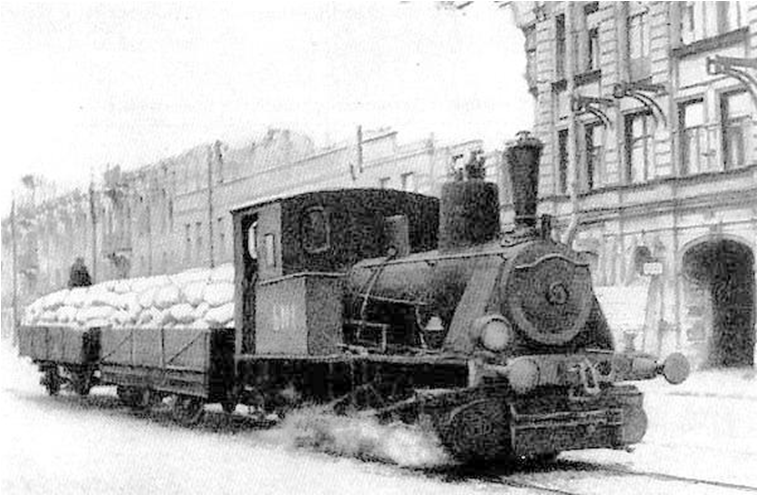
KhPZ produced 15 such locomotives between 1901 and 1903.
But the most amusing locomotive in Kharkiv is the “Rak” model.
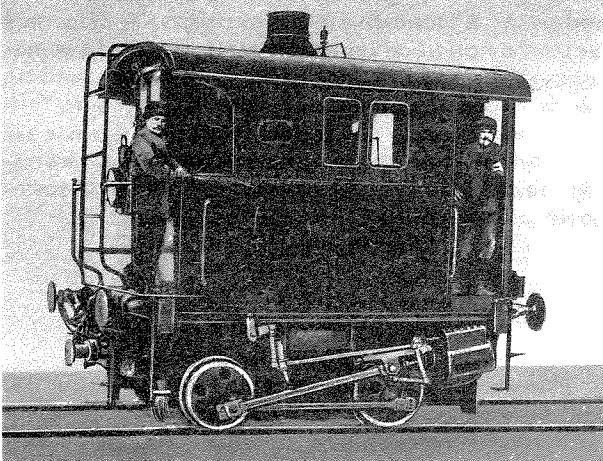
Its boiler was mounted vertically; the locomotive was only 4.2 meters long, and in general it resembled not so much a locomotive as a bizarre, truncated railcar with a smokestack.
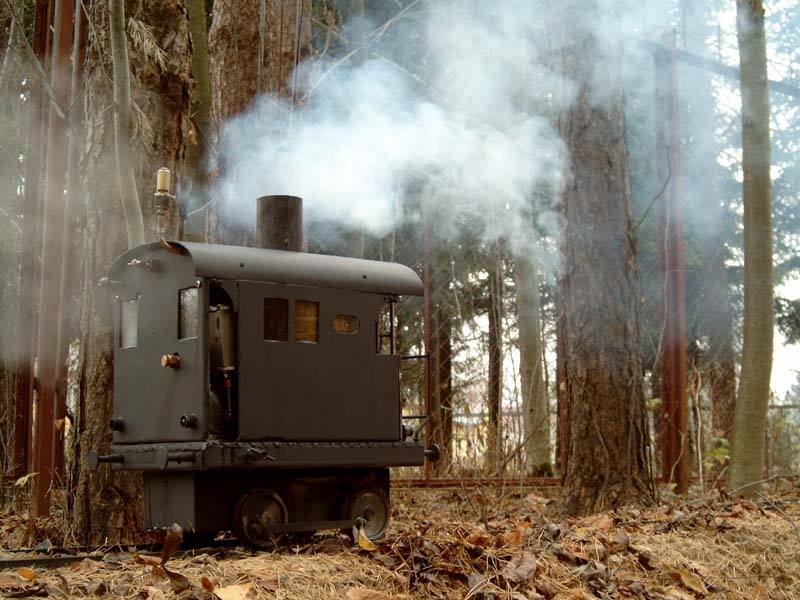
There are no precise figures regarding the years of production or the number of units built for this locomotive, but it was clearly produced in small numbers—there is simply too little information available about it. The photo shows that these “Rak” locomotives were used not only on factory grounds but also on access tracks.
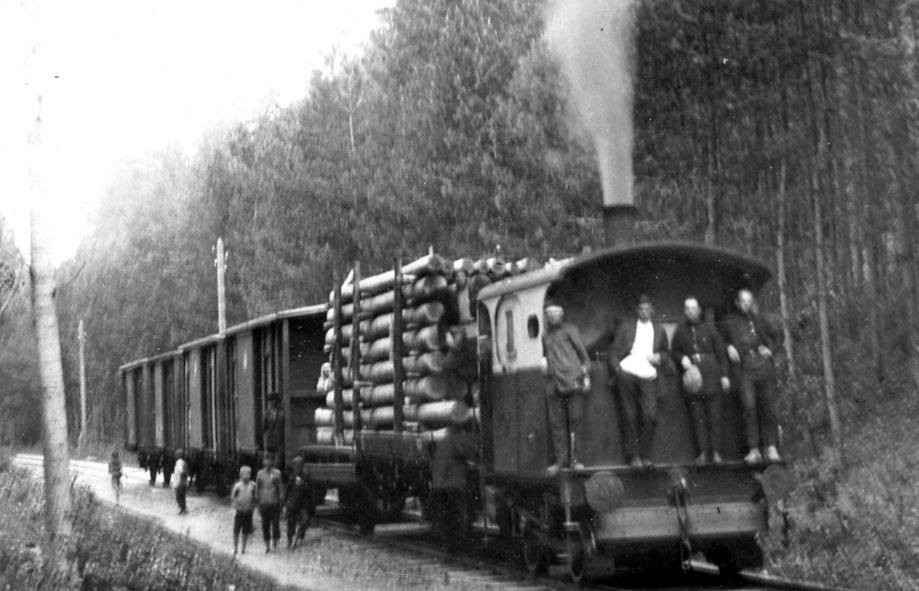
However, V. Rakov’s book contains information that casts doubt on the theory that Model No. 2345 was the first locomotive produced by the Kharkiv Locomotive Plant. According to this data, production of these shunting tank locomotives did not begin until 1901, whereas only freight locomotives of the “Od” series were produced in 1897. Most likely, it was the first locomotive produced both in Kharkiv and in Ukraine as a whole.
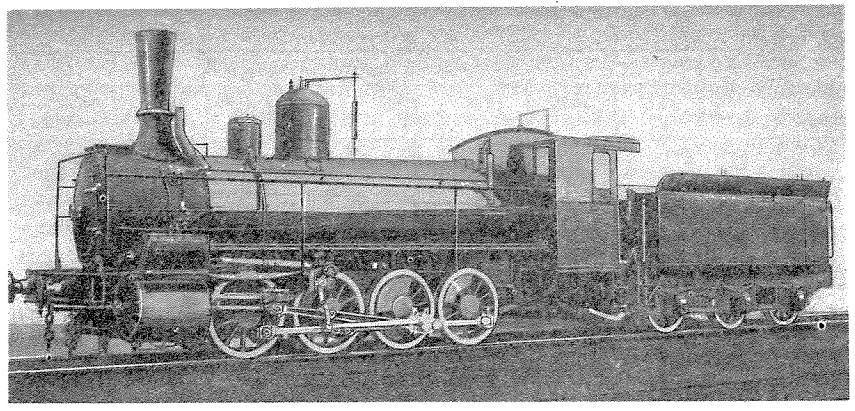
As many as 20 of them were produced in December 1897, and in the years that followed, the plant maintained an average production rate of 10 locomotives per month. But we will definitely tell you more about the legendary “O” series locomotives—the most mass-produced in the plant’s history, with a total of 1,403 units built… And the mystery surrounding the HPZ’s “firstborn” model, which set off for Rogan on December 5, 1897, remains unsolved…
Sources:
- 1. Kharkiv Malyshev Plant (1895–1995): A Brief History of Its Development. Kharkiv: Prapor, 1995.
- 2. V. A. Rakov. Class O Steam Locomotives // Locomotives of the Russian Railways, 1845–1955. — 1995. — pp. 140–153.

- Danylevs’koho Street, 19 - 13.10.2026
- Debunking the myth about one of the most famous Kharkiv photos - 12.10.2026
- The Architectural Evolution of the Kharkiv Theater - 26.09.2026